
Figure 1
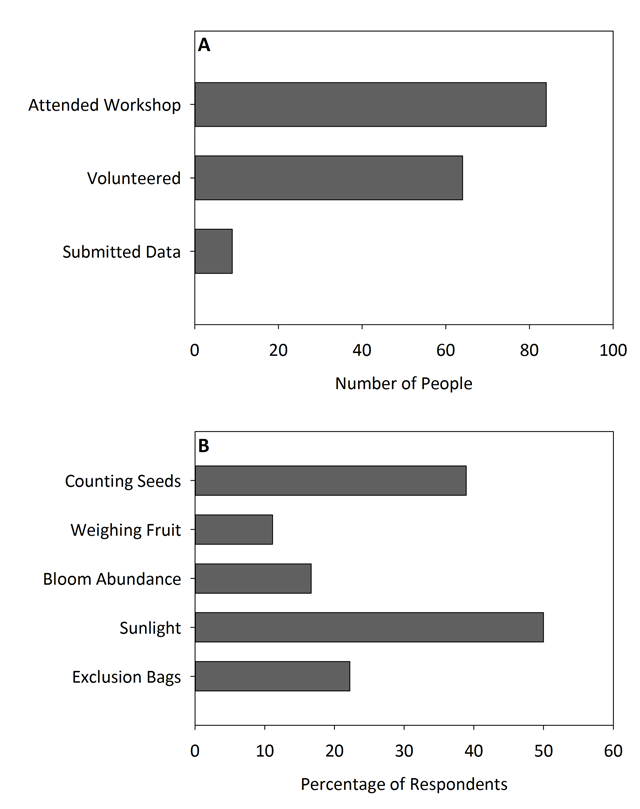
A) The number of individuals who attended Pollination Investigators training workshops, elected to participate, and submitted data. B) Workshop attendees were asked if any protocol steps remained unclear following our training as part of a follow-up survey. Respondents could check all tasks that remained confusing. The answer choices were: Collecting harvested fruit seed counts from test plants, collecting harvested fruit weight from test plants, measuring bloom abundance and area in your garden, measuring percentage sunlight in your garden, and attaching pollinator exclusion bags on test plants. Measuring sunlight and collecting seed counts remained points of confusion to the greatest percentage of respondents.

Figure 2
We asked volunteers who had plants that survived to the flowering stage, yet failed to establish their pollination treatments what went wrong. Volunteers cited wildlife damage to the flowers and damage caused to the flowers during exclusion bag attachment most frequently. Those who selected “other” reported that a lack of time prevented continued participation. No volunteers reported that unclear instructions regarding how to attach exclusion bags or missing the flowering period were obstacles to their continued participation.
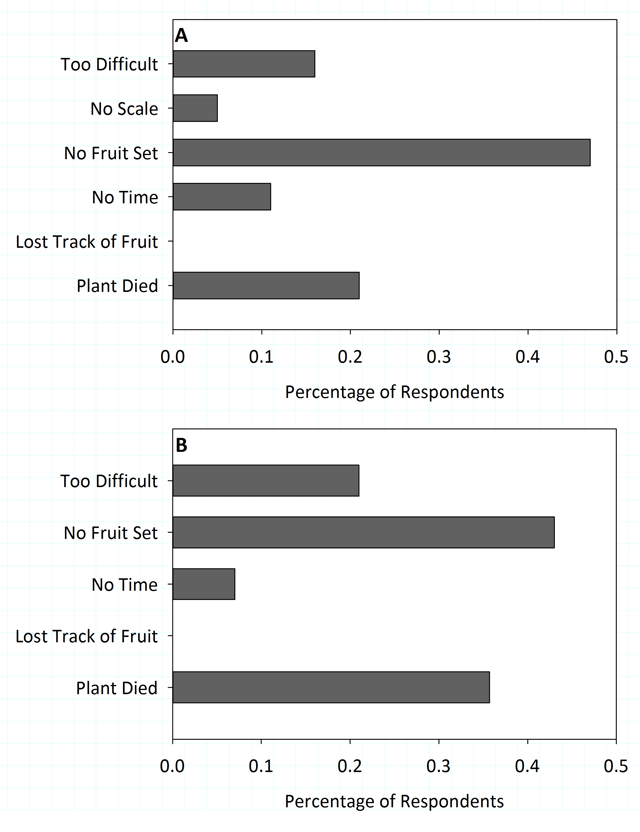
Figure 3
A) We asked volunteers what prevented them from submitting fruit weight data. The answer choices were: The task was too difficult, did not have an adequate scale, no fruit set, didn’t have time, lost track of what fruit I was monitoring, and plants died. Volunteers could check all answers that applied. No fruit set was the most commonly selected answer choice. B) Volunteers were also asked what prevented their successful collection and submission of seed counts. A lack of fruit set followed by plants dying were the most frequently selected answer choices.
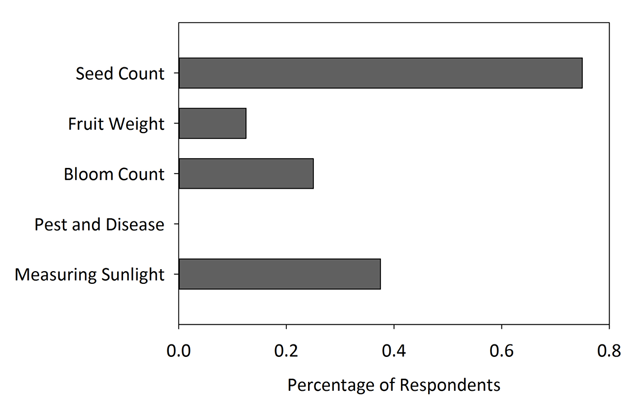
Figure 4
The final question in our online survey asked if volunteers would be more likely to participate in Pollination Investigators again if we removed one or more tasks. Respondents could check all tasks that they would like to see removed from the protocol. The answer choices were: Counting seeds, weighing fruit, taking bloom count and area measurements, recording pest and disease incidence, and measuring sunlight. Counting seeds received 75% of the total responses.