
Introduction
Scientific outcomes from citizen science projects—“a scientific project involving a partnership with volunteers, both novices and experts, in the generation of new knowledge” (Bergerot 2022, p. 2) —are often well documented (Bonney et al. 2016). Outcomes for participants in such projects are less frequently evaluated, although research has begun to address this (e.g., Leonard et al. 2023; Mady et al. 2023; Olson and Colston 2024; Janssen et al. 2025). Learning outcome frameworks have also emerged, including Phillips et al. (2018), who present six outcome categories: Interest in Science and the Environment; Self-efficacy for Science and the Environment; Motivation for Science and the Environment; Knowledge of the Nature of Science; Skills of Science Inquiry; and Behaviour and Stewardship.
This work aims to provide a qualitative exploration of participant experiences in and outcomes from a collaborative marine litter (ML) citizen science project called Coast Watchers in North West England. ML is defined as “persistent, manufactured or processed solid material discarded, disposed of, or abandoned in the marine and coastal environment” (UNEP 2021, p. 11), and is a pervasive problem. Plastic waste is particularly hazardous to marine life (Murphy et al. 2024), whilst ML can also injure beach users and affect the mental and physical health benefits gained from exposure to coastal space (Wyles et al. 2016).
Managing ML demands a global effort, including eliminating the input and increasing the removal of litter from the marine environment (Williams and Rangel-Buitrago 2019). Monitoring ML across marine environments is important for informing management strategies (Nelms et al. 2022), something that is typically achieved through repeated physical surveys of the beach to identify and categorise litter.
Achieving long-term survey data of ML across large geographic areas can be expensive, time consuming, and laborious, particularly for lone researchers (Nelms et al. 2022). Citizen science—noted for its capacity to mobilise large numbers of people to collect data over greater spaciotemporal scales than possible in conventional monitoring (van Emmerik et al. 2020) —can help to resolve some of the economic and practical limitations associated with ML monitoring, whilst simultaneously achieving public engagement outcomes. Consequently, ML citizen science projects have advanced the understanding of ML (Hidalgo-Ruz and Thiel 2015), improved the representativeness of large-scale national data sets (Zorzo et al. 2021), and supported the removal of litter from the environment.
However, despite the value of such ML citizen science projects, project evaluations typically overlook participant outcomes. In a review of ML citizen science projects, Kawabe et al. (2022) found 90% of projects failed to report on or assumed the project’s impact on participants. Concurring, only 4 of the 38 ML citizen science studies reviewed by Severin et al. (2023a) assessed impacts on participants. This pattern is observed more broadly across citizen science projects in the water sciences, with Walker et al. (2021) finding 32% of 549 reviewed citizen science publications only suggested potential participant benefits, whilst 24% failed to report benefits at all. Moreover, of the publications reporting actual benefits, just 16% investigated benefits, whilst other publications only inferred, observed, or attributed them.
Where participant outcomes and benefits in ML citizen science projects have been explored, they may be perceived (e.g. Peacock et al. 2025) or focussed on school students and educational programmes (e.g. Eastman et al. 2014; Hartley, Thompson, and Pahl 2015; Yeo et al. 2015; Wyles et al. 2017; Locritani, Merlino, and Abbate 2019; Wichmann et al. 2022; Catarino et al. 2023; Severin et al. 2023b). These global studies indicate that ML citizen science projects and education interventions can improve children’s knowledge of ML processes (Locritani et al. 2019), and lead to greater levels of concern about and understanding of the causes and impacts of ML (Hartley et al. 2015). Citizen science can also positively impact traits of ocean literacy, including litter-reducing behaviours (Severin et al. 2023b), although other studies have shown no significant effect on children’s pro-environmental behaviours (Wichmann et al. 2022). Similarly, whilst one study found an association between beach cleaning and improved student wellbeing (Wyles et al. 2017), another found no similar correlation (Severin et al. 2023a). Comparatively, studies exploring outcomes for adult participants appear uncommon, with authors acknowledging the “infancy” of the research area (Wyles and Ghilardi-Lopes 2023).
One reason for the shortfall of projects evaluating participant outcomes may be because most ML citizen science projects are contributory by design (Kawabe et al. 2022). Such projects typically involve participants collecting and contributing data to a scientist designed project (Shirk et al. 2012), with limited opportunities for citizen involvement in the research process (Certomà 2025). Citizen science projects that present opportunities for participants to be involved more deeply, for instance in collaborative or co-designed initiatives, could offer greater opportunities to better account for and investigate participants’ experiences and outcomes.
Drawing on a ML citizen science project called Coast Watchers, a place-based and collaborative ML citizen science initiative on Rossall Beach on the Fylde coast in North West England (Figure 1), this exploratory case study asks: What are participants’ experiences in and outcomes from a ML citizen science project? To explore this, we firstly introduce the Coast Watchers project—including its collaborative citizen science approach, ML survey protocol, and key findings—to help contextualise participant outcomes. Secondly, having established the larger project of which this study is a part, the Methods section explains the qualitative methods used to explore participant experiences and outcomes. This is followed by a discussion and evaluation of the resulting findings.
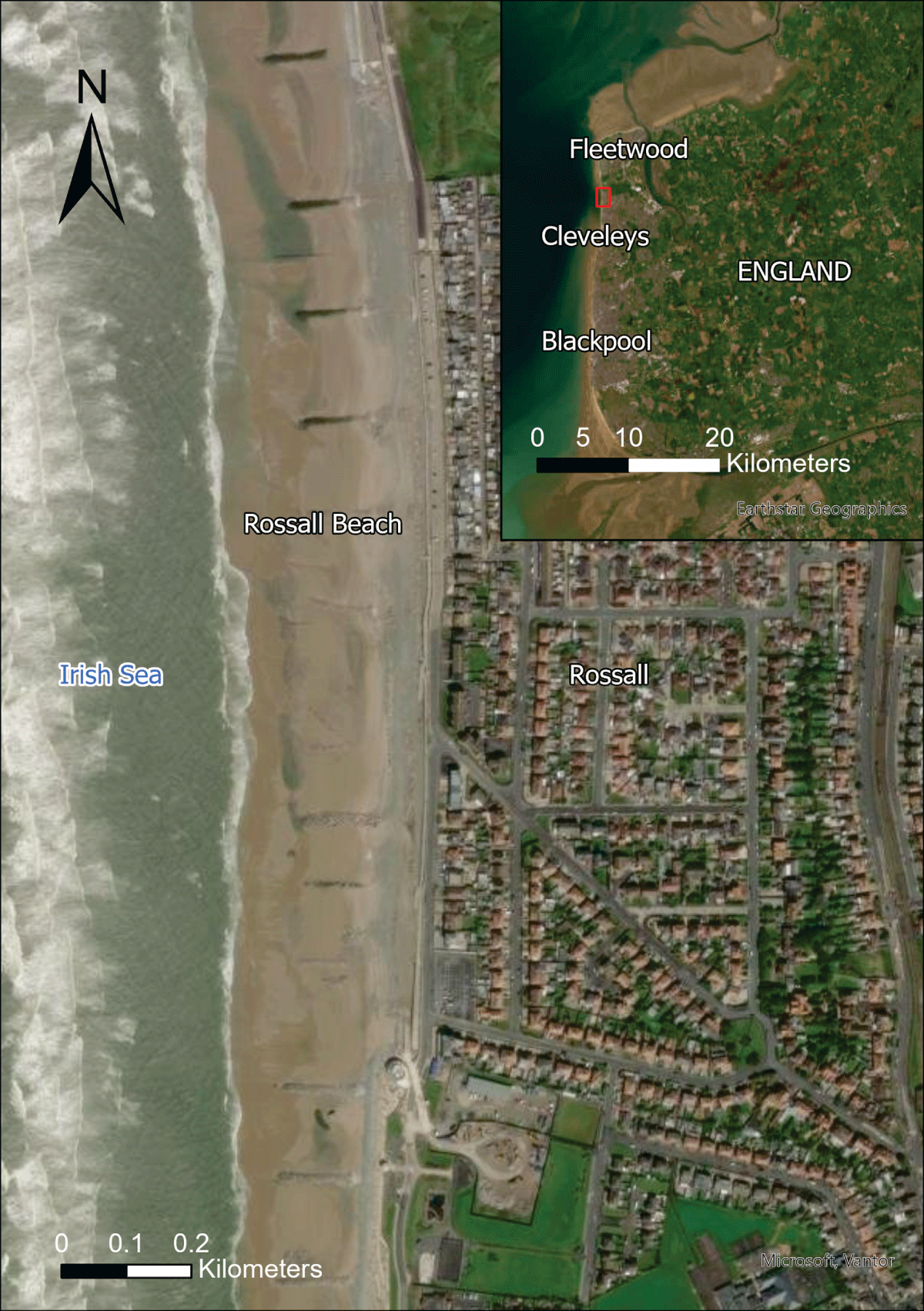
Figure 1
Rossall Beach and its location within North West England (inset).
Background: the Coast Watchers Project
Coast Watchers, established in 2019 by Rabbit Patch (a creative business on the Fylde Coast), Wyre Council, and Lancaster University, was formed with the intention of engaging people in monitoring and better understanding the Fylde’s coastal environment. The project was designed to be collaborative and place-based (a term defined as “physically rooted in a distinct environment, history, culture, and economy”; Haywood et al. 2024, p.1). A collaborative citizen science model, unlike a contributory model, shifts the emphasis of project design from a top-down and scientist-led practice to one that values and balances input from a plurality of voices in most stages of a citizen science research process, including project design, question identification, method development, data collection, and dissemination (Shirk et al. 2012). A collaborative model, which gave local people a voice in shaping the design of Coast Watchers, was deemed most appropriate to help the project provide place relevance, attract and sustain engagement, and potentially lead to positive participant outcomes.
Central to the collaborative design of Coast Watchers was ensuring that the project delivers meaningful scientific outcomes and, crucially, is grounded in people’s place-based values and issues that matter most to them, something often overlooked in contributory citizen science projects (Certomà 2025). Here, Coast Watchers was rooted in prior qualitative work across the wider Fylde region (see Earl et al. 2022), which highlighted deep values in and attachments to the local coastal space. A changed experience in and appreciation of the coastal environment during the COVID-19 pandemic, driven in part by issues of increased busyness and litter, increased participant’s willingness to protect the coastal environment. Motivations from some participants to learn about the coastal environment were also seen.
Follow-on meetings and workshops with residents, a local community group leader, and Council stakeholders to shape the direction of Coast Watchers again highlighted ML as a local concern that could be feasibly studied through citizen science. Monthly ML surveys were conducted on Rossall Beach from August 2021 to July 2022 (12 surveys), with up to 12 volunteers recruited from Rossall Beach Residents and Community Group (RBRCG) and social media participating in data collection each month (Supplemental File 1: Coast Watchers ML Surveying Protocol and Key Findings). This paper examines participant’s experiences and outcomes from these citizen science surveys.
Methods
To understand and articulate participants’ experiences and outcomes, interviews were conducted in the two months following the final ML surveying event. Interviews were advertised to Coast Watchers participants via a private Facebook group and email, with 13 people being emailed directly. Eleven participants (eight female, three male; eight retired or not working, three in employment or education), all of whom had been contacted via email, agreed and consented to an online interview via Teams. Interviews were semi-structured and based on 27 questions that explored motivations for involvement, methodological reflections, learning outcomes, behaviours, citizen science identity, and future participation (Supplemental File 2: Interview Questions).
Interview recordings were manually transcribed and anonymised, with participants ascribed pseudonyms. To understand and interpret patterns of meaning across the interviews, data were analysed using reflexive thematic analysis, following Braun and Clarke’s (2021) six-phase approach. In short, the analysis involved data familiarisation and an initial round of descriptive coding by hand to tease out important points of interest and meaning. Using NVivo software, identified codes were then grouped thematically, with commonality, differences, and connections across the data explored. Themes were then named, reviewed, and refined, including in respect to existing literature, with key participant outcomes compared against Phillips et al.’s (2018) framework. Finally, a coherent narrative was built around the overall research question. Interview data were supplemented by participant observations documented immediately after each survey session, providing a portfolio of personal experiences, reflections, observations, and participant interactions.
Results and Discussion: Participant Experiences in and Outcomes from Coast Watchers
This section explores interviewees’ experiences and self-reported outcomes from ML surveying during the Coast Watchers project, which are organised around the key themes identified in the analysis.
Motivations for participation
More than half of the respondents reported environment-related motivators, including passion for the coast and the need to maintain beach cleanliness to support the environment. For two participants, the motivator was the impact of experiencing the negative implications of litter on the beach and marine system. Seven participants also spoke about the wider societal benefits of beach cleaning as a motivator for them, including contributing to keeping the beach litter-free for others, whilst a sense of “giving back” was important for some retirees. Motivations also went beyond environmental concerns, with wellbeing, social, and intrinsic motivations all present, including possible learning possibilities and opportunities to meet and interact with others.
These motivations for engaging with beach cleaning are well documented (Wyles et al. 2017; Power 2022), although a final motivator, time, specifically an individual’s time capacity and convenience to attend sessions, was also important here. Perhaps this was dictated by the scheduling of the survey sessions on Monday mornings, which restricted the sessions to a primarily retired or non-working audience. Young or employed people could attend only during holidays, whilst tourists typically attended on an ad-hoc basis.
Interviewees expressed enjoyment from the project. Ian said, “I’ve enjoyed it all. You know sometimes when it’s absolutely blowing a hooley and it’s piddling it down with rain you think what am I doing this for, but I still enjoy it.” Several participants also drew upon the mental and physical wellbeing benefits from their participation, describing the fresh air, exercise, and therapeutic benefits experienced when beach cleaning. But, as Wyles et al. (2017) suggests, it is unclear whether it is the activity of beach cleaning itself or being in the coastal blue space environment that is more important for promoting such well-being effects. Similarly, it is also key to understand the extent to which citizen science surveying of ML, compared with the act of beach cleaning only, presented any additional benefits.
Marine litter citizen science can build heightened awareness of litter types and amounts
Surveying ML was more “interesting” for participants and seemed to offer an additional benefit that just beach cleaning could not provide. Two participants reported: “I think if it was a case of: here’s your litter picker, go pick some litter, see you next month, it wouldn’t be the same at all,” and “just picking up stuff and throwing it in the bag on the beach, you kind of feel as though you’re missing out on something.”
This difference appeared to be rooted in the opportunity to build subjective awareness about ML (Wyles et al. 2017; Locritani et al. 2019), stimulated by the process of recording and thinking about the types of ML collected, beyond just collecting it. Karen remarked:
“With the other group [RBRCG], you’re literally just popping whatever into the bag and not really giving it much thought. Whereas with your group [Coast Watchers], you are kind of looking for anything old, anything interesting, and anything that we think you might be interested in, so it definitely makes you more aware of what you’re actually putting into the bag.”
The process of surveying litter was mentally engaging, provoking questions and awareness about the types, amounts, patterns, and drivers of litter observed on the beach over time. Alice commented:
“Writing it down and logging it, it does make you think. Before I was just chucking it in the bag and didn’t really pay much attention. It was just piece of litter, put it in the bag. But now you’re thinking, gosh, we’re seeing a pattern of more sanitary waste or cigarette butts, what does that mean?… it makes you more aware of what you’re picking up, doesn’t it? You know, if we’ve only picked up one piece of glass, but 20 pieces of sanitary, you’re realising where the problem is coming from.”
By stimulating an awareness of the types and quantities of local ML, participants could formulate their own conclusions based upon observations made across multiple survey sessions. John, a long-term local resident, demonstrated this finding:
“I think [I am] more aware of the type of litter and rubbish that is on the beach, the quantity of it. Both have now become measurable to me, whereas before they were totally immeasurable”, allowing him to have “reached a conclusion, if you will, for the rubbish on the beach at Cleveleys, where it’s likely to have come from [and] how long it’s likely to have been there for.”
Findings suggest self-reported learning and knowledge outcomes, something observed in other citizen science studies (e.g., Haywood, Parrish, and Dolliver 2016; Peter et al. 2021).
Surveying marine litter can change pre-conceptions that beach users are the main source of litter
Forming conclusions about the source of ML appeared to provoke strong learning outcomes, with participants recognising that most ML surveyed was not from direct littering. John remarked, “I can’t remember ever finding… a whole plastic bottle or a whole glass bottle. We found the odd can. So, we’re not finding evidence, if you will, of deliberate littering.” Instead, participants attributed the Irish Sea as the predominant ML source. For Eric, witnessing this and observing the length of time that litter may reside in the marine environment was surprising to him:
“We’ve seen now from monitoring how things come ashore, and we’ve found crisp packets that are ten years old and what have you… there must be some offshore depository somewhere for this waste. And it gets churned up and comes back in again, and that’s disturbing and worrying. And I don’t think most people are aware of that. That was an eye opener for me.”
Eric’s response was not in isolation; five other participants expressed surprise or greater awareness that the sea, compared with beach users, is an important ML source. Helen pondered, “I was quite surprised that there’s less litter dropped than the amount of litter that comes in on the tide.” In fact, this finding directly contradicted some participants initial expectations that most ML derives from direct littering by beach users, an expectation also observed in other studies (e.g., Rayon-Viña et al. 2019). Maggie affirmed her attitude shift:
“I obviously used to go on day trips to the beach and I used to see the rubbish and think, oh you know there must have been a lot of people here the other day and they’ve left all this rubbish knocking about. And now I know that it’s not all that… I never even understood the fact that it actually can lie out at sea for months, years, whatever, and it’s when we have storms you get this stuff coming back in.”
Consequently, surveying ML enabled participants to gather evidence and form conclusions that directly contradict their initial expectations, a finding in commonality with Locritani et al. (2019). As such, citizen science presented an experiential learning environment that challenged and changed preconceptions.
Marine litter citizen science can foster environmental consciousness
Surveying enabled participants to learn about more than just the types, amounts, and sources of ML; it heightened awareness of its wider environmental impacts, a finding also reported from a microplastic citizen science project (Jones, Potts, and Hale, 2024). For Kelly, despite prior awareness of the ML problem, witnessing ML through surveying proved emotive:
“I’d always known plastic was a problem from being in the conservation world, but seeing it on a local beach, just the abundance and the impact it would have, that surprised me, it shocked me… you see it first-hand. Whereas usually you see it in pictures, or maybe a journal or article. But then looking at it [litter on the beach], you think of all the pictures of the pollution incidents, the birds with plastic rings around their beaks. So that visual imagery is just so much more powerful when you see it in person.”
An elevated sense of environmental consciousness was also apparent for Helen, who described a shifting experience in coastal space:
“It’s just been a real eye opener and whenever I walk around now, especially on the coast, you know, I’m very conscious of what’s around me. Whereas before it was just, you know, you see litter and you think it’s just one of those things, but now I’m seeing it as an impact on the marine life and things like that. And it has kind of never been a conversation in my head before.”
This heightened consciousness did not end with litter’s impact on wildlife for Pam, as her awareness of the social implications of litter for beach users has increased:
“You would go along and you sort of say, gosh, there’s a lot of rubbish here and that will be it. Whereas now, you go along and you say there’s a lot of rubbish, what impact is that having on the wildlife, on the views of people that come to visit, on the plastic and the life cycle of the plastics and all that sort of thing? You definitely start thinking in a slightly deeper way.”
Consequently, for some participants, surveying shaped their place interactions and built an increased awareness of anthropogenic impacts on the local marine environment, a finding also observed in another coastal citizen science project (Haywood, Parrish, and Dolliver 2016). Such shifts in place interactions from citizen science may also generate a sense of individual empowerment (Dean et al. 2018), including changed single-use plastic behaviours for one participant:
“The other thing I was really surprised and made me think about is packaging, especially food packaging that I personally consume, [that] is out there. It’s not good… you’ve seen the aftermath of where it ends up like first hand, it really makes you stop and think, OK do I actually need this? Let’s try and replace some plastic, which I’ve tried to do anyway from like refill bottles and stuff, but it’s [Coast Watchers involvement] kicked me to do it a lot more.”
Empowerment was also found in Helen’s experiences, who expressed a new sense of self-efficacy:
“Feeling really empowered environmentally because if somebody asked me about environmental issues before, I kind of wouldn’t have much of an opinion… It’s something other people did, who were much smarter than me and have a lot more intelligence than I have to understand all the stuff”. She continued: “I felt part of something you know, if everybody just did a little bit like we were doing then what a difference it would make.”
Citizen scientists share learning across their social networks
Four participants reported that they share learning with friends, family, and wider community groups: “any opportunity that I can get to kind of share what I’m doing… I’m telling everyone who will listen,” said one, whilst another remarked, “you’re learning – you can then impart that information on to other people and raise awareness.” This willingness of these participants to share their acquired knowledge highlights the capacity of citizen science to not only influence the learning outcomes for the immediate volunteer group, but to also shape awareness for a wider audience. The finding underlines the need for researchers to share findings in an accessible and meaningful way, so that participants can ultimately share learnings with others. Pam noted:
“What is more interesting I think, is when you do the survey and then you get your feedback and you get a little bit more idea of the trends… I think it builds a picture up and you can then impart that information.”
Alongside sharing learning amongst their own social networks, some participants recognised the scientific value of their data collection to enact change on local and national scales. Ian noted, “If you’re armed with numbers and data and conclusions from that, you can make a much better case for perhaps getting things changed.” Notably, one participant used the Coast Watchers ML data to support their own local activism about water quality, whilst the researchers submitted the data in a successful government consultation to ban certain single-use plastics nationally (DEFRA 2023).
Am I a citizen scientist?
In this project, participants had opportunities to engage in more than data collection. In this interviewee sample, two participants were involved in all research stages, whilst the remaining nine contributed to and were engaged in data collection and project evaluation, including sharing their feedback and experiences and informing the project’s future direction. In this sense, the participants were “doing science” (Ballard 2008) to a greater extent than in many contributory citizen science projects, although the extent to which the participants considered themselves to be citizen scientists is unknown. Interviewees were asked, “To what extent do you identify as a citizen scientist?” The overriding response was that participants did not identify as citizen scientists. Helen replied, “I don’t see myself as a scientist, I just see myself as a local person who’s concerned about what’s going on”, a sentiment Karen echoed: “a citizen scientist, my goodness me! Probably not very much, no! I mean literally if I can just do my bit you know, I’m happy with that.” Similarly, John echoed this lack of identity but drew further upon Karen’s sense of contributing and playing a role: “science was never my strong point, but… I would like to think that I have played a worthwhile role in determining the end result of the of the findings of the survey.”
Yet, all interviewees reported positive outcomes from the work, therefore it is apparent that identifying as a citizen scientist is not necessarily an important part of the participants’ experiences here, nor a pre-requisite for harnessing the benefits derived from the work. Instead, perhaps the term citizen science is most important for the scientific community, providing credibility (Lin Hunter, Newman, and Balgopal 2023) and a common language with which to associate data, findings, and outcomes from such projects, rather than being a significant term for participants.
Evaluating Outcomes
Coast Watchers was designed as a place-based and collaborative citizen science initiative. Crucially, compared with a contributory citizen science model, the collaborative approach offered participants an opportunity to contribute to most research stages, including project design, question identification, method development, data collection, and dissemination. Through this process, ML was identified as a local concern, one that could be feasibly researched through monthly citizen science survey events. A qualitative investigation of participant experiences from the surveying highlighted several positive participant outcomes, including enjoyment, learning, and heightened environmental consciousness.
Some of the outcomes expressed here align well with Phillips et al.’s (2018) framework, particularly “interest,” as the participants assigned a high degree of personal relevance to the work. Stewardship outcomes were also observed through “spillover” effects (Wyles et al. 2017; Severin et al. 2023a) that encouraged other pro-environmental behaviours—including a reduction in single-use plastics for one participant—and interests, at least in the short term. Notably, after a year of monitoring ML, participants expressed interest in learning about other phenomena in the coastal environment, including flora and fauna—which for some interviewees was stimulated by their participation in ML citizen science. Monthly Coast Watchers events transitioned to surveying flora, fauna, and morphological changes, aiming to build participants’ understanding of the coastal environment. But, after a further five events, researcher support and funding for Coast Watchers ended, and with it, participant involvement, highlighting the challenge of maintaining citizen science momentum beyond the lifetime of individual projects. Consequently, the long-term outcomes for participants beyond the lifespan of Coast Watchers are unknown.
Many of the outcomes highlighted here, particularly increased subject knowledge and changed pre-conceptions, did not align well with the categories within Phillips et al.’s (2018) framework. This is acknowledged as both a strength and weakness of the exploratory qualitative method employed here because whilst nuanced self-reported outcomes can be expressed, the comparability to other studies is reduced. Standardised pre- and post-project surveys may have been more appropriate to quantitatively measure change in participant outcomes across the project (e.g., Mady et al. 2023), although surveys would have been difficult to implement given uncertain participant retention over the 12-month period.
However, lessons can be drawn from the project about how positive participant outcomes could be maximised in future citizen science projects. Central to this may be the collaborative process itself, as, by giving roles to citizen scientists that go beyond traditional contributors of data, a project was developed that was of direct relevance for local people, aligned with local concerns and interests, and tested anecdotal knowledge and hypotheses. Notably, by investing time to ground the project in place and find common concerns that people care about—ML in this case—people were motivated to give up their time to volunteer and demonstrate pro-environmental behaviours like beach cleaning. Ultimately, this process of “matching” the data collection and engagement methods to local motivations and concerns helped to attract and sustain participation (Land-Zandstra et al. 2021), contributed to high levels of reported enjoyment and learning, and led to a set of locally meaningful results.
Yet, it is acknowledged that grounding citizen science in this way may be relevant only for place-based citizen science projects. For instance, it is recognised that Coast Watchers may be described as a “place-based community action” project (van Noordwijk et al. 2021), since the localness of the issue in question may attract place-connected participants, who are motivated to benefit their local environment and community. For projects that are not location-specific, such as “mass participation projects” (van Noordwijk et al. 2021), which may aim to engage people across larger spatial scales, tailoring the project to the motivations, interests, and concerns of a specific audience would be difficult, if not impossible. Another factor is the resource- and time-demanding nature of involving multiple stakeholders in the design of a project. However, for such place-based projects, it is argued that it is time well spent, as the project appeals to a targeted audience, matches their interests, and carries impact.
Conclusions
This work has helped to address the shortfall of research exploring participant outcomes from ML citizen science. We drew findings from Coast Watchers, a place-based and collaborative citizen science initiative on Rossall Beach in North West England. Post-project participant interviews, which were analysed using a reflexive thematic analysis approach, highlighted various positive self-reported participant outcomes from the work. These included enjoyment and experiential learning outcomes, with participants expressing increased awareness of ML types, amounts, and impacts on the marine environment. The work also changed pre-conceptions that beach users are the main source of litter on Rossall Beach, something that was surprising for some interviewees. Wider “spillover” effects were also observed for some participants, including a sense of environmental empowerment, the sharing of learning amongst social networks, and engagement in follow-on citizen science activities to learn about other phenomena in the coastal environment. These outcomes were found despite participants not identifying as citizen scientists, suggesting that whilst the term may be useful for the academic community, it holds little value for participants.
Although the evidence presented here is based on a small sample in a single case study, which limits the generalisation of findings to other places or demographic groups, the research sets a useful precedent for future research. Notably, studies on the long-term benefits for citizen science participants are needed, alongside comparative work exploring the extent to which meaningful participant outcomes vary between contributory, collaborative, and co-designed citizen science models. Such research would strengthen the evidence base of citizen science outcomes beyond data collection and help to ensure future citizen science projects are designed effectively to maximise positive participant outcomes. Ultimately, citizen scientists should be seen as more than passive data collectors of information; they are active collaborators who can effectively help design and ultimately benefit from citizen science projects.
Supplementary Files
Supplemental File 1
Coast Watchers ML Surveying Protocol and Key Findings. DOI: https://doi.org/10.5334/cstp.996.s1
Ethics and Consent
Ethical approval from Lancaster University’s Faculty of Science and Technology (FST) Ethics Committee: FST-2022-1072. Informed consent was obtained from all interview participants.
Acknowledgements
We thank the valued contributions of all Coast Watchers participants, including the interviewees who shared their experiences for this research. Special thanks to Jane Littlewood for making Coast Watchers happen. We also thank the reviewers for their detailed and constructive comments.
Data Accessibility Statement
Data available on request.
Author Contributions
All authors contributed to research conception, design, manuscript drafting and gave final approval. JE undertook data collection, data analysis, and manuscript writing.