
Introduction
Social inclusion is defined as “the process of improving the terms of participation in society for people who are disadvantaged on the basis of age, sex, disability, race, ethnicity, origin, religion, or economic or other status, through enhanced opportunities, access to resources, voice and respect for rights” (United Nations 2016, p.20). It is a key challenge of the 21st century, but enabling meaningful social inclusion requires addressing three key domains: (a) access to opportunities, (b) access to employment and income, and (c) participation in political and civic life. Social participation, which can be defined as an individual’s involvement in activities with others in community life based on the societal context (Levasseur et al. 2022), therefore provides a unique opportunity to foster social inclusion (Procentese et al. 2024; Tommasi et al. 2025).
In the citizen science community, many important conversations about inclusion are taking place (see for example: Paleco et al. 2021; Mahmoudi et al. 2022; Benyei et al. 2023; Pateman and West 2023; Carlen et al. 2024), but we do not always directly include the perspectives of citizen scientists in our projects or in the communication about our work. The YouCount project aimed to do exactly this, working hands-on with youth citizen scientists to develop a conceptual and methodological framework for inclusive youth citizen social science through ten local case studies in nine European countries (Figure 1), focusing on different aspects of social inclusion and using the YouCount App (YouCount 2022). The intention was to enable young people, including students and youth from the community or youth organisations (aged 13–29 years), to participate. The YouCount project combined different ways to participate and levels of participation but sought to ensure a high level of co-creation by striving for youth participation and involvement in all aspects of the research design, data collection, data analysis, writing, and scientific communication and dissemination (Canto-Farachala and Norvoll 2023). Details of the projects are shared in Figure 1 but can also be found elsewhere in the literature (Kjellqvist et al. 2022; Mihók et al. 2023; Ridley et al. 2023; Borgström et al. 2024; Winther and Søgaard Jørgensen 2024).
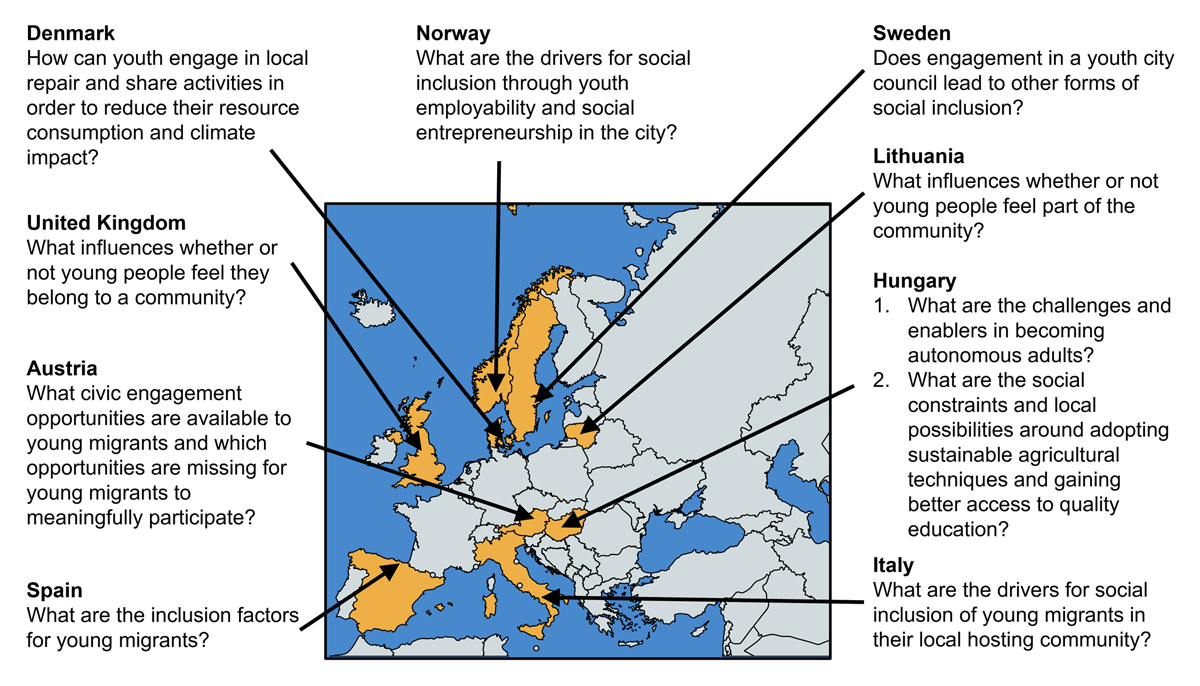
Figure 1
A geographic representation of the different case studies.
On a practical level, transitioning towards increased youth social inclusion and participation requires the establishment and facilitation of inclusive arenas where young people take part in dialogues/discussions about issues that concern them. One way to do this is through citizen social science with young people—youth citizen social science. However, there is still limited knowledge on how we can work with co-creative citizen social science with and for young people, and how to increase the diversity of young people participating in citizen social science (Healy 2021; Constant and Hughes 2023; Procentese et al. 2024). This applies beyond citizen social science and extends to citizen science (CS) more broadly, wherein youth from marginalised and Indigenous communities are largely excluded from participating in citizen science projects or are simply unaware that opportunities exist (Dawson 2019). There are many benefits of engaging youth outside of school settings in the local community, as well as many benefits to youth through possible learning outcomes from participation in citizen science projects (Ballard et al. 2017). One reason co-creation and co-design are rare in the literature is that they are resource intensive (Murray et al. 2022; Clement et al. 2023; West et al. 2023). And yet youth outcomes are so enhanced when they do engage in co-creation and co-design that we believe it is worth the effort.
Fostering youth participation for social inclusion
There are three rationales for increased youth participation: (1) rights-based legal principles, (2) efficiency and better services, and (3) individual or societal developmental benefits (Head 2011). Youth engagement in social activities and innovation work is one pathway to manifest citizenship and create social inclusion in practice, but young people also constitute an important social resource that can enable new knowledge and solutions to challenges regarding social inclusion. Moreover, youths from multicultural backgrounds also possess a transcultural competence that can be used as a major social and innovation resource. There is also evidence suggesting that youth civic participation promotes lived citizenship in the youth involved, whereby they see their role within wider civic society and are motivated to continue to engage in the future (Wilson et al. 2024).
Youth participation should be built on the assumption that they are competent citizens, rather than passive recipients of services (Checkoway 2011; Lúcio and I’Anson 2015). However, the realisation of youth participation can be challenging because, for example, governmental processes usually do not involve youth in matters affecting their own interests (Hart 1997).
Co-creation and co-authorship
Herein, we present a study of the co-creation of a webinar-based social arena for youth involved in the YouCount project. Two central research questions are: What are the elements that enable youth citizen scientists to communicate their citizen science research on social inclusion and how can teams design inclusive, co-creative, communicative practices with youth? Key milestones of youth engagement in YouCount are provided in Figure 2 to help situate the webinar in the broader timeline of the project. This webinar built on the YouCount webinar series held in 2021, where youth, practitioners, and stakeholders united to share experiences and build a community of interest (Göbel 2022). A key learning was that youth citizen scientists should be involved from the start. We aimed to address this concern beginning with the 2023 webinar, Stories from the YouCount Youth, and continuing with this article, both of which embody inclusive practice by sharing power in two ways: (1) through the webinar co-creation process and the webinar itself, and (2) by sharing experiences and perspectives through narrative outlines constructed from the youth citizen scientists’ contributions. Throughout this article, the process and outcomes of involving youth citizen scientists in all stages of the webinar, including event planning and facilitation, and the evaluation and dissemination of the results, are highlighted. Webinar co-creation contributed to the dissemination phase of the YouCount Project and to its wider impact.
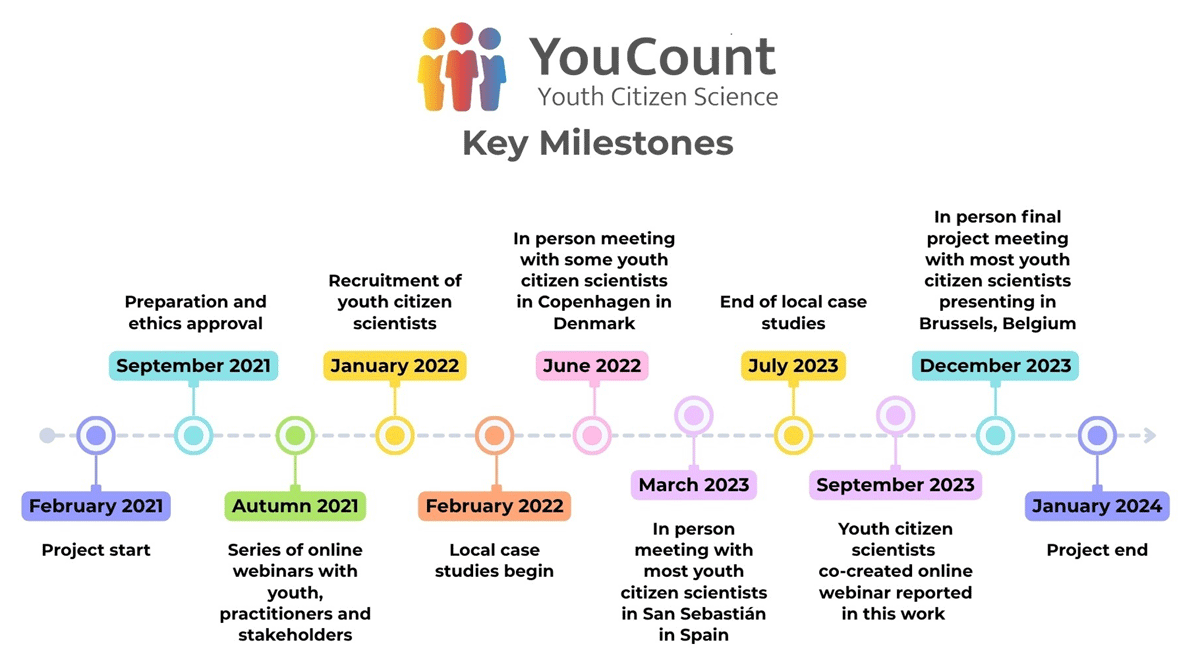
Figure 2
An overview of the key milestones for youth engagement in the YouCount project.
Three different groups are represented in the authorship of this manuscript, and all contributed in different ways to the design, delivery, and evaluation of the webinar: (1) the YouCount youth citizen scientists (which is the identity they chose for themselves) who co-created the webinar and shared their experiences within, (2) the case researchers who worked closely with the youth citizen scientists, and (3) the external facilitator, who was new to the project and led the webinar co-creation; the external illustrator, who visually recorded the meetings; and the organiser from the YouCount team, who supported the webinar delivery. However, the pronouns “we”/“our”/“us” are used in this article to directly reflect the contributions and ideas of the youth citizen scientists in two sections: (1) the webinar content that they created and (2) their reflections about the webinar and the YouCount project.
The contributions to the writing process have taken different forms. The external facilitator led the drafting of the document, with inputs from the case researchers and the organisers from the YouCount team who supported the webinar delivery. The external illustrator created the figures in the youth citizen scientist’s reflection section. Most of the youth citizen scientists did not directly write any sections because of barriers related to lack of funding to support their training and to pay for their writing time. Hence, their contributions to the reflections come from the ideas and viewpoints they shared in the webinar pre-meeting, the webinar, the post-webinar reflection meeting, and discussions with their case researchers. The writing in the reflections section remains as close to their phrasings as possible, and drafts of these sections were subsequently shared with them in translation for review before submitting this article, with their contributions included in the manuscript.
There are, however, specific contributions from some youth citizen scientists. The title of the paper comes from Evie Ball, from the UK, who used the term “combined voices” to refer to uniting the voices of youth from different countries and the case researchers. Yuri Autorino, Francesca Margherita De Falco, and Biagio Marano, from Italy, contributed to writing (in Italian) some parts of the methods and conclusions, which was subsequently translated back to English and slightly edited for clarity.
Case Study: How to Co-Create a Webinar with Youth Citizen Scientists
This section describes the process followed to co-create a webinar with youth citizen scientists. It involved three spaces of online interaction: the pre-webinar meeting, the webinar itself, and the post-webinar reflection. Figure 3 summarises who participated in each of these spaces; often, case researchers and youth citizen scientists also shared the same physical space.
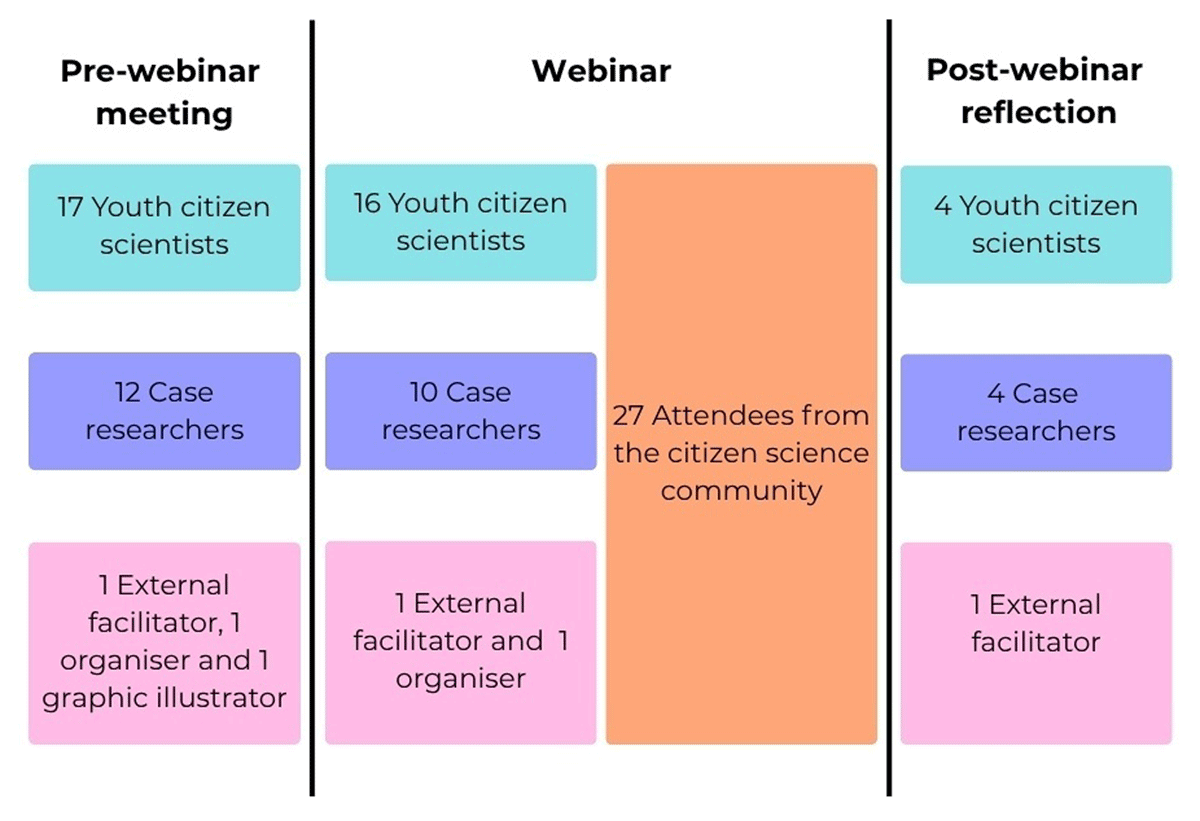
Figure 3
Participants in the spaces of online interaction.
Webinar design and preparation (Planning)
Youth citizen scientists were invited to participate in the webinar development via their local case researcher, and 8 of the 10 case studies chose to participate (Sweden and one of the two Hungary cases did not participate). Initial communication between the facilitator and the youth citizen scientists was mediated through the case researchers by emails. Emails were written in plain language, using tools like the Hemingway App to identify overly complex language (Hemingway Editor 2023). The external facilitator and some case researchers developed a few questions to provide initial prompts (Supplemental File 1: Table S1), that were used for discussion during the online pre-meeting (Figure 3). The youth citizen scientists were invited to respond to each question, sharing their thoughts with the wider group. Case researchers provided translation support as required but otherwise remained in the background. The graphic illustrator captured insights from three of these questions (PQ1, PQ2, and PQ4). In addition to the questions in Supplemental File 1: Table S1, the youth citizen scientists were also invited to share what they wanted to learn about in the webinar (which contributed to the development of questions in Supplemental File 2: Table S2) and how they thought the webinar should be evaluated. During the conversations, the facilitator wrote notes to be used to be used as part of the webinar and the post-meeting.
The webinar was developed and delivered in three key stages, with each group participating in different ways. The process of creating, delivering, and evaluating the webinar, together with the role each group played, is outlined in the following sections.
Webinar structure (facilitating)
The webinar was held on Thursday 29th September 2023 at 1730 CET, after being promoted through the YouCount team’s social networks online and on the YouCount website. It was recorded and shared on the YouCount website (YouCount Webinar 2023), and all 55 participants are outlined in Figure 3. “Participants” here refer to everyone present at the webinar, and attendees are those who attended but were not involved in the webinar.
The facilitator tried to create a safe space at the start of the webinar, reminding attendees to be respectful and that English was the minority native language in the group. From the discussions at the pre-meeting, three main questions, identified as the most interesting to provide insights on their local projects and work, were selected by the youth citizen scientists and the YouCount team (Supplemental File 2: Table S2). These questions (and associated prompts) were shared with all youth citizen scientists 10 days before the webinar to give them time to prepare. Each case could present in their preferred format (interview or solo/group presenting) and preferred language. One youth citizen scientist presented in Hungarian sign language whilst another youth citizen scientist translated to English, and another group presented combining Lithuanian and English with some translation support. They were allocated 10–15 minutes to present, depending on their needs, with a 3-minute break in the middle of the webinar. During this break, the visual captures were presented to centre the youth citizen scientists’ voices and to share the pre-meeting contributions of the youth citizen scientists who could not attend the webinar. After all the presentations, the youth citizen scientists answered questions from the audience. At the end of the webinar, the youth citizen scientist presenters and the webinar attendees were invited to complete a short evaluation (see the next section for more information).
Webinar structure (content)
To provide more context for the webinar content, short insights from each case presented in the pre-meeting webinar and the webinar are shared here, remaining true or very close to the original wording used. The pronouns “we”/”our”/”us” in this “Webinar structure (content)” section therefore refer to the youth citizen scientists from the respective countries.
Hungary
The most positive and enjoyable part for the Hungarian team was collecting, synthesising, and presenting our data. We sought to understand how inclusive our town in Szeged was from the perspective of people who are living with hearing loss and hearing impairment. Some of our team had negative experiences in their community, which we think might relate to the extent of hearing impairment, but it was good to collect this information, and we can share this information with others to improve things.
Denmark
Sustainability and creating youth-friendly local societies was the focus for the Danish case, where we developed the research but also independently supported the research process through running events and focus group interviews with our peers. Youths are very busy, so it is difficult for them to find time to engage, but the educational system might be an opportunity.
Austria
Reconnecting with old friends from our hometown was an unexpected benefit of the Austrian case, which aimed to analyse which opportunities young refugees and migrants have for participating in society. We had strong connections with our youth citizen scientists and case researchers and felt like we were all at the same level. It was, however, difficult to find a good time for all of us to meet, given the various commitments we were juggling.
Italy
In Italy, we shared our work as young undergraduate researchers working with communities in the Forcella neighbourhood, which has complex social issues that local nongovernmental organizations (NGOs) are trying to tackle. We acquired methodological skills in participatory action research, conducting interviews, creating reports, and analysing qualitative data. In addition, participation in the YouCount project offered the opportunity to gain initial experience in the world of research, allowing us to assess whether this was a career path of interest to us. This allowed us to start outlining our academic careers to continue in the world of research or to pursue certain areas of study. We also learned a lot about working with people from different cultures and working on our own prejudices. To address this, we co-developed a vocabulary of inclusion as a way for us to develop better relationships together. Our success relied on us learning about building social networks and different research tools, which in turn helped us grow as people.
Spain
In the Spanish case, we gathered ideas from immigrant young people, and our researchers organised an event with policymakers. We independently requested that journalists from the newspapers and radio were also invited to this event. We know that they play an important role in sharing information with society, and we wanted them to hear our stories. We feel that journalists don’t understand our problems and that they don’t share important information. Immigrant young people in Spain face multiple issues in renting and getting a job, and people are often very rude or impolite towards us. We want to improve this so the transition from being a minor under 18 to being an adult over 18 is less difficult. After our event, the policymakers and journalists were all surprised to learn this, and they said they would do their best to improve this in the future. We think that their perspectives about us changed for the better.
Norway
We worked on improving social inclusion through youth employability in Norway. This involved lots of training about the process of being a researcher, how to collect/organise/analyse data, and how to interview others. An important part of our work was deciding how to define meaningful work for youth, and we developed a criterion that we shared with politicians and other stakeholders.
United Kingdom
In the UK, the group was not created through a pre-existing social group, which was therefore an opportunity for us to meet new people. We collectively explored how people felt socially included in Preston, which has specific issues with disconnection, exclusion, and a lack of opportunities for youth to interact. We conducted research in colleges, schools, the university, and areas in our city. The three main problems we came across were (1) dialogue between young people and the older generations, (2) distribution of amenities, and (3) safety. We engaged with multiple stakeholders to find solutions to the issues we identified, but we also found comfort in sharing our stories and realising that we were not alone.
Lithuania
For Lithuania, we were exploring inclusive spaces for young people in the Panevėžys district. We felt this project was a very good example of how to connect with youth as we felt very included throughout the process. We specifically use the word “team” to refer to our group of youth citizen scientists and case researchers because we feel so comfortable working together. We used the app to record the places that are inclusive in our district, and through this, we learned how to be more confident sharing our ideas with other people.
Webinar evaluation
Quantitative
A short evaluation was created based on questions suggested by the youth citizen scientists, case researchers, and the YouCount team, supported by literature where possible (see Supplemental File 3: Table S3). A question format was chosen to facilitate quick and immediate responses. All attendees and youth citizen scientists were invited to respond to the evaluation, but not everyone did. In total, 6 youth citizen scientists and 14 attendees from the citizen science community contributed their insights.
Qualitative—Webinar reflection
The youth citizen scientists shared reflections with their local case researchers, who in turn were invited to share by email this input and their own reflections on the webinar with the facilitator and organisers. The youth citizen scientists and local case researchers were also invited to a follow up meeting 11 days after the webinar (Figure 3). The questions in Supplemental File 4: Table S4 were discussed by the group, and the results from the webinar evaluation were shared and discussed.
Evaluation
The quantitative section was co-created with youth citizen scientists. A qualitative evaluation usually involves interviewing attendees and presenting evidence through quotations; the co-creative approach used in this work involved youth citizen scientists as co-authors, so the quantitative material appears here as reflections. This approach overlaps with Lawrence-Lightfoot’s portraiture methodology (1997), which combines empirical description with aesthetic expression to capture the dimensionality of human experience in social and cultural contexts.
Quantitative descriptions
The quantitative evaluation results from the webinar are shared in Figure 4, and most youth citizen scientists and attendees reported excellent levels of satisfaction with the webinar, stating that they learned something from it. Only two attendees selected a 2 in the Likert scale in one of the questions, implying that the webinar would not change their approach to working with youth. Three attendees were neutral in this question, while four were neutral in the question regarding their eagerness to work with youth.
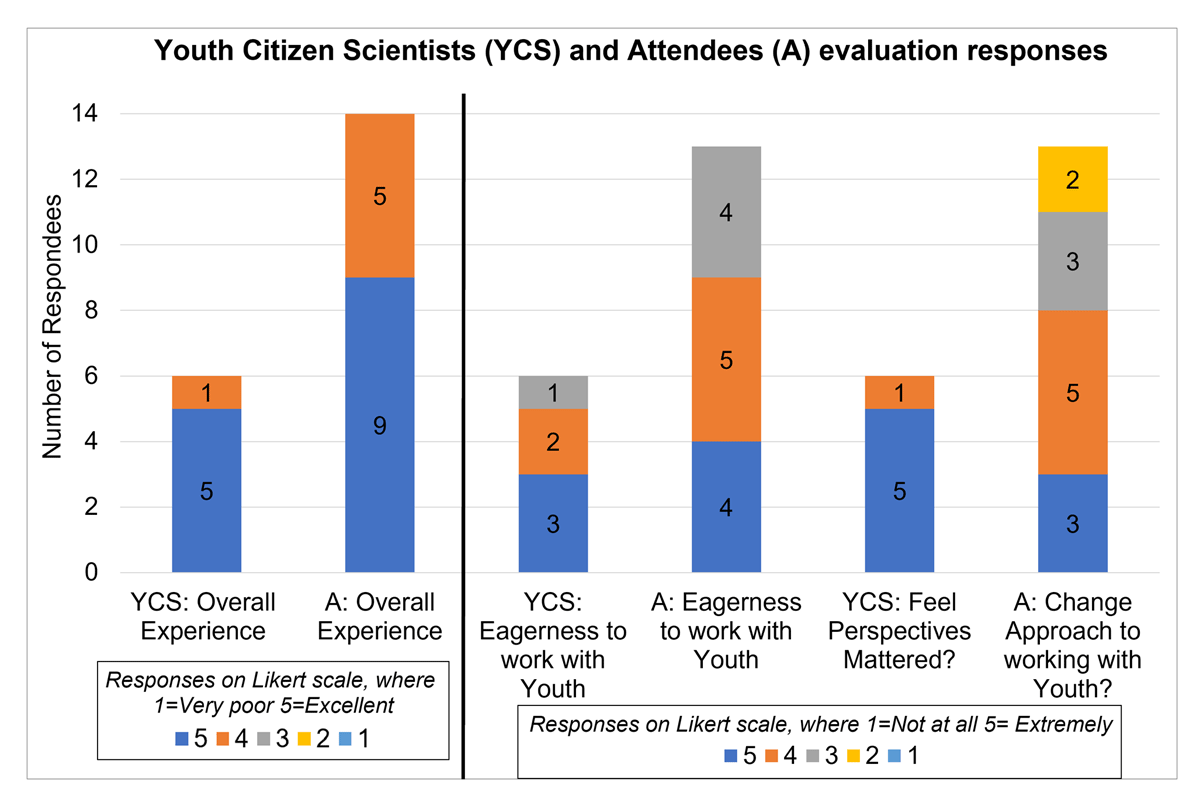
Figure 4
Youth citizen scientists and attendee webinar evaluation responses using Likert scales.
Qualitative reflections
The broad scope of the webinar meant that both the youth citizen scientists and case researchers learned valuable lessons about the webinar format as an arena for social participation, dialogical practices, and engagement in science and dissemination activities, but also, crucially, about inclusive youth citizen social science through the YouCount project. These lessons are shared here through reflections from the youth citizen scientists who are co-authors of this paper. The material presented comes from a combination of the pre-meeting, the webinar, the reflection meeting, and email correspondence. The case researcher reflections are shared in the Supplemental File 5: Case Researcher Reflections. However, this feedback comes from many different individuals and that feedback shared by every person was valued equally, even in cases where there were different opinions.
The “Youth Citizen Scientists’ Reflections” section intentionally has a different tone and style of writing to the rest of the paper. It was originally written in English and roughly translated using the deepl online translator to Danish, German, Hungarian, Italian, Lithuanian, Norwegian Bokmål, and Spanish. This was shared with the youth citizen scientists (with the proviso that the translations would not be perfect), and they were given time to read, consider, and share perspectives in whatever language they liked. These contributions were subsequently incorporated into the “Youth Citizen Scientists Reflections” section. The section therefore uses the pronouns “we”/”our”/”us” to reflect the collective ownership of and engagement with the ideas that have been shared in this work by the youth citizen scientists. Their work is shared in their words and in language they can access and understand. The case researchers’ reflections (shared in the Supplemental File 5: Case Researcher Reflections) also use the pronouns “we”/”our”/”us,” highlighting how in this work they seek to share power with the youth citizen scientists and to intentionally position themselves at the same level.
Youth citizen scientists’ reflections
Throughout the “Youth Citizen Scientists’ Reflections” section, the pronouns “we”/”our”/”us” are used to represent the experiences and perspectives of the 21 youth citizen scientist co-authors in this work.
Webinar
A key reflection shared by the youth citizen scientists who participated in the webinar or who planned the webinar was the joy and pleasure we got from engaging with our peers and learning about their stories and work (see Figure 5). We really enjoyed coming together and getting to know people in other countries. This was particularly valuable for us as a way of building networks and giving us new perspectives on how others are coping with the challenges of the YouCount project. These networks and perspectives supported us, encouraging us to continue and facilitating meaningful discussion to assess whether we were all progressing in line with the expectations of the project. We now feel like we have lots of new friends across Europe that we could hang out with when we visit new cities. We also enjoyed all the different accents and ways of communication. For some, this was our first time to connect with other youth citizen scientists on the YouCount project or to engage in public speaking. However, we were all very supportive and encouraging towards each other. We felt the webinar was a safe place for us to be ourselves. We realised that no matter the language, we could find a way to communicate. However, we did value the chance to be able to speak our preferred language or to get translation support. We also valued the chance to share our expertise with stakeholders, and we felt like our opinions mattered and that our audience wanted to listen to our stories.
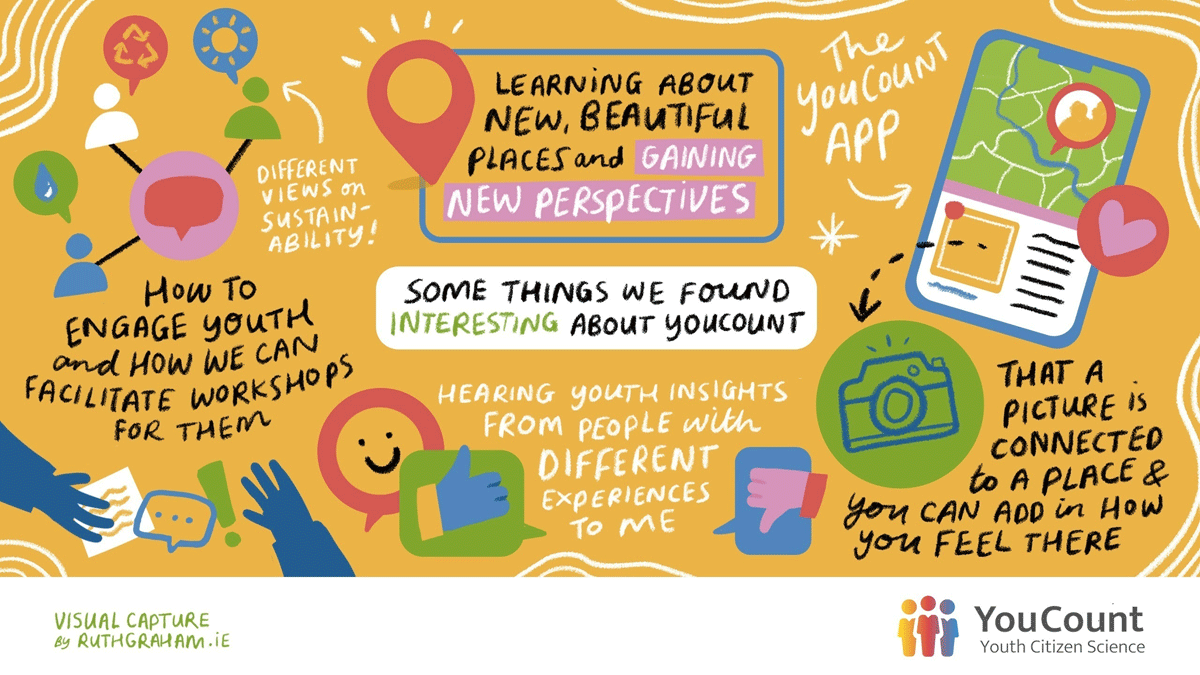
Figure 5
Visual capture from the pre-meeting of what the youth citizen scientists found interesting about YouCount.
This webinar was a unique way for us to share our combined voices about YouCount, but it also highlighted many areas that need to be addressed for our work and experiences to be equitably valued. We feel that an informal environment should be created so that we can have conversations rather than lectures, as this is more comfortable for us. It is essential to build in flexibility for us and our lives, especially because we are juggling work, school, and other commitments around our research work. Timing is therefore very important to us, both in terms of punctuality but also in terms of managing our expectations and our planning. This extends to the timing of breaks and to the pace of events. We are absorbing a lot of information very quickly and need time to process and think about this. Using the webinar as one example, we did have a short break, but this was too short given the volume of information all the presenters were sharing. We would also have liked to have had graphic illustration during the webinar talks, to provide different ways for people to understand or engage with the presentations.
In considering the feedback from the webinar, we think that more people should be excited to work with young people! We think that the youth perspective needs to be included more, and we feel really pleased to see that people valued our combined voice. It made us feel that the audience actually listened, and we are happy that they will take that back to change the way they work with young researchers.
Project
Through the webinar, we shared our work on our cases for the YouCount project, as well as our ideas and perspectives about the experience of participating in YouCount. Social inclusion was a concept that was new to many of us, but once we understood what it was, we had a lot to share and many ideas to explore. Each country and case were investigating different research questions, but we see many more social inclusion issues at local levels in our own communities. Indeed, for some of us, YouCount was an opportunity to take direct action on issues that we had identified and/or that affected us in our own localities, such as representation of immigrants or lack of amenities for youth. It was also a safe space for us to share our stories and perspectives on our local community, which we were then able to work on together to improve.
The project was a big learning opportunity for many of us, with new experiences like working in groups, public speaking, meeting people from other countries, and the opportunity to travel (see Figure 6 for some examples). This was particularly valuable for those who could attend our event in Spain. It was a very productive experience because we got to meet other like-minded people. The international nature of YouCount was, therefore, a huge draw for us, although we also valued the connection with local youth. Providing us with space to share our ideas and be heard meant that many of us grew in confidence. We also had the opportunity to practise our English, learn about other cultures, and learn more about where we live.
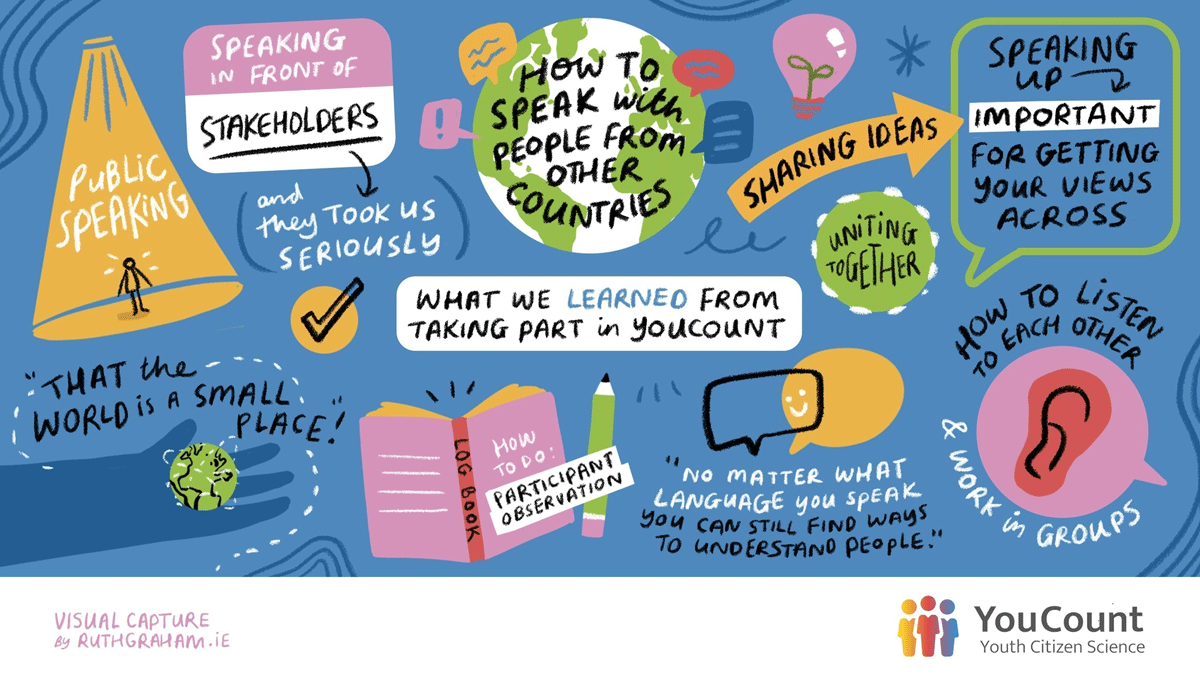
Figure 6
Visual capture from the pre-meeting of what the youth citizen scientists learned from taking part in YouCount.
The act of being a citizen scientist gave us a role and a purpose, which was a great way for us to share our voices. We also felt inspired by the process of engaging in research with our case researchers (Figure 7). We really value the relationships we established with the case researchers, as this enabled us to be heard more deeply, to share different points of view, and to feel as if we are at the same level. This relied on openness among us all. Simultaneously, working in teams was a common highlight for us, as it provided a sense of community and support, as well as being an opportunity to meet new people in our local area.
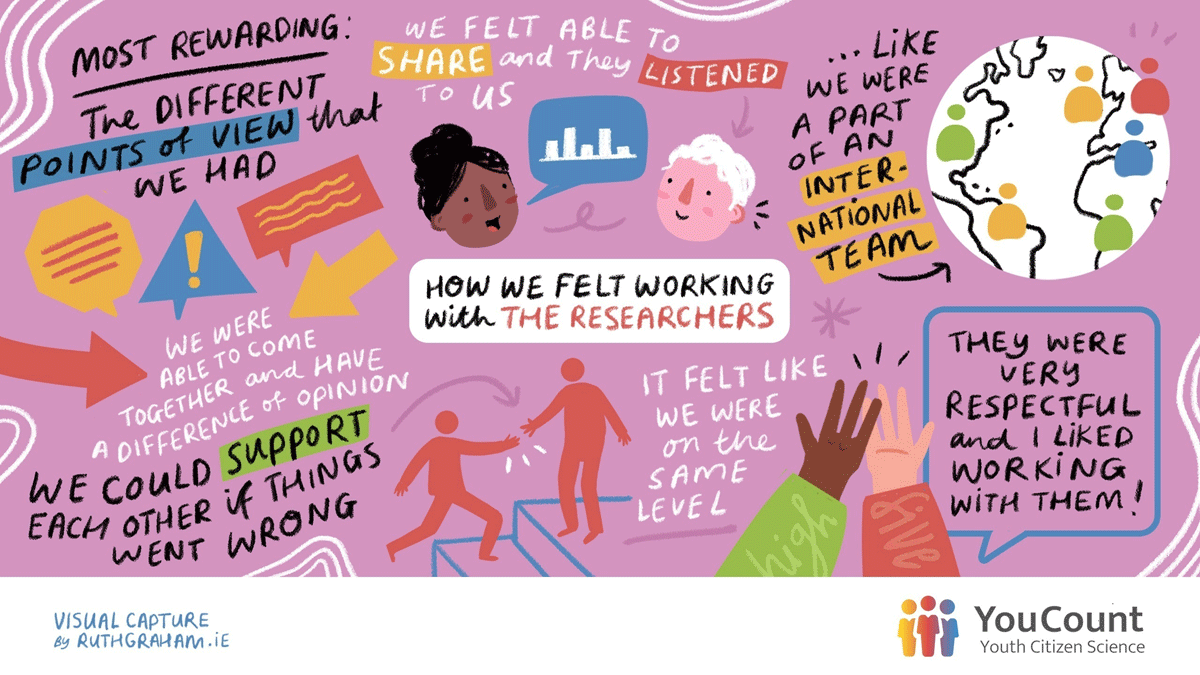
Figure 7
Visual capture from the pre-meeting of how the youth citizen scientists felt working with the researchers.
Challenges and Lessons Learned
The intentional and explicit use of a co-design methodology to communicate the work of youth citizen scientists in a social arena created rich learning opportunities and challenges as to how to equitably do citizen science with young people. Simple examples include the fact that YouCount’s community setting in comparison to school was unique, and required a longer timeframe to overcome the webinar team’s trust-related tensions, common in the field of citizen science (Skarlatidou et al. 2024), which is essential when trying to create safe and comfortable settings for youth (online or in person) (Jennings et al. 2006). In this case, the youth citizen scientists and the case researchers already knew each other well, so the activities around the webinar built directly on a long-term collaboration already underway. However, an unknown (to the youth citizen scientists and many case researchers) facilitator meant new relationships had to be established. During the webinar reflection, case researchers shared that they perceived an important benefit to using an external facilitator who was new to the project, specifically because they centred the youth citizen scientists rather than the case researchers. This was an important power shift, which is an essential element in equitable work with youth (Jennings et al. 2006), and this webinar and this article have tried to realise this.
Inclusive practice in youth citizen social science and in social inclusion was a recurring question throughout the process, with different cultural contexts being an important example of this. Among all presenters, there were more than 10 different native languages and very different lived experiences. In the post-webinar discussion, youth citizen scientists and case researchers shared how personal touches such as displaying “hello” in everyone’s languages on the welcome slide or saying “thank you” in the language of the presenter were small points that resonated very deeply because they were a clear acknowledgement of and welcome to the multicultural backgrounds of the youth citizen scientists (Yusupova et al. 2015). Ensuring various voices were represented by multiple modalities, such as through figures, writing, and other visual cues, also supported youth citizen scientists’ engagement in the project. This work was also enabled by explicitly building in time and space for social interactions between and feedback from the youth citizen scientists, which are known motivators for citizen science participation (Takase et al. 2019). The webinar also acted as a connector between the youth citizen scientists and between the different roles in the project.
The webinar provided added value to additional research streams within the YouCount project. This includes supporting the outcome evaluation and impact assessment approach, and providing insights on the experiences of hands-on youth citizen social science (see Lorenz et al. 2023). The latter identified youth participation in the macro-level communication space (a broad, societal, or global arena) as unexpected, but the enthusiasm, motivation, and knowledge shared in the webinar directly demonstrates how centring the youth citizen scientists and providing them with a safe place to share their knowledge and experiences allowed for their rich contributions to the broader project.
Limitations
The youth citizen scientists, case researchers, and organisation team believe that the webinar was a success, which is supported by the evaluation data. However, the imperfect nature of the webinar has also been discussed amongst the team members. In the post-webinar reflection with the youth citizen scientists, it was acknowledged that the attendees who are unlikely to change their eagerness or approach to working with youth after the webinar are a clear indicator of this, and it was suggested that one reason for the lack of change might be that much of the audience already worked with youth. Another clear example of webinar limitations is the evaluation process. Even though there were multiple formal feedback loops, the most grounded feedback came through local conversations between the youth citizen scientists and their case researchers. Timing for this project and for the webinar was also particularly complicated. Because YouCount was a community-focused project, it meant that many of the youth citizen scientists had part time jobs or commitments (school or social clubs) around the webinar and the pre-/post-webinar meetings. Late evening was therefore usually the most consensual time for meetings, but it meant that many of the youth citizen scientists and indeed the case researchers and attendees were tired after a long day. However, the community-centeredness of the YouCount project meant youth citizen scientists could not always leave school or work early to participate. Additionally, the webinar team was working across three time zones (BST/CET/EEST) and with a wide age gap (13–29 years old). The intensity of the webinar (all stories shared within 1.5 hours) was also an issue, as it required a large amount of focus from the youth citizen scientists and left limited time for discussion.
Connecting people across borders is non-trivial, especially when interactions are mostly online, and technological issues are a challenge regardless of who the presenters are. Many of the case researchers were acting as moderators, using the preferred communication channels of the youth citizen scientists (e.g., Messenger, WhatsApp etc.) to transfer information from the webinar facilitator’s emails. The case researchers therefore acted as intermediaries to enable joint voices. However, sometimes the information was addressed to the case researchers rather than the youth citizen scientists, so the final messages were not well written for the final youth citizen scientist audience. In cases of direct communication with the youth citizen scientists, tools like the Hemingway App were used as mentioned before, but it was easy to forget how information was moving and being shared between all parties.
Conclusions
Youth must be included in systems, structures, and processes seeking to increase social inclusion. Through this webinar and article, good practices that enable active youth participation, such as using co-creation and creating space for youth to meaningfully contribute, have been identified. The YouCount project has in turn substantially benefited from collaboration between the youth citizen scientists and the case researchers, which is evident through enhanced research approaches, the amplification of inclusive practices, and youth-centered recommendations. The webinar and this article are both products of this collaboration that relied on these cross-border connections. However, the webinar and project successes required significant time investment from all parties to build relationships and nurture ideas before even beginning to focus on the common goal of improving social inclusion.
For all youth citizen scientists, the opportunity to be involved in the project proved to be a learning experience, contributing significantly to their personal and academic growth. This has fostered a greater understanding and acceptance of scientific opinions on crucial issues (for example, opportunities for migrants). The youth citizen scientists felt they contributed to the knowledge of the scientific group by making the boundaries between different and distant contexts, and between citizens and scientists, more flexible (through, for example, running workshops for peers). Enabling the youth citizen scientists to actively participate in scientific research also helped them overcome misunderstandings of knowledge processes and promote processes of social participation as evidenced in the webinar content. In this way, the youth citizen scientists have developed skills in analysing contexts, reducing distances between citizens and scientists, and increasing acceptance of scientific and social dynamics.
The youth citizen scientists did not necessarily have the same intentions as the case researchers, but they had their own messages and ideas. They wanted the opportunity for others to learn about their stories and their expertise. Finding ways for their voices and ideas to be equitably included and acknowledged in social arenas like the webinar and this journal (such as through the Youth Citizen Scientists’ Reflections section) is, therefore, a fundamental act of justice and ethics. This was possible only through involving youth citizen scientists from the start in co-creative processes and by forming meaningful collaborative relationships. For the citizen science community, a key discussion arising from this work is how to disseminate results and how to (consensually) increase the visibility and activity of citizen scientists. Finally, the dimensionality of and potential for youth contributions to citizen science, citizen social science, and the pursuit of social inclusion should never be underestimated.
Supplementary Files
Data Accessibility Statement
The data are not publicly available in a classical sense. However, as the subjects of the evaluation are the co-authors, this paper is our way of making the data openly available.
Ethics and Consent
All necessary and possible formal clearance according to the EU and national requirements were obtained, including national regulations concerning minors in research and informed consent. Participation in the YouCount project and the webinar activities was voluntary. Where possible, the work reported here was covered by local ethics by each partner in their respective countries and these are detailed in the table. Further details about the recruitment and consent procedures are available in Pučėtaitė and Norvoll (2021).
Ethics approval and details for each country.
| COUNTRY | ETHICS APPROVAL ORGANISATION | REFERENCE NUMBER |
|---|---|---|
| Austria | Institutional Review Board of the Department of Communication of the University of Vienna | 20220504_020 |
| Denmark | * | |
| Hungary | * | |
| Italy | Ethical Committee of Psychological Research of the Department of Humanities of the University of Naples Federico II | 1/2022 |
| Lithuania | Kaunas University of Technology Research Ethics Commission | M6-2022-01 and M6-2022-20 |
| Norway | * | |
| Spain | University of Deusto Research Ethics Committee | ETK-45/23-24 |
| United Kingdom | University of Central Lancashire Research Ethics Committee | BAHSS2 0274 |
[i] * Denmark, Hungary, and Norway did not have formal national requirements or a national or local institution for ethics approval of social science research during the timeframe of the YouCount project. However, they complied with key ethics requirements such as data protection according to GDPR, including voluntariness and informed consent from adults and from minors and their parents.
Acknowledgements
We thank Rasmus Durban Jahr at Oslo Met University for his technical support of the webinar. We are grateful for the support of members of the European Citizen Science Association (‘ECSA’) and Living Knowledge Network Empowerment, Inclusiveness and Equity Working Group. We acknowledge the ECSA Projects, Data, Tools and Technology Working Group for their kind financial support of this article. We also thank Lilija Pleškienė and Dovilė Balinš from Raguva Gymnasium for their help. The reviewers, editors and our proofreader Katherine Jewell are thanked for their careful attention to and feedback on this article.
Author Contributions
CM led the conception of the work, the webinar facilitation and the writing of the paper. YA, EvB, SBL, JC, AD, FMDF, AD, AAD, MK, JK, EML, KM, BiM, NM, EM, RM, ZN, HN, EER, AT, and AV co-designed the webinar structure at the pre-meeting, presented at the webinar, shared insights in the reflection meeting and/or contributed to this article. EgB, SF, FG, CG, GH, UL, BaM, RN, AP, FP, JR, MS, MT, SW, and CMSW collaborated with the youth citizen scientists to prepare for the webinar and meetings, shared reflection insights, and/or contributed to the writing and review of the paper. RG did the graphic illustration for the pre-meeting. RN led on project administration and supervision.