Introduction
One of the main strategies to promote the conservation of biodiversity, adopted worldwide, is the creation of protected areas (PAs) (McDonald and Boucher 2011). Brazil is the fifth largest country in the world, the first among megadiverse countries (Mittermeier et al. 2005), it accounts for 15–20% of the world’s biodiversity (CDB 2022), and houses one of the largest PA systems in the world (Roque et al. 2018). Instituto Chico Mendes de Conservação da Biodiversidade (ICMBio) is the government agency responsible for managing Brazil’s 334 federal protected areas, which cover 10% of Brazilian continental and 26% of marine territories. These PAs include all six protected area management categories defined by the International Union for Conservation of Nature (IUCN; Dudley, Shadie, and Stolton 2013), with a prevalence of national parks and communal reserves where sustainable use of natural resources by traditional peoples is one of the expected outcomes.
Many studies have shown the positive effects of PAs on the conservation of species and landscapes (Blanco et al. 2020). Protected areas are effective not only in reducing the extinction of species (Butchart et al. 2012) and the loss of habitats (Jusys 2016; Shah et al. 2021), but also in increasing carbon storage (Walker et al. 2020). In relation to the United Nations (UN) Sustainable Development Goals (SDGs), protected areas contribute not only to the achievement of SDGs 14 and 15 (Life below Water and Life on Land, respectively), which are directly related to the Convention on Biological Diversity’s (CBD) Aichi Biodiversity Targets (www.cbd.int/sp/targets/), but these areas may contribute to human welfare and wellbeing, including poverty alleviation, food and water security, health, disaster risk reduction, sustainable cities, and climate change strategies, and may even play a role in sustaining peaceful societies and mitigating the risks of conflicts (Dudley et al. 2017).
However, the establishment of protected areas per se does not guarantee the conservation of biodiversity (Bruner et al. 2001), and not all PAs can successfully reduce human pressure on biodiversity (Geldmann et al. 2019) or guarantee positive social outcomes. Several factors, including PA design and management, habitat specificities, and sociopolitical context affect their effectiveness (Barnes et al. 2017; Shah et al. 2021). Biodiversity monitoring programs are fundamental to keep track of the state of target ecosystems, species, or natural processes and to provide evidence-based information on the response of the targets to environmental changes and management actions (Lindenmayer and Likens, 2009; Lovett et al. 2007). Protected areas suffer constant pressure from competing interests in land use, and when not properly funded and supported by society, they can be subject to downsizing, degazettement, or reclassification (Bernard, Penna, and Araújo 2014).
Citizen involvement in knowledge production, broadly referred to as citizen science, happens in a scale of participation, from contributory projects, where the public primarily contributes data, to community-based, or participatory, action research, in which scientists and the general public contribute to produce knowledge that could solve local problems (Strasser et al. 2019; Thiollent 2011). Likewise, citizen participation in monitoring of protected areas, when designed from a participatory approach, involves more than the mere collection and analysis of data, and may contribute to strengthening the relationship between society and nature, and between society and the management of protected areas (Danielsen et al. 2010; Constantino et al. 2019), ultimately addressing many SDGs (Fraisl et al. 2020).
In this case study, we present ICMBio’s Brazilian Biodiversity Monitoring Program (Programa Nacional de Monitoramento da Biodiversidade do ICMBio), henceforth referred to as Monitora Program. We aim to 1) demonstrate the key aspects of the Program that have increased participation, 2) show how the Program has impacted management decisions and instruments, and 3) exemplify how it can contribute to the achievement of SDG goals and targets.
Description of the Monitora Program
The Monitora Program is an ongoing, long-term, large-scale government program aimed at monitoring the state of biodiversity and associated ecosystem services, carried out in PAs managed by ICMBio with support from several partners. The objectives of the program are evaluation of the effectiveness of the PA system, contribution to the planning and management of PAs, endangered species protection, and sustainable management of fauna and flora (Brasil/ICMBio 2017, 2022). It was developed through a long process that started in 2010, involving hundreds of institutions, including researchers, protected area managers, and users and beneficiaries of PAs, such as traditional peoples (Monitora 2018a; Souza et al. 2019).
In its development, the integration and complementarity with other monitoring programs were actively sought, from remote sensing to field studies at different scales such as the National Forest Inventory (IFN), the Brazilian Long Term Ecological Research Program (PELD), and the Program for Biodiversity Research (PPBio) (Monitora 2018a; Roque et al. 2018; Bacellar et al. 2020). The program is still growing, as some prior monitoring initiatives carried out for decades by ICMBio and partner institutions, such as the monitoring of amazonian turtles, sea turtles, sea birds, and coral reefs, gradually join the Monitora Program (e.g., Ribeiro, Masuda, and Miyashita, 2019; Dantas et al. 2022).
To encompass the main Brazilian ecosystems, the Monitora Program is divided into three subprograms: Terrestrial, Freshwater, and Marine, each one subdivided into components that share standard protocols (Figure 1). Threatened, invasive, and harvested species represent transversal categories of species monitored in all subprograms.
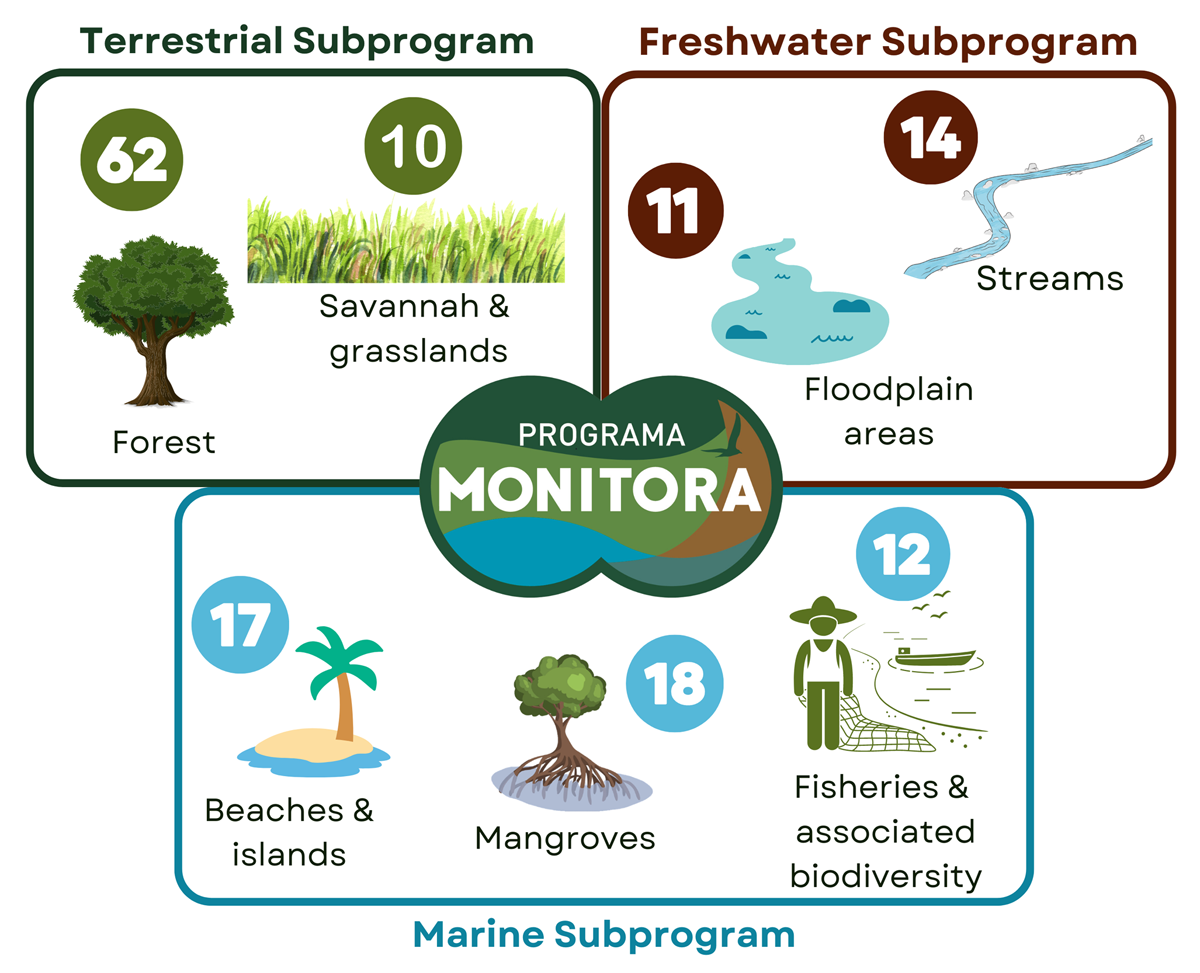
Figure 1
Number of Brazilian federal protected areas participating in each component of Monitora’s subprograms (green, brown and blue circles) as of 2022. Some PAs contribute to more than one component, so cross-component totals do not correspond to the number of involved PAs.
The Monitora Program has a modular structure, which allows gradual implementation, with increasing complexity in protocols and sampling design. In the first level of complexity, the minimum effort in any given protected area is the periodic sampling of mandatory monitoring targets. Protocols and sampling designs are strict, yet simple and low-cost, to allow replication in space, continuity over time, and participation of people with any level of education, including illiterate persons that may have robust local ecological knowledge (see supporting material in https://www.gov.br/icmbio/pt-br/assuntos/monitoramento). The main goal here is to establish baselines and temporal series to keep track of the effectiveness of protected areas individually and of the Brazilian System of PAs as a whole. This level of monitoring may be classified as extensive monitoring, as it favors spatial coverage over effort per site, generating information about trends in species abundance and distribution (Proença et al. 2017).
More complex, optional sampling protocols for the same or new monitoring targets can be added to each PA’s monitoring scheme, according to local context, representing the second level of complexity of the program. This level can be considered intensive, question-driven monitoring focused on adaptive management, as it requires intense sampling effort, and the analyses allow hypotheses tests, mostly related to natural resource harvesting or other types of direct human impact (Lindenmayer and Likens 2010; Proença et al. 2017). Here, protocols can be specific for individual PA needs, in which case they are built in collaboration with local communities. Specific questions may also be answered by the spatial replication of the basic protocols encompassing comparisons between areas under different degrees of pressure.
The first pilot data collections occurred in 2014 in forest habitats. Currently, 113 of the 334 (34%) federal protected areas managed by ICMBio participate in the Monitora Program, most of them in the Amazonia biome (Figure 2). There are currently 18 monitoring targets (Table 1). Some targets are related to resource use, like subsistence fisheries and Brazilian nut harvesting. All protocols are informative about ecosystem health. As the program grows, by incorporation of previous long-term monitoring initiatives, new monitoring targets and sites will be added.
Table 1
The Monitora Program’s targets divided by subprogram and component.
| SUBPROGRAM | COMPONENT | MONITORING TARGETS |
|---|---|---|
| Terrestrial | Forest | Woody plants |
| Butterflies | ||
| Mammals | ||
| Birds | ||
| Amazonian nut | ||
| Subsistence hunting | ||
| Savannah and grasslands | Vegetation | |
| Freshwater | Floodplain areas | Freshwater fisheries |
| Arapaima fish | ||
| Amazonian turtles | ||
| Streams | Freshwater fish | |
| Dragon flies | ||
| Marine | Beaches and islands | Marine birds |
| Shorebirds | ||
| Marine turtles | ||
| Mangroves | Mangrove vegetation | |
| Crabs | ||
| Fisheries and bycatch | Marine fisheries (fish, crustaceans, mollusks) |

Figure 2
Location of federal protected areas (grey areas) and those participating of Monitora Program in 2022 (orange dots).
Social Participation in the Monitora Program
Encouraging social participation is one of the Monitora Program’s guiding principles, especially in local communities who depend upon natural resources within PAs. The utmost aim in the Monitora Program is to stimulate citizen participation in management decisions at different scales, from local resource-harvesting quotas to manifestations in authorization processes of large enterprises (Souza et al. 2019; Ribeiro et al. 2021). To reach this goal, the Monitora Program was developed as a participatory project. Participatory processes are not built overnight and are not restricted to a few steps; instead, they require solid relationships of trust and safe spaces for information empowerment by different actors (Tófoli et al 2019a). In a culturally and socially diverse and unequal country, citizen science must respect and observe different worldviews, expectations, and needs, as well as contrasting degrees of formal education, and diversity in local ecological knowledge. Social participation in the Monitora Program occurs in various stages, such as planning, data collection and analysis, interpretation, and discussion of results, presented in Figure 3. (Monitora 2018a; Souza et al. 2019; Ribeiro et al. 2021).
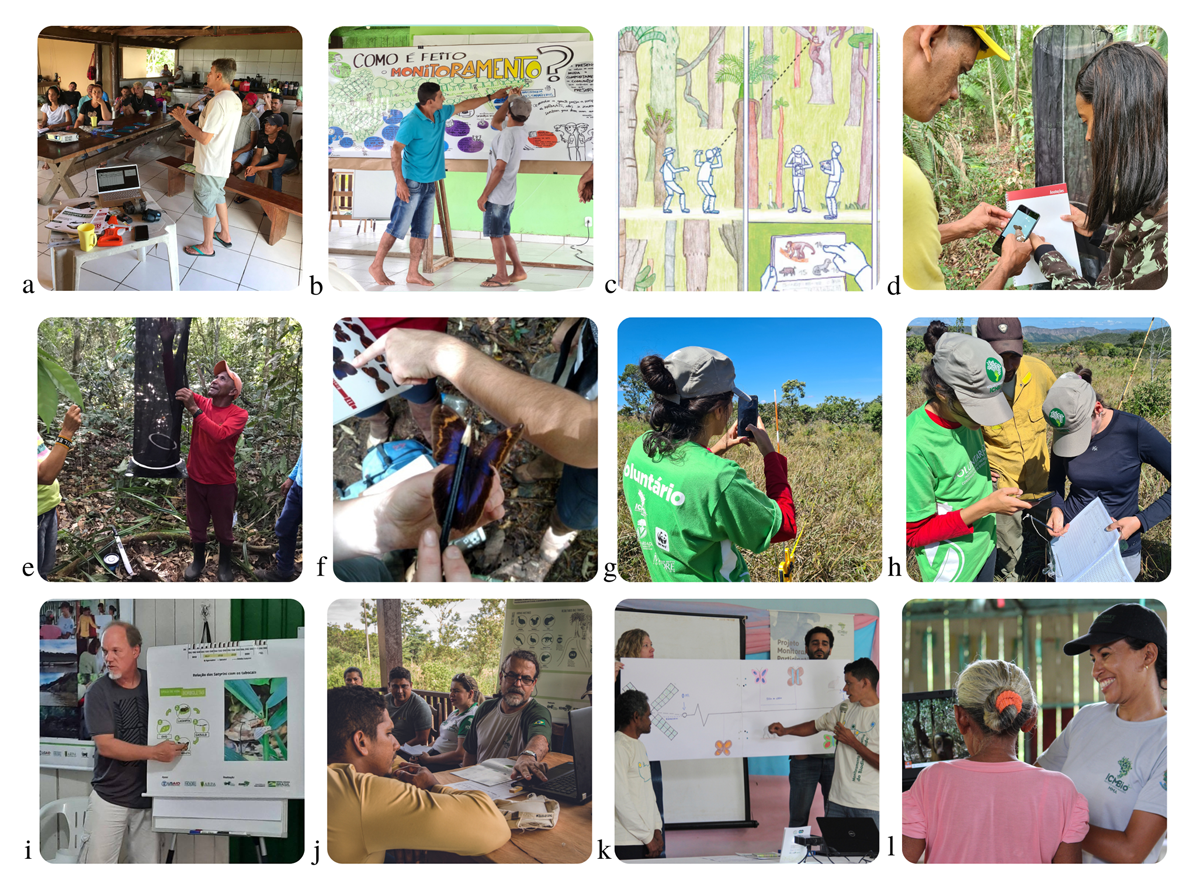
Figure 3
Social participation in various stages of the Monitora Program: (a–b) planning events, (c) example of illustration-only field guide, (d–h) in situ data collection, and (i–l) presentation and discussion of results in some Encontro dos Saberes. Photos: Onildo Marini-Filho (a, b, e, i), Danilo Correa (d, g, h), Sara Ghazale (f), Bruno Bimbato (j), Paulo Bonavigo (k), Pollyana de Lemos (l).
Program design
Program design occurred in stages, one subprogram or monitoring target at a time, including question identification, selection of targets to be monitored, and definition of sampling design and protocols (Figure 3a,b). Numerous local and national planning events were held, involving more than 1,500 people and 120 institutions. Participants ranged from PA managers, scientists from universities and research institutions, and NGO technicians to representatives of local communities and associations. Local meetings were more diverse and welcomed any interested individuals or organizations.
Particularly in the Amazon region, the Monitora Program developed monitoring projects designed to fit local contexts, specific to a single PA or a group, inspired by the Action Research method (Thiollent 2011). The monitoring targets in these cases are called “complementary targets”. The questions to be answered were defined collectively between local communities, PA managers, and scientists, who suggested appropriate sampling designs to achieve the goals (Souza et al. 2019). In Amazonia, sixteen PAs are part of this initiative and six protocols have been developed to monitor natural resources used by those in local communities such as the Amazonian-nut, fish, and animals hunted for subsistence (Tófoli et al. 2019b; Cronemberger et al. 2023). This approach is also being used in some Marine PAs (Monitora 2022).
Training and data collection
ICMBio and partners are dedicated to developing training courses and materials, adequate to each different audience, from technical materials that discuss data analysis to illustration-only field guides focused on local biodiversity monitors (Figure 3c) (Santos et al. 2015).
Between 2013 and 2022, more than 2,800 people, among local communities and PA managers, participated in about 100 local- or national-scale training and capacity-building events. As the Monitora Program grows, training events, meetings, and discussion forums throughout the country become common practice. In the first semester of 2022, the Marine subprogram alone promoted three training courses and two planning meetings, which gathered 222 participants from 30 federal PAs, 3 state PAs, and 25 partner institutions.
After training, monitoring data are collected in the field by local monitors, following specific protocols for each target (Figure 3d–h). Social participation in data collection may happen as voluntary work; in community-based arrangements where those involved in harvesting natural resources collect monitoring data; or even by hiring local residents as data collectors by short-term contracts. Voluntary participation in data collection has proved to be of particular interest to university students seeking field experience. Irrespective of the form, citizen involvement in the field sampling has increased manifold since the program’s inception in 2014, as can be seen in the implementation of the protocol for butterfly monitoring (Figure 4).
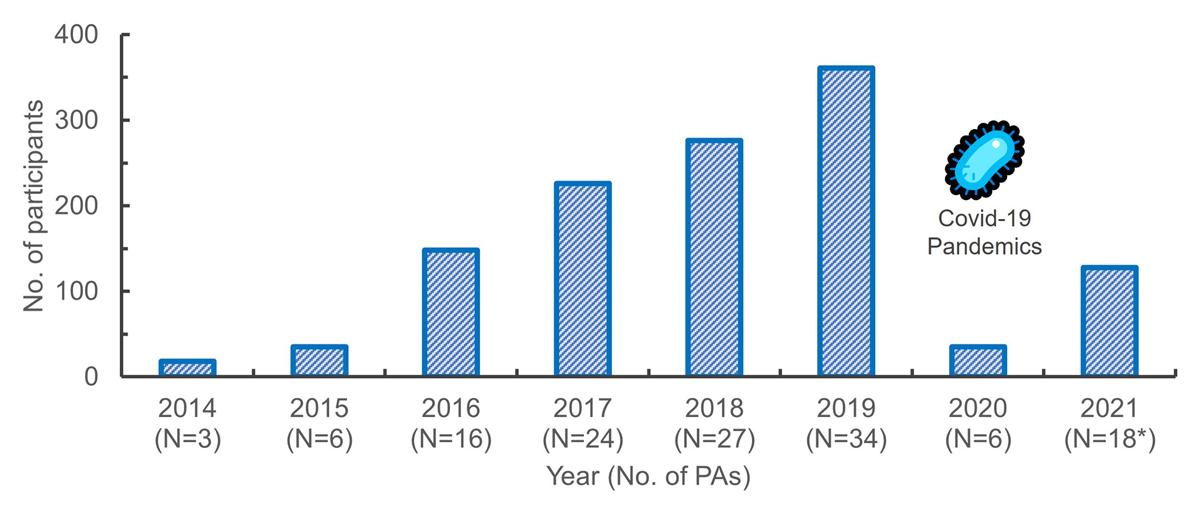
Figure 4
Evolution of social participation in butterfly data collection (part of the Terrestrial subprogram) as the number of involved protected areas (PAs) grew. The Covid-19 pandemic affected data collection in 2020 and 2021 (*partial results).
Data analysis
Collected data are consolidated, validated, analyzed, and openly made available, following the program’s data policy (Brasil/ICMBio 2017, 2022). The most important aspect of the data policy is the anonymity guarantee to participants who provide sensitive data, such as data on hunting or threatened species use, often related to their own production activities. This clause separates biodiversity monitoring from eventual enforcement actions. The data policy acknowledges all persons and institutions involved in the process and their different roles and responsibilities. One of its principles is the rapid availability of data to society, but it allows safeguarding specific data for more complex analysis, thus encouraging researchers to engage in the program.
The new data management system of the Monitora Program (SISMonitora), built with open-source software (Django/Python) and tools (such as OpenData Kit, Darwin Core, Java), will receive, store, and make available monitoring data from different protocols in the same system. Data validation is a dynamic process; it seeks to ensure quality and integrity of the collected data, and relies on participation at different levels. A team of researchers linked to the Monitora Program performs a first data-suitability analysis, as well as taxonomic verification. Further, collaborative communities of researchers contribute on online platforms, such as iNaturalist (www.inaturalist.org), that receive part of the records. Multiple partners are involved in the analysis of data, such as PA managers, universities, and ICMBio’s research centers, resulting in technical reports (Monitora 2018b, 2021) and scientific articles (e.g., Carvalho et al. 2021, 2022).
Communication and collective discussion of results
The final stage of the Monitora Program’s cycle is a local meeting called Encontro dos Saberes (Knowledge Meetings, Figure 3i–l). The word saberes in Portuguese means both knowledge and wisdom, including traditional wisdom. PA managers, scientists, local inhabitants, and stakeholders join to discuss and interpret the results and define actions that must be taken to improve monitoring protocols, biodiversity conservation, and PA management, based on the information generated by the program (Tófoli et al. 2021). Special attention is paid in preparing the diverse public to interact: Scientists must adjust their vocabulary and approach to different contexts and learn from non-scientists; local monitors must be confident in presenting their observations; community members must be confident on the process of sharing experiences; and managers must be open to hearing and adequately addressing the many questions and demands raised in those occasions. From 2018 to 2022, 868 people participated in 17 Encontros dos Saberes organized in Amazonian PAs. These meetings were designed to enable multilateral discussion and qualified debate of results among all the participants, considering the diversity of actors, and promoting scientific literacy and knowledge exchange. They also address data validation, as eventual inconsistencies will be questioned by those who participated in data collection, generating collective debate that can bring improvements to the initiative.
Furthermore, the meetings promote trusted relationships and raise the quality of the monitoring results, since the benefits of biodiversity monitoring for society become legitimately understood and valued by local communities. That, in turn, multiplies engagement, supports the continuation of the process in the long term, inspires new monitoring sites, and enables the results achieved to go beyond biodiversity information. Of course, many of these emergent properties demand time and consistency. This process and the observed results are in accordance with Danielsen et al. (2010), who noted the rapid return from monitoring to action at the local scale when the community members are involved in research design and data gathering.
In addition to the local scale, the Monitora Program seeks to influence larger scales of planning and intervention, by adopting standardized protocols across the country. Many management tools are now being informed by the Monitora Program, from local fishing agreements to national and international biodiversity assessments and guidelines (e.g., Ferreira et al. 2021; Cemave/ICMBio 2020; MMA 2018).
The Monitora Program and the Sustainable Development Goals
The Monitora Program’s actions and results align, directly or indirectly, to 12 of the 17 SDGs. A description of this relationship is presented in Figure 5 as descriptive examples of the potential contributions of Monitora Program to the SDGs, at the levels of goals and targets.
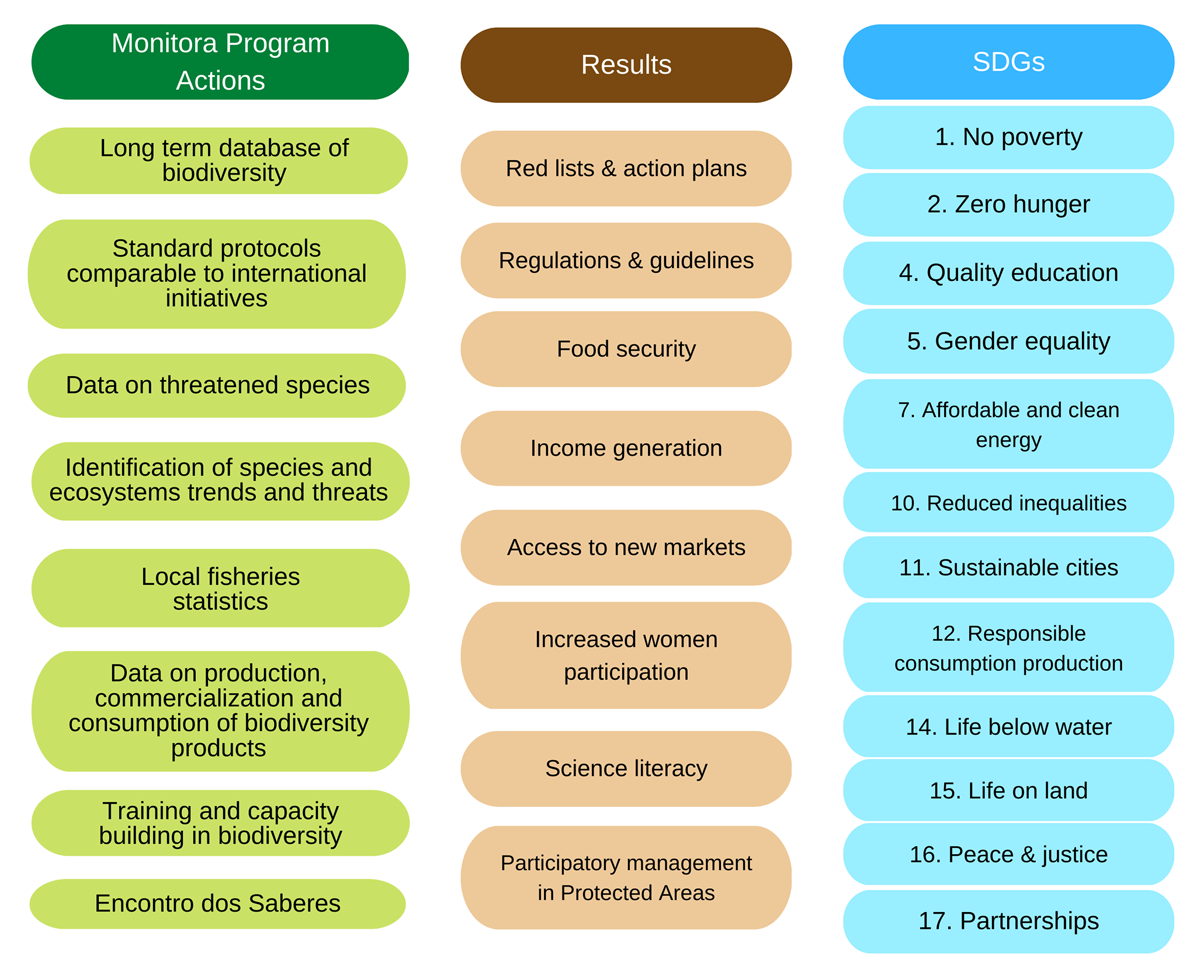
Figure 5
Schematic relationship between Monitora Program actions, intended and observed results, and Sustainable Development Goals. No attempt was made to link individual elements of the framework in Figure 5, as each action (represented in green) may lead to one or multiple results (in brown), which may contribute to more than one SDG (in blue).
Life below Water and Life on Land
The Monitora Program can contribute directly to SGDs 14 (Life below Water) and 15 (Life on Land) by generating biodiversity data. These data contribute to the periodic assessment of the conservation status of more than 12,000 animal species that take place every five years in Brazil (ICMBio 2018), feeding public policy. The Monitora program has produced new occurrence data for many mammal species classified as data deficient (Monitora 2021) and population status data for critically endangered species, such as the Black-winged Trumpeter Psophia obscura (Carvalho et al. 2022). Moreover, the Monitora Program’s experience with social participation is inspiring changes in the way species assessments are undertaken, by including local ecological knowledge into the process (Kellermann et al. 2020).
Monitoring data have been used to develop guidelines for minimizing impacts of new enterprises on biodiversity, such as the impact of coastal developments on marine turtles (Sforza et al. 2017) and of wind farms on migratory birds (Cemave/ICMBio, 2020). When put into practice, these guidelines have the potential not only to influence species conservation, but also to contribute to more sustainable cities (SDG 11) and energy sources (SDG 7).
One of the Monitora Program’s local protocols allowed the investigation of the impacts of logging at Jamari National Forest. Carvalho Jr. et al. (2021) suggest that concessions managed with Reduced Impact Logging techniques may be a reasonable compromise between economic and conservation interests, which may lead to responsible production in this industry (SDG 12).
Responsible consumption and production, No Poverty and Zero Hunger
Monitora program’s potential contributions to SGDs 1 (No Poverty) and 2 (Zero Hunger) are interconnected to SDG 12 (responsible consumption and production), as they come from community-based monitoring of the sustainable use of natural resources, which contributes to income generation and food security for communities inside and around PAs. Systematized local information gathered by the Monitora Program generates statistics that expand and qualify communities’ access to markets by facilitating collective bargaining of products in the sociobiodiversity value chain, such as the Amazonian-nut, Arapaima fish, and other marine and freshwater catch.
In Brazil, any use of threatened species is forbidden. This affects artisanal fishing and subsistence hunting of some species assessed as threatened on a national scale (ICMBio 2018). However, in many cases, the greatest threat to these species does not come from these activities, but from the loss and degradation of habitats due to land use change and large-scale enterprises such as roads, dams, and industries. Making artisanal fishing and hunting viable on a sustainable basis can be a means of promoting the conservation of these species and ecosystems with the involvement of direct users of biodiversity resources, while maintaining traditional livelihoods and income sources. Corumbau and Cassurubá communal reserves, located in the Brazilian northeastern coast, went through this process. In these PAs, artisanal fishing of threatened genera Cardisoma, Scarus, and Sparisoma, forbidden elsewhere, is now allowed as part of a fishing agreement that requires population monitoring. This strategy is starting to be understood as a conservation tool, and the real threats to the fisheries populations begin to surface (Brasil/ICMBio 2021; Santos et al. 2022).
In the Amazon, monitoring results indicated sustainability of the subsistence hunting by local populations in two communal reserves with low human density and high forest integrity (de Paula et al. 2022). These results are now facilitating local agreements between communities and PA managers, which will formally allow hunting practices, conditioned by a set of agreed rules. In a different PA, the participative monitoring of game species led to a debate on best practices, even before the collected data had been analyzed (Chiaravalloti et al. 2018). These discussions promote trusted relationships among stakeholders, which in turn help reduce conflicts (Campos-Silva and Peres 2016; Pellin et al. 2023) and promote participatory decision-making, contributing to SGD 16 (Peace, Justice and Strong Institutions).
Gender equality
The program promoted increase in women’s participation by actively targeting this audience, as well as young and elderly people. Special care is taken to ensure that women can participate in events such as the Encontro dos Saberes. For example, prior contact emphasized the importance of women’s presence, and barriers to participation were identified; they included cultural questions and special needs such as adequate conditions to accommodate children during the meetings. As a result, women were 38% of local biodiversity monitors and 42% of Encontro dos Saberes participants in 16 surveyed Amazonian PAs (IPÊ 2022).
By participating in the monitoring initiatives, many women have access to predominantly male environments, such as those around fishing activities. It has also been a way of getting involved in activities far from home, in mixed groups. When evaluating her participation, one woman from a traditional riverside community stated, “I am very happy today. Beyond being a mother, which was my dream, I am also a biodiversity monitor” (IPÊ 2022).
In some cases, women showed different interests than men in relation to monitoring targets. In some coastal areas, men are involved in fishing while women work in the gathering of crustaceans. These different needs are being addressed by the Monitora Program, by establishing specific protocols for each monitoring target (Monitora 2018b).
Other contributions
Monitora’s training program was conceived from a critical education point of view (Santos 2015; Tófoli et al. 2021; Monitora 2022) and fosters the sense of belonging, the capacity of qualified participation in management decisions (Pellin et al. 2023), the incorporation of local knowledge in analyses, and scientific literacy. Surrounding schools use the program to value local context as a pedagogical practice. The Monitora Program has become an opportunity for professional, scientific, and academic training for students living in remote areas (Pellin et al 2023). Thus, the training program can contribute to the promotion of quality education (SGD 4) and to a reduction in inequalities (SDG 10) in access to education.
Alignment to SDG 16 (Peace, Justice and Strong Institutions) comes from expanded local governance and promotion of participatory management in the participant PAs (Pellin et al. 2023), as well as from the program’s data policy, which aims to ensure public access to biodiversity data while safeguarding anonymity of sensitive data providers.
International partnerships and support played an important role in the development and funding of the Monitora Program (see funding information). The use of data collection protocols which are compatible with international programs (e.g., TEAM protocol for terrestrial vertebrates in Carvalho et al. 2021) allows data integration and knowledge-sharing between partners. These aspects are compatible with SDG 17 (Partnerships for the Goals).
Conclusions, Learnings, and Challenges
As with any long-term action, and particularly in-situ monitoring in the global South (de Lima et al. 2022), one of the Monitora Program’s main challenges is continued funding. The ARPA Program, Áreas Protegidas da Amazônia, financed in part by international donors such as the World Bank and the Global Environmental Facility (Castro and Silva 2017), has been the main funding source of the Monitora Program. However, these funds can be applied only in the Amazon, creating the so called “ARPA effect”: most participant PAs are located in the Amazon biome, while the few participant PAs located in the Atlantic Forest and Cerrado biomes struggle to secure funding, despite their importance as the only two biodiversity hotspots located in Brazil (Myers et al. 2000).
The budgetary resources from ICMBio have been insufficient for the continuity of the Monitora Program, which makes it an initiative—although created and maintained by the Brazilian State—highly dependent on international funds. Furthermore, ICMBio’s overall budget has been decreasing over the years, reflecting the past federal government’s disregard for environmental issues in general (Barbosa, Alves, and Grelle, 2021). Similarly, international environmental cooperation and funds have decreased in Brazil (Hochstetler 2021), but this scenario seems to be improving in the new government.
In a context of uncertain funding, local partnerships become crucial. Local partners may be able to offer local solutions, such as low-cost homestay accommodations, which helps to stretch fieldwork budgets. However, proper continuous financing is required. Citizen or voluntary participation should never be merely a means to cut project expenses, but instead, should be a meaningful way to promote genuine participation. De Lima et al. (2022) discuss the need to guarantee proper financing to in-situ monitoring data collection in the tropics to make open data fair for both data originators and end users, and they suggest the latter should assist with funding.
Integrating the Monitora Program with other monitoring initiatives poses another challenge, although it has been an issue considered since its inception. While common protocols make integration easier in some cases, shared analyses are yet to occur, since the Monitora Program and some of its counterparts are still struggling with efficient data management, storage, and distribution. In other cases, different protocols or sampling designs require some harmonization before data can be analyzed together (Roque et al. 2018).
Results from long-term projects take time to show up, and require persistence, continued engagement, and funding. The Monitora Program’s first results are just now starting to be published (e.g., Monitora 2018b, 2021). Despite the contribution to the achievement of the SDGs, by influencing changes that move society closer to these goals at the local scale, data generated in the program are not yet used to support Brazilian SDG reporting. According to the classification proposed by Fraisl et al. (2020), Monitora Program data could contribute to SDG reporting and monitoring. This requires further studies and developments regarding data harmonization and system interoperability, as well as greater integration between ICMBio, responsible for the Monitora Program, and IBGE (Instituto Brasileiro de Geografia e Estatística), responsible for monitoring SDGs in Brazil (https://odsbrasil.gov.br).
The Monitora Program incorporates characteristics that are present in other programs, such as monitoring of PAs; central management by PA agency; replication of standard protocols in hundreds of sites; multiple taxa as monitoring targets; different protocols for different ecosystems; voluntary and/or community-based participation; and social participation in more than just data collection. However, to our knowledge, it is the only program in the neotropical region to incorporate all these traits. The guiding principles of the Monitora Program provide a basis from which other institutions can easily build similar programs (Monitora 2018; Ribeiro, Masuda, and Miyashita 2019; Dantas et al. 2022). Three Brazilian state PA agencies—from Mato Grosso, Pará, and Amazonas states—have started their own compatible monitoring initiatives, which brings new possibilities and challenges of data and analysis integration. Likewise, other countries, such as Ecuador and Peru, are being inspired by the Monitora Program to implement their own monitoring programs.
The participation of different stakeholders in the planning, data collection, and collective interpretation of results is just as important as the biological data collection (Souza et al. 2019). Social participation is a continuous process of building trusted relationships, by which the quality of the gathered information increases, especially when it comes to resources that are used by people. Even if unintentionally, each person involved affects the whole process and is affected by it (Ribeiro et al. 2021). Person by person, we get closer to one of the Monitora Program’s core objectives: the involvement of different stakeholders in environment management in different scales and forums, thus fulfilling the Brazilian Constitution, which establishes that everyone has the right to an ecologically balanced environment, whose defense and conservation are the responsibility of both the State and the community.
Ethics and Consent
Authorization for biological data collection was provided by ICMBio. Personal data collected are protected under the Monitora Program data policy (Brasil/ICMBio 2017, 2022). All persons depicted in Figure 3 have consented to the use of their images.
Acknowledgements
We’d like to thank all persons that have participated in any stage of the Monitora Program over the years, including, but not limited to, local communities, data collectors, volunteers, protected area managers, scientists and technicians. We thank three anonymous reviewers for valuable suggestions to improve the text’s quality.
Funding Information
Monitora Program has received funding from Programa Áreas Protegidas da Amazônia, Conselho Nacional de Desenvolvimento Científico e Tecnológico (CNPq), Deutsche Gesellschaft für Internationale Zusammenarbeit (GIZ), Global Environmental Facility (GEF, GEF Mar and GEF Terrestre Projects), Gordon & Betty Moore Foundation, Fundo Amazônia, United Nations Development Programme (UNDP), ICMBio, United States Agency for International Development (USAID).
Competing Interests
The authors have no competing interests to declare.
Author Contributions
Monitora as first author is being used to recognize the collective work behind the publication; CC and KTR coordinated the organization and elaboration of the text, and the other authors contributed equitably with data, information, text and graphics, and are mentioned in alphabetical order.