
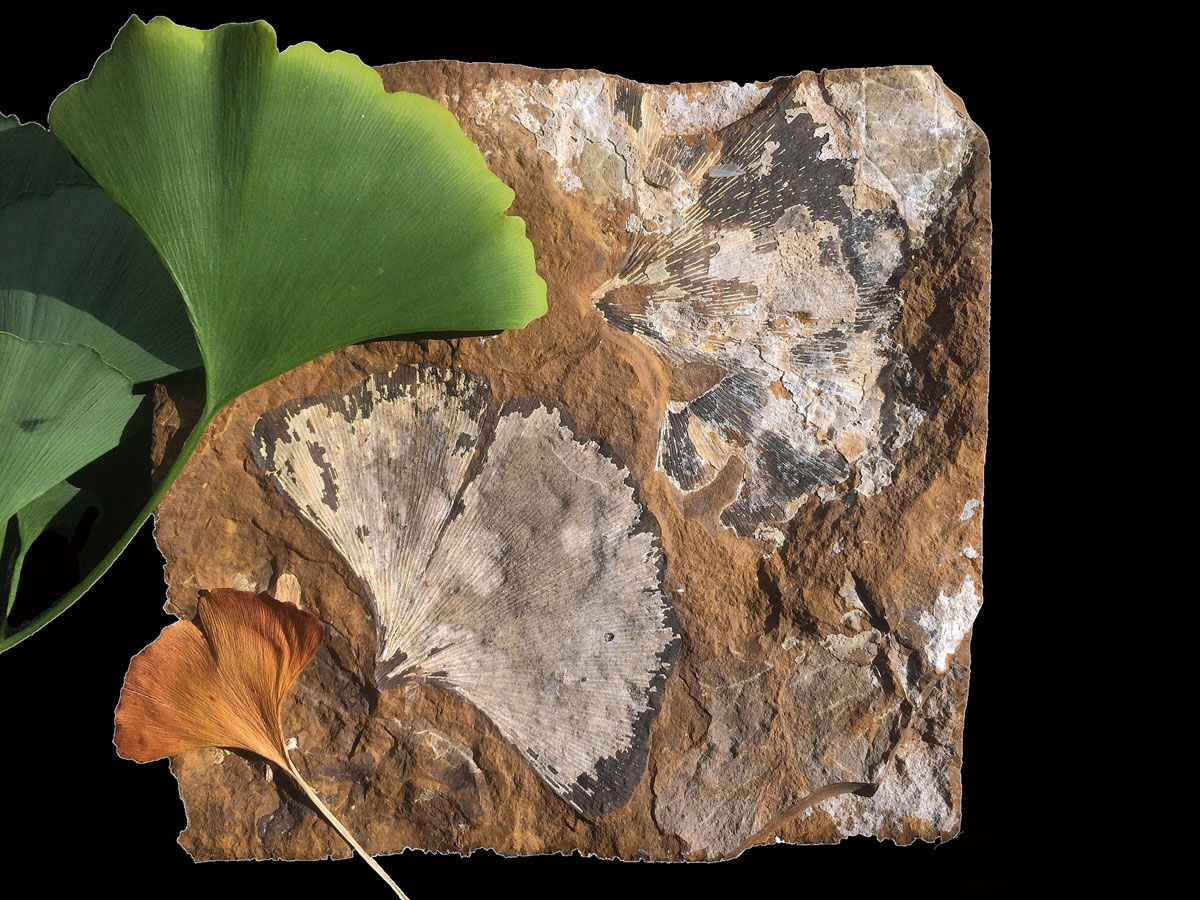
Figure 1
Image of fresh, herbarium, and fossil ginkgo leaves. Fresh leaves are from the Fossil Atmospheres experiment at the Smithsonian Environmental Research Center. The dried leaf represents herbarium material collected during the past century. The fossil is from the late Paleocene-aged Almont locality in North Dakota (~58 myo). Image used with permission from Scott Wing.
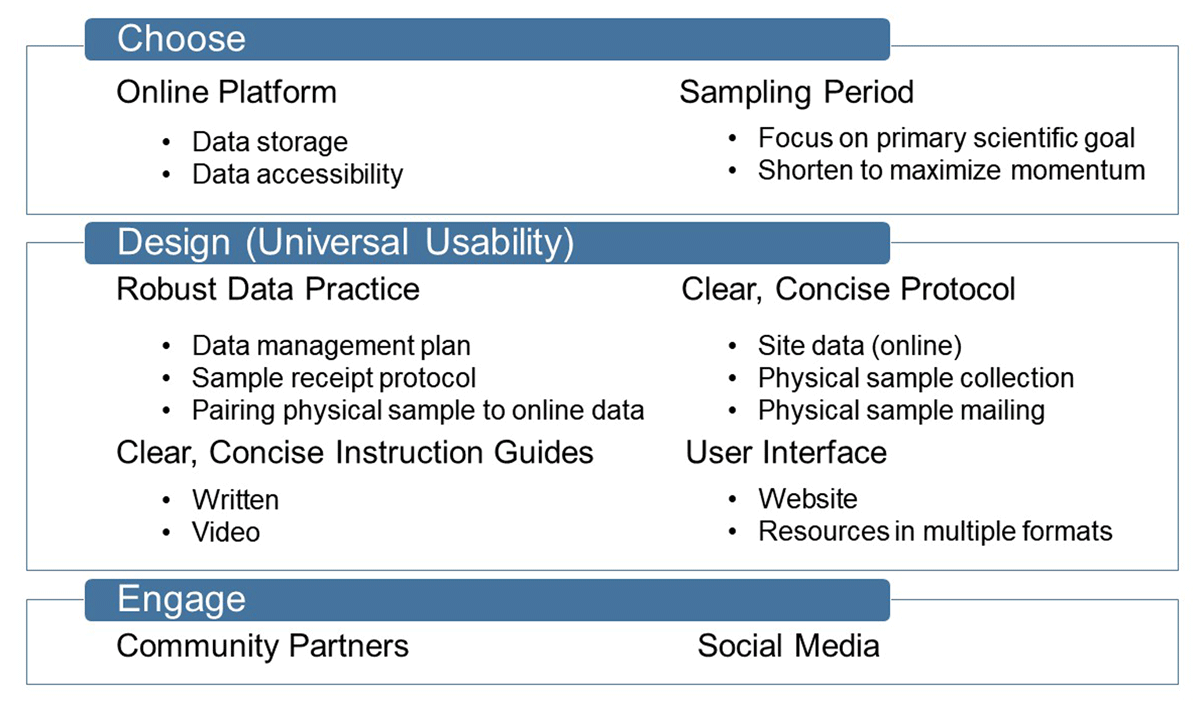
Figure 2
Three phases of project development and implementation when utilizing a hybrid protocol: Choose, Design, and Engage. Phases are presented in implementation order (top to bottom) and include subordinate categories representing areas for action with primary goals.
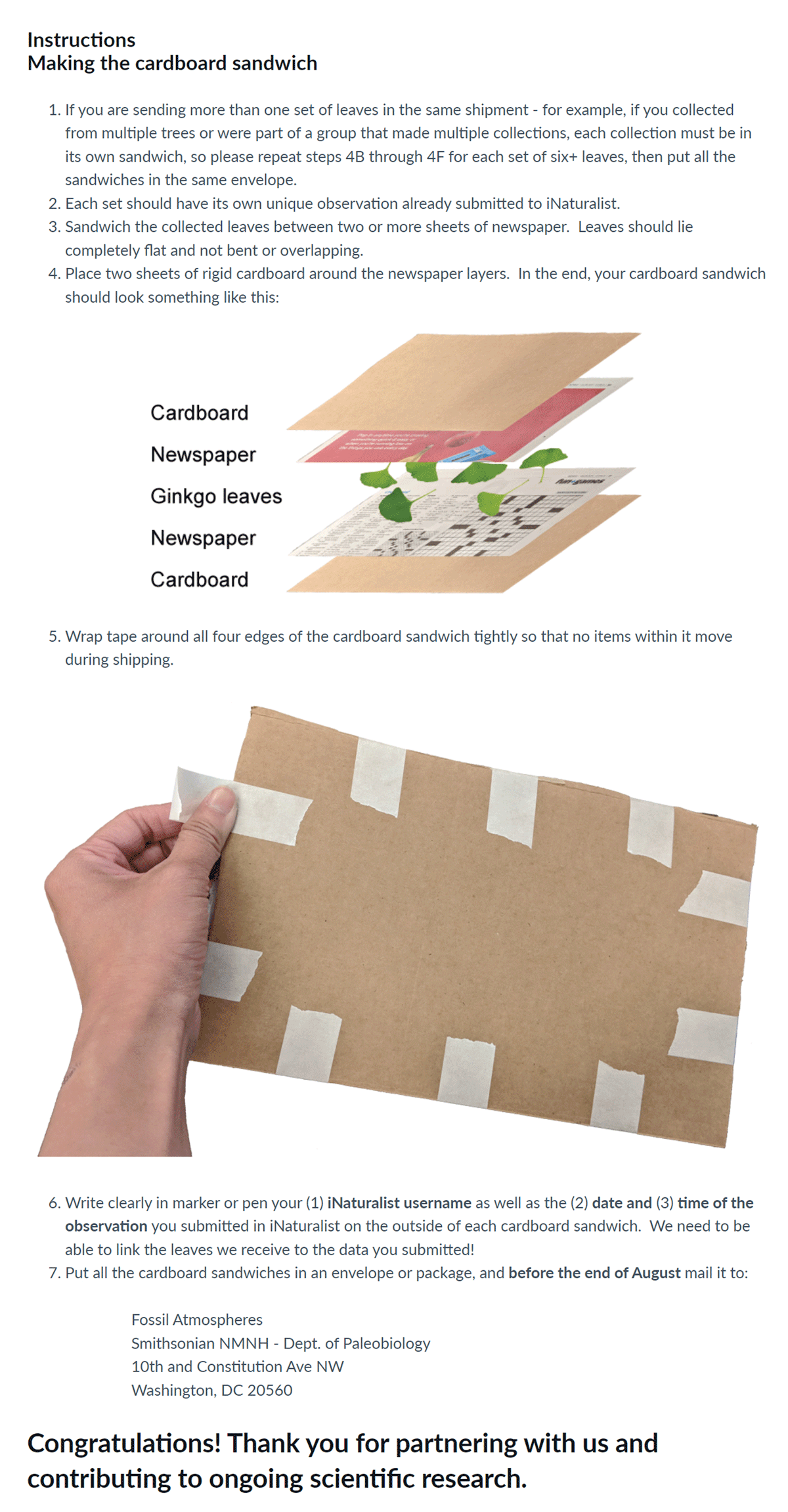
Figure 3
An excerpt of the protocol instructions detailing how to create the cardboard sandwich used to ensure intact delivery of leaf samples to the Smithsonian. Full protocol instructions are available in the supplemental materials (Appendix B).
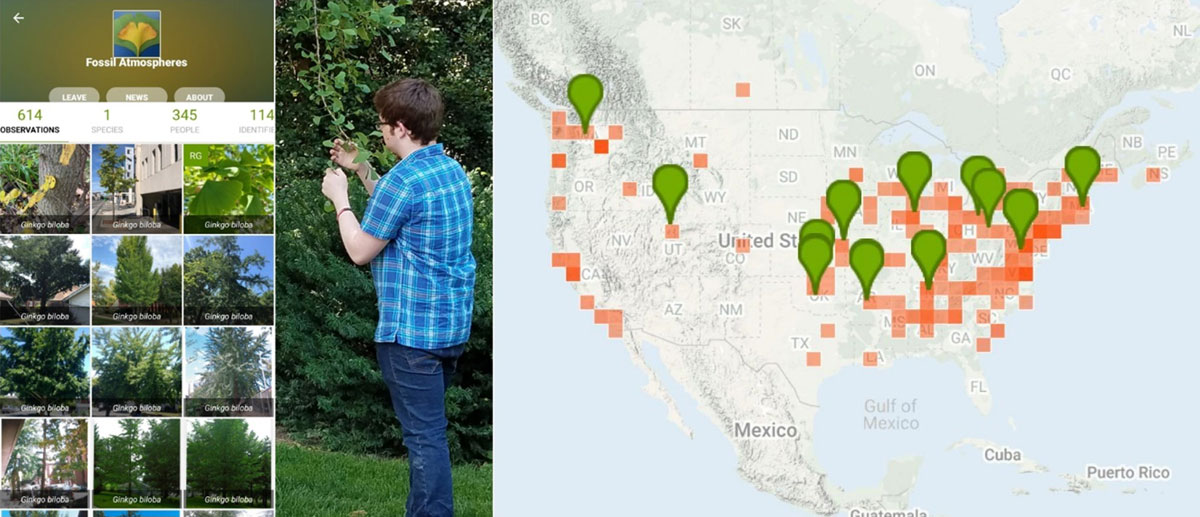
Figure 4
iNaturalist website user experience. a) iNaturalist app screenshot with scoreboard and recently submitted images. b) Citizen scientist collecting leaves. c) Distribution map on iNaturalist desktop homepage for Fossil Atmospheres; recent submissions highlighted with pins; older submissions generalized to regional squares.
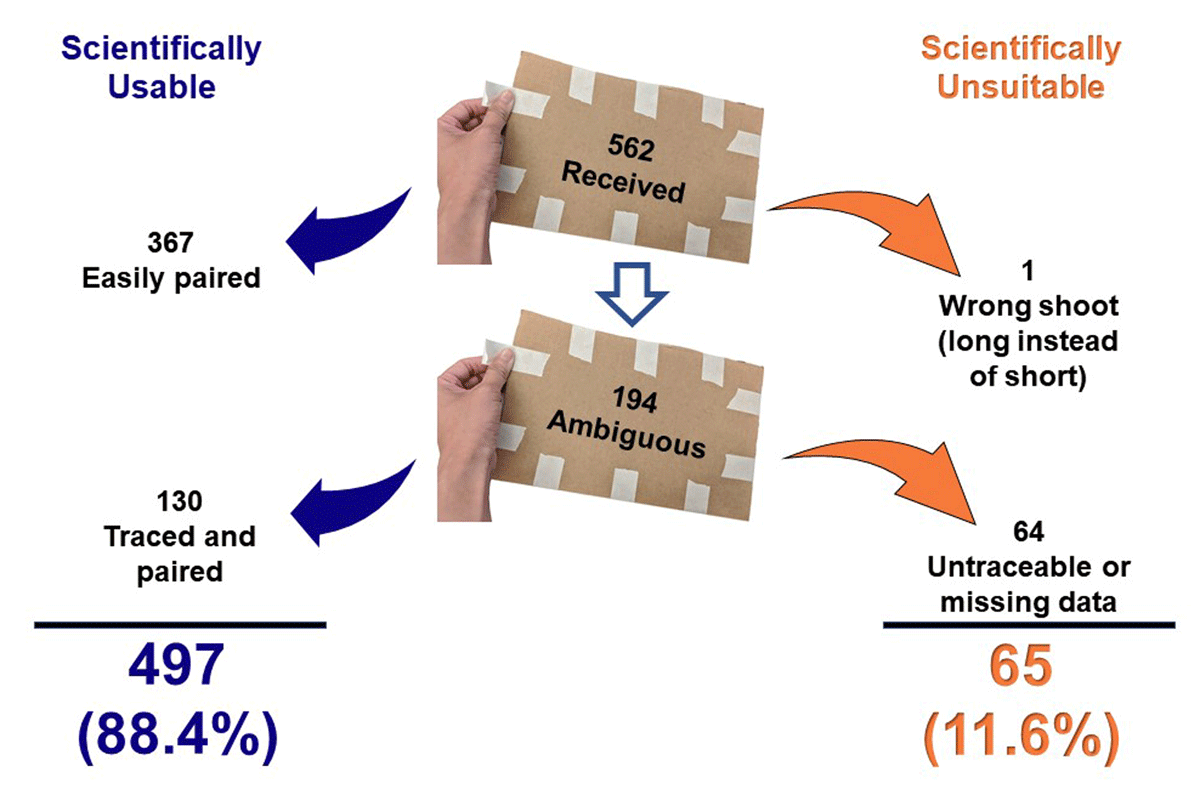
Figure 5
Summary of physical samples received by the Fossil Atmospheres project. Scientifically usable samples matched strict criteria, and totaled 88% of the 562 samples received.
Table 1
Summary of records related to iNaturalist and sample return. * One sample contained leaves from an incorrect location on the tree and was rejected.
| NUMBER OF RECORDS RECEIVED | PERFECT RECORD | ONE OR MORE PROBLEMS | FINAL RESULTS | |||
|---|---|---|---|---|---|---|
| UNUSABLE (MISSING DATA OR DUPLICATE) | USABLE (TRACED) | ACCEPTED SAMPLES | SCIENTIFICALLY USABLE SAMPLES (MET STRICT REQUIREMENTS) | |||
| iNaturalist entry | 608 | 367 | 111 | 130 | 497 (88%) | 496* (88%) |
| Physical sample | 562 | 554 | 4 | 4 | 558 (99%) | |