Figure 1
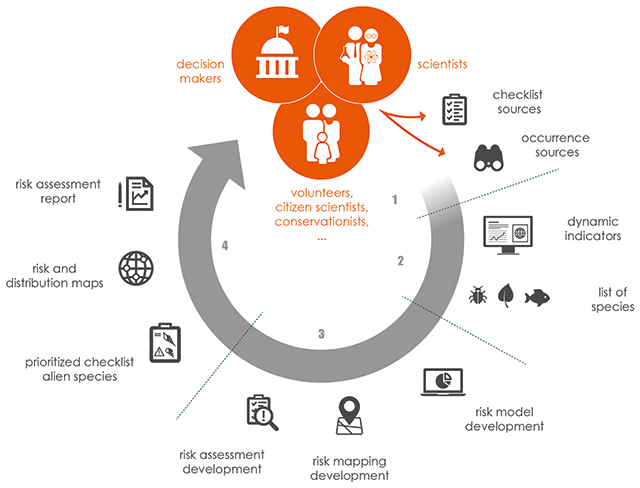
Citizens and biodiversity scientists both are providers of invasive species data and users of the information created from them. Open data workflows can be created whereby contributors of data produce the aggregated knowledge about the organisms that interest them. Products such as maps, indicators, and predictive models aim to support the data providers, while also creating policy relevant information. In the Belgian TrIAS project, a cycle is envisaged that starts with data publication and continues with the generation of aggregate indicators, maps, models, and risk assessments. All this analysis results in publications aimed both at the contributors of data and policy support. This motivates citizens and scientists alike and creates a cycle supporting knowledge creation. The participants contribute most to the information cycle, but because the data are openly licenced, information can be spun off for use in policy. However, policy-makers can contribute to this cycle in many ways, such as by sharing public data, by providing training, and by supporting the underlying infrastructures.