
Figure 1
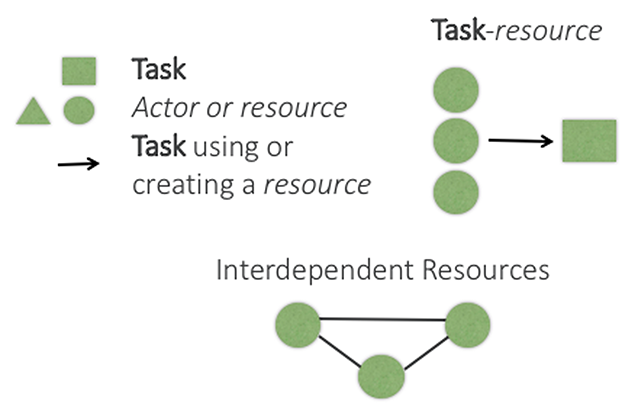
Tasks (squares) and resources (triangles) or actors (circles) (upper left); tasks create/use resources creating a task/resource assignment problem (upper right) and dependencies among interdependent resources (bottom).
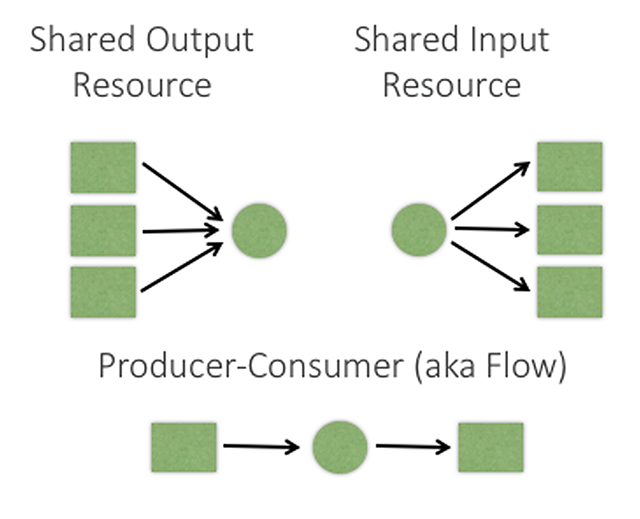
Figure 2
Three types of dependencies between two tasks (rectangles) based on shared use of resources (circles).
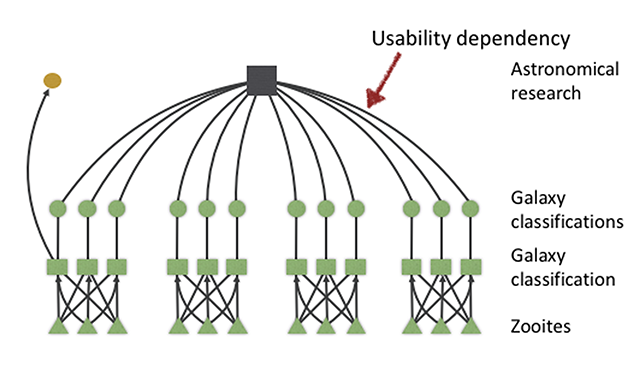
Figure 3
Flow of data in the Galaxy Zoo project.
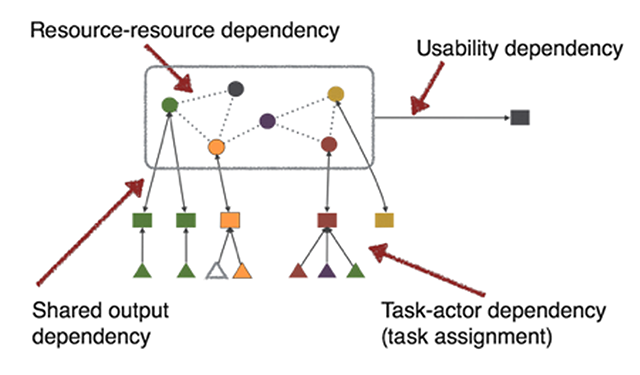
Figure 4
Expected structure of dependencies in writing a paper.
Table 1
Galaxy Zoo Quench talk posts referenced in the paper.
| ID | Title | URL |
|---|---|---|
| a | Galaxy Zoo Quench Project Overview | https://quench.galaxyzoo.org/#/project |
| b | Major redshift measurement errors in the SDSS stereoscopic pipeline | BGS000000b/discussions/DGS000021u |
| c | Quench Talk Office Hours | BGS000000a/discussions/DGS00001xk |
| d | Sample Selection: Post-quenched galaxy and control galaxy | BGS0000001/discussions/DGS00001xy |
| e | Classification Result Error | BGS0000008/discussions/DGS000020s |
| f | Difference between v5 QS and QC catalogs and their v4 counterparts | BGS0000008/discussions/DGS000022a |
| g | Dealing with Sample Selection Issues | BGS0000008/discussions/DGS0000223 |
| h | Framework and Suggestions for Data Analysis Phase | BGS0000007/discussions/DGS000013u |
| i | Temporary Pause in Quench (Resume July 25th) | BGS000000f/discussions/DGS000023b |
| j | Quench project: a proposal aimed at reviving and completing it | BGS000000e/discussions/DGS000022f |
[i] 1 Unless a complete URL is given, URLs start https://quenchtalk.galaxyzoo.org/#/boards/.
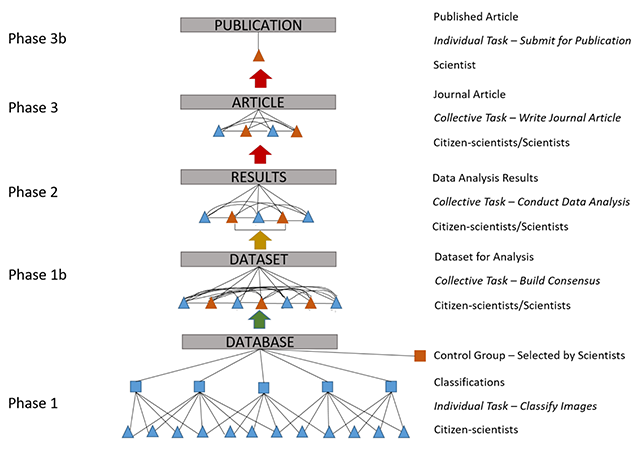
Figure 5
Expected structure of dependencies in Galaxy Zoo Quench (data flow from the bottom up).
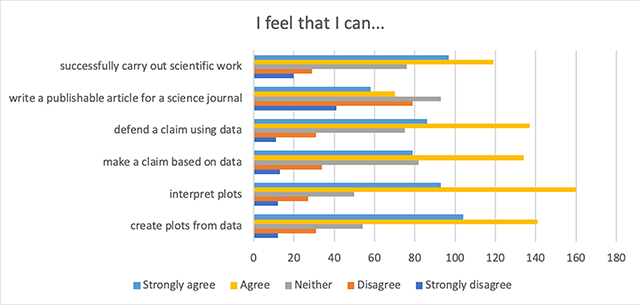
Figure 6
Histogram of responses to questions regarding perceived data analysis and reporting skills (N = 490).