
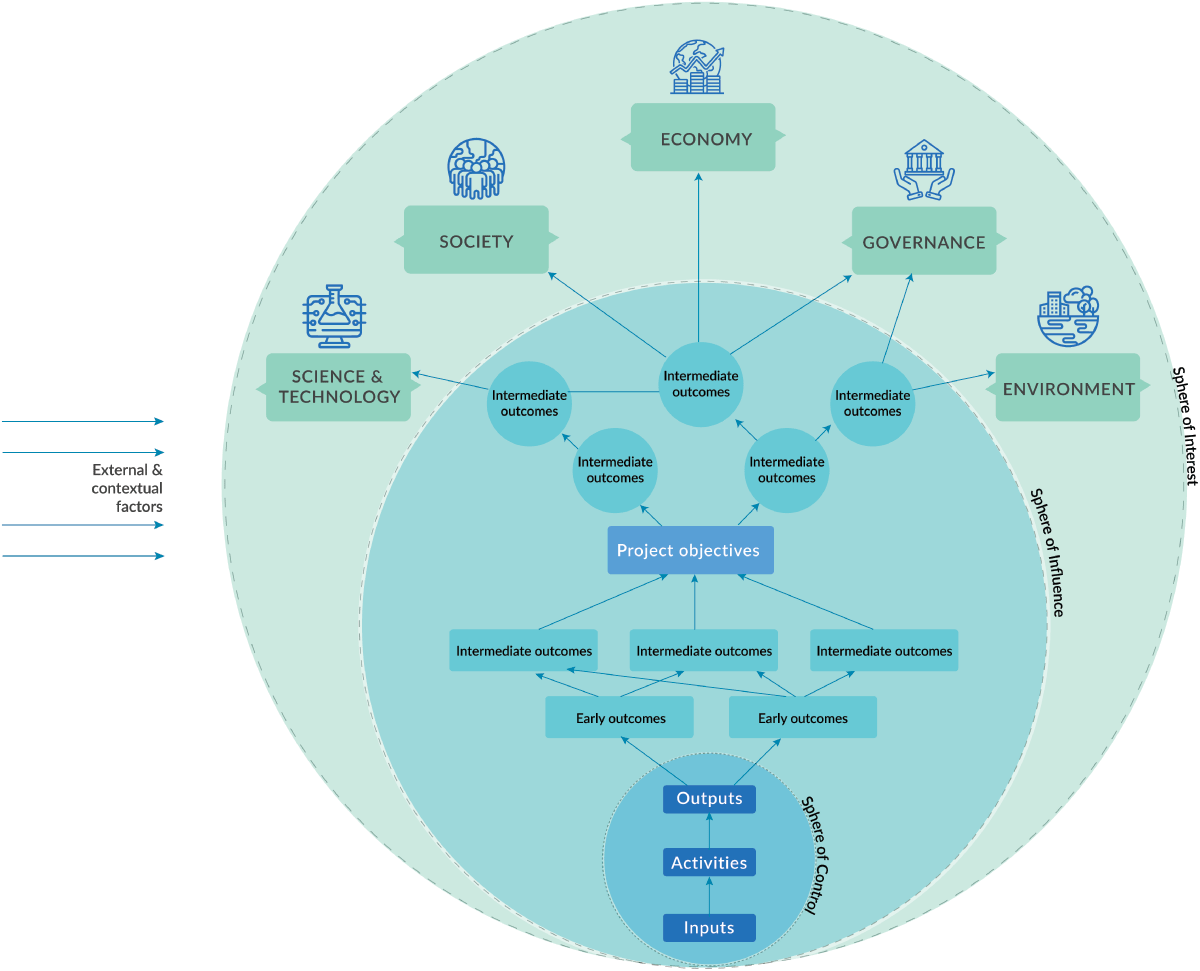
Figure 1
Theory of change for citizen science initiatives.
Source: Wehn et al. (2020), compiled from Van Es et al. (2015).
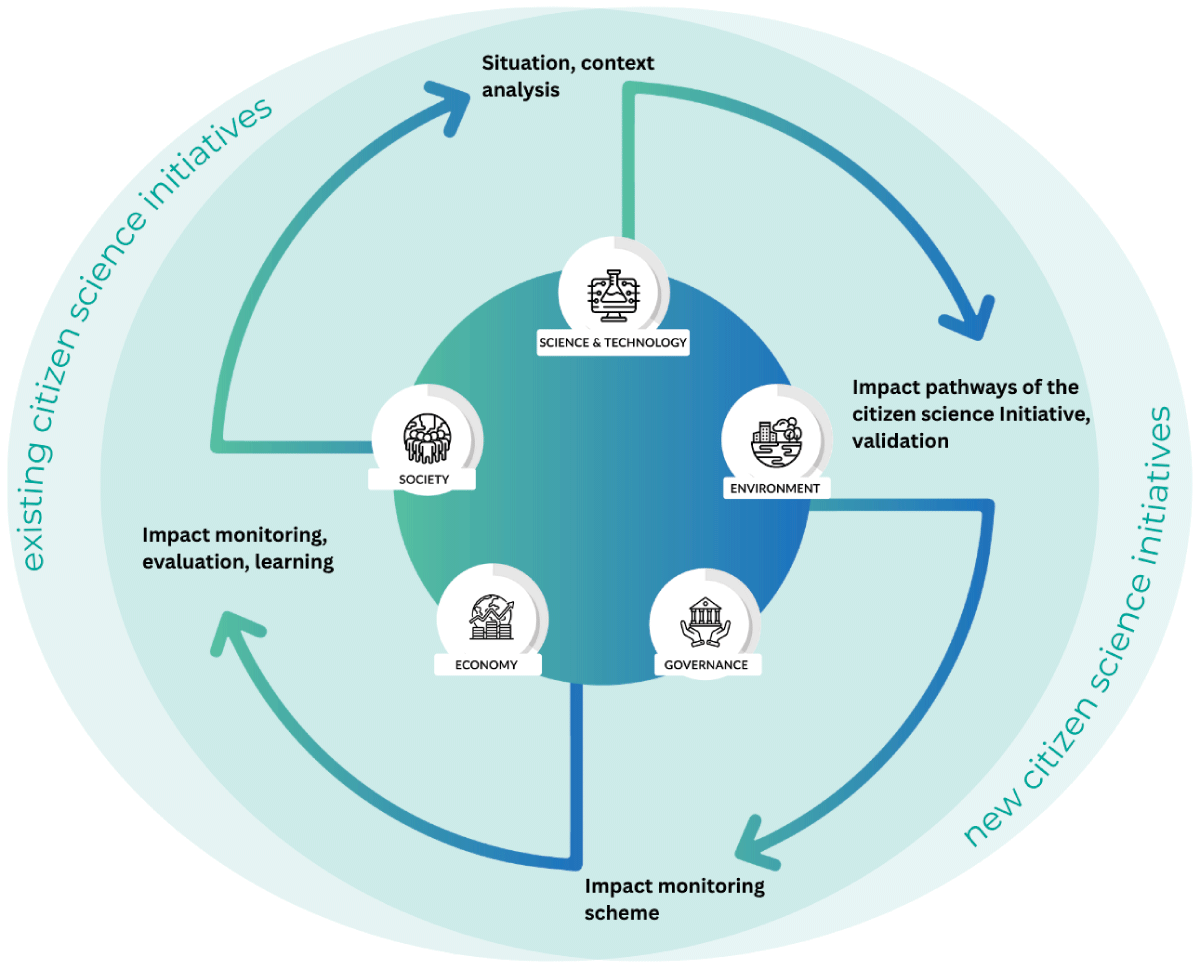
Figure 2
Steps of the Impact Journey Approach for citizen science initiatives.
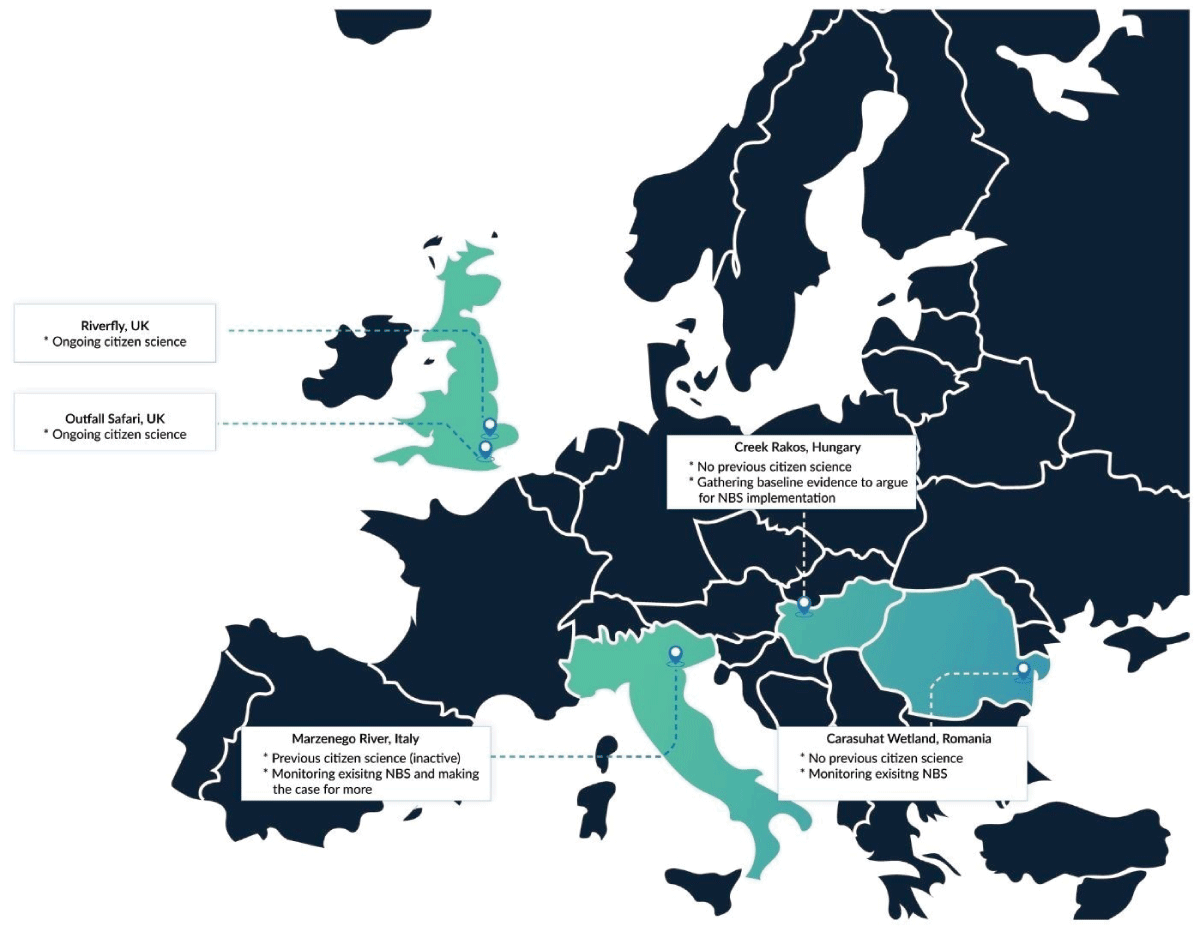
Figure 3
Map showing location and details of the MICS case study sites.
Source: based on Wheatland et al. (2021). NBS: nature-based solutions.
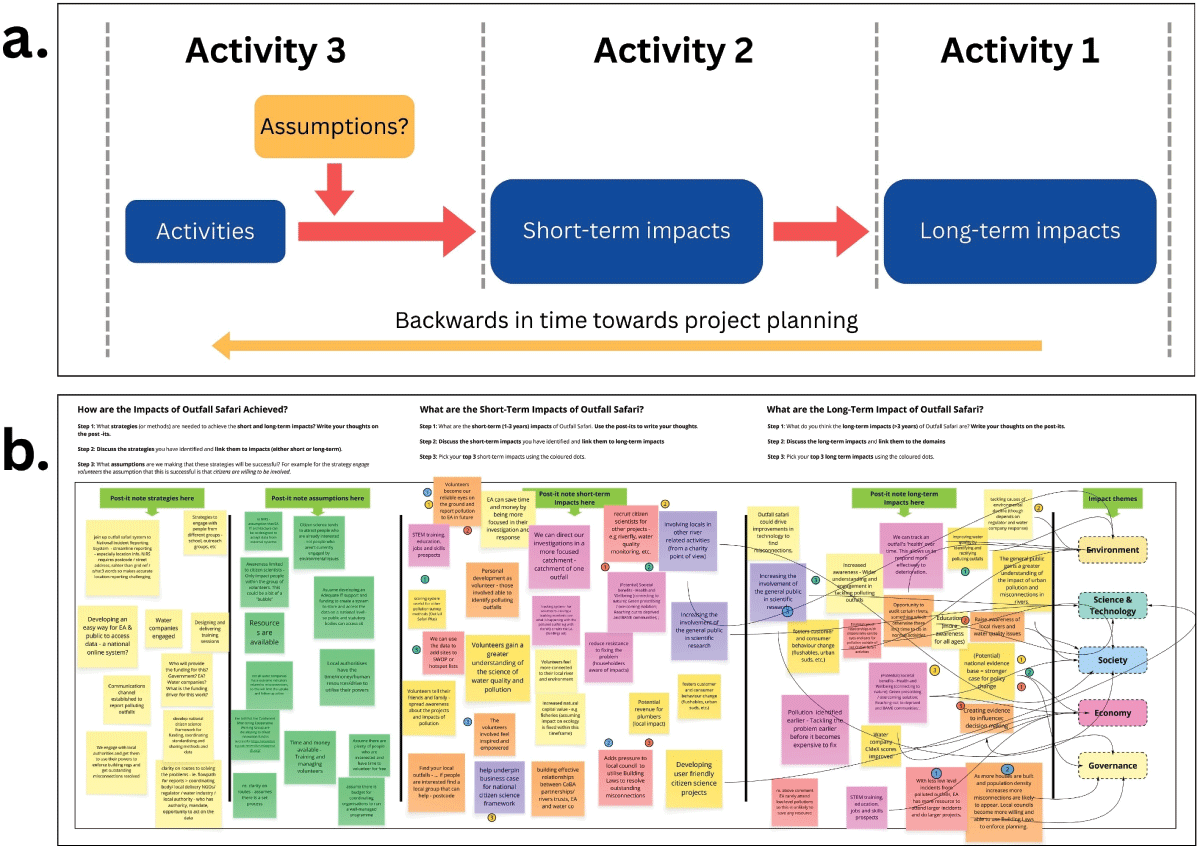
Figure 4
Activities and outputs of the Impact Journey workshop in the Outfall Safari case study (UK). (a) Diagrammatic representation of how the activities were organized during the workshops; participants were asked to complete the tasks from right to left, effectively working back in time, first considering the long- and short-term impacts of the citizen science activities associated with their project (Activities 1 and 2), then what citizen science or other activities are required to achieve them (Activity 3). Participants were also asked to consider what assumptions were being made that the activities would be successful, for example, for the activity to “engage with local citizens,” the assumption would be that citizens are interested and willing to be involved. (b) Virtual whiteboard with comments from Outfall Safari IPAs as an example.
Source: Wheatland et al. (2021).
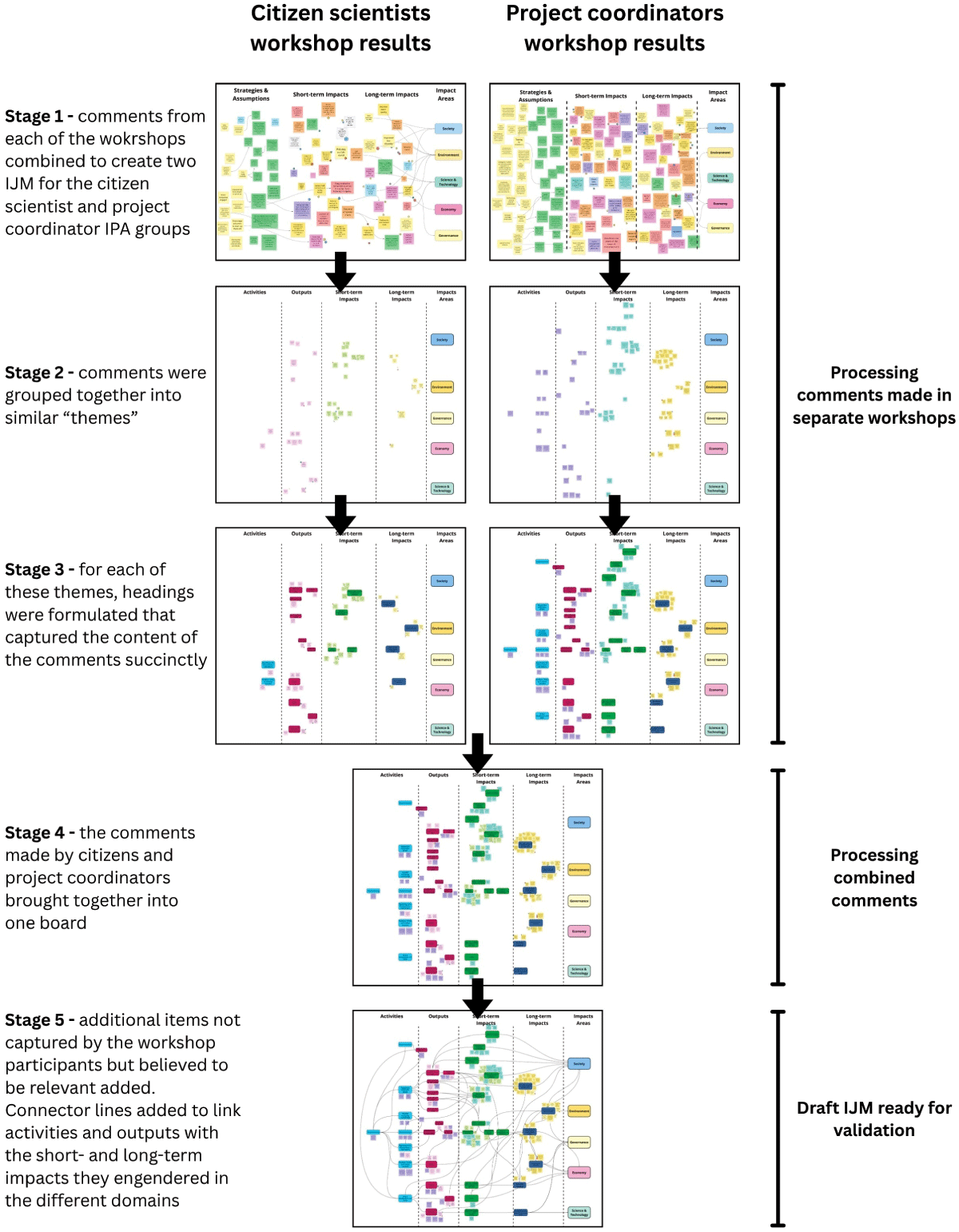
Figure 5
Steps taken by the MICS team to generate the draft Impact Journey map for the Outfall Safari case study (UK).
Source: Wheatland et al. (2021).