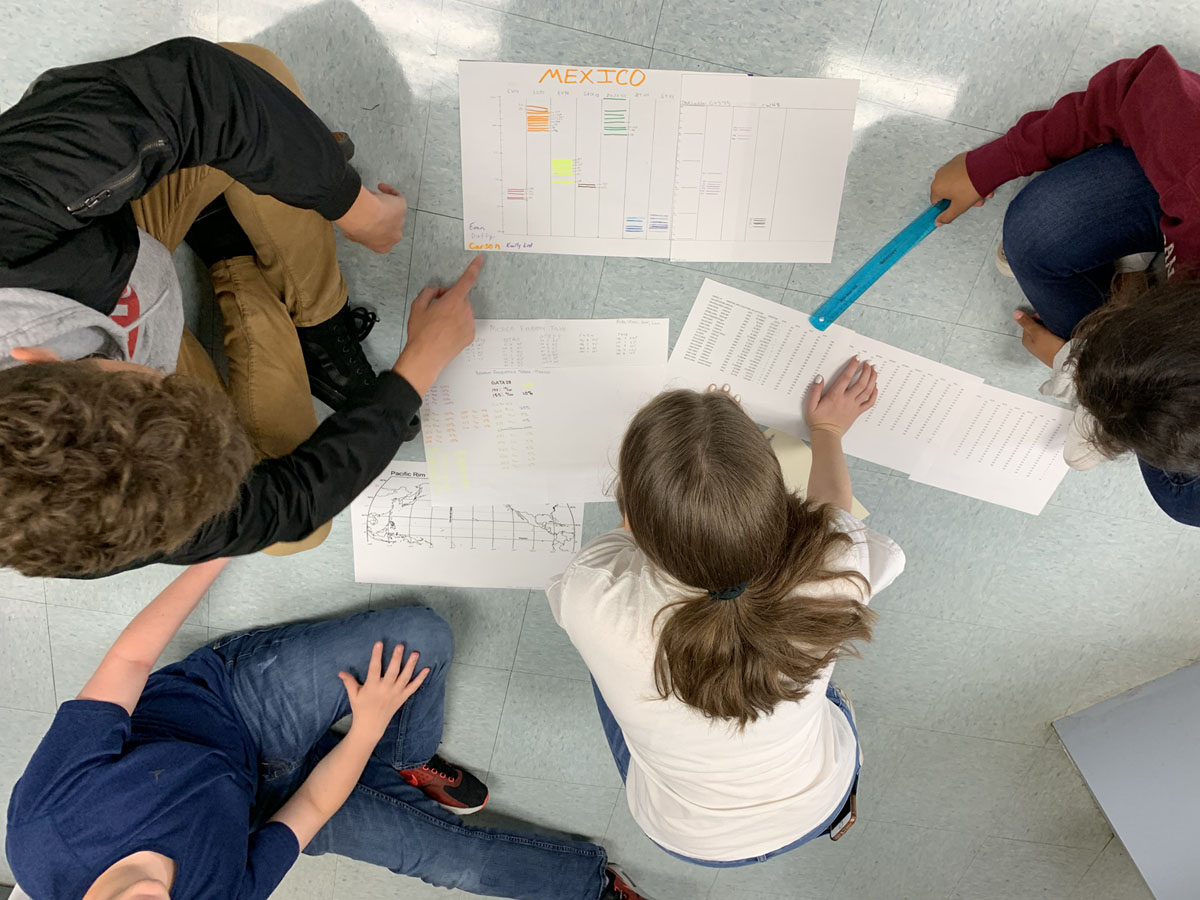
Figure 1
Halsey Randall, M. (2019). Students working in groups using marine research data of humpback whales to create mock gel electrophoresis bands and location maps. Used with permission of the photographer.

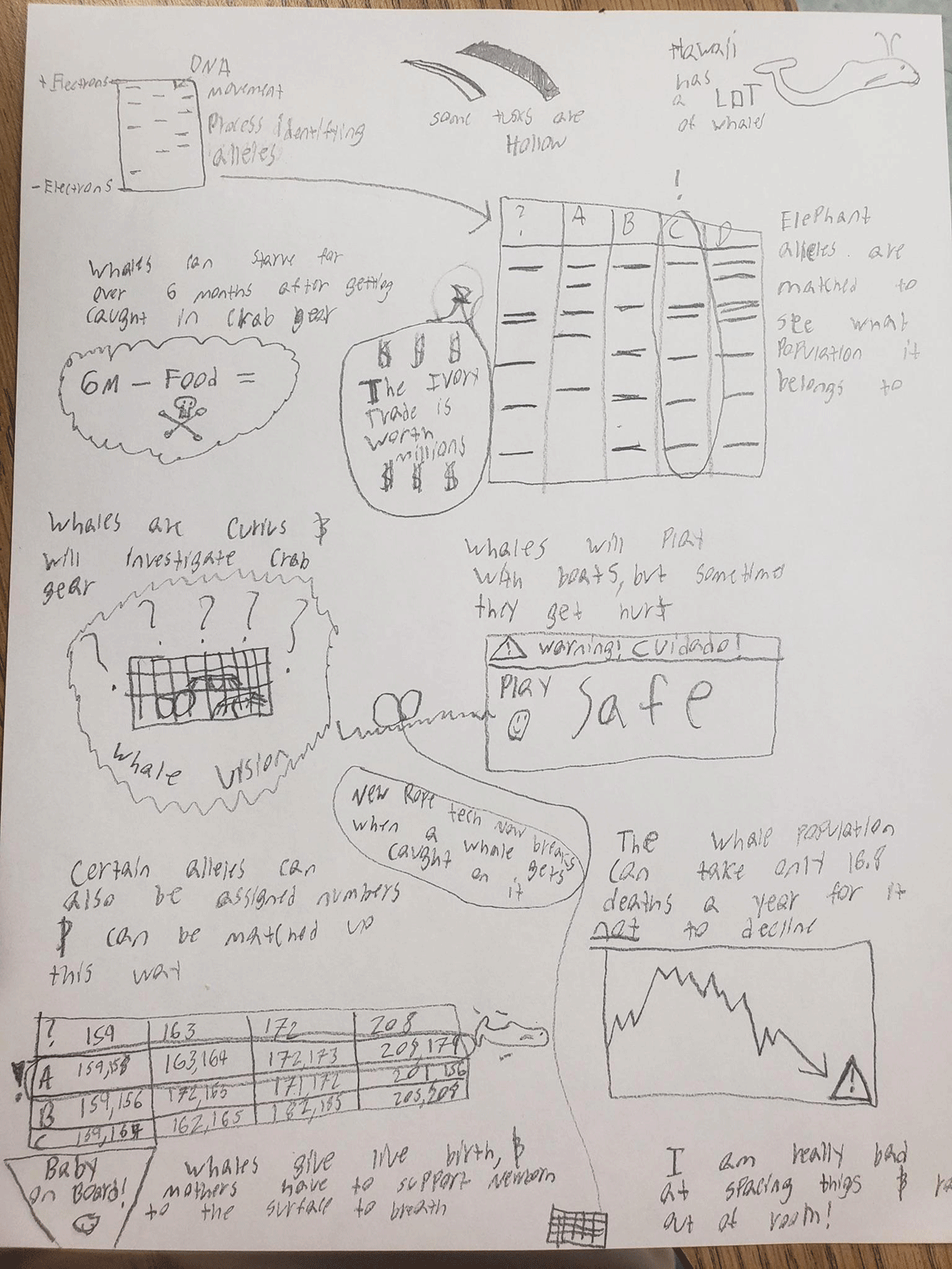
Figure 2
Halsey Randall, M. (2019). Student example of mock gel electrophoresis bands from the research data. Used with permission of the photographer.
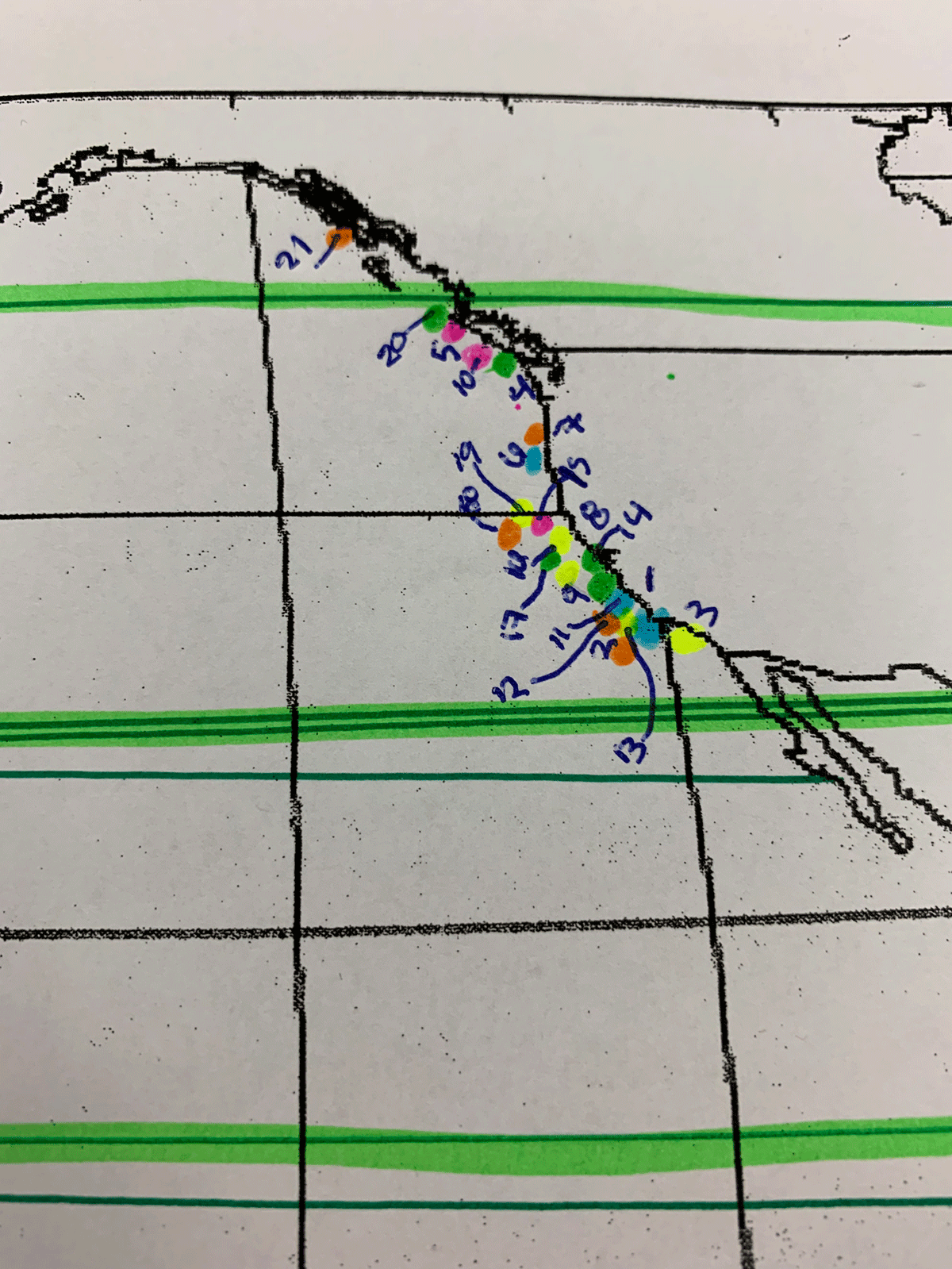
Figure 3
Halsey Randall, M. (2019). Map of locations of collected DNA samples along the Pacific Coast of North America. Used with permission of the photographer.
| STANDARDS – MATH | |
|---|---|
| Math Practices: MP.1 – Make sense of problems and persevere in solving them. MP.3 – Construct viable arguments and critique the reasoning of others. MP.5 – Use appropriate tools strategically. | CC Math Standards: HS.S-ID.5 – Summarize categorical data for two categories in two-way frequency tables. Interpret relative frequencies in the context of the data. Recognize possible associations and trends in the data. HS.S-ID.6 – Represent data on two quantitative variables on a scatter plot, and describe how the variables are related. HS.S-IC.1 – Understand statistics as a process for making inferences about population parameters based on a random sample from that population. |
| Science & Engineering Practices | Disciplinary Core Ideas | Crosscutting Concepts |
|---|---|---|
| Asking Questions and Defining Problems Analyzing and Interpreting Data Constructing Explanations and Designing Solutions | LS1.A – Structure and Function LS3.A – Inheritance of Traits LS3.B – Variation of Traits ESS3.C – Human Impacts on Earth Systems ETS.1B – Developing Possible Solutions | Cause and Effect Scale, Proportion and Quantity Stability and Change Influence of Science, Engineering, and Technology on Society and the Natural World |