
Introduction
The Louisiana Department of Wildlife and Fisheries (LDWF) programs that focus on aquatic outreach and education will be highlighted to demonstrate the goals of each program as well as show the impact they have on the general public, educators, and students throughout the state. The LDWF Aquatic Outreach and Education section was established to foster a connection between fisheries resources and the public through outreach, education, and access. The primary goals of the Aquatic Outreach and Education section are as follows but not limited to:
Provide information to user groups regarding management processes.
Provide new fishing opportunities, increase angling participation, and enhance angler experiences throughout the state.
Educate the public regarding aquatic resources and department programs.
Educate and train volunteers to assist in carrying out the objectives.
Funding for the multiple programs that our section oversees would not be possible without the U.S. Fish and Wildlife Service (USFWS) Sport Fish Restoration (SFR) Program. According to the USFWS (2025), this program was created to restore and better manage America’s declining fisheries resources. This grant source provides funds to state agencies—LDWF in Louisiana—for recreational fishing, boating access, and aquatic education. Funding for this grant is collected from multiple sources including the following: federal excise tax on fishing equipment, import duties on fishing equipment and pleasure boats, and a portion of fuel tax attributable to small engines and motorboats. Funding from SFR varies by state based on the land to water ratio as well as fishing license sales. LDWF manages multiple projects funded through SFR including fisheries management, fish production, aquatic habitat management, boating and fishing access, outreach and education.
If we were to look through a fisheye lens, we would see that it provides an ultra-wide view with a distinctive bulging appearance, similar to the eye of a fish. It adds a unique perspective and a lot of visual information into the frame (Coleman 2024). Similarly, as we dive into exploring the various aquatic education programs that LDWF has to offer, this unique lens highlights the broad scope and reach we have throughout the state. It is important to note that some of our programs are unique to the general public while others specifically target educators and students; however, there is some overlap.
What We Do
General Public Programs and Opportunities
Fishing Course Series
The Fishing Course Series (FCS) is designed for participants to gain knowledge and confidence to fish on their own through completion of any of the offered classes. Participants range in age from children to adults and are of all skill levels. FCS classes are two hours long and are designed to teach core fishing skills in the first hour, followed by application of learned skills with LDWF staff and volunteers in the second hour (Figure 1). The course series currently includes the following classes: Intro to Fishing, Beginner Catfishing, Intermediate Catfishing, Beginner Bass Fishing, Intermediate Bass Fishing, Beginner Rainbow Trout Fishing, Beginner Saltwater Fishing, and Fishing Secrets Explained. FCS classes are held statewide at locally stocked ponds and lakes through our Get Out & Fish! (GOF) program. The GOF program stocks channel catfish and rainbow trout at various times of the year (LDWF 2025a). Participants are instructed on how to properly use the specific gear and safe handling practices while fishing. In the three years since this program’s inception, we have offered 107 classes to over 800 participants. As a result of these classes, 28% of the adult participants have purchased new fishing licenses.

Figure 1
FCS participants learn various techniques to improve their catch! Photos: Reproduced with permission of LDWF.
“This (FCS) class is something I have been looking for. Going over the basics makes fishing more approachable for me. It also connects my son to something we both love!”
“The (FCS) class was delivered in a manner that everyone understood, no matter skill level. I want to attend other classes now. Thank you very much for this opportunity and for free no less.”
Women’s Fishing Workshop
The goal of Women’s Fishing Workshop is to help participants become knowledgeable, confident anglers who enjoy and protect Louisiana’s world-class fishing. These workshops are exclusively offered to women at least 18 years or older who are new to fishing or rusty anglers who would like to expand their fishing skills. These workshops, led by LDWF biologists and volunteer instructors, cover a variety of topics and teach numerous skills to help make fishing more enjoyable (Figure 2). Some of the main topics covered include fish identification, methods for cleaning fish, fishing gear, and fishing tactics. Once participants complete the initial day-long workshop in Baton Rouge, they have an opportunity to be selected through a lottery for a weekend workshop to put their skills to the test. Since 2014, approximately 700 women have attended this workshop—increasing their confidence and skill level.
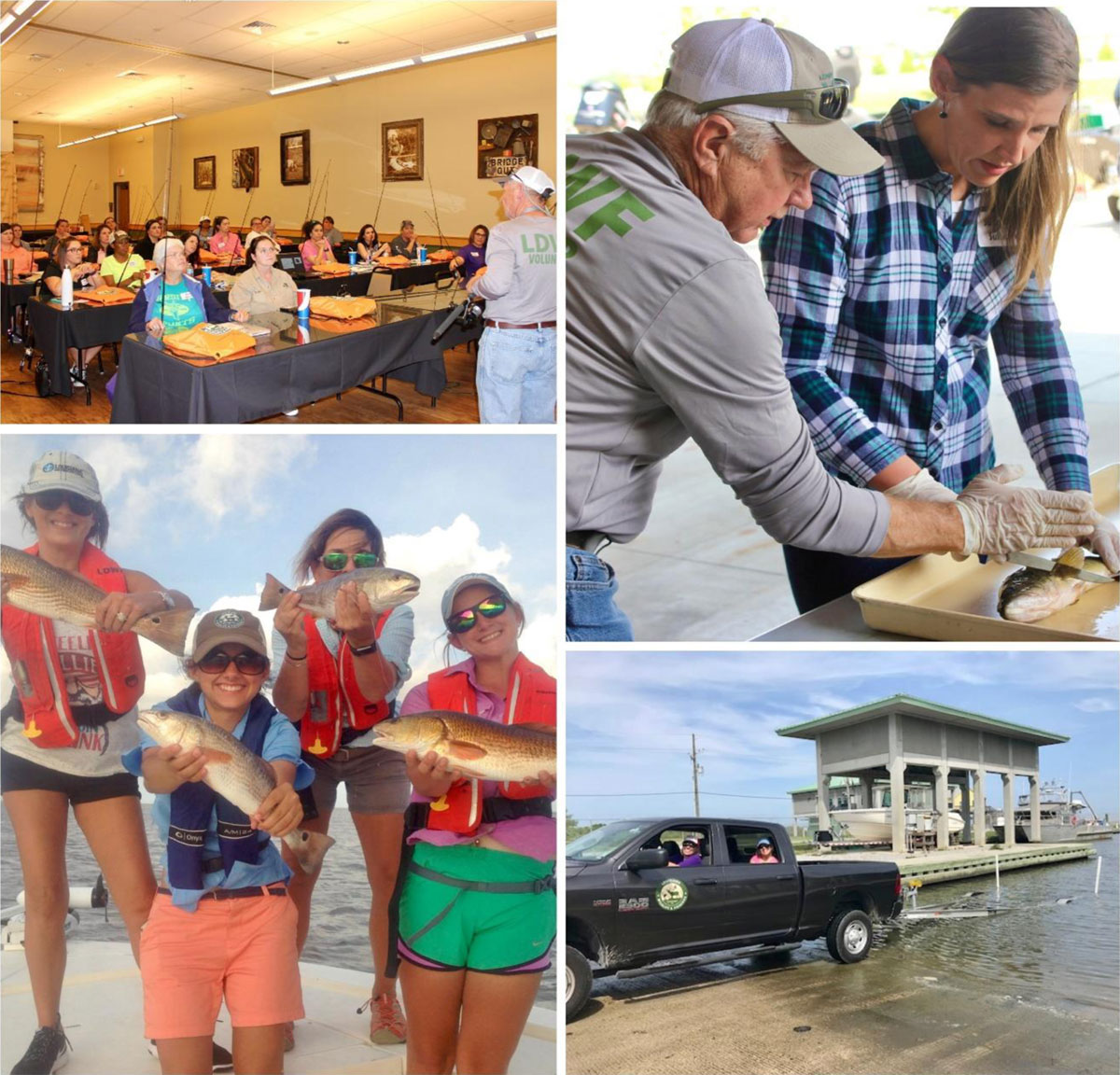
Figure 2
Women’s Workshop participants learning new skills to be better anglers. Photos: Reproduced with permission of LDWF.
“I gained immense confidence attending the Women’s Workshop. The participant-to-instructor ratio was just right, creating an ideal learning environment. I must say learning how to prepare for fishing, understanding the various types of fish, fishing equipment, and acquiring basic fishing skills from engaging instructors made every moment worthwhile. I was so inspired that I went out and purchased fishing equipment and gear. This workshop is one I would happily attend annually, or even quarterly. I have shared with others and highly recommend.”
In addition to the programs that are featured above, we frequently attend sportsman shows, boat shows, festivals, conferences, and other community events to showcase educational activities that we offer as well as general fisheries outreach information for the angling community.
Education Programs and Opportunities
WETshop
Wetland Education Teacher Workshop (WETshop) is a six-day coastal awareness workshop hosted in Grand Isle at the LDWF Fisheries Research Lab. This unique, hands-on workshop is open to formal and non-formal educators throughout Louisiana (Figure 3) to learn about coastal wetlands and issues pertaining to these fragile ecosystems. Educators get a fully immersive experience working in the field with scientists from various agencies and organizations (Figure 4) and bring this newfound knowledge back into their classroom settings to share with students, peers, and community members. By engaging in meaningful lessons and hands-on experiences, it is our hope that this workshop encourages educators to become wetland stewards. Participating educators are provided with standards-aligned lessons and resources that can be easily incorporated into their curricula. A sample WETshop agenda can be found in Appendix A. Since 1995, WETshop has serviced approximately 500 teachers from 48 different parishes. Over 700,000 students, teachers, and communities have been educated about Louisiana coastal values and issues.
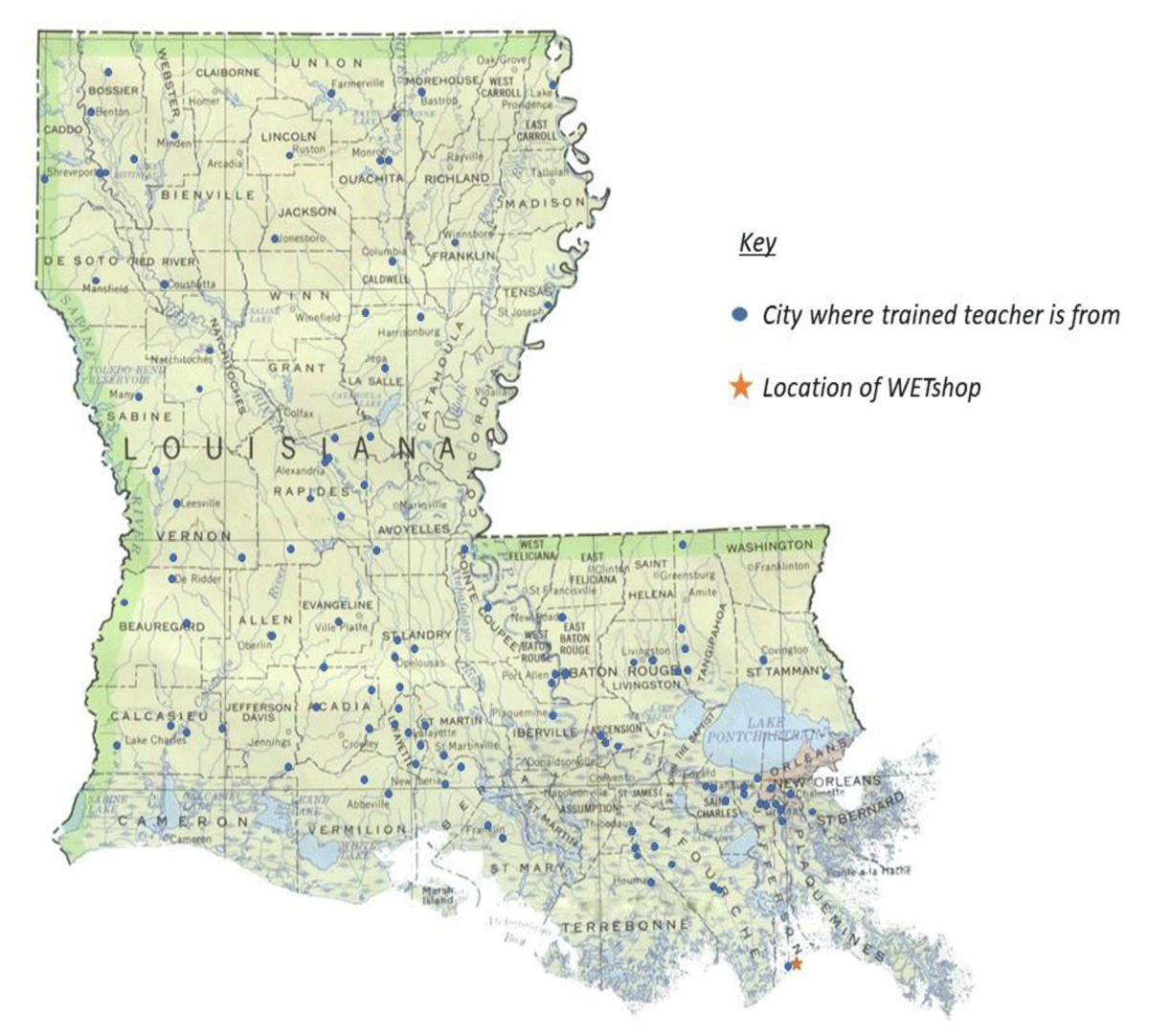
Figure 3
WETshop map. Note the location of the workshop and where participants reside. Photo: Reproduced with permission of LDWF.
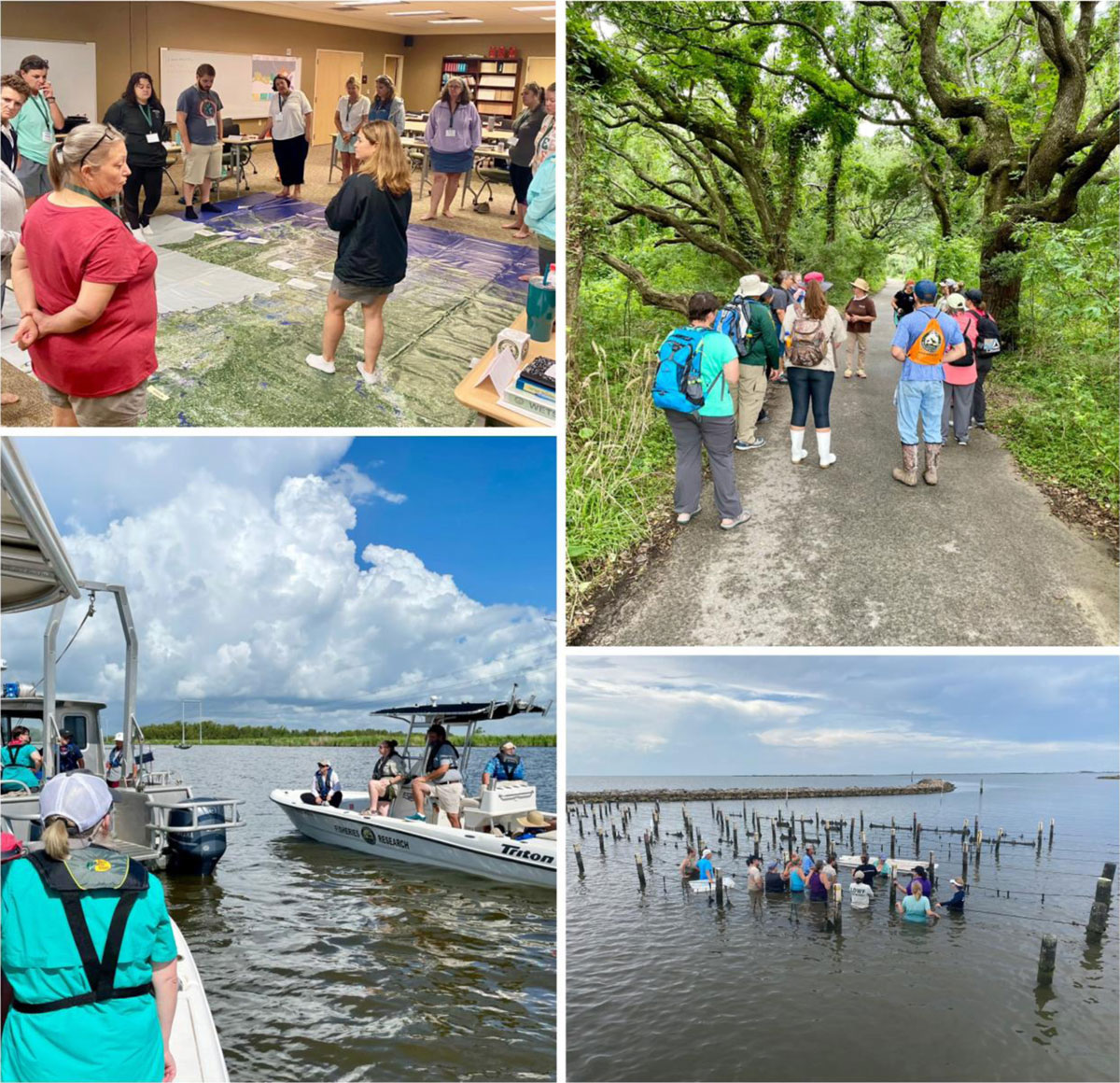
Figure 4
WETshop participants learn about Louisiana geography and natural resources using a large-scale satellite map of the state (top left), tour a maritime forest to learn about its value and importance (top right), tour an oyster farm to understand oyster ecology (bottom right), and view wetland transitional changes along the coast (bottom left). Photos: Reproduced with permission of LDWF.
“WETshop made me more excited to be a teacher and my kids more excited for class. The hands-on activities with researchers were so helpful and meaningful. It was helpful for me to have the personal experiences and photos to share with students to build connections on how our choices affect the coastline.”
“During WETshop, we had the opportunity to learn about the maritime forests, fisheries management, barrier island beach ecology, coastal restoration projects, bird life, marsh and swamp habitats, the role of oil and gas in Louisiana and marine organisms with LDWF. I was able to share my new knowledge/ideas with my students and coworkers thanks to all of the leaders. I was able to elaborate on LA State Standards such as climate, invasive species, and land loss on the LA environment thanks to this workshop.”
Native Fish in the Classroom
LDWF and Louisiana Sea Grant have partnered over the past 23 years to develop and implement Native Fish in the Classroom (NFC), which is a hands-on, conservation aquaculture program for Louisiana middle schools and high schools (Figure 5). While this program is implemented in other states and raising species such as trout, salmon, sea bass, shad, sturgeon, and American Eels, NFC in Louisiana is unique in that teachers and students are raising Paddlefish. Paddlefish were once faced with overfishing and population declines in Louisiana, but due to recreational regulations, conservation measures—including hatchery rearing of fish and maintaining suitable habitat throughout the state, and a ban on commercial fishing, their populations have rebounded (Maxwell 2025). The program is exploring the addition of Largemouth Bass for teachers and students to raise as an alternative to Paddlefish.
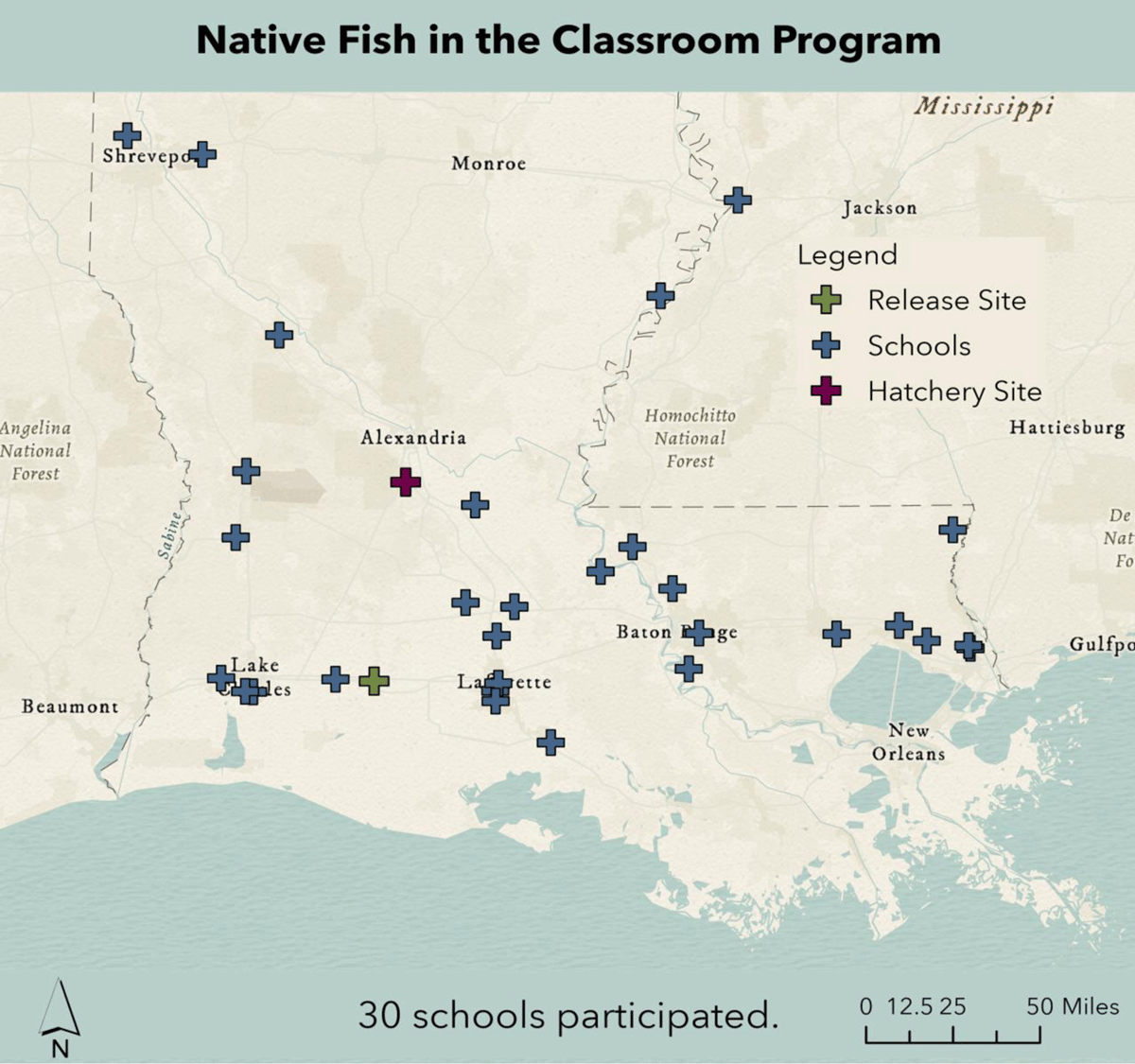
Figure 5
Participating school locations from 2018-2024. Photo: Danielle DiIullo. Reproduced with permission of Louisiana Sea Grant.
This program aligns well with the school year since Paddlefish spawning cycles coincide with the academic spring semester. Students prepare their tanks in the fall and receive bluegill or catfish from the LDWF Booker Fowler Fish Hatchery to maintain proper water quality. As the spring semester approaches, the program ramps up to collect the adult broodstock that are then used for a field trip to the hatchery for teachers and students. This much anticipated field trip allows teachers and students to experience and actively engage in an artificial spawn event. Teachers and students view the spawn process at a safe distance to ensure they are not in the way of the biologists and safe from any potential hazards. The fertilized eggs are brought back to their respective schools where they raise them to fingerling size (fingerlings are juvenile fish, about the size of a finger) before being released into the riverine system where the adult broodstock came from (Figure 6). Teachers are provided with standards-aligned materials and resources to ensure the success of this program. Additionally, LDWF provides the necessary equipment to each school in the program. LDWF hosts two workshops for teachers—one in the summer and one in the winter—to ensure they understand proper program protocols and expectations. Due to the nature of this program, we do not provide open access to our documents.
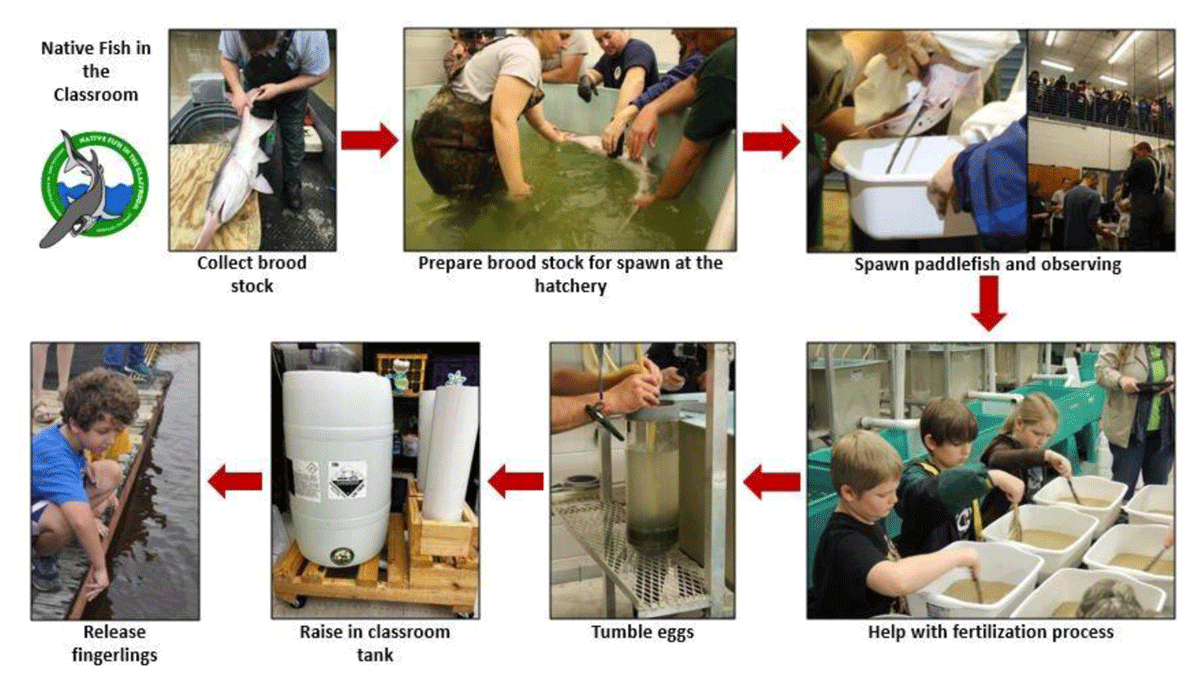
Figure 6
Sequence of events for the Native Fish in the Classroom Program. Photos: Reproduced with permission of LDWF.
Since 1991, approximately 2,400,000 hatchery-produced paddlefish have been stocked in Louisiana waterways (Reed and Maxwell 2024). Seventy-five teachers from 60 schools in 24 parishes have been part of this program since 2002.
“Through the NFC program, students are able to learn the importance of the paddlefish and other fish in our ecosystem. Students who are located in an impoverished, rural community learn valuable information about the need for a healthy ecosystem through this program.”
“The Native Fish in the Classroom program is the single best educational program I have been involved with in my 24 years of teaching. The hands-on aspect of the program is multi-faceted. Students get to take care of the tank, water quality, bring in native fish for the tanks, and measure paddlefish fry and fingerlings. We collect data on the number of eggs, the number of fry which hatch, and continue counting (by photographs) as the die off progresses. We also graph the length of fry and fingerlings.”
Teacher Activity Books
LDWF provides three free activity books, geared towards kindergarten through sixth grade. The books—Fishing for Fun, Let’s Go Fishing, and Finnie the Fingerling—focus on various aspects of aquatic education, depending on the grade level. Each book is correlated to Louisiana Student Standards for Science and provides opportunities for teachers to educate their students about fisheries-related topics relevant to Louisiana. Teachers can order student copies of their preferred book(s) online through the LDWF website (LDWF 2025b). To bring the content of these books to life, LDWF partners with several organizations that offer field trips for aquatic clinics upon completion of the Let’s Go Fishing book. Fifth grade students have the opportunity to practice their casting skills or go fishing at a local pond as well as learn about fish identification, invasive species, boater safety, and water quality (Figure 7). Over 533,500 activity books have been used by students across the state since 2006.
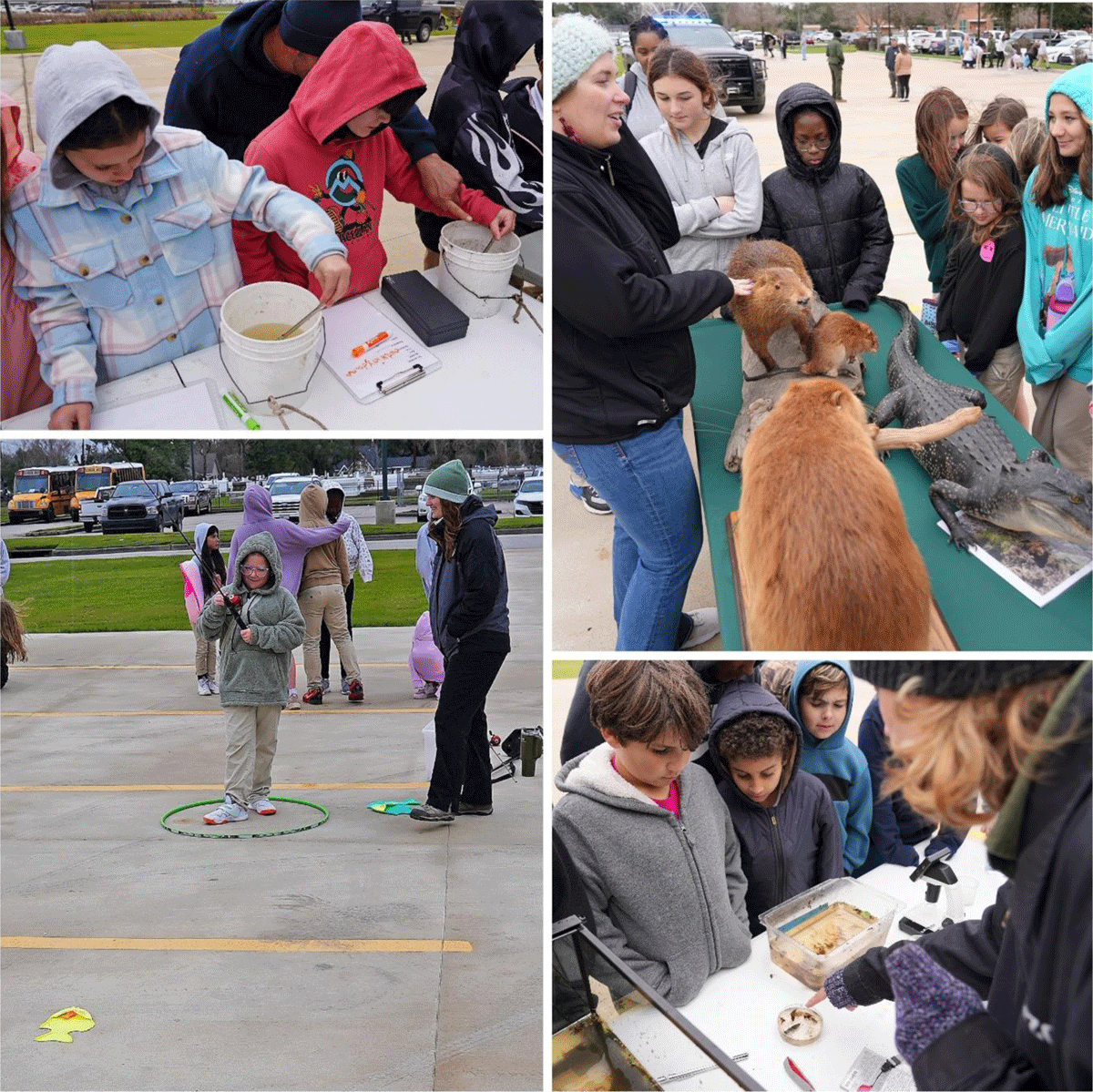
Figure 7
Students in Terrebonne Parish test their knowledge after completing the Let’s Go Fishing book in class. Photos: Reproduced with permission of LDWF.
“With limited interactive supplies and materials in the classroom, the activity books and loaner kits have significantly increased my students’ engagement and knowledge. I have even developed a unit called Fall into Fishing. I love the level of the resources and how they meet all students’ needs.”
“I have used the LDWF activity books in my classroom for years. We use Let’s Go Fishing prior to our fishing clinic and the kids really enjoy it. Even for my non-fishing kids, there’s just so much in the book. It’s a great vehicle to bring in invasive species, caring for the environment, and reviewing our ecosystem unit. I love that the kids all get their own book, and it’s free!”
In addition to the programs highlighted above, our team also participates in local and national conferences, classroom and library visits, as well as college and career fairs at schools all around the state. Partner agencies often request our assistance for student engagement events such as Ocean Commotion, Wetland Days, World Wetlands Day, and 4-H camps.
Collaborative Efforts through Partnerships and Volunteers
As a team of seven individuals covering the entire state, it can be challenging for us to be present at every requested event. On average, we receive about 12 monthly requests—with numbers peaking at 25 in busier months—to attend events around the state. The diversity of our programs attracts other state agencies, regional agencies, federal agencies, non-profit organizations, and local environmental organizations that want to help us improve our reach and program success. Additionally, we are often asked to assist at events that are hosted by the aforementioned agencies—further strengthening the partnerships between us. These collaborations bring in unique perspectives, streamline our goals, as well as share enhanced levels of expertise.
The Aquatic Volunteer Instructor Program (VIP) is designed to increase aquatic education throughout the state by extending LDWF’s reach in teaching and encouraging wise utilization of Louisiana’s fisheries resources. This program is unique in that both the general public and educators benefit from this training. Our volunteer instructors, or VIPs, attend a training workshop which covers topics including knot tying, casting techniques, fishing safety, fish identification, fish anatomy, invasive species, fisheries management, pond ecology, and marine debris (Figure 8). Upon successful completion of the training, certified instructors have access to loaner kits, activity guides, lesson plans aligned to state standards, and other educational resources. We currently have about 70 active volunteer instructors who play a critical role in helping LDWF promote fishing and aquatic education throughout Louisiana. This program is the main hub of all other programs and acts as the bulging eye component of the fisheye lens. Aquatic VIP provides many opportunities to volunteer with all other programs that we offer.
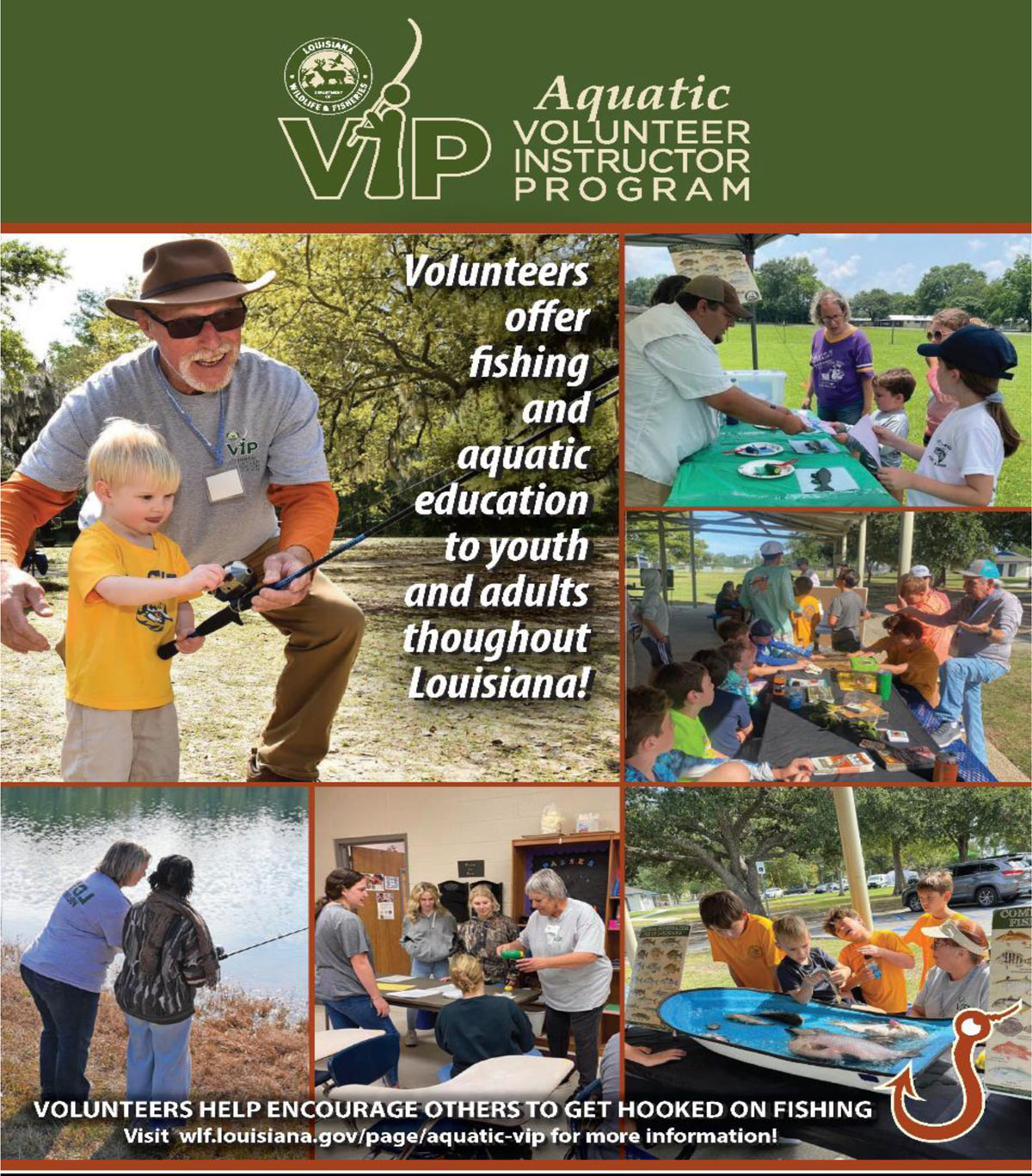
Figure 8
Certified volunteers teaching aquatic activities at various events. Photo: Reproduced with permission of LDWF.
“Sharing fishing and aquatics with youth is the most rewarding part of volunteering. Seeing that first fish caught, or that biggest fish caught, are the moments that I’ll never forget!”
“The Aquatic VIP training really played a large part in igniting our passion and purpose for sharing aquatic education and conservation with our youth. We currently serve over 1,150 youth in school clubs across Natchitoches Parish and over 5,000 youth in enrichment settings. The VIP training itself was very informative, engaging, and fun. The binder of curriculum and resources that we received has been so valuable. The partnership that Natchitoches Parish 4-H has developed with LDWF is vital to our programming efforts, and for this we will forever be thankful.”
Conclusion
Looking back through the fisheye lens, it is easy to see the detailed, panoramic view of all that we do as a section. While all Aquatic Outreach and Education programs focus on aquatic education in some capacity, each program has its own unique approach to teaching future generations about the abounding natural resources in Louisiana. Any of our programs can easily be replicated in other states, with modifications as needed (RBFF 2010). The success of these programs would not be possible without the collaborative efforts of multiple statewide agencies and organizations. Additionally, the eagerness of participants and volunteers to learn new techniques and skills keeps these programs thriving. Aquatic education not only aims to improve angling skills and teaching skills but also other important life skills, fostering responsible stewards of their communities and environment. Our aquatic education programs promote a deeper understanding of fish habitats, conservation practices, and sustainable fishing techniques. By educating anglers about ecosystem health and responsible resource management, these programs help ensure the long-term vitality of both fisheries and the sport itself. Over time, our programs have shown that hands-on experiences are crucial to engaging participants, partnerships strengthen impact by expanding our reach and resources, and continuous adaptation keeps these programs relevant and appealing by updating content to address emerging issues, such as invasive species.
Reproducibility
For access to program resources, all interested parties must attend the proper trainings and receive full certification. We want to ensure that all LDWF volunteers comply with our policies.
Additional File
The additional file for this article can be found as follows:
Ethics and Consent
Informed consent to provide feedback regarding program impacts was provided by all participating parties except for those who completed feedback forms anonymously.
Acknowledgements
All Aquatic Outreach and Education Programs would not be possible without working in conjunction with the Louisiana Wildlife and Fisheries Foundation (LWFF). The LWFF was formed to provide a means for individuals and corporations to become partners with LDWF and the Louisiana Wildlife & Fisheries Commission in the challenge of conserving Louisiana’s wildlife and fisheries resources (LWFF 2025). Our Outreach Staff would like to thank the LWFF for their continued support of our programs. Additionally, we would like to thank all of our partner organizations who assist in making our programs the successes that they are in the state of Louisiana.
Competing Interests
The author has no competing interests to declare.