
The Gulf Coast of the United States is a region deeply connected to the ocean, making marine and ocean literacy essential for students to understand their environment. With threats like oil spills, hurricanes, and rising sea levels, it’s vital that students grasp how their local ecosystems function and how human actions impact them. Oftentimes these ecosystems are learned about through textbooks, but teachers can educate their students on these essential topics while enhancing their connection to their environment and community through the use of place-based education (Deringer 2017; Sherfinski 2023). Place-based education is defined simply as using the local environment as the context for teaching and learning. By focusing on local challenges and solutions, such as restoring mangroves, protecting marine species, or the role of wetlands in protecting communities, students can more easily grasp abstract scientific concepts and see the everyday relevance to what they are learning. Through place-based education, educators can nurture a generation of environmental stewards who are not only informed about the region’s issues but are also motivated to act, ensuring the preservation and sustainability of their coastal heritage.
Over three grant cycles, the Gulf Research Program’s Board on Gulf Education and Engagement (BGEE) has demonstrated how impactful programs can be in nurturing this next generation of environmental stewards by rooting programmatic work in place-based education. With BGEE’s focus on the five Gulf Coast states—Florida, Alabama, Mississippi, Louisiana, and Texas—this article will highlight several projects from across the region that were funded to explicitly focus on integrating ocean literacy, marine education, and watershed lessons with place-based education, stressing the importance of local environmental engagement in the Gulf Coast region. It will also demonstrate how using this framework as a structure for programmatic activities enabled success in advancing ocean literacy and marine education through the lens of place-based education.
Introduction to the Board on Gulf Education and Engagement
The Gulf Research Program is a funding entity under the National Academies of Sciences, Engineering, and Medicine (NASEM). In 2013 the Department of Justice entrusted NASEM with $500 million in funds from the criminal settlement of the Deepwater Horizon Oil Spill. The leadership of the NASEM in turn supported the Gulf Research Program as a division within the Academies. As the program found its footing, it became apparent that an explicit focus on preparing the future generation to be leaders in the region would be critical to long-term regional success and the Board on Gulf Education and Engagement was created to oversee this part of the portfolio. The aim of BGEE’s work is to support the development of generations of environmentally and scientifically literate people with leadership skills and capacity for solving complex social and environmental challenges in the Gulf Coast region through education, outreach, research, and experiential opportunities. BGEE contributes to the Gulf Research Program’s vision of a safer, more resilient, and sustainable future for the Gulf and for all those who call the region home by supporting the development of a sense of place and building environmental and scientific knowledge and skills.
BGEE’s efforts are based on the belief that in order to prepare for a future of increasing environmental impacts, communities need to implement more policies and practices that allow all their members to thrive and be resilient. These policies and practices should be informed by engaged community members and leaders who understand the causes of natural hazards and its impacts on their own lives now and in the future. Decisions about how to build more resilient communities should be based on scientific, traditional, and community knowledge, and represent the values of society because this contributes to better accepted and more robust policies (Bozeman & Sarewitz 2011).
To better serve the people of the Gulf Coast, BGEE roots its efforts in place-based education. The history of place-based education can be traced back to teaching philosophies and practices of indigenous peoples such as Native Americans and Alaska Natives (Cajete 1994) and the locally situated, culturally, and environmentally informed pedagogies used by educators, described and advocated for by Dewey (1916).
Place-based education directly supports ocean and marine literacy by fostering a strong connection between students and their local ecosystems, particularly coastal and marine environments. This approach “helps students understand the relationship between people and the places they live,” (Smith 2002) allowing them to explore and engage with environmental issues that are relevant to their communities. In the context of ocean literacy, place-based education encourages students to investigate local marine environments like beaches, wetlands, and coral reefs, and to learn about the challenges these areas face, such as pollution and habitat loss. This hands-on, localized learning helps students develop a sense of responsibility toward preserving their marine resources and equips them with the knowledge needed to actively participate in conservation efforts. Through this deep connection to the environment, students are empowered to become informed stewards of the ocean and its ecosystems.
Developing a strong sense of place is especially crucial for students in the Gulf Coast region due to the area’s unique environmental challenges and vulnerability to natural disasters. The Gulf Coast faces frequent threats such as oil spills, hurricanes, and habitat loss, which directly impact both the local communities and the marine ecosystems they depend on. By fostering a deep connection to the region’s environment, students gain a personal understanding of the critical issues affecting their surroundings, from the importance of wetland protection to the restoration of damaged coastal habitats. This connection not only encourages a sense of responsibility but also empowers students to take an active role in preserving the Gulf’s delicate ecosystems. As the region faces ongoing environmental challenges, nurturing a sense of place ensures that future generations are motivated to protect and restore the Gulf Coast for years to come.
Connecting Place-Based Education to Ocean Literacy and Marine Education
The Gulf of America (internationally known as the Gulf of Mexico) is a 218,000 square mile oceanic basin which includes 17.2 million acres of marsh and almost 30,000 miles of tidal shoreline. The impact of the region on the US economy is astounding—with approximately half of the total US petroleum refining and natural gas processing in the region—along with the healthy recreation, leisure, and tourism industries (NOAA 2024). Despite the environmental and socioeconomic importance of the Gulf, environmental literacy and more specifically ocean literacy concepts are not part of formal learning standards in most of the region. Place-based education, coupled with environmental and ocean literacy efforts, can play a crucial role in cultivating environmental stewardship and a strong sense of responsibility toward marine ecosystems (Stocco & Rocca 2024), which is critical in ensuring future generations can protect and preserve an already fragile Gulf Coast region.
Florida
A 2023 project, A Watershed Event (AWE): Empowering K-8 Youth through Place-Based Education, led by Dr. Donna Ellen Granger of Florida State University, aims to deepen students’ understanding of the Gulf region through a combination of informal and formal interactive science experiences. The initiative focuses on ambitious science teaching, where teachers guided students in exploring and making sense of scientific concepts. Students investigate the effects of nutrient loading and climate change on local ecosystems, especially seagrass and harmful algal blooms (HABs), while engaging in citizen science monitoring and environmental action projects (Figure 1).
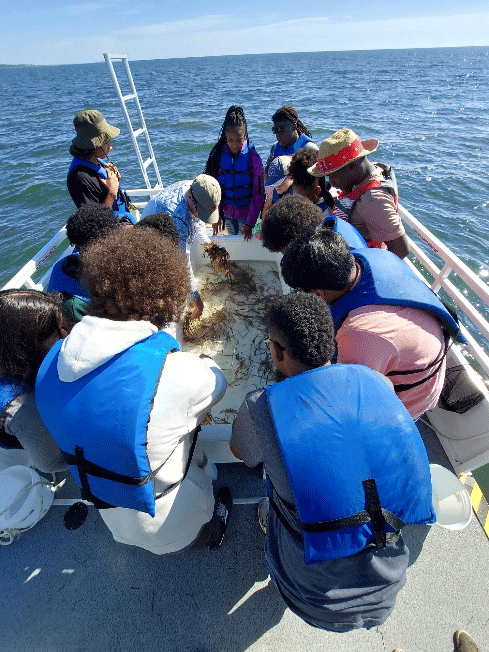
Figure 1
Informal field experiences (Granger).
The project targets K-8 students from five counties bordering Apalachee Bay, consisting of both rural and urban low socioeconomic populations. It aims to raise awareness of how local actions impact the coastal watershed and tap into students’ growing passion for climate change and environmental conservation. Teachers participate in professional development to support the integration of place-based education and improve their science teaching practices. Ultimately, the project aims to inspire stewardship for local watershed resources and instill a conservation mindset in the students.
Mississippi/Alabama
The Biodiversity, Relationships, and Aquatic Chemistry Knowledge in Saline Habitats (BRACKISH) project, directed by Ms. Ayesha Gray, the Director of the Grand Bay National Estuarine Research Reserve (GNDNERR) in Moss Point, Mississippi and funded by BGEE in 2022, aimed to enhance environmental literacy among eighth-grade students in Pascagoula and Moss Point. Using place-based, hands-on learning, the project focused on local estuarine ecosystems and water quality. Over three days, students first learned about the GNDNERR estuary and its species, then visited the reserve to collect water quality data and sample species. On the final day, students engaged in role-playing case studies on local water quality issues, discussing human impacts and solutions. The project aimed to deepen students’ connection to their environment and emphasized the importance of water quality and estuarine conservation by using inquiry-based and hands-on learning approaches to improve environmental literacy. The project targeted underserved middle school students in minority communities, offering a free program that promoted environmental stewardship, scientific literacy, and a connection to the local estuary.
Louisiana
In the first round of projects funded in 2022 under BGEE’s Empowering K-8 Youth through Place-Based Education Projects and Programs grants, Puddles & Floods: Learning to “Read” Flood-Prone Landscapes of the Lower Mississippi River aimed to enhance water literacy among upper elementary and middle school students in Southeast Louisiana, where flooding is a frequent issue. Led by Ms. Claire Anderson, Executive Director of the Ripple Effect Water Literacy Project, students engaged in hands-on field investigations, first in their schoolyard and then at off-campus flood control sites, to explore the causes, contributors, and impacts of flooding. Through these activities, they developed skills in “reading” landscapes and understanding flood-related phenomena, combining environmental, engineering, social, and economic perspectives.
The project involved 1,500 students across Orleans and East Baton Rouge parishes. It began with a lesson based on a real-world flood story, followed by schoolyard investigations into water movement and flood patterns. In later lessons, students visited flood control locations such as the Bonnet Carré Spillway and Mardi Gras Pass to apply their learning to larger flood management systems. They explored both the negative and positive aspects of flooding, including how it can create new land in some areas.
In the final phase, students created and shared personal stories or short films about flooding, drawing on their experiences and the knowledge gained throughout the unit. This culminated in a class presentation of their creative responses, helping students communicate their understanding of local water issues.
Texas
The OCEANS program (Oceanography, Conservation, Ecology, Arts, Nature, and Stewardship): Building Resilience Through Place-Based Learning was implemented in K-8th grades at Flour Bluff Independent School District (FBISD) in 2023, directed by Ms. Katie Doyle. The program aimed to increase STEM literacy and engage minority, economically disadvantaged students at risk of dropping out. By using place-based learning, it focused on local ecosystems such as freshwater, saltwater, and coastal habitats, offering hands-on activities like field trips, kayaking, fishing, and art projects to foster scientific inquiry and improve academic performance (Figure 2).
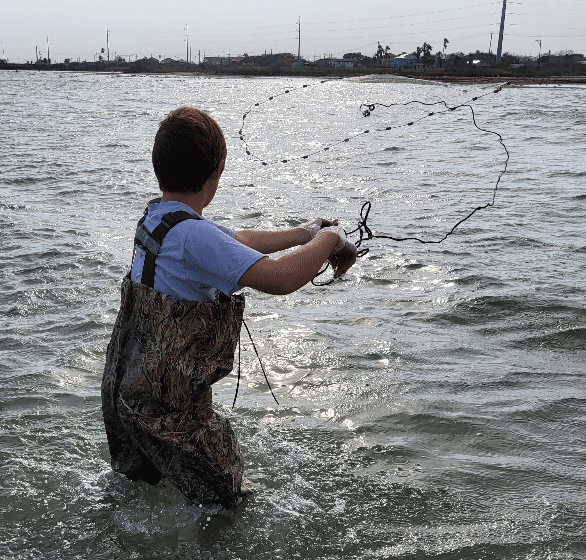
Figure 2
Dimit Pier Research (Doyle).
The program was aligned with Texas Essential Knowledge and Skills (TEKS) and included culturally responsive teaching. Sixth- to eighth-grade students mentored younger students, deepening their connection to the local environment and developing leadership skills. Through citizen science and environmental stewardship projects, students contributed to addressing local ecological issues and created an Environmental Stewardship and Literacy Plan with recommendations for the community.
Collectively, these place-based education projects across the Gulf Coast are advancing ocean literacy and marine education by engaging young learners with local environmental issues and providing professional development for educators. Through place-based education projects like these four, the GRP aims to increase scientific and environmental literacy across the region.
Outcomes and Impacts
Grantees funded under the Board on Gulf Education and Engagement are required to submit annual progress reports. The outcomes and impacts detailed below are reported from the project director. Some grants are finished while others are still in progress, therefore this section will demonstrate both formative and summative findings from the portfolio.
Florida
Funded in 2023, the AWE project has recently wrapped up and reported on their first year of project activities which focused on revising and testing the curriculum designed to engage students with topics such as food webs (Figure 3), eutrophication, and watershed issues. A week-long professional development (PD) was held in July 2023 at the FSU Coastal and Marine Laboratory (FSUCML), with five teachers participating. Four teachers from three schools implemented the revised curriculum during the 2023/24 academic year, leading field experiences at the FSUCML. The teachers provided valuable feedback through post-teaching interviews, and this feedback was used to revise both the formal classroom curriculum and informal field experiences. Additionally, student pre/post content assessments were developed to measure learning outcomes, and these results will inform future revisions.
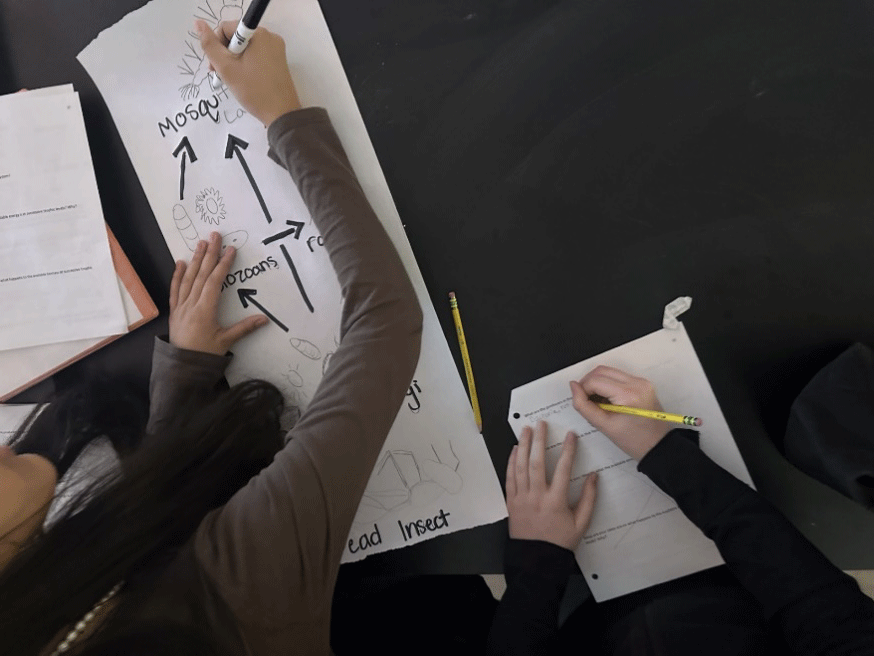
Figure 3
Student food web exercise (Granger).
Reporting submitted to the Gulf Research Program in early 2024 indicated that, with preparations for the summer 2024 PD underway, 22 teachers from three counties had already signed up. These teachers would participate in PD activities designed to enhance their ability to implement the curriculum and engage with the informal field experiences. Transportation was provided for teachers who needed it. The project team is actively refining the curriculum and field experiences based on the feedback from both teachers and students, and the summer PD will serve as an opportunity to continue to improve these materials in anticipation of broader classroom implementation during the 2024/25 academic year.
Mississippi/Alabama
The BRACKISH project has successfully implemented 12 programs with students and teachers, with 11 conducted during the 2023–2024 school year, impacting 520 eighth graders and 22 teachers/chaperones. The programs included interactive presentations, field trips, and “city council meetings,” offering students hands-on learning experiences to explore local habitats and participate in scientific data collection. Due to the limitations of the program’s 36 ft passenger vessel, larger student groups were divided into smaller teams, ensuring every participant experienced both on-site and boat-based activities. These activities covered topics like living shorelines, water quality testing, and aquatic species sampling (Figure 4), fostering a deeper connection with the local environment.
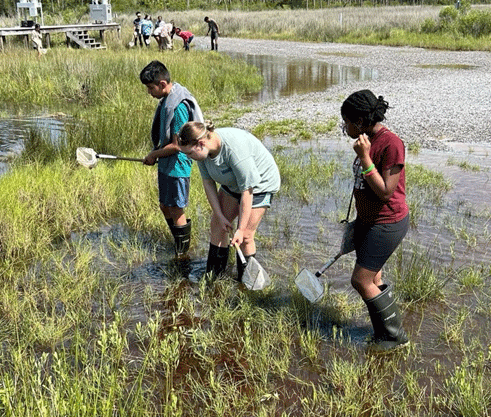
Figure 4
Aquatic species sampling (Gray).
Preliminary evaluation results indicate that the program effectively enhanced students’ understanding of environmental science, with post-test scores significantly higher than pre-test scores. A paired samples t-test revealed a significant increase in scores (p = .023), validating the program’s impact. The success of BRACKISH has led to strong interest from participating schools with teachers and students expressing excitement and anticipation for activities that were planned for Fall of 2024.
Upon completion of the program, a BRACKISH infographic, lesson activities, and the final curriculum should be available on the Grand Bay NERR website.
Louisiana
The Puddles & Floods: Learning to “Read” Flood-Prone Landscapes of the Lower Mississippi River project provided immersive, field-based professional development for four teachers across five weeks, including three full days of learning and daily coaching. During the first year of the project, the team carried out 3 field-based excursions with teachers and students in New Orleans. Two of these field trips were to Audubon Nature Center to collect infiltration, topography, and surface material data in the natural environment and the other field trip was a tour of a green infrastructure site led by a project partner, Groundwork NOLA. The Puddles & Floods project culminated in a peer-reviewed journal article summarizing the first year of their project (Sprague et al. 2024).
Students in the program were surveyed on various aspects of their understanding and attitudes. These survey data highlight that the students experienced increases in agency based on the students’ attitude towards problem solving strategies. Teachers participating in the program reported increased student engagement, with one teacher saying “everybody feels like they’re a part of [the activity].” Preliminary evaluation results indicate that student knowledge increased as demonstrated by an increase in student scores of their self-drawn models of water permeability in different environments (Figures 5 & 6).
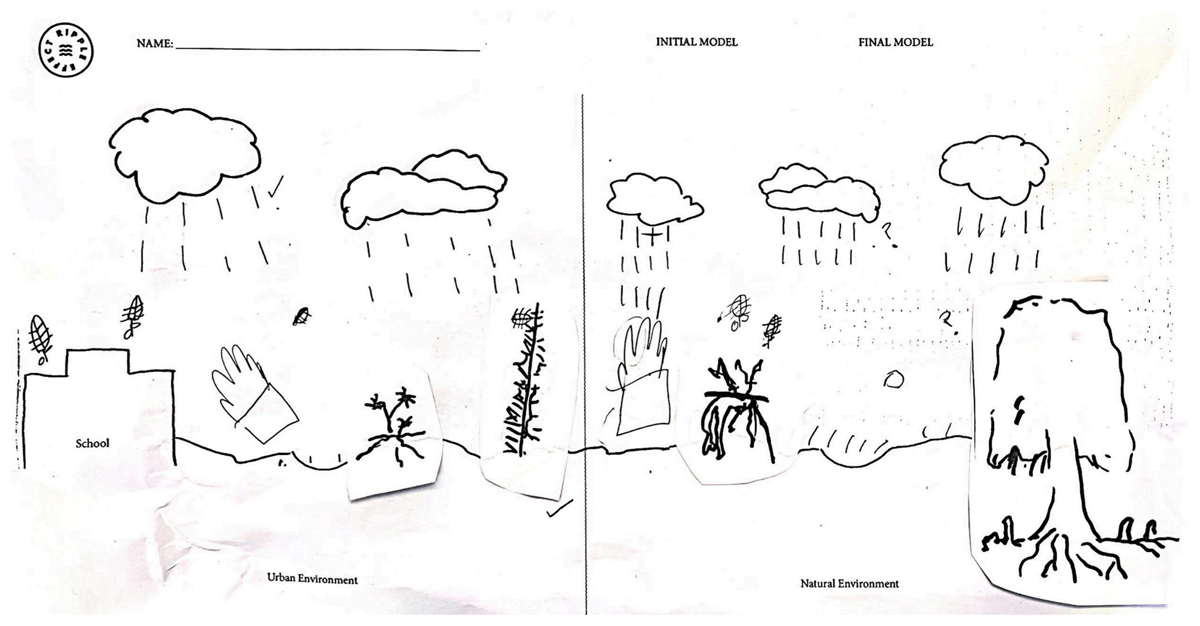
Figure 5
3rd grade student, initial model (student name redacted).
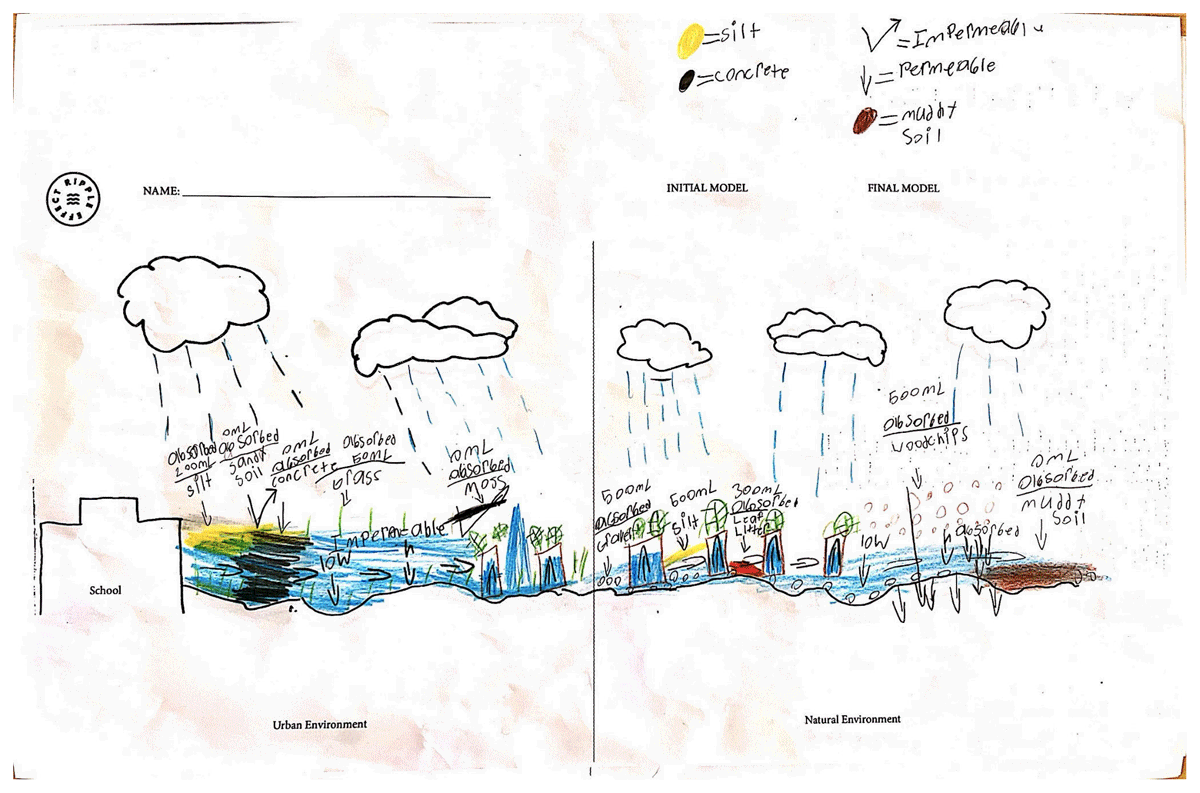
Figure 6
3rd grade student, final model (student name redacted).
Texas
The OCEANS program, which engaged 20 teachers from the Flour Bluff School District (FBISD), focused on promoting ocean literacy and environmental stewardship through place-based education. Over the first year, teachers developed lesson plans that incorporated outdoor lessons and an art component, covering topics such as animal research projects and bioluminescence. Students also participated in field trips to local sites, like the Texas State Aquarium and estuaries, deepening their connection to marine ecosystems. Environmental data, including water temperature, salinity, and pH, were collected by students, and middle school students (OCEAN Ambassadors) played a key role in educating younger students through field trips and hands-on activities. The program worked toward creating an Environmental Stewardship and Ocean Literacy Plan, with surveys conducted to gather community feedback, which will be used to refine the plan in 2025.
Teacher confidence in ocean literacy improved significantly as a result of the OCEANS program. Pre- and post-surveys revealed a notable increase in teacher confidence in teaching ocean-related content, with statistical analysis showing significant improvements in seven out of ten areas. While three questions did not show significant differences, teachers still expressed satisfaction with the program, noting that students enjoyed learning about the ocean and developed a stronger connection to local ecosystems. The program also included outreach events where the public and students participated in hands-on activities like seine and cast net fishing, water quality testing, and nurdle collection, all promoting ocean literacy and environmental awareness. The OCEANS program proved successful in enhancing teacher preparedness and boosting ocean literacy in the local community.
In addition to advancing general ocean and marine literacy through place-based education, these projects also work towards GRP’s goal of contributing to a next generation equipped with the scientific and environmental literacy necessary to address the complex scientific and environmental challenges facing the Gulf Coast. BGEE’s theory of change includes multiple outcomes of interest that are addressed by place-based education, such as increasing scientific and environmental literacy and increased knowledge about the region. These projects highlight how place-based education can support ocean literacy by enabling students to understand concepts at a local and more tangible level and provide a model for future programs on how to further literacy goals by incorporating a place-based lens.
Conclusion
The Ocean Literacy Scope and Sequence page from the National Marine Educators Association provides a structured guide for K-12 educators, helping them develop a comprehensive understanding of ocean concepts across grade bands. While the document primarily focuses on ocean literacy and building scientific knowledge, place-based education fits within this framework by encouraging educators to tailor lessons to local marine environments. By using local examples—such as nearby coastlines, watersheds, or regional marine issues—teachers can enhance students’ connections to their immediate surroundings. Place-based education strengthens this sense of place, encouraging students to see how global ocean concepts apply directly to their lives and communities. Thus, place-based education supports ocean literacy by grounding abstract scientific principles in the students’ local environmental context.
For students in this region, learning about the Gulf’s ecosystems through a place-based approach allows them to connect personally to the environment around them. They can better understand the role of local marine life, such as sea turtles and fish populations, and the impact of human activity on these species, by seeing it in context. Scientific and environmental concepts are made relevant to students by approaching them from a local perspective, enabling them to engage with the educational content more fully. Examples of this might include:
Students could explore and experiment with how different environments and materials absorb water and contribute to flooding in their local parking lots and green spaces.
Students could safely collect, sort, weigh, and map trash in their local waterways (e.g. streams, creeks, drainage ditches, stormwater catch basins, etc.) and then communicate their findings to local leaders and the community.
Students could contribute to citizen science efforts like identifying and monitoring various bird species to better understand the marine ecosystem health.
Students can explore their local history and interview local leaders to better understand what decisions were made to foster both the built and natural environment around them, building student agency.
Additionally, by studying local issues—like how wetlands protect communities from storm surges or how healthy coral reefs contribute to a thriving local economy—students develop a sense of responsibility for protecting the Gulf.
In a region where the environment is inextricably linked to local industries, livelihoods, and culture, fostering a sense of place can motivate young people to become active participants in conservation and stewardship. Ultimately, place-based education empowers students to take action to safeguard the Gulf’s unique ecological and cultural heritage for future generations.
Competing Interests
The authors have no competing interests to declare. The authors are solely responsible for the content of this paper, which does not necessarily represent the views of the National Academies of Sciences, Engineering, and Medicine.