
The prospect of the Roman Forum as an archaeological site was created during the first four decades of the Italian nation, from 1870 to the early 1910s (Figure 1). Alessandro Sebastiani’s expansive analysis of archaeological practice in these years exposes the ways that isolating, revealing, and as a consequence, creating ancient places such as the Forum served the ideology of the modern Italian state.1 By the early 20th century, the state had succeeded in transforming the Campo Vaccino into an historic site that embodied the idea of ancient Roman power while projecting the potential of the new nation. The two major protagonists tasked with shaping the Forum in this way were the archaeologists Rodolfo Lanciani (1845–1929) and Giacomo Boni (1859–1925). They directed the excavation there in turn. Together they were successful in shaping the Forum even as sharp differences existed between them, in terms of their intellectual positions towards the past as well as their methods of excavating and preserving it.
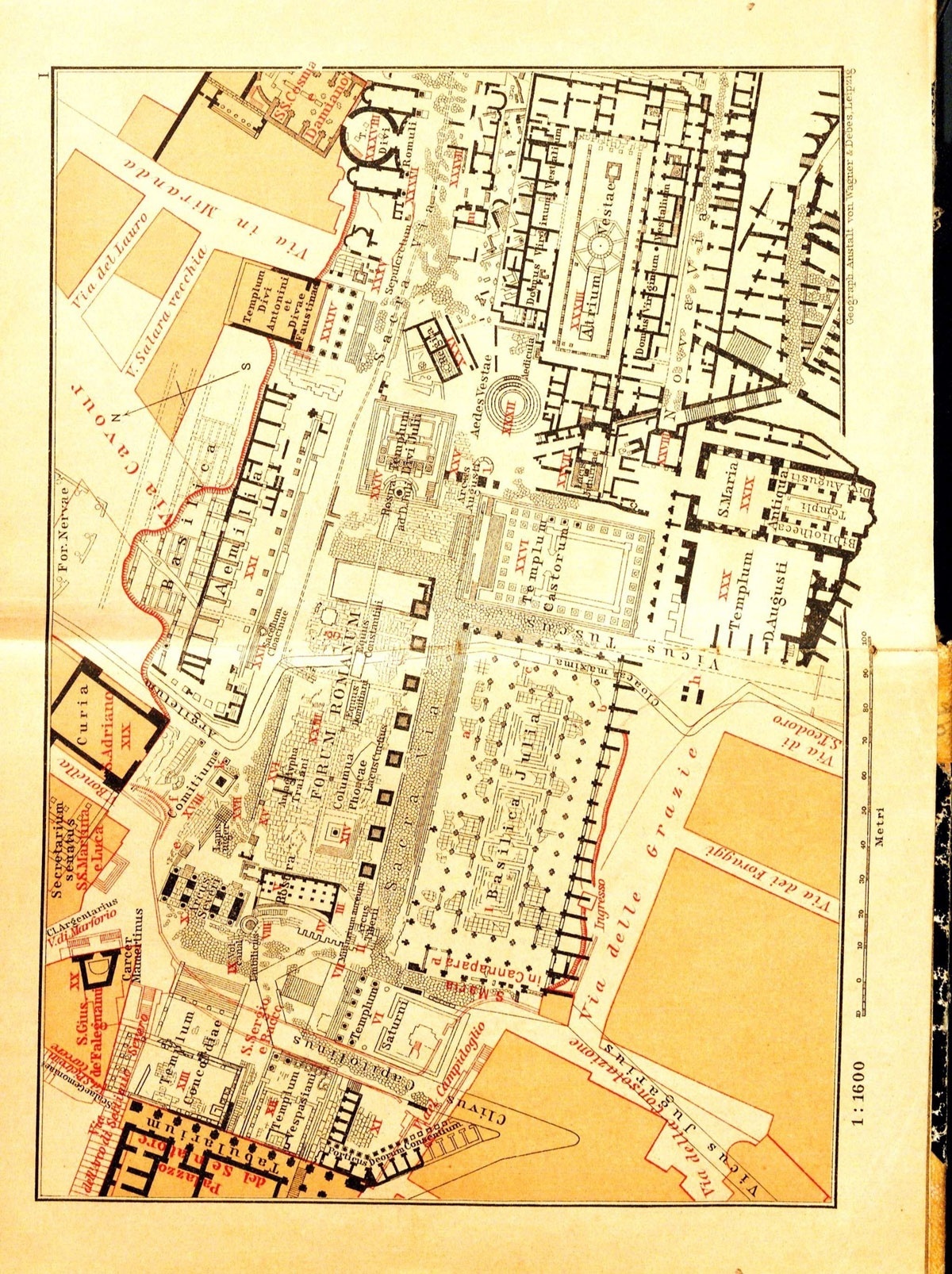
Figure 1
Plan of the Roman Forum. Foldout illustration from Christian Huelsen, The Roman Forum: its history and its monuments, translated by Jesse B. Carter. Loescher & Co., 1906.
This essay will not add new information to our understanding of the history of the clearing of the Forum itself, nor of the archaeologists’ contentious relationship, as these are subjects that are well documented in the scholarly literature. Instead, it will focus on what the contrast between Lanciani’s and Boni’s thoughts and behaviors discloses about the history of the nascient field of archaeology in the service of a national government, at a time when the bureaucractic framework of that government was itself under construction. Specifically, it will concentrate on the changing circumstances in which the two men worked: how decisions were made about what to excavate, and how knowledge from the excavations was interpreted and transmitted to others. Charting these two matters during Lanciani’s and Boni’s respective directorships exposes some growing pains in the practice of classical archaeology in Rome. That the excavation site was the Roman Forum, whose fate was of extreme interest to many, facilitated the dicipline’s evolution.
A summary of what they accomplished follows. Lanciani directed the excavation from c. 1875 until 1885, concentrating his efforts on disengaging major structures from accumulated sediment.2 Boni labored there intensively from late 1898 through 1904, and less intensively for the next decade, until Italy’s entry into World War I.3 He expanded the boundaries primarily to the north and east, and dug deeply within the Forum’s surface. Scholars have provided good accounts of what Lanciani and Boni uncovered in the Forum, particularly since Boni’s archival materials recently have become accessible.4
These include the following.5 Lanciani inherited a site in which the base of the Basilica Aemilia had been partially exposed, and that of the Arch of Septimus Severus was visible through a well around the monument’s perimeter (Figure 2).6 The platforms of the temples at the foot of the Capitoline Hill and of the structures on the Forum’s northwestern edge were in the main still concealed. Lanciani brought down the level of the central area of the Forum to establish a smooth surface. In the process, he dug out some temple bases. Famously, he destroyed part of the Orti Farnesiani on the slope of the Palatine Hill and thus exposed the Atrium Vestae buried beneath it (Figure 3). As a topographer, he prioritized locating the ancient roads that ran through or skirted the Forum.7 The ancient authors often mentioned the location of since-lost structures in relation to the streets, thus finding those streets aided in Lanciani’s decisions about where to excavate.
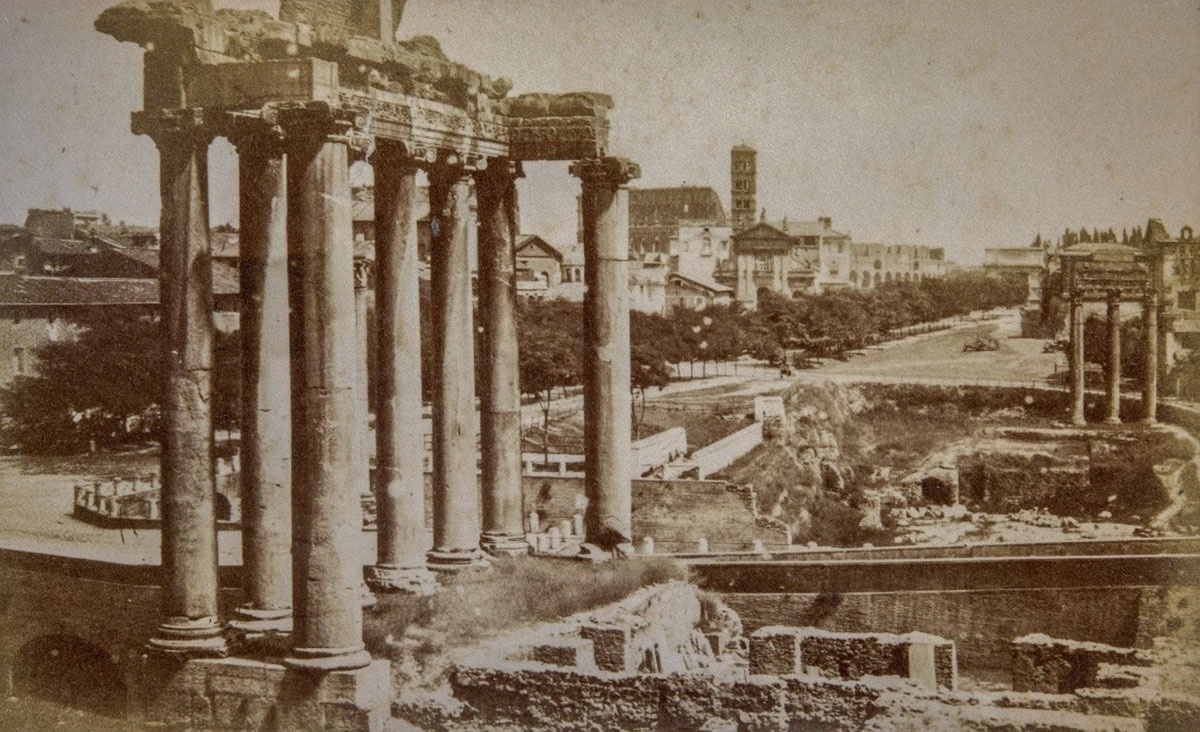
Figure 2
Unknown photographer, View of the Roman Forum from the Campidoglio; the Arch of Septimus Severus is obscured by the Temple of Saturn, c. 1870 (Biblioteca Vallicelliana, Rome, inv. 110483; BVF07018).
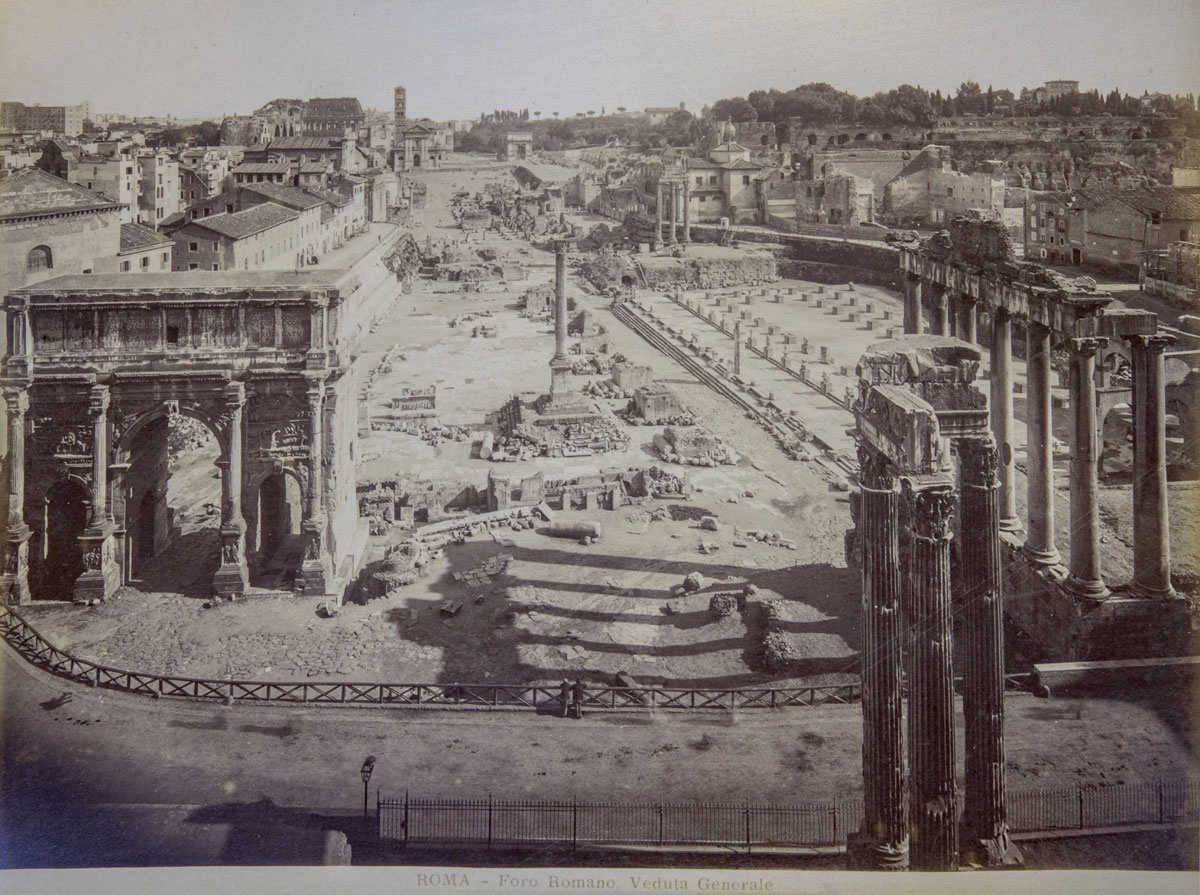
Figure 3
Unknown photographer, View of the Roman Forum from the Tabularium, c. 1885 (Biblioteca Vallicelliana, Rome, inv. 108657(24), BVF01868).
For his part, Boni removed sediment in nearly all areas of the Forum, and revisited monuments which Lanciani or others had engaged with earlier. This included bringing down the level to reveal the footprints of the Regia and the Temple of Vesta on the eastern part of the site, and the platform of the Temple of Saturn to the west. In addition, he uncovered the Basilica Iulia, whose location had long been a subject of speculation. His excavation in the spur of land near the Temple of the Castors—which entailed the destruction of the 17th-century church of Santa Maria Liberatrice—yielded fresh finds, including the remains of the Lacus Iuturnae (Figure 4). However, he is best known for probing the Forum deeply. In this way, he made two remarkable discoveries that provided evidence of Rome’s pre-Republican history. In his first year working in the Forum, in the area of the Comitium, he encountered the Lapis Niger, a shrine containing an archaic stele. Its inscription intimated that it was dated to the period of the ancient kings (Figure 5). Then, in the first years of the 20th century, Boni brought down the level of the Via Sacra considerably, to correspond to the Regia’s inner chambers. In the process, he located some prehistoric graves near the Temple of Antoninus and Faustina (Figure 6).8 Boni held that he was guided by intuition about ancient culture rather than a study of classical texts, thus distinguishing his process from Lanciani’s.
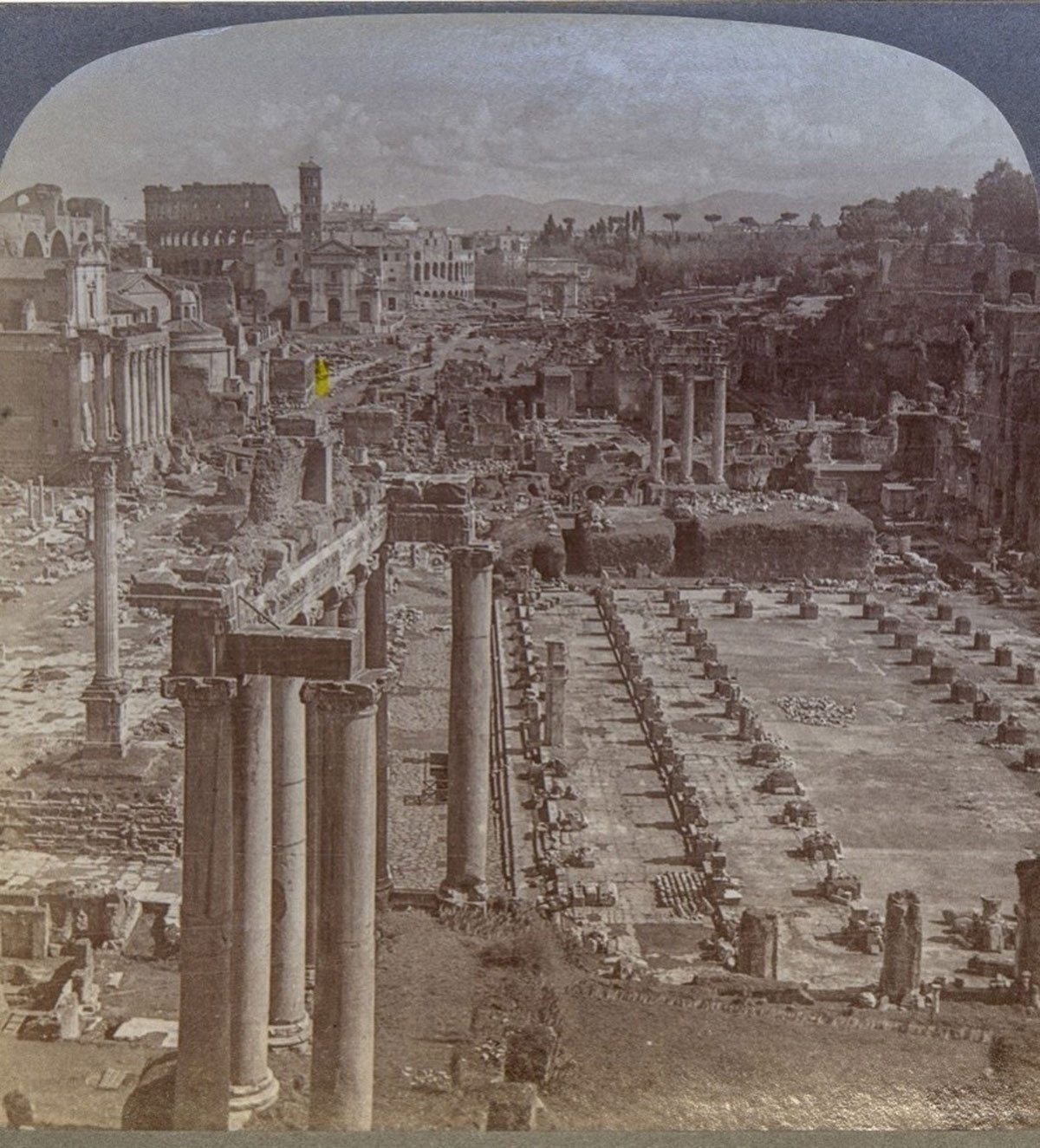
Figure 4
Underwood & Underwood, The Roman Forum from the Tabularium, photograph for stereoscope, 1900-1910 (Biblioteca Vallicelliana, Rome, inv. 109271, BVF01051).
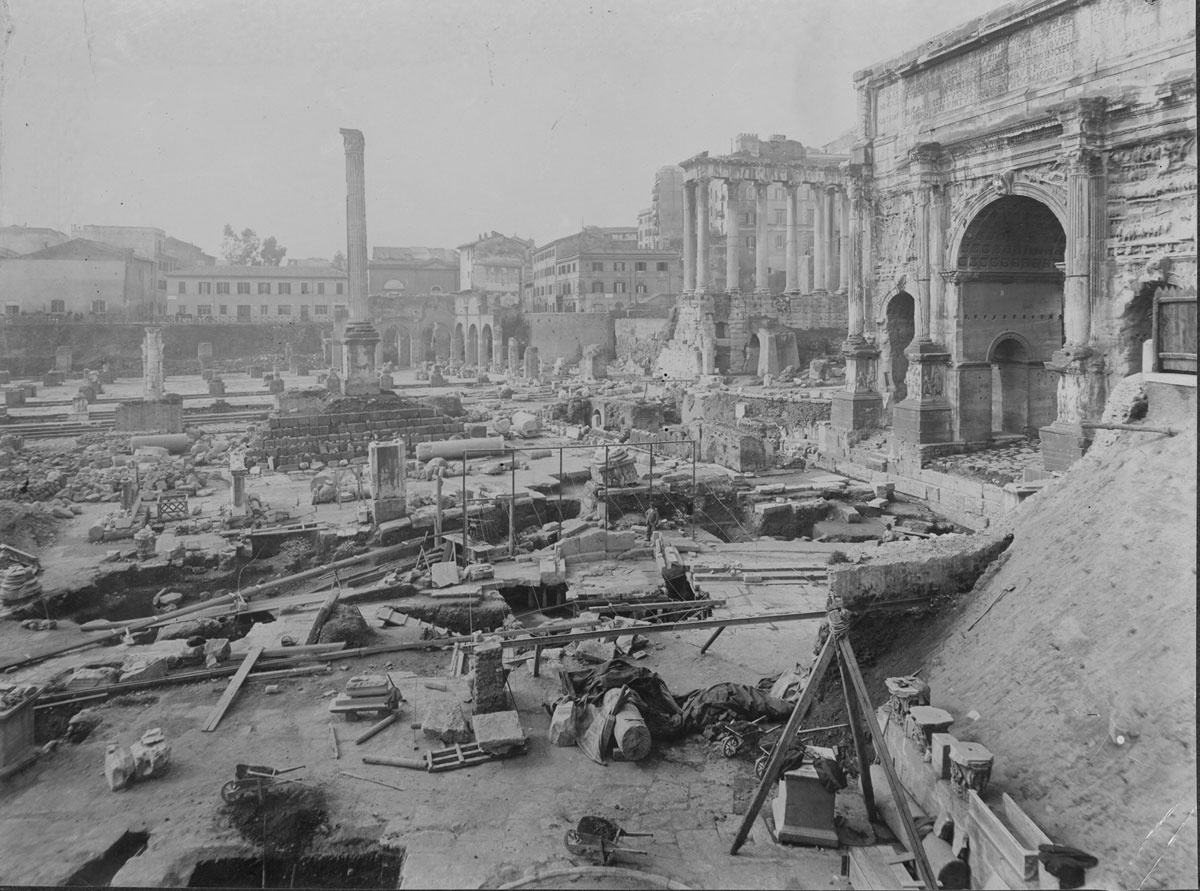
Figure 5
Unknown photographer, The area of the Comitium looking southwest, and the excavation site of Lapis Niger, 1900 (Su concessione del Ministero della cultura–Parco archeologico del Colosseo, AFSAR serie E187).
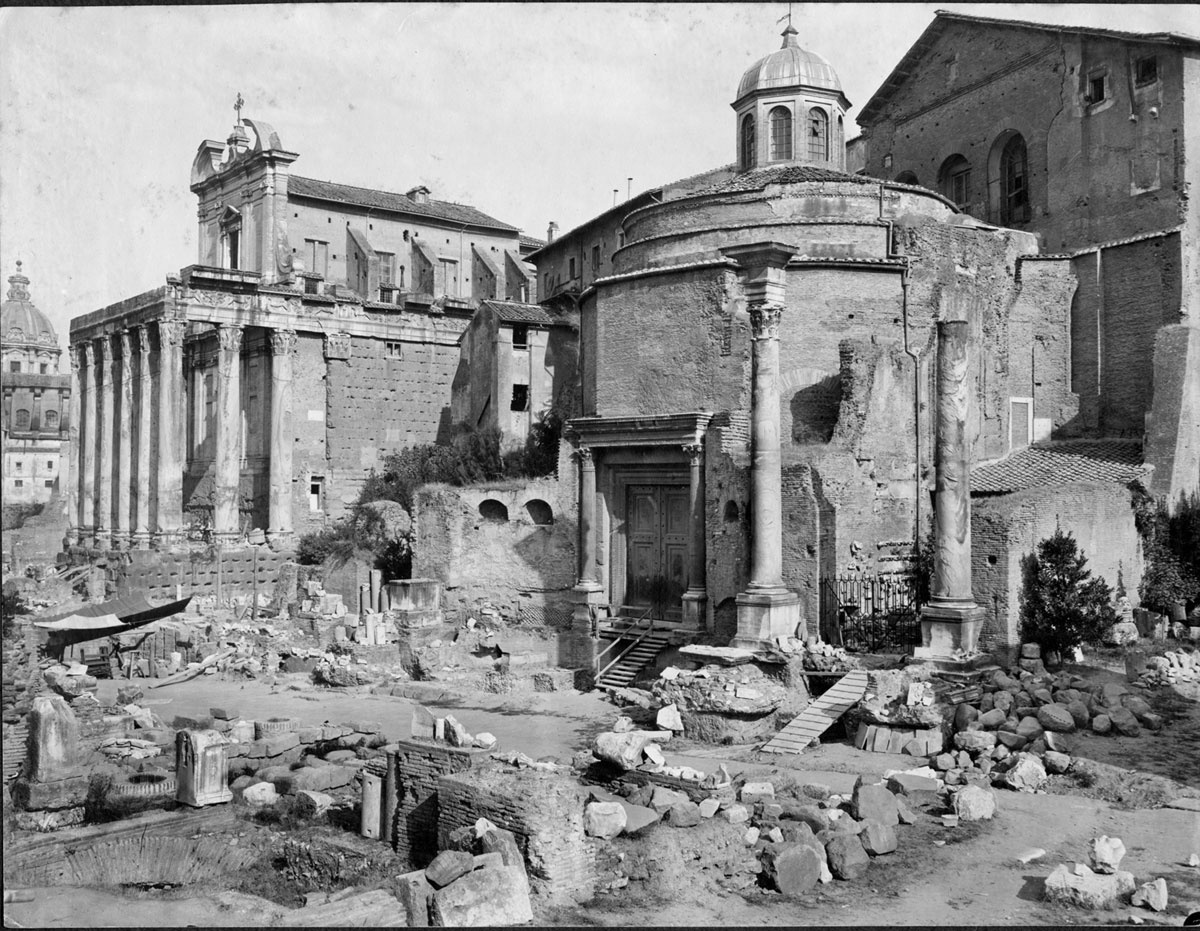
Figure 6
Unknown photographer, The Temple of Romulus after the lowering of the level of the Via Sacra; excavation of Sepolchrum to far left, at the corner of the Temple of Antoninus and Faustina, c. 1904 (Su concessione del Ministero della cultura–Parco archeologico del Colosseo, AFSAR serie 9x2 n. 611).
Boni’s accounts of these excavations are sprinkled with criticism of Lanciani’s earlier actions. Indeed, Boni’s decision to concentrate his efforts in certain areas of the Forum was in many cases predicated on disapproval of his predecessor’s decisions. In response, Lanciani sometimes issued sly or belligerent dismissals of Boni’s reproaches.
Decision-making in the Roman Forum
In the late 19th century, the remains of some classical buildings in the Roman Forum were highly visible, as they had been for centuries, even if their identities were uncertain. The liberation of some selected structures from the centuries-old buildup of dirt and debris had already been initiated in the late 18th century, and was particularly advanced during the French occupation of Rome from 1809 to 1814.9 From 1870 forward, when the Italian government systematically aquired the land on which the Forum lay, that activity continued with speed and diligence. The process, however, was complicated because the Forum was also a highly utilized public site. It sat at the edge of a built-up urban area, and well-used thoroughfares transversed the space. These roads served the carts and beasts of burden which facilitated travel and transport through the city (Figure 2). After Unification, they helped connect the expanding residential neighborhoods that accommodated people newly arriving from all parts of Italy to staff the growing nation’s industries and bureaucratic offices.10 Thus, Lanciani carefully planned his excavation around these thoroughfares (Figure 3).11 By the time Boni begins his work, however, most of the roads had been removed. Instead, his challenge was to contend with the owners or tenants of buildings on the northern and southern edges of the Forum. These buildings were slated for demolition in order to reveal what surely were historic monuments of interest buried beneath them. Initially proprietors fought the government’s efforts at sale or appropriation, but as national plans for reshaping Rome became more resolute, Boni successfully expanded the Forum’s boundaries (Figure 4).12
The Italian government recognized the extraordinary cultural benefits of the Roman Forum excavation. The ancient site had the potential to crystallize a history that Italians from all parts of the peninsula could embrace and celebrate with pride and devotion. Thus, all the government’s archaeological activity was placed under the aegis of the Ministry of Public Instruction, the office charged with collecting, preserving and shaping a shared Italian cultural patrimony. The Ministers of Public Instruction, however, served under the auspices of the Prime Minister, an elected official whose tenure was subject to frequent re-appointment at the behest of Italy’s parliamentary bodies. Furthermore, in these early years, legislative proposals regarding the regulation of national patrimony, including the allocation of funds for excavating, were contentiously debated, and not always with positive outcomes for the success of the Forum excavation.13 Nonetheless, Guido Baccelli (1830–1916), head of the Ministry on and off at this time, sustained a consistent vision for the Forum as well as for other archaeological sites in Rome. He proposed a zona monumentale, an archeological park, that would showcase expansive, connected, and well-curated landscapes of ancient monuments and museums of antiquities. The goal was to create an awe-inspiring statement of past glory, one that communicated the essence of the Italian nation.14 Both Lanciani and Boni had the opportunity to work under Baccelli in their most productive years, from 1881 to 1884, and from 1898 to 1900, respectively.15
In the first decade of the nation, the bureaucratic office in charge of excavation underwent change as well. It came to assert centralized control over all of Italy’s cultural patrimony. The office of the Soprintendenza became the Direzione Generale degli Scavi e dei Musei, and later, the Direzione Generale per le Antichità e Belle Arti, and subsequently its staff was reorganzised and its priorities re-evaluated.16 One consequence of these adjustments was the way in which Lanciani’s and Boni’s duties were demarcated. Initially hired in 1871 as an inspector of sites, by 1875 Lanciani shouldered expansive duties. Not only did he direct the Forum excavation but he was responsible for inspecting all archaeological sites in Rome and its vicinity. Because many archaeological finds were revealed during construction projects, which were numerous in the 1870s and 1880s as the city underwent a major urban transformation, Lanciani’s duties were onerous. Furthermore, the government allowed Lanciani to be employed in related work. He was secretary of municipal Rome’s Commissione Archeologica Comunale, overseeing the archaeological properties in the city’s jurisdiction, and contributing to a bulletin with essays that elaborated on new finds.17 In addition, from 1878 forward, he taught topography at the Università di Roma, and was awarded a chair by 1882. Lanciani’s lengthy portfolio of duties provided him with a broad understanding of nearly all emerging knowledge about ancient Rome’s monuments; his reconstruction of ancient Rome, the Forma Urbis Romae, captures what he learned in these years.18 Nonetheless, it limited his effectiveness at any one task. Indeed, Lanciani’s forced resignation from national service in early 1890 was in part the result of his taking on ancillary tasks which the national government officials determined were in conflict with his position as director of the Forum.19 By comparison, Boni was assigned a more narrow but ultimately more intense task. Hired in late 1898 as an inspector in the Roman Forum, he was given the title of director within a year. His primary task was to focus on uncovering the monuments there, doing it quickly, and where possible, restoring them.20
The differing précis for the position of excavation director most certainly reflects a transformation in the practice of archaeological methods in the early decades. Furthermore, from a pragmatic point of view, the two excavators’ divergent skills reflect the shifting tasks presented by the changing landscape of Forum and the state’s evolving aims to tackle them.
Lanciani was trained as an engineer. Additionally, he learned the following methods of excavating ancient sites from the 19th-century papal archaeologists: he consulted references from ancient literature, e.g, a passage from Livy, as well as any historical representations, e.g., Palladio’s publication of ancient buildings,21 for information of relevance to help him identify and understand any retrieved artifact. Therefore, he brought two valuable skills to the directorship. He was well-versed in the classical literature, and he was adept at deciphering ancient inscriptions. In addition, to aid in the work of retrieving what lay beneath the Forum’s surface, he found and deciphered past verbal and visual representations related to ancient Rome’s physical appearance; these included historical guidebooks, maps, drawings and engravings.22 For the latter, he scoured archives in Italy and throughout Europe to find and consult as many representations of historic Rome as possible. In the 1870s and early 1880s, when many of the Forum’s structures and topographical features were still buried and their whereabouts unknown, Lanciani’s abilities were apposite for the work at hand. Indeed, at this time, Lanciani was able to tease out the locations of the Atrium Vestae, the Curia, and the Vicus Iugarius.
Boni brought his experience as a stratigrapher and as a restorer of monuments in the city of Venice to his work in the Roman Forum.23 He revealed monuments such as the Basilica Iulia and the Curia which lay unseen beneath substantial modern debris. In areas in which the footprint of a monument was already known, he probed the Forum’s surface with exploratory shafts, checking the stratigraphic layers to ascertain where the most ancient remains could be found. In the case of the Regia and the Temple of Vesta, this led to new information about Rome’s pre-Imperial past. Thus, Boni’s methods delivered what Lanciani’s could not. Additionally, Boni made his most remarkable discovery after a stratigraphic probe in the area around the Comitium. Here he brought to light the Lapis Niger, a sanctuary hidden beneath a black stone, containing varied artifacts including the archaic inscribed stele (Figure 5). The stele in particular hinted at a pre-Republican Roman past. Nonetheless, despite Boni’s skill at stratigraphy, Baccelli initially hired the Venetian because he was impressed with his aptitude for reconstructing historical monuments, skills that would be of use to implement a visually compelling zona monumentale. This was something Boni understood, even if he was not very enthused about the task.24 Indeed, it was Boni’s idea to delegate this work, asking to formulate a committee, with Lanciani as member, to facilitate reconstruction of some monuments by studying and sorting through the Forum’s many marble fragments. A reconstruction of parts of the Temple of Vesta was suggested, although not implemented; the honorary columns in the Comitium were ultimately the only restoration projects completed.25
By the turn of the century, Boni’s search for the earliest historical evidence of ancient Rome conflicted with Baccelli’s plans. While working on exposing the inner chambers of the Regia, Boni was determined to take down the level of the adjacent Via Sacra in order to connect the two features (Figure 6). Boni mocked Lanciani, who had left the Via Sacra at a higher level in the 1880s. At the time, Lanciani had boasted that he had exposed the celebrated path on which the ancients had once walked. Boni was annoyed at Lanciani’s hubris and felt that the exposed road dated to the medieval period. He thus brought down the level of the Via Sacra, determined to reveal the true sacred path.26 As a result, the temples skirting it, that of the Temples of Antoninus and Faustina and of Romulus, sat high above the road, seemingly hovering far above the Forum. Although Baccelli had obviously approved of Boni’s action for further digging, once the results were obvious, there was concern about the overall appearance of the site. The issue was serious enough that the King of Italy was consulted.27 The government’s unease about the dramatic lowering of the Via Sacra lends credibility to Lanciani’s response to Boni’s criticism, that he left the substrata unexplored because he was asked to stop.28 Beyond exemplifying the personal antagonism between the two archaeologists, however, this episode reflects the tension created when the goals for a scientific practice of archaeology clash with supporting the state in showcasing its cultural patrimony. Despite the excitement that Boni’s work in this area generated—they revealed the pre-historic graves near the Temple of Antoninus and Faustina—there were repercussions. Soon after this work, in 1905, his focus was redirected toward the well-worn Palatine Hill excavation. However, unlike Lanciani’s, Boni’s career in the state archaeological service was long, and unconflicted by outside duties.29
Intrepreting the Roman Forum
In general, Lanciani was very comfortable interpreting his finds for the public, and did so in lectures and in print. In general, Boni seemed more reserved in doing so, especially as some of the discoveries, such as the Lapis Niger and the Sepolchrum, were unanticipated and puzzling; he often relied on others to promote them. This situation begs the question: was it not the excavation director’s responsiblity to interpret and communicate what was found, and if not, whose was it?
Beginning in 1876, during Lanciani’s custodianship, notices of the excavation were presented in the government-sponsored Notizie degli Scavi di Antichità, a near monthly journal dedicated to news from throughout Italy. The frequency of the entries did not necessarily promote the production of well-considered information. At times the entries appear written in a harried manner; sometimes the news was understandably delayed. Furthermore, any cogent interpretation, based on slow and reasoned analysis of what had emerged over time, was not immediately possible; only occasionally did longer essays on the significance of a specific monument appear. Because they were both busy men, Lanciani’s accounts fell behind, and Boni’s were often inadequate as well.30 Thus, the Notizie degli Scavi entries could be informative, but not always so, and in their objective precision, they read as highly unexciting records of the excavation rather than gripping stories about Rome’s past monuments. Who, then, was supposed to provide the deeper analysis?
In the late 19th and early 20th centuries, the discipline of archaeology was not taught at University in Italy, although national archaeological training programs were being considered.31 With the suppression of the papal archaeological academy after the establishment of the nation, the sole institutional body in Italy qualified to interpret archaeological matters was the Accademia dei Lincei. It held meetings to discuss matters of antiquity and it promoted lectures and publications among its elite membership. However, the Lincei itself underwent some changes after Unification, and especially after 1878 when it was designated a national academy. In a reorganization to modernize its areas of scholarship based on emerging disciplinary distinctions, archaeology was placed under the division of humanistic sciences, suggesting that the field would embrace more than just a knowledge of ancient languages and texts to understand the remains of the past.32 Nonetheless, membership consisted of many who were well trained in philology and classical literature and included an older generation of papal archaeologists and foreign scholars, many from Germany. Lanciani was an active and well-supported associate. Boni, whose educational background was different from most members of the Lincei, had a more antagonistic relationship with the academy. He felt marginalized and was angered by their conservative approach to his spectacular finds.33
At the same time, there were a number of foreign academies of classical studies forming in Rome, and their goals included furthering an archaeological practice based on the methods of scientific inquiry. The Deutsches Archäologisches Institut (DAI) was established in 1874, emerging from a highly engaged and well respected Rome-based organization founded in 1829;34 its headquarters was situated in the Palazzo Caffarelli on the Capitoline Hill, overlooking the Forum. The Americans set up their School of Classical Studies in the city in late 1894, and the British School at Rome was operational by 1901. Members of these organizations were keenly interested in the Roman Forum excavation, especially because the Italian government had curtailed their ability to do their own excavations on its soil after 1870. They expressed their opinions openly, so much so that Boni, in particular, tried to shield information of the new finds from some of them. This was the case after the Lapis Niger discovery. The implications of the discovery had the potential to upend a position strongly expressed among some German philologists, that the earliest history of Rome centered on the figure of Romulus as the first King was a fable, as it was not supported by evidence.35 Other foreign experts in the city were equally vigorous in issuing their interpretions. Thomas Ashby Jr., who was the first student at the British School at Rome in 1901 and became its director in 1906, was a near constant presence during Boni’s Forum excavation, as his many newsworthy publications and photographs indicate. Ashby was sometimes critical of the excavation techniques he witnessed. Nonetheless, Boni considered him a highly objective, even if too frequent, commentator.36 The director of the American School of Classcial Studies, Richard Norton, was an enthusiast for Boni’s methods of excavation and he roundly disparaged those of his predecessor Lanciani in the press.37
Additionally, engaged amateurs in all matters related to Rome’s antiquity had an outsized interest in the Forum excavation, even as the academies moved to marginalize them as the institutions strove to professionalize the discipline of archaeology. One highly active group of such amateurs was the British and American Archaeological Society. It provided a forum for lectures by those deemed local experts and it facilitated trips to the archaeological sites. Lanciani was a frequent lecturer at the society during and after his directorship of the Forum. He organized many site visits within Rome—he still had access to the Forum, much to Boni’s annoyance—and in the surrounding countryside. Indeed, his expertise was well-known and appreciated.38 Boni lectured at this society as well, although the events were less frequent, and perhaps less entertaining.39 Thus, it appears that as the foreign academies paid increasing attention to Boni and his spectacular and challenging discoveries, the amateurs found a source of ready and entertaining information in Lanciani.
Beyond these groups, many others were paying attention to and commenting on the Forum. For those in Rome, the excavations were happening in a highly visible site, with the Tabularium serving as a spectacular viewing platform. The press provided news of the finds and fueled easily consumable interpretations, and the photographs that served as newspaper article illustrations enticed the reader. That the photographs sometimes captured visiting foreign dignitaries touring the Forum drew additional attention to the site. Indeed, both Lanciani and Boni wrote for the popular press. No doubt they did so as a means to keep interest alive in the excavation, and to encourage the government to fund their work. Both archaeologists wrote for English and other language publications as well, and thus the news went well beyond the boundaries of Rome. The consequence was that many outside the academies had the opportunity to learn about the excavation and to form opinions, some well-supported and others not, about the history of the Forum.40 An example of an engaged amateur was Welbore St. Clair Baddeley (1856–1945), an Englishman who at first was a great admirer of Lanciani, but who subsequently criticized him when he became fiercely devoted to Boni. He shared his criticism of Lanciani’s work and his praise of Boni’s widely.41
In short, there were many different types of individuals interested in ascertaining the significance of the Roman Forum discoveries, and in their enthusiasm and haste, they sent sometimes uncurated or unvetted opinions to a wider audience. The discovery of the Lapis Niger underscored the limitations that this situation presented. In addition to the puzzling language of the stele’s inscription, the context of the shrine in which it was located confounded observers because the cache of objects within it were dated to vastly different times; they were likely assembled there during an ancient reburial. The Lincei was not fully equipped to analyze these finds because its traditional methods of interpretation provided little guidance. The stele appeared to belong to an obscure historical moment, the time of the ancient Kings, with little literary reference to inform about the existence or purpose of the shrine. The episode with the Lapis Niger also revealed the weaknesses of Boni’s stratigraphic approach in discovering knowledge. The practice of stratigraphy yields knowledge about the chronology of an archaeological object in two ways: by an evaluation of the sediment in which it appears—a tool best employed to interpret prehistoric finds like the Sepolchrum, and not appropriate for the Lapis Niger—or by a comparative analysis of any structures positioned nearby. This second approach was not one which Boni could be confident in, given the history of modifications of the Forum throughout the centuries.42 Understanding this, the Lincei was concerned that too much speculation about the Lapis Niger’s meaning might ultimately jeopardize the significance of the discovery, and they cautioned Boni to use restraint in his pronouncements about it. But many who were watching the activities in the Forum at this time were enthralled and their voices were already unleased.
Summary
Four decades of the Roman Forum under the directorships of Lanciani and Boni provide points of reference to observe some changes in the practice of classical archaeology. In particular, as Italian state’s goals for the Forum became more clear and purposeful, the processes needed to uncover the area were modified. The skills expected of the excavators changed accordingly, and scientific expertise came to be considered essential for the archaeological enterprise. In addition, with the widespread and varied interest in the Forum excavation in these years, it became increasily clear that proper curation and publication of the discoveries was necessary. This would eventually lead to sharp distinctions among those groups interested in archaeology: the trained professional, the informed amateur, and the engaged public. In these ways, then, clearing the Roman Forum involved not just two directors with vastly different educational backgrounds, but also the morphing governmental, academic, and cultural institutions that served to shape the archaeological enterprise. Because the site was such a powerful presence in Rome and was of such import to the nation, these institutions played a significant role in the development of classical archaeology.
Notes
[1] Alessandro Sebastiani, Ancient Rome and the Modern Italian State: Ideological Placemaking, Archaeology, and Architecture 1870–1945 (Cambridge University Press, 2023).
[2] Lanciani assumed the duties of excavating the Roman Forum from Pietro Rosa in 1875, and received the title of director in 1878. He worked in the field until 1885, when he took a leave of absence. Thereafter he did not return to work in the Forum, but held the title until very late in 1889, when the state forced his resignation. Domenico Palombi, Rodolfo Lanciani: l’archeologia a Roma tra Ottocento e Novecento (L’Erma di Bretschneider, 2006), 62–66; Susan M. Dixon, Archaeology on Shifting Ground: Rodolfo Lanciani and Rome, 1871–1914 (L’Erma di Bretschneider, 2019), 20, 27–29.
[3] Boni was appointed as an excavation technician as early as October 1898, and quickly was elevated to director of the Forum excavation in September 1899. He retained that title until 1908, although work in the Forum had begun to taper off after 1904. His duties were expanded to include the custody of the Palatine excavation, which was halted temporarily during the war. Boni remained in the state archaeological service until his death in 1925. Albert J. Ammerman, “On Giacomo Boni, the Origins of the Forum, and Where We Stand Today,” Journal of Roman Archaeology 29 (2016): 293–96, https://doi.org/10.2307/505123; Myriam Pilutti Namer, Giacomo Boni: storia, memoria, archeonomia (L’Erma di Bretschneider, 2019), 35–62.
[4] Andrea Paribeni and Federico Guidobaldi, eds., Giacomo Boni: documenti e scritti inediti: catalogo ragionato dell’Archivio Boni-Tea (Scripta Manent, 2020); Patrizia Fortini and Miriam Taviani, eds., In Via Sacra: Giacomo Boni al Foro Romano: gli scavi dei documenti della Sopraintendenza (Electa, 2014); See also Federico Guidobaldi, “Note dall’Archivio Boni-Tea. La progettata e mai realizzata pubblicazione di Giacomo Boni sugli scavi del Foro e del Palatino,” in Tra Roma e Venezia, la cultura dell’antico nell’Italia dell’Unità, ed. Irene Favaretto and Myriam Pilutti Namer (Istituto Veneto di scienze, lettere ed arti, 2016); Myriam Pilutti Namer, “Notes on Some Unpublished Fieldwork Reports Written by Giacomo Boni for Giovanni Baccelli in 1899,” History of Classical Scholarship 3 (2021): 297–98.
[5] For a general overview of their work, see Roberta Altieri, “Scavi e ricerche nel Foro Romano dal 1870 al 1976,” in Maria Barosso: artista e archeologa nella Roma in trasformazione, ed. Angela M. d’Amelio et al. (De Luca, 2025), 167–73.
[6] Ronald T. Ridley, The Pope’s Archaeologist: The Life and Times of Carlo Fea (Quasar, 2000), 310, fig. 52.
[7] Simone Sisani, “Il Foro Romano,” in Gli Scavi di Roma 1878–1921, ed. Filippo Coarelli (Quasar, 2004), 59–62.
[8] Sisani, “Il Foro Romano,” 62–68; Patrizia Fortini, “Gli scavi al Foro Romano e il Museo,” in Giacomo Boni: l’alba della modernità, ed. Alfonsina Russo et al. (Electa, 2021), 46–50; Anna de Santis, “Lo scavo del Sepolcreto presso il Tempio di Antonino e Faustina,” in Giacomo Boni: l’alba della modernità, ed. Alfonsina Russo et al. (Electa, 2021).
[9] On earlier excavation in the Roman Forum, see Ronald T. Ridley, The Eagle and the Spade: The Archaeology of Rome during the Napoleonic Era, 1809–1814 (Cambridge University Press, 1992), 137–48, 182–93, 239–45; Ridley, Pope’s Archaeologist, 309–21; Paolo Liverani, “Disegnare il Foro Romano tra XVIII e XIX secolo,” in Maria Barosso: artista e archeologa nella Roma in trasformazione, ed. Angela M. d’Amelio et al. (De Luca, 2025).
[10] Giuseppe Cuccia, Urbanistica, edilizia, infrastrutture di Roma Capitale 1870–1990: una cronologia (Edilizia Laterza, 1991), tav. I–III.
[11] Rodolfo Lanciani, Notes from Rome, ed. Anthony L. Cubberley (British School at Rome, 1988), 147.
[12] Lanciani, Notes from Rome, 285, 293, on the removal of dirt over the Curia, the Basilica Aemilia and Santa Maria Liberatrice; Sisani, “Il Foro Romano,” 63, for the demolition of a modern structure near the Temple of Saturn.
[13] Andrea Emiliani, “Nella battaglia tra pubblico e privato: l’istituzione della Direzione Generale e Giuseppe Fiorelli,” in A Giuseppe Fiorelli nel primo centenario della morte, ed. Stefano Caro and Pier Giovanni Guzzo (Tipograpfico, 1999).
[14] Valeria Capobianco, Un progetto per la nuova capitale: la zona monumentale riservata, ed. Daniele Manacorda et al. (Istituto di Studi Romani, 2017); Namer, “Notes on Unpublished Fieldwork,” 301–2.
[15] Mario Crespi, “Guido Baccelli,” in Dizionario biografico degli Italiani 5 (Istituto dell’encyclopedia italiana, 1963), https://www.treccani.it/enciclopedia/guido-baccelli_(Dizionario-Biografico)/.
[16] Marcello Barbanera, L’archeologia degli italiani (Editori Riuniti, 1998), 39–48; Silvia Bruni, “Rapporti tra Stato e Municipio di Roma (1870–1911): l’istituzione di un museo archeologico in Roma capitale,” Mélanges de l’École Français de Rome: Italie et Méditerranée 113, no. 2 (2001): 777, https://www.persee.fr/doc/mefr_1123-9891_2001_num_113_2_9830; Sebastiani, Ancient Rome, 39, on the slowness of the government bureaucracy.
[18] Palombi, Rodolfo Lanciani, 149–57; Rodolfo Lanciani, Forma Urbis Romae, Consilio et avctoritate Regiae Academiae Lyncaeorum (Hoepli, 1893).
[19] Susan M. Dixon, “Lanciani’s Dismissal,” Bulletin of the History of Archaeology 26, no. 8 (2016): 3–7, https://doi.org/10.5334/bha-592.
[21] Andrea Palladio, I quattro libri dell’architettura (Dominic de’Fraceschi, 1570).
[23] Amedeo Bellini, “Il restauro architettonico: tra John Ruskin e Luca Beltrami,” in Giacomo Boni: l’alba della modernità, ed. Alfonsina Russo et al. (Electa, 2021).
[24] Eva Tea, Giacomo Boni nella vita del suo tempo (Ceschina, 1932), 2: 5–9.
[25] Rita Turchetti and Susanna Le Pera Beranelli, “Scavi al Foro Romano,” in Archeologia a Roma nelle fotografie di Thomas Ashby, 1891–1930, ed. British School at Rome and Istituto Centrale per il Catalogo e la Documentazione (Electa, 1989), 20.
[26] T. P. Wiseman, “Con Boni nel Foro: i diari romani di W. St. Clair Baddeley,” Rivista dell’Istituto Nazionale d’Archeologia e Storia dell’Arte 3, no. 8 (1985): 132–36.
[29] Domenico Palombi, “Giacomo Boni e l”Accademia”,” in Giacomo Boni: l’alba della modernità, ed. Alfonsina Russo et al. (Electa, 2021), 28, n. 18.
[30] See Namer, “Notes on Unpublished Fieldwork,” 300–302, on Boni’s well-considered method of communicating information about the finds.
[32] Raffaello Morghen, ed., L’Accademia Nazionale dei Lincei nel CCCLXVIII anno della sua fondazione, nella vita e nella cultura dell’Italia Unità 1871–1971 (L’Accademia Nazionale dei Lincei, 1972), 7–43.
[34] Stephen L. Dyson, In Pursuit of Ancient Pasts: A History of Classical Archaeology in the Nineteenth and Twentieth Centuries (Yale University Press, 2016), 30–35, 40–43.
[35] Stephen L. Dyson, Archaeology, Ideology, and Urbanism in Rome from the Grand Tour to Berlusconi (Cambridge University Press, 2019), 98–99. A group of classical scholars in 19th-century Germany sought to challenge approaches to ancient texts that tied them too uncritically to traditional beliefs; their school of thought is known as hypercriticism.
[36] T. P. Wiseman, “Thomas Ashby and Rome,” in Archeologia a Roma nelle fotografie di Thomas Ashby, 1891–1930, ed. British School at Rome and Istituto Centrale per il Catalogo e la Documentazione (Electa, 1989), 9.
[39] Christopher Smith, “Boni and British Scholarship,” in Tra Roma e Venezia: la cultura dell’antico nell’Italia dell’Unità. Giacomo Boni e i contesti, ed. Irene Favaretto and Myriam Pilutti Namer (Istituto Veneto di scienze, lettere ed arti, 2016), 216–20.
[40] David Watkin, The Roman Forum (Harvard University Press, 2009), 198–99.
[42] Leandro D’Amore, “Stratigraphy in Archaeology: A Brief History,” in Encyclopedia of Global Archaeology, ed. Claire Smith (Springer, 2014), 7093.
Acknowledgements
With much respect and gratitude, I acknowledge the vast erudition, deep wisdom, and sharp wit of Stephen L. Dyson (1937–2026), Professor Emeritus, Park Professor of Classics and SUNY Distinguished Professor in the Department of Classics at the University of Buffalo. His numerous publications on the archaeology and ideology of Rome have been endless sources of information and insight for me, and I will miss his counsel. In addition, I thank the external readers without whose discerning comments this article would be much improverished.