
Introduction
William T. Semple, the project leader for the University of Cincinnati Expedition to the Troad and the chair of the Department of Classics, officially opened the excavation at Troy on May 2, 1932, with three swings of a pick (Figure 1). Those swings were likely the only time he – and perhaps any other American, German, or Turkish archaeologist or official – wielded a pick at the site during the 1932–1938 seasons. That job, and many more, were left to the scores of local workers recruited from nearby villages over the course of seven years.1 These workers reflect what scholars have labeled ‘hidden hands,’ ‘invisible labor,’ or ‘silent’ participants; they have been discussed extensively since 2010, especially at late nineteenth- and early- to mid-twentieth century excavations in British Mandate Palestine and Egypt.2 And like the workers at these other sites, the Troy excavators received only cursory acknowledgement in the publications of the site.3
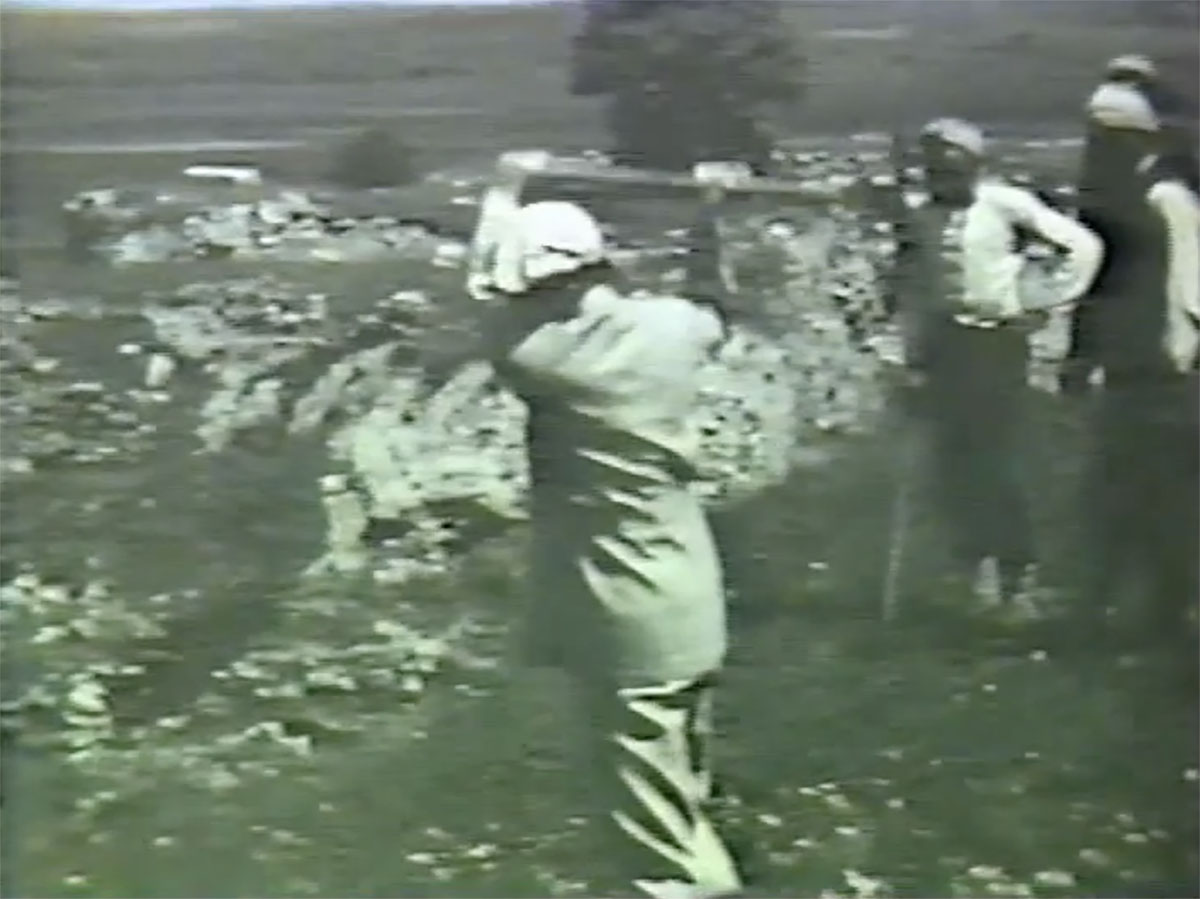
Figure 1
William T. Semple officially opening the excavation on May 2nd, 1932. Film clip.
To highlight these workers, I discuss one individual – Kâni Barin (Figure 2), who is the only local individual named in any of the official publications.4 The story of Kâni, in broad strokes, reflects the experiences of his fellow workers, and we can gain insight into their lives through an exploration of what we can reconstruct of his. Sources for his life come via the extensive archival records from the Troy collection in the Archives and Special Collections of the Department of Classics at the University of Cincinnati (hereafter abbreviated UC Classics Archive). These records include: financial ledgers (Workers’ Payrolls, Excavation Accounts, and Foremen’s Ledgers), the Director’s Notebooks of Carl W. Blegen (the Field Director of the project), and unpublished photographs of the excavation. We also have one other important source – a paper delivered by Blegen to the Cincinnati Literary Club in 1954 describing the life of Kâni.5
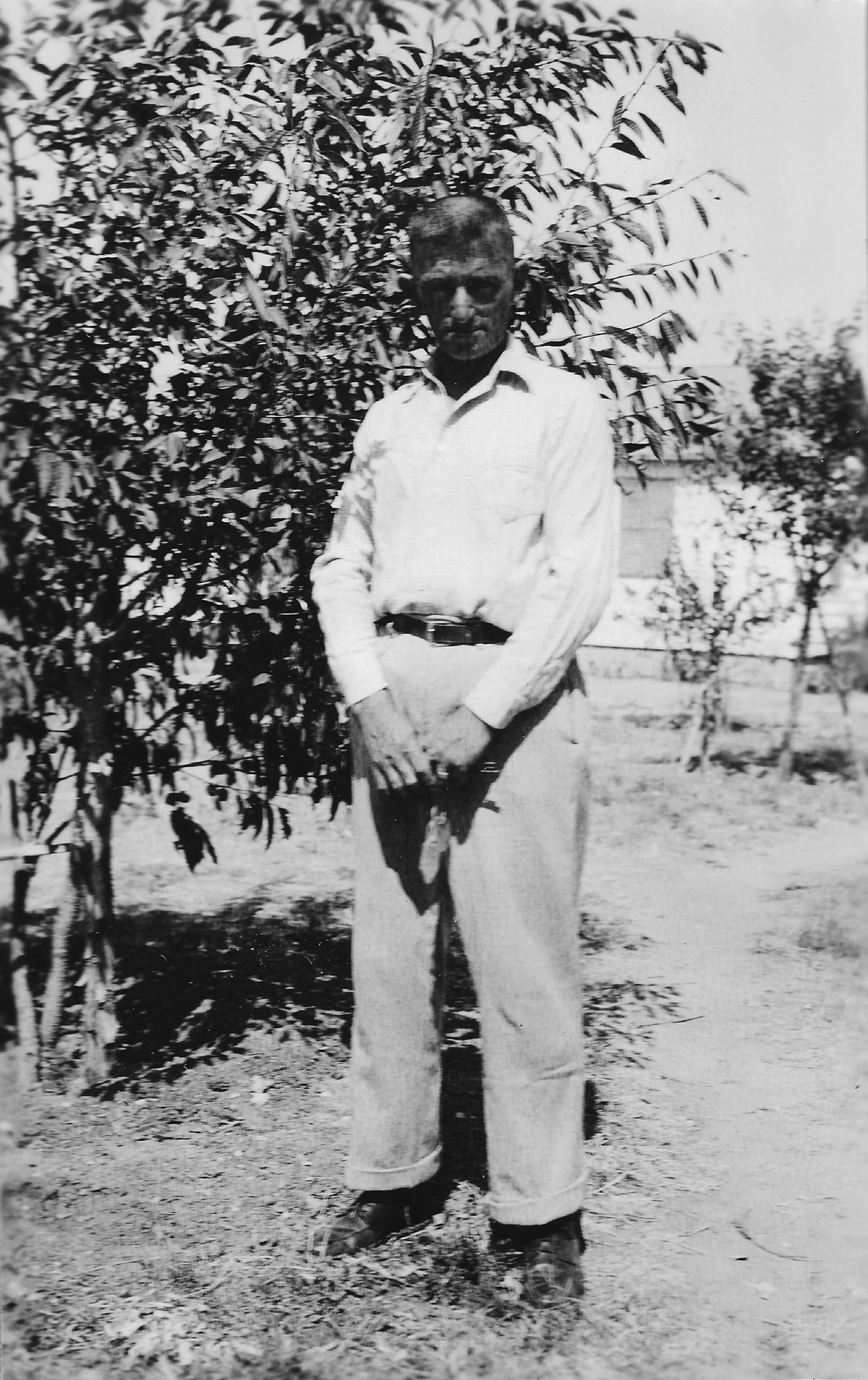
Figure 2
Kâni posing for a formal photograph in 1937. Troy Photograph: T.37.W.4.
To discuss Kâni’s life, I divide it into three parts: his experiences before the UC expedition, the time during the dig from 1932–1938, and what we know – which is very little – following the last season. The first and third parts, not surprisingly, rely heavily on Blegen’s paper. As I demonstrate, Kâni’s experiences in his first thirty or so years of life are reflected in, and corroborated by, other sources. The second section relies almost exclusively on the aforementioned primary documentation as well as contemporaneous excavation reports. Before I turn to Kâni’s life, I first discuss the primary sources used.
Archival Sources
The use of archival records in examining previous excavations is not new – investigations of previously-explored sites require reading as much primary documentation from the earlier excavations as possible to understand both what was excavated and also to gain insight into the questions asked by the previous excavators. Manfred Korfmann from the University of Tübingen and Brian Rose from the University of Cincinnati returned to Troy in 1988, 50 years after the last season of the Blegen excavations, and as Rose writes, ‘Korfmann and I found ourselves heavily indebted to the research and publications of Carl Blegen.’6
The value of archival records to investigate specifics of archaeological practice, such as the politics of a foreign school vis-à-vis nationalist discourse, is demonstrated by Jack L. Davis in his examination of the excavation in Colophon in 1922 sponsored by the American School of Classical Studies at Athens.7 Studies into the careers of archaeologists that seek to explore not only their archaeological practices but also their background and their potential motivations rely heavily on preserved archival records as well; John D.M. Green and Ros Henry’s work on the letters and photographs of Olga Tufnell is one such study.8 In a slightly different fashion, Natalia Vogeikoff-Brogan, Jack L. Davis, and Vasiliki Florou edited a volume in which various scholars examined aspects of the life of Blegen, and primary records feature prominently in nearly every chapter.9
Turning from the foreign archaeologists and to the hired local workers, Stephen Quirke has demonstrated the value of archival records in his work on the excavators at the various digs conducted by Flinders Petrie.10 Pertinent and related to this study, he examined name-lists which may also serve as pay-lists; he notes the difficulties in understanding Petrie’s records, especially as they change over Petrie’s long career.11
The Troy financial records (all located in the UC Classics Archive), while more limited chronologically to the seven seasons of the dig, offer even more information than the records that Quirke examined, and they are also far easier to understand. The Workers’ Payrolls list the names of nearly every worker hired and their payrates, including wage increases over time and potential pay discrepancies. The Excavation Accounts list all expedition expenses as well as financial transactions with workers who are not necessarily included in the Workers’ Payrolls; a chauffeur was employed, for example, and payments to him are in these accounts. The Foremen’s Ledgers list all expenses noted by the various foremen of the excavation although few were consistently up-to-date; their expenses do appear, however, in the Excavation Accounts.
Blegen’s seven Director’s Notebooks constitute an invaluable resource of the day-to-day operations of the excavation. While the preliminary reports often include information about the specific season under discussion, seemingly mundane details that Blegen wrote daily reveal information that does not appear anywhere else. In addition to the photographs of the finds and excavation proper, the other American staff at Troy also documented the daily life of the excavation. They regularly photographed the activities of the workers, even though only one of those photographs appeared in any of the Troy publications. The entire photographic corpus totals 9318 to date, and Kâni in particular appears – by name – in 24.
Beyond these records, Blegen delivered two papers to the Cincinnati Literary Club that perhaps shed the most light on the workers and Kâni in particular. Blegen read the one entitled ‘Johnny’ on January 25, 1954, and he presented ‘Retrospect,’ which was a retrospective of his career following his retirement, on December 2, 1957.12 In the latter, Blegen does not discuss or even mention Kâni, but he does devote two pages to the workers as a whole. ‘Johnny,’ the earlier paper and the more important of the two, reflects the nickname that the American team gave to Kâni because of the similar sound of the names. A paper such as this one, which was an address to a private club and therefore not public, must be approached with caution. Written nearly 16 years after the final season at Troy, it relies on Blegen’s memory of what Kâni told him, and also on the veracity of Kâni’s recollections to Blegen, many of which were at least a decade old when Blegen first heard them. Contradictions do exist between this paper and the other records, but they are minor.
Prologue to the Excavation
In ‘Johnny,’ Blegen recalls ‘a bright morning in early May, not long after sunup’ when he first encountered Kâni.13 His first impression was not positive – he writes that Kâni was ‘particularly ragged, unshaved, and seedy-looking.’14 Blegen does not provide more of a physical description of Kâni, but based on photographs, he appears to have been between 67 and 69 inches (167-175 centimeters) in height. Like many of the other workers who were around his age, he appears trim but muscular, and while he may have been ‘unshaved’ initially, he eventually sported a ‘toothbrush’ mustache. Other workers of his age or younger have the same, in marked contrast to the more luxurious ones worn by the older workers.
Blegen’s impression of Kâni – who eventually ‘became fairly neat in his appearance’ – quickly changed when he realized that latter spoke English.15 Blegen continues that ‘[l]ittle by little,’ the UC team learned about his story, and that story was ‘not without interest in illustrating the ups and downs of living in the Balkans.’16
Kâni was born to Albanian-speaking Muslim parents shortly before 1900, and they lived in southwestern Macedonia, then under Ottoman rule.17 Because Blegen is vague, we do not know in which province (vilayet) Kâni lived, although as Elisabeth Kontogiorgi discusses, the idea of ‘Macedonia’ as an entity was essentially a European one at that time, and it would have meant little to nothing to the inhabitants.18
While young, Kâni attended a school and learned to speak, read, and write Turkish.19 Access to an education might suggest that his family lived in or near an urban area, and one could speculate further that they were of a social class to which education was available. Selçuk Akşin Somel argues, however, that compulsory education became required in the provinces in the late nineteenth century and that, in theory at least, primary schools existed ‘down to the village level.’20 Benjamin Fortna notes that in the Macedonian provinces especially, Ottoman authorities began constructing primary schools at the end of the nineteenth century to combat the number being built by Bulgarians, Serbians, and Greeks.21
The cultural milieu in which a young Kâni lived would have exposed him to several languages other than Albanian and Turkish. Blegen asserts that he also spoke Greek, certain Slavic languages, and possibly even Ladino.22 Karakasidou and Kontogiorgi note the presence of both Serbs and Bulgars in the region, and the Greek population was widespread, especially in commercial centers, so Blegen’s assertion for those languages seems plausible.23 Whether Kâni learned Ladino is unknown, since the vast majority of the Sephardic Jewish population that spoke the language lived in Thessaloniki with only small enclaves in other urban areas; this also supports the notion that Kâni may have lived in or near an urban area.24 Based on Blegen’s claims, I have determined that Kâni spoke at least seven languages (Albanian, Turkish, a Slavic language that is probably Bulgarian or Serbian, Greek, English, Russian, and Polish), and wrote at least in two (in addition to English, he wrote in Turkish using both the Ottoman Turkish alphabet and the Latin alphabet). Blegen was certainly justified in calling Kâni a ‘remarkable polyglot.’25
In Blegen’s narrative, Kâni was ‘still little more than a boy’ when he traveled to Canada.26 If Kâni completed primary school, which was required for boys from ages seven to eleven, he would have been between eleven and thirteen when he left.27 He first worked in an unnamed industry in Toronto where he learned not only English but also Russian from his coworkers.28 His next stop was Akron, Ohio, in the United States, where he found work in a rubber factory.29 Improving his English, he also quickly acquired Polish, again from his coworkers.30 Emigration to the United States, albeit temporary in Kâni’s case, was not uncommon by the time he traveled. As early as 1890 and particularly after 1903, large numbers of people from the Macedonian region sailed overseas because of economic and political issues.31
Blegen states that after more than a decade abroad, Kâni returned home.32 However, ‘[t]wo wars had swept over the country, bringing about far-reaching political and territorial changes.’33 Blegen does not specify these wars, and while we do not know precisely when Kâni was gone (between late 1911 and early 1922 seems probable), these wars probably include both Balkan Wars (possibly conflated since less than one month separated the end of the first and the start of the second) and World War I. Regardless, the region of Macedonia from which Kâni originally came was now under Greek control, and so was he.34
Because he could not produce evidence that he had performed his compulsory military service, Kâni was almost immediately conscripted into the Greek army; however, as Blegen writes, ‘[f]resh from the relative freedom of Akron and Toronto, he looked with a jaundiced eye on army discipline.’35 He soon deserted the army and fled north into Albania.36 One could speculate that, as a Muslim, he also might have faced persecution since that occurred to minority populations in the so-called ‘New Lands’ of Greece according to Beaton.37 During his time in Albania, Kâni married and had a child; however, when ‘his economic situation sank to rock bottom,’ he crossed back into Greece as a refugee.38 He managed to avoid military service this time, but Blegen writes that ‘his troubles were by no means over.’39
Following the Greek-Turkish War of 1919–1922, the next major political event in the region affected not only Kâni but nearly every person who later worked at Troy: the Compulsory Population Exchange.40 The terms for the exchange were expressed in the 1923 Lausanne Convention. This included a formal treaty to end the war as well as other ‘Instruments’ signed during the conference at Lausanne, particularly Article 1, which states:
As from the 1st May, 1923, there shall take place a compulsory exchange of Turkish nationals of the Greek Orthodox religion established in Turkish territory, and of Greek nationals of the Moslem [sic] religion established in Greek territory.
These persons shall not return to live in Turkey or Greece respectively without the authorisation of the Turkish Government or of the Greek Government respectively.41
As Sarah Shields asserts, ‘[r]eligion had become racial identity;’ moreover, this exchange is what Michael Bartuciski and Shields contend is nothing less than ethnic cleansing or, as Bruce Clark terms it, ‘ethnic engineering.’42 Aslı Iğsız writes that this was the first time a population exchange was ‘legitimized as a solution for a “greater good”: peace.’43
Blegen summarizes the basics of the exchange for his audience, and even though he lived in Greece at the time and was a partial participant in the immediate post-World War I events, he characterizes the exchange as ‘a far-sighted statesmanlike solution of an incredibly complicated and troublesome question.’44 He acknowledges the individual human toll, however, and by 1957, he labels the exchangees as ‘refugees.’45
As for Kâni and his family, they were ‘among the first victims in their district.’46 Blegen is particularly graphic about their experience: ‘[T]hey were herded together, conveyed to Saloniki [Thessaloniki], and deposited aboard a rusty ship. After many days of crowded waiting and several more of sailing – and without being given any information – they at length reached their unknown destination.’47
The basics of this account are echoed elsewhere. Clark discusses Henry Morgenthau’s description of the exchange from a pro-Greek point of view, with an emphasis on the horror that the Greek exchangees endured.48 What Morgenthau does not mention, Clark continues, is the ‘other human drama that was unfolding in Salonika harbour around that time…a small fleet of creaky Turkish passenger ships and freighters began taking people in the other direction.’49 Roderick Beaton relates a similar story regarding the expulsion of Muslims from Crete that was witnessed by Pantelis Prevelakis; the latter wrote ‘[t]he army threw a cordon round the Turkish quarter, secured the entry to the harbour, and then called the Turks to pass in single file.’50
After arriving in their new homeland, Blegen writes that Kâni and his family were ‘allotted a ruined house in the near-by empty village of Erenkoy [sic];’ the village was empty although it had been a ‘flourishing Greek community’ prior to the exchange.51 This general state of ‘ruin’ appears to have been the case in many areas, especially along the coast. Iğsız quotes Raşit Kemali Bonneval, who, forced from Lemnos with his family to Foça near İzmir, wrote ‘[w]hen we arrived, Foça was in ruins.’52 Resettlement in İzmir proper, which was largely destroyed at the end of the Greek-Turkish War is a special case, and Biray Kalluoğlu examines it in depth.53 Beyond ruined buildings, there was a larger issue of housing in both countries for the new exchangees.54
Blegen’s story of Kâni concludes the portion of the latter’s life before the excavation by noting that the extreme poverty led to the death of Kâni’s wife.55 He married an Albanian exchangee, and they ‘managed to struggle along for some years, making little or no headway.’56
The University of Cincinnati Expedition to the Troad
No extant source discusses how the UC team solicited workers. While Blegen’s notebooks from 1933 through 1938 include his activities prior to the beginning of the season, his 1932 notebook begins on May 1st with the initial clearing of the site.57 He does note that he and both William T. and Louise Taft Semple conducted a preliminary trip to Troy at the beginning of April, but even before this trip, Blegen had hired Johan Scharer, a veteran of Hans Henning von der Osten’s excavations at Alişar, as foreman.58 A letter from Blegen to Semple in January indicates that von der Osten offered Scharer’s services.59
The 1932 excavation accounts record several advances to Scharer starting on March 31st and continuing throughout April, so he must have hired the initial workers for the site.60 Blegen mentions that they mainly came from the surrounding villages, and he specifically notes the adjacent settlement of Hisarlık as well as Çiblak, Halil Eli, and Kalifatli (modern Çıplak, Halileli, and Kalafat respectively), all of which are a short walking distance from the mound itself.61 Kâni lived in Erenköy, a longer distance from the site than the others. In addition to the initial workers, Scharer also hired local craftspeople who built the first stone building at the site, and who prepared the foundations for the portable house built later that summer.62
The workers’ payroll for that year lists 36 total workers for April, approximately half of whom started on April 3rd.63 When the 1932 season officially commenced in May, Scharer records 126 names for the month, and in this list is the first official appearance of Kâni (Figure 3).64 Kâni is listed as Worker #62, and he started on May 9th, reflecting Blegen’s ‘bright morning in early May.’65 In the left margin next to his name is the abbreviation ‘Arb.’ which almost certainly means ‘Arbeiter’ (‘worker’).66 Other workers have other abbreviations or lack them entirely, so at least in 1932, he was hired only as a regular laborer.
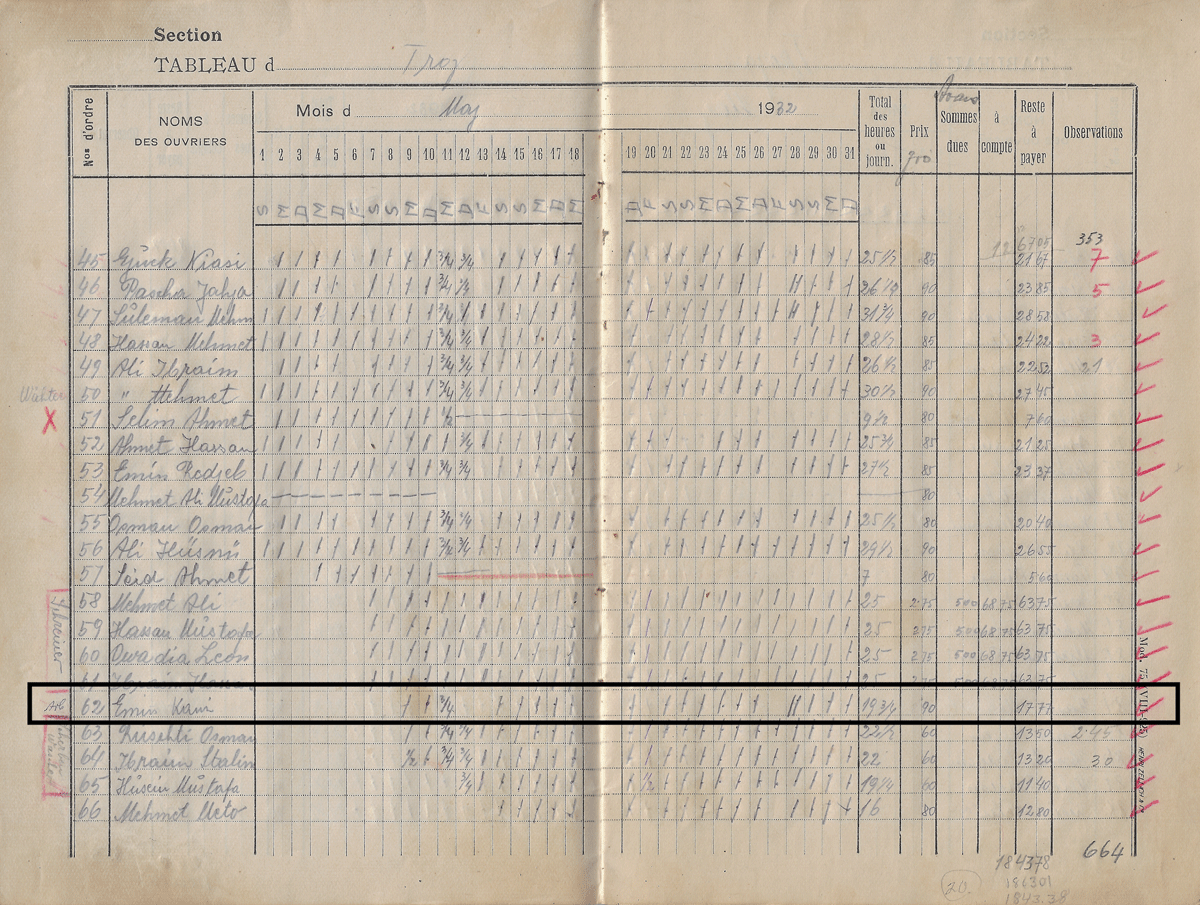
Figure 3
Pages 17–18 from the 1932 Workers’ Payroll with Kâni’s name highlighted. Note the abbreviation “Arb.” in the left margin.
Despite Blegen, John L. Caskey, Marion Rawson, and Jerome W. Sperling writing, in the first Troy volume published in 1950, that ‘Kâni Barin, who after an apprenticeship of two years filled the post of foreman during the five succeeding campaigns from 1934–1938,’ there is no evidence that he held a special status in 1932.67 Neither the excavation accounts nor the preliminary report mentions him in any way.68
The foreman for 1933 was Josef Reiffenmüller, another veteran of Alişar.69 Kâni is recorded as Worker #8, and he started on April 3rd along with a small cohort of other workers (Figure 4).70 Blegen later claims that Kâni was ‘promoted to subforeman with an enlarged sphere of activity’ that year, but, again, neither the excavation accounts nor the preliminary report mentions him, and they certainly do not indicate that he held a special status.71
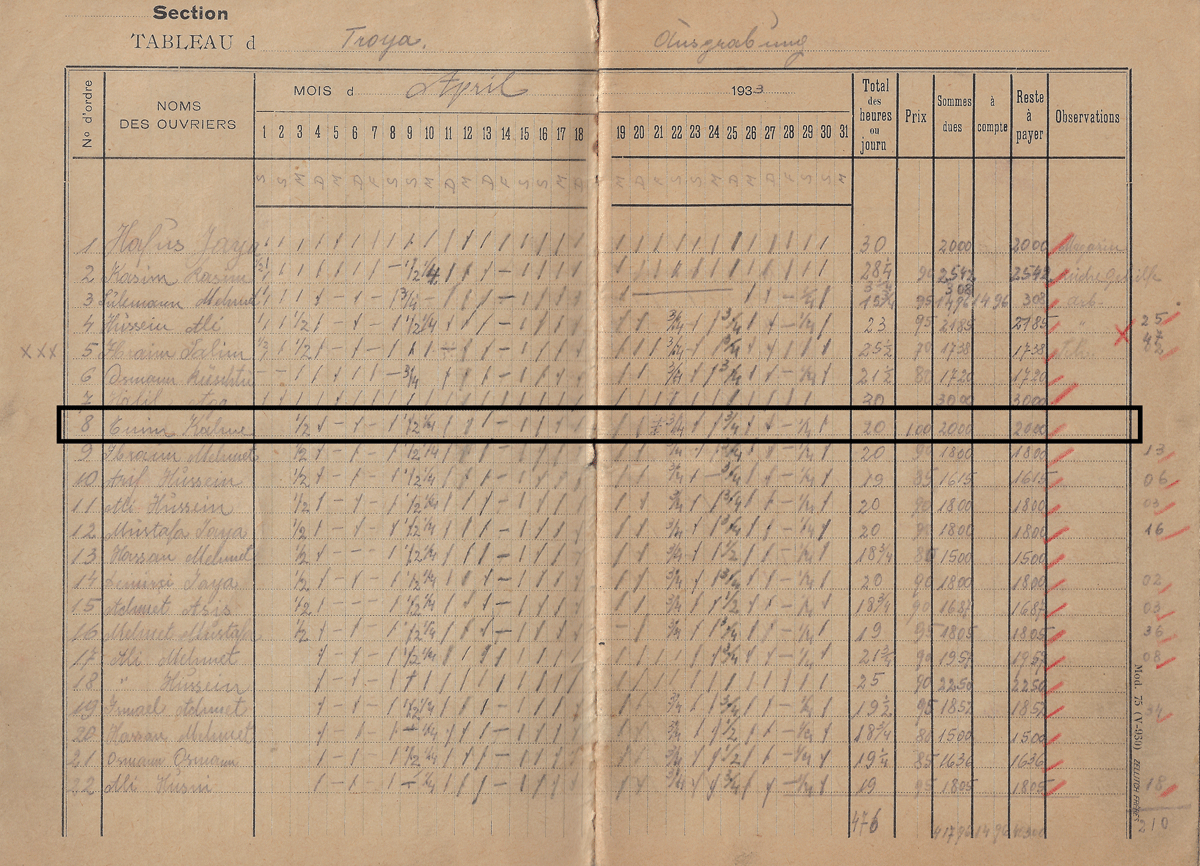
Figure 4
Pages 1–2 from the 1933 Workers’ Payroll with Kâni’s name, spelled “Kahne,” highlighted.
Referring to 1932, Blegen notes one other point in his 1954 paper – that Kâni was ‘often called on to do a bit of interpreting on the side.’72 He does not appear to have received any additional remuneration for this service, and this task placed him in the class of translators whom Sarah Irving describes as ‘cultural mediators between their own society and Western[ers].’73 While we know that Blegen and a few other team members had acquired a minimal proficiency in Turkish by this point (and spoke it fairly well by 1938), we can assume that they relied on Kâni extensively to convey their stated – and unstated – wants to the other workers, for the remainder of their time at Troy.
The preliminary report for the 1934 season suggests that Blegen would have preferred to have Reiffenmüller return, but the latter died unexpectedly in 1933.74 Without him, Blegen continues, ‘we were unable to find a satisfactory successor.’75 He presumably means a European, because in his 1934 notebook, he provisionally hired a Hungarian named Fekete on April 1st.76 But when Fekete arrived at Troy on April 6th, he was denied permission to work by the local police.77 Blegen asked their financial agent in Çanakkale, Godfrey Whittall, for assistance in this problem, but if Whittall sent a letter regarding this, that correspondence is no longer extant, and Blegen records no resolution either.78 This led to Blegen stating that ‘the foreman’s duties consequently had to be distributed mainly among the members of the staff, but much useful assistance was rendered also by Emin Kani [sic], who was in charge of the vase-mending department in our pottery workroom’ (Figure 5).79
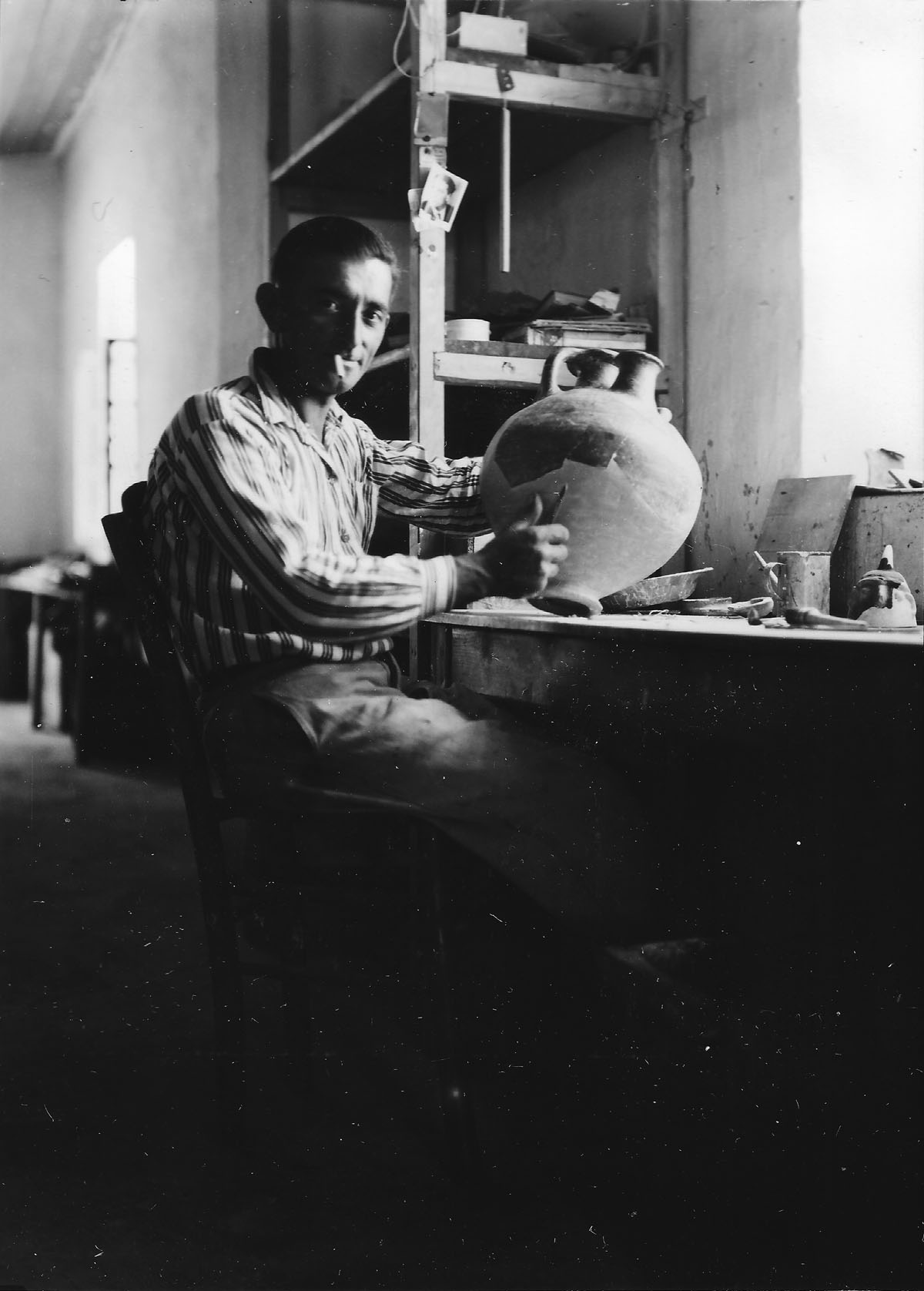
Figure 5
Kâni, in his role as “chief pot-mender” repairing a stirrup jar in June of 1934. Troy Photograph: 34.S.21.10.
In the Troy I volume published 15 years later, Kâni is said to have ‘served as chief pot-mender [and] also carried out most the duties of foreman’ in 1934, although a few pages earlier, he was listed simply as the foreman for that year.80
The handwriting in the 1934 Workers’ Payroll for parts of April, May, and June appears to be Caskey’s, and the excavation accounts record a number of pre-season advances to him, similar to the advances previously given to Scharer and Reifenmüller.81 The other handwriting is similar to that in the foreman’s notebooks for 1935-1938, so it must belong to Kâni.82 Caskey provided a model for Kâni to follow, and after doing the same for the first 16 entries for April in 1935 (Figure 6), Kâni handled the payroll records through the end of that year and for the remainder of the expedition.83
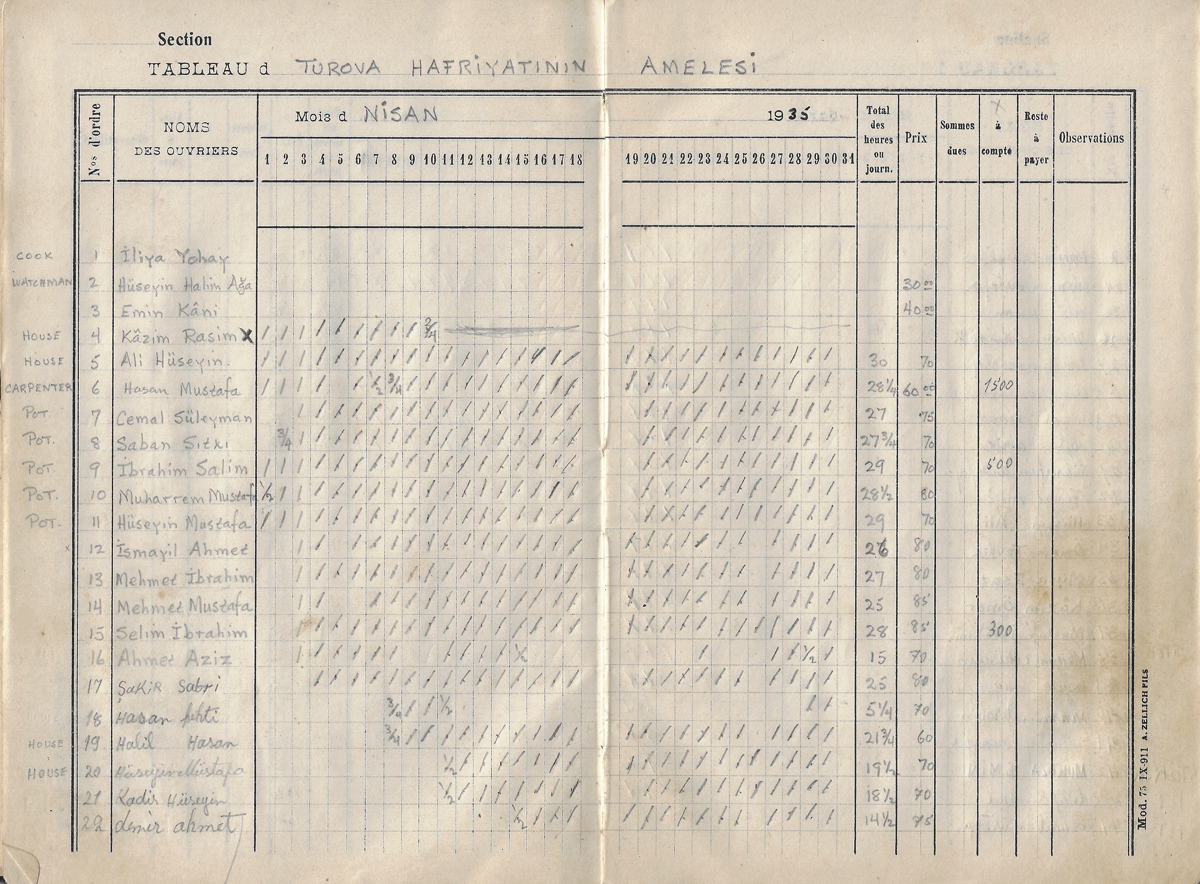
Figure 6
Pages 9–10 from the 1934–1935 Workers’ Payroll for April showing Caskey’s handwriting (Entries #1–#16) and Kâni’s for the remainder on the page (#17–#22).
According to Blegen, Kâni – listed as ‘Johnny’ for the first and only time in Blegen’s notebooks – began work as a pot-mender on April 4th, 1934, and by the end of the season, he oversaw a team of ‘five youthful apprentices’ (Figure 7).84 They are labeled ‘pot boys’ in the captions of the photographs, regardless of their age (Figures 8, 9). While he is not specifically mentioned as supervising the mending facility in the published reports from 1935–1938 seasons (Blegen mentions that they continued to mend considerable quantities of vessels in those seasons), Kâni continued this duty, in addition to his others, at least at the beginning of the 1935 and 1936 seasons.85
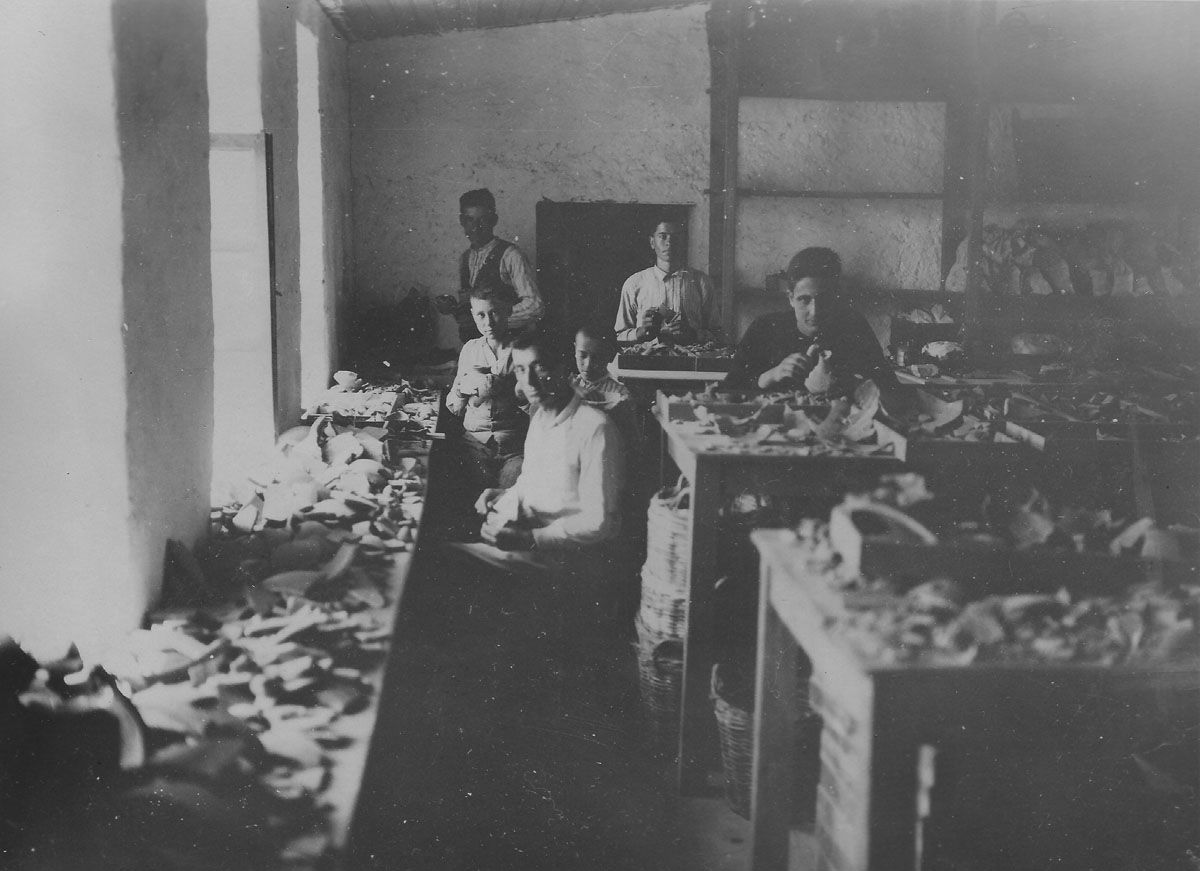
Figure 7
Kâni (in front) and the so-called “pot boys” mending vessels in the pottery shed on July 5th, 1937. Troy Photograph: 37.S.27.8.
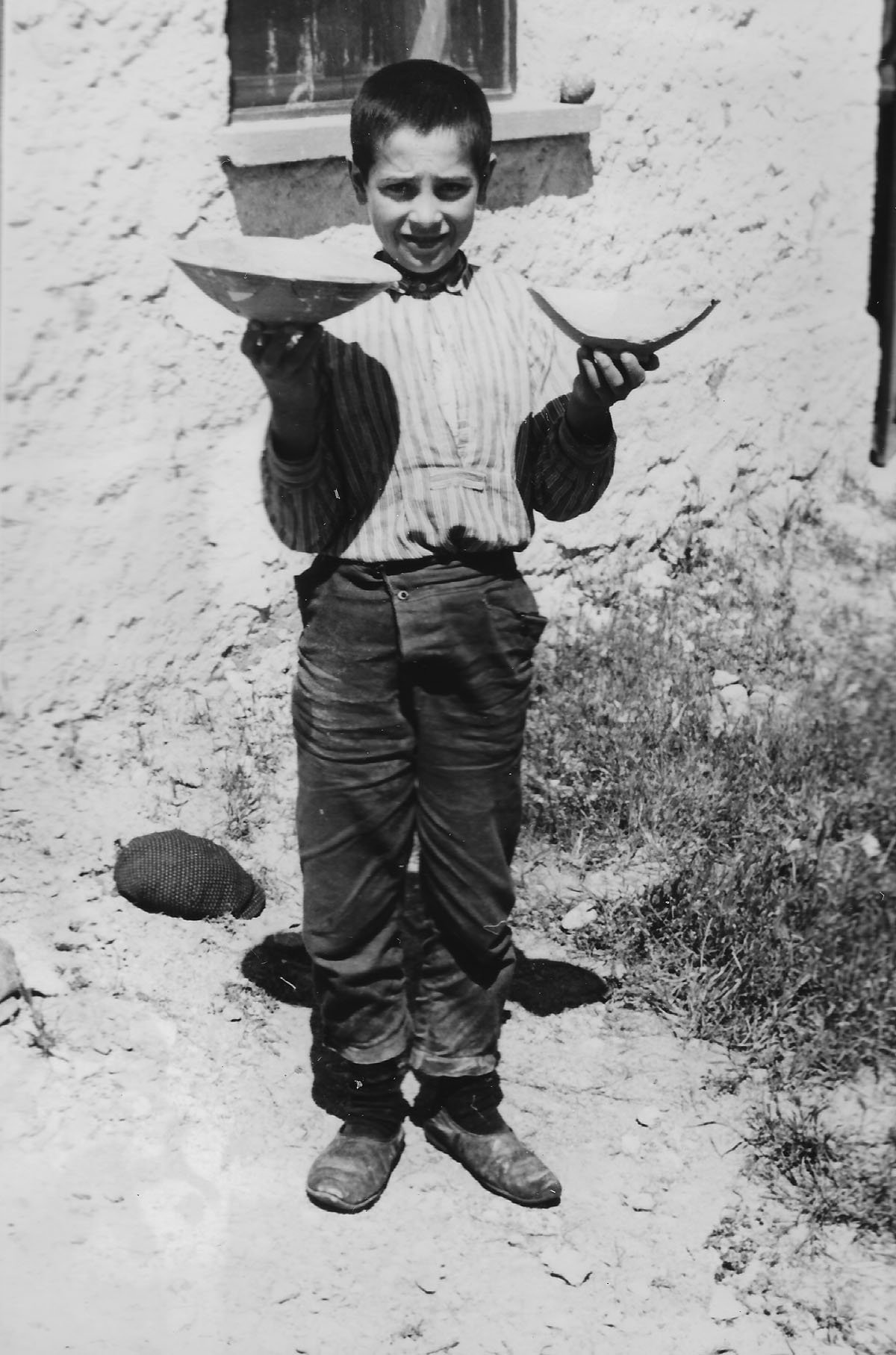
Figure 8
One of the “pot boys” displaying two mended vessels on May 17th, 1936. He appears in other photos, but his exact identity is unknown. Troy Photograph: 36.C.5.12.
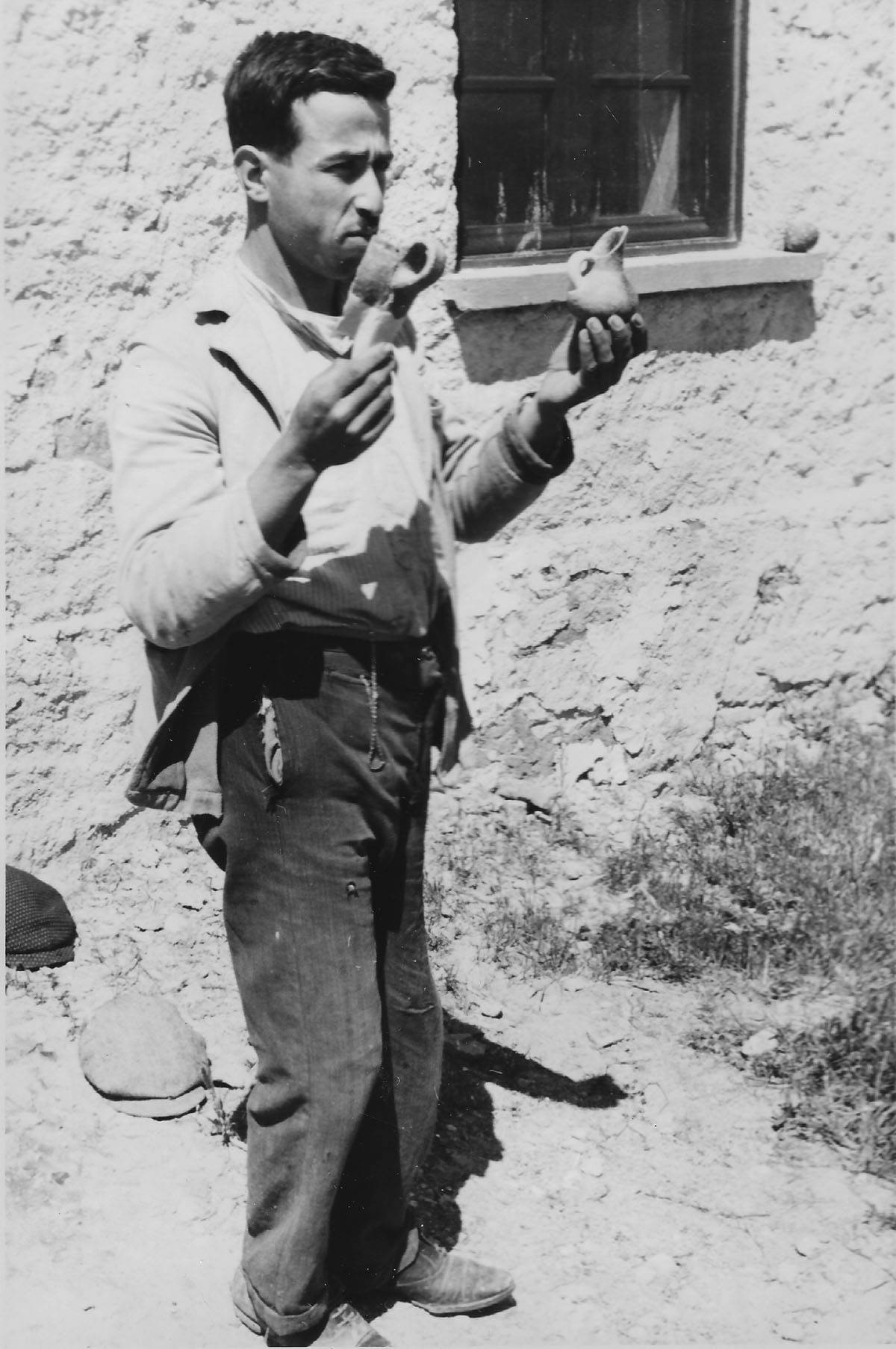
Figure 9
An older “pot boy” who is either Hüseyin Mustafa (Worker #9), Muharrem Mustafa (Worker #10), or Mahmut Mustafa (Worker #12), and is also displaying two mended vessels on May 17th, 1936. He appears in other photos but is still only listed as “Mustafa.” Troy Photograph: 36.C.5.14.
In both the contemporaneous preliminary reports and the later Troy I volume, Blegen states that Kâni filled the position of foreman from 1935 to 1938 either ‘competently and faithfully’ or with a similar sentiment.86 1935 also represents the first year that he is paid a flat rather than daily rate, although already in 1934, he is paid advances as early as the middle of May; this practice continues for the following seasons.87
Kâni continues to appear in the workers’ payrolls (that he kept), the excavation accounts, and in Blegen’s director’s notebooks as he fulfilled his foreman’s duties, but those mentions become rote after 1935.88 The photographic record, conversely, reveals a much richer record of the varied roles he filled. For example, the expedition installed a rail car system to move the vast quantities of earth from the areas they were digging, much like other large excavations at the time.89 Kâni is shown in two photographs either maintaining or, more likely from the date of July 1st, removing a track in 1934 (Figure 10). As additional buildings were constructed, Kâni also supervised the craftspeople hired. In 1935, a wing was added to the pottery building, and a new structure was built to house the rail cars and track.90 The third building was a permanent guard’s house, shown here under construction with Kâni, masons, and carpenters (Figure 11).
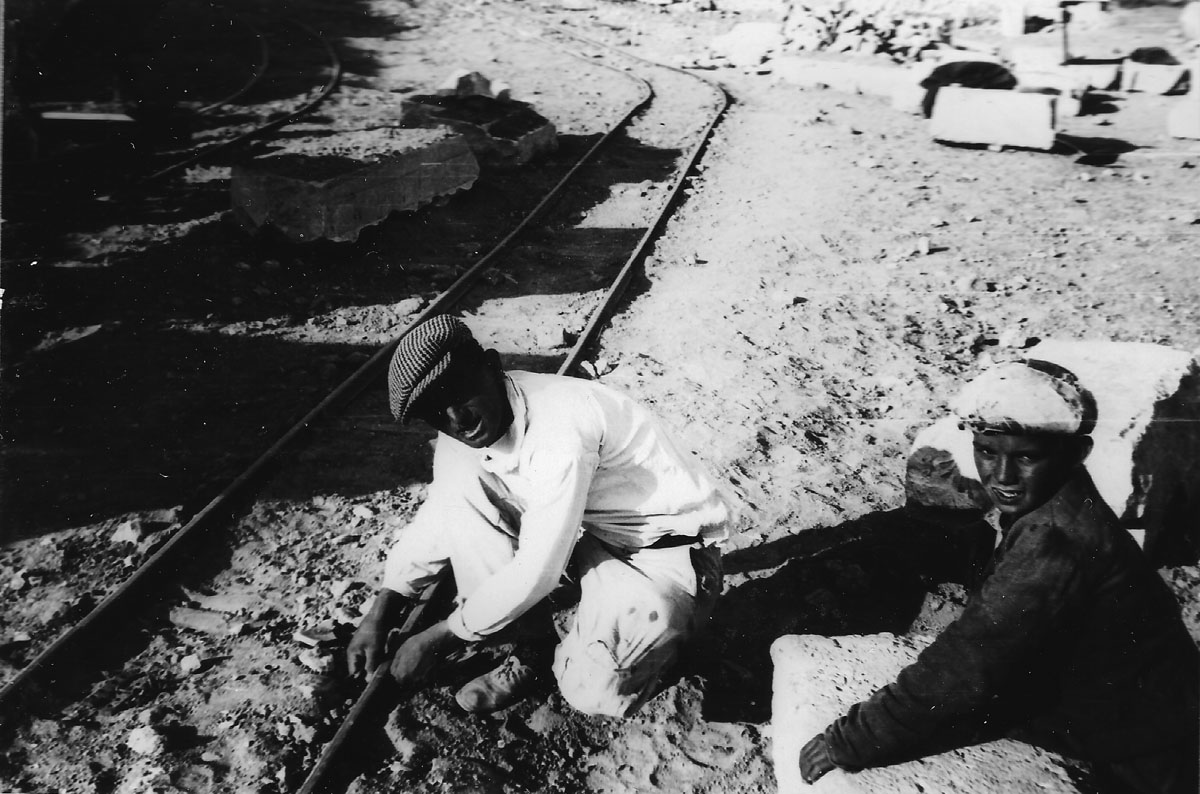
Figure 10
Kâni working on a rail line with an unidentified worker on July 1st, 1934. Troy Photograph: 34.C.16.32.
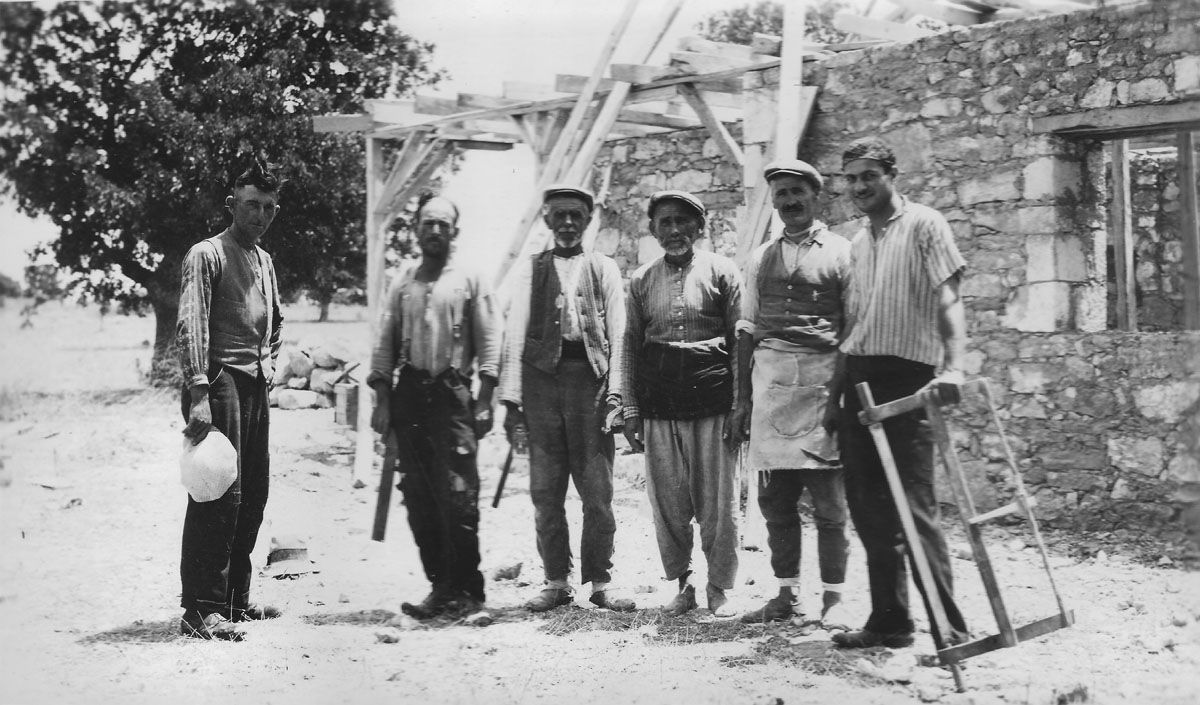
Figure 11
Kâni, at left, with the builders of the guard’s house. Troy Photograph: T.35.197.
Toward the end of his story of Kâni, Blegen describes him as a ‘real friend,’ and it is clear that the foreign staff interacted with at least a few workers in off-hours.91 Here, on an unknown occasion, Kâni holds a bird identified in the caption as a European roller (Figure 12), and this is one of several photographs taken at the same time. Another photograph shows Marion Rawson filming the scene, and although a number of film clips survive, this one does not.
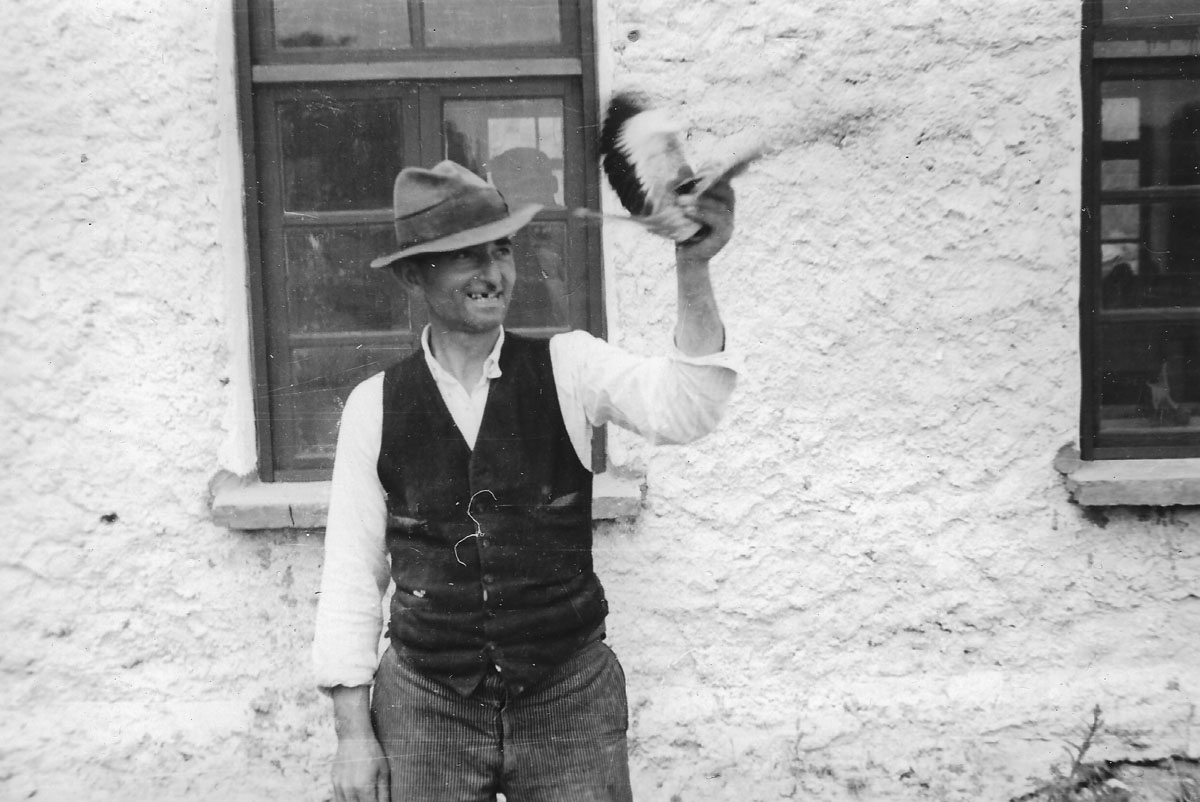
Figure 12
Kâni holding a European roller on June 21st, 1936. Troy Photograph: 36.C.8.36.
The expedition wrapped in early July of 1938, and a few photographs of the camp and the workers were taken at that time. We do not know exactly when this photograph was taken (Figure 13), but early July seems likely. Kâni is sprawled on the ground to the right in front of the house staff and the pot boys, all of whom are in front of the portable house.
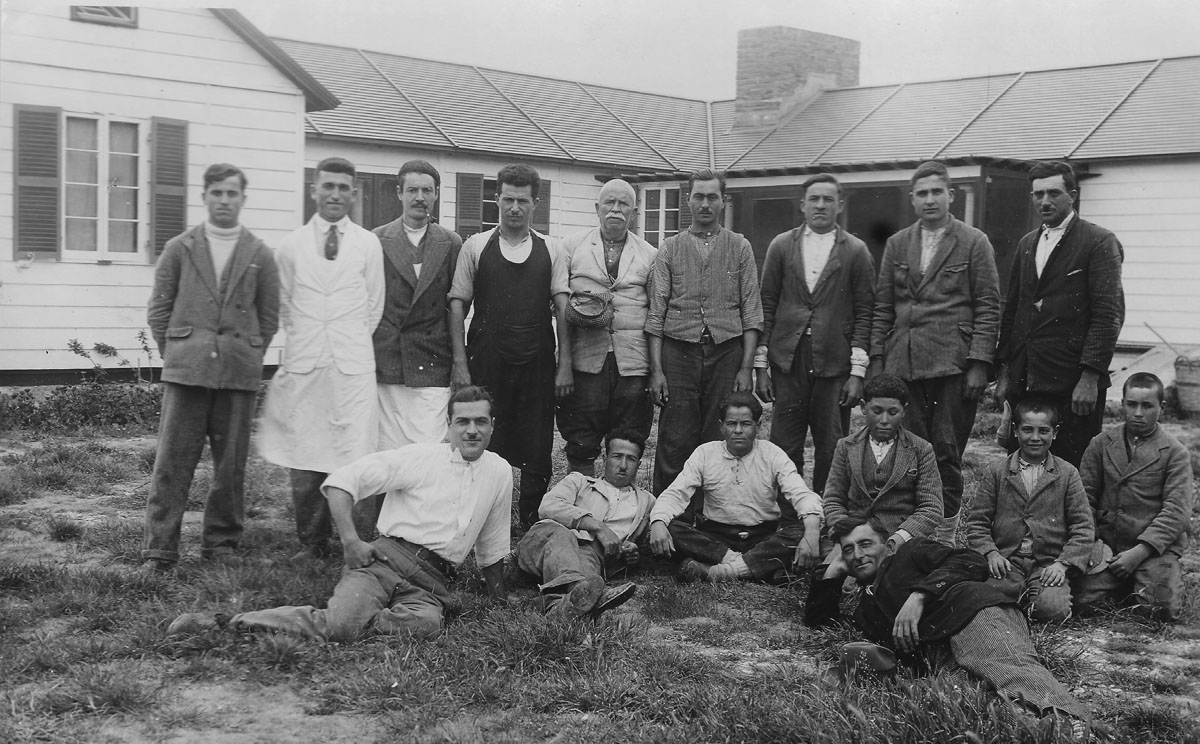
Figure 13
The house staff and “pot boys” standing in front of the portable house, with Kâni lying on the ground to the right. Troy Photograph: Unnumbered.
Epilogue to the Excavation
Blegen concludes his 1954 account of Kâni stating that ‘at rare intervals he lets us hear from him.’92 Presumably Kâni and Blegen – and/or other members of the team – exchanged letters, but, unfortunately, none of these appear to survive. This is surprising considering the vast correspondence that does remain extant in both Cincinnati and in the Archives of the American School of Classical Studies at Athens.
During World War II, we do not have any information about Kâni, but we do know that Caskey, a member of the Office of Strategic Services from 1942–1945, was in charge of a zone along the Turkish coast that included the Troad, so contact with Kâni or any of the other locals Caskey had known previously is possible.93 After the war, Blegen states that Kâni found employment with an American tobacco company; this was a period when Turkish tobacco production rapidly increased.94 While he may have been hired because of his ability to read and write English, Blegen notes that his written English was becoming increasingly difficult to understand by 1954, presumably from lack of use.95
We do not know if the team ever interacted with Kâni again, but we know from an undated photograph that they did meet with another former member of the team – Ferat Şükrü (Figure 14). Şükrü, described as a ‘snake charmer’ by Blegen,96 was often photographed with various types of snakes native to the region (Figure 15). Blegen and Rawson visited the museums that held the Troy material to restudy and rephotograph specific finds in the early 1950s, and this meeting with Şükrü almost certainly occurred on one of those trips. Since they were in Çanakkale more than once, one could imagine that they either made the trip to Erenköy or that Kâni visited them in Çanakkale, if he still lived in the region.
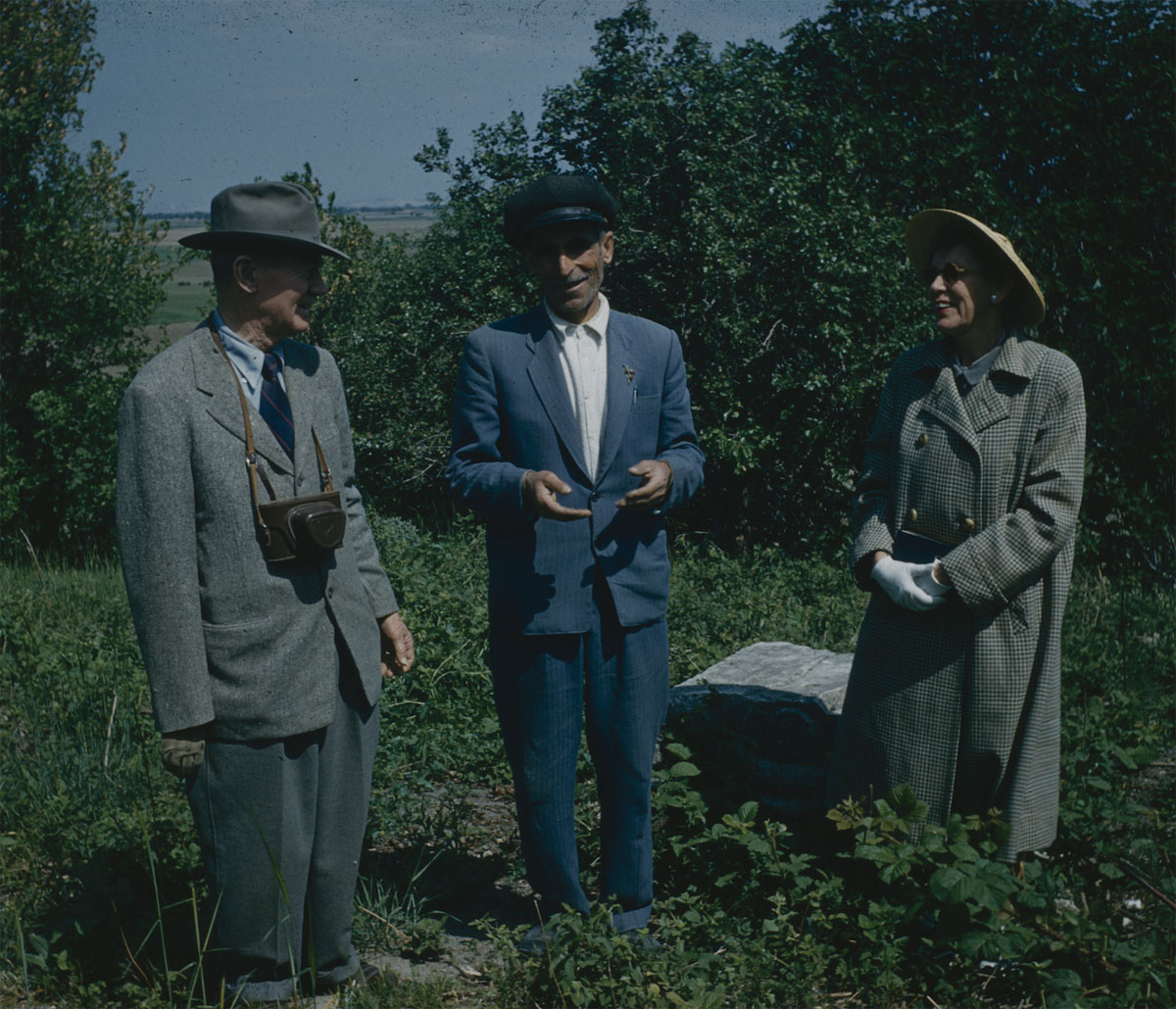
Figure 14
Carl W. Blegen and Marion Rawson flanking Ferat Şükrü in an undated photograph. Troy Photograph: Unnumbered Slide.
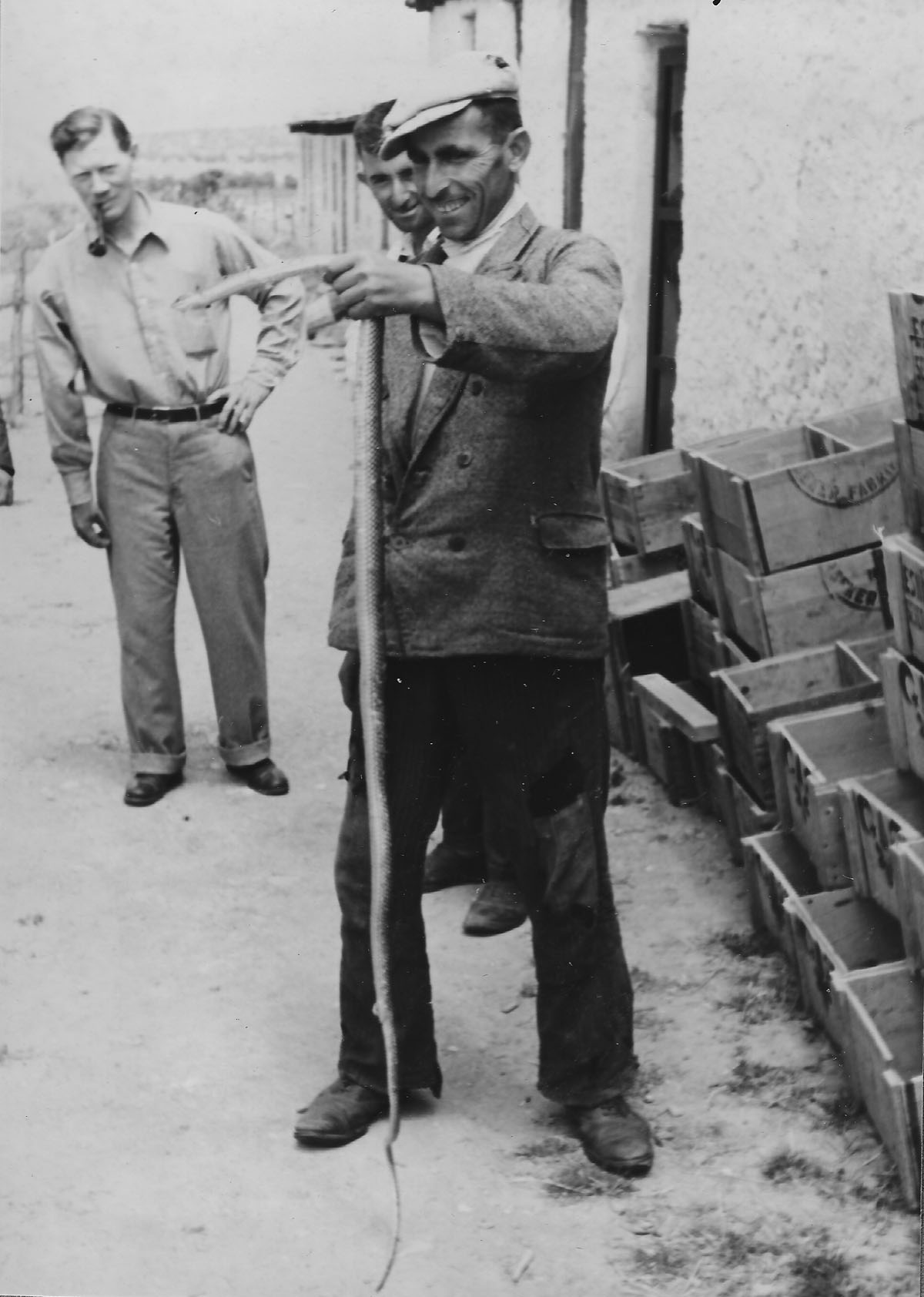
Figure 15
Ferat Şükrü holding a snake with both Kâni and Blegen looking on from June 14, 1936. Troy Photograph: 36.C.9.A.
Conclusion
The existence of Blegen’s 1954 paper allows us to reconstruct Kâni’s life in far more detail than the other records, by themselves, permit. However, those records document, at the very least, the names of the hundreds of workers who excavated Troy, the days they worked, and their pay rates, and for certain individuals, we can learn more.
For example, we know the names of the three cooks the team employed: Dolinsky in 1932 and Kadri in 1933; the former kept a ledger recording his expenditures. In 1934, Elia – who would remain the cook through 1938 – appears in the records. Although we do not have a ledger that he wrote, we do have provision lists detailing the items he bought to prepare. Likewise, the expedition hired two chauffeurs – Kemal and Mustafa. The latter appears to have been the principal driver, and he was also regularly trusted both to obtain items for the dig and to act as a courier of funds; numerous notes stating the amounts sent by Whittall with Mustafa remain extant.
Combined with other records in the Troy collection, we can find more workers who have stories to be explored in even more depth. Ferat Şükrü, discussed above, is one, as is Hüseyin Halim Ağa, whom Blegen also discusses briefly in his retrospective (Figure 16).97 The latter, also present in Figure 13 in the center of the back row, was originally from Crete and was hired as a caretaker for the site year-round during the 1932–1938 seasons.
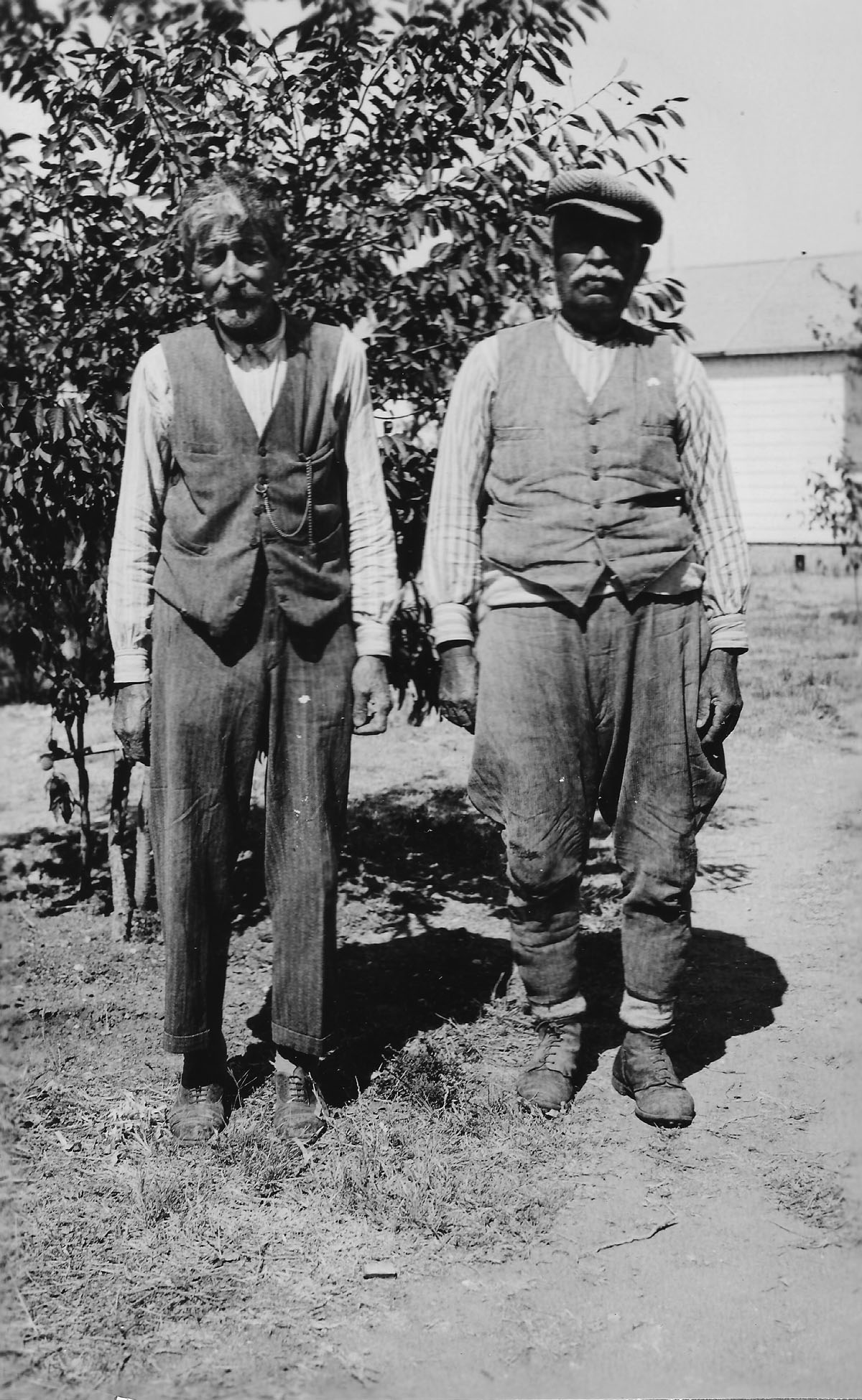
Figure 16
Hüseyin Halim Ağa on the right, next to the Hasan Mustafa, the master carpenter for the excavation. Troy Photograph: T.37.W.5.
Kâni Barin, however, is an exemplar for humanizing the people by whose labor Troy was excavated. On the one hand, his life was a microcosm of the larger political and economic forces sweeping the region at that time: multi-lingualism in the late Ottoman empire; emigration in the early twentieth century; military conscription by one of the nation-states that emerged from the fragmentation of the Ottoman empire; forced relocation because of the Compulsory Population Exchange; and poverty thereafter so extreme that it resulted in the death of at least one family member and in his own ‘particularly ragged, unshaved, and seedy-looking’ appearance when Blegen first met him. He likewise illustrates the range of roles that might be filled by locally-hired workers on a ‘big dig’ during the first half of the twentieth century: laborer, translator, pot-mender, and, in this case, foreman. The Troy collection in the UC Classics Archive provides extraordinary resources for ‘digging up’ the biographies of the workers who dug up Troy.
Notes
[1] While the workers at Troy appear to be overwhelmingly male and so the term ‘workmen’ used by the authors of the site publications would be accurate, at least one woman and one young woman were hired in 1932 and 1933 respectively. Therefore, I use the gender-neutral term ‘workers.’
[2] For a general overview of ‘invisible labor,’ see Winifred R. Poster, Marion G. Crain, and Miriam A. Cherry, “Introduction: Conceptualizing Invisible Labor,” in Invisible Labour: Hidden Work in the Contemporary World, ed. Marion G. Crain, Winifred R. Poster, and Miriam A. Cherry (Oakland: University of California Press, 2016), 3–27. While they focus on labor that is ‘not conceptualized as work’ (3), their theme of invisible labor that is ‘pushed out of sight’ (20–21) may best explain the type of labor performed by the workers at Troy. Studies that focus on the workers at sites in British Mandate Palestine include: Eric H. Cline, Digging Up Armageddon: The Search for the Lost City of Solomon (Princeton: Princeton University Press, 2020); Eric H. Cline, “Invisible Excavators: The Quftis of Megiddo, 1925–1939,” Palestine Exploration Quarterly 155, no. 4 (2022): 316–339. https://doi.org/10.1080/00310328.2022.2050085; John D.M. Green and Ros Henry, eds., Olga Tufnell’s “Perfect Journey”: Letters and Photographs of an Archaeologist in the Levant and Mediterranean (London: UCL Press, 2021); and Sarah Irving, “A Tale of Two Yusifs: Recovering Arab Agency in Palestine Exploration Fund Excavations 1890–1924,” Palestine Exploration Quarterly 149, no. 3 (2017): 223–36, https://doi.org/10.1080/00310328.2017.1323294. Another important resource is “Unsilencing the Archives: The Laborers of the Tell en-Nasbeh Excavations (1926–1935)” by Melissa Cradic and Samuel Pfister (Melissa Cradic and Samuel Pfister, “Unsilencing the Archives,” ArcGIS StoryMaps, September 10, 2021, https://storymaps.arcgis.com/collections/dc601d4d131145f88f828196860b8a44).
For workers in Egypt, see: Wendy Doyon, “On Archaeological Labor in Modern Egypt,” in Histories of Egyptology: Interdisciplinary Measures, ed. William Carruthers, Routledge Studies in Egyptology (New York: Routledge, 2015), 141–56; Wendy Doyon, “The History of Archaeology through the Eyes of the Egyptians,” in Unmasking Ideology in Imperial and Colonial Archaeology: Vocabulary, Symbols, and Legacy, ed. Bonnie Effros and Guolong Lai, Ideas, Debates, and Perspectives 8 (Los Angeles: Cotsen Institute of Archaeology Press, 2018), 173–200; Stephen Quirke, Hidden Hands: Egyptian Workforces in Petrie Excavation Archives, 1880-1924, Duckworth Egyptology (London: Duckworth, 2010); and Joanne Rowland, “Documenting the Qufti Archaeological Workforce,” Egyptian Archaeology 44 (2014): 10–12. Studies that examine workers more broadly and in other regions include: Allison Mickel, “Essential Excavation Experts: Alienation and Agency in the History of Archaeological Labor,” Archaeologies: Journal of the World Archaeological Congress 15 (2019): 181–205, https://doi.org/10.1007/s11759-019-09356-9 and Allison Mickel, Why Those Who Shovel Are Silent: A History of Local Archaeological Knowledge and Labor (Louisville, Colorado: University Press of Colorado, 2021).
[3] See Carl W. Blegen et al., Troy: General Introduction. The First and Second Settlements (Princeton: Princeton University Press, 1950), 5 for the single sentence devoted to the workers.
[4] Blegen et al, 4–5. Hereafter, I use only the name by which he introduced himself to Blegen in 1932 – Kâni. When I refer to other workers, I attempt to use their full names as found in the 1937 and/or 1938 Workers’ Payroll. By then, virtually all of them had adopted surnames following the Turkish Surname Law (Soyadı Kanunu) introduced in 1934.
[5] Carl W. Blegen, “Johnny,” in Papers of the Cincinnati Literary Club, Vol. 76 1953–1954, 1954, 238–43.
[6] Brian Rose, “Carl Blegen and Troy,” in Carl W. Blegen: Personal and Archaeological Narratives, ed. Natalia Vogeikoff-Brogan, Jack L. Davis, and Vasiliki Florou (Atlanta: Lockwood Press, 2015), 157.
[7] Jack L. Davis, “A Foreign School of Archaeology and the Politics of Archaeological Practice: Anatolia, 1922,” Journal of Mediterranean Archaeology 16, no. 2 (2003): 145–72, https://doi.org/10.1558/jmea.v16i2.145. See also Jack L. Davis, “Warriors for the Fatherland: National Consciousness and Archaeology in ‘Barbarian’ Epirus and ‘Verdant’ Ionia, 1912–1922,” Journal of Mediterranean Archaeology 13, no. 1 (2000): 76–98, https://doi.org/10.1558/jmea.v13i1.29908.
[9] Natalia Vogeikoff-Brogan, Jack L. Davis, and Vasiliki Florou, eds., Carl W. Blegen: Personal and Archaeological Narratives (Atlanta: Lockwood Press, 2015). The authors state unequivocally that this was not intended to be a traditional biography (2).
[12] Blegen, “Johnny.”; Carl W. Blegen, “Retrospect,” in Papers of the Cincinnati Literary Club, Vol. 80, 1957–1958, 1957, 152–64. For the full versions of these two papers, also see: https://classics.uc.edu/images/archives/Blegen_Lit_Papers_Collection_Public.pdf (pp. 88–94 for “Johnny” and pp. 149–169 for “Retrospect”).
[17] Blegen, 240. Kontogiorgi discusses the different groups of Albanian Muslims in the region (Elisabeth Kontogirogi, Population Exchange in Greek Macedonia: The Rural Settlement of Refugees 1922–1930 (Oxford: Oxford University Press, 2006), 20–21, although without more specifics about Kâni’s parents, we cannot ascertain to which specific group they may have belonged.
[20] Selçuk Akşin Somel, The Modernization of Public Education in the Ottoman Empire 1839–1908: Islamization, Autocracy and Discipline, The Ottoman Empire and Its Heritage: Politics, Society and Economy 22 (Leiden: Brill, 2001), 109–110.
[21] Benjamin C. Fortna, Imperial Classroom Islam, the State, and Education in the Late Ottoman Empire (Oxford: Oxford University Press, 2002), 68–69. See also Anastasia N. Karakasidou, Fields of Wheat, Hills of Blood: Passages to Nationhood in Greek Macedonia, 1870–1990 (Chicago: The University of Chicago Press, 1997), 95–99 regarding the use of Greek schools in promoting nationalist Greek interests.
[23] Karakasidou, Fields of Wheat, Hills of Blood, 15. Kontogirogi, Population Exchange in Greek Macedonia, 21.
[34] Blegen, 241. Kontogiorgi, Beaton, and Karakasidou all discuss Greek designs on and intervention in Macedonia – the ‘Macedonian Struggle’ – that existed since at least 1900 and accelerated after 1903. Kontogirogi, Population Exchange in Greek Macedonia, 28–37; Roderick Beaton, Greece: Biography of a Modern Nation (Chicago: The University of Chicago Press, 2019), 177–181, 192–198; Karakasidou, Fields of Wheat, Hills of Blood, 105–107.
[37] Beaton, Greece, 199–200; Beaton asserts that the attitudes to these new Greek citizens were ‘shockingly colonialist,’ 200. See also Kontogiorgi’s and Karakasidou’s discussions of the ‘new lands’ (Kontogirogi, Population Exchange in Greek Macedonia, 37–40; Karakasidou, Fields of Wheat, Hills of Blood, 141–146).
[40] For a brief recount of the events leading to the war and the war itself, see Beaton, Greece, 217–218, 220–231.
[41] United Nations. United Nations Treaty Series/League of Nations Treaty Series. Volume 32. Accessed on April 1, 2023. https://treaties.un.org/doc/Publication/UNTS/LON/Volume%2032/v32.pdf (p. 77). Hirschon suggests that rather than religious affiliation, language could have been the criterion (Renee Hirschon, “‘Unmixing Peoples’ in the Aegean Region,” in Crossing the Aegean: An Appraisal of the 1923 Compulsory Population Exchange between Greece and Turkey, ed. Renee Hirschon, Studies in Forced Migration 12 (New York: Berghahn Books, 2003), 3–12. 8). This could have proved even more problematic, and Kâni is the perfect example – he spoke both languages. Without more discussion of her suggestion, we cannot know to which side Kâni would have been assigned in Hirschon’s alternative solution. Of note is that Eleutherios Venizelos, the Prime Minster of Greece at the time, rejected the idea that language should be a ‘criterion of nationality’. Eleutherios Venizelos, Greece before the Peace Congress of 1919. A Memorandum Dealing with the Rights of Greece, Publication No. 7 (New York: Oxford University Press for the American-Hellenic Society, 1919), 2–3.
[42] Michael Barutciski, “Lausanne Revisited: Population Exchanges in International Law and Policy,” in Crossing the Aegean: An Appraisal of the 1923 Compulsory Population Exchange between Greece and Turkey, ed. Renee Hirschon, Studies in Forced Migration 12 (New York: Berghahn Books, 2003), 23; Sarah Shields, “The Greek-Turkish Population Exchange: Internationally Administered Ethnic Cleansing,” Middle East Report no. 267 (2013): 5; Bruce Clark, Twice a Stranger: How Mass Expulsion Forged Modern Greece and Turkey (London: Granta Books, 2006), 18.
[43] Aslı Iğsız, Humanism in Ruins: Entangled Legacies in the Greek-Turkish Population Exchange (Stanford: Stanford University Press, 2018). 4. For the immediate events leading up to the exchange and the exchange itself, in addition to Iğsız 1–20, see in particular Hirschon, “‘Unmixing Peoples’ in the Aegean Region,” 3–12; Renee Hirschon, “Consequences of the Lausanne Convention: An Overview,” in Crossing the Aegean: An Appraisal of the 1923 Compulsory Population Exchange between Greece and Turkey, ed. Renee Hirschon, Studies in Forced Migration 12 (New York: Berghahn Books, 2003), 13–20; and Clark, Twice a Stranger, 42–64, 158–198.
[44] Blegen, “Johnny,” 241. Regarding Blegen’s work with the Red Cross, see the account in Jack L. Davis, “The American School of Classical Studies and the Politics of Volunteerism,” Hesperia: The Journal of the American School of Classical Studies in Athens 82, no. 1 (2013): 15–48, https://doi.org/10.2972/hesperia.82.1.0015.
[53] Biray Kalluoğlu, “Excesses of Nationalism,” Nations and Nationalism 19, no. 3 2013): 532–50, https://doi.org/10.1111/nana.12028.
[54] For Greece, see Vassilis Colonas, “Housing and the Architectural Expression of Asia Minor Greeks Before and After 1923,” in Crossing the Aegean: An Appraisal of the 1923 Compulsory Population Exchange between Greece and Turkey, ed. Renee Hirschon, Studies in Forced Migration 12 (New York: Berghahn Books, 2003), 163–78. In Türkiye, Yıldırım makes a similar point: refugees, who had fled during the Balkan Wars and during or immediately after World War I, already had taken residence in many dwellings that were habitable. Onur Yıldırım, Diplomacy and Displacement: Reconsidering the Turco-Greek Exchange of Populations, 1922–1934, Middle East Studies: History, Politics, and Law (New York: Routledge, 2006), 95. One other important point that Yıldırım, makes is that, while the exchangees in Greece could unite and actively campaign for more assistance, the same was not the case in Türkiye, 186.
[57] Carl W. Blegen, “C.W. Blegen 1932 Director’s Notebook,” 7 (UC Classics Archive, Troy Collection, Box 03). Other activities which incurred expenses are recorded in the “1932–1933 Excavation Accounts” (UC Classics Archive, Troy Collection, Box 07).
[58] Blegen, 7; Hans Henning von der Osten, Discoveries in Anatolia 1930–31, vol. 14, Oriental Institute Communications (Chicago: The Oriental Institute of the University of Chicago, 1933), viii.
[59] Letter from Carl W. Blegen to William T. Semple, 16 January 1932 (UC Classics Archive, Troy Collection, Box 02, Folder 02).
[60] Troy Staff, “1932-1933 Excavation Accounts,” 7, 9, 11 (UC Classics Archive, Troy Collection, Box 07).
[61] Carl W. Blegen, “Excavations at Troy 1932,” American Journal of Archaeology 36, no. 4 (1932): 433, https://doi.org/10.2307/498010.
[62] Troy Staff, “1932–1933 Excavation Accounts,” 7, 9, 11 (UC Classics Archive, Troy Collection, Box 07).
[68] Troy Staff, “1932–1933 Excavation Accounts” (UC Classics Archive, Troy Collection, Box 07); Blegen, “Excavations at Troy 1932.”
[69] Carl W. Blegen, “Excavations at Troy 1933,” American Journal of Archaeology 38, no. 2 (1934): 223 n. 1, https://doi.org/10.2307/498078; von der Osten, Discoveries in Anatolia 1930–31, viii.
[70] Josef Reifenmüller, “Foreman Accounts 1933,” 1–2 (UC Classics Archive, Troy Collection, Box 07); Josef Reifenmüller, John L. Caskey, and Kâni Barin, “1933–1934 Workers’ Payroll,” 1–2 (UC Classics Archive, Troy Collection, Box 07).
[71] Blegen, “Johnny.” 239; Troy Staff, “1932–1933 Excavation Accounts” (UC Classics Archive, Troy Collection, Box 07); Blegen, “Excavations at Troy 1933.”
[74] Carl W. Blegen, “Excavations at Troy 1934,” American Journal of Archaeology 39, no. 1 (1935): 6 n. 1, https://doi.org/10.2307/498762.
[76] Carl W. Blegen, “C.W. Blegen 1934 Director’s Notebook,” 6 (UC Classics Archive, Troy Collection, Box 04).
[78] Blegen, 8 (UC Classics Archive, Troy Collection, Box 04). In the preliminary report for 1934, Fekete is not mentioned, but the excavation accounts for that year record a payment to him on April 14th (Troy Staff, “1934–1935 Excavation Accounts,” 11, UC Classics Archive, Troy Collection, Box 07).
[81] Reifenmüller, Caskey, and Barin, “1933–1934 Workers’ Payroll,” 39–47 (UC Classics Archive, Troy Collection, Box 07); John L. Caskey and Kâni Barin, “1934–1935 Workers’ Payroll,” 1–8 (UC Classics Archive, Troy Collection, Box 07); Troy Staff, “1934–1935 Excavation Accounts,” 5, 9 (UC Classics Archive, Troy Collection, Box 07).
[82] No foreman’s notebook for 1934 remains. Either one was not kept, or it does not survive. The excavation accounts for 1934 do record expenses under the label “J.L. Caskey’s account” (see, for example, Troy Staff, “1934–1935 Excavation Accounts,” 19, 21, (UC Classics Archive, Troy Collection, Box 07)), so either he had a separate notebook (no expenses are listed in his excavation notebook) or he had receipts that were recorded in a manner similar to the way the foreman’s accounts were listed in the excavation accounts in other years.
[83] Caskey and Barin, “1934–1935 Workers’ Payroll,” 9–10 (UC Classics Archive, Troy Collection, Box 07); Kâni Barin, “1936–1937 Workers’ Payroll” (UC Classics Archive, Troy Collection, Box 07); Kâni Barin, “1938 Workers’ Payroll” (UC Classics Archive, Troy Collection, Box 07).
[84] Blegen, “C.W. Blegen 1934 Director’s Notebook,” 7 (UC Classics Archive, Troy Collection, Box 04); Blegen, “Excavations at Troy 1934.” Blegen, 30.
[85] Carl W. Blegen, “C.W. Blegen 1935 Director’s Notebook,” 7–8 (UC Classics Archive, Troy Collection, Box 04); Carl W. Blegen, “Excavations at Troy, 1935,” American Journal of Archaeology 39, no. 4 (1935): 585–586, https://doi.org/10.2307/498162; Carl W. Blegen, “C.W. Blegen 1936 Director’s Notebook, 13–19” (UC Classics Archive, Troy Collection, Box 05); Carl W. Blegen, “Excavations at Troy, 1936,” American Journal of Archaeology 41, no. 1 (1937): 49–50, https://doi.org/10.2307/498214; Carl W. Blegen, “Excavations at Troy, 1937,” American Journal of Archaeology 41, no. 4 (1937): 594–595, https://doi.org/10.2307/498599; Carl W. Blegen, “Excavations at Troy, 1938,” American Journal of Archaeology 43, no. 2 (1939): 225–227, https://doi.org/10.2307/499260.
[86] Blegen et al., Troy: General Introduction, 12–13, 15, 17; see, for example, Blegen, “Excavations at Troy, 1938,” 204 n. 1.
[87] Caskey and Barin, “1934-1935 Workers’ Payroll,” 9-10 (UC Classics Archive, Troy Collection, Box 07); Troy Staff, “1934–1935 Excavation Accounts,” 23 (UC Classics Archive, Troy Collection, Box 07). See, for example in 1935, 101, and Troy Staff, “1938 Excavation Accounts,” 2–3 (UC Classics Archive, Troy Collection, Box 07).
[88] Blegen, “C.W. Blegen 1936 Director’s Notebook” (UC Classics Archive, Troy Collection, Box 05); Carl W. Blegen, “C.W. Blegen 1937 Director’s Notebook” (UC Classics Archive, Troy Collection, Box 05); Carl W. Blegen, “C.W. Blegen 1938 Director’s Notebook” (UC Classics Archive, Troy Collection, Box 06); Troy Staff, “1935–1937 Excavation Accounts” (UC Classics Archive, Troy Collection, Box 07); Troy Staff, “1938 Excavation Accounts” (UC Classics Archive, Troy Collection, Box 07).
[93] Susan Heuck Allen, Classical Spies: American Archaeologists with the OSS in World War II Greece (Ann Arbor: The University of Michigan Press, 2011), 91, 139.
[94] Blegen, “Johnny,” 7; İlhan Zeynep Karakılıç, “Social Memory of the Greek-Turkish Population Exchange in Daily Life: A Case Study of a Tobacco-Producing Village in Turkey,” Sociologia Ruralis 61, no. 1 (2021): 98, https://doi.org/10.1111.soru.12327.
Acknowledgements
This paper is a product of The Digital Troy Project, an initiative between the Department of Classics, the Digital Scholarship Center at UC, and the UC Libraries system. Because of the nature of the records in the Troy collection as well as their general neglect over several decades, this vast trove of information is acutely fragile; I decided in 2018 that most of them needed to be digitized both to preserve the originals as well as to share this unique collection. Grants from the Digital Scholarship Center for 2019–2020 and 2020–2021 allowed William J. Weir and myself to scan more than 9300 photographs and more than 70 of the preserved notebooks, and all of these records are available online. All illustrations in this paper are provided courtesy of The Digital Troy Project, the Department of Classics, University of Cincinnati.
Additional support was also generously provided by the Department of Classics, and I must thank Jack Davis and Kathleen Lynch, the previous chairs of the Department without whom The Digital Troy Project would not have been possible, and Daniel Markovich, the current chair. James Lee, James Van Mil, Sydney Gao, Riley Soutar, and John Wallrodt also all contributed.
I thank Jacob Engstrom for his numerous comments on an earlier draft of the work as well as those of the anonymous reviewers. Finally, I thank my editors, Carol R. Hershenson and Therase H. Kramer, both of whom have significantly improved this paper. All inaccuracies, etc. are naturally my own.
Competing Interests
The author has no competing interests to declare.