
Introduction
This paper focuses on the intersection between archaeological labor, cultural heritage, and social memory in Tres Zapotes, Veracruz. This village, located in the Gulf lowlands, constitutes the humble beginnings of the history of Olmec archaeology, when José Melgar reported the very first discovery of an in-situ Olmec monument – the Hueyapan colossal head or Tres Zapotes Monument A.1 This unprecedented monolith put Tres Zapotes on the map, changing the course of its sociocultural development. Since then, the archaeological site has gradually attracted the curious eyes of different individuals such as archaeologists, collectors, tourists, and even New Age groups, who traverse the tropical forest on the bumpy roads of rural Veracruz to admire the Olmecs’ achievements. The periodic waves of national and international visitors have not passed unnoticed by local people, who find the long trips made to visit an ‘ordinary village’ like Tres Zapotes quite impressive. The National Geographic Society-Smithsonian Institution Expedition, directed by Matthew Stirling, was the first large group of visitors to arrive in Tres Zapotes during the early twentieth century.2 Local people working for Stirling and his research crew of US scholars had to face unfamiliar sociocultural relationships, and adapt to an unusual type of labor: archaeological fieldwork. They also had to make sense of the astonishing archaeological findings of this previously unknown ancient society, which resulted in a dialectical dialogue between local people’s empirical ideas and archaeologists’ scientific interpretations. Stirling’s archaeological research in Tres Zapotes lasted only three years (1938–1940), but its impact on the village’s social memory was long-lasting. Despite all the people who worked for Stirling to have passed away, the village still remembers to some extent the archaeological expedition, and the traces of the excavations remain as memories inscribed in the local landscape.
Five decades after Stirling’s excavations a second major archaeological project was begun in Tres Zapotes by Christopher Pool in the 1990s.3 This project is still ongoing and has brought archaeological labor to Tres Zapotes, creating particular social relationships between local people and US and Mexican archaeologists once again. During the last three decades, local people working under Pool’s project have surveyed and excavated Tres Zapotes and its surroundings, yielding more archaeological findings that were incorporated into their cultural heritage and the narratives of their discoveries into their social memory.
Tres Zapotes was certainly not the same ‘ordinary village’ upon Pool and his team’s arrival, as the impressive assemblage of archaeological findings put it on the map. They found a different sociocultural setting shaped mainly by their predecessors’ work in the village, but also by the successive investigations conducted throughout the region that contributed to the definition of the Olmec culture and its incorporation into the national and local identity. An important new element of Tres Zapotes’ sociocultural setting was a modest archaeological museum established by the National Institution of Anthropology and History (INAH) in 1975. The museum provided new sources of formal and informal labor in the village – some individuals were hired as museum staff and others offer souvenirs and tours to visitors.
These socioeconomic practices led them to develop their own understanding and knowledge of the village’s pre-Hispanic remains. The existence of formal and informal labor related to archaeology presupposes the existence of differential relationships with and narratives of the local cultural heritage. In order to generate contributions to the study of cultural productions developed in the archaeological practice, this paper explores how archaeological labor has shaped the construction and perception of cultural heritage and social memory in Tres Zapotes.
Archaeological labor, cultural heritage, and social memory
Since the nineteenth century expeditions to the Mesoamerican cultural area local people have usually agreed to guide archaeologists to ‘ruins’ and to do the hard work for them.4 In the accounts of these expeditions, people from rural areas of México and Central American countries – like Guatemala, Belize, Honduras, etc. – are depicted as excellent diggers having pristine insights on the archaeological record due to the laborious and traditional characteristics of their rural lifestyle. In other regions of the world, this stereotypical perception has led to the objectification of local people as digging tools and proxies of ancient people and to the alienation from the products of their work.5
More recently, participation in archaeological projects in Mexico is often characterized as a great opportunity for individuals to gain an additional income and learn about the ancient past. In fact, local communities have normally obtained marginal benefits. For instance, in El Tajín, Veracruz, Sam Holley-Kline determined that archaeology provided seasonal wage labor to just a fraction of the population, and hiring was not equal but relied on kin and sociopolitical relationships.6 Furthermore, in some cases archaeology has produced more damage than benefits such as the appropriation of cultural heritage – e.g., extracting monuments and artifacts from their local contexts.
Local communities from different Mesoamerican regions have also been excluded from the management of archaeological remains located within their lands. In Guatemala, this exclusionary practice has been institutionalized not only by the academy, but also by the government which has paternalistic attitudes.7 Many non-western governments have made repatriation requests to western museums based on cultural nationalist arguments that emphasizes cultural ownership of historically looted countries.8 Ironically, countries like México have replicated the same actions at the local scale that they have denounced at the global scale. As part of the creation of a national identity rooted in the pre-Hispanic past, the establishment of museums and the preservation of archaeological sites in México meant the removal of archaeological artifacts from the hands of indigenous groups and even the dispossession of their communal lands.9 The promulgation in 1972 of the Federal Law of Artistic, Historic, and Archaeological Monuments reaffirmed the nationalization of ancient remains as inalienable objects, even though oral tradition holds that they constitute part of the cultural heritage of descendant communities. Then the federal government through INAH, is the official owner of archaeological resources and holds the right of regulating any type of archaeological work (research, conservation, restoration, etc.) and other related for-profit activities like tourism.
In terms of labor, INAH projects do not differ substantially from foreign-led archaeological practice. The main job INAH offers to local people is manual labor in seasonal projects, in which archaeologists enjoy a privileged position receiving the credit for the work done. These short-term work opportunities are only attractive to unemployed and non-professional male individuals with incomplete school education, usually known as peón or jornalero. INAH has permanent custodian positions in archaeological sites and local museums with socioeconomic benefits like health insurance and retirement income, but they are currently very limited and only persons with middle-high school education are eligible. Despite having more responsibilities and close social relations with archaeologists and INAH, custodians also play a passive role in the management of cultural heritage because they do not hold decision-making power over the archaeological sites they oversee.
Additionally, the incursion of tourism in local communities with museums or archaeological sites encouraged the emergence of informal labor. Depending on their skills, resources, and familiarity with archaeology, some people have tried to make a living by giving guided tours and selling handmade replicas of archaeological artifacts. In rural places with poor learning infrastructure, individuals usually instruct themselves how to perform such activities, as INAH provides insufficient training, and instead has put constraints on the services of uncertified guides and the reproduction of archaeological artifacts. Moreover, a lack of legal knowledge has facilitated the commodification of archaeological artifacts, especially when individuals are offered money for pieces they often find on their land.
Although the participation in archaeological labor and related informal activities –including looting – is normally driven by economic interests, the values and meanings individuals ascribe to archaeology and cultural heritage can be different according to the interactions established with archaeological remains.10 This present-day process of cultural resignification has been examined insufficiently due to the lack of consideration for local communities’ interests.
Methodology
Diverse conceptual frameworks – e.g., public, collaborative, and community-based archaeology – have recently attempted to de-center archaeological practice by putting the spotlight on the interests and opinions of historically marginalized and silenced stakeholders.11 I follow Lynn Meskell’s archaeological ethnography to explore the present-day meanings and values of ancient remains developed by local individuals who have engaged in archaeological labor.12 I employ a broad definition of archaeological labor to include different types of socioeconomic activities related directly to ancient remains.
In 2022, I conducted semi-structured interviews and participant observation in Tres Zapotes.13 I carried out participant observation at 1) archaeological excavations; 2) the museum where I assisted staff members in giving tours and organizing cultural activities; and 3) the archaeological site to which I went on trips with landowners. Based on the interaction with different individuals in these settings, I identified four categories of archaeological labor in Tres Zapotes: archaeological project workers, museum staff, tour guides, and craftspeople. The first two can be considered as formal types of labor since they follow contractual arrangements with archaeologists or INAH, and the last two as informal types of labor because these self-created jobs are not regulated by a governmental institution or private company.
There is a significant imbalance between the categories mentioned in terms of the individuals interviewed. While many local people have worked in archaeological projects in the last three decades, there have been only three museum custodians, two craftsmen, and one tour guide in Tres Zapotes. For this reason, in this paper I decided to use data from only one participant for each category as parallel life stories of archaeological labor. I chose to present the testimonies of the archaeological worker and craftsman with the most years of experience and the current museum custodian, along with the only tour guide in the village. They are all male, which is a result of the bias and gender disparities of archaeological labor in local communities where female workers are normally relegated to washing artifacts. I aimed my questions at understanding individuals’ knowledge, beliefs, ideas, and memories related to the local ancient remains before and after engaging in archaeological labor. I provide a brief overview of the history of Olmec archaeology and archaeological work in Tres Zapotes prior to unfolding the life stories of archaeological labor.
History of Olmec archaeology
The national identity of México was originally constructed based on one single pre-Hispanic culture, the Aztec empire. When this diverse country originated in the early nineteenth century, the only ancient societies known where those the Spaniards interacted with during the contact period. At that time, part of Veracruz and Tabasco was dominated by the Aztecs and did not have a prominent urban center comparable to México-Tenochtitlán. This created a centralist identity narrative in which the Aztecs were conceived as the greatest pre-Hispanic ancestors of México and the others as inferior societies.14
This Aztec-centric narrative was contested with the development of archaeology as a scientific discipline. In the middle nineteenth century, explorers ‘discovered’ impressive ancient cities in regions of Mexico like the Yucatan peninsula, which demonstrated that the Mayas reached a high level of complexity hundreds of years before the Aztecs.15 It was during this same period that Melgar reported in 1869 the discovery of a giant ‘Ethiopian’ idol, the Hueyapan colossal head. By that time, the creators of this unprecedented monument had not yet been identified. Chavero supported Melgar’s biased interpretation and inscribed the Hueyapan head in México’s pre-Hispanic history as evidence of the presence of Black people in Mexico prior to the Spanish conquest.16
At the beginning of the twentieth century, the hegemonic narrative of the nation’s pre-Hispanic origin experienced another major change with emergence of Olmec artefacts in private collections and international museums. Scholars like Marshall H. Saville and Hermann Beyer noticed the stylistic similarities between some votive axes and labeled them Olmec – a Nahuatl term the Aztec used for the Gulf Coast inhabitants meaning ‘People of Land of Rubber.’17 Additionally, the early Long Count date of the Tuxtla Statuette found in southern Veracruz, reflecting a calendrical system previously thought limited to the Maya, attracted the interest of archaeologists like Frans Blom and Stirling, who conducted expeditions to Veracruz aimed at examining the temporal and cultural relation between the Mayas and their western neighbors. Stirling’s work at Tres Zapotes and La Venta uncovered the magnificent remains of a long-forgotten culture that predated the ancient Mayas.
In 1942 the Sociedad Mexicana de Antropología (SMA) held its second roundtable to define the main traits of this new pre-Hispanic culture. In this meeting Alfonso Caso and Miguel Covarrubias proposed that the Olmecs were the mother of other cultures such as the Maya, the Teotihuacan, the Zapotec, and others.18 Caso and Covarrubias’ ideas transcended the academic realm and were rapidly integrated in national identity discourses, mainly by the Mexican government. As López Hernández points out, this enabled the state to resignify Olmec heritage, transforming the ‘Ethiopian’ idols into México’s mother culture.19 Although the mother culture hypothesis has recently been criticized, it is still deeply embedded in the country’s social memory, especially in Veracruz and Tabasco, where it gives a sense of local pride.20
The meanings ascribed to the Olmecs were assimilated through the construction of museums in the capital cities of Veracruz and Tabasco, for which many monuments were removed from the lands of local communities. Likewise, many international museums acquired Olmec artefacts for their galleries, and have borrowed monuments from Mexican museums to organize temporary Olmec art exhibitions in countries like the United States, France, and Japan.21 I have observed that in this context the Olmecs have a universal value associated to human cultural evolution, as one of the earliest complex societies of America and the world (see Arqueología Mexicana’s 53rd special edition on pristine civilizations).22
Due to this universal value, the Olmecs have been claimed as the ancestors of different groups from México and abroad to validate their ancestry in the New World. For instance, Melgar’s idea has been revived by Afrocentric groups to provide a sense of place and belonging in the New World to the African American community.23 Different stakeholders have emerged throughout the history of Olmec archaeology, but it is individuals from places like Tres Zapotes who have provided the labor to recover from oblivion the archaeological remains long buried in their lands.
Archaeological work in Tres Zapotes
The archaeological site of Tres Zapotes is located in Veracruz, México, between the Eastern Lower Papaloapan Basin (ELPB) and the Western Tuxtla Mountains (Figure 1). This 3000-year-old Olmec settlement owes its name to the adjacent contemporary village. According to the memories transcribed by Ambrosio Mayo Zapot – an honorable local elder born in 1910 – Tres Zapotes was founded in 1760 under the municipal jurisdiction of Santiago Tuxtla by people of Nahua descent.24 Don Ambrosio’s ancestors were illiterate and landless farmers whose main source of labor was the Hacienda Hueyapan, a cattle ranch and sugar plantation based on an exploitative colonial system. Based on archival research conducted by Justeson et al., we know that the Tres Zapotes archaeological site and the village were located within the boundaries of the Hacienda Hueyapan.25 Melgar reported that the colossal head was found in the Hacienda’s grounds by a peón, probably from Tres Zapotes, a few years before his visit in 1862 (Figure 2).26 It seems that Melgar went directly to the Hacienda because there is not a single mention of Tres Zapotes in his accounts.

Figure 1
Map of the ELPB and Western Tuxtla Mountains showing the location of Tres Zapotes and Santiago Tuxtla. ESRI map edited by the author.
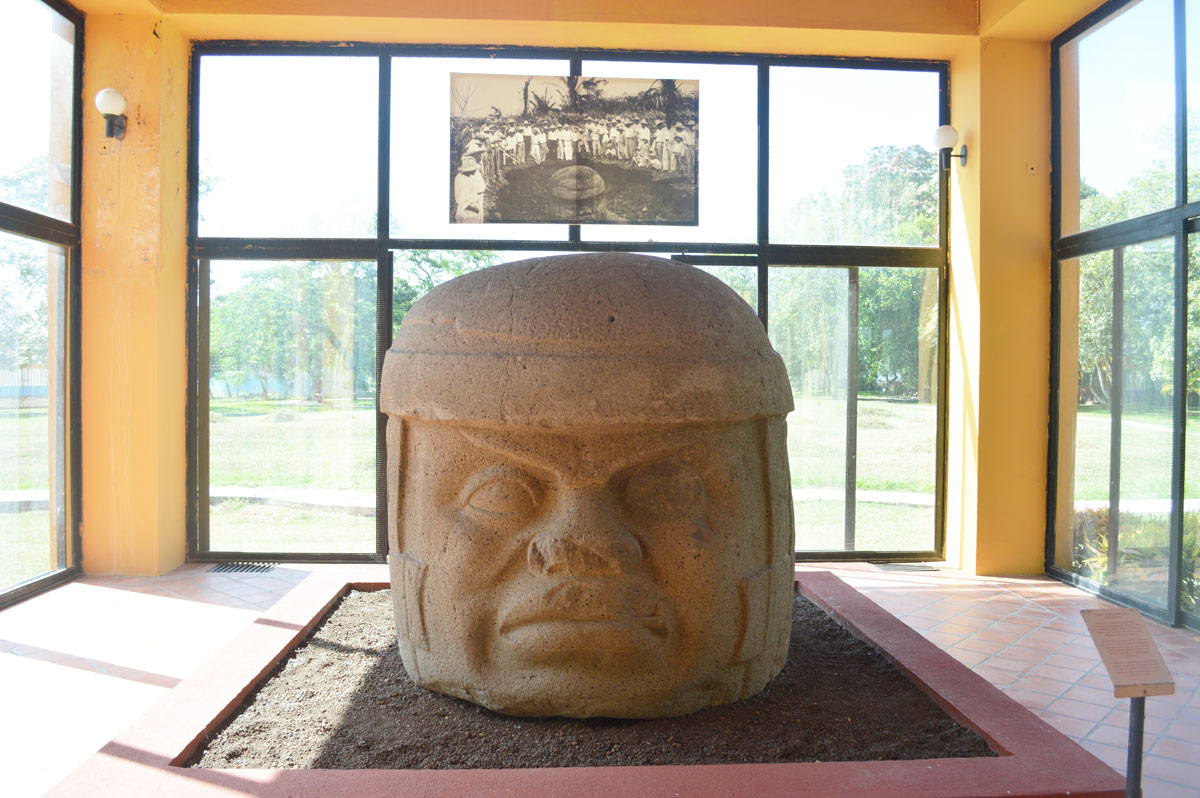
Figure 2
Hueyapan colossal head or Tres Zapotes Monument A. Photograph by the author.
The Hueyapan head attracted gradually the curious eyes of academic and non-academic people who wanted to see the astonishing monument. In their 1905 expedition to Los Tuxtlas region, the Selers visited the Hacienda Hueyapan where they photographed the colossal head in addition to a carved stone box – Tres Zapotes Monument C.27 Another important visitor was Albert Weyerstall, who in the late 1920s surveyed the archaeological site – which he called the Hueyapan Group – with the aid of two local guides.28 He pointed out the presence of large archaeological structures and a total of five basalt monuments. Weyerstall could have reported more mounds and monuments, but it seems that he only photographed the ones the guides could remember or wanted to show him. He mentions that he constantly insisted the elder to show him more idols, but instead this nameless person, unwilling to do so, tried to persuade Weyerstall to stop looking for worthless stones, like Tres Zapotes Monument C, which the elder guide actually believed contained treasures.29
Apparently, not everyone in the vicinity shared this interest in the monuments and mounds at the time of Weyerstall’s visit. For local people the archaeological site was generally conceived, and still is, as a farmland where they grow corn, sugar cane, and raise cattle. For instance, Don Ambrosio wrote that during that time people did not value Tres Zapotes’ archaeological remains, although they would constantly interact with them when working in their fields.30 Nevertheless, as result of this daily interaction, some mounds were given names like Tres Zapotes Structure 7 (Figure 3) – according to Don Ambrosio, by 1900 it was locally known as Cerro del Venado (Deer Hill) but currently people refer to it as Loma Camila (Camila’s Hill).

Figure 3
View of Tres Zapotes Structure 7 (Loma Camila) cover with pasture and surrounded by maize and sugar cane fields. Photograph by the author.
During the post-revolutionary period, Tres Zapotes fought for lands with the Hacienda Hueyapan, which resulted in the official establishment of its ejido (communal lands given to agrarian communities with usufruct rights) in 1932, the same year Weyerstall’s report was published. The ejido produced a sense of ownership of the archaeological site within Tres Zapotes’ residents, especially among ejidatarios (individuals granted usufruct rights of an ejido’s portion) whose lands had salient archaeological features. Interestingly, it was after this sociopolitical reconfiguration that the village of Tres Zapotes was finally mentioned in an archaeological account by Stirling. In his initial visit in 1938, he was informed that the colossal head was not close to the Hacienda headquarters as his predecessors had mentioned, but to the village of Tres Zapotes.31
In that same year, Stirling directed the very first archaeological excavations in Tres Zapotes, co-sponsored by National Geographic Society and the Smithsonian Institution. Stirling’s work in this and other Gulf Coast sites illustrates the hierarchical power relationships of the time between archaeologists, the Mexican government, and local people. Research in Tres Zapotes started one year before INAH’s founding, and so Stirling requested permission from the Department of Prehispanic Monuments. However, none of his reports specify if he also requested permission from local authorities since the excavations were done in Tres Zapotes’ ejido. The only indication in his accounts of a probable meeting with local authorities is that Stirling declared that the village’s council appointed a representative to assemble a list of the people who wanted to work in the excavations and make sure that everyone had an equal opportunity.32 Stirling had planned to hire 30 men but ended up assembling three crews of 30 men each that rotated every three days because about 100 people were interested in working. According to Ramón Galloso (one of Stirling’s closest workers), excavation workers were paid 10 Mexican cents a day.33
The projects’ logistics were not devoid of fixed gender norms. At the field camp, two young women (María Ascanio, the cook and Valvina Chagala, the maid) were hired for housekeeping and cooking meals for the US archaeologists. María and Valvina worked under Stirling’s wife, archaeologist Marion Stirling, with whom they had interesting conversations about discrepancies between US and Mexican customs regarding women’s/wives’ roles.34 Marion Stirling also supervised the washing of archaeological materials and served as the project’s housekeeper, bookkeeper, and even typist. At the archaeological trenches, Stirling was the field director of the male workforce – the only women at the excavations were the archaeologists’ wives, namely Marion Stirling and Marian Weiant.
Although the local workers did most of the digging, Stirling and his archaeologists’ team would sometimes jump into the trenches when a significant discovery was made. In his conversations with Sánchez Valdez, Don Ramón declared that when they found a stone structure the archaeologists instructed them to get out of the pit, and added with some mysticism, that ‘they even paid us a day’s salary without showing up to work. On our return, they told us to cover the hole or else the Chaneques [supernatural guardians of the jungle] would punish us.’35 This is not the only story and belief related to ancient remains that persist in Tres Zapotes’ social memory. For instance, local people said that a green light appearing on mounds at nights indicated the location of treasures and thought that obsidian was the byproduct of lightning bolts. They also made thoughtful hypotheses that impressed the archaeologists such as interpreting the bars and dots of Stela C as numbers.36
The unprecedented activity of US individuals hiring people to conduct archaeological excavations was likewise quite intriguing. People did not fully understand or believe the purpose of Stirling’s scientific work – their most reasonable explanation was that he was looking for treasures. They even thought that pottery must contain gold because he took it back home with him.37 According to Stirling, this misconception made it difficult to persuade people to reveal the location of monuments without paying a fee, for which he would give no more than the equivalent to a day’s salary.38 Moreover, some individuals brought in archaeological figurines to the archaeologists hoping for compensation – Stirling ended up setting a price of 5 Mexican cents for an ordinary figurine which could increase depending on its condition.39
Pottery and figurines were not the only archaeological objects that Stirling and his team took with them from Tres Zapotes. They left the village with one of the greatest findings, the Stela C fragment, which was placed in the National Museum of Anthropology in México City.40 Once again, there is no mention in Stirling’ accounts if he consulted the Tres Zapotes’ authorities or if they demanded something in exchange. Regardless of how the Stela C fragment was taken, the labor provided by Tres Zapotes to Stirling contributed to the loss of material elements of its cultural heritage. Similarly, in 1951 the recently found Nestepe colossal head (Tres Zapotes Monument Q) was moved to a small park in Santiago Tuxtla by Ignacio Díaz Bustamante, the municipal president of that time.41
In sum, Stirling’s work in Tres Zapotes set not only a significant precedent for future archaeological projects but also provided a solid foundation for the development of a local cultural identity. The work done by local people from Tres Zapotes as well as La Venta to uncover the monuments was used as the main archaeological evidence for what became the definition of the Olmecs as ‘Mesoamerica’s mother culture’ in 1942. At the time of the SMA’s second roundtable, the only in situ Olmec monuments with stratigraphic context were the ones excavated by Stirling’s workers. The Olmecs were assimilated by Tres Zapotes’ inhabitants as the pre-Hispanic ancestors of the village and the mother culture idea still prevails in their social memory, although it is no longer accepted within the archaeological community.
A new generation of local archaeologists
Archaeological research was conducted again in Tres Zapotes three decades after Stirling’s work. Ponciano Ortiz Ceballos excavated a survey unit in the site as part of the ‘Proyecto Olmeca de Los Tuxtlas’ co-directed by Robert Squier and Francisco Beverido Pereau from 1970 to 1972.42 Years later, INAH commissioned Luis A. Millet Cámara to carry out a salvage project in response to the construction of an oil pipeline passing through the archaeological site.43 Despite the significant contributions that Ortiz Ceballos and Millet made to the understanding of Tres Zapotes pre-Hispanic past, their work did not have a long-lasting impact in local people’s social memory.
In the second half of the 1990s, Pool began a second major archaeological project in Tres Zapotes. This and Pool’s successive projects have provided recurrent labor to different individuals during the summers. Pool’s archaeological fieldwork reproduced some aspects of Stirling’s work such as the gendered division of local workers in accordance with the ejido’s wishes: a male crew assembled for archaeological surveys and excavations, and a female one for washing artifacts, processing flotation samples, and cooking.44 Workers are initially hired through open meetings in which permission to conduct archaeological fieldwork is asked of local authorities and ejidatarios. Local authorities have usually appointed a trusted person to supervise the archaeological work, given that they have not forgotten about the monuments extracted from the village.45 Ejidatarios have likewise requested hiring a relative or friend as a condition to carrying out archaeological work in their lands, and they have sometimes received a compensation for the damages related to excavating, such as clearing a portion of their sugar cane fields or milpas. On certain occasions, ejidatarios have denied permission to Pool, seeing more disadvantages than benefits, assuming they would lose their lands if an important discovery were made.
After close to thirty decades of archaeological research in Tres Zapotes, Pool’s project has produced dozens of experienced workers. This is the case of Jaime Zapot Leyva who has participated in almost every fieldwork season conducted by Pool and his graduate students (Figure 4). He had a previous idea of archaeological labor from his father, Pedro Zapot, who worked in Ortiz Ceballos’ excavations, as well as from his mother, Carme Leyva, who was the niece of Valvina Chagala, Stirling’s field camp maid. In contrast to Don Guillermo (see below), Jaime attended Tres Zapotes’ elementary school when the monuments were already in the museum and did not finish high school. He remembers learning for the first time about the Olmecs and their creations found in the vicinity from a schoolteacher who was an archaeology enthusiast.
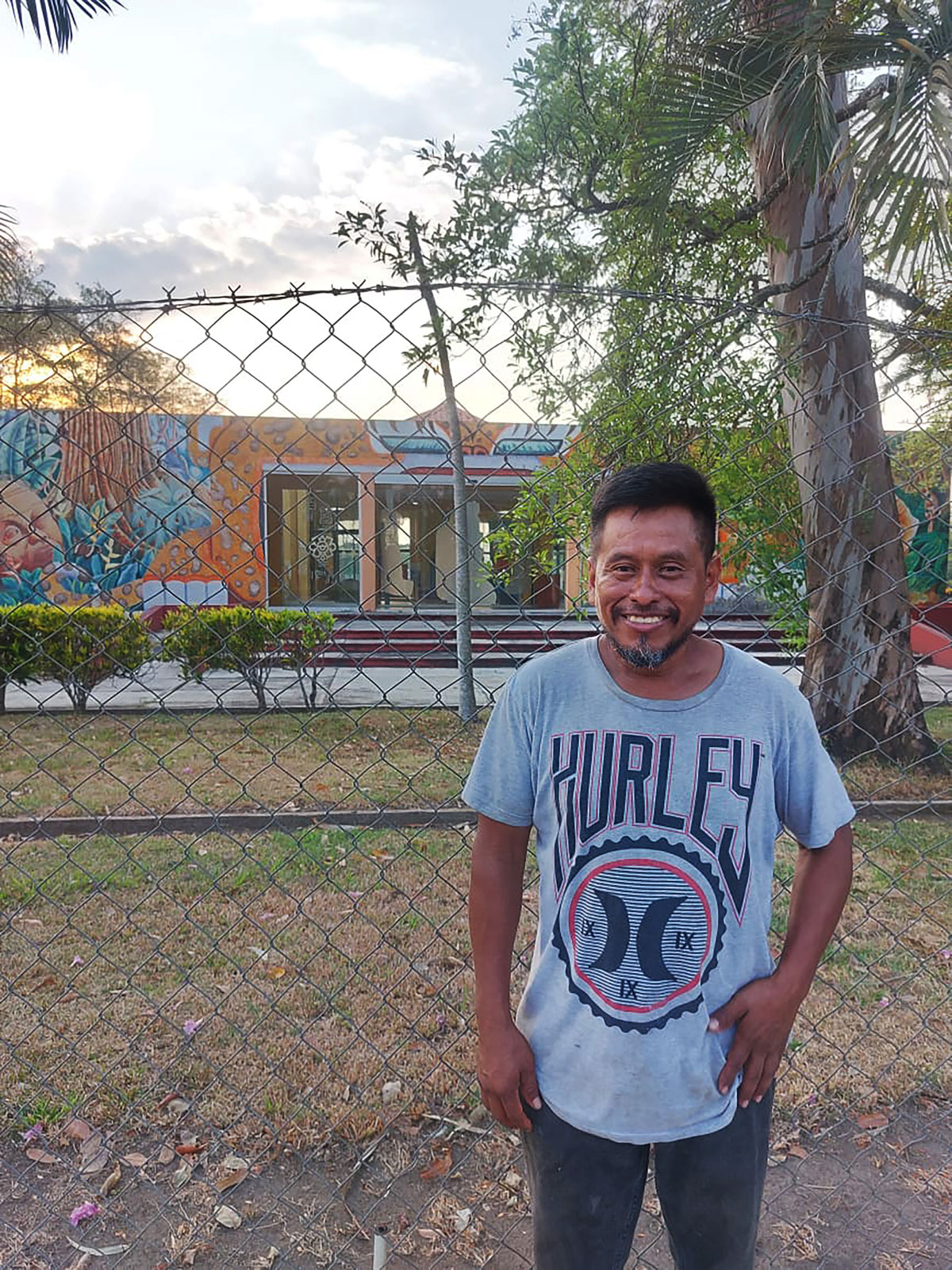
Figure 4
Jaime Zapot Leyva, senior archaeological worker. Photograph by the author.
During the last 17 years he has worked as janitor in a rural school near Tres Zapotes, in addition to helping his mother with the family’s ejido land where they grow sugar cane and raise livestock. In 1997, Jaime had the opportunity to participate in archaeological research thanks to his brother, who at that time was part of the ejido council that Pool met with to request permission to conduct fieldwork and seek potential workers. Participating in archaeological surveys and excavations allowed him on the one hand to develop new labor skills, and on the other to explore several points of the local landscape and become familiar with the archaeology of the region on a deeper level. The close fieldwork interactions with archaeologists and graduate students have provided him with a unique opportunity to ask questions and share his thoughts about the discoveries. Likewise, Jaime’s level of expertise has been of great assistance to inexperienced students and archaeologists unfamiliar with the region.
In addition to his expertise, Jaime has developed a strong interest in and commitment to the research and conservation of Tres Zapotes’ archaeology. Although there are always other job offers during summers, he prefers to join Pool’s project not only for the payment but also for the satisfaction of finding archaeological remains and meeting individuals from México and abroad. The memories of the discoveries made and the adventures with the fieldwork crew are his most valuable outcomes from the years dedicated to archaeology. Contrary to many local people who ascribe a monetary value to archaeological remains, Jaime views them as one of the most emblematic material possessions of Tres Zapotes and feels proud of the contributions he has made to the study of the ancient Olmecs. As a result of his commitment to archaeology, he has donated or suggested to people to donate artifacts to the museum, and many times has informed archaeologists of fortuitous discoveries or damages done to the site’s mounds. The perception of the archaeological remains as Tres Zapotes’ possessions or property leads Jaime to emotionally declare that the Nestepe head, and other monuments extracted from the village’s ejido, should be returned.
Labor at Museo de Sitio de Tres Zapotes
Old people from Tres Zapotes say that the monuments excavated under Stirling’s project – including the Hueyapan head – were located in the village’s park and elementary school before the museum was created; however, nobody seems to remember exactly who brought them to the village and when that happened. The Tres Zapotes museum was built by INAH in 1975 as part of the public works made to commemorate the 450 anniversary of Santiago Tuxtla’s foundation. In 1996, INAH authorized the construction of fieldwork facilities (laboratory and storehouse) under the museum’s grounds as a response to the local authorities’ condition that the artifacts would not be removed during Pool’s planned project.46 In 2007, Veracruz’s governor, Fidel Herrera Beltrán, financed the refurbishment of the museum and attended to its reinauguration – an important moment in Tres Zapotes’ history given that it was the first time a high-ranking politician visited the village (Figure 5).
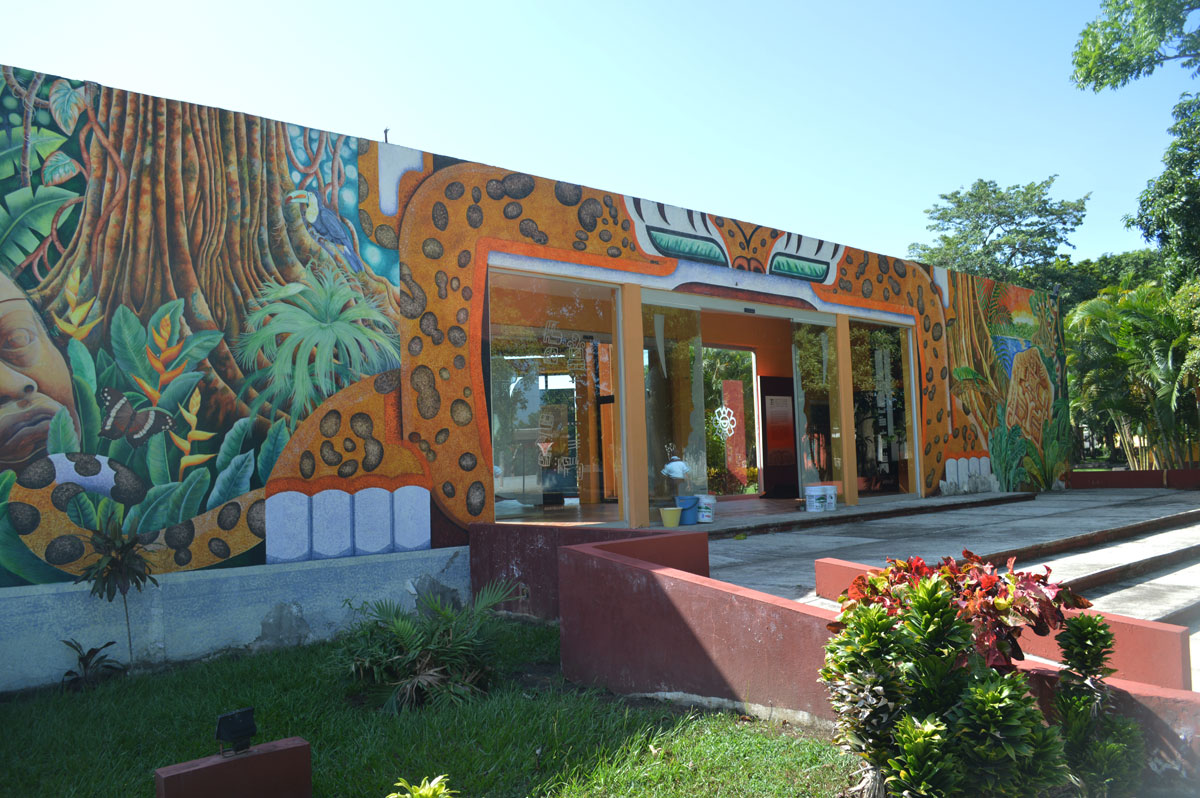
Figure 5
Façade of the Museo de Sitio de Tres Zapotes after being refurbished in 2007. Photograph by the author.
Tres Zapotes donated a portion of land from its ejido for the construction of the monuments’ new home but has no legal authority over it. The museum is exclusively administered by INAH; nevertheless, the staff is composed of Tres Zapotes’ residents. Currently, there is one INAH custodian, Guillermo García Santos, and two security guards, Juan and Mauricio, hired through a private agency (Figure 6). Born in the late 1960s, Don Guillermo attended the village’s elementary school when some of the monuments were still there and completed high school in Santiago Tuxtla, where the Nestepe head was taken. In the early 1990s, he first worked in the sugar cane industry and then became a taxi driver transporting people from Tres Zapotes to Santiago Tuxtla and vice versa. Some of his most regular patrons or clients were the former custodians of Tres Zapotes’ museum – Victor Pio and Eloy Hernandez – whom he would ask for job opportunities during their trips. In 1994, they informed Don Guillermo that INAH had just opened a new custodian position and recommended to apply. In that same year, he was selected for the position after passing satisfactorily a test which consisted of 10 questions related to Mexican history.

Figure 6
Current Museum Staff; from left to right: Guillermo García Santo, Juan Vergara Mazaba, and Mauricio Mendoza Canela. Photograph by the author.
Don Guillermo’s new job is completely different from the type of labor he had been familiar with. His main duty as a custodian is to guarantee the protection and conservation of the museum’s archaeological artifacts. Yet due to the lack of staff positions he and the other custodians fulfill many activities such as box-office manager, bookkeeper, tour guide, janitor, gardener, etc. Moreover, the scarcity of resources for the maintenance of the museum adds more pressure to the custodian’s job performance. During his first year working in the museum, Don Guillermo had considered quitting because the custodian’s monthly salary was the same as working two weeks as a taxi driver. His workmates convinced him to not do so, arguing that if he did, INAH would never open another custodian position in Tres Zapotes. Don Victor’s and Don Eloy’s positions have been vacant since they retired in 2019, so that the responsibility of administrating the museums falls on Don Guillermo, who is only allowed to get help from the security guards for maintenance and cleaning activities.
Giving guided tours has been the most challenging task for Don Guillermo due to his initial lack of archaeological knowledge. Before working in the museum, all he knew about archaeology was that the Olmecs were the ancient people who erected the mounds and monuments scattered around the village. He considered the museum and archaeological site just as a tourist attraction that helped him generate an income as a taxi driver and paid little attention to the symbolic relevance of such cultural resources. Given that the custodian job is strictly related to the protection of archaeological remains, the training INAH provides does not include the development of skills and knowledge required to perform educational activities such as giving tours. Don Guillermo has amassed an autodidactic archaeological expertise by reading books and magazines and interacting with archaeologists and graduate students, who have conducted fieldwork in Tres Zapotes. Nevertheless, most of his knowledge related to Tres Zapotes’ archaeology does not come from an academic source, but from the memories of local people like elders and ejidatarios.
Despite being a challenging task, giving tours is an enriching experience that has enabled Don Guillermo to interact with diverse individuals vising the museum. He finds the intrepid efforts made by international tourists who come as far as Tres Zapotes to visit not only the museum but also the archaeological site quite impressive, which under the ejido is dissected in different lands, surrounded by barbed wires, and covered with either grass, sugar cane fields, or milpas (maize field). This great interest shown by extranjeros (foreigners), including archaeologists, made Don Guillermo reflect on the value of Tres Zapotes’ archaeological remains. Although being one of the main Olmec sites provides a sense of pride to its current inhabitants, Don Guillermo affirms that extranjeros value the material remains of such ancient society more than they do. Decades ago, Stirling also claimed that local people pay no attention to ancient ruins until an outsider comes and exhibits interest.47
Modern Olmec sculptors
INAH museums and archaeological sites open to the public have stores with a rich variety of souvenirs. The main articles are INAH Press books and magazines, traditional textiles, pottery, and jewelry made by Mexican craftspeople, and reproductions of archaeological artifacts. INAH manufactures archaeological reproductions and regulates their commercialization – individuals who desire to make reproductions of ancient objects and make profit out of them must request authorization to INAH, otherwise it would be deemed an illegal activity. For the permit authorization, INAH officials ensure that the integrity of the archaeological object is not affected and that its image is not distorted by the reproduction. The permit paperwork represents a hardship for individuals living in rural places given that, in addition to the payment of a mandatory fee, it must be done directly at any of the INAH offices located in the capital cities of Mexico’s states. For these reasons, many craftspeople prefer to create objects of pre-Hispanic appearance inspired by archaeological artifacts to avoid INAH regulations.
The museum of Tres Zapotes does not have a store and does not receive INAH merchandise either. The first person from Tres Zapotes to make crafts and sell them as souvenirs was Rolando Solis, a former INAH custodian who worked in the museum for 19 years. As a child, he taught himself how to draw and paint with limited tools and resources. Don Rolando’s artworks were mainly landscape paintings featuring important places and elements of the village and the ejido, including archaeological mounds such as Loma Camila (Figure 7). During his time working in the museum, visitors would constantly ask him if there we any recuerdos (souvenirs) that they could bring home, so eventually he began to sell his paintings and make clay figurines inspired by Tres Zapotes monuments such as the Hueyapan head and Stela C.

Figure 7
Painting made by Don Rolando Solis showing a group of archaeological workers and Tres Zapotes Monument F. Reproduced with the permission of José Alberto Solis.
Don Rolando became so obsessed with the Hueyapan colossal head that he undertook the ambitious enterprise of making a circa 1.5 m tall replica with his own funds (Figure 8). One of his sons, José Alberto, remembers that Don Rolando began by digging a pit in the house’s front yard in which the head’s mold was carved directly on the ground, and then proceeded to pour the sand-cement mixture into the pit. The modern Olmec head was so heavy that he needed the help of his family and friends to take it out of the pit and place it on the front yard facing the street. According to José Alberto, Don Rolando did not make the head to sell it but as an heirloom for the family’s house – where it remains as a landmark of Tres Zapotes. He crafted a second head (smaller than the first) which he gave away to a friend who placed it in the entrance of his village, Los Jarochos, located about a kilometer from Tres Zapotes. Lastly, a visitor from Texcoco hired Don Rolando to make two heads for the building of a cultural association interested in Mesoamerican art. After his death, his sons were commissioned to create another head for a hotel in Coatzacoalcos, but they did not continue selling souvenirs to museum visitors despite Don Rolando always said it was quite a profitable activity.

Figure 8
Photograph of Don Rolando Solis and his first Olmec colossal head. Reproduced with the permission of José Alberto Solis.
Local tourist guides
The Mexican government also regulates the services and activities provided by tourist guides, including visits to archaeological sites and museums. In this case, it is the Secretary of Tourism (SECTUR), the federal institution in charge of accrediting guides. The SECTUR accreditation in cultural tourism constitutes an advantageous resource because in many archaeological sites and museums only certified guides are allowed to give tours. As a mandatory requirement, individuals must complete a diploma program which is normally delivered by tourist agencies and educational institutions, such as the Escuela Nacional de Antropología e Historia (ENAH). The ENAH diploma program for tourist guides lasts six months and carries a fee of 10,000 Mexican pesos, making it almost unaffordable to non-Mexico City residents with low income. Thus, as in other regions, there are just a handful of certified guides in Los Tuxtlas and most of them are specialized in adventure tourism.
Although tourism is relatively new in the region, working as guide has been a familiar socioeconomic activity related to archaeology, as with Weyerstall and Stirling (see above). Because the Tres Zapotes museum has never had an INAH-appointed guide, custodians have to give tours to visitors, even though it is not part of their job responsibilities. The site is not open to the public, but some intrepid visitors are eager to climb the Loma Camila, for which a guide is usually needed. The fact that the archaeological mounds are located on ejido lands gives uncertified guides the opportunity to offer tourist services.
Since the location of Loma Camila is widely known, many people working in the ejido have guided or given directions to visitors at least once – some have done so without expecting a gratuity. Francisco Mujica was the first person in the village who tried to work formally as a tourist guide. He enrolled in a diploma program in Veracruz City but did not complete it because travelling every weekend became too expensive; nevertheless, he continued working as a guide in Tres Zapotes for many years. As an uncertified guide, Don Francisco only offered tours to the archaeological site which consisted in visiting Loma Camila and other mounds in which important discoveries were made. His tours are based on information collected from the memories of Stirling’s workers who were still alive by the end of the last century, and from his experience working in Pool’s project (Figure 9). Additionally, part of Don Francisco’s knowledge about the Olmecs came from a New Age group that used to perform ceremonies in Loma Camila in the 1990’s. Regardless of their non-scientific ideas, his interactions with this group of individuals made him value the archaeological site of Tres Zapotes and feel proud of its ancient inhabitants.
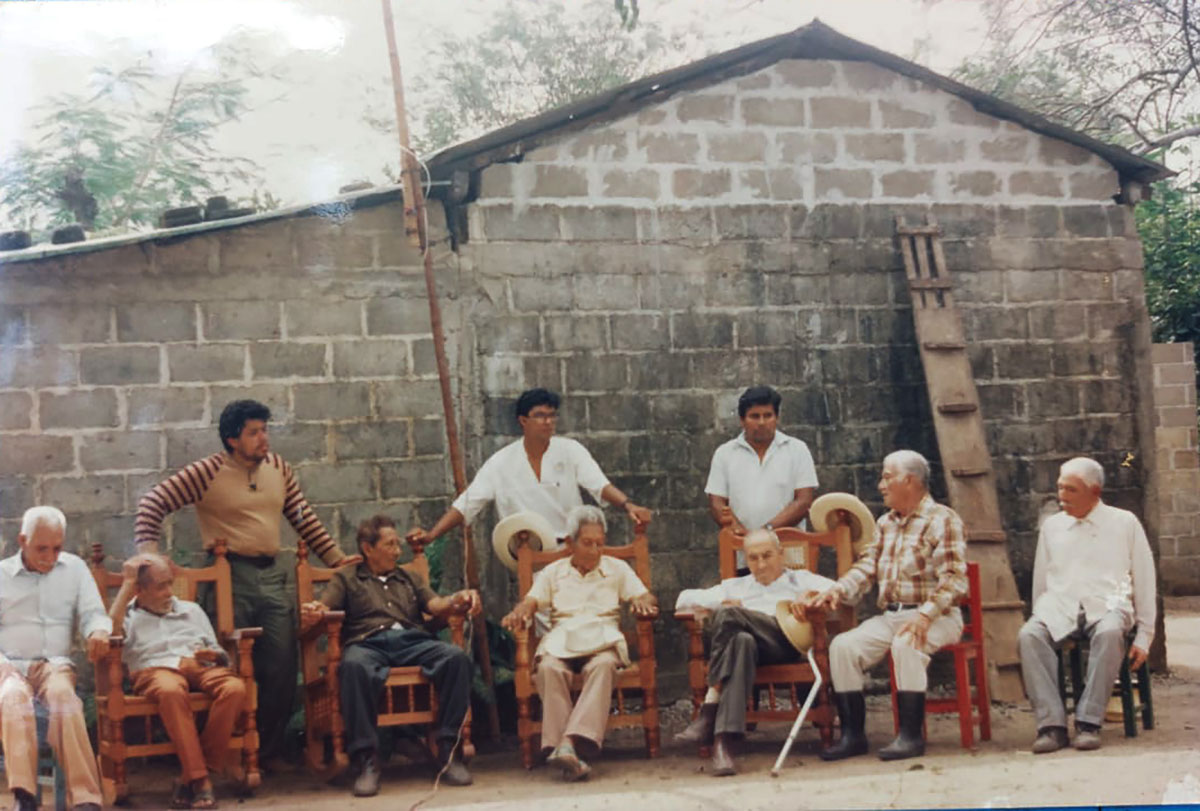
Figure 9
Some of Stirling’s workers in the 1990s. Photograph reproduced with the permission of Don Francisco Mujica.
Concluding remarks
The history of archaeology in Tres Zapotes spans more than a century and a half since Melgar’s account. Although local people were already familiar with the ruins located in the vicinity of Tres Zapotes, the archaeological work conducted since the discovery of the Hueyapan head has shaped their perception of such ancient elements of the local landscape. Furthermore, the new monuments uncovered after the foundation of Tres Zapotes’ ejido, mainly during Stirling’s project, accelerated the development of the local cultural heritage and identity. Following the 1942 Second Roundtable, the archaeological monuments regarded originally by local people as mere carved rocks or stone dolls were resignified as artworks of the so-called Olmecs. This change is observed from Stirling’s to Pool’s project. It seems that the little attention local people paid to the monuments is what permitted the extraction of Tres Zapotes Stela C and Nestepe head; however, as many people in the village have explained, they are no longer ignorant of what they have, and so they made Pool promise that every archaeological artifact excavated would remain in Tres Zapotes as a condition to allow him to conduct archaeological research.
Archaeological labor has also nurtured Tres Zapotes’ social memory. Details of the discovery of monuments is one of the most prevailing pieces of information among local people, and for that reason the remembrances of individuals who worked for Stirling constitute the main source of archaeological knowledge in the village. Participating in Pool’s project has made experienced workers like Jaime new holders of recollections and knowledge regarding the history of archaeology in Tres Zapotes. Don Guillermo, who as an INAH custodian has close interactions with archaeologists, has developed an understanding of the museum’s monuments based generally on the accounts shared by archaeological workers, respectable elders, and ejidatarios. On the other hand, in his tours Don Francisco has relied more on a non-scientific group to complement the archaeological information drawn from local people. Although knowledge produced by archaeologists has been insufficiently disseminated in Tres Zapotes,48 the outdated mother culture hypothesis, once championed by Caso and Covarrubias, is rooted so deeply in the village’s social memory that it elicits different emotions among local people (especially for archaeological workers and museum staff) such as pride towards the museum and the monuments it holds, or outrage regarding the extraction of the Nestepe head and Stela C.
Interestingly, the resignification of the archaeological remains contrasts with Don Guillermo’s opinion that people do not value Tres Zapotes’ cultural heritage. As Cojtí Ren points out, marginalized communities have little interest in archaeology because they are mainly focused on their survival.49 Yet this is the main reason that has led some people in Tres Zapotes to work in archaeological projects and use their cultural heritage to devise new sources of income, such as selling souvenirs and giving tours to museum visitors. Even if we are not in a position to offer more impactful contributions to help people overcome their marginalized conditions, as archaeologists we must at least make greater efforts to disseminate the archaeological knowledge (produced with the aid of local workers) in the communities where we work.
Notes
[1] José Melgar, “Antigüedades Mexicanas: Notable Escultura Antigua,” Boletín de la Sociedad de Geografía y Estadística de la República Mexicana 2, no. 1 (1869): 292–97; José Melgar, “Estudio sobre la Antigüedad y el Origen de la Cabeza Colosal de Tipo Etiópico que Existe en Hueyapan, del Cantón de Los Tuxtlas,” Boletín de la Sociedad de Geografía y Estadística 2, no. 3 (1871): 104–9.
[2] Matthew W. Stirling, “Discovering the New World’s Oldest Dated Work of Man,” National Geographic Magazine 76, no. 2 (1939): 183–218.
[3] Christopher A. Pool, “Proyecto Arqueológico Tres Zapotes,” in Memoria del Coloquio Arqueología del Centro y Sur de Veracruz, ed. Sara Ladrón Guevara and Sergio Vásquez, (Xalapa: Universidad Veracruzana, 1997), 169–76.
[4] E.g. Frederick Catherwood, Views of Ancient Monuments in Central América, Chiapas and Yucatan (London:F. Catherwood, 1844); Claude-Joseph Désiré Charnay, Cités et ruines américaines: Mitla, Palenqué, Izamal, Chichen-Itza, Uxmal (Paris: Gide Éditeur, 1863); Frans Ferdinand Blom, and Oliver LaFarge. Tribes and Temples: A Record of the Expedition to Middle America by the Tulane University in Louisana in 1925 (New Orleans: Tulane University of Louisiana, 1926).
[5] Allison Mickel, “Essential Excavation Experts: Alienation and Agency in the History of Archaeological Labor,” Archaeologies 15, no. 2 (2019): 181–205, https://doi.org/10.1007/s11759-019-09356-9; Allison Mickel, Why Those Who Shovel Are Silent: A History of Local Archaeological Knowledge and Labor (Boulder: University Press of Colorado, 2021).
[6] Sam Holley-Kline, “Archaeology, Land Tenure, and Indigenous Dispossession in Mexico,” Journal of Social Archaeology 22, no. 3 (2022): 197–221, https://doi.org/10.1177/14696053221112608.
[7] Iyaxel Ixkan Anastasia Cojtí Ren, “The Experience of a Mayan Student,” in Being and Becoming Indigenous Archaeologists, ed. George P. Nicholas (London: Routledge, 2010), 84–92.
[8] John H. Merryman, “Two Ways of Thinking about Cultural Property,” The American Journal of International Law 80, no. 4 (1986): 831–53, https://doi.org/10.2307/2202065.
[9] Christina Bueno, “Forjando Patrimonio: The Making of Archaeological Patrimony in Porfirian Mexico,”Hispanic American Historical Review 90, no. 2 (2010): 215–45, https://doi.org/10.1215/00182168-2009-133; Christina Bueno, The Pursuit of Ruins: Archaeology, History, and the Making of Modern Mexico (Albuquerque: University of New Mexico Press, 2016); Sandra Rozental, “In the Wake of Mexican Patrimonio: Material Ecologies in San Miguel Coatlinchan,” Anthropological Quaterly 89, no. 1 (2016): 181–219, https://doi.org/10.1353/anq.2016.0007; Sandra Rozental, “On the Nature of Patrimonio: ‘Cultural Property’ in Mexican Contexts,” in The Routledge Companion to Cultural Property, ed. Jane Anderson and Haidy Geismar (New York: Routledge, 2017), 237–57; Holley-Kline, “Archaeology, Wage Labor, and Kinship.”
[10] Siân Jones, “Wrestling with the Social Value of Heritage: Problems, Dilemmas and Opportunities,” Journal of Community Archeology and Heritage 4, no. 1 (2016): 21–37, https://doi.org/10.1080/20518196.2016.1193996; Kersel, Morag M. “Trascending Borders: Objects on the Move.” Archaeologies: Journal of the World Archaeological Congress 3, no. 2 (2007): 81–98, https://doi.org/10.1007/s11759-007-9013-0.
[11] E.g. Sonya Atalay, Community-Based Archaeology: Research with, by, and for Indigenous and Local Communities (Berkeley: University of California Press, 2012); Chip Colwell-Chanthaphonh and T. J. Ferguson, “Introduction: The Collaborative Continuum,” in Collaboration in Archaeological Practice: Engaging Descendant Communities, ed. Chip Colwell-Chanthaphonh and T. J. Ferguson (Lanham: AltaMira Press, 2008), 1–32; M. Jay Stottman, “From the Bottom Up: Transforming Communities with Public Archaeology,” in Transforming Archaeology: Activist Practices and Prospects, ed. S. Atalay, L.R. Clauss, R.H. McGuire, and John R. Welch (Walnut Creek: Left Coast Press, 2014), 179–96; Patricia McAnany and Sarah M. Rowe, “Re-Visiting the Field: Collaborative Archaeology as Paradigm Shift,” Journal of Field Archaeology 40, no. 5 (2015): 499–507, https://doi.org/10.1179/2042458215Y.0000000007.
[12] Lynn Meskell, “Archaeological Ethnography: Conversations around Kruger National Park,” Archaeologies 1, no. 1 (2005): 81–100, https://doi.org/10.1007/s11759-005-0010-x.
[13] Human Research/Institutional Review Borad (IRB) approval was previously obtained to conduct this research, IRB number: 50747. Verbal informed consent was secured from the individuals mentioned in this article.
[14] Haydeé López Hernández, En busca del alma nacional. La arqueología y la construcción del origen de la historia nacional en México (1867–1942) (Ciudad de México: INAH, 2018).
[16] Alfredo Chavero, “Historia Antigua y de la Conquista,” in México a través de los Siglos, ed. Vicente Riva Palacio, Vol. 1 (México City: Ballescá y Compañía, 1888).
[17] Marshall H. Saville, “A Votive Adze of Jadeite from México,” Monumental Records, no. 1 (1900): 138–40; Marshall H. Saville, “Votive Axes from Ancient México.” Indian Notes 6, no. 4 (1929): 266–342; Hermann Beyer, “Book Review: Frans Blom and Oliver La Farge: Tribes and Temples. A record of the Tulane Expedition to Middle America,” El México Antiguo: Revista Internacional de Arqueología, Etnología, Folklore, Prehistoria, Historia Antigua y Lingüística Mexicanas 2, no. 11–12 (1927): 305–13.
[18] Alfonso Caso, “Definición y Extensión del Complejo Olmeca,” in Mayas y Olmecas. Segunda Reunión de Mesa Redonda sobre Problemas Antropológicos de México y Centro América (México City: Sociedad Mexicana de Antropología, 1942), 46; Miguel Covarrubias, “Origen y Desarrollo del Estilo Artístico Olmeca,” in Mayas y Olmecas. Segunda Reunión de Mesa Redonda sobre Problemas Antropológicos de México y Centro América (México City: Sociedad Mexicana de Antropología, 1942), 48.
[20] See Sharer, Robert J., David C. Grove, eds. Regional Perspectives on the Olmec (Cambridge: University of Cambridge Press, 1989);
[21] J. Guthrie, Elizabeth P. Benson, eds. The Olmec World: Ritual and Rulership (Princeton: Princeton University Press, 1995); Kathleen Berrin, Virginia M. Fields, Olmec: Colossal Masterworks of Ancient México (San Francisco: Fine Arts Museum of San Francisco, 2010); Michelet Dominique, Les Olmèques et les cultures du golfe du Mexique (Paris: Musée du Quai Branly, 2020).
[22] Arqueología Mexicana, “Civilizaciones Originarias: Mesopotamia, Egipto, China, Valle del Indo, Área Andina, Mesoamérica,” Arqueología Mexicana, no. 53 (2013).
[23] Gabriel Haslip-Viera, Bernard Ortiz Montellano, and Warren Barbour, “Robbing American Cultures: Van Sertima’s Afrocentricity and the Olmecs,” Current Anthropology 38, no. 3 (1997): 419–41, https://doi.org/10.1086/204626.
[24] Ambrosio Mayo Zapot. Unpublished Manuscript. In possesion of Ambrosio Mayo Zapot’s family. n.d.
[25] John Justeson, Christoper A. Pool, Ponciano Ortiz Ceballos, María del Carmen Rodríguez Martínez, and Jane MacLaren Walsh, “The Environs of Tres Zapotes as the Find-Spot of the Tuxtla Statuette,” Latin American Antiquity 31, no. 4 (2020): 747–764, https://doi:10.1017/laq.2020.61.
[27] Caecilie F. Seler-Sachs, “Altertümer des Kanton Tuxtla im Staate Vera-Cruz,” in Festschrift Eduard Seler, ed. Walter Lehmann (Stuttgart: Verlag von Strecker und Schröder, 1922), 543–56.
[28] Albert Weyerstall, “Some Observations on Indian Mounds, Idols and Pottery in the Lower Papaloapan Basin, State of Veracruz, México,” Middle American Papers 4, no. 2 (1932): 23–69.
[31] Stirling, “Discovering the New World’s Oldest Dated Work of Man”, 185; Grove, Discovering the Olmecs.
[33] Quoted in Francisco J. Sánchez Valdez, Tres Zapotes: Historia de un Pueblo Inédito y Primigenio (Xalapa: CONACULTA, 2005), 11. Cf. Marion Stirling, “Jungle Housekeeping for a Geographic Expedition,” National Geographic Magazine 80, no. 3 (1941): 303–38. Contrary to Ramón Galloso, Marion Stirling mentions in this article that workmen were paid 2.50 Mexican pesos a day.
[34] See Stirling, “Jungle Housekeeping.”; Marion Stirling Pugh, “An Intimate View of Archaeological Exploration.” In The Olmecs and their Neighbors, ed. Elizabeth P. Benson, (Washington, D.C.: Dumbarton Oaks Research Library and Collections, 1981), 1–14.
[36] See Matthew W. Stirling, “Great Stone Faces of the Mexican Jungle,” National Geographic Magazine 78, no. 3 (1940): 309–34; Matthew W. Stirling and Marion Stirling, “Finding Jewels of Jade in a Mexican Swamp,” National Geographic Magazine 82, no. 5 (1942): 635–61; Grove, Discovering the Olmecs, 23.
[37] Stirling, “Discovering the New World’s Oldest Dated Work of Man”; Matthew W. Stirling, “On the Trail of La Venta Man,” National Geographic Magazine 91, no. 2 (1947): 137–72; Stirling, “Jungle Housekeeping.”
[40] Grove, Discovering the Olmecs, 24.
[41] Robert F. Heizer, Tillie Smith, and Howel Williams, “Notes on Colossal Head No. 2 from Tres Zapotes,” American Antiquity 31, no. 1 (1965): 102–4, https://doi.org/10.2307/2694027.
[42] Ponciano Ortiz Ceballos, “La Cerámica de Los Tuxtlas,” M.A. Thesis, Universidad Veracruzana, 1975.
[43] Luis A. Millet Cámara, “Rescate Arqueológico en la región de Tres Zapotes, Ver,” B.A. Thesis, Escuela Nacional de Antropología e Historia, 1979.
[44] In one field season, Pool did try to hire women as field workers, but the idea was rebuffed by the village’s council; Christopher A. Pool, personal communication, February, 2024.
[45] Grove, Discovering the Olmecs, 127–134.
[46] Grove, Discovering the Olmecs, 137.
Acknowledgements
I would like to thank the editors of this special issue, Dr. Allison Mickel and Dr. Sam Holley-Kline, for giving me the opportunity to share my research in this journal, and the University the Kentucky for financing me through the Arts and Sciences Dean’s Competitive Fellowship. My advisor, Christopher A. Pool, deserves special mention for his support and valuable comments. Finally, I want to express my most sincere gratitude to the people of Tres Zapotes who welcomed me with open arms and kindly shared substantial information that made my fieldwork more than successful.
Funding Information
Funding was provided by the College of Arts and Sciences and the Department of Anthropology of the University of Kentucky.
Competing Interests
The author has no competing interests to declare.