
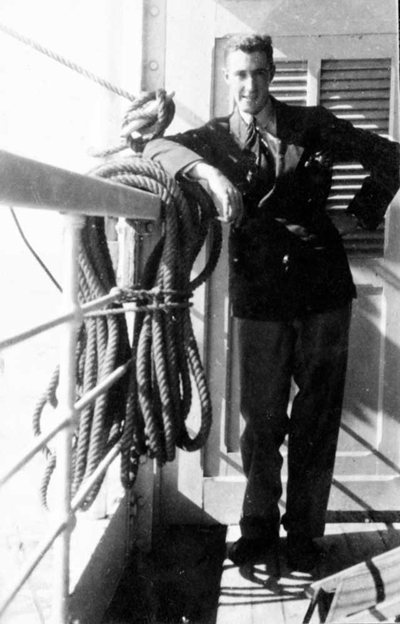
Figure 1
Harding on board the SS Champollion. At this point, he was clean shaven; he was to grow a beard during the course of the dig. Image courtesy of the UCL Institute of Archaeology.
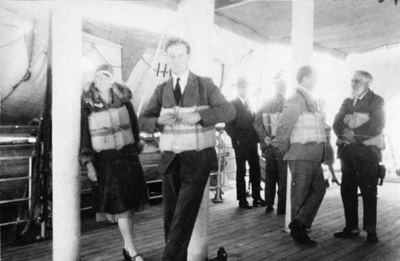
Figure 2
Lifeboat drill on board the SS Champollion, en-route to Alexandria in Egypt. Professor Petrie stands talking in the background. Image courtesy of the UCL Institute of Archaeology.
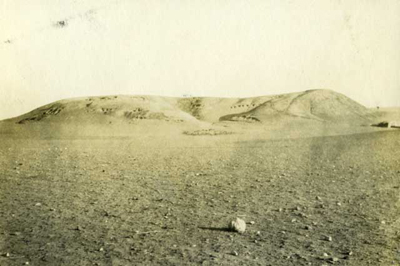
Figure 3
View of the east face of Tell Jemmeh. Image courtesy of the UCL Institute of Archaeology.
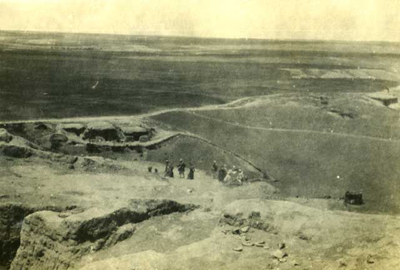
Figure 4
View from the top of the tell, showing the landscape around Jemmeh. Image courtesy of the UCL Institute of Archaeology.
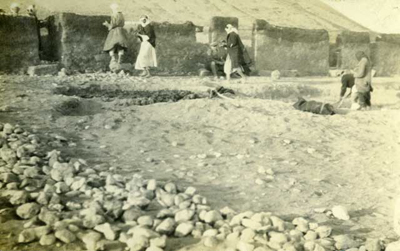
Figure 5
The Tell Jemmeh dig house under construction in early December 1926. Image courtesy of the UCL Institute of Archaeology.
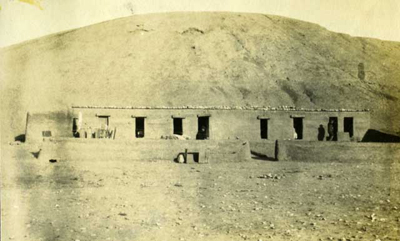
Figure 6
View of the finished dig house, with the tell rising up sharply behind. One of Harding’s early jobs was to cut a staircase from here up to the top of the mound. Image courtesy of the UCL Institute of Archaeology.
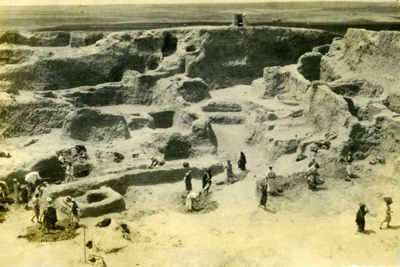
Figure 7
View of the main excavation area on top of the tell. Image courtesy of the UCL Institute of Archaeology.
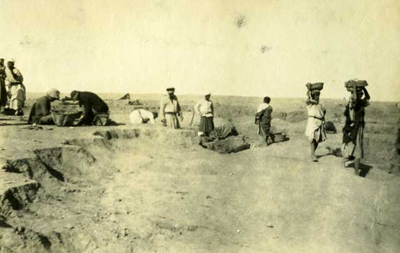
Figure 8
Two staff members sit engrossed on the left, while workers carry away baskets of spoil on the right. Image courtesy of the UCL Institute of Archaeology.
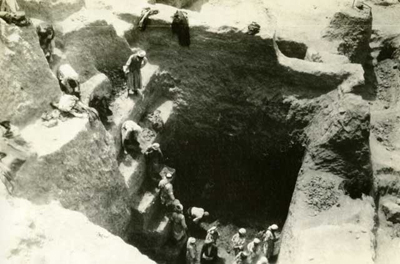
Figure 9
One of the deep areas of excavation on the tell. A survey point is visible in the top right corner. Image courtesy of the UCL Institute of Archaeology.
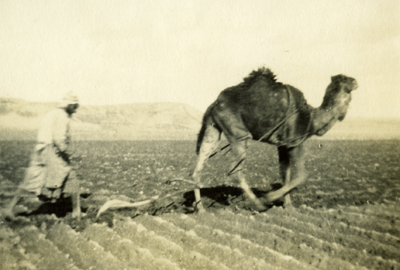
Figure 10
A local man ploughs his fields, using a camel and what Hilda Petrie described as a ‘Roman plough’ (Drower 2004: 235). Image courtesy of the UCL Institute of Archaeology.
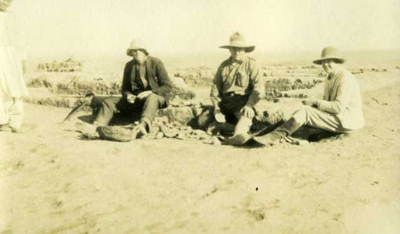
Figure 11
Denzil Risdon, Leslie Starkey and Madge Starkey sitting on the side of the trench. Image courtesy of the UCL Institute of Archaeology.
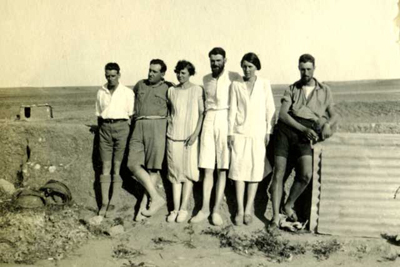
Figure 12
Part of the Jemmeh team. Left to right: unidentified man, probably a site visitor; Leslie Starkey, Madge Starkey, Denzil Risdon, Lucy Risdon and Gerald Harding. Image courtesy of the UCL Institute of Archaeology.
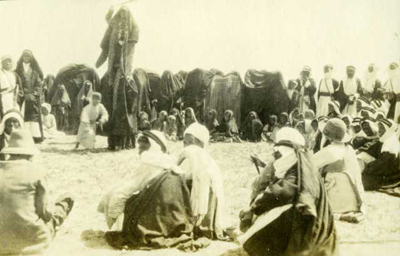
Figure 13
Harding attends a local fantasia. This was one of two such events he attended, the first on 9 January, and this one in April, to mark the end of Ramadan (Drower 2004: 243). Unlike the first occasion, this fantasia took place in the daytime, and so Harding was able to capture it visually. Image courtesy of the UCL Institute of Archaeology.
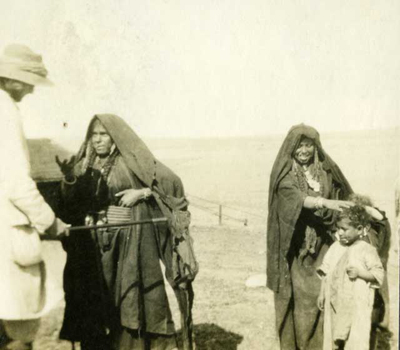
Figure 14
Hilda Petrie listens to a Bedouin women, while another woman and her children look on. Image courtesy of the UCL Institute of Archaeology.
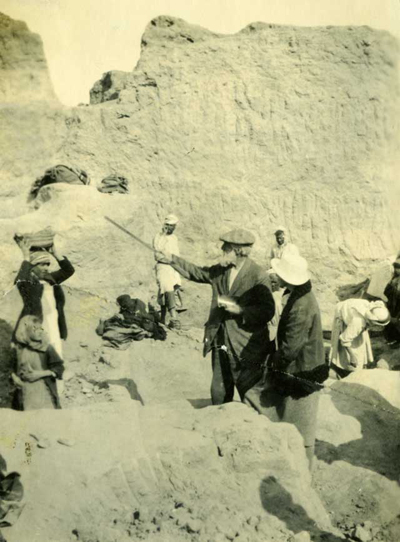
Figure 15
Professor Petrie visiting the work, which he did several times a day during the Jemmeh field season (Drower 1995: 366). His diary tells us he also did much of the levelling, planning and photography. Image courtesy of the UCL Institute of Archaeology.