
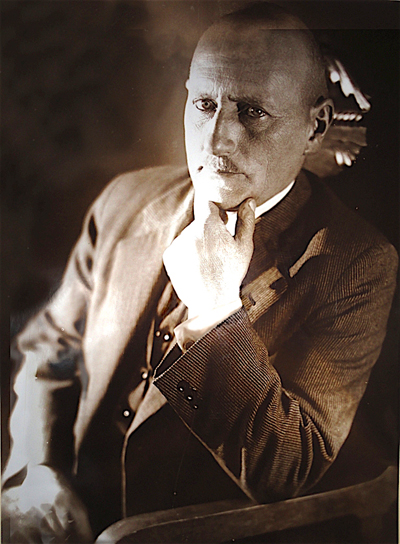
Figure 1
Posnansky in his La Paz studio in 1939 at age 66 (modified from the image in the Spanish Wikipedia biography, https://es.wikipedia.org/wiki/Arthur_Posnansky#/media/File:Arthurposn.jpg).
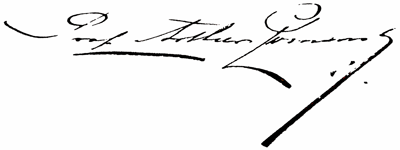
Figure 2
Posnansky’s signature from a hand-written book dedication in 1915 (modified from Ponce Sanginés 1994: 33).
Table 1
Highlights of Posnansky’s life.
| 1873 | Born in Vienna |
| 1895 | Graduates from the Imperial Naval Academy in Pula (currently in Croatia) |
| 1897–1903 | Trades rubber in the Amazon |
| 1903 | Visits Tiwanaku for the first time and moves to La Paz |
| 1906 | Brings Bolivia’s first car to La Paz |
| 1911 | Completes his ‘eternal theory’ of Tiwanaku |
| 1912–1914 | Does post-graduate work on racial anthropology in Berlin |
| 1914 | Returns to La Paz with a new wife and infant son, buys property, and builds first house |
| 1922 | Sells second house to Bolivian government, which is turned into the National Museum of the Archaeology of Bolivia |
| 1928–1930 | Hosts German astronomers and architects for research at Tiwanaku |
| 1930 | Founds the Archaeological Society of Bolivia |
| 1944–45 | Temporarily relocates to New York and publishes his magnum opus, Tihuanacu: The Cradle of American Man2 |
| 1946 | Dies of a stroke in La Paz at 73 years old |
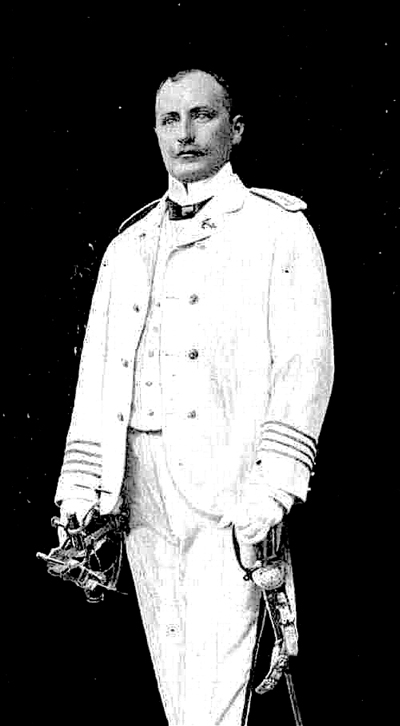
Figure 3
Posnansky as a young man in his naval dress uniform, from his book on his adventures in the Amazon (Posnansky 1904: Frontispiece).
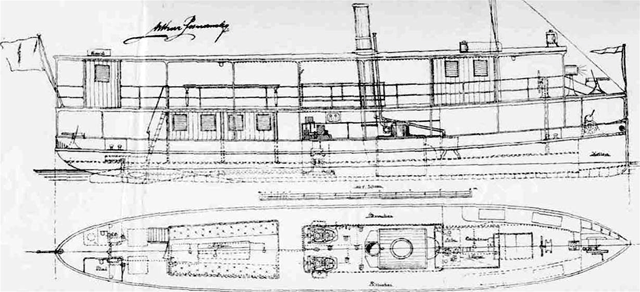
Figure 4
Schematic of the Iris (Posnansky 1904).
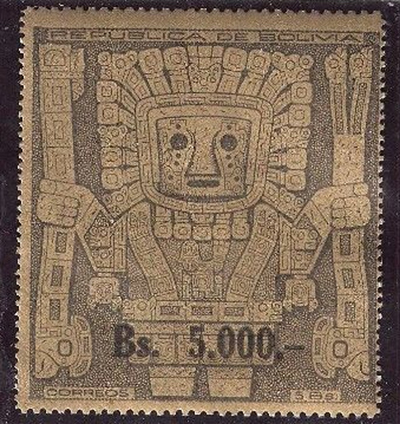
Figure 5
One of the Bolivian stamps Posnansky had produced, based on a life-size replica of the Gateway of the Sun and photogrammetry (http://www.ebay.ie/itm/BOLIVIA-GATE-OF-THE-SUN-MINT-SET-OF-18-STAMPS-CV-144-00-/142412771917).
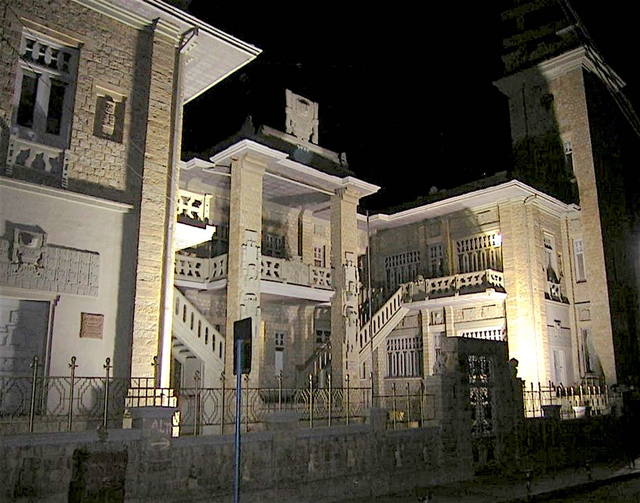
Figure 6
Posnansky’s second house, a ‘palace’ built in neo-Tiwanaku style. Since 1922 it has been the National Museum of the Archaeology of Bolivia.
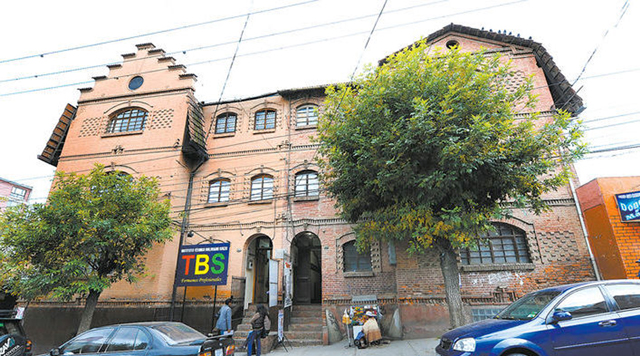
Figure 7
Posnansky’s third house in the Miraflores district of La Paz where his descendants still live (modified from Gracia 2014).
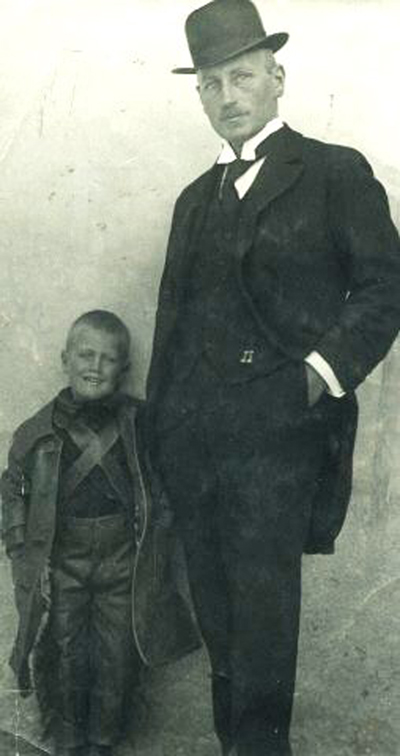
Figure 8
Posnansky with his son Manuel (photo from Posnansky’s great-granddaughter Vanessa, http://es.wikipedia.org/wiki/Arthur_Posnansky#/media/File:Arthur_Posnansky_3.jpg).
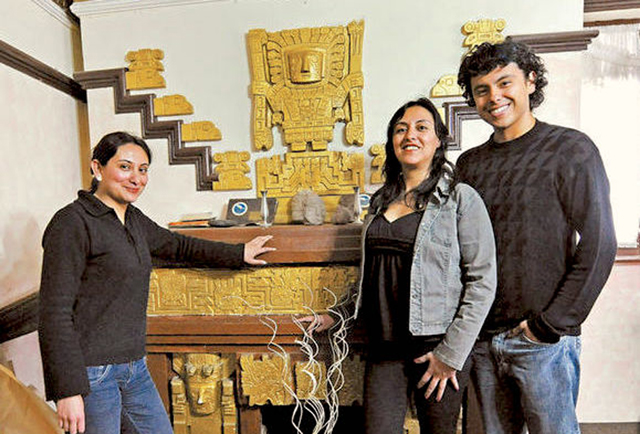
Figure 9
Posnansky’s great-grandchildren in front of the house’s Neo-Tiwanaku style fireplace (modified from Gracia 2014).
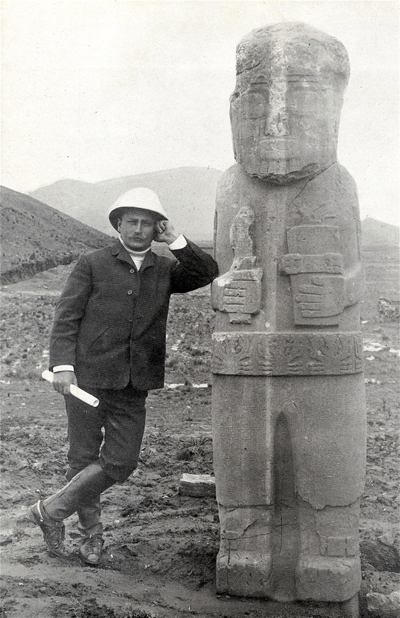
Figure 10
Posnansky in 1903 (30 years old), the year he visited Tiwanaku for the first time, leaning against a monolith known as El Fraile. He seems quite content and is dressed for the part (as he must have imagined archaeologists dress), complete with pith helmet, gaiters, handlebar moustache, and a roll of documents (Posnansky 1945, II: Fig. 108).
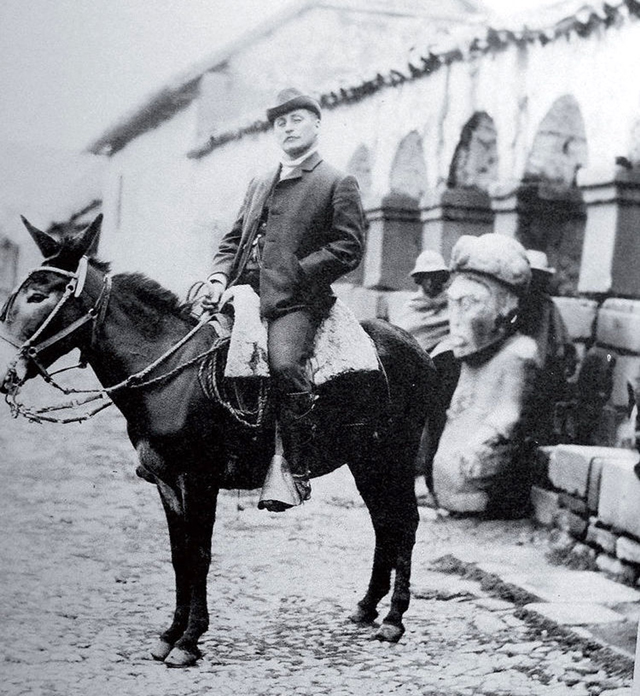
Figure 11
Posnansky in front of the modern church in the town of Tiwanaku (modified from Gracia 2014).
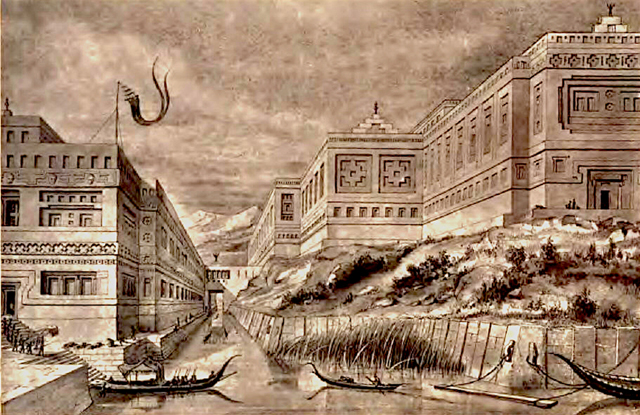
Figure 12
An early, speculative reconstruction of Tiwanaku as a port city (Inwards 1884: Plate 6).
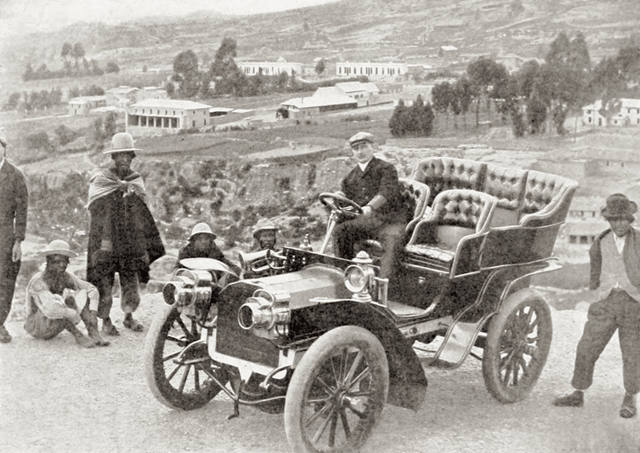
Figure 13
Posnansky in his new car on the outskirts of La Paz, perhaps taken while traveling with Robinson Wright (1907: 215).
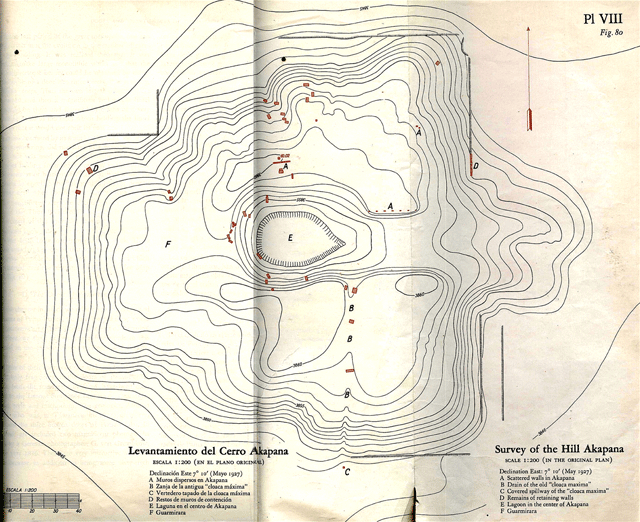
Figure 14
Plan drawing of the Akapana hill in 1927, one of Tiwanaku’s principal monuments (Posnansky 1945, II: Map VIII, Fig. 80).