
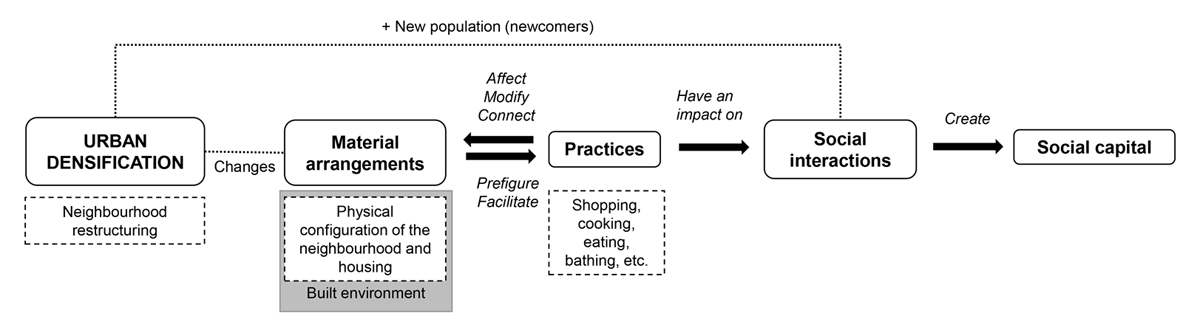
Figure 1
The conceptual framework used in this research on changes in material arrangements, residents’ daily practices and social interactions, initiated by urban densification.
Source: Author (X. L.).
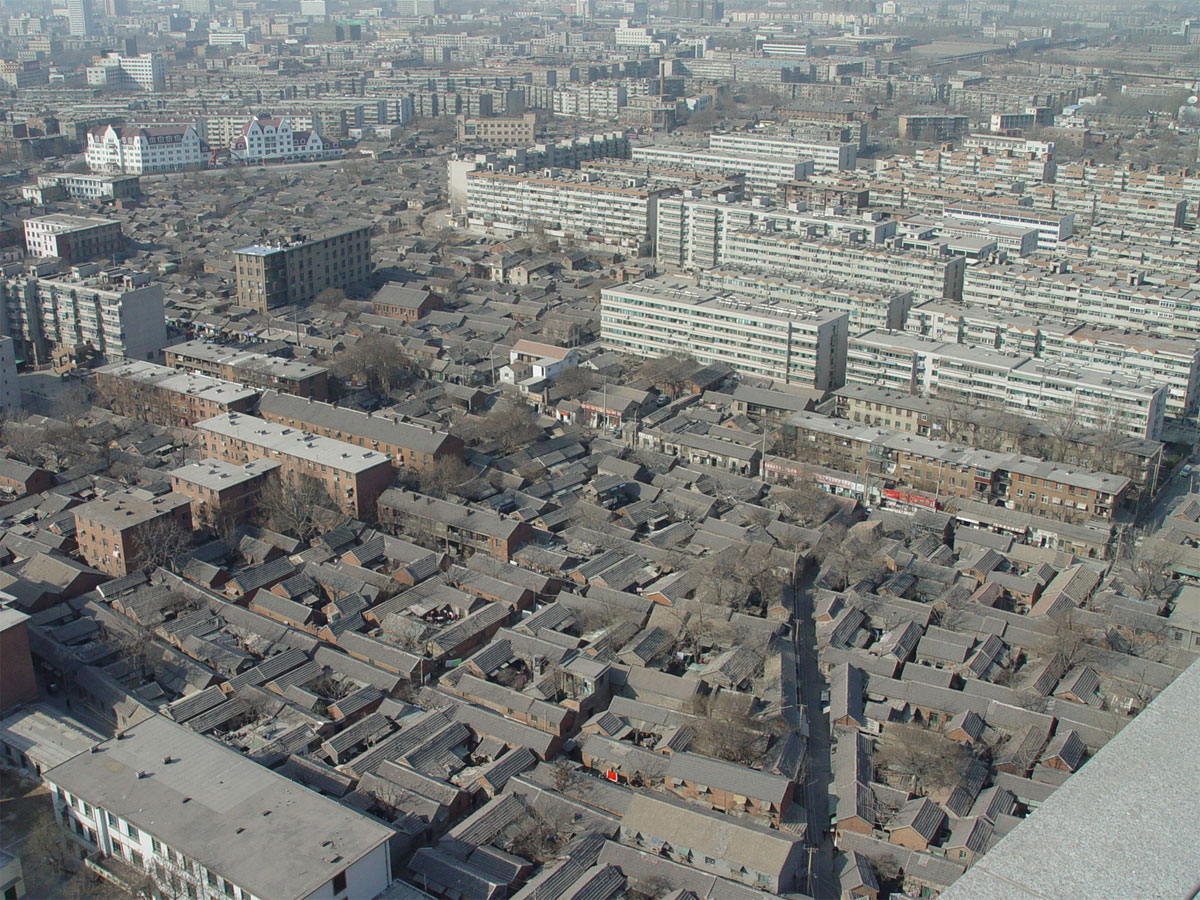
Figure 2
Weijiazhuang (WJZ) neighbourhood before the restructuring project, 2007.
Source: Research participant.
Table 1
Household numbers in city of Jinan’s Weijiazhuang (WJZ) neighbourhood after restructuring.
| CLUSTER | NUMBER OF HOUSEHOLDS | BLOCK CODE |
|---|---|---|
| Hongjing Garden | 1,455 | B |
| Shengjing Garden | 400 | E |
| Dijing Garden | 723 | A |
| Haojing Garden | 224 | C |
| Huajing Garden | 324 | D |
[i] Source: Author (X. L.).
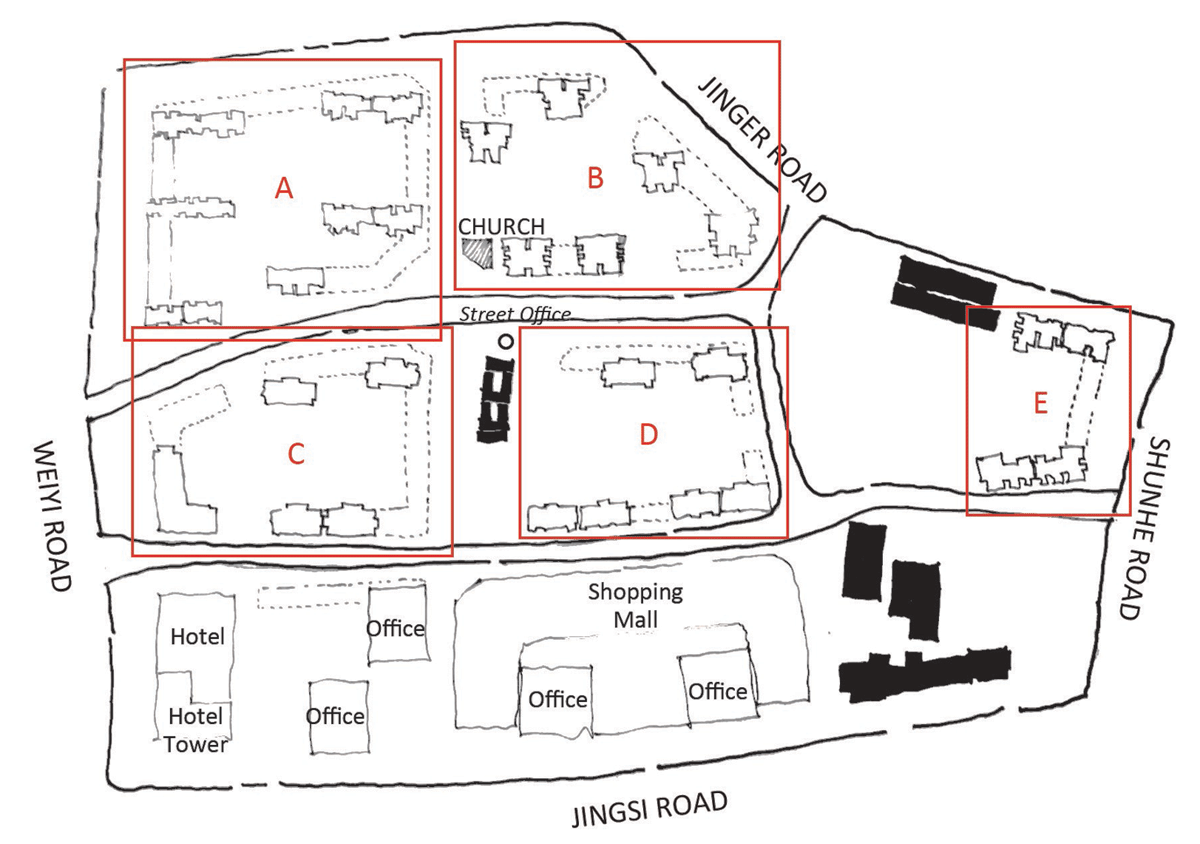
Figure 3
Layout of WJZ neighbourhood after the restructuring project.
Note: Shaded blocks are community buildings that were conserved in the restructuring project.
Source: Author (X. L.).
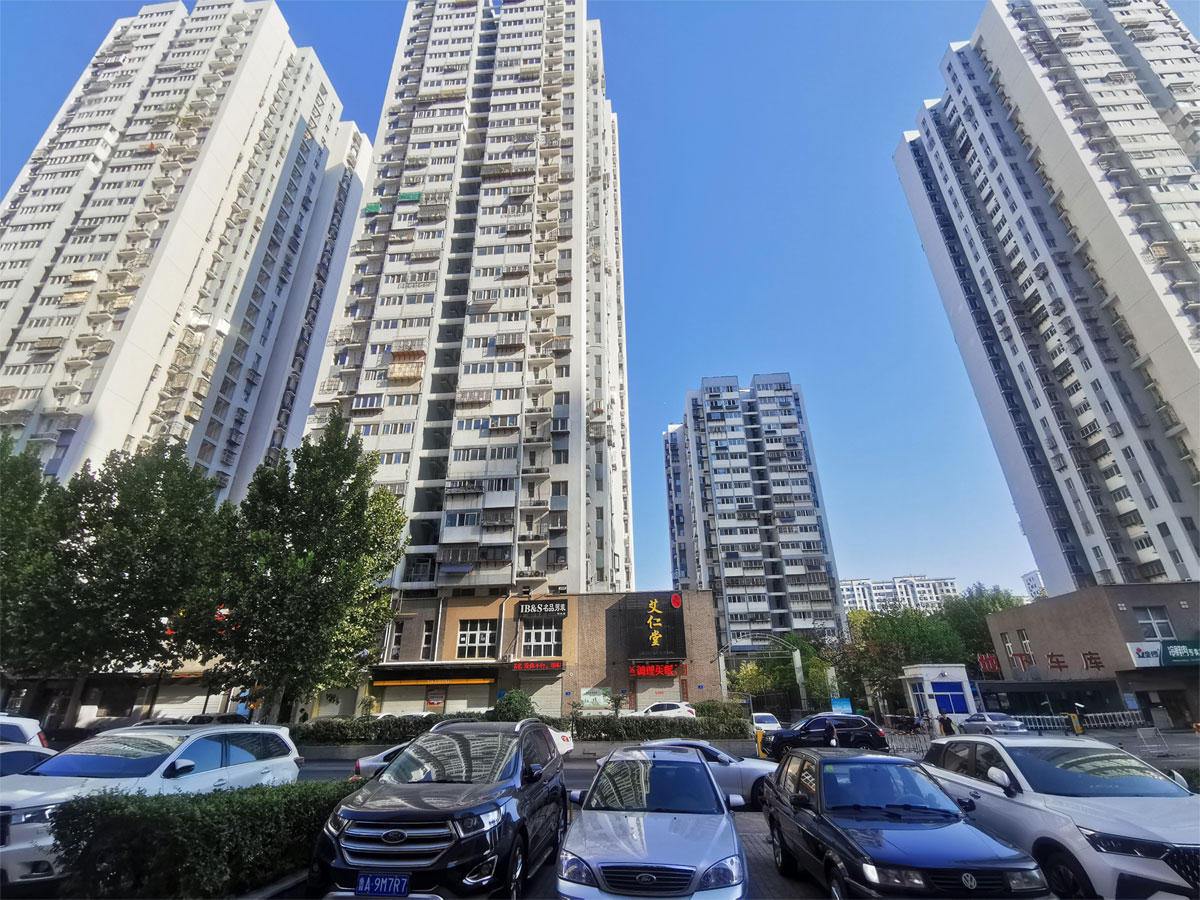
Figure 4
WJZ residential blocks after the restructuring project, 2020.
Source: Author (X. L.).
Table 2
Demographic data of the research participants.
| LABEL | ROLE | GENDER | CLUSTERa | AGE RANGE (YEARS) | OCCUPATION | MONTHLY INCOME (RMB) |
|---|---|---|---|---|---|---|
| S1 | Stayer | Female | Hongjing | 51–60 | Community staff | 2,000–4,000 |
| S2 | Stayer | Female | Hongjing | >60 | Retired | 2,000–4,000 |
| S3 | Stayer | Female | Hongjing | 41–50 | Unemployed | <2,000 |
| S4 | Stayer | Female | Hongjing | 51–60 | Retired | 2,000–4,000 |
| S5 | Stayer | Male | Hongjing | 51–60 | Unemployed | <2,000 |
| S6 | Stayer | Female | Hongjing | 51–60 | Retired | 2,000–4,000 |
| S7 | Stayer | Female | Hongjing | 51–60 | Retired | 2,000–4,000 |
| S8 | Stayer | Female | Hongjing | >60 | Retired | 2,000–4,000 |
| S9 | Renter | Female | Shengjing | 21–30 | Community staff | 2,000–4,000 |
| N1 | Newcomer | Female | Huajing | 51–60 | Retired | Prefer not to say |
| N2 | Newcomer | Female | Huajing | 21–30 | Community staff | 2,000–4,000 |
| N3 | Newcomer | Female | Hongjing | 41–50 | Community staff | 4,000–6,000 |
| N4 | Newcomer | Female | Dijing | 31–40 | Public institution | 4,000–6,000 |
| N5 | Tenant | Female | Hongjing | 31–40 | Self-employed | 2,000–4,000 |
[i] Notes: 1 RMB = £0.11 (based on the exchange rate on January 2021).
a None of the research participants is from Haojing Garden due to access control.
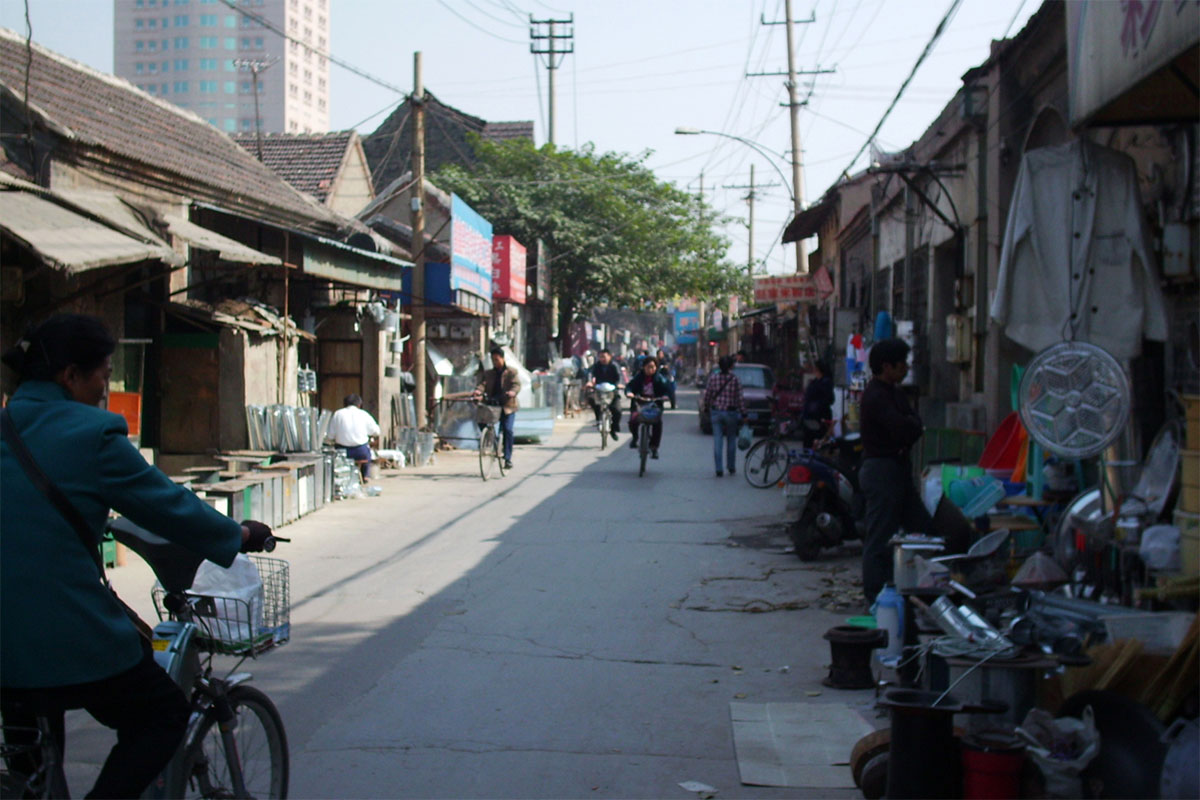
Figure 5
WJZ neighbourhood and old street life.
Source: Research participant.
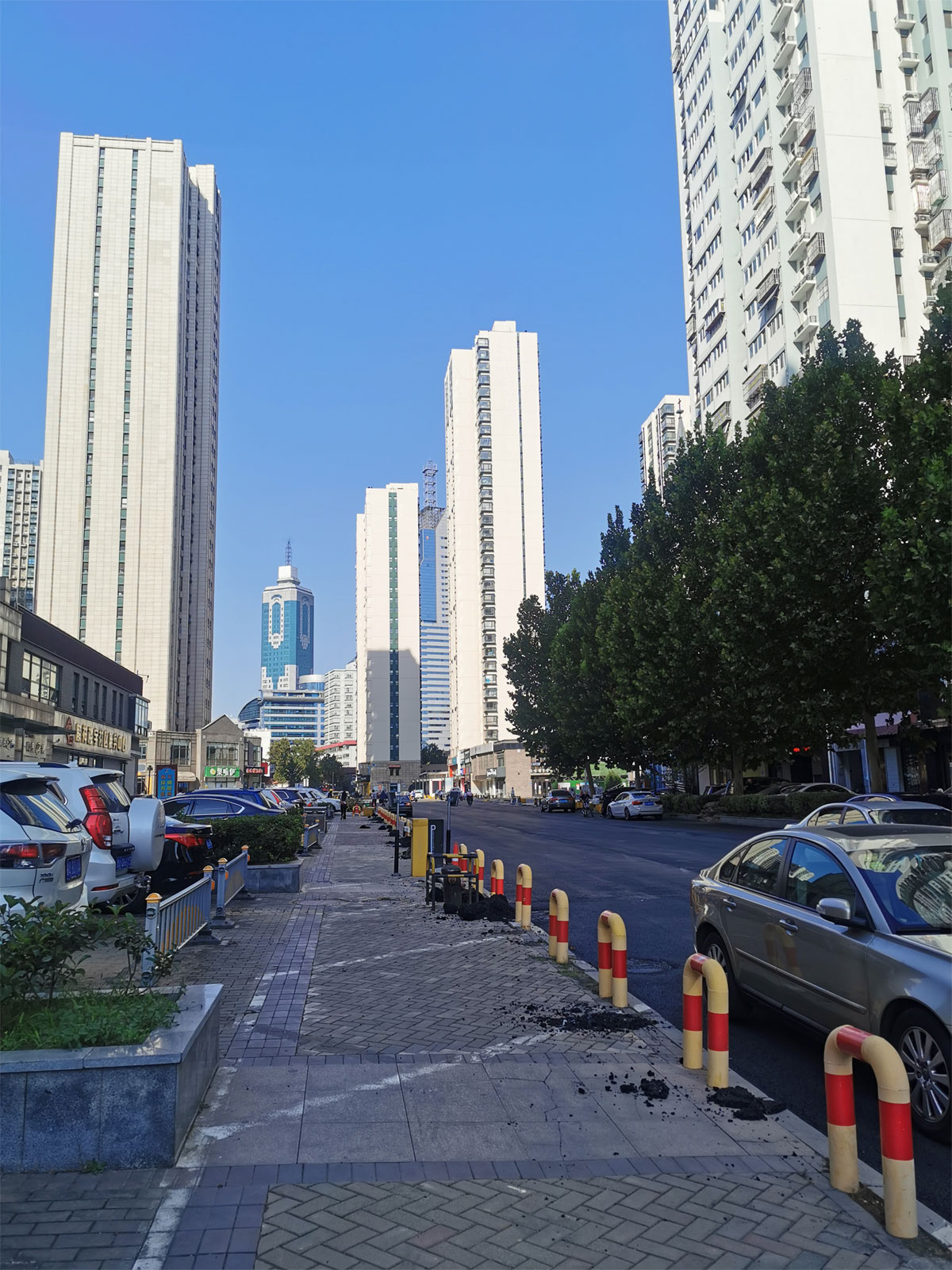
Figure 6
WJZ’s new street layout.
Source: Author (X. L.).
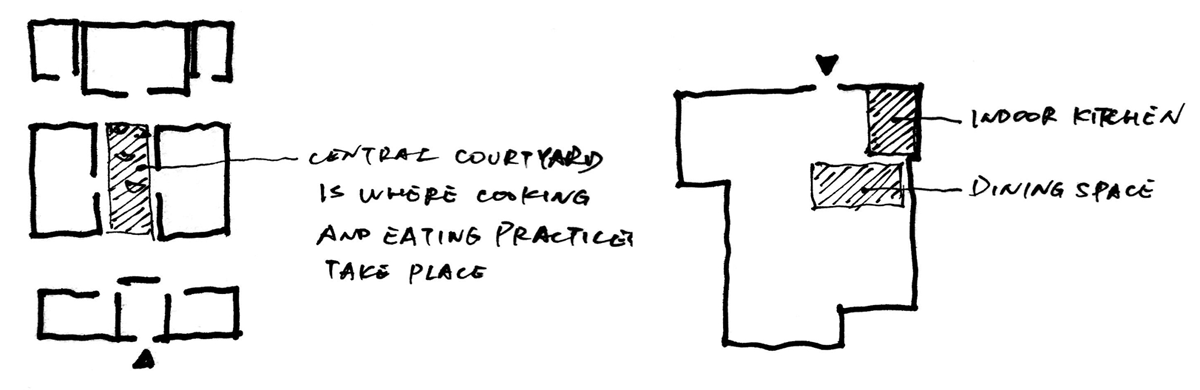
Figure 7
Changes in materiality in cooking and eating practices before (left) and after (right) the restructuring.
Note: Dark lines represent the exterior wall boundaries of the dwelling. On the left is a combination of living units in a courtyard housing, each square representing one room. The outdoor courtyard is located in the centre of the house. On the right is one complete flat in a high-rise building, including a kitchen unit and designated dining space.
Source: Author’s (X. L.) field notes.
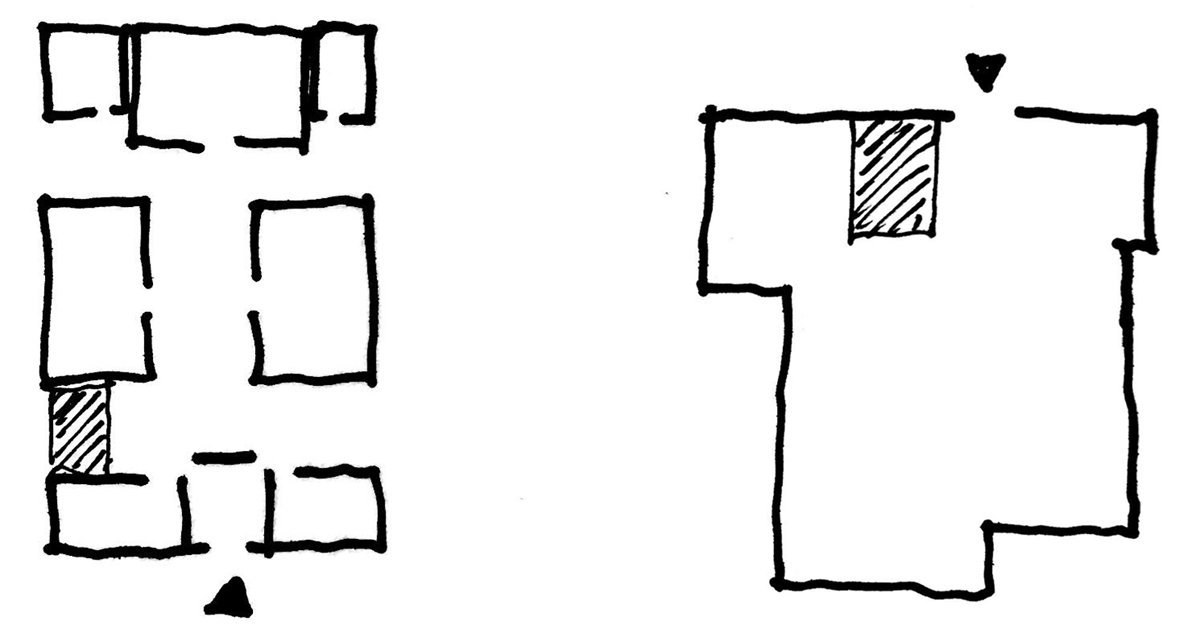
Figure 8
Changes in sanitation facilities before (left) and after (right) the restructuring.
Note: Dark lines represent exterior wall boundaries: (left) the courtyard housing typology with a shelter-like outdoor hygiene facility and shared by residents living in the same courtyard unit; and (right) the high-rise flat with a toilet unit. Not to scale.
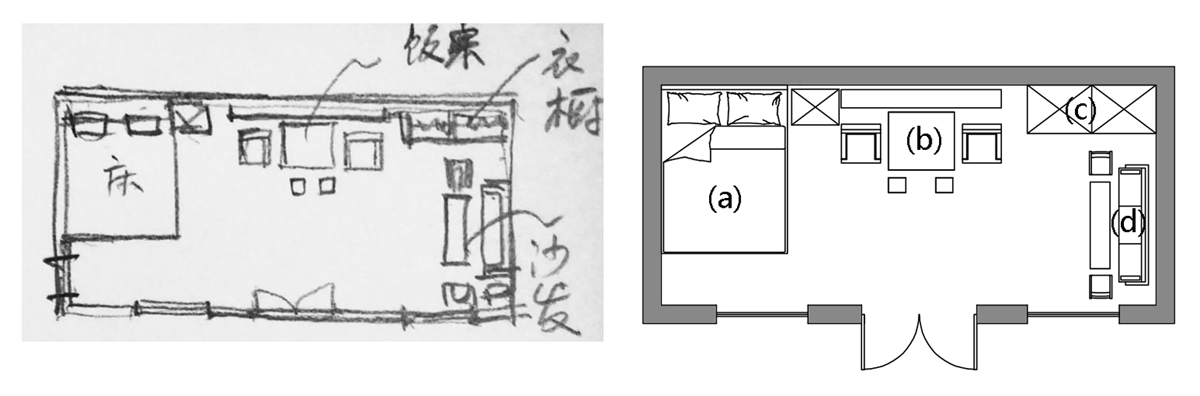
Figure 9
An interchangeable open-floor plan in a courtyard housing for one household.
Note: (left) A drawing by a research participant who is a local architect and who lived in the courtyard house typology in the 1980s; and (right) a technical drawing created by the author (X. L.) based on the hand drawing on the left illustrating how the multifunctional space is used showing the furniture: (a) bed, (b) table, (c) closet and (d) sofa.
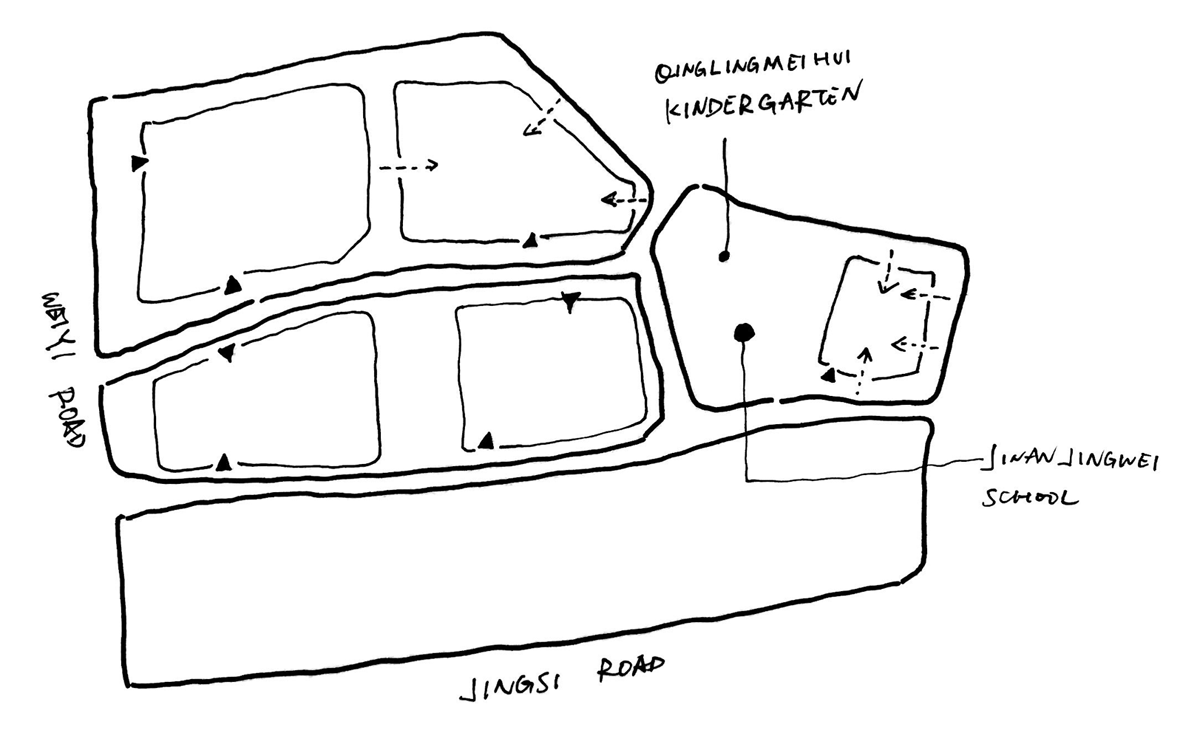
Figure 10
Accessibility for each community to adjacent neighbourhood streets.
Note: Black triangles mark the entrances with restricted access control; and dotted arrows mark sideway access without the control of visitors.
Source: Author’s (X. L.) field notes.
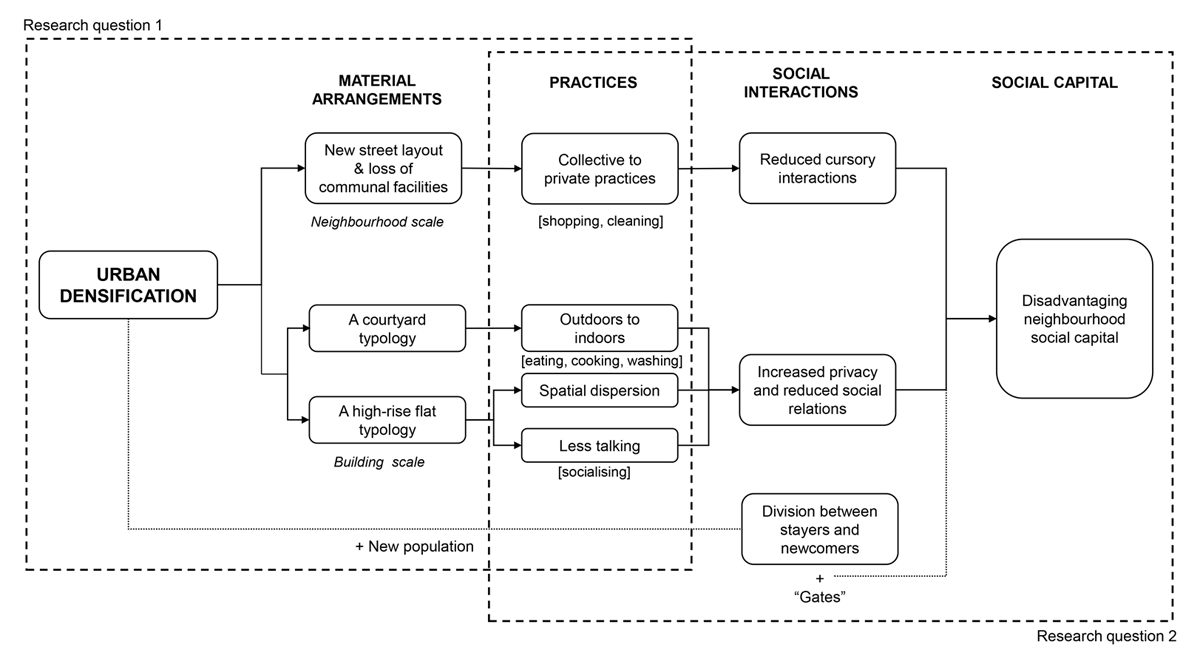
Figure 11
Research findings in relation to the analytical framework.