
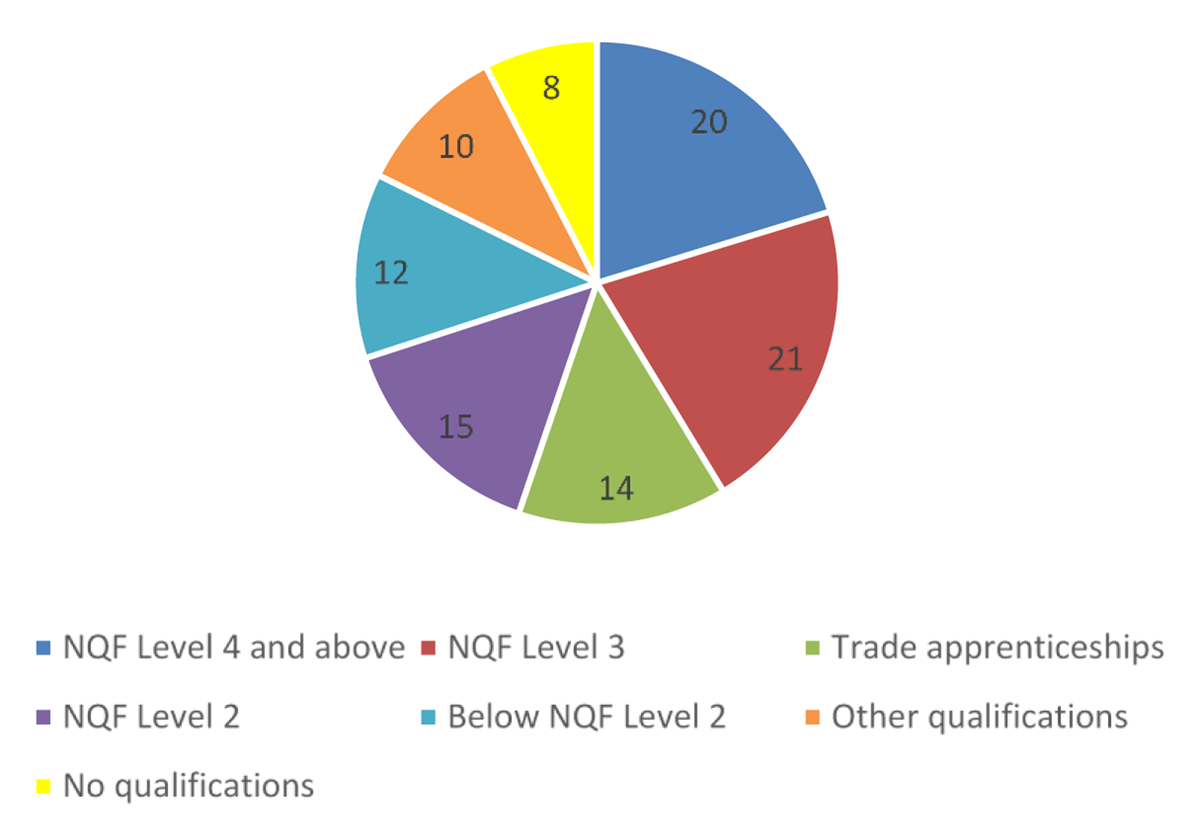
Figure 1
Percentage of qualifications across 1.85 million workers in construction, 2016. Source: ONS (2017).
Table 1
Matches and mismatches between sectoral supply and demand for skills.
| Low demand for skills | High demand for skills | |
|---|---|---|
| High level of skill supply | Over-qualification (mismatch) | Professionalism (match) |
| Low level of skill supply | Low skills equilibrium (match) | Under-qualification (mismatch) |
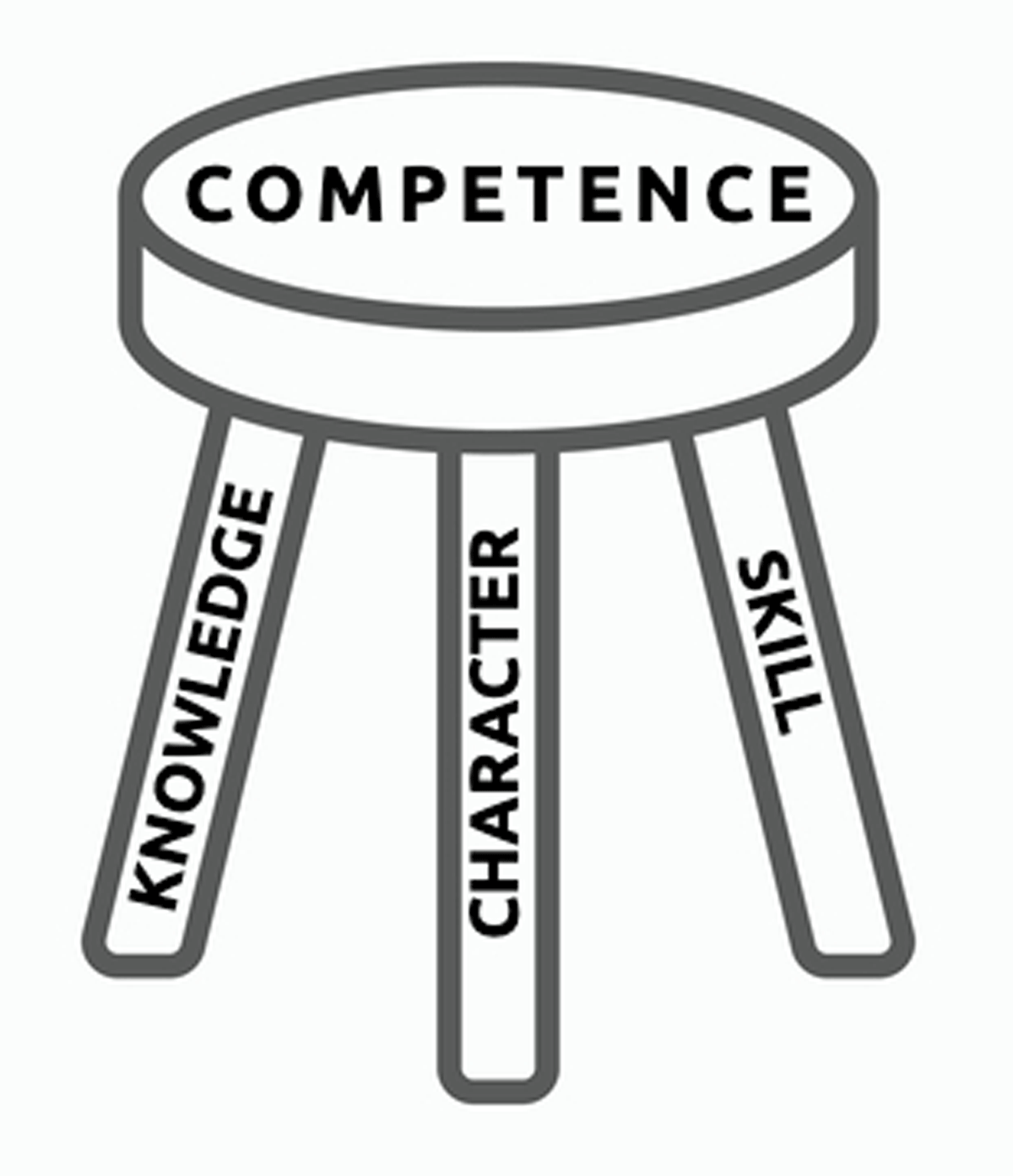
Figure 2
Competence as the combination of three different types of capability.
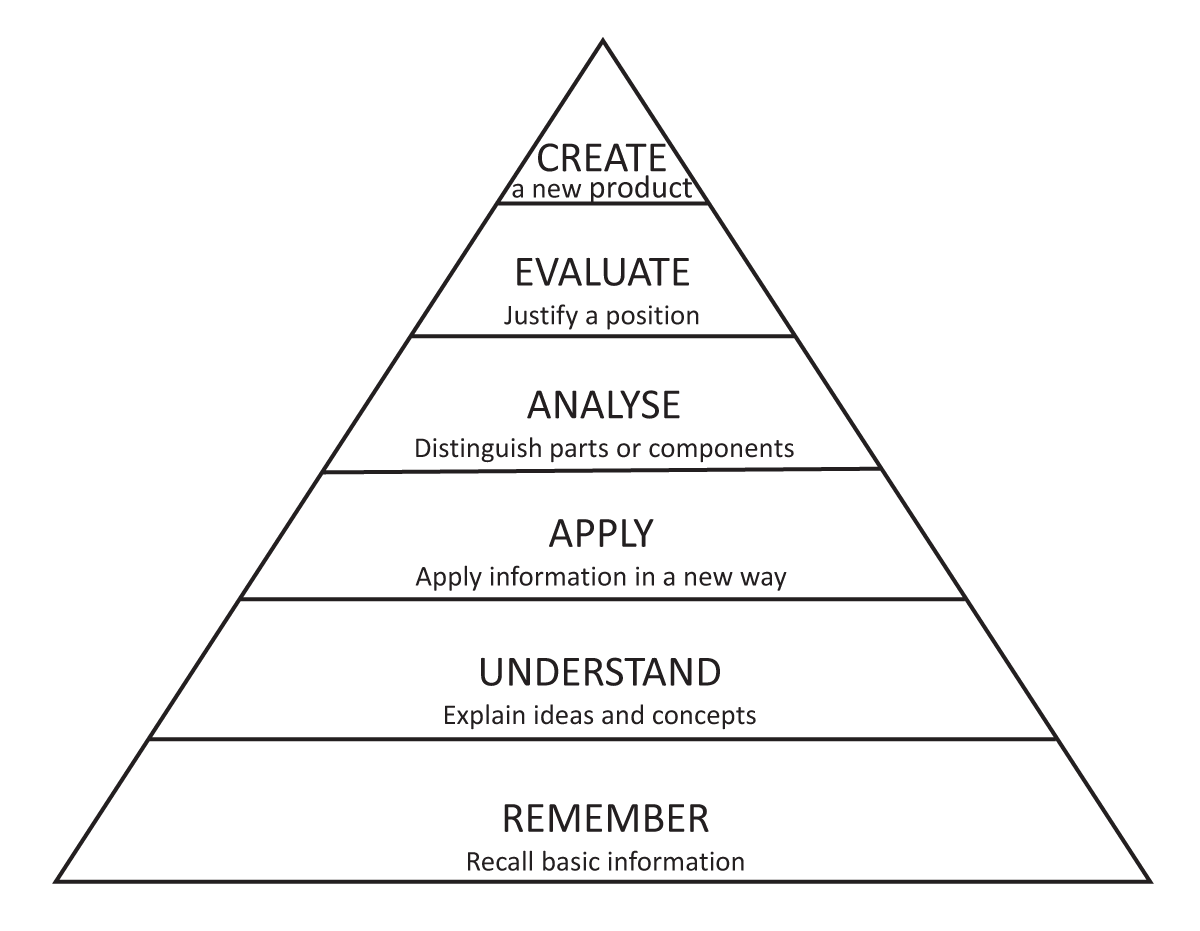
Figure 3
Revised Bloom’s taxonomy of educational objectives. Source: Anderson et al. (2001).
Table 2
Stages of moral educational development.
| Stage and orientation | Description |
|---|---|
| 6. Universal ethical principle | Good behaviour is determined by individual conscience and choice, framed by ethical principles: comprehensiveness, universality and consistency |
| 5. Social contract, legalistic | Good behaviour conforms with individual rights and standards, which are socially constructed (the social contract may change over time) |
| 4. ‘Law and order’ | Good behaviour consists of doing one’s duty, showing respect for authority and maintaining the social order for its own sake |
| 3. Interpersonal concordance | Good behaviour is that which pleases or helps others. Behaviour is frequently judged by intention (‘s/he means well’) |
| 2. Instrumental-relativist | Good actions are those that satisfy personal needs. Reciprocity (doing good for others) is pragmatic: ‘I’ll scratch your back if you scratch mine’ |
| 1. Punishment-obedience | Physical consequences determine whether an action is good or bad. Avoiding punishment and deferring to power are valued in their own right |
[i] Source: Adapted from Kohlberg & Hersh (1977).
Table 3
Summary of skills hierarchies for knowledge, skill and character.
| Order of skill | Savoir (knowledge) | Savoir-faire (skill) | Savoir-être (character) |
|---|---|---|---|
| 6 | Create | Improve | Ethical |
| 5 | Evaluate | Plan | Legalistic |
| 4 | Analyse | Operate (expert) | Normative |
| 3 | Apply | Operate (basic) | Relative |
| 2 | Understand | Handle | Instrumental |
| 1 | Remember | Recognise | Consequential |
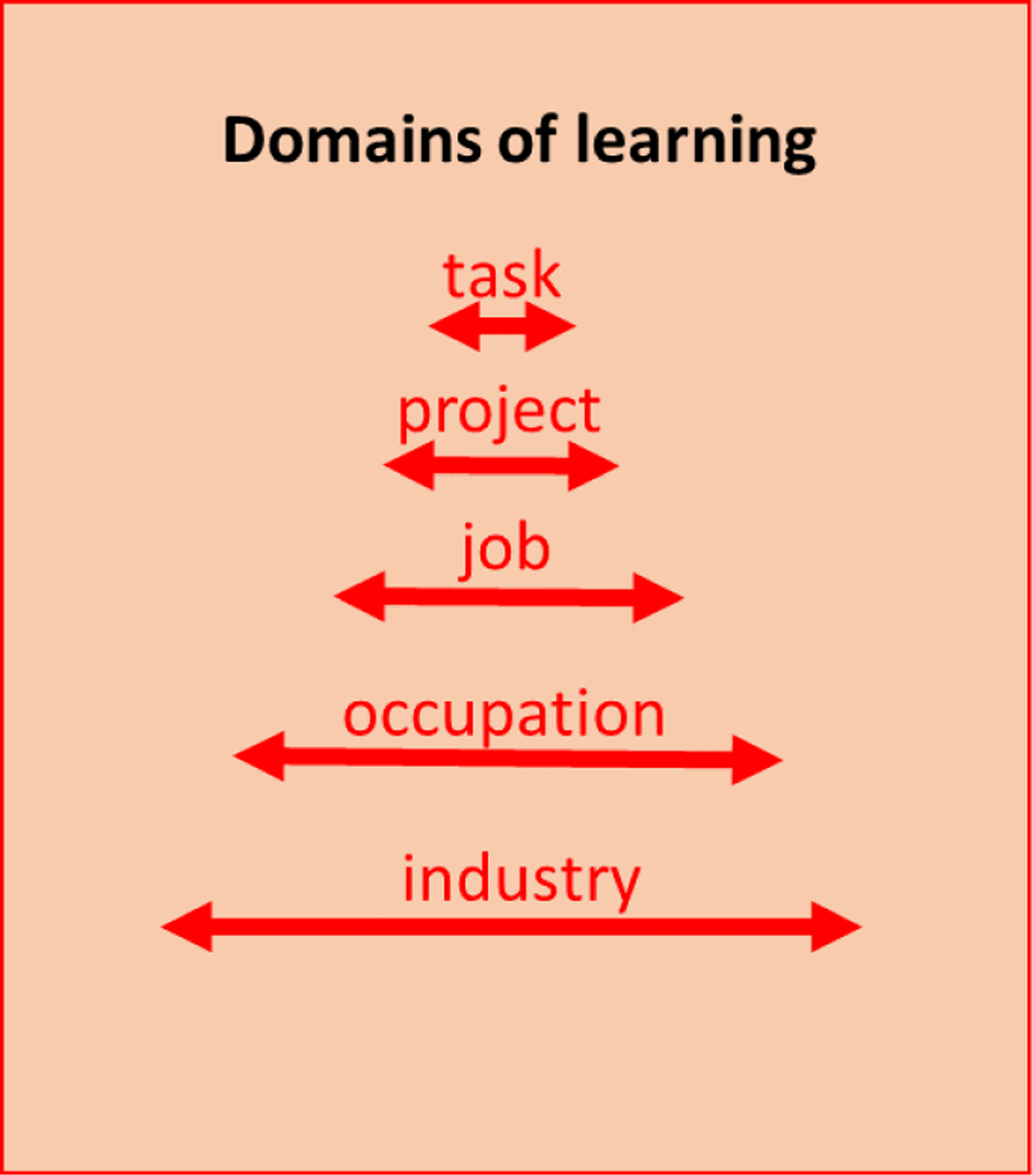
Figure 4
Domains of learning. Source: Adapted from Clarke, Gleeson, & Winch (2017).
Table 4
Changes in the structure of employment and training in construction in Germany and the UK, 1970s–90s.
| Germany | UK | |
|---|---|---|
| Labourers as part of the total construction workforce, 1974 | 33% | 32% |
| Labourers as part of the total construction workforce, 1996 | 17.5% | 35% |
| Change in labourers as part of the total construction workforce, 1974–96 | –15.5% | 3% |
| Change in youth trainee numbers, 1991–97 | 65% | –18% |
| Workforce self-employed, late 1990s | 11% | >50% |
[i] Source: Clarke & Wall (2000).
Table 5
Comparison of the production and training approaches to vocational education.
| Production approach (UK) | Training approach (Germany) | |
|---|---|---|
| Loci of learning | Work based Trade or firm specific | Career based Occupation specific |
| Motives for learning | Individual choice | Occupational entry requirements |
| Modes of learning | On-the-job learning Short courses | Classroom learning, simulation, workplace application |
| Time spent in training | Shorter | Longer |
| Learning outcomes for worker | Able to perform tasks, satisfy short-term employer goals; lower levels of autonomya | Able to pursue an occupation, adapt to future change; higher levels of autonomy |
| Level of qualifications | Lower (NVQ 2 or 3) | Higher (level 3 and above) |
| Possible to work unsupervised without qualifications? | Yes | No |
| Governance of vocational education and training (VET) | Industry led | Negotiated by employers, unions and educationalists |
[i] Note: Here ‘autonomy’ refers to a worker’s capacity to make good unsupervised decisions, using higher order skills. It does not mean ‘freedom from supervision’, even though that meaning is common in the context of UK construction management, where fragmentation, self-employment and subcontracting predominate.
Source: Adapted from Clarke et al. (2017).