
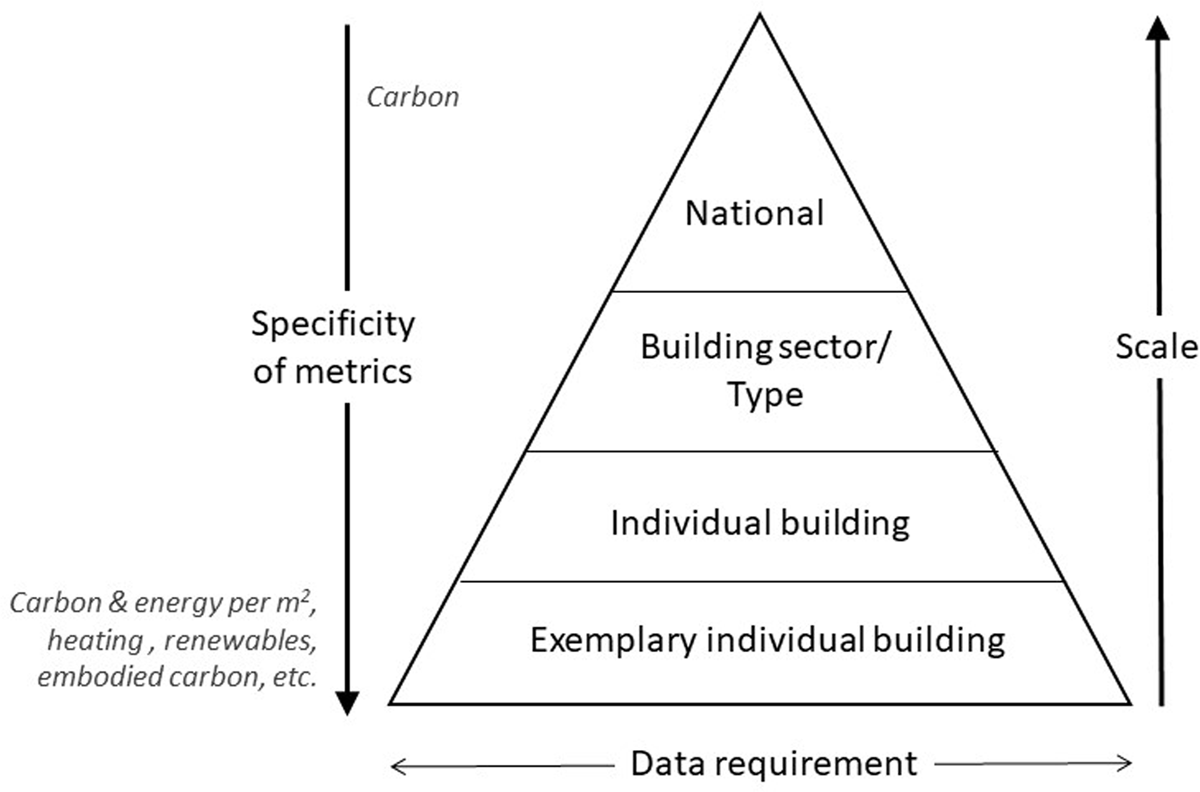
Figure 1
Metrics that guide building retrofit at different scales.
Table 1
Metrics for residential retrofit regulations, standards and assessment tools.
| Type | Country | Description | Key metrics (/m2) | |||
|---|---|---|---|---|---|---|
| Energy | Carbon | Energy costa | Space heating energy | |||
| Regulations and standards | UK | The Future Homes Standardsb & Building Regulations | × | × | × | |
| EU/UK | Passivhaus/EnerPHit standards | × | × | |||
| UK | Net Zero Carbon standardsc | × | × | |||
| Evaluation/assessment tools | UK | Standard Assessment Procedure (SAP) for Energy Rating (used for Energy Performance Certificates—EPCs) | × | × | × | |
| EU/UK | Passive House Planning Package (PHPP) | × | × | |||
[i] Notes: a The energy cost metric is explained in more detail in section 4.1.
b The Future Homes Standard 2019 is not yet enacted, but it is expected to be introduced by 2025. A consultation process related to proposed to Part L (conservation of fuel and power) and Part F (ventilation) of the Building Regulations for new dwellings is currently underway (UK Government 2020).
c The Net Zero Standards framework is for new buildings and major refurbishments targeting net-zero carbon for both construction and operational energy (UKGBC 2019).
Sources: AECB (2007); MHCLG (2019); Passivhaus Trust (2020); UKGBC (2019).