
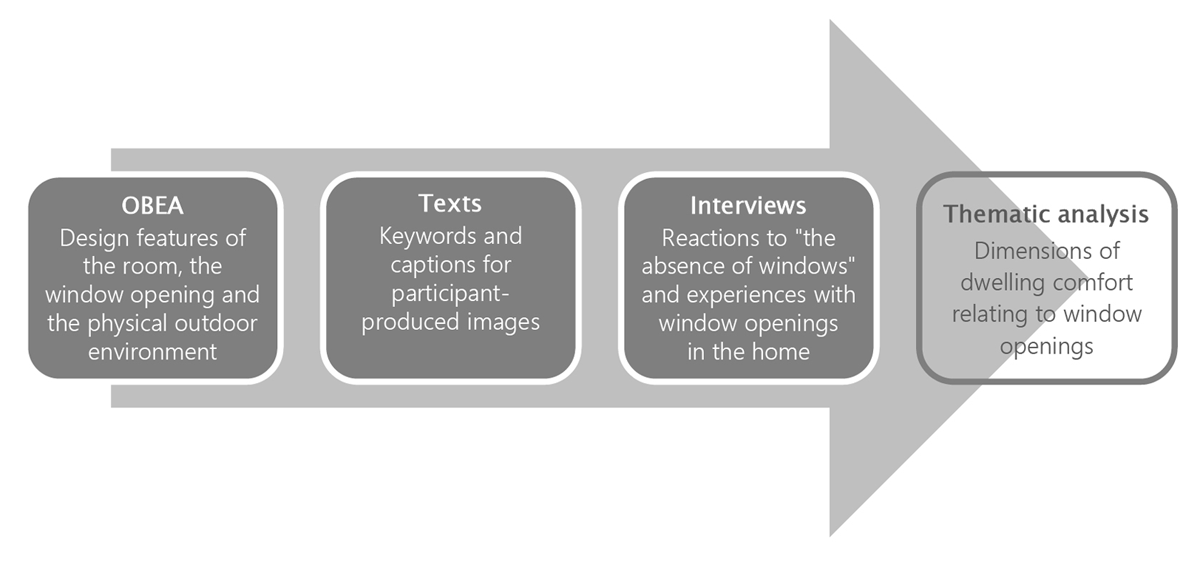
Figure 1
The thematic analysis is based on the following data: (1) design features, (2) keywords assigned by the participants to their photographs of the windows and (3) participants’ accounts.
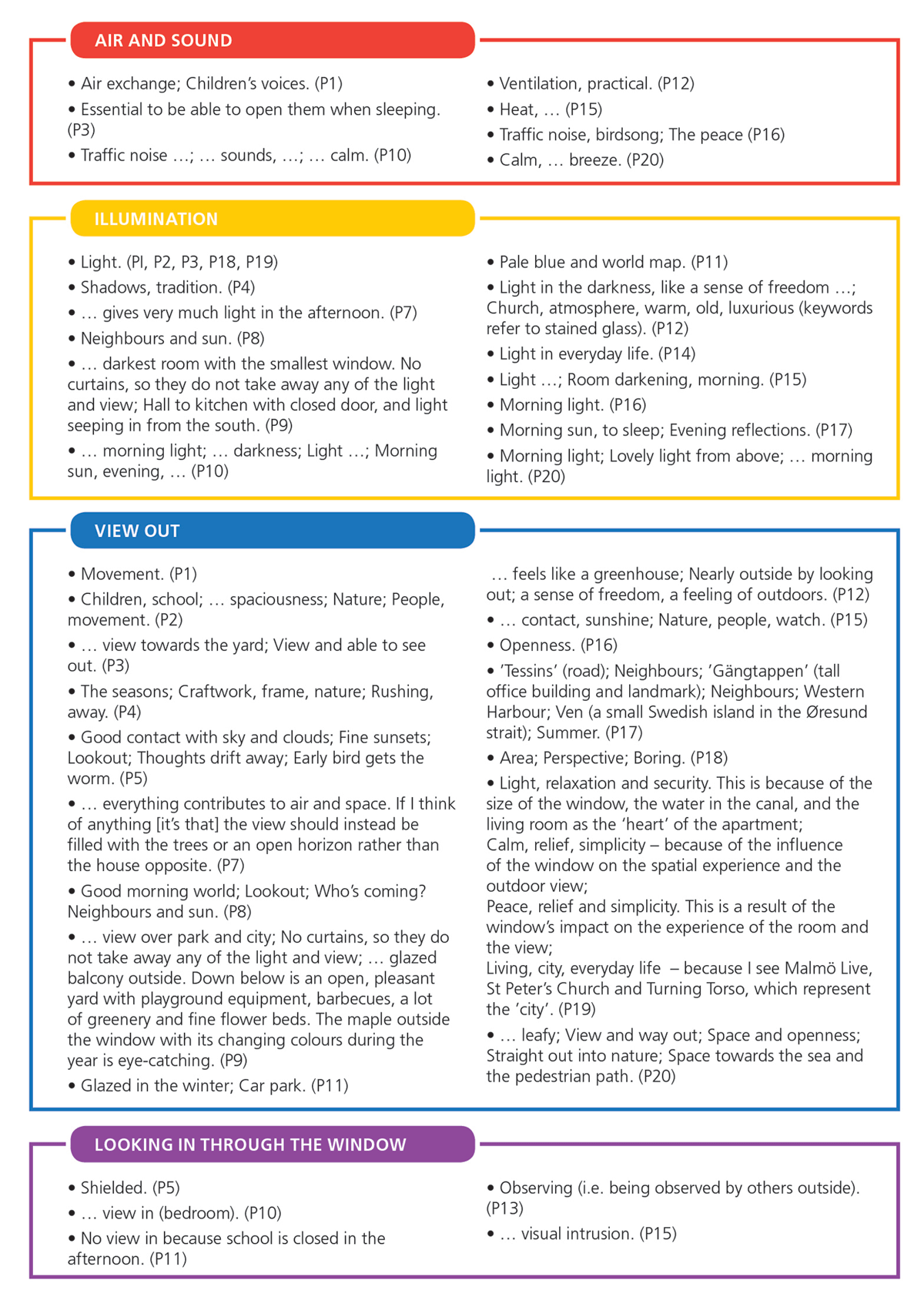
Figure 2
Keywords assigned by the participants to their images divided into four major groups.
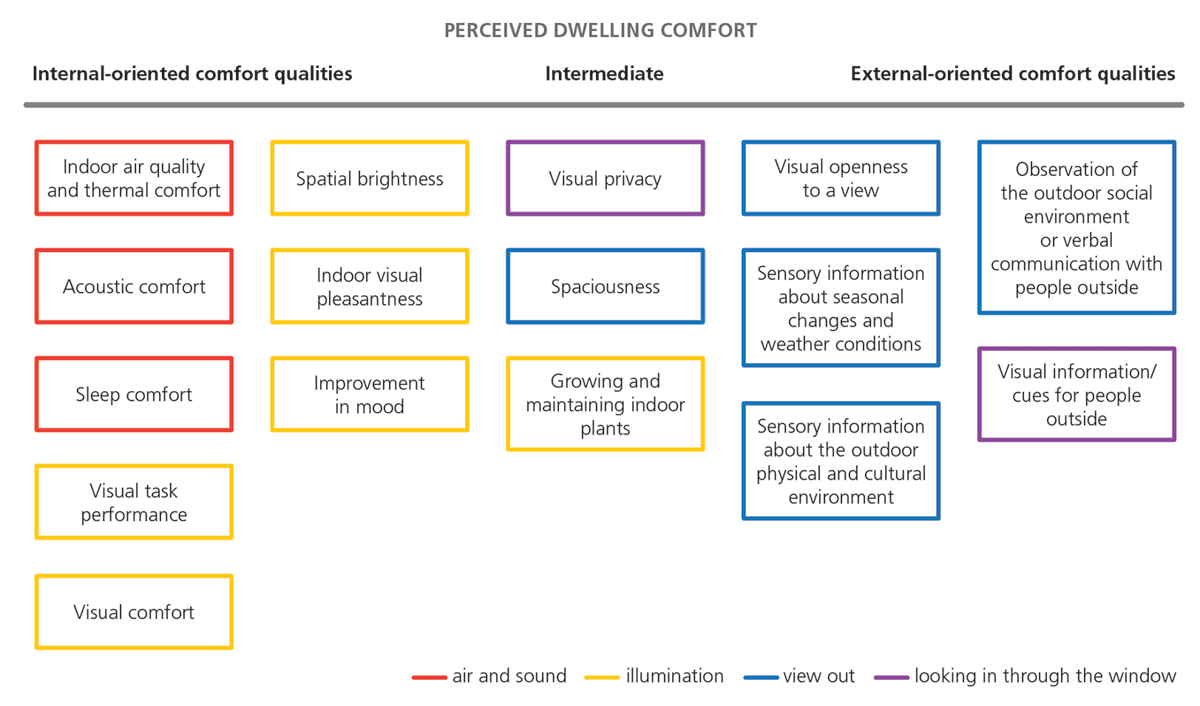
Figure 3
Perceived dwelling comfort: an analytical framework of residents’ views on the role of windows in the home.
Note: Colour coding represents horizontal themes corresponding to the major groups of participants’ keywords.
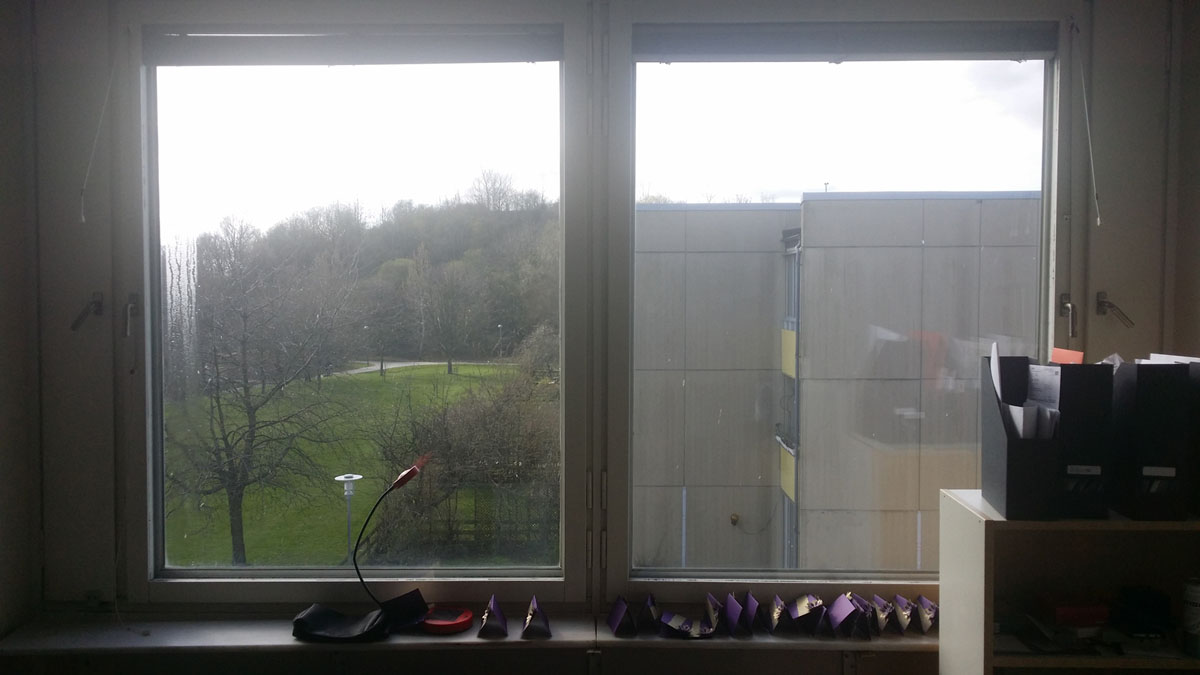
Figure 4
The window in the guest room in the apartment of participant P18.
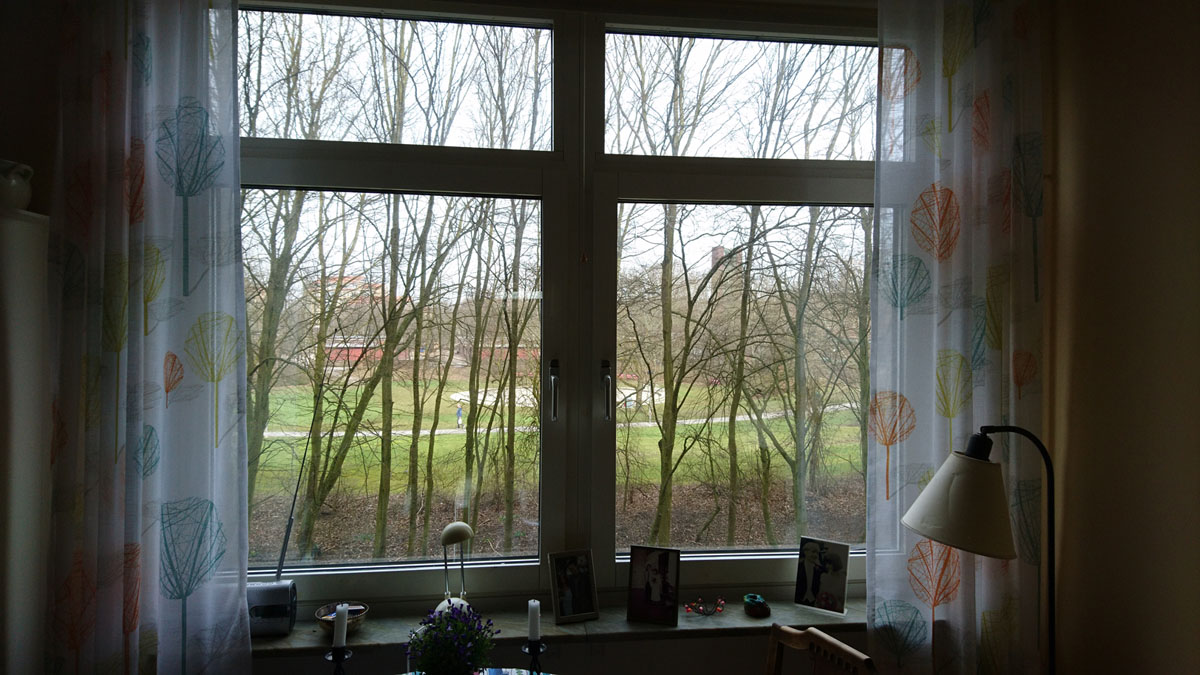
Figure 5
The window in the kitchen in the apartment of participant P9.
Table 1
Thematic analysis: internally oriented comfort qualities relating to windows.
| COMFORT QUALITYa | DESCRIPTION | EMPIRICAL EXAMPLES |
|---|---|---|
| Indoor air quality and thermal comfort (20) | Characterised by fresh air, cooling and heating, and involves natural ventilation, passive cooling and solar heat gain | Opening the windows for ventilation; to improve ventilation because air inlets are not sufficient in summer; or to lower the indoor temperature; wanting exterior shades or having them installed or an appreciation of a projecting balcony above the window (in modern low-energy buildings) |
| Acoustic comfort (9) | Characterised by the avoidance of disturbing or undesired outdoor sounds | Undesired sounds, such as seagulls being noisy early in the morning, traffic, and waste collection trucks |
| Sleep comfort (20) | Characterised by the daily rhythm through light/dark exposure; the avoidance of disturbing light (or too much darkness) and noise during sleep; and maintaining a cooler temperature during the night | Problems with darkening the room during the day after a night shift; wearing a sleep mask; waking up with daylight or sunlight; having the bedroom window open to reduce the temperature; the feel of cool air (e.g. when the duvet is removed); the feel of fresh air; preferring the bedroom to be even darker than you can make it; preferring some light seeping through sheer curtains or half-closed venetian blinds because you dislike darkness and are scared of the dark; letting in daylight during the daytime and wanting it to be dark in the evening |
| Visual task performance (11) | Characterised by daylight illumination in terms of adequate lighting to make the completion of a task easier | Daytime cleaning with daylight; reduced daylight on the task area because of dark bookshelves, and the location of the desk; poor daylighting conditions during the day when playing; adequate daylight in the kitchen for some tasks, for example, making a sandwich, but inadequate for other tasks, for example, cooking dinner and reading a recipe; needing more light in later age |
| Visual comfort (13) | Characterised by daylight illumination that minimises uncomfortable visual contrast, glare and reflected glare | Reflected glare from bright external surfaces, for example, a newly installed copper roof, white exterior walls of adjacent buildings; reflected glare from the television screen making it difficult to see |
| Spatial brightness (20) | Characterised by daylight illumination and enabling an adequately daylit room (ambient lighting) | The whole room has to be bright; plenty of light; contrasts; colour nuances affected by the weather; variation that makes daylight more vivid and less sterile |
| Indoor visual pleasantness (11) | Characterised by daylight illumination and enabling the visual appearance of the window, objects, people and interior surfaces of the room | Avoiding direct sunlight to preserve the flooring, a nice tablecloth on the kitchen table or a tapestry on the wall; unshielded windows because mullions and glazing bars are carefully moulded |
| Improvement in mood (4) | Characterised by daylight illumination | Feeling good from the light you receive every day; feeling bad when it is dark; feeling almost depressed with a view of just a brick wall; ‘light makes me so alert’ |
[i] Note: a Numbers represent the prevalence of the themes across the participants. For example, ‘20’ signifies that all 20 participants referred to the particular theme.
Table 2
Thematic analysis: intermediate comfort qualities (either internal or externally oriented, or both) relating to windows.
| COMFORT QUALITYa | DESCRIPTION | EMPIRICAL EXAMPLES |
|---|---|---|
| Visual privacy (15) | Characterised by a view into the dwelling which is perceived as intrusive (and concerns about how to screen from the gaze of people passing outside) | People outside watching activities inside; translucent glass for privacy; attaching tinted film on a balcony glass railing or door glass; people outside seeing the programme on the television |
| Spaciousness (15) | Characterised by a view out, and suggesting visual openness or enclosure produced by an interior. It has less to do with illumination because the feeling of enclosure can be experienced at night without much light from the outside. View distance may affect the perception of spaciousness more than illumination through the window. Imagine, for example, translucent glazing, a light-coloured tent fabric with no transparent ‘windows’, or thick fog | Feeling confined when there are no windows, or like living in a prison cell; feeling that the apartment is a bit bigger; a view to a brick wall generates a feeling of confinement; closeness to adjacent buildings decreases the feeling of space and light; appreciation of living high above ground level where light filters in from all directions; feeling of freedom with a panoramic window; a feeling of the outside indoors |
| Growing and maintaining indoor plants (5) | Characterised by daylight illumination (and by a view in) | Growing pot plants because it looks more inhabited or for aesthetic reasons (less sterile when not having curtains), or to reduce visual intrusion; starting seeds |
[i] Note: a Numbers represent the prevalence of the themes across the participants. For example, ‘20’ signifies that all 20 participants referred to the particular theme.
Table 3
Thematic analysis: externally oriented comfort qualities relating to windows.
| COMFORT QUALITYa | DESCRIPTION | EMPIRICAL EXAMPLES |
|---|---|---|
| Visual openness to a view (17) | Characterised by a view out that has certain qualities regarding view content, view distance and view elements | Seeing nature outside; looking out through the window; trees moving in the wind; garden; clouds; the sun’s path across the sky; birds; the park; the cityscape; people; too dense and close to adjacent houses |
| Sensory information about seasonal changes and weather conditions (14) | Characterised by a view out and enabling sensory information from the outside, such as sound, or to be able to open the window and feel the wind and outdoor temperature | Vegetation that indicates the time of year; the croaking of frogs and toads during summer nights; to be able to check the weather; rain falling on hard surfaces |
| Sensory information about the outdoor physical and cultural environment (9) | Characterised by a view out onto the physical environment, urban culture or cultural heritage, and enabling sensory information, such as hearing urban sounds | A historic castle in the area; connection to the outside (having a view out and hearing sounds); the voices of students passing in at night (as a sign of life in a city); hearing birds chirping or people talking outside; seeing and listening to the sounds of a busy city street with cars and buses |
| Observation of the outdoor social environment, or verbal communication with people outside (13) | Characterised by the view out and enabling sensory information, such as voices talking or dogs barking, and verbal communication | Checking whether a neighbour’s car is in the car park to see if they are home; checking for intruders through the window; calling out to someone; watching her child playing football outside |
| Visual information/cues for people outside (9) | Characterised by a non-intrusive view in, and requires visual openness enabling inhabitants to provide visual cues for people outside | Choosing interior window treatments depending on how others perceive them, for example, roller blinds or curtains instead of venetian blinds; creating a pleasing window display for people outside with flowerpots and lamps on the windowsill; appreciation of seeing other residents’ indoor lighting |
[i] Note: a Numbers represent the prevalence of the themes across the participants. For example, ‘20’ signifies that all 20 participants referred to the particular theme.
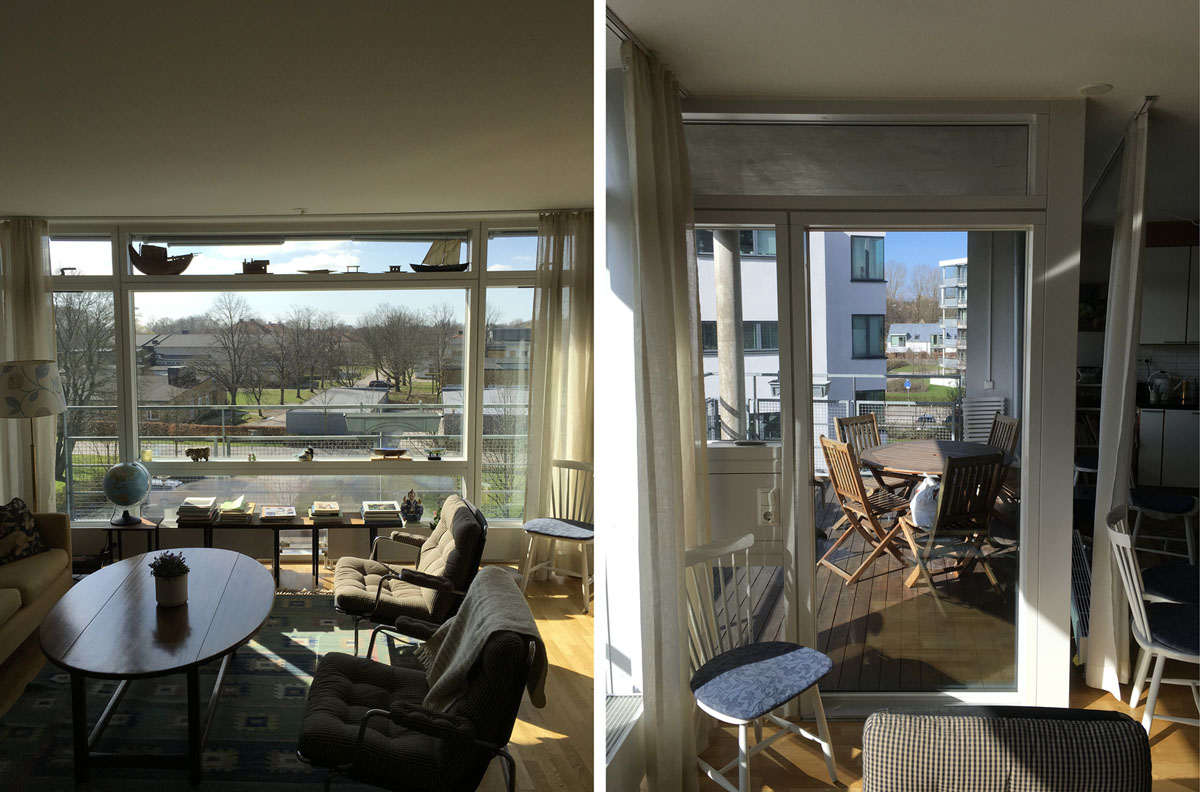
Figure 6
The window (left photo) and the balcony door (right photo) in the in the living room in the apartment of participant P5, with his corresponding captions: (a) ‘Good contact with the sky and clouds’ and (b) ‘Exit’.