
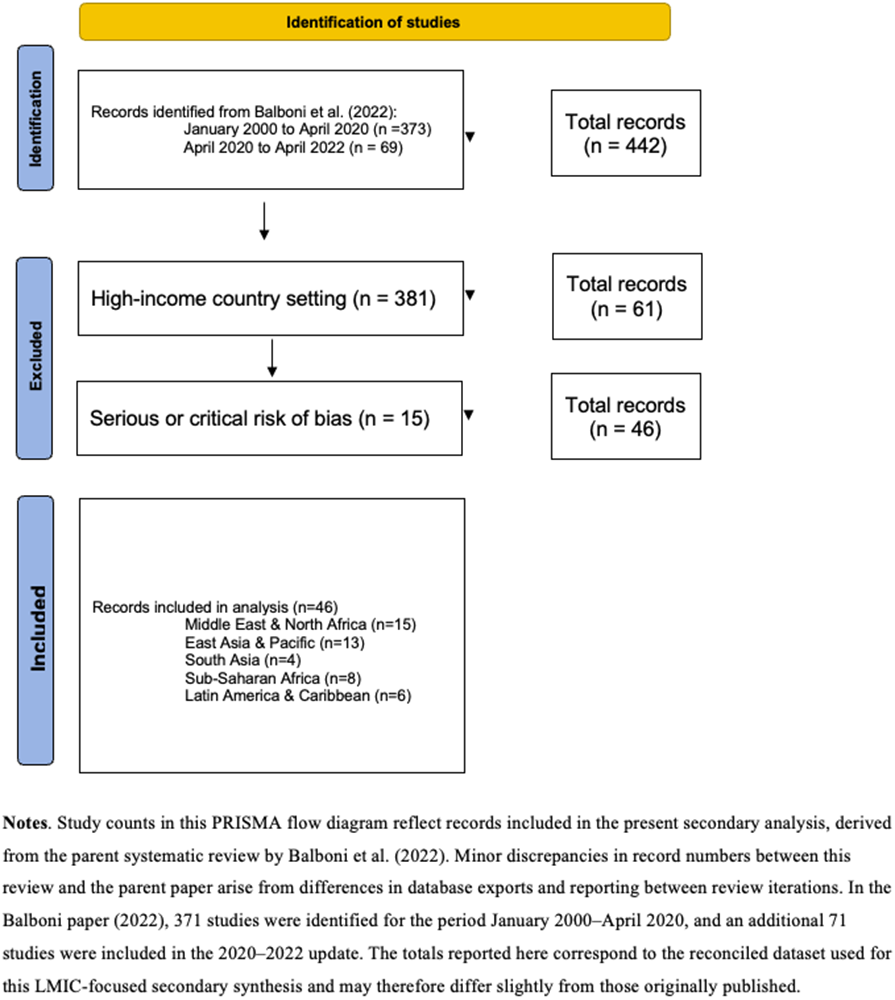
Figure 1
Preferred Reporting Items for Systematic Reviews and Meta‑Analyses (PRISMA)‑style flowchart: selection/numbers of articles for LMIC analysis.
Table 1
SC in serious illness in LMICs (n = 37).
| AUTHOR, YEAR | REGION; COUNTRY | RELIGIOUS OR SPIRITUAL TRADITION | POPULATION | DESIGN | MEASURES | SUMMARY OF RESULTS | OUTCOMES | BIAS RATING |
|---|---|---|---|---|---|---|---|---|
| Afrooz et al. [11] | Middle East; Iran | Muslim | Adult, inpatient and outpatient cancer pts recruited from Ardebil University of Medical Sciences, Ardebil, Iran | Cross‑sectional survey study | Herth Hope Index (HHI); Sources of hope; Hope inspiring strategies | Of 14 sources of hope assessed, top five for pts: God 100%, prophets/imams 91%, child 67.5%, MDs 63.5%, spouse 60%. Of 20 hope‑inspiring strategies assessed, top five: 97% relationship with God, 87% blessing, 84.5% controlling symptoms of disease, 82% praying, 66% appropriate manner of physician. | Description of sources of hope | Low |
| Akuoko et al. [12] | Sub‑Saharan Africa, Ghana | Christian; Muslim | Adult female advanced breast cancer outpatients from two outpatient clinics in Kumasi, Ghana | Cross‑sectional survey study | Spiritual needs (Spiritual Need Assessment for Patients, SNAP) | Most [92.1%] had at least one spiritual need (SNAP). Needs included: 92.6%, someone to bring you spiritual texts; 92.1%, finding peace of mind; 90.9%, finding forgiveness; 90.3%, your relationship with God or something beyond yourself; 90.3%, visits from clergy/imam of your own faith community; 90.3%, religious rituals such as chant, prayer, lighting candles or incense, anointing, communion; 88.6%, finding hope; 87.5%, meaning and purpose of human life; 84.7%, personal meditation or prayer practices. Older women reported greater religious needs compared to younger women. | Supportive Care Needs Survey‑Long Form; modified Client Service Receipt Inventory | Low |
| Bar‑Sela et al. [13] | Middle East (14 countries)* | Muslim; Jewish; Christian | MDs and nurses treating pts with advanced cancer | Cross‑sectional survey study | Spiritual care attitudes and provision (survey adapted from the Boston Religion and Spirituality in Cancer Care study); HDI (survey developed by United Nations Development Programme: composite of life expectancy, education, per capita economic production) | Respondents were from 14 Middle Eastern countries, 40% MDs/60% nurses; 61% female; 73% Muslim; 25% very high HDI, 41% high HDI, 29% medium HDI, and 5% low HDI. Of eight spiritual care types, 42–81% considered appropriate. 47% indicated that they had provided spiritual care to any of last three advanced cancer pts. In multivariable analysis (MVA), the strongest predictor of spiritual care: staff in high‑HDI countries had higher odds of not providing spiritual care than those in medium‑HDI countries [AOR = 4.21 (95% CI: 2.58, 6.87)], equivalent to greater provision in medium‑HDI settings]. Other significant predictors were spirituality, intrinsic religion/spirituality, training, and being a nurse. Only 22% had received spiritual care training; 77% indicated interest in receiving it. | Description of frequency and perception of importance of spiritual care provision, impact of spiritual care, and spiritual care training; Assessment of predictors of spiritual care provision | Low |
| Bar‑Sela et al. [14] | Middle East; Middle East (14 countries*) | Muslim; Jewish; Christian | Physicians and nurses treating pts with advanced cancer | Cross‑sectional survey study | Spiritual care attitudes and provision (survey adapted from the Boston Religion and Spirituality in Cancer Care study); Human Development Index (survey developed by United Nations Development Programme: composite of life expectancy, education, per capita economic production) | 72% Muslim, 13% Jewish, 10% Christian. 90% at least slightly spiritual; 85% at least somewhat religious. 82% believe SC should be provided to advanced cancer pts at least occasionally, but 44% provide SC less often than they think they should. 77% had never received spiritual care training; 77% are interested in receiving training. In MVA of respondents who value spiritual care but don’t provide it to pts, predictors included low personal spirituality [P < 0.001] and not having received training [P = 0.02]. How “developed” (HDI) a country also negatively predicted spiritual care provision [P < 0.001]. Main perceived barriers: lack of time (66%), private space (58%), training (54%). | Description of perceptions of spiritual care; Predictors of spiritual care provision | Low |
| Bashar et al. [32] | Middle East; Iran | Muslim | Adult pts who had been admitted to the ICU and received mechanical ventilation in 31 provinces in Iran (45 hospitals) | Cross‑sectional survey study | Pt spiritual health (Spiritual Health Questionnaire, SHQ, validated in Muslim populations) | In structural equation modeling, spiritual health (SHQ) was indirectly associated with decreased depression and anxiety [HADS: b = −0.081, P < 0.05] via pt–physician communication. Pt spiritual health had positive direct/indirect associated with greater impact of event [IES‑R via PP‑QoC: b = 0.293, P < 0.05], and higher post‑traumatic stress scale [PTSS‑14 via PP‑QoC: b = 0.267, P < 0.001]. So though spiritual health is related to less depression/anxiety (indirect), SH was associated with greater post‑traumatic stress disorder (PTSD) symptoms. Pt spiritual health was not related to QoL directly or indirectly. | Pt anxiety and depression (Hospital Anxiety and Depression Scale, HADS) Quality of communication (Pt– physician and Pt–nurse Quality of Communication Questionnaire) Impact of Event Scale (scale) Quality of life (Quality of Life in Mechanically Ventilated pts, QoL‑MVP) | Low |
| Camargos et al. [15] | Latin America; Brazil | Catholic; Evangelic; Spiritist | Adult, advanced cancer pts (n = 525), and healthcare professionals providing direct care to oncology pts (n = 525) from multiple clinical settings affiliated with a tertiary care cancer center in Sao Paulo State, Brazil | Cross‑sectional survey study | Assessment of perceptions of spiritual/religious care; Spiritual well‑being (World Health Organization QOL: Spiritual, Religious and Personal Beliefs scale, WHOQOL‑SRPB) | 94.1% of pts considered it important that health professionals ask about their spiritual beliefs. Nearly all pts [99.6%] reported that spiritual support is necessary during cancer treatment; 98.3% of health professionals agreed that spiritual and religious support was necessary for oncology pts. | Description of pt and MD perceptions of spiritual/religious care; Global pt QoL (World Health Organization Quality of Life Questionnaire, WHOQOL‑Brief) | Low |
| Chacko et al. [16] | South Asia; India | Hindu; Christian; Muslim | Pts with stage III or IV cancer being seen at a single medical center in Vellore, India | Cross‑sectional survey study | Survey assessing importance of physical, emotional, social, and spiritual dimensions of end‑of‑life (EOL) care (modified EOL survey from Davison, 2010) | Addressing spiritual needs was moderately to very important to 96.4%. “Extremely important” aspects of spiritual care included: being able to pray [89.3%], others praying for the patient [86%], meeting spiritual advisors [63.6%], discussing spiritual issues [60.7%], and considering spiritual preferences while making decisions about life‑prolonging therapies [59.3%]. Health professionals rated the same items markedly lower [52.5%, 42.5%, 42.5%, 50%, and 35% respectively]. Ideal person for addressing spiritual needs: family/friends [38.6%], spiritual advisor [35.7%], others [17.8%], nurse [5%], MD [2.9%]. | Description of pt perceptions of spiritual dimensions of EOL care | Moderate |
| Chaiviboontham [17] | East Asia and Pacific; Thailand | Buddhist | Adult advanced cancer pts seen receiving palliative care in three hospitals in Bangkok and suburban Thailand | Cross‑sectional survey study | Spiritual Well‑Being Scale (SWBS) Personal Information Questionnaire (PIQ) | 41.7% perceived palliative care interventions (e.g., pharmacologic and non‑pharmacologic) to be effective. In MVA, spiritual well‑being (SWBS) was associated with greater pt‑perceived efficacy of palliative care [b = 0.057, SE = 0.012, P < 0.001]. | Effectiveness of palliative care (Palliative Care Assessment Form, PCAF) | Low |
| Chen et al. [18] | East Asia and Pacific; China | Non‑religious | Adult gynecological cancer patients recruited from a single university hospital in western China | Cross‑sectional survey study | Spiritual well‑being (European Organisation for Research and Treatment of Cancer spiritual well‑being, EORTC QLQ‑SWB32) | In MVA, global health [β = 0.337, P < 0.001] and depression [β = −0.144, P < 0.001] were significantly associated with Global‑SWB. | Quality of life (European Organisation for Research and Treatment of Cancer quality of life instrument, EORTC QLQ‑C30) Depression (Hospital Anxiety and Depression Scale, HADS) | Moderate |
| Chui et al. [42] | East Asia and Pacific; Malaysia | Muslim; Buddhism; Christian | Adult female breast cancer pts recruited from Hospital Kuala Lumpur (HKL) and the University of Malaya Medical Centre (UMMC) | Cross‑sectional survey study | Complementary and alternative medicine (CAM) questionnaire, including massage, exercise, prayer for health (PFH), supplements, herbal remedies, and indigenous medicine | 70.7% report using any form of CAM. The largest category of CAM‑use was prayer for health [56.8% of full sample, 80.3% of CAM users], and 95.9% find prayer helpful. | Descriptive study of CAM use | Low |
| Dadsetan et al. [38] | Middle East; Iran | Adult multiple sclerosis patients recruited from neurology wards of Shahid Bahonar Hospital, affiliated with Kerman University of Medical Sciences in the southeast of Iran | Cross‑sectional survey study | Palliative care needs including physical, social, psychological, economic, spiritual dimensions (instrument developed/validated by the authors) | All patients reported some degree of spiritual needs [µ = 31.2, σ = 4.1]. Nurses rated patients’ spiritual needs lower than patients [µ = 26.6, σ = 3.7, P < 0.0001]. Patient also reported physical needs [µ = 42.6, σ = 9.6], social needs [µ = 39.0, SD = 6.4], psychological needs [µ = 22.3, σ = 6.8], and economic needs [µ = 14.1, σ = 3.0]. | Nursing assessment of patient palliative care needs (instrument developed/validated by the authors) | Moderate | |
| Effendy et al. [19] | East Asia and Pacific; Indonesia | Muslim | Adult, hospitalized cancer (any stage) pts in three general hospitals in Indonesia | Cross‑sectional survey study | Assessment of pt palliative care needs (Problems and Needs of Palliative Care scale short version, PNPC‑sv) | 82.4% of pts physical symptoms; 74.8% financial issues; 58.8% psychological issues; 51.3% ADLs issues; 43.7% spiritual issues; autonomy 39.5%; 27.7% social issues. 88.4% indicated spiritual issues were addressed by family [80.7%], nurses [63.4%], MDs [38.4%]. | Description of symptoms and spiritual issues | Low |
| Farahani et al. [20] | Middle East; Iran | Muslim; Christian | Cancer MDs and nurses in government‑ affiliated medical facilities | Cross‑sectional survey study | Assessment of spiritual care (SC) perceptions and practices (Spiritual Care Survey, adapted from the Multidimensional Measure of Religiousness and Spirituality) | 70.6% of the participants considered spiritual care to be influential in the pts’ QOL. However, 64.7% had received no spiritual care training, while 82.4% indicated a willingness to receive training. | General views of spiritual care and provider perspectives on providing different types of spiritual care | Moderate |
| Fawares et al. [21] | Middle East; Jordan | Muslim | Adult cancer patients receiving palliative care at a single hospital in Jordan | Cross‑sectional survey study | Religious beliefs and values (Arabic Beliefs and Values scale) | Patients had high endorsement of religion and spirituality; they had greater endorsement of the spirituality religious beliefs items [3.38 ± 0.33] than of the spirituality non‑religious beliefs aspect [2.49 ± 0.50]. 79% had never attended a spirituality session and 74.8% had never been visited by a religious/spiritual advisor in hospital | Descriptive data only | Moderate |
| Gravier et al. [22] | Mixed; Brazil, Chile, India, Jordan, USA | – | Adult advanced cancer pts recruited from five outpatient palliative care clinics in Brazil (n = 131), Chile (n = 71), India (n = 44), Jordan (n = 182) and the USA (n = 300); total n = 728 | Cross‑sectional survey study | Meaning in life (Meaning in Life Scale, MILS); spiritual pain and financial distress (0–10 numeric scales administered alongside the Edmonton Symptom Assessment System, ESAS‑SP and ESAS‑FD); optimism (1–7 numeric rating scale) | Meaning in life (MILS) did not differ between the five countries [P = 0.11], though domain sub‑scores differed. In MVA, higher meaning in life was associated with greater optimism [b = 0.33, P < 0.001], lower depression [b = −0.26, P < 0.001], less spiritual pain [b = −0.19, P < 0.001], and less financial distress [b = −0.16, P < 0.001]. | Symptom burden, depression and physical symptoms (Edmonton Symptom Assessment System, ESAS); performance status (Karnofsky) | Moderate |
| Haokip et al. [23] | South Asia; India | Hindu | Adult cancer patients recruited from a single, large government hospital, All India Institute of Medical Sciences, Rishikesh, India | Cross‑sectional survey study | Spiritual beliefs (System of Belief Inventory, SBI‑15R) | Most (77%) considered themselves moderately or very spiritual. In univariable analysis, spirituality was inversely associated with depression [r = −0.209, P < 0.05]. | Depression symptoms (Patient Health Questionnaire Hindi version, PHQ‑9) | Moderate |
| Kwok et al. [37] | East Asia and Pacific; Hong Kong, Taiwan, Thailand | Buddhist; None; Christian | Adult Parkinson’s disease patients were recruited from neurological clinics in China (Hong Kong), Taiwan, and Thailand | Cross‑sectional survey study | Unmet supportive care needs, including physical symptoms; emotional, psychosocial, and spiritual needs; and provision of information and practical concerns (Palliative care Outcome Scale, POS, the Chinese version for HK and Taiwan, and a Thai version for Thailand) | 55.4% reported unmet spiritual needs (POS). Degree of spiritual need varied by country: Taiwan 64.1%, Hong Kong 70.3%, and Thailand 29.3% [P < 0.05]. Other common supportive care needs included: physical symptom needs [62.9%], psychosocial needs [64%], and anxiety needs [52.2%]. | Symptom burden (Palliative Care Outcomes Symptom—Parkinson’s Disease) Quality of life (7‑item EQ‑5D) | Moderate |
| Liu et al. [36] | East Asia and Pacific; China | Adult cancer inpatients and adult non‑cancer chronic illness inpatients recruited from the Chongqing University Three Gorges Hospital | Cross‑sectional survey study | Spiritual well‑being (Functional Assessment of Chronic Illness Therapy, FACIT‑Sp, Chinese version) | 97% of patients had no religious affiliation; spiritual well‑being was moderate among cancer patients versus chronic illness (non‑cancer) patients; and cancer patients’ SWB scores were lower than those of patients with chronic illnesses [FACIT‑Sp: µ(cancer pts) = 33.30, σ = 10.35; µ(chronic illness pts) = 38.61, σ = 10.88, P < 0.001]. | Descriptive assessment of spiritual well‑being (SWB), with comparisons of SWB between those with cancer versus chronic diseases, and predictors of SWB | Moderate | |
| Lowther et al. [39] | Sub‑Saharan Africa; Kenya | Adult HIV pts, on ART for at least 1 month, with a pain or symptom score of 3–5 (from a possible range of 0‑best to 5‑worst) on the African Palliative Care Association Palliative Outcome Scale (APOS), being seen at an HIV clinic in Mombasa | Randomized controlled trial | Intervention: five visits to a palliative care nurse who provided assessment and care plan for addressing physical, psychological, social and spiritual problems. Complex pts were referred to specialty palliative care Controls: Usual HIV care (monthly clinic appointments) vs. usual care (1:1) n = 60 per arm | A RCT of a nurse‑led palliative care intervention for pts with HIV found in assessments of 22 components of the palliative care intervention (medication and psychosocial), discussion about spiritual worries was higher in the intervention arm vs. usual care [95% vs. 57%, P < 0.001], emotional support from staff [100% vs. 80%, P < 0.001], use of weak opioids [60% vs. 18%, P < 0.001], discussion about the future [67% vs. 22%, P < 0.01] constipation medication [27% vs. 12%; P = 0.04], support for the family in planning for the future [65% vs. 22%, P < 0.001]. Mental well‑being had greater numeric improvements in intervention arm vs. usual care [57% vs. 52%, but no analyses reported]. | Care received (Client Services Receipt Inventory, CSRI); Qualitative exit interviews to further assess pt perceptions of the intervention; Mental health (MOS‑HIV) | Moderate | |
| Mah et al. [43] | Mixed; Canada, Kenya | Christian | Pts who died in three Kenyan hospices [N = 127], compared to pts who died of advanced cancer in Ontario, Canada [N = 602] | Cross‑sectional survey study | Patient quality of death and dying as assessed by the family caregiver (The Quality of Death and Dying Questionnaire, QODD), with six domains: Symptoms and Personal Care, Preparation for Death, Moment of Death, Family, Treatment Preferences, and Whole Person Concerns | As compared to the Canadian sample, quality of death outcomes (QODD) in the Kenyan sample were worse on 14 quality of dying and death concerns and on overall quality of dying and death [all P < 0.001] but better on five concerns, including interpersonal and religious/spiritual concerns [all P < 0.005]. In correlational analysis, overall quality of dying was associated with better pt care experiences with symptoms and personal care, interpersonal care, and of religious/spiritual concerns [all P < 0.01]. | Description of quality of death and dying, with comparisons between the Canadian and Kenyan samples | Moderate |
| Malhotra et al. [24] | Mixed; China, India, Myanmar, Sri Lanka, Vietnam | Adult advanced cancer patients recruited from seven hospitals in five countries (China, India, Myanmar, Sri Lanka, and Vietnam) | Cross‑sectional survey study | Spiritual suffering (reverse scaling of the meaning/peace domain of the spiritual well‑being scale to function as a spiritual suffering scale; Functional Assessment of Chronic Illness Therapy‑FACIT‑Sp) | Among advanced cancer patients, “Spiritual suffering” (reversed meaning/peace FACIT‑Sp) is less among those with more education [b = −0.26, SE = 0.12, P < 0.05], is greater among those of lower socioeconomic status [b = 7.57, SE = 1.66, P < 0.01], and is greater in Sri Lanka [b = 16.55, SE = 2.04, P < 0.01], India [b = 11.53, SE = 1.89, P < 0.01], and Vietnam [b = 5.81, SE = 2.02, P < 0.01] as compared to China. | Physical and functional suffering (physical and functional well‑being sub‑scales of the Functional Assessment of Cancer Therapy‑General, FACT‑G version 4) Pain (Visual Analogue Pain Scale) Psychological suffering (Hospital Anxiety and Depression Scale, HADS) Social suffering (social subscale of the FACT‑G) | Moderate | |
| Martinez and Custódio [33] | Latin America; Brazil | Adult end‑stage renal disease on hemodialysis pts from a single medical center in Brazil | Cross‑sectional survey study | Spiritual well‑being (Spiritual Well‑Being Scale, SWBS) | In MVA, spiritual well‑being (SWBS) predicted better mental health (GHQ) [adjusted r2 = 0.0124, f = 5.165, P = 0.0009]. Associations were driven by existential rather than religious well‑being | Mental health (General Health Questionnaire, GHQ) | Moderate | |
| Mishra et al. [44] | South Asia; India | Adult cancer inpatients and outpatients, and their informal caregivers (when present) seen by oncology and palliative care services during the COVID‑19 pandemic at a single hospital in New Delhi. | Cross‑sectional survey study | Spiritual suffering during the COVID‑19 pandemic questionnaire (three‑item questionnaire developed by the authors) | 53.6% of patients reported lack of spiritual clarity and hope; among caregivers, 20% reported suffering a lack of spiritual clarity and hope. 35% of patients and 30% of caregivers reported challenges due to a lack of religious practice during the pandemic. | Other domains of suffering during cancer care in the COVID‑19 pandemic were examined: physical, logistic (including treatment delays), psychological, and socioeconomic | Moderate | |
| Myint et al. [25] | East Asia and Pacific; Myanmar | Multi‑faith | Adult cancer patients (>50 y, all stages) seen at three oncology clinics in Mandalay, Myanmar | Cross‑sectional survey study | Palliative care needs (Palliative care assessment tool, including psychosocial and spiritual needs) | 90.1% of patients desired spiritual support. 73.8% wanted help to find meaning in their cancer experience. 85.8% were willing to receive palliative care services. In MVA, greater spiritual and psychosocial need predicted willingness to receive palliative care services [aOR = 3.76, (95% CI: 1.17, 12.05), P = 0.03]. | Willingness to receive palliative care services; Social support (structural‑functional social support scale, SFSS) | Low |
| Ndiok and Ncama [45] | Sub‑Saharan Africa; Nigeria | – | Adult cancer pts seen at two teaching hospitals in Nigeria, cgs could respond on behalf of cognitively impaired pts | Cross‑sectional survey study | Pt spiritual and existential issues (study developed scale to assess pt spiritual/existential issues for their population, with literature review, pilot testing, and validation) | Existential/spiritual needs were reported by 49.7% to 71.8%, including 71.8% difficulties with acceptance; 63.6% difficulties in feeling useful; 55.7% difficulties in being available to others; 55.0% difficulties concerning the meaning of death, 49.7% difficulties in confidence in God/religion. | Description of spiritual needs and existential issues | Low |
| Nkhoma et al. [40] | Sub‑Saharan Africa; Kenya | – | Adult, HIV/AIDS pts recruited from an outpatient clinic in Mombasa, Kenya | Cross‑sectional survey study | Existential/spiritual concerns (African Palliative Outcomes Scale, APOS) | 36.8% reported being in lowest three categories of peace (APOS), 23.5% in lowest three categories of life worthwhile. In MVA, decreasing age associated with greater existential/spiritual concerns [P = 0.001], as was higher CD4 count [P = 0.014], and TB treatment [P = 0.02]. | Description of existential and spiritual concerns | Moderate |
| Ramirez et al. [34] | Latin America; Brazil | Catholic; Protestant; Other Christian | Adult end‑stage Renal disease (ESRD) patients from three outpatient hemodialysis units in Brazil | Cross‑sectional survey study | Positive religious coping and religious struggle (Brief RCOPE) | In MVA, religious struggle correlated with both depressive [b = 0.31, P < 0.0001] and anxiety [b = 0. 36, P < 0.0001] symptoms. In MVA, positive religious coping was associated with better overall QoL [b = 0.17, P = 0.02], while religious struggle was associated with worse overall QoL [b = −0.26, P < 0.001]. | Depression and anxiety (Hospital Anxiety and Depression Scale, HADS); Quality of life (the World Health Organization QoL instrument, abbreviated version, WHOQOL‑Brief) | Low |
| Ratshikana‑Moloko et al. [26] | Sub‑Saharan Africa; South Africa | Christian; Ancestral beliefs; Other | Adult advanced cancer pts recruited from the Gauteng Center for Palliative Care in Soweto, South Africa | Prospective cohort study | Pt reports of religious/spiritual needs and care (Spiritual Needs and Care questionnaire); Religious/spiritual characteristics (Coping with Cancer study items) | Most pts were religious or spiritual [94.8%]. Most reported having spiritual needs [97.8%], with the most common being seeking a closer connection to God [92.6%] and forgiveness of sins [90.8%]. 39.5% of pts received spiritual care. Pts receiving spiritual care had less pain [2.82 ± 1.23 vs. 1.93 ± 1. 69] and were more likely to die at home [57.5% vs. 33.7%, P = 0.012]. In MVA, spiritual care associated with reduced pain [POS: OR = 0.33 (95% CI: 0.11, 0.95)] and increased family worry [POS: OR = 3.43 (95% CI: 1.10, 10.70)]. | Description of pt spiritual needs and care; Pt palliative care outcomes (Palliative Care Outcomes scale, POS); Pt location of death | Moderate |
| Rohani et al. [27] | Middle East; Iran | – | Adult women all stages of breast cancer receiving care at 1 of 2 educational medical facilities in Iran, Tehran | Prospective cohort study (6 months) | Spiritual beliefs and behaviors (Spiritual Perspectives Scale, SPS) Religious coping (RCOPE positive and RCOPE negative) Sense of coherence/meaning to life (Sense of Coherence Scale, SOC) | In MVA, though spiritual beliefs and behaviors (SPS), and religious coping (RCOPE Pos and RCOPE neg) did not predict improvements in QOL (EORTC QLQ‑C30) at 6 months, Sense of Coherence (SOC) did predict improvements in QOL at 6 month [EORTC QLQ: b = 0.50, P < 0.001]. | Quality of life (European Organisation for Research and Treatment of Cancer scale, EORTC, QLQ‑30) | Low |
| Şahan [41] | Middle East/North Africa; Turkey | – | Adults diagnosed with COVID‑19 in Turkish hospitals (55% hospitalized), surveyed online (Google Forms) (n = 384) | Cross‑sectional survey study | Spiritual needs (Spiritual Care Requirements Scale) | Spiritual needs (Spiritual Care Requirements Scale score) of the participants was 67.05 ± 26.30 (possible 21–105). The mean VAS for Death Anxiety score of the participants was 8.82 ± 1.26 (possible 0–10). | Death anxiety (Visual Analog Scale, VAS) | Moderate |
| Satija et al. [46] | South Asia; India | Hindu; Muslim; Other | Adult advanced cancer patients who were recruited from oncology and palliative medicine clinics at a tertiary cancer hospital in India | Cross‑sectional survey study | Spiritual Well‑being (FACIT‑Sp) | 73% were not aware of the stage of their malignancy. In MVA, patients who were aware of their cancer diagnosis had worse FACIT‑Sp faith subdomain scores [b = −1.6, (95% CI: −3.1, −0.1, P = 0.03] (alternate numerical interpretation is those with greater spiritual well‑being have less awareness of their cancer). | Awareness of stage of malignancy | Moderate |
| Selman et al. [47] | Sub‑Saharan Africa; South Africa, Uganda | – | Adult cancer, HIV, and other advanced illness pts seen at four palliative care facilities in South Africa and one hospice in Uganda | Cross‑sectional survey study | Quality of life (Missoula Vitas Quality of Life Index, MV‑QVQOLI): subscales symptoms, function, interpersonal, well‑being, transcendent; assessment of what is important to pts using QVQOLI | Pts assessed what is most important to their QOL, which were: close relationships [mean = 4.13], feeling at peace [mean = 4.12], sense of meaning in life [mean = 4.10], being active [mean = 3.84], physical comfort [mean = 2.58]. The transcendent subscale was most highly correlated with pt global QoL [r = 0.77, P < 0.001], as compared to other domains of QoL. | Description of pt quality of life and description of what pts deem as most important to quality of life | Low |
| Valentino et al. [28] | Latin America; Brazil | Any religion recorded as present or absent only (97.9% of pts reported having a religion); denomination not recorded | Adult patients (and adult caregivers) with advanced incurable cancer, undergoing systemic palliative treatment and/or individualized palliative care, life expectancy >3 and ≤12 months, performance status ≤3, full cognitive capacity and coherent communication skills recruited from the Barretos Cancer Hospital in Brazil. | Cross‑sectional survey study | Spirituality (1 of 6 End of Life factors of importance rated by patients and caregivers) | Of six factors most important at the end‑of‑life, patients and caregivers reported that presence of loved ones [42.3% pts, vs. 44.2% cgs] was the factor of greatest importance, followed by spirituality [38.5% pts vs. 27.9% cgs] and the place‑of‑death [14.0% pts vs. 18.4% cgs]. | Preferred place of death outcome (questionnaire developed/validated by the research team) End of life factors of importance (scale) Depression and anxiety (Hospital Anxiety and Depression Scale, HADS) | Moderate |
| Wisesrith et al. [29] | East Asia and Pacific; Thailand | Buddhist | Adult terminally ill cancer patients from seven hospitals in northern, northeast, central, and southern regions of Thailand | Cross‑sectional survey study | Spiritual needs (Spiritual Needs Scale, developed and validated by the authors) | The overall spiritual needs of terminal ill cancer patients were at the moderate level [µ = 18.21, σ = 2.56]. The highest mean was found in the “prepare for death” dimension, followed by the “have meaning, values, and life purposes,” and the “have opportunity to pursue most important things in life” dimensions respectively and had different spiritual needs among married persons (versus widowed) [F(3,318) = 3.66, P < 0.05], with increasing number of family members [F(8,313) = 5.07, P < 0.05], living with family [F(2,319) = 3.91, P < 0.05], and having a spiritual anchor (key spiritual supporter) [F(2,319) = 4.13, P < 0.05]. | Descriptive study of spiritual needs in Thai patients | Moderate for description of spiritual needs; Serious for predictors of spiritual needs |
| Yaghoobzadeh et al. [35] | Middle East; Iran | Muslim | Adult pts with cardiovascular disease hospitalized for greater than 24 hours in a medical institution in Iran | Cross‑sectional survey study | Spiritual well‑being (Spiritual Well‑Being Scale, SWBS) | Mean spiritual well‑being (SWBS) was 86.21 (SD 12.46; range 40–116) and mean hope (HHI) was 34.80 (SD 5.05; range 23–46), indicating higher than moderate spiritual well‑being and a moderate level of hope. In MVA, hope was a significant predictor of spiritual well‑being [b = 0.90, 95% CI 0.68–1.13, P < 0.001], as were religious belief [b = 0.99, 95% CI 0.17–1.80, P = 0.018] and female sex [P = 0.047]. Spiritual well‑being was in turn a significant predictor of hope [b = 0.12, 95% CI 0.09–0.16, P < 0.001], alongside marital status, educational status and socioeconomic status. | Hope (Herth Hope Index, HHI) | Moderate |
| Yang et al. [30] | East Asia and Pacific; China | – | Adult advanced metastatic cancer patients with a life expectancy < 6 months and admitted to the hospice ward of Shengjing Hospital of China Medical University | Prospective observational study (2 weeks) | Spiritual well‑being (Functional Assessment of Chronic Illness Therapy‑Spiritual Well‑being) | Patients’ existential well‑being [b = −0.99, (95% CI: −1.72, −0.26), P = 0.008] and meaning dimension [b = −0.87, (95% CI: −1.29, −0.43), P < 0.001] significantly decreased after admission to the PC unit, but peace and faith did not change over time. | Anxiety and depression (Hospital Anxiety and Depression Scale) Pain (Numerical Rating Scale) | Moderate |
| Zafar et al. [31] | Middle East; Pakistan | Most (80–96%) reported that religion/religious practice plays an essential role in their lives. | Adult cancer pts undergoing treatment at the tertiary cancer center in Lahore, Pakistan | Cross‑sectional survey study | Assessment of religiousness, Preferences regarding EOL care, Pt EOL priorities (survey developed for this study from validated instruments: Multidimensional Health Locus of Control scales, Singer et al. EOL care items, survey piloted) | 96% reported religion as important (4% not important); most (80–96%) endorsed an important role of religion/religious practice in their lives. Average rank order preferences of priorities at EOL: (1) spiritual/religious well‑being; (2) not being a burden to others; (3) strengthening relationships with family/friends; (4) receiving adequate pain control and symptoms management; (5) achieving a sense of control and dignity; (6) avoiding inappropriate prolongation of dying. | Description of pt religiousness and EOL priorities | Moderate |
[i] Notes: *Cyprus, Egypt, Iran, Iraq, Israel, Jordan, Lebanon, Pakistan, Palestine, Saudi Arabia, Sudan, Oman, Turkey, United Arab Emirates.
Table 2
Spiritual interventions in serious illness in LMICs (N = 7).
| AUTHOR, YEAR | REGION, COUNTRY | RELIGIOUS OR SPIRITUAL TRADITION | POPULATION | DESIGN | INTERVENTION | MEASURES | SUMMARY OF RESULTS |
|---|---|---|---|---|---|---|---|
| Wang et al. [54] | East Asia, China | Nullifidian; Buddhist; Christian | Adult hematological malignancy patients and their informal family caregivers were recruited from Fujian Medical University Union, Fujian, China | Randomized trial (8 weeks) | Family participatory dignity therapy; Control: Treatment as usual | Patient hope (Herth hope index, HHI); Patient spiritual well‑being (Functional assessment of chronic illness therapy‑spiritual well‑being scale, FACIT‑Sp); Caregiver anxiety (self‑rating anxiety scale, SAS); Caregiver depression (self‑rating depression scale, SDS); Family adaptability (Family adaptability and cohesion evaluation scale‑II, FACES II, for patients and family caregivers) | For patients, there were significant improvements in hope [P = 0.001], spiritual well‑being [P = 0.002], and family cohesion [P < 0.001] and adaptability [P < 0.001] between the intervention and control groups. The difference over time was also significant in family cohesion [P = 0.018] and adaptability [P = 0.003]. The interaction effects were significant for hope [P = 0.034], spiritual well‑being [P < 0.001], and family cohesion [P < 0.001] and adaptability [P < 0.001]. For family caregivers, there was a significant difference in anxiety [P = 0.037], depression [P = 0. 001], and family adaptability [P = 0.036] between the intervention and control groups. Within groups, a significant difference in family adaptability [P = 0.012] was found. Moreover, the interaction effects were significant on anxiety [P = 0.001] and family cohesion [P = 0.038]. |
| Xiao et al. [52] | East Asia, China | Adult lung cancer patients receiving chemotherapy, and their informal caregivers, at a cancer hospital in Changsha, China | Randomized trial (4 weeks) | Family‑oriented dignity therapy; Control: Attention (education) | Dignity (Patient Dignity Inventory), Depression (Patient Health Questionnaire‑9), Spiritual well‑being (Functional Assessment of Chronic Illness Therapy‑Spiritual Well‑being Scale, FACIT‑Sp) | Patients in the intervention group showed significantly greater reduction in existential distress [β = −1.372, (95% CI: −2.269, −0.472), P = 0.003] and depression [β = −3.430, (95% CI: −5.032, −1.829), P < 0.001] at week one, as well as significantly greater improvement in spiritual well‑being at both week one [β = 3.705, (95% CI: 0.599, 6.811), P = 0.019] and week four [β = 4.939, (95% CI: 0.476, 9.401), P = 0.030]. | |
| Amini et al. [49] | Middle East, Iran | Muslim | Adult Muslim gastrointestinal cancer patients admitted to an inpatient ward at a public hospital in Northwestern Iran | Randomized trial (3 days/until discharge) | Usually two 30–45‑minute researcher‑led sessions per day for 3 days, plus one ~50‑minute session with a clergyman on day 3, that included relationship building (e.g., active listening), spiritual needs and rituals assessment, and spiritual distress assessment. Followed by development/implementation of spiritual care plan, including supportive presence, spiritual ceremonies (e.g., prayer), exploring meaning, bibliotherapy (e.g., reading spiritual books), helping to connect with God, aiding in meeting with loved ones, assisting resolving concerns about suffering, raising hope, recognizing the value of life, finding meaning, building sense of control, building coping skills; Control: Treatment as usual | Templer’s Death Anxiety Scale (T‑DAS) | Pre‑intervention, death anxiety (T‑DAS) was similar between intervention and usual care control groups [8.14 ± 1.54 vs. 8.03 ± 0.85, P = 0.429, respectively]. After the intervention, T‑DAS was less than the usual care group [7.86 ± 1.22 vs. 8.18 ± 0.79, P = 0.029, respectively]. This was not considered a clinically meaningful change, however. |
| Mahdavi et al. [53] | Middle East, Iran | Muslim | Caregivers of Alzheimer’s dementia pts registered with the Iran Alzheimer’s Association | Randomized controlled trial | Spiritual group therapy for caregivers, over the course of 5 weeks; Controls: (1) attention control—group sessions without spiritual content; (2) no‑intervention control | Caregiver strain (Caregiver Strain Index, CSI) | The spiritual group therapy mean of the post‑test caregiver strain score [32.43 ± 2.73] was significantly lower than pretest [37.16 ± 1.26] [P < 0.001]. The mean post‑test score of caregiver strain was significantly lower in the intervention group compared to the two other groups [P < 0.001]. |
| Kang et al. [50] | Mixed, Canada, Korea, Hong Kong, Iran, US RCTs and other | Advanced cancer pts | Meta‑analysis | Meaning‑centered interventions, including: meaning‑centered psychotherapy, logotherapy, or meaning‑making interventions | Effect sizes by well‑being outcomes, categorized as: meaning in life, spiritual well‑being, QoL, anxiety, physical symptoms | 10 studies included in the meta‑analysis (6 randomized, 4 non‑randomized) with interventions being meaning‑centered psychotherapy, logotherapy, or meaning‑making interventions. Studies categorized by outcomes assessed: meaning‑in‑life (6 studies) [effect size = −0.96 (95% CI: −1.28, −0.64), P < 0.001]; spiritual well‑being (3 studies) [effect size = −0.37 (95% CI: −0.61, −0.13), P = 0.002]; QoL (6 studies) [effect size = −0.48 (95% CI: −0.67, −0.28), P < 0.001]; anxiety (3 studies) [effect size = −0.28, (95% CI: −0.52, −0.04), P = 0.02]; physical symptoms (3 studies) [effect size = −0.31 (95% CI: −0.56, −0.05), P < 0.001]. | |
| Lowther et al. [39] | Sub‑Saharan Africa, Kenya | Adult HIV pts, on ART for at least 1 month, with a pain or symptom score of 3‑5 (from a possible range of 0‑best to 5‑worst) on the African Palliative Care Association Palliative Outcome Scale (APOS), being seen at an HIV clinic in Mombasa | Randomized controlled trial | Intervention: six contacts over 5 months (baseline, 2 wk, 4 wk, then 3 monthly) with a palliative‑care‑trained HIV nurse who provided assessment and a care plan addressing physical, psychological, social and spiritual problems; complex pts referred to specialist palliative care. Control: usual HIV clinic care (monthly appointments). 1:1 randomization, n = 60 per arm. | Care received (Client Services Receipt Inventory, CSRI); Qualitative exit interviews to further assess pt perceptions of the intervention; Mental health (MOS‑HIV) | A RCT of a nurse‑led palliative care intervention for pts with HIV found in assessments of 22 components of the palliative care intervention (medication and psychosocial), discussion about spiritual worries was higher in the intervention arm vs. usual care [95% vs. 57%, P < 0.001], emotional support from staff [100% vs. 80%, P < 0.001], use of weak opioids [60% vs. 18%, P < 0.001], discussion about the future [67% vs. 22%, P < 0.01], constipation medication [27% vs. 12%, P = 0.04], support for the family in planning for the future [65% vs. 22%, P < 0.001]; visits from spiritual leaders did not differ [68% vs. 63%, P = 0.56]. Clinically significant mental‑health improvement (MOS‑HIV MHSS) was numerically higher in the intervention arm [57% vs. 52%; not formally tested]. | |
| Weru et al. [51] | Sub‑Saharan Africa, Kenya | Adult advanced cancer (stage 3 and 4) patients receiving care at clinical settings of the Aga Khan University Hospital Nairobi | Randomized trial (6 weeks) | Dignity therapy; Control: Treatment as usual | Quality of Life (Edmonton Symptom Assessment Scale, ESAS) | There was no significant difference between ESAS Quality of life in the intervention versus the control group. |
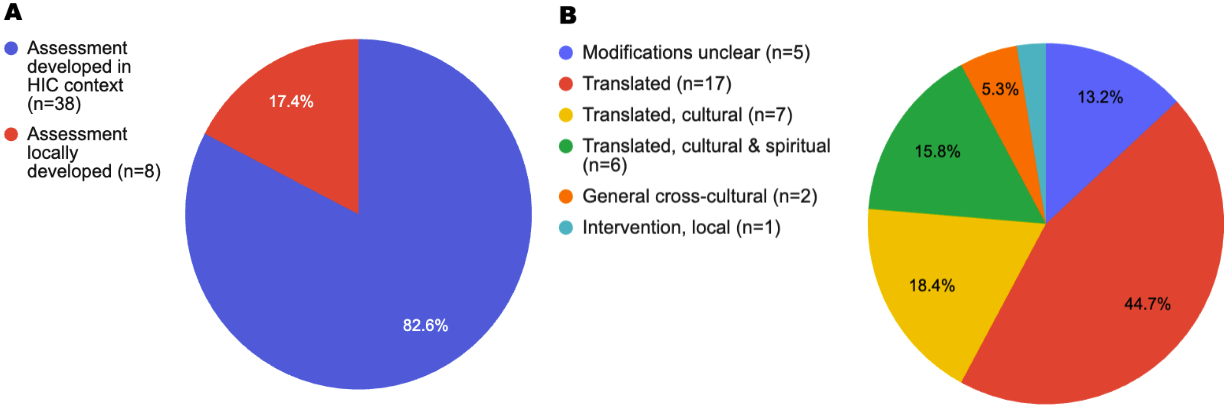
Figure 2
SC assessments.