
Table 1
Evolution of the Fellows & Scholars Program by cycle.
| ELLISON | FICRS | CONSORTIA I | CONSORTIA II | |
|---|---|---|---|---|
| Active Years | 2004–2007 | 2007–2012 | 2012–2017 | 2017–2022 |
| Administered Through | Fogarty | Vanderbilt University | Five consortia: GHES, GloCal, NPGH, UJMT, and VECD | Six consortia: GHES, GloCal, NPGH, UJMT, VECD, and HBNU |
| Total # of Awarded US Universities | 1 | 23 | 28 | |
| # of NIH Institute and Center Funding Partners | 9 | 10 | 11 | 19 |
| Yearly average # of Trainees (Total) | 46 (185) | 75 (376) | 85 (427) | 99 (493) |
| # of LMICs | 15 | 24 | 34 | 39 |
[i] An awarded consortium consisted of four partnering US institutions, with some including a US recruitment partner. The first five consortia listed below were awarded in Consortia 1. These awards continued in Consortia II with the addition of the sixth consortia:
Global Health Equity Scholars Program (GHES): University of California‑Berkeley, Yale University, Stanford University, and University of Arizona).
University of California Global Health Institute Program for Fellows and Scholars (GloCal): University of California‑San Francisco, University of California‑Los Angeles, University of California‑San Diego, and University of California‑Davis, with Charles Drew University.
Northern Pacific Global Health (NPGH): University of Washington, University of Michigan, University of Minnesota, and Indiana University, with University of Hawaii.
The UJMT Global Consortium: Building Research Capacity through Mentored Training (UJMT): University of North Carolina at Chapel Hill, Johns Hopkins University, Morehouse School of Medicine, and Tulane University.
Vanderbilt‑Emory‑Cornell‑Duke Consortium for Global Health Fellows (VECDor): Vanderbilt University, Emory University, Cornell University, and Duke University, with Meharry University.
Partnership for Global Health Research Training Program (HBNU): Harvard University, Boston University, Northwestern University, University of New Mexico, with University of Puerto Rico.
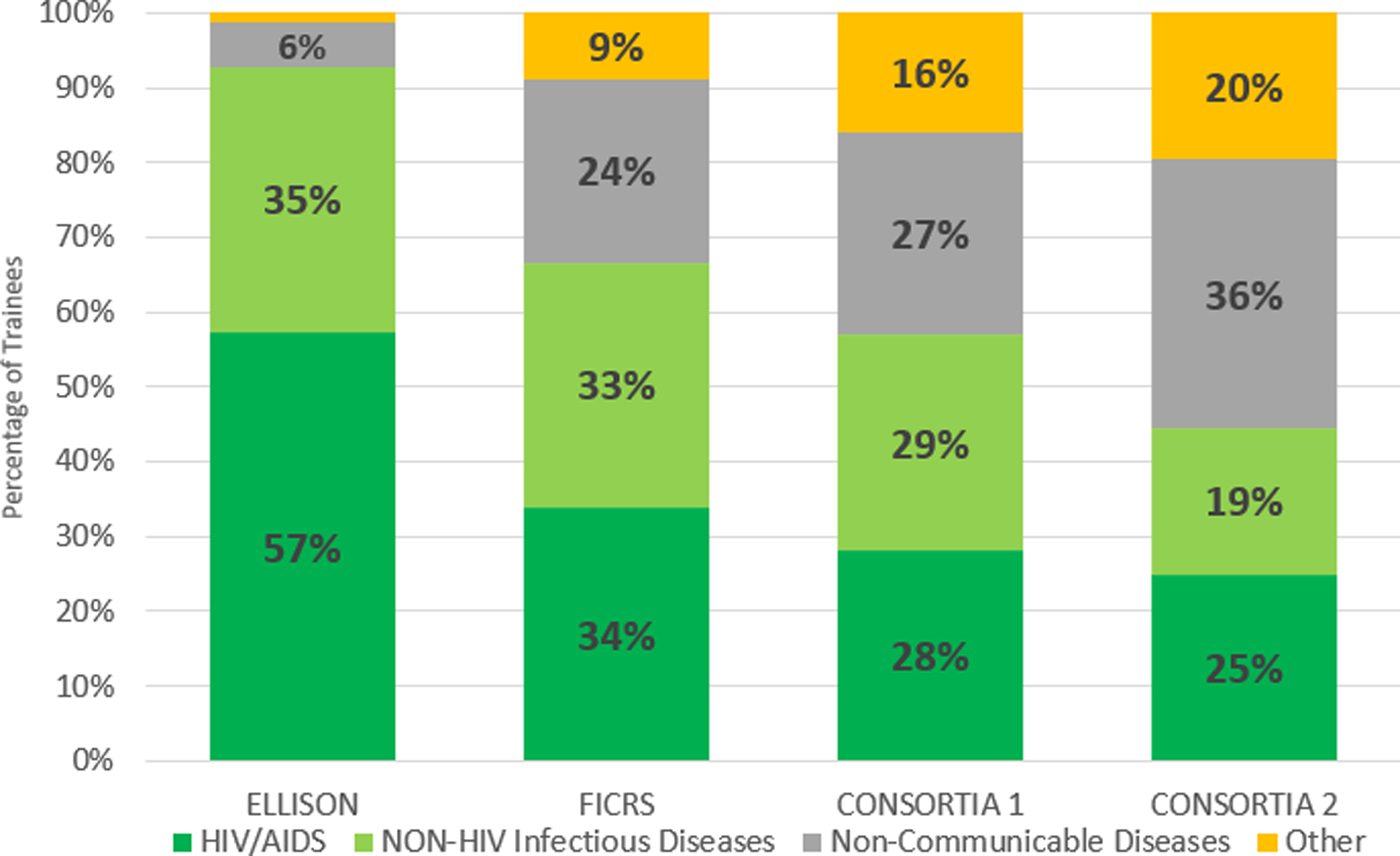
Figure 1
Topical areas of trainee research projects.
Notes: Others include cross‑cutting issues such as maternal or child health, trauma, nutrition, and environmental issues. Co‑morbidity research projects may be counted in more than one topical area.
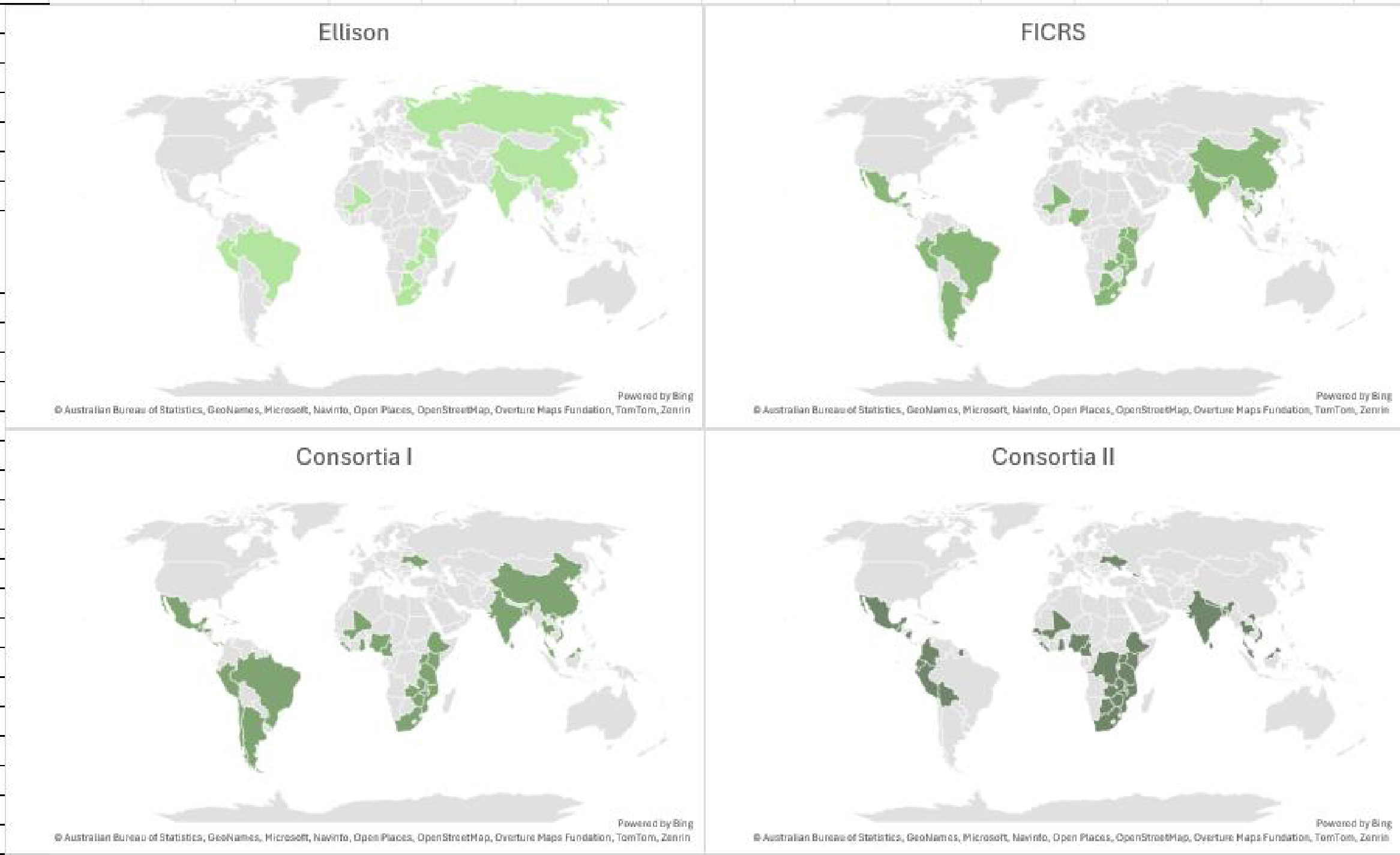
Figure 2
Geographic distribution of program country partnerships across cycles.
Table 2
LMICs participating by cycle.
| ELLISON | FICRS | CONSORTIA I | CONSORTIA II | |
|---|---|---|---|---|
| LATIN AMERICA & THE CARIBBEAN | ||||
| Argentina | X | X | ||
| Bolivia | X | |||
| Brazil | X | X | X | |
| Chile | X | |||
| Colombia | X | |||
| Costa Rica | X | |||
| Dominican Republic | X | |||
| Ecuador | X | |||
| Guatemala | X | X | ||
| Haiti | X | X | X | X |
| Honduras | X | X | ||
| Jamaica | X | X | ||
| Mexico | X | X | X | |
| Nicaragua | X | |||
| Panama | X | |||
| Peru | X | X | X | X |
| Suriname | X | |||
| AFRICA | ||||
| Botswana | X | X | X | |
| Cameroon | X | X | ||
| Democratic Republic of Congo | X | |||
| Ethiopia | X | X | ||
| Ghana | X | X | ||
| Kenya | X | X | X | X |
| Liberia | X | X | ||
| Malawi | X | X | X | |
| Mali | X | X | X | X |
| Mozambique | X | X | X | |
| Nigeria | X | X | X | |
| Rwanda | X | X | X | |
| Senegal | X | |||
| Sierra Leone | X | X | ||
| South Africa | X | X | X | X |
| Tanzania | X | X | X | X |
| Uganda | X | X | X | X |
| Zambia | X | X | X | X |
| Zimbabwe | X | X | ||
| ASIA & THE PACIFIC | ||||
| Bangladesh | X | X | X | X |
| China | X | X | X | |
| India | X | X | X | X |
| Malaysia | X | X | ||
| Nepal | X | |||
| Samoa | X | |||
| Sri Lanka | X | X | ||
| Thailand | X | X | X | X |
| Vietnam | X | X | X | |
| EUROPE | ||||
| Georgia | X | |||
| Russia | X | |||
| Ukraine | X | X | ||
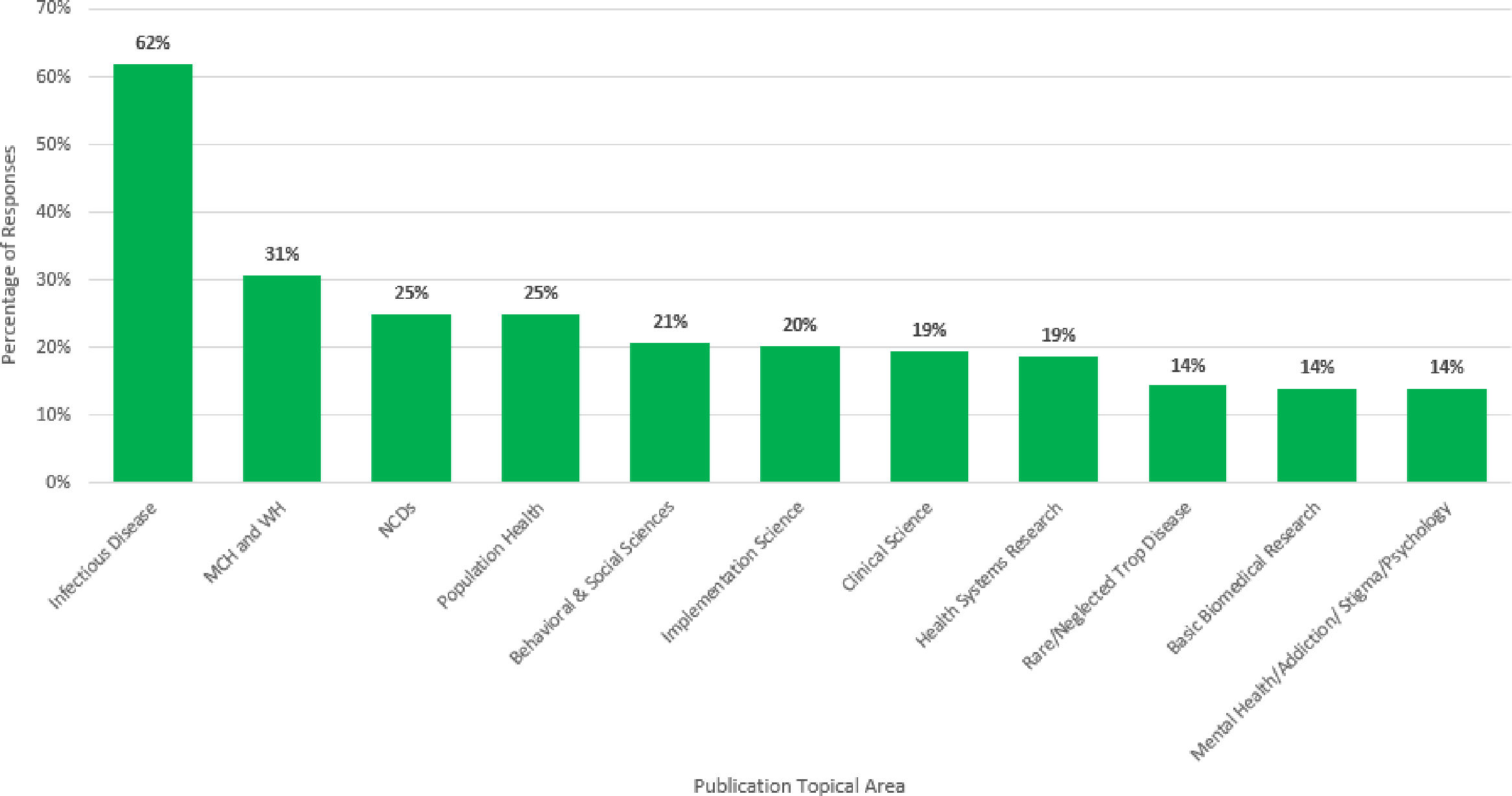
Figure 3
Topical area of alumni publications.
Note: Topics less than 10% are removed.
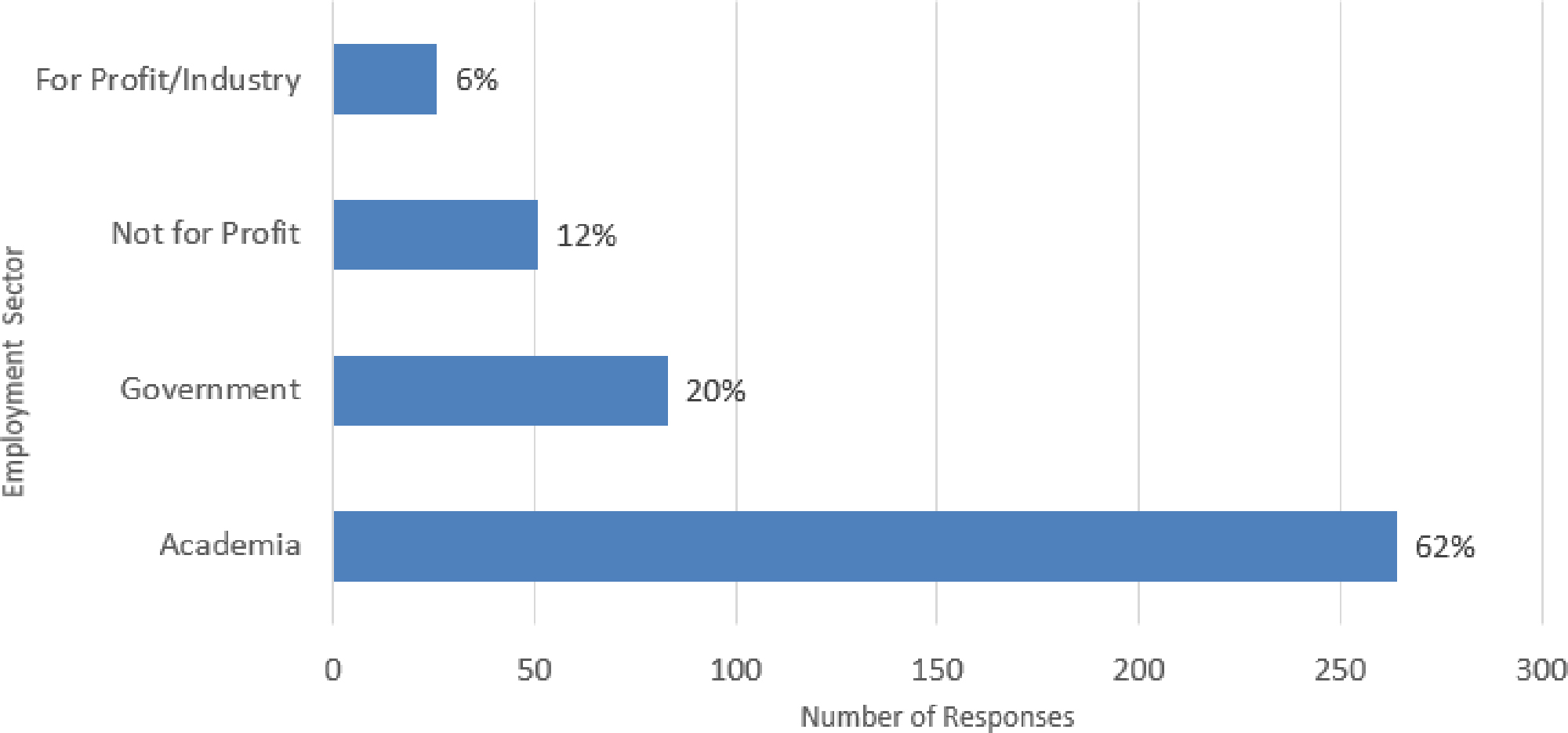
Figure 4a
Alumni employment by sector.
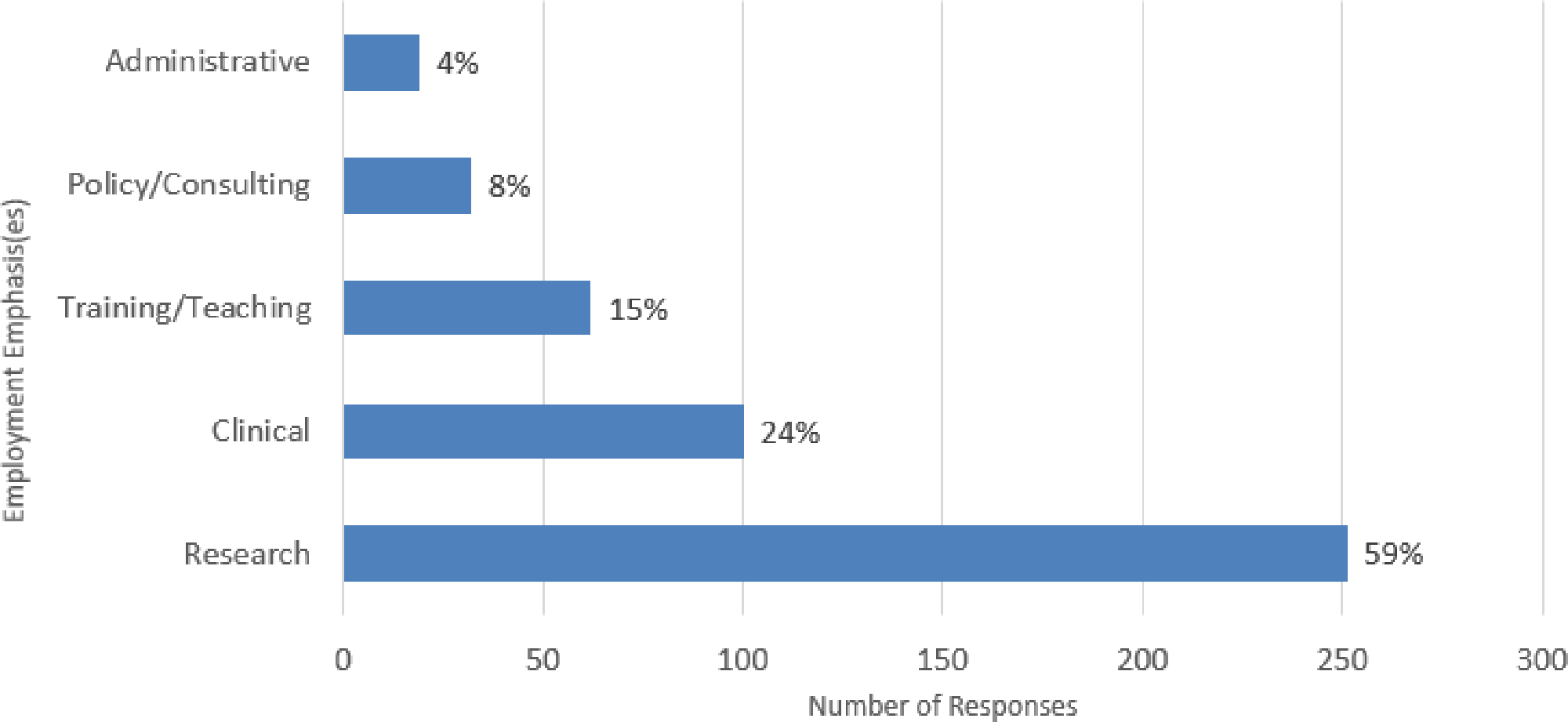
Figure 4b
Alumni employment by emphasis.