
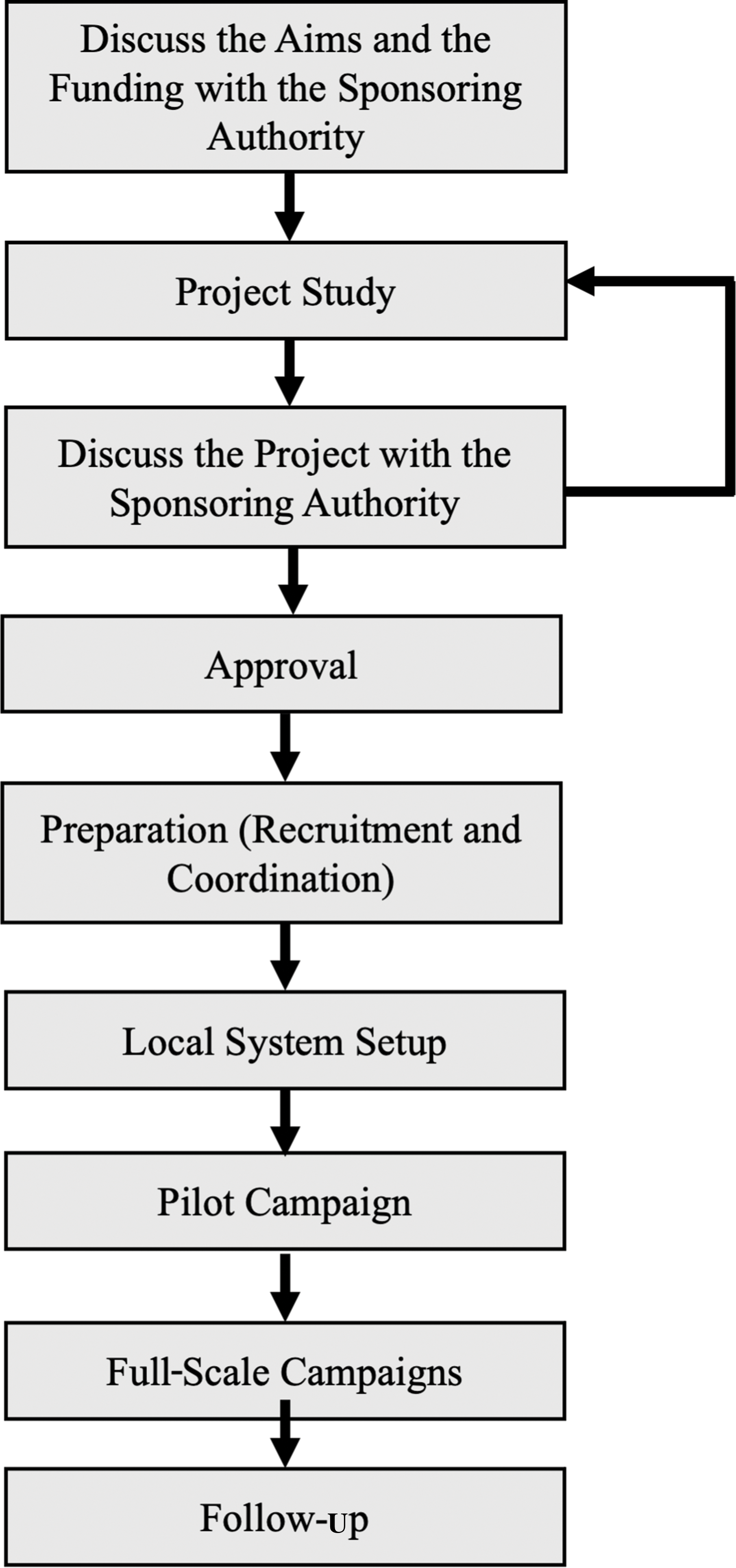
Figure 1
The flowchart for organizing Green Cochlea Good Practice Guide (GCGPG).
Table 1
The list of equipment needed, which can be modified according to the participating surgeons’ preferences.
| ITEM | SPECIFICATIONS |
|---|---|
| Anesthesia machine | Per each surgical room |
| Anesthesia equipment: airway (oral, nasal), endotracheal tube, stylet, face mask, pulse oximeter … | Per each patient |
| Surgical drapes, microscope drapes, surgical gowns, and gloves | Per each patient |
| Otological surgical microscope | Per each surgical room |
| Mastoidectomy surgical set (including surgical blade handle, toothed and non‑toothed forceps, two cat’s paw retractors, two self‑retaining retractors, periosteal elevator or freer elevator, macro‑ and micro‑suctions, suture holder) | Reusable with sterilization |
| Electrode insertion set (including insertion forceps and claw). | Reusable with sterilization |
| Surgical otologic drill and its burs (minimum: size 7 or 6 cutting, 4, 2, 1.5 diamond) | Per each surgical room. The drill itself is reusable with sterilization, while the burs can be either reusable or disposable according to the brand |
| Facial nerve monitor (including its probes and electrodes) | The machine per each surgical room; the probes and electrodes per each patient |
| Monopolar diathermy and/or blades | The diathermy machine per each surgical room; the diathermy blade per each patient |
| Sutures and absorbable sponge | Per each patient |
| Camera cover or a sterile glove to cover the sound processor used for intraoperative monitoring | Per each patient |
| Bone wax and hemostatic agents | Only when needed in rare cases with difficult hemostasis |
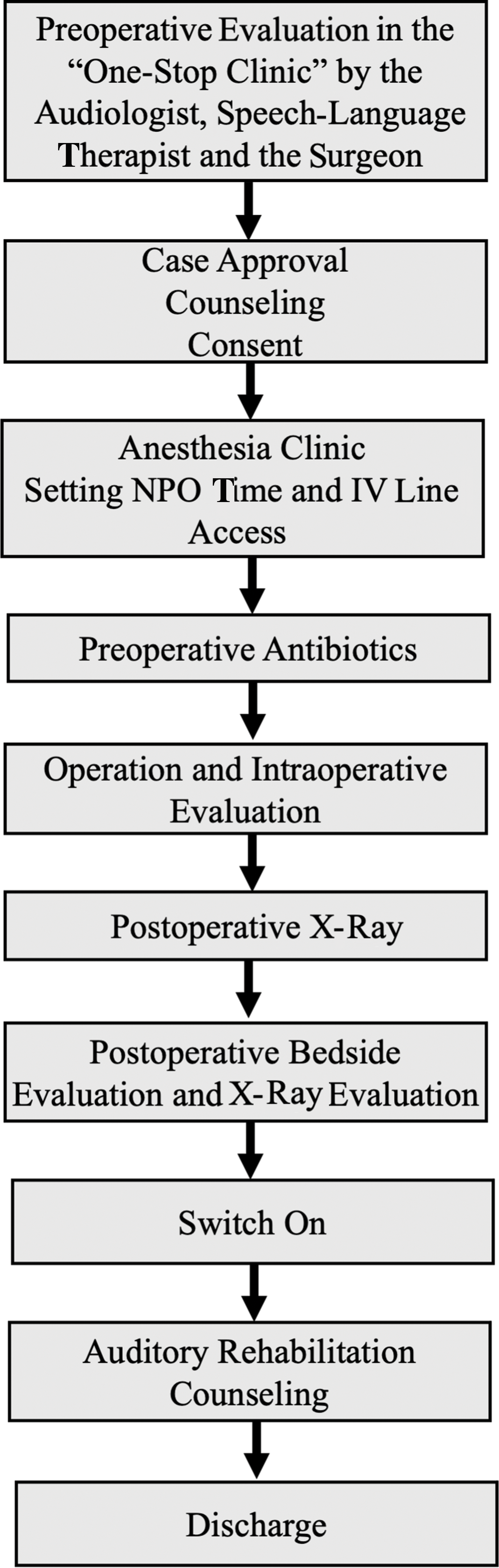
Figure 2
Summarizes the case journey from admission to the discharge.