
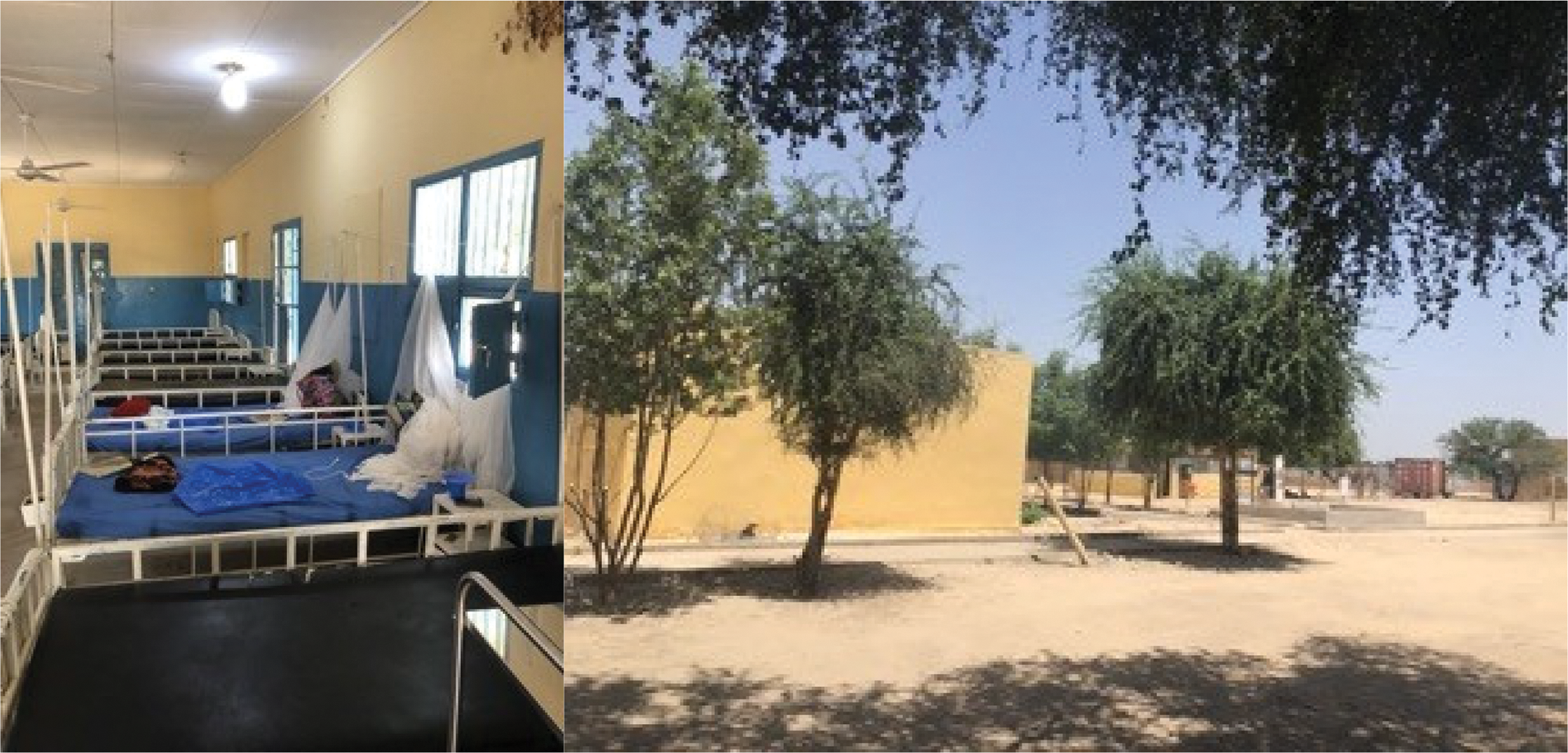
Figure 1
Photos from the hospital: IPD ward and outside the hospital with the Triage building behind the tree on the right.
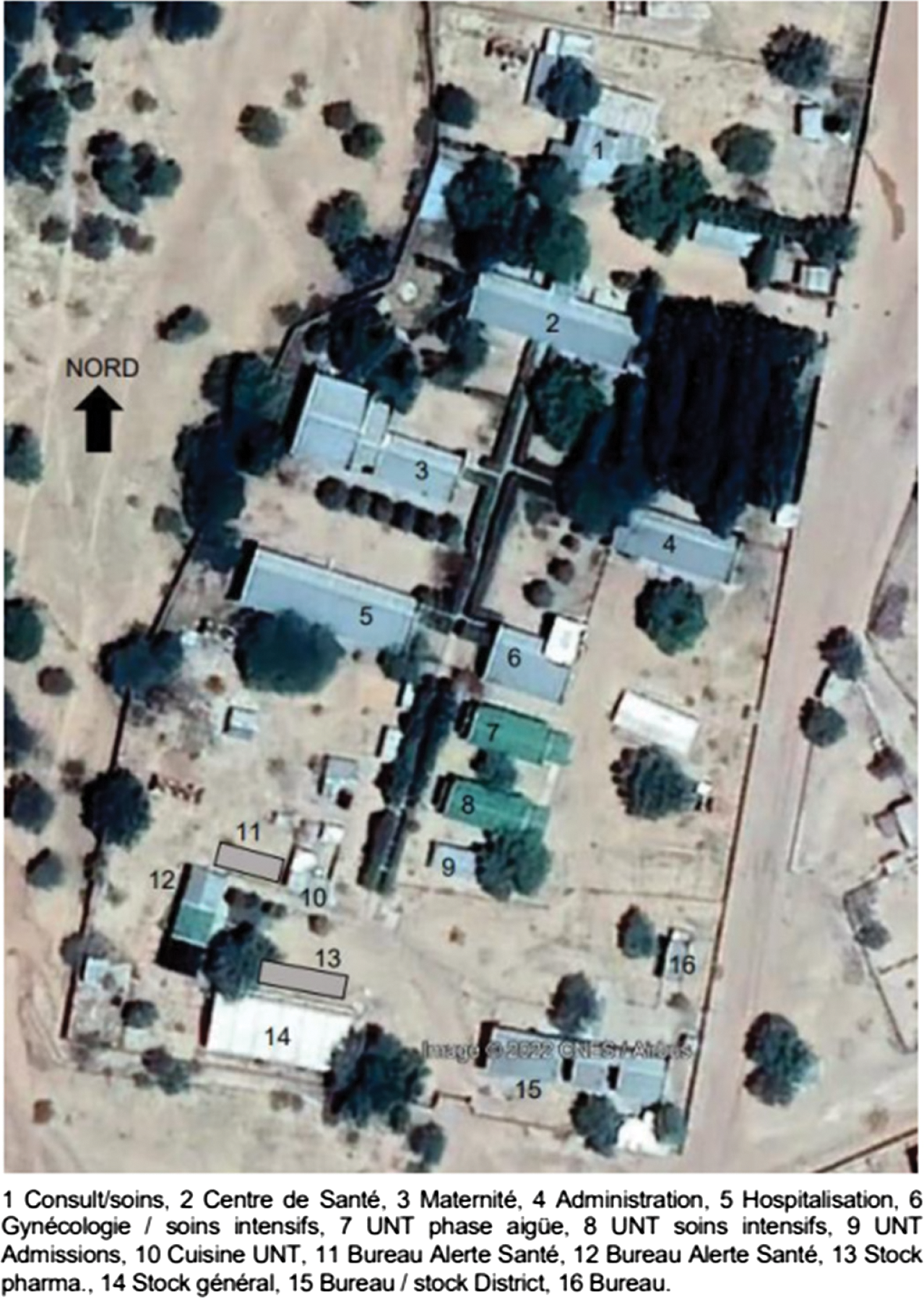
Figure 2
Satellite map of the hospital.
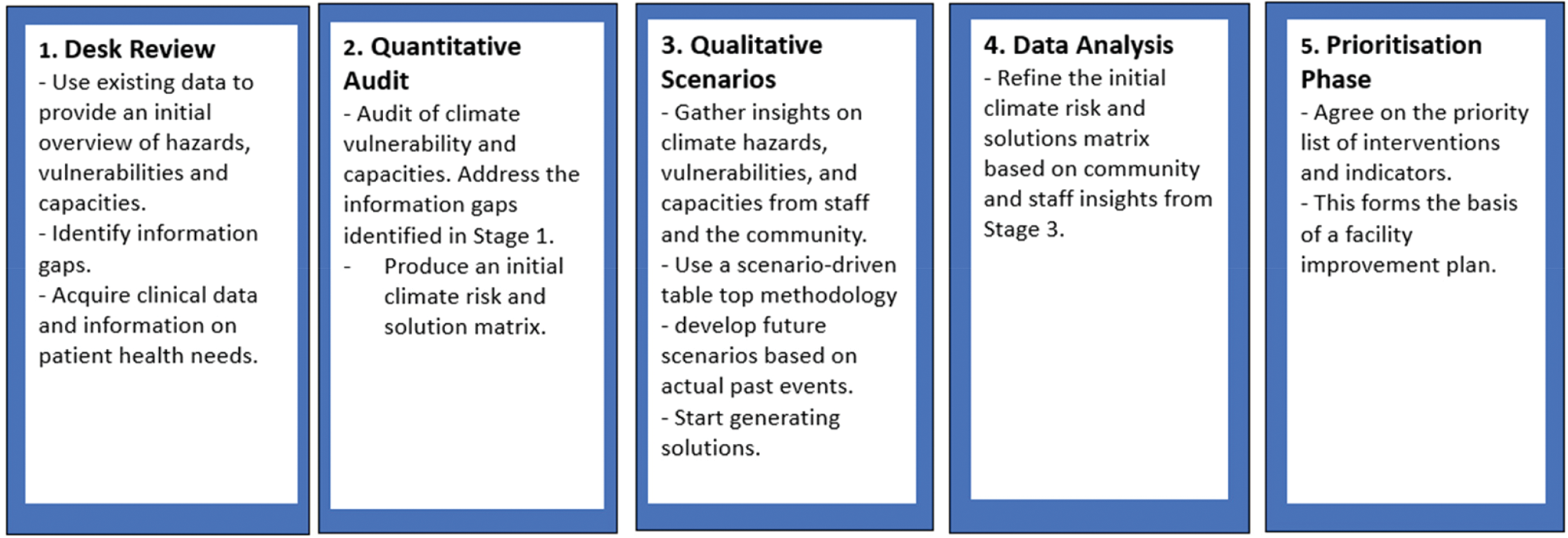
Figure 3
Health facility climate VCA process.
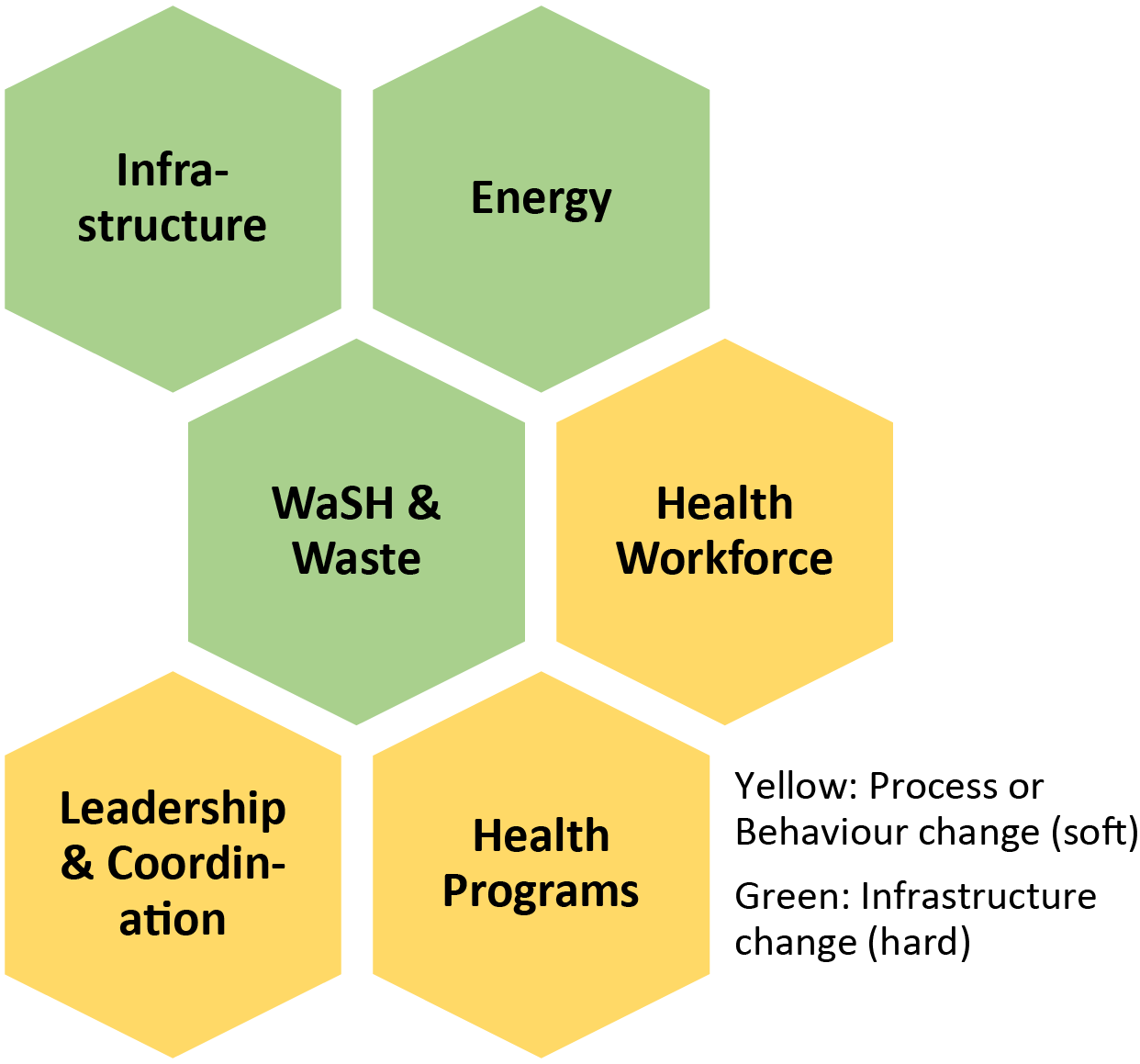
Figure 4
CRESH modular approach [46].
Module 1: Infrastructure, technologies and products. Module 2: Energy. Module 3: Water, sanitation, hygiene and healthcare waste. Module 4: Health workforce. Module 5: Health programming. Module 6: Leadership and coordination.
Table 1
Prioritized climate solutions.
| SOLUTION | CATEGORY | DESCRIPTION |
|---|---|---|
| 1 | Infrastructure, technology, and products | Additional multi‑functional structure to increase the reception capacity of peaks |
| 2 | Infrastructure, technology, and products | Renovate/repaint internal hospital surfaces to improve infection control |
| 3 | Infrastructure, technology, and products | Reduce overall indoor temperatures with reflective paint on roofs |
| 4 | Infrastructure, technology, and products | Improve ventilation through ventilation chimneys and slatted windows/shutters |
| 5 | Infrastructure, technology, and products | Improve O2 management to ensure resilience in the case of peaks (efficient concentrators/bridging system) |
| 6 | Energy | Improve energy infrastructure to ensure resilience and stabilize the ICU/ pharmacy temperature; solar system expansion; upgrade battery housing with suitable bridging system; motion sensors to reduce lighting usage |
| 7 | Energy | Develop and implement an energy management protocol to reduce consumption |
| 8 | Wash and waste | Strengthen medical waste infrastructure through a communal waste zone |
| 9 | Wash and waste | Assess the possibilities for recycling waste (e.g., plastics) in Ndjamena |
| 10 | Workforce | Implement a hospital Hygiene Committee (entire hospital) |
| 11 | Workforce | Staff training in self‑care and sustainable healthcare, energy management, waste management, effects of heat on patients, modification of ID distribution, etc. |
| 12 | Workforce | Promote or develop a disaster management committee at the local/hospital level |
| 13 | Health services | Reinforce community sensitization activities around malaria, heat, non‑communicable diseases, diarrhea, etc. |
| 14 | Health services | Strengthen the blood bank, including raising awareness for donor recruitment and providing testing reagents |
| 15 | Health services | Extend the current (free) ambulance service (including boat transfer) for children under 5, to include older children and pregnant women |
| 16 | Health services | A package of preventative nutritional interventions (including nutri‑vacc) 3 m before the peak of malaria |
| 17 | Health services | Review and realign vaccination, malaria, and malnutrition prevention activities to reduce missed opportunities |
| 18 | Health services | Distribution of mosquito nets and indoor residual insecticide spraying. |
| 19 | Governance and financing | Implement a seasonal risk calendar to help hospital leadership anticipate needs and plan buffer stocks accordingly. |
| 20 | Governance and financing | Review and strengthen facility emergency plans (EPREP) to cover all risks, including climate and pandemic risks. |
| 21 | Governance and financing | Rigorously monitor and evaluate implementation to adjust activities and demonstrate “best buys” |
| 22 | Governance and financing | Integrate this project into national (or organizational) action plans and roadmaps to ensure sustainable funding and increase scalability. |