
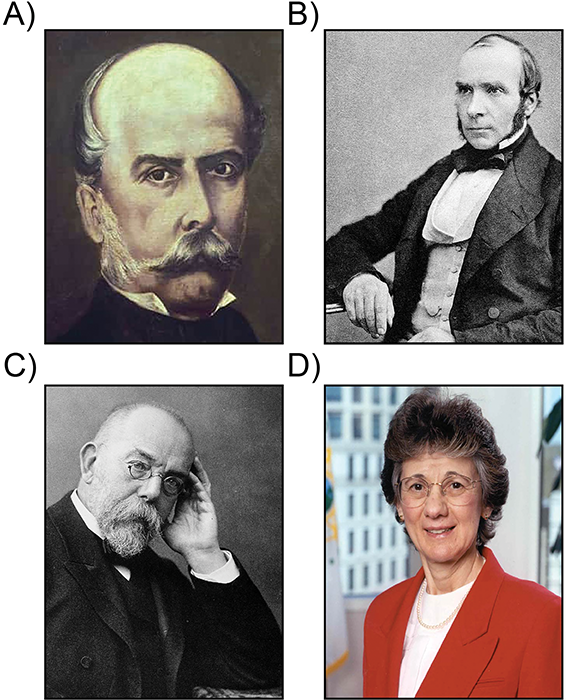
Figure 1
In the nineteenth century, Filippo Pacini (a), John Snow (b), and Robert Koch (c) left an indelible mark on the history of cholera and are rightly considered the “fathers” of studies on the disease and its causative microorganism (see text for details). In modern times, Rita R. Colwell (d) stands out as one of the most influential microbiologists in cutting‑edge research on Vibrio. In particular, she is promoting understanding of the biology, ecology, and impact of these bacteria on global public health.
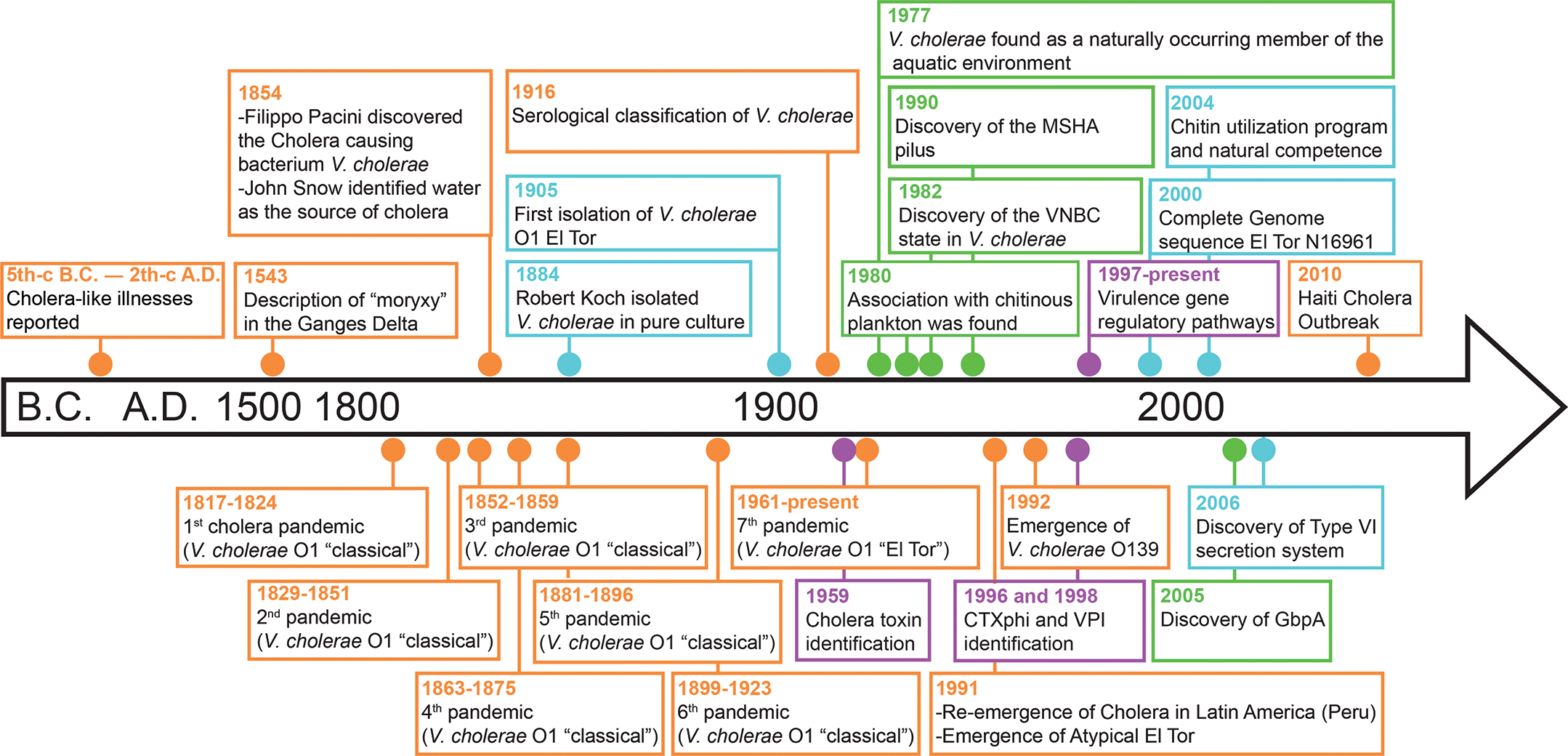
Figure 2
Overview and timeline of historically notable discoveries regarding cholera and Vibrio cholerae. Key moments are indicated by dots color‑coded on the basis of their focus: epidemiology (orange), biology and evolution (blue), virulence (purple), and ecology (green).
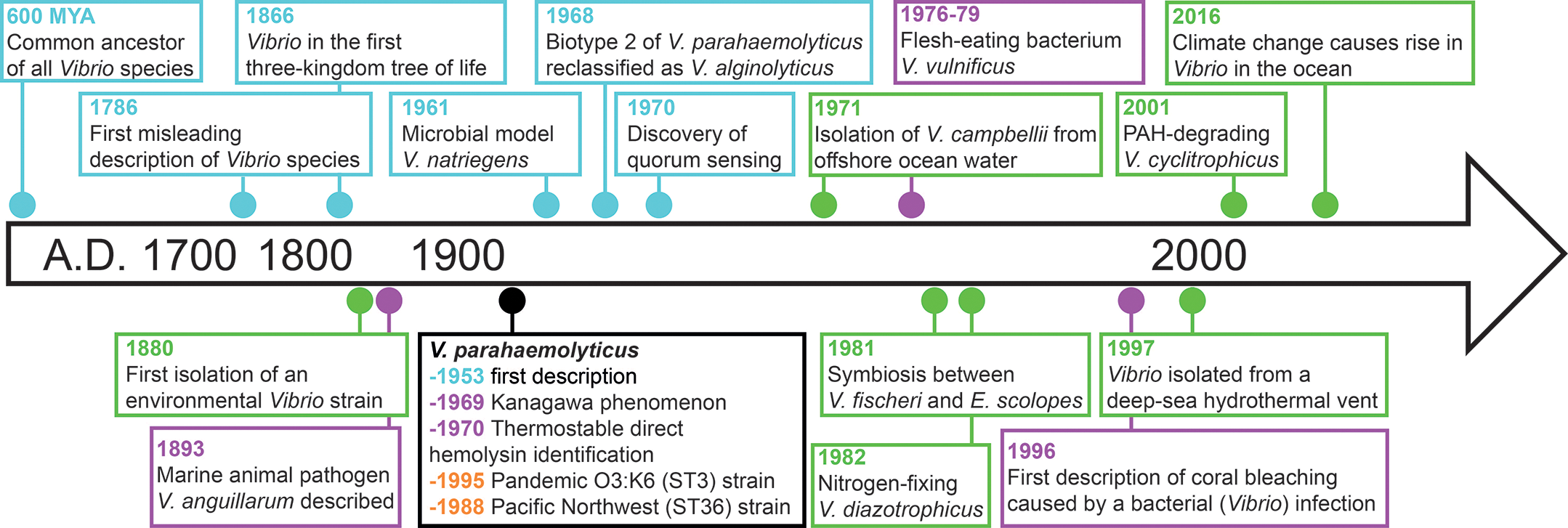
Figure 3
Overview and timeline of historically notable discoveries in non‑cholera Vibrio species. Key moments are color‑coded dots on the basis of their focus: epidemiology (orange), biology and evolution (blue), virulence (purple), and ecology (green).