
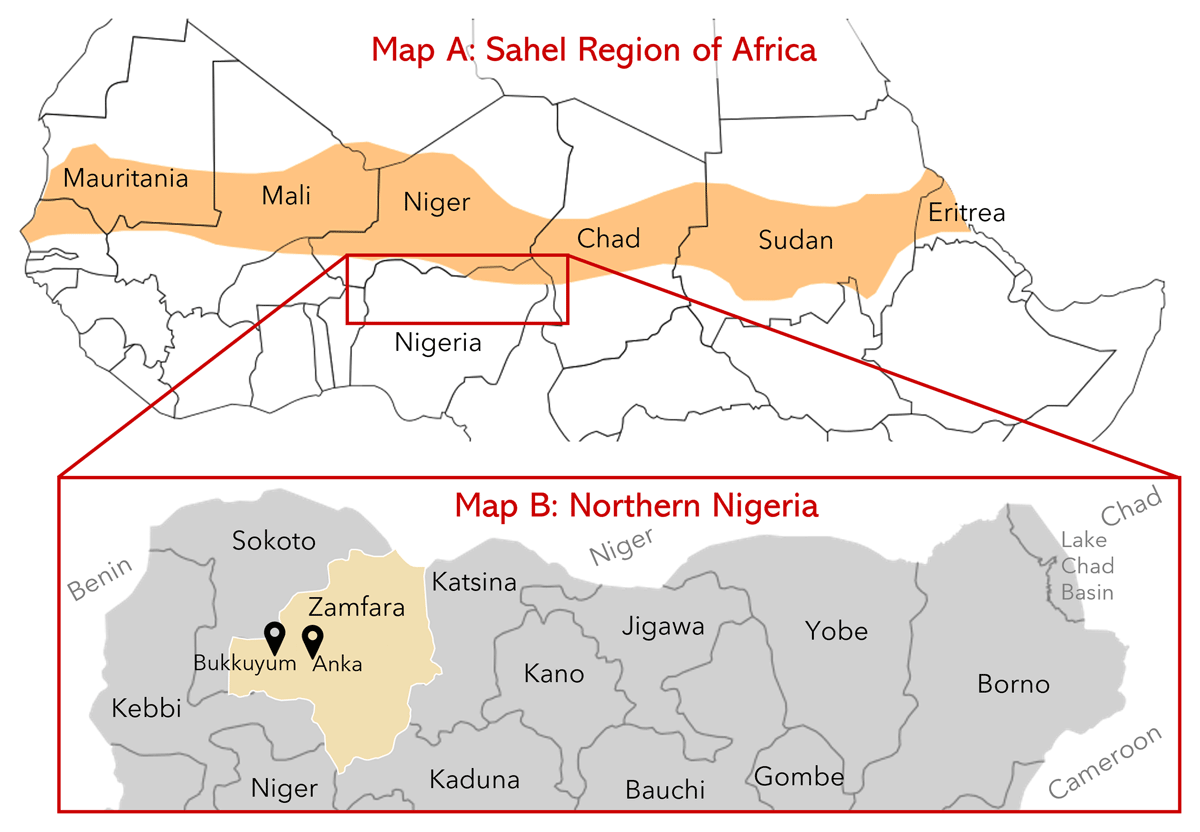
Figure 1
Map A shows the northern Africa region, with the Sahel in orange. Map B highlights Zamfara State and the two Local Government Areas (Anka and Bukkuyum) where artisanal mining communities have been impacted by lead poisoning.
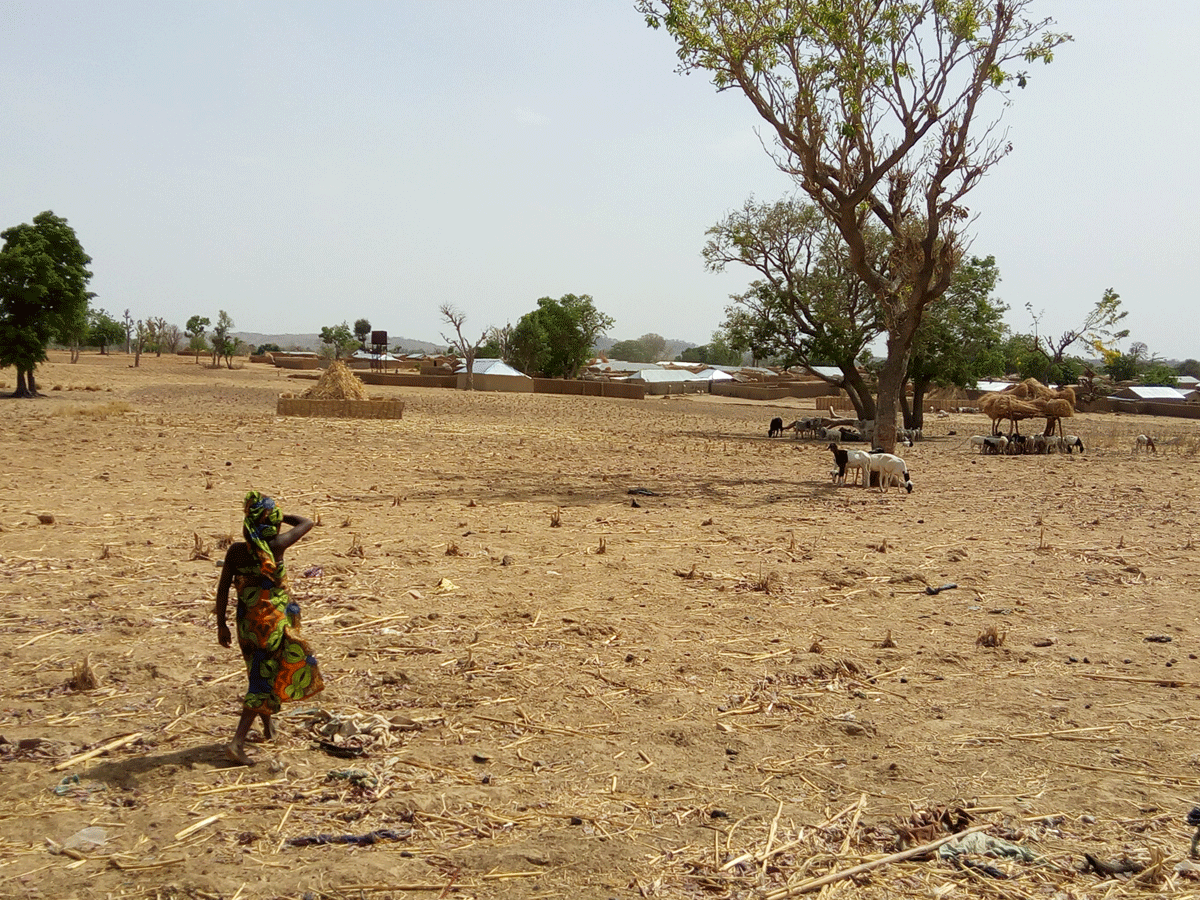
Figure 2
A child walks home on the outskirts of Abare Village, Zamfara State in 2011 (photo credit: Casey Bartrem Casey Bartrem/TIFO).
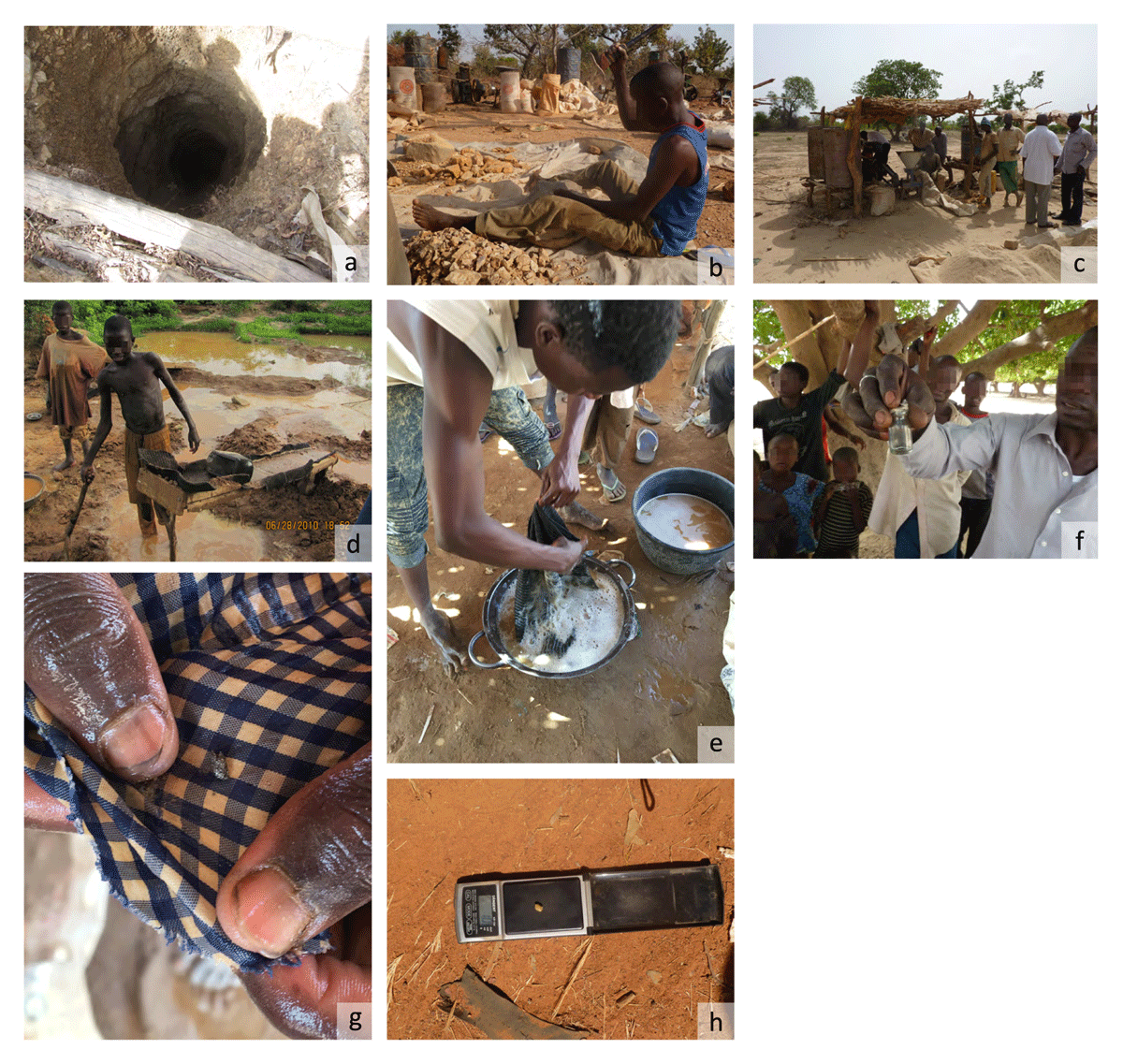
Figure 3
Photo series of gold ore processing in Zamfara State, Nigeria: a, ore is sourced from mines across the region and transported to processing areas; b, ore rock is broken by hand into gravel-size pieces. c, modified grain mills are used to grind ore into a flour-like consistency; d, sluice boards are often used to gravitationally separate gold particles from silica and other contents; e, contents of the sluice carpets are washed into a container; f, mercury is added to the sluiced concentrate; g, a mercury-gold amalgam is obtained, which will then be heated, vaporizing the mercury; h, the final product is ready to be sold to dealers who visit the mine sites regularly. Photo credits: TIFO, Casey Bartrem, Simba Tirima, and Ian von Lindern.
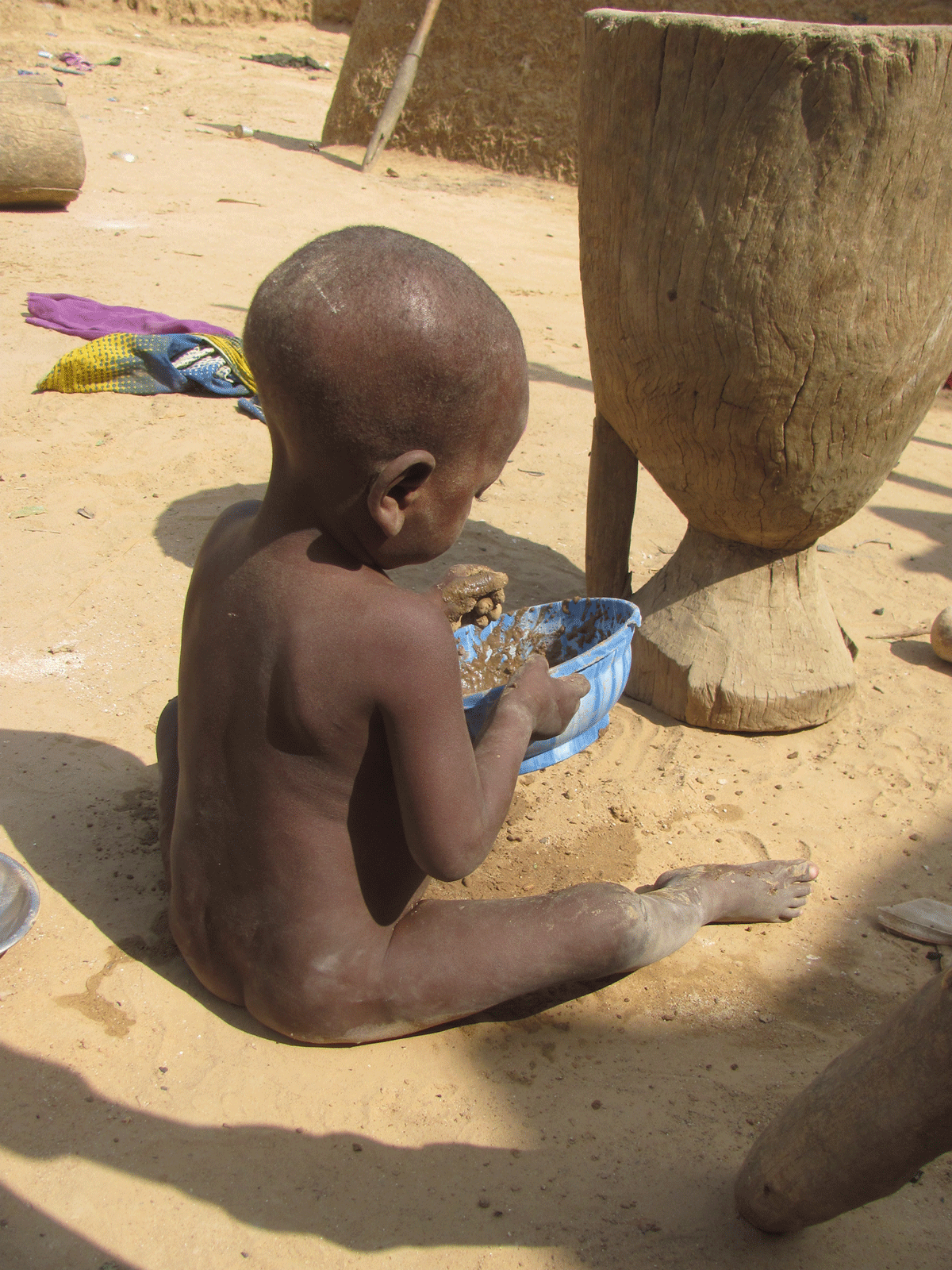
Figure 4
A boy plays with soil on the floor of his home (photo credit: Casey Bartrem Casey Bartrem/TIFO).
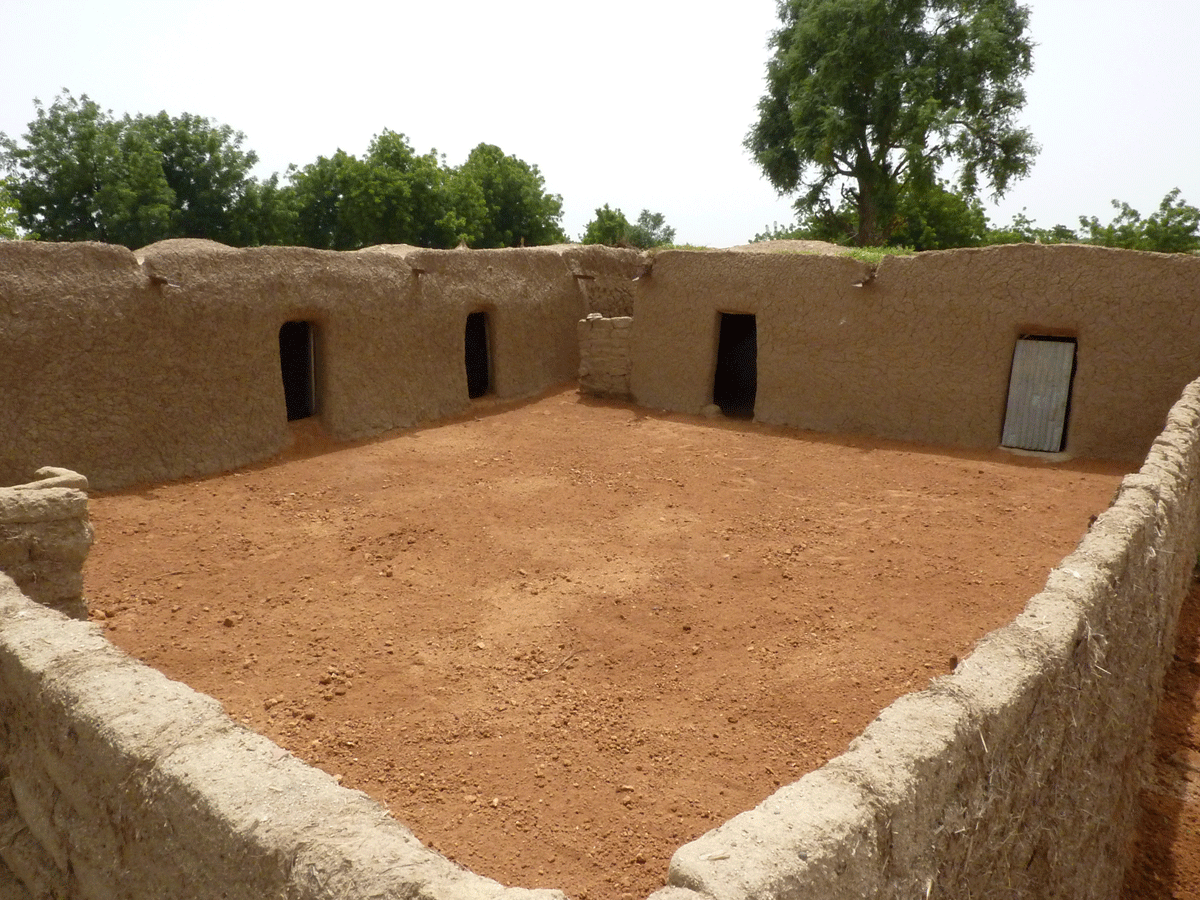
Figure 5
A recently remediated home in Zamfara State. Contaminated surface soils have been excavated and replaced with soils certified to be <20 mg/kg Pb (photo credit: Casey Bartrem Casey Bartrem/TIFO).
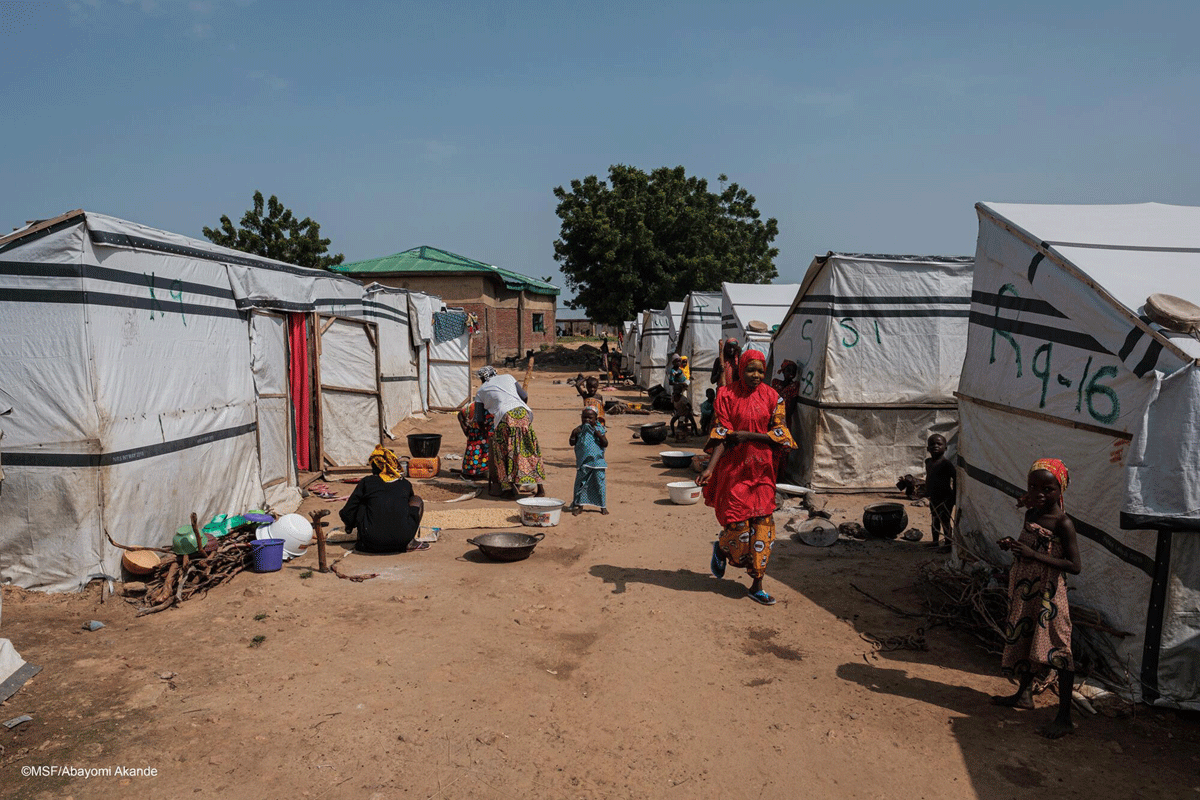
Figure 6
A camp for people displaced by regional violence in Anka, Zamfara State, Nigeria in October 2020. Many people living in the camp were once residents of the villages impacted by lead poisoning in the previous decade (photo credit: MSF/Abayomi Akande [45]).
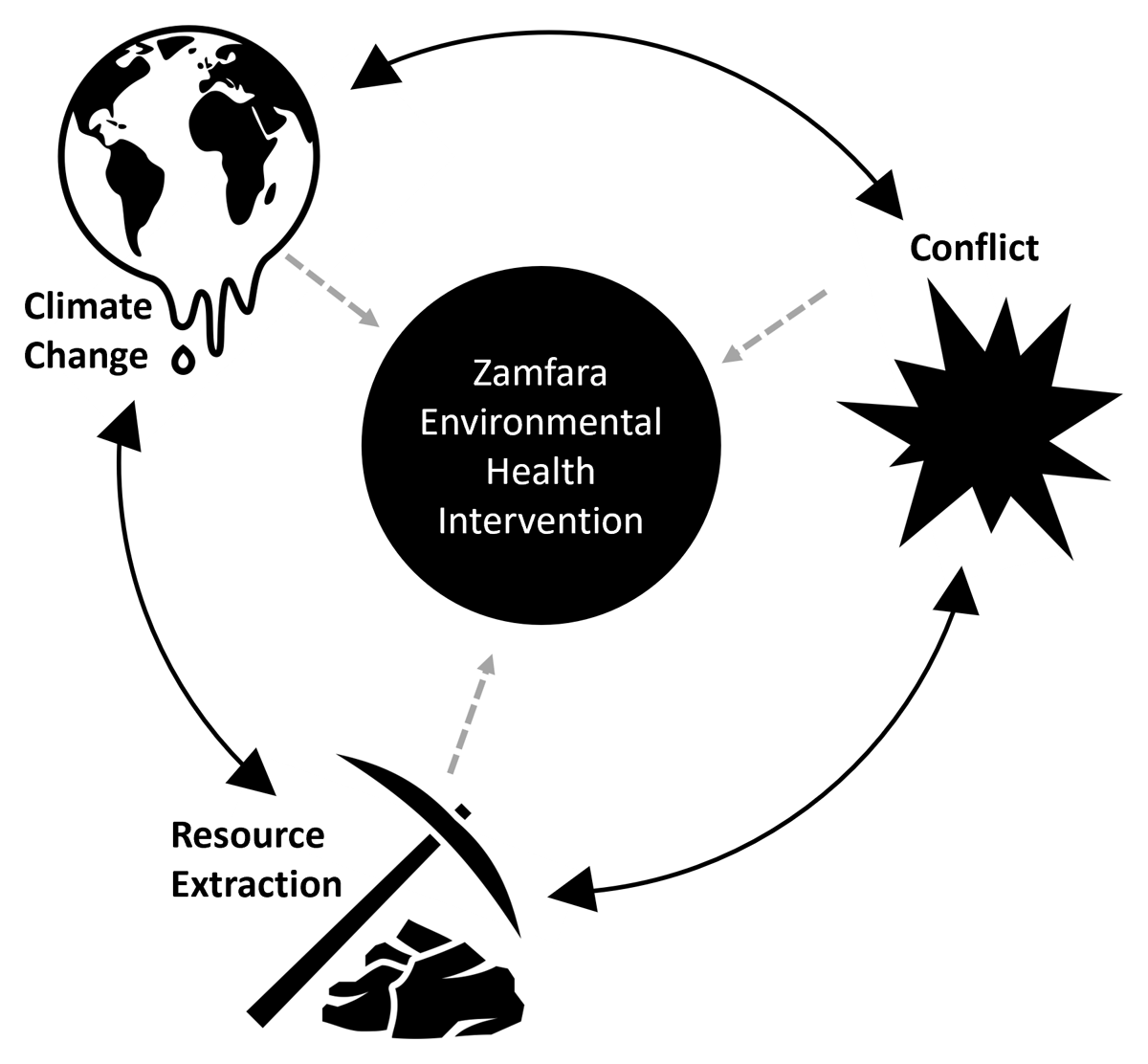
Figure 7
Climate change, conflict, and resource extraction, as well as the interactions between these issues, are resulting in significant impacts on the environmental health project in Zamfara State, Nigeria.
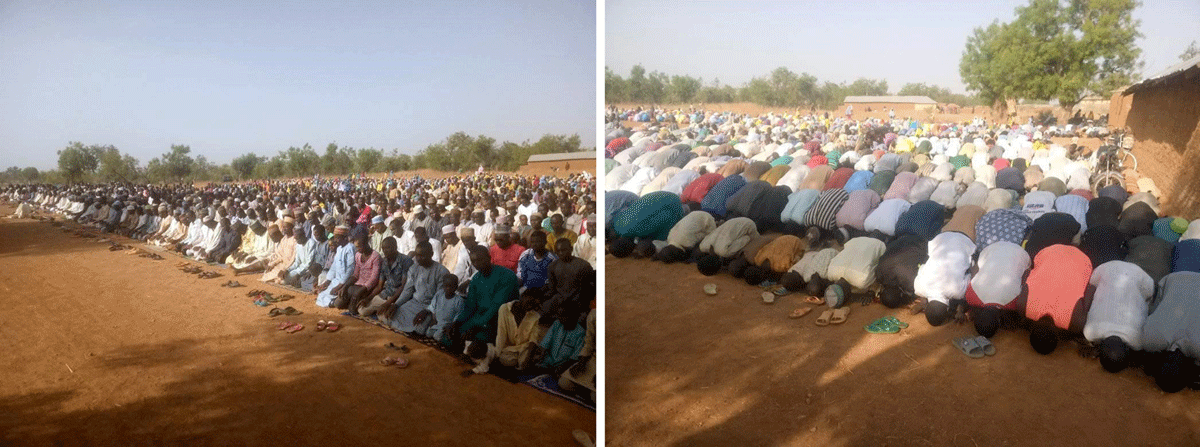
Figure 8
Residents of Bagega Village in Zamfara State, Nigeria at a mass prayer for peace (2020, photo credit: Simba Tirima).