
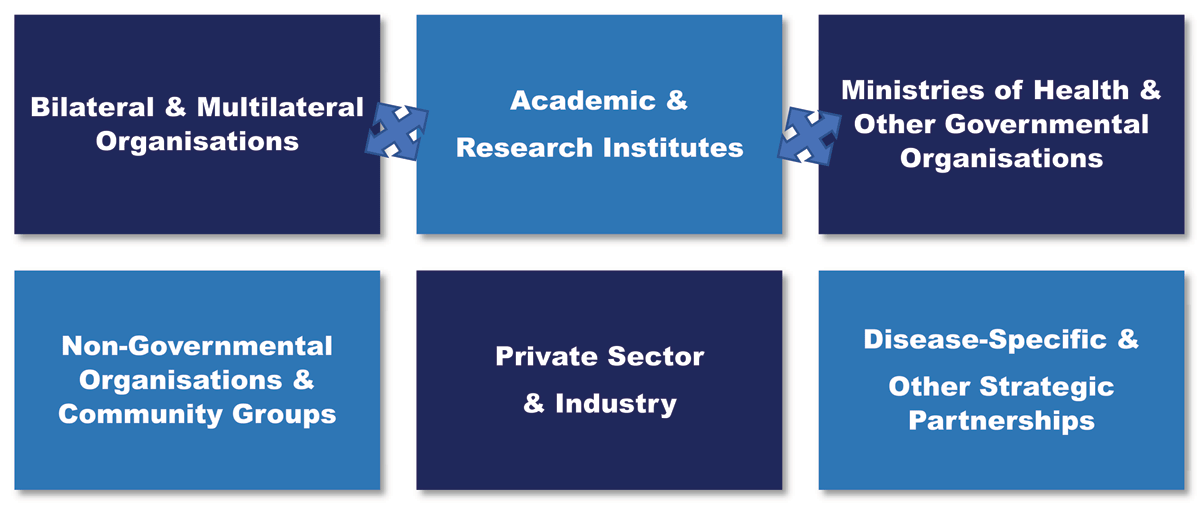
Figure 1
Types of partners that provide opportunities for partnerships.
Table 1
Measures of success of partnerships for global health leadership training*.
| KEY ELEMENTS | INDICATORS |
|---|---|
| STRATEGIC | • Shared vision, long-term aims, and clear plans for achieving them • Jointly agreed upon framework of priorities |
| HARMONIZED and ALIGNED | • Consistency of partnership work with local and national plans • Complementary to activities by other development partners |
| EFFECTIVE and SUSTAINABLE | • Delivery of high-quality projects • Achievement of short and long-term milestones |
| RESPECTFUL and RECIPROCAL | • Mutual listening among partners • Cooperative planning, implementation, and learning |
| ORGANIZED and ACCOUNTABLE | • Well-structured management • Transparent decision-making processes |
| RESPONSIBLE | • Activities conducted with integrity and trust |
| FLEXIBLE, RESOURCEFUL, and INNOVATIVE | • Adaptive and responsive to changing circumstances |
| COMMITTED to JOINT LEARNING | • Regular monitoring and evaluation of activities • Reflection on lessons learned • Dissemination of results and knowledge |
[i] * Adapted from the THET partnerships for global health.