Have a personal or library account? Click to login
Employment Opportunities and Experiences among Recent Master’s-Level Global Health Graduates Cover

Employment Opportunities and Experiences among Recent Master’s-Level Global Health Graduates

Open Access
|Mar 2019

Figures & Tables

Table 1

Demographics Information.

QuestionNumber (n = 152)Percent
Degree Obtained in 2016Master of Global Health, Global Science or Global Medicine5737.5%
Master of Public Health, with a concentration in Global Health or Master of Science in Public Health9562.5%
GenderMale3623.7%
Female11575.7%
Other/Prefer Not to Answer10.6%
Race/Ethnic BackgroundAmerican Indian/Alaskan Native10.7%
Hawaiian10.7%
Asian or Pacific Islander, including Indian Subcontinent3826.6%
Black, not of Hispanic Origin96.3%
Hispanic Origin149.8%
White6948.3%
Prefer not to disclose117.7%
Currently a citizen of U.S. or a holder of a U.S. permanent resident visaYes12583.7%
No2616.3%
What degrees do you hold, excluding your recent Master’s level degree?Bachelor’s degree11277.8%
Degree in Nursing2114.6%
Master’s from a school of Public Health117.6%
Employed and Not EmployedEmployed10267.1%
Not Employed4730.9%
Volunteering32.0%
agh-85-1-305-g1.png
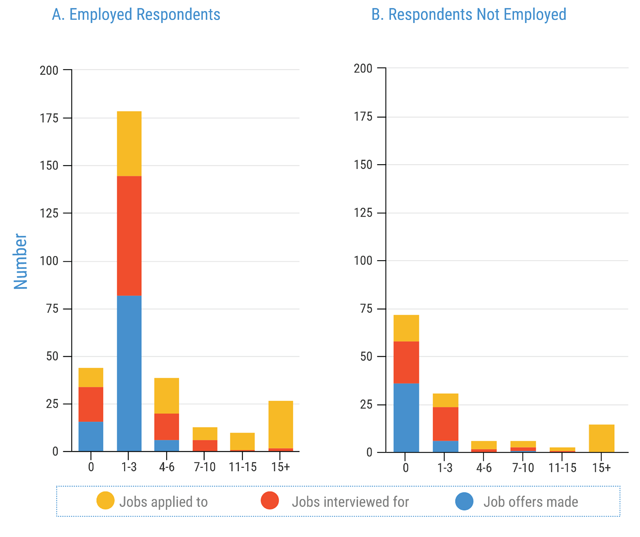
Figure 1

Job Applications, Interviews and Offers.
agh-85-1-305-g2.png
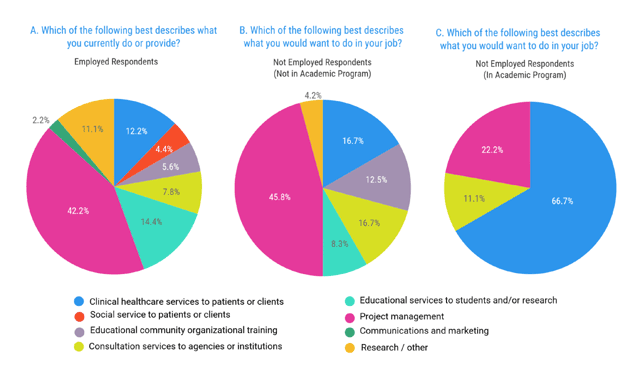
Figure 2

Employment Services Type.

agh-85-1-305-g3.png
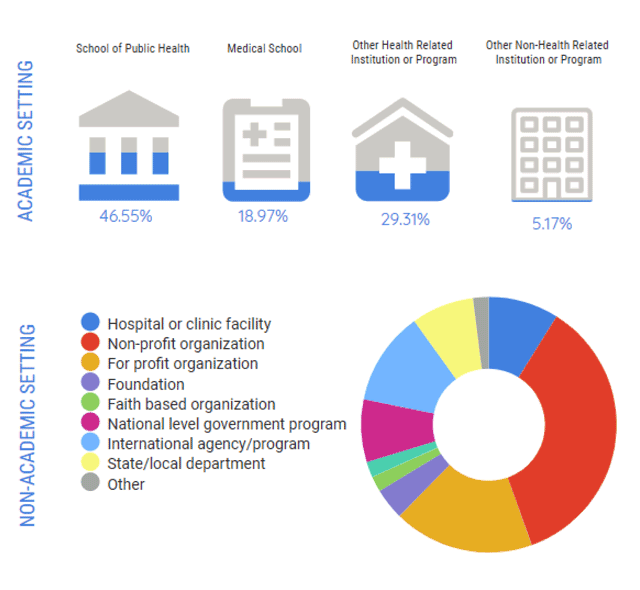
Figure 3

Current Academic or Non-Academic Employment Setting.
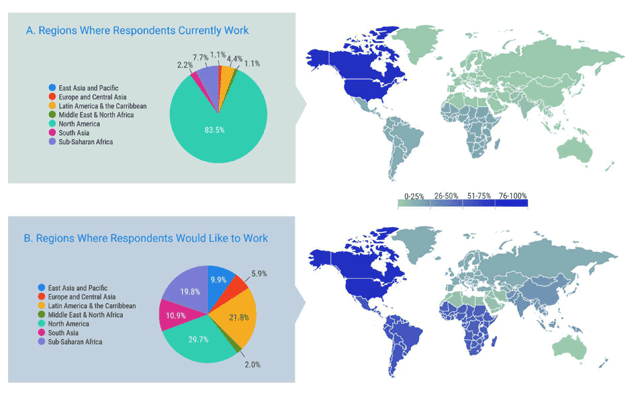
agh-85-1-305-g4.png
Figure 4

Employment Location.

agh-85-1-305-g5.png
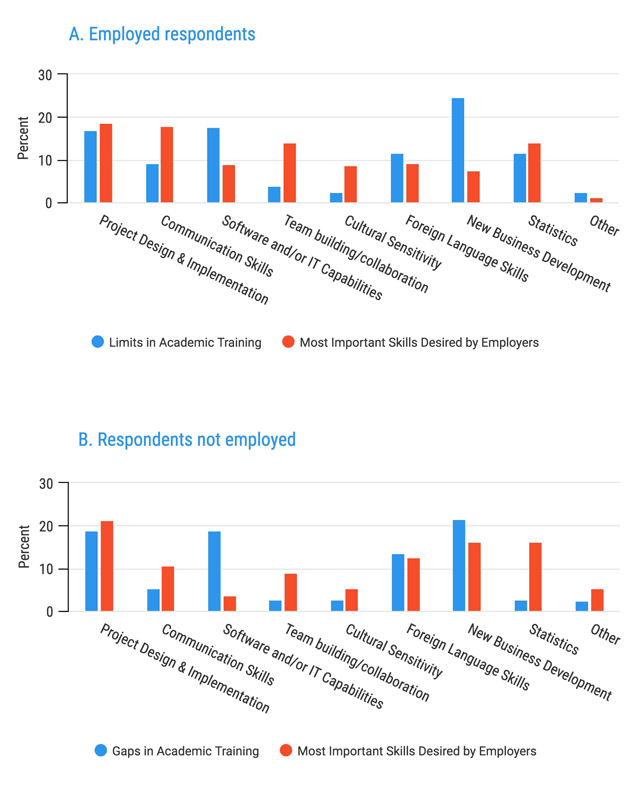
Figure 5

Gaps in Academic Training and Most Important Skills Desired by Employers.
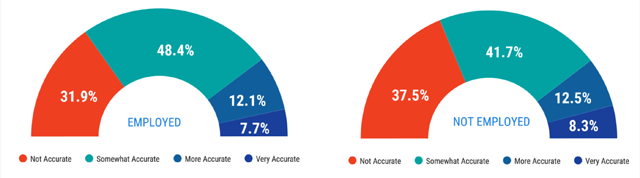
agh-85-1-305-g6.png
Figure 6

Limitations in Academic Training.
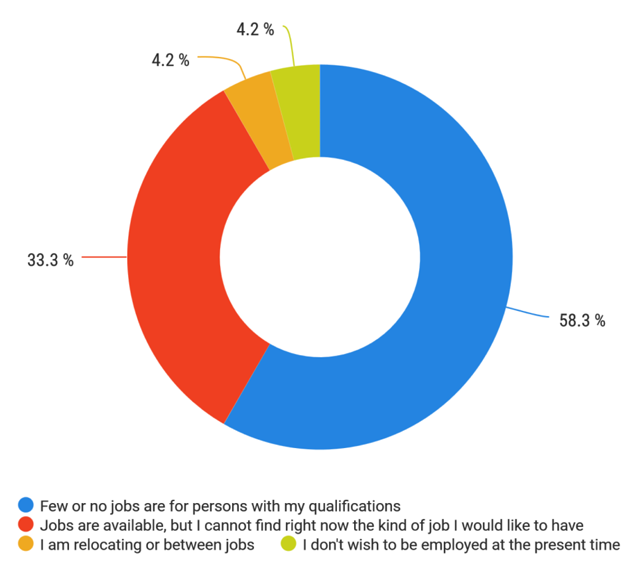
agh-85-1-305-g7.png
Figure 7

What is the Primary Reason That You Are Now Unemployed?

Table 2

Recommendations for Students, Universities and Employers.

Major AudienceRecommendations
Students
  1. When searching for graduate programs, review the core curricula, consider key competencies and potential gaps in training.

  2. Connect early with faculty, colleagues, mentors and alumni throughout the course of study to increase personal networks.

  3. Engage early in applicable work and research, paid or otherwise, to strengthen qualifications.

  4. Courses in data analysis, statistics and IT management may be useful.

  5. Consider other venues for curriculum, such as business school course in program design and implementation or an adult education course in collaboration and managing teams to enhance your skills in these key areas.

  6. Subscription to online job posting sites is recommended for improved awareness of job availability and prospective employers.

  7. Once students become active job seekers, apply to as many positions as possible that fit interests and skills.

  8. Prepare for the possibility of working in North America and earning a lower starting salary than peers with masters-level training in other disciplines (engineering, business administration, etc.).

Universities
  1. Develop and maintain strong pipelines with global health employers.

  2. Seek employers’ input regarding curricular content to help match program learning outcomes with employers’ needs.

  3. Integrate training in project design and implementation, new business development, IT training, communications, team building and other skills identified by both graduates and employers in this study.

  4. Provide opportunities for internship and volunteer positions that demand project implementation.

  5. Maintain robust correspondence with program alumni to provide feedback and identify gaps in education and training.

  6. Engage students with program alumni, which will both build students’ professional networks and grant them insight into alumni experiences.

  7. Share available job postings on university web sites or through student listservs.

Employers
  1. Support network building among universities, students, alumni and your own organizations.

  2. Provide recommendations for curricula, internship and volunteer opportunities in order to furnish students with non-clinical skills needed for employment.

  3. Be cognizant that job seekers are simultaneously applying to many jobs.

  4. Provide opportunities for continuing education and skill development to allow those who do obtain entry-level jobs to refine pertinent and necessary skills that may not have been acquired in education alone.

DOI: https://doi.org/10.5334/aogh.305 | Journal eISSN: 2214-9996
Language: English
Published on: Mar 13, 2019
Published by: Ubiquity Press
In partnership with: Paradigm Publishing Services
Publication frequency: 1 issue per year

© 2019 William Cherniak, Elahe Nezami, Quentin Eichbaum, Jessica Evert, Ashti Doobay-Persaud, Sharon Rudy, Ginny DeFrank, Tom Hall, Adam Hoverman, published by Ubiquity Press
This work is licensed under the Creative Commons Attribution 4.0 License.