
Table 1
List of partner schools and corresponding student numbers, including inbound and outbound student travels.
| Partner Universities | Student numbers for small group collaboration | Outbound Student numbers | Inbound student numbers |
|---|---|---|---|
| Medical University of Vienna, Vienna, Austria | 12 | 6 | 5 |
| The University of Sydney, Sydney, Australia | 35 | 9 | 2 |
| McGill University, Montreal, Canada | 23 | 0 | 5 |
| University of Copenhagen, Copenhagen, Denmark | 3 | 1 | 1 |
| University of Helsinki, Helsinki, Finland | 10 | 9 | 1 |
| Ludwig Maximilians University, Munich, Germany | 8 | 5 | 3 |
| Martin Luther University, Halle, Germany | 15 | 3 | 4 |
| Kyoto University, Kyoto, Japan | 11 | 1 | 4 |
| Tokyo Women’s Medical University, Tokyo, Japan | 9 | 4 | 1 |
| National Taiwan University, Taipei, Taiwan | 8 | 6 | 3 |
| King’s College, London, United Kingdom | 24 | 2 | 4 |
| Columbia University, New York, United States of America | 36 | 18 | 34 |
| Total | 194 |
Table 2
Selection of discussion topics beyond anatomy. Topics were expanded every year.
| Discussion Topics | Selection of Topic |
|---|---|
| Healthcare Education | Differences in medical school curriculum |
| Differences in postgraduate and residency training | |
| Differences in tuition | |
| Differences in salaries | |
| Healthcare Delivery Systems | Differences in healthcare delivery systems |
| Differences in health insurance systems | |
| Differences in remuneration and fees | |
| Differences in hospital systems and general medical practice | |
| Shortage of healthcare workers | |
| Public Health Challenges | Aging |
| Obesity | |
| Epidemics (Tuberculosis, Ebola, HIV/Aids) | |
| Addictions | |
| Mental Health | |
| Environmental Health/Climate and Health | |
| Healthcare access and health equity (social justice) | |
| Socio medical sciences | |
| Immigrant health | |
| Health Ethics and Law | Abortion |
| Euthanasia (Aid-in-dying) | |
| Organ donation law | |
| Stem cell and embryonic research | |
| Contraception | |
| Infertility treatment law (egg donation. | |
| genetic testing, surrogacy) |
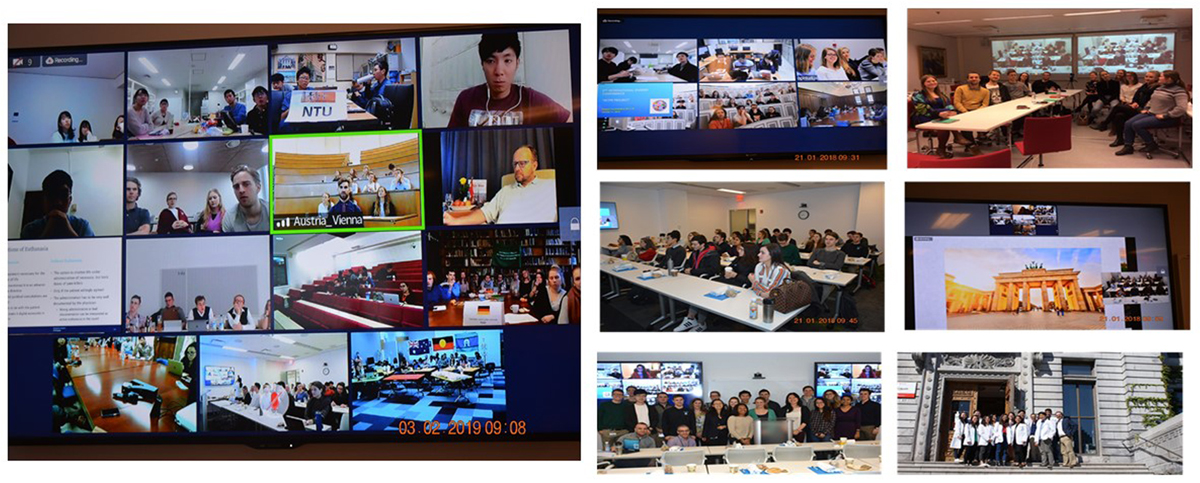
Figure 1
Online student conference.
Table 3
Basic sciences research areas for travel. Research laboratories were assigned per students’ preferences and determined by the availability of the host university.
| Partner Universities | Research Area offered |
|---|---|
| Medical University of Vienna, Vienna, Austria | Tissue Engineering |
| The University of Sydney, Sydney, Australia | Stem Cell |
| McGill University, Montreal, Canada | Immunology, Neuroscience |
| University of Copenhagen, Copenhagen, Denmark | Diabetes |
| University of Helsinki, Helsinki, Finland | Lipid Physiology |
| Ludwig Maximilians University, Munich, Germany | ENT, Transplantation Immunology, Neuroscience |
| Martin Luther University, Halle, Germany | Immunology |
| Kyoto University, Kyoto, Japan | Neuroscience |
| Tokyo Women’s Medical University, Tokyo, Japan | Neuroscience |
| National Taiwan University, Taipei, Taiwan | Cancer Immunology, Bioengineering, Public Health, |
| King’s College, London, United Kingdom | Neuroscience |
| Columbia University, New York, United States of America | Immunology, Pathology, Surgery, Gynecology, Public Health/Epidemiology, Neuroscience, Precision Medicine, Tissue Engineering |
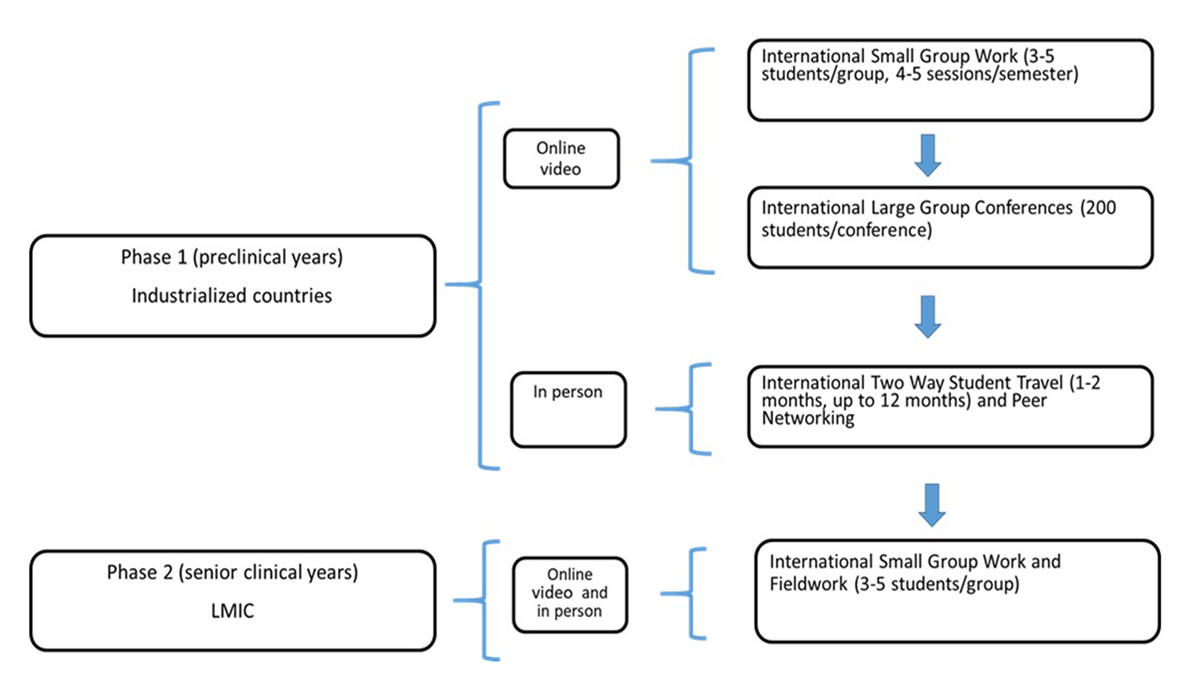
Table 4
Overview of the format of the program structure (including pilot phase 2). A stepwise format eased students into international experiences.
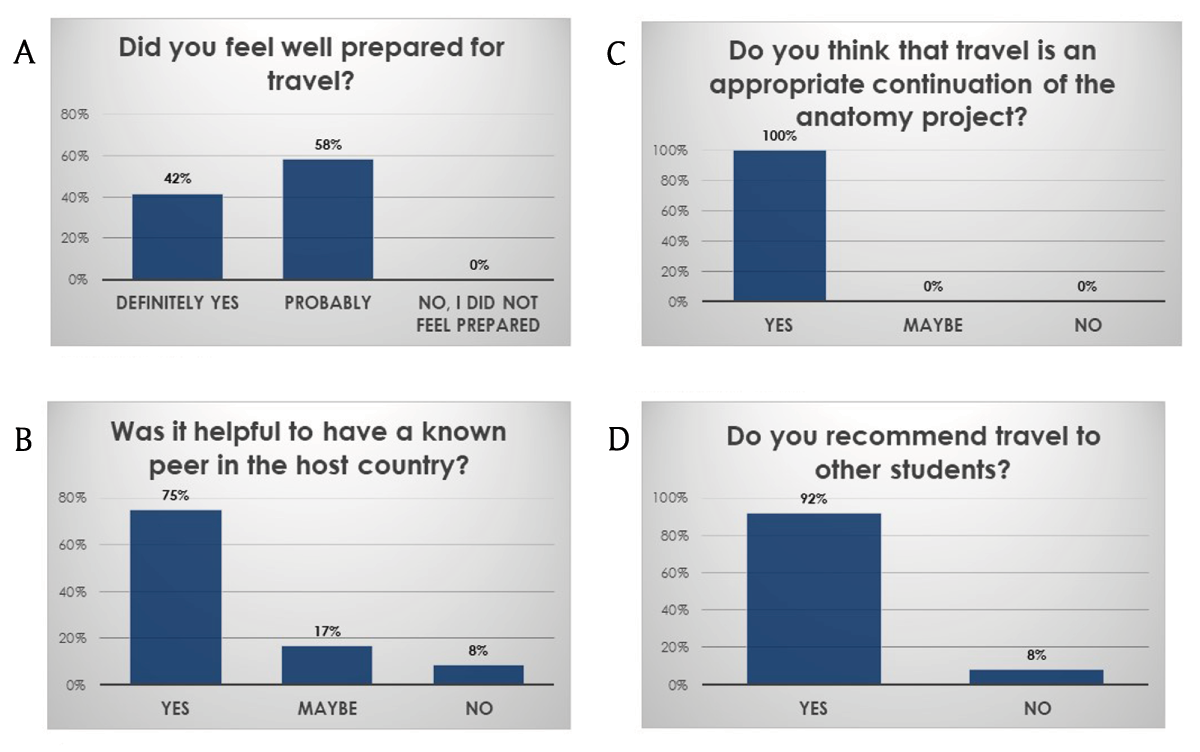
Figure 2
Student travels results (n = 12).
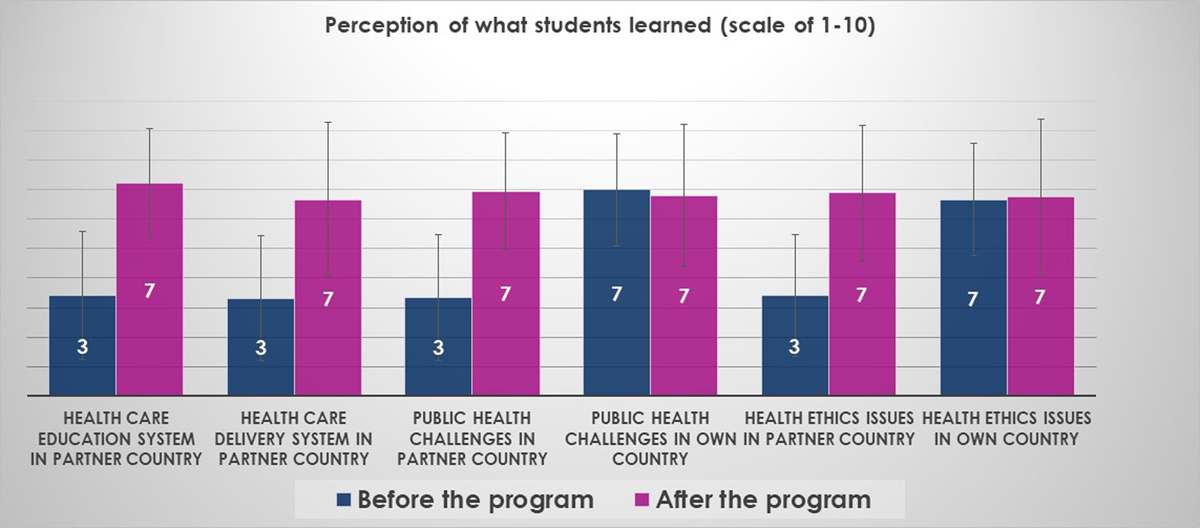
Figure 3
The majority of students learned about the healthcare education, healthcare delivery, health ethics, and public health challenges in the partner countries but did not feel that they learned more about these topics in their home countries.
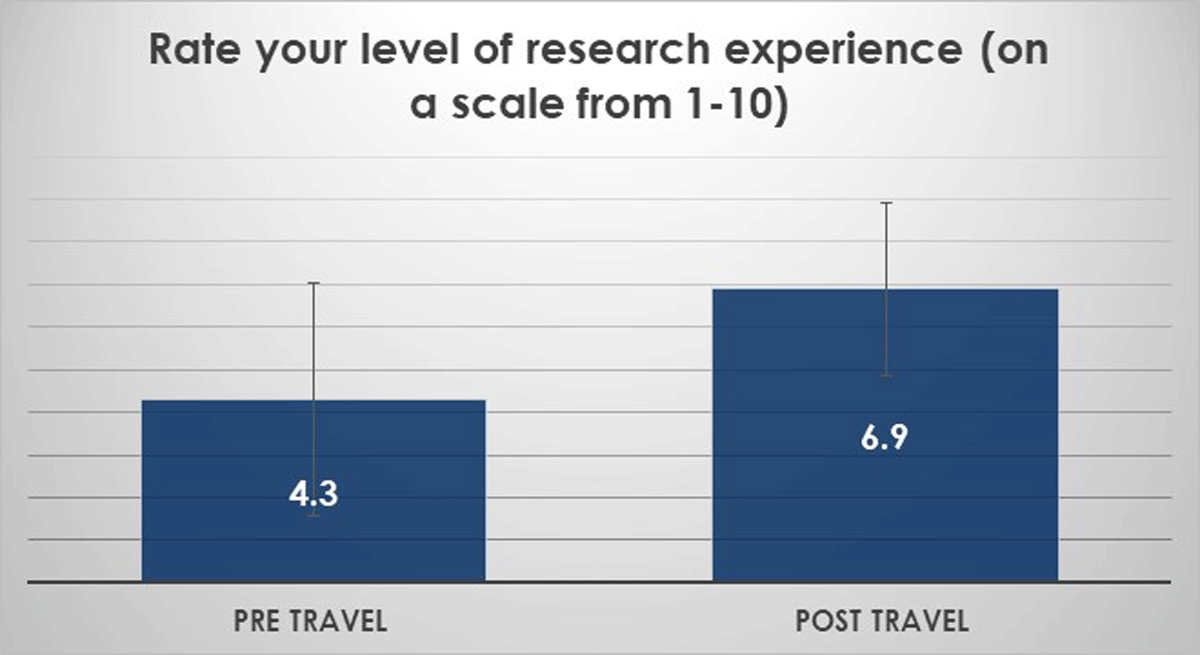
Figure 4
Research abroad experience. Students felt they improved their research skills. The experience abroad was meant to improve research skills but not to improve above the level of what students would have experienced in their home countries. No control was available.
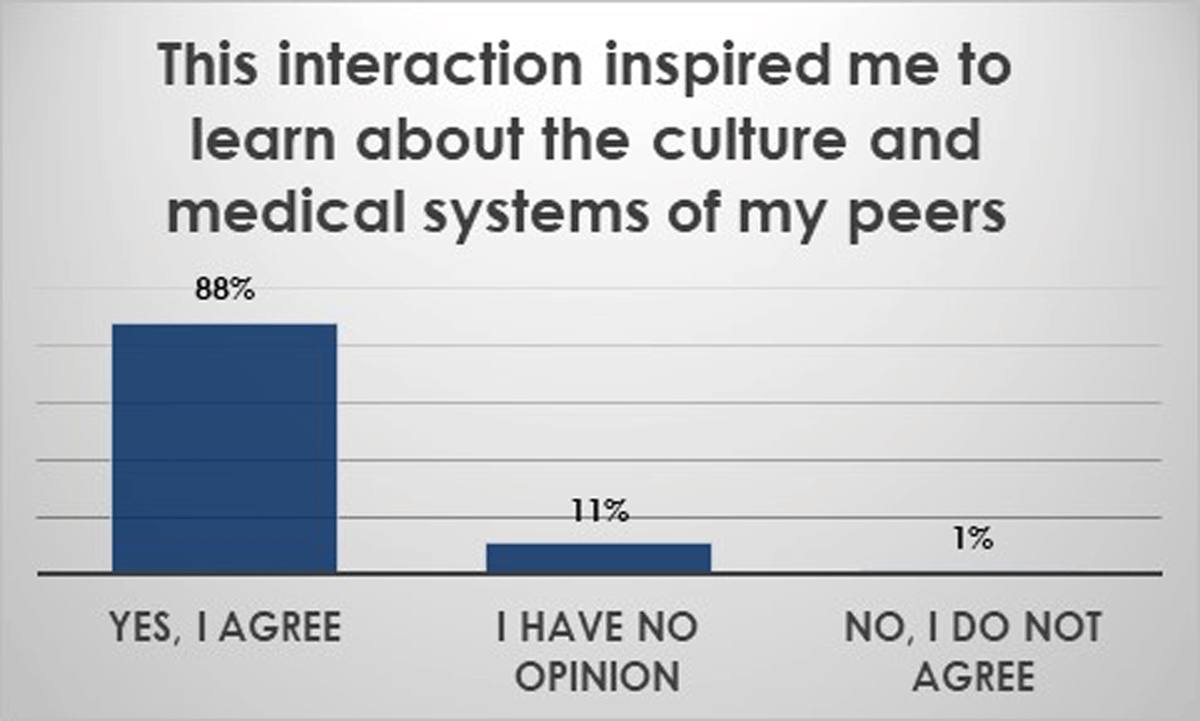
Figure 5
Students felt inspired to learn more about the other countries’ culture and medical systems.
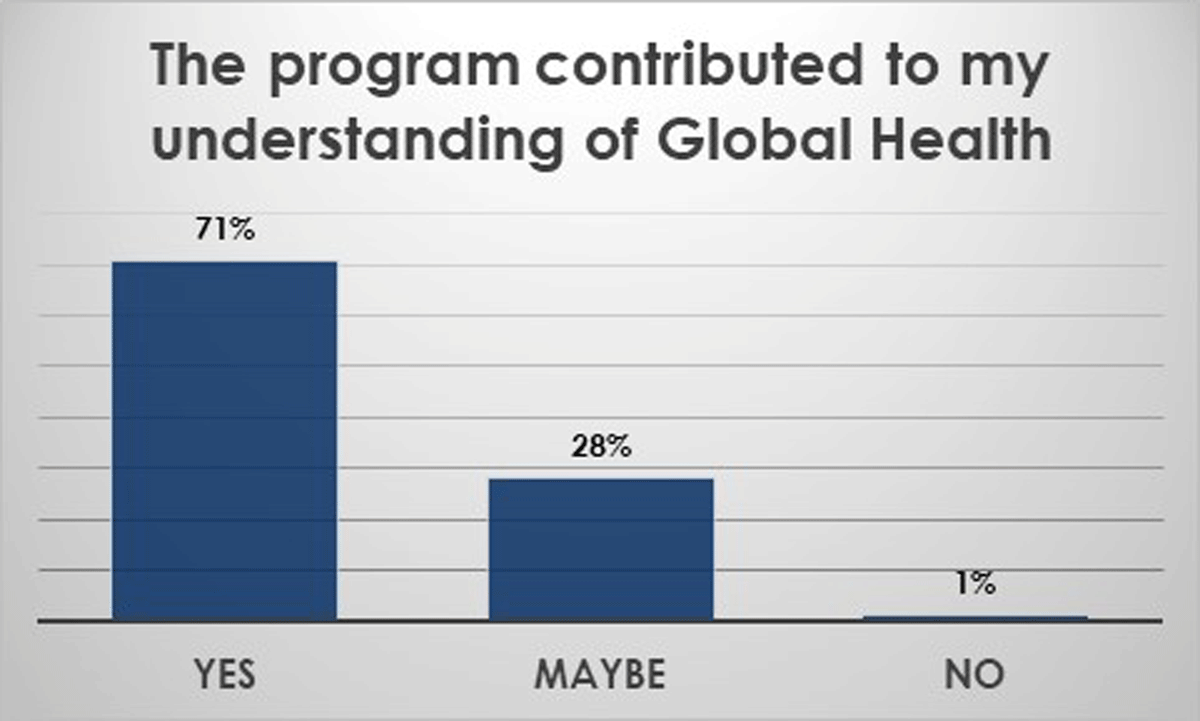
Figure 6
The majority of students felt that the program contributed to their understanding of Global Health.
Table 5
Theme analysis of what students learned. Students perceived learning about a variety of topics beyond anatomy related topics.
| Themes | Students’ responses |
|---|---|
| Medical education systems | “US medical education is so expensive. There is a really big lack of female medical professionals in Japan.” |
| Healthcare delivery systems | “Although countries seem to differ in healthcare systems, through our discussions we realized that some parts of delivery were quite similar and could lead to future collaboration!” |
| Health insurance systems | “I learned all about the Bismarck model of health insurance and how Japan and Germany handle their healthcare expenses as compared to the U.S.” |
| Health law and ethics | “Each country has the same ethical thoughts about abortion.” |
| Public Health challenges | “Challenges are quite similar all over the world.” |
| Anatomy course and related topics | “You have to pay to donate your body in Germany.” |
| Politics and health | “Health problems contain political issues” |
| Cultural differences | “Cultural shock!” |
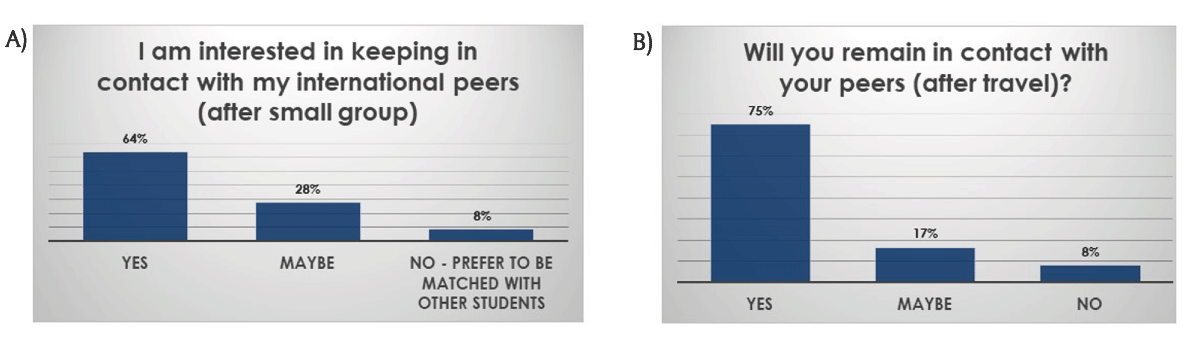
Figure 7
A) The students felt connected and wanted to remain in contact with each other after the small group work. B) After traveling to the partner countries the students were motivated to remain in contact with their peers (over 90%;). The percentage of interested students increased after their travels.
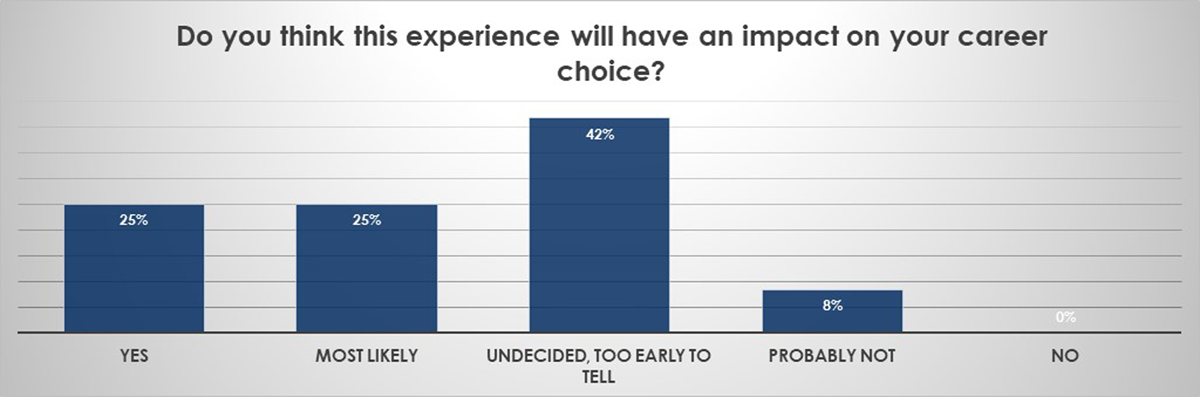
Figure 8
Impact on future career choices. The majority of students felt this interaction might have an impact on their career choices.
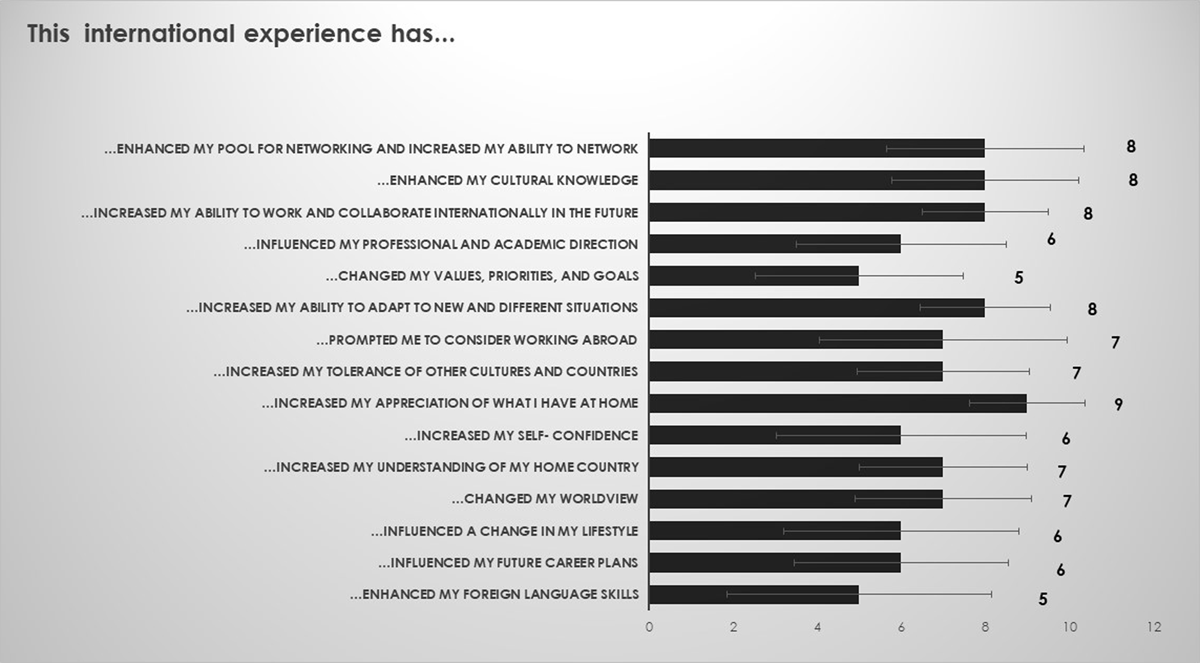
Figure 9
Responses from student questionnaires on overall learning and “hidden curriculum” (on a scale from 1 to 10).