
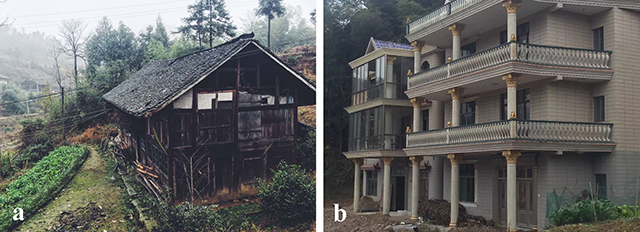
Figure 1
a) Abandoned traditional building in a village in rural Hubei; b) a new rural hotel on a misty day in the same village. [Photographs: Jiao Jian].

Figure 2
a) Australia (Glenn Murcutt, 1984); b) Norway (Peter Zumthor, 2011); c) China (Wang Shu and Lu Wenyu, 2012). [Photographs: Riley Sherman, Louise Bourgeois and Edward Denison, respectively].
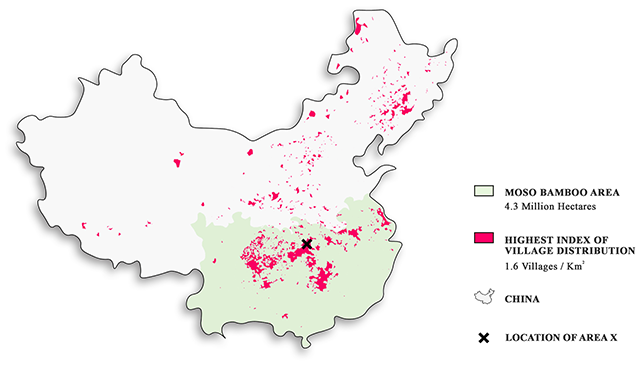
Figure 3
The highest densities of village distribution in China generally match with the areas of Moso bamboo forests. [Image: Daniel Stamatis].
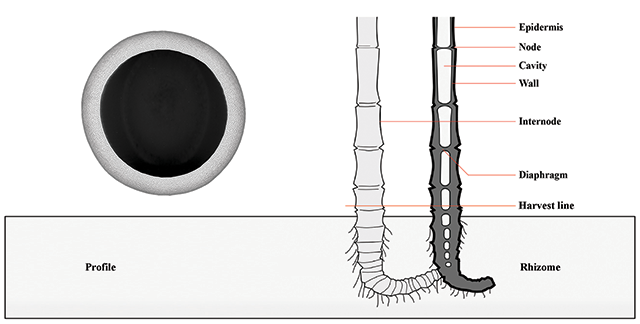
Figure 4
Characteristics of the bamboo culm of the monopodial kind. [Image: Daniel Stamatis].
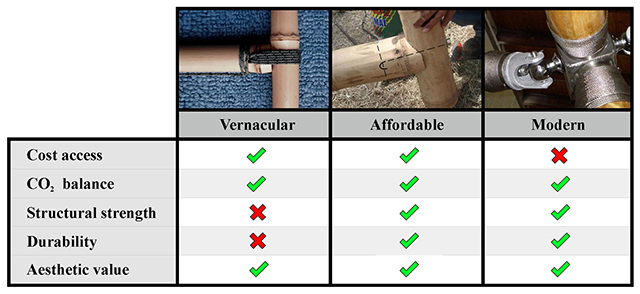
Figure 5
Joinery systems for bamboo structures, with the choice of technique depending on the socio-economic position of the project in question. [Image: Daniel Stamatis].
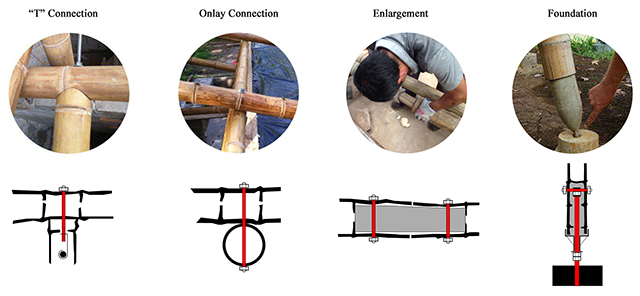
Figure 6
Basic understanding of bamboo pole connections. [Image: Daniel Stamatis].
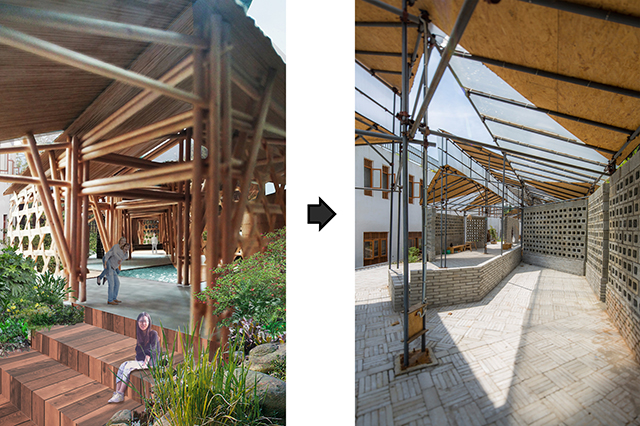
Figure 7
Two views of the Area X taken from a similar perspective: left, an image of our bamboo design combining a model photograph with Adobe Photoshop effects [Image: Daniel Stamatis]; right, a photo of the project as built using a steel scaffold system. [Photograph: Tan Gangyi].
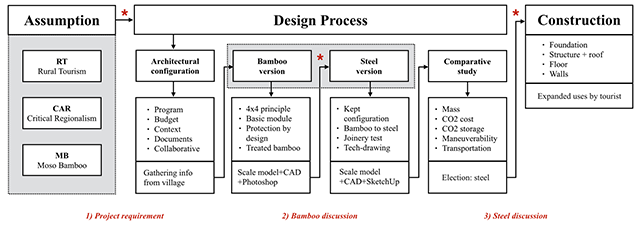
Figure 8
Project sequence for Area X. [Image: Daniel Stamatis].
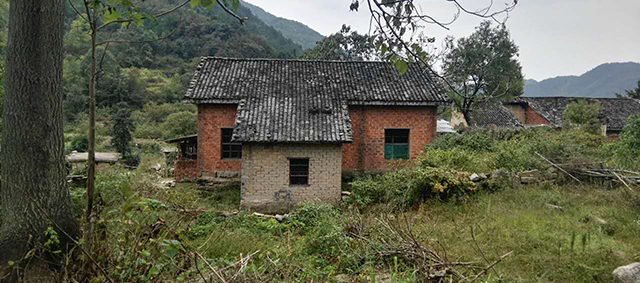
Figure 9
Typical house in Zhengjia Shan. [Photograph: Daniel Stamatis].
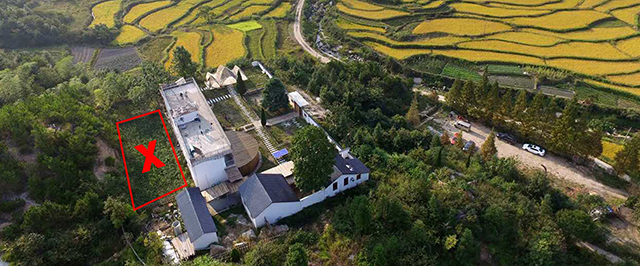
Figure 10
Bird’s-eye photo of Qianyi Farm Hotel indicating the location of Area X. [Photograph: Tan Gangyi].
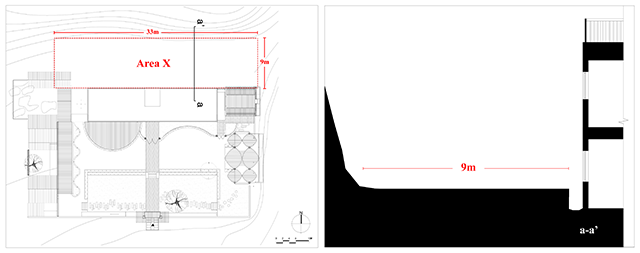
Figure 11
Dimensions of Area X prior to the design process. [Image: Daniel Stamatis & Tan Gangyi].
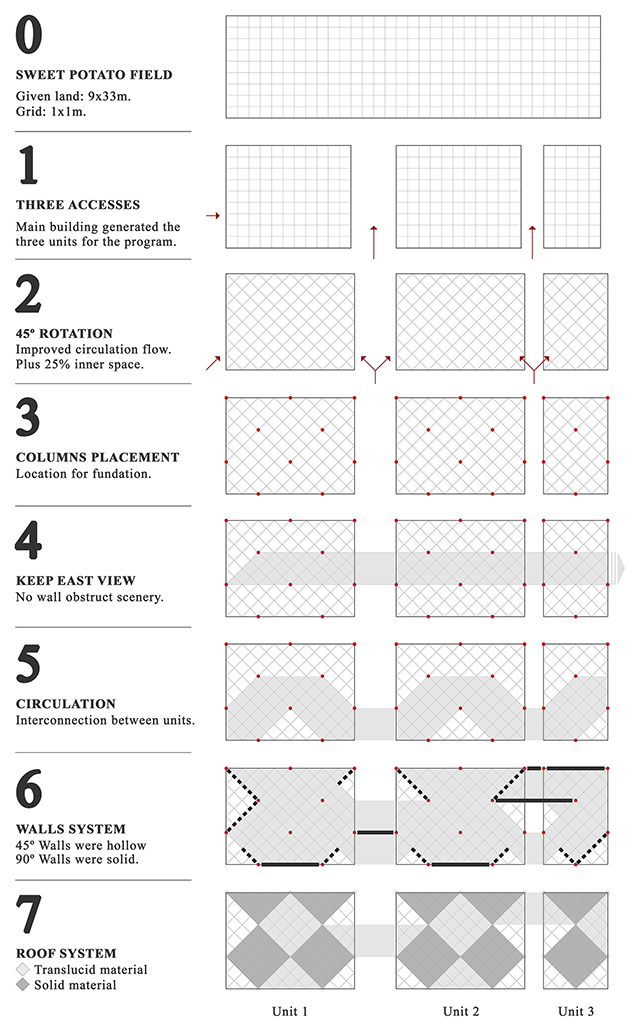
Figure 12
Architectural layout configuration for Area X. [Image: Daniel Stamatis].
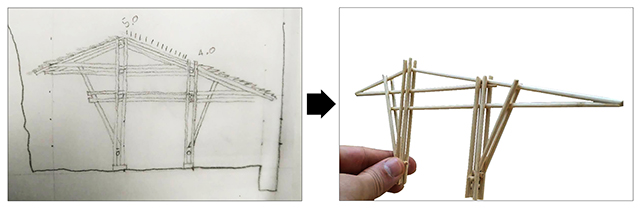
Figure 13
Hand-drawn structural design translated into a scale model. [Image: Daniel Stamatis].
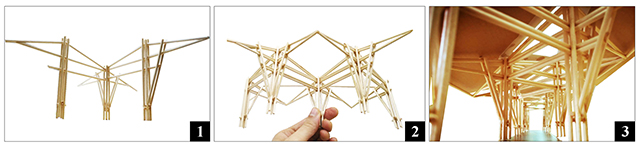
Figure 14
Generation of 3-dimensional space using the protection by design concept. [Image: Daniel Stamatis].
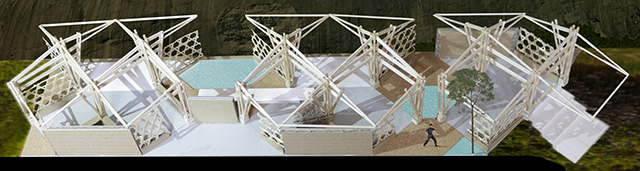
Figure 15
Overall scale model of the bamboo design for Area X combined with Adobe Photoshop effects. [Image: Daniel Stamatis].
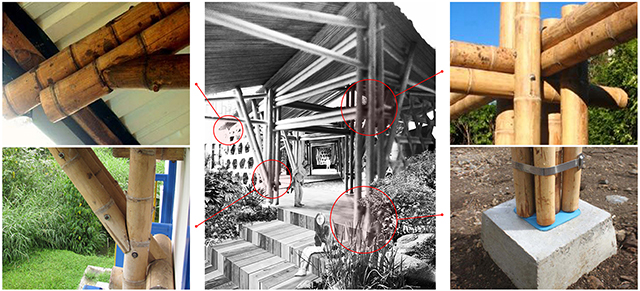
Figure 16
Examples of joinery systems to be used in the bamboo design for Area X. [Image: Daniel Stamatis].
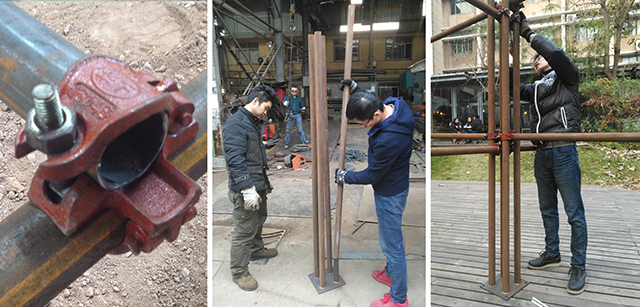
Figure 17
A 1:1 test for the scaffolding structure to translate the bamboo design into the steel version. [Photographs: Daniel Stamatis].
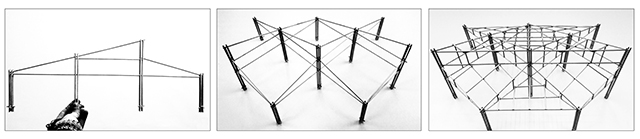
Figure 18
Design evolution through scale models for one unit of the steel scaffolding version of Area X. [Images: Daniel Stamatis].
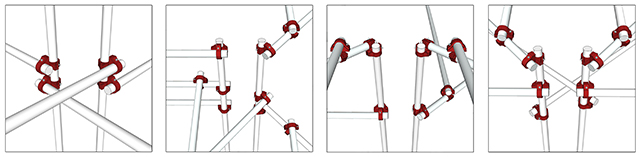
Figure 19
Studies of joints in the steel scaffolding structure using Sketch-Up software. [Image: Xie Long].
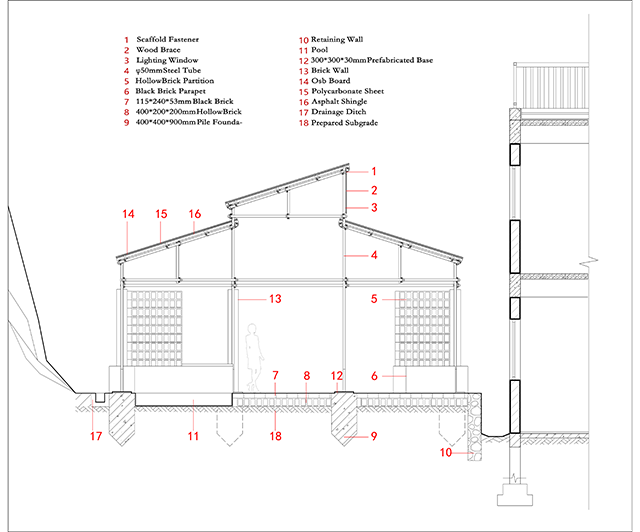
Figure 20
Section through Area X indicating the various materials. [Image: Xie Long].
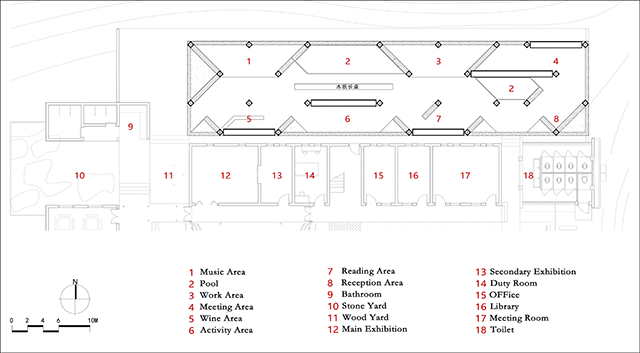
Figure 21
Plan of Area X indicating the tentative functions. [Image: Xie Long].
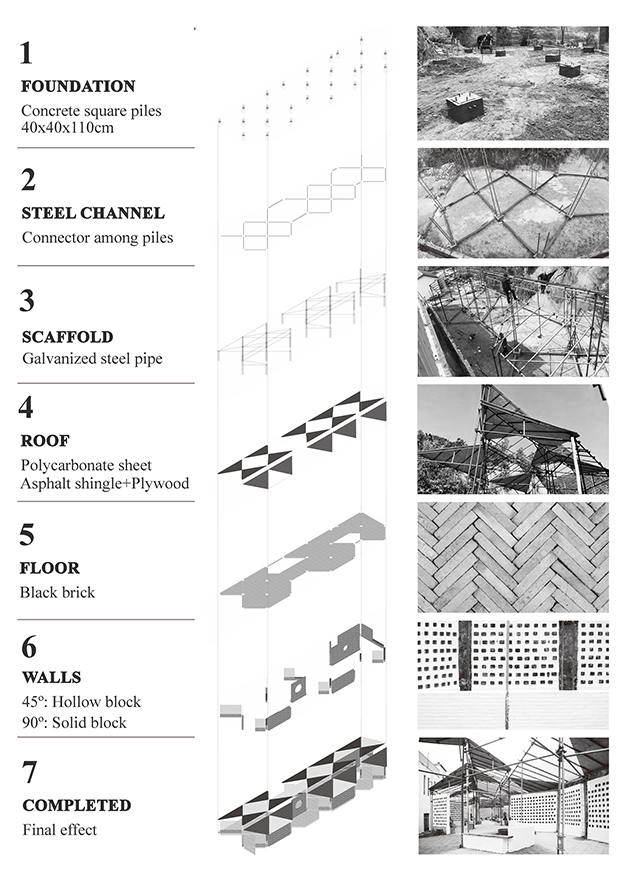
Figure 22
Construction process of the steel design for Area X. [Image: Daniel Stamatis & Xie Long].
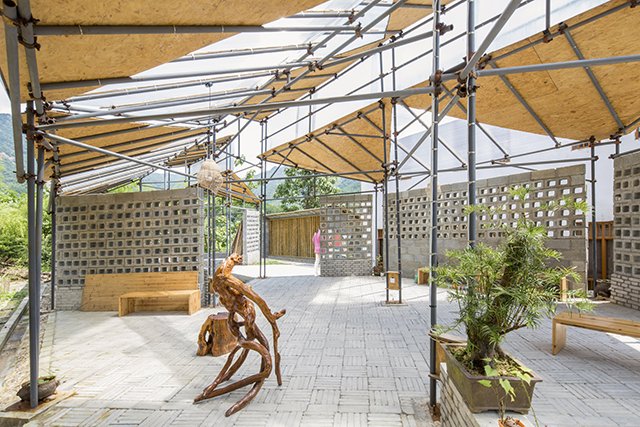
Figure 23
View of Area X after its construction. [Photograph: Tan Gangyi].
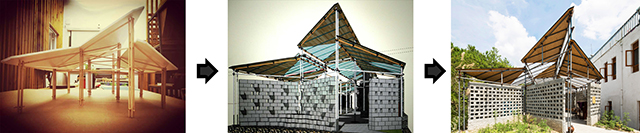
Figure 24
Logic of design: from scale model to digital model to the construction of the west façade. [Images: Daniel Stamatis, Xie Long & Tan Gangyi].
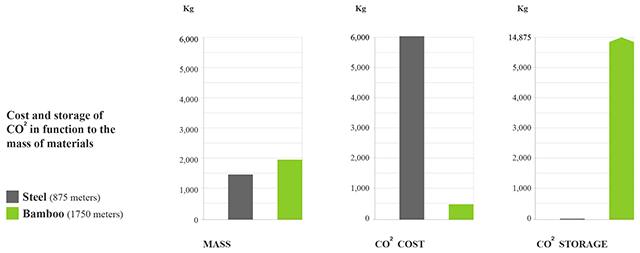
Figure 25
The maneuverability assessment for both bamboo and steel. [Image: Daniel Stamatis].
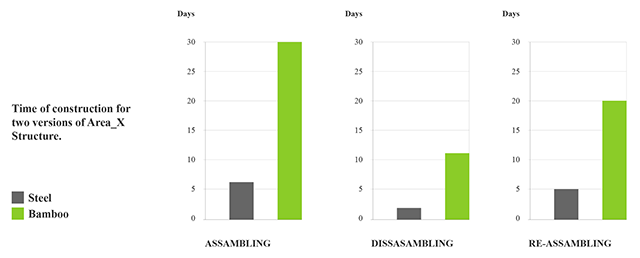
Figure 26
Cost and storage of CO2 in relation to the mass of bamboo and steel. [Image: Daniel Stamatis].
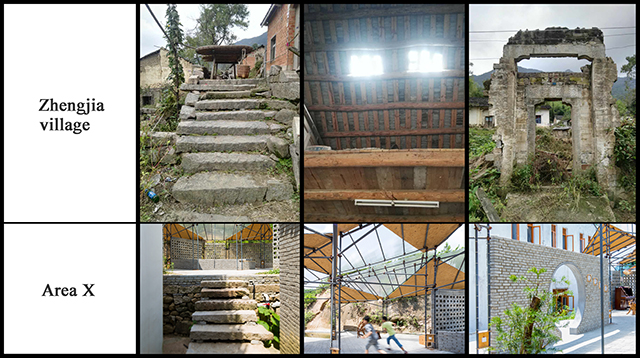
Figure 27
Some aspects of Area X compared to those that are found in the village. [Photographs: Daniel Stamatis & Tan Gangyi].
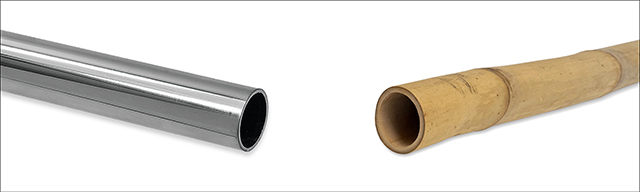
Figure 28
Steel and bamboo: made for each other? [Image: Daniel Stamatis].