
1. Introduction
Judicial Councils have long been advocated as a recommendable model for the administration of the judiciary by the Council of Europe. The Consultative Council of European Judges (CCJE) Opinions 10 (2007) and 24 (2021) describe a Judicial Council largely as an independent body entrusted to safeguard judicial independence. The last opinion explicitly welcomes “a diversity” among member states in relation to organization referred to as Councils for the judiciary.1 In the preparatory survey to CCJE Opinion No. 24 (2021), even bodies composed without judges (e.g. Andorra) or with a minority of judges (e.g. Norway) were referred to as Judicial Councils by their member states. In fact, more than 80% of the 41 responding member states with highly diverse systems of judicial administration reported having a Judicial Council.
In this article, we will explore the status of bodies known as Judicial Councils in Europe, and search for more detailed recommendations on the composition and competences for such bodies. If there are different kinds of Judicial Councils, can subgroups be distinguished to foster analysis on which systems are suited best to foster efficient and independent judiciaries? These are the questions we wish to address.
To start with, we will have a closer look at the origin, development, and current compositions and competences of Judicial Councils in Europe. Because the judiciaries in the Nordic countries are regularly top-ranked in international surveys of judicial independence,2 we will focus particularly on the variations and common features of judicial governance in these countries. Our overall aim is to contribute to a discussion of the composition and competences that a Judicial Council will need to safeguard judicial independence.
2. Methodology
The empirical foundation for our comparison of compositions and competences of Judicial Councils in Europe is primarily based on the compilation of responses of the CCJE members to the questionnaire for the preparation of the Opinion No. 24 available online.3 The questionnaire included 25 questions on the organisation of the judiciary and the role, competences, composition and challenges of Judicial Councils. A very high number of 41 member states replied.4 Information on Malta published by the ENCJ is added to get a more complete picture. For the Nordic countries, the comparative overview made by the Norwegian Court Commission for the 2020-report is used as a supplementary data source, especially for Iceland that did not participate in the CCJE-survey.5 The final report from the 2020 Committee of Inquiry on the Constitution in Sweden, delivered in March 2023,6 is also included in the data material. The report includes the issue of the organisation, governance, and role of the Swedish National Courts Administration (Domstolsverket), and the Committee proposes to establish a new court administration agency to strengthen protection of the long-term independence of the courts and judges.
Of course, some limitations of the data must be taken into account, due to the fact that CCJE-and ENCJ-data is based on self-evaluations from CCJE members. Nevertheless, the information is a starting point that may serve the deliberative purpose of our article well.
Indeed, it is not easy to unfold relevant features and competences necessary to administratively safeguard an independent judiciary from a more normative perspective searching for a best practice model. Sipulova et.al’s recently developed Judicial Self-governance (JSG) Index is a useful tool for a more nuanced debate on the composition and competences of different administration systems of the judiciary,7 especially Judicial Councils. Their profound systematising of dimensions of competences is a steppingstone for the exploration of competences of Judicial Councils in this article.8 The index is based on 60 competences grouped into eight dimensions (Regulatory, Administrative, Personal, Financial, Educational, Informational, Digital and Ethical), presented in more detail in section 2.4.2.
The survey that was carried out in the preparation for CCJE Opinion No. 24 (2021) did not map all the 60 competences included in the Index, and we do not attempt to use the Index to score the trends of judicial empowerment in Europe and the Nordic countries in detail. What we will do, is to investigate the share of power held by judges in bodies that are designated to manage domestic judiciaries independently based on reported data from member states and use the eight defined dimensions of competences from the index to systematise the power these bodies comprise. Based on a closer look at the governance of the judiciaries in the Nordic countries in particular, we will discuss the ideal of judicial self-governance with selection of peers and majority votes for judges on a broad spectrum of dimensions.
3. The origin and development of Judicial Councils
3.1 What is a Judicial Council?
The international bodies advocating the establishment of Judicial Councils to safeguard the independence of the judiciary tend to lean upon wide and open descriptions of the bodies they recommend. In Opinion No 24 (2021) the CCJE, for example, stated that it did not wish to recommend “a specific council model”,9 and gave the following description of the body of concern: “This Opinion concerns national institutions of member states which are independent of the executive and legislature, or which are autonomous, and which ensure the final responsibility for the support of the judiciary in the independent delivery of justice.”10 The ENCJ has followed a similar description.11 Neither the CCJE nor other European bodies have ever defined a Judicial Council in a way that clearly distinguishes between objective definitions of and normative expectations towards such bodies. However, in Opinions 10 and 24, the CCJE does formulate some recommendations that, if they were used as defining criteria, would exclude many of the reported councils in their survey from being a “Judicial Council”. CCJE recommends that a council for the judiciary “have a mixed composition with a substantial majority of judges” but also accepts bodies “exclusively composed of judges”.12 Furthermore, the CCJE recommended in 2021, but even more strongly in 2007, that a Judicial Council should pursue “a wide range of tasks aiming at the promotion of judicial independence and efficiency of justice”, but few of the competences mentioned are indispensable.13 Selection, appointment and promotion of judges should “preferably” be within the council’s competences as well as the “assessment of the quality of justice and […] the implementation of techniques ensuring the efficiency of judges’ work”.14 Moreover, prior consultation on draft legislation likely to have an impact on the judiciary before deliberation in Parliament is formulated as a ‘must have’ competence.15 We will show in section 3.4 that several bodies reported as Judicial Councils do not comply with these few recommendations.
Researchers, as well as the Council of Europe, have often distinguished between Councils for the judiciary on the one hand and other systems, in particular judiciaries organised by a Ministry of Justice – as for example in Germany and the Czech Republic – or a Court Service, more or less independent from other powers of state – as in the Nordic countries.16 Councils for the Judiciary were traditionally more common in south-western Europe. Therefore, in 2003, Voermans and Albers17 suggested a dichotomy between a “Northern” and “Southern” model which was later rejected by Garoupa and Ginsburg.18 In 2014, Bobek and Kosar19 distinguished five different models, including Judicial Council, ministerial model, court service model, mixed systems and socialist model. New scholarship argues today that a more nuanced analysis of different models and empirical research into the interaction between different public institutions is needed.20 To pave the ground for a more nuanced analysis and discussion, we will have a closer look at the origins of Judicial Councils.
3.2 The origins of Judicial Councils
The origins of the Judicial Council can be found in south-western Europe, where they were established and reformed in times of constitutional change. In France and Italy consultative judicial bodies were established in 188321 and 190722 respectively.23 After the war, in both France and Italy, new councils were established as elements of a new, modernized state after authoritarian rule.
In 1948, the Italian CSM was established by the Italian Constitution as the “mother” of the European model of Judicial Councils later supported by the Council of Europe and European Union: it is a constitutional, independent body consisting mostly of judges with a wide range of competences. It is important to note from the start that there were considerable differences even between the French and Italian model with the French model providing less competences to judicial self-governance.24 Judicial Councils were established next after the French and Italian model25 in the constitutions of Portugal (1976)26 and Spain (1978)27 after the end of authoritarian regimes in both respective countries.
The next wave of new Judicial Councils came about in the 1990s until the early 2000s in new constitutions in central and eastern European countries: Poland in 1989,28 Romania,29 Bulgaria and Slovenia in 1991, Croatia in 1993, Lithuania in 1994, Slovakia in 2001 and Latvia in 2010.30 The constitution building in these countries was supported by European institutions, especially the Council of Europe with the Venice Commission (established in 1990).31 Further support for the development of independent judiciaries throughout Europe also came from the CCJE (established in 1999) and the ENCJ, as a network for Judicial Councils, formally established in 2004.32
Given the history of Judicial Councils in times of democratic change in France, Italy, Portugal and Spain after authoritarian regimes, it is understandable that Judicial Councils were pushed as a means to institutionalize the judiciary as an independent body in post-communist countries. However, as Bobek and Kosar have critically noted,33 establishing a Judicial Council became a panacea in these countries recommended by the European Union (EU) and Council of Europe (CoE) to meet the 1993 Copenhagen Criteria “achieving stability of institutions guaranteeing … the rule of law”.34 While these countries very much needed to reform their respective judiciaries after communist regime (an endeavour in which an institution like a Judicial Council might be considered helpful) these reform processes may have neglected the fact that establishing an institution like a Judicial Council is not enough to ensure accountability, transparency and efficiency in a judicial system.35
However, Judicial Councils were not only introduced at that time in central and eastern Europe, but also in Belgium (1998) and the Netherlands (2002).36 In particular, the Judicial Council of the Netherlands shows that different models were developed, not just replications of the Italian Council model. With this European push for judicial self-governance, judicial administration bodies were reformed and then sometimes named Judicial Councils like in Denmark in 1999, Ireland in 2019 and Finland in 2020. We will return to these institutions below at 3. In countries like Austria37 and Germany,38 the introduction of Judicial Councils has been advocated by associations of judges for some time, claiming that the institutional autonomy of judges in other countries should be extended to them as well. However, so far, in both countries, these claims have not been successful. At the Deutsche Juristentag (DJT) 2022, the biggest German conference on legal reform, applications to introduce Judicial Councils in Germany were voted down with considerable majorities.39
3.3 Judicial Councils and European Standards
Judicial Councils have been recommended in the soft law of the Council of Europe as the best way to organise independent judiciaries for some time. Bobek and Kosar have argued that there was considerable pressure for countries aspiring to EU-membership to establish a Judicial Council, especially regarding independent appointment procedures, even though the documents never claimed it to be the only acceptable option.40 This is especially true for the Recommendation of the Councils of Ministers which acknowledges such councils and introduces guidelines for their set up and work but also acknowledges other options.41 In a recent Grand Chamber case, the ECtHR reported that the Council of Europe endorses the introduction of such councils, but denies an explicit duty under the Convention for their introduction.42
The Venice Commission has been more decisive in its recommendations, seeing favour in a strong role for Judicial Councils in appointment processes.43 The Venice Commission accepted other models as well but recommended that states which have not yet done so should consider “the establishment of an independent Judicial Council or similar body.”44 The Venice Commission included the existence and work of an independent Judicial Council in its Rule of Law Checklist.45
The CCJE has, as already mentioned, dedicated two Opinions specifically to Judicial Councils. The first one, CCJE Opinion No. 10 (2007) has been cited several times by the ECtHR.46 CCJE Opinion No. 10 (2007) and Magna Carta of Judges recommend that Councils for the Judiciary should have broad competences for all questions concerning their status as well as the organisation, the functioning, and the image of judicial institutions.47
In light of these favourable views on Judicial Councils, it is certainly understandable that reformers have felt urged to go for the “secure” option which promised acceptance into the “European club”, e.g. membership in the European Union. However, the establishment of a Judicial Council alone has not proved to be an easy fix for independent judiciaries in Europe.48 In the 2010s, serious crises occurred in Poland and Hungary. In light of these challenges to the independence of Judicial Councils in several member states, Poland in particular, the CCJE revisited opinion No. 10 (2007) in 2021 to reaffirm the importance of its guidelines and amend them in light of the current challenges, trying to contribute to the improvement of bodies referred to as Judicial Councils to make them more resilient. The CCJE accepted that there was still no single Council model, embraced diversity,49 but cautiously qualified some of its earlier recommendations, more strongly advocating for mixed councils, including members of the civil society, and warned against ex officio-members.50 The CCJE also pointed out that a great number of competences could make a council vulnerable to politization from outside and inside the judiciary, and that some competences should go hand in hand, e.g. that competences on issues of court administration had to be accompanied by obligations to increase the efficiency of the judiciary.51
3.4 Status in Europe in 2021
Now, the current situation of reported Judicial Councils in Europe shall be assessed. The survey among member states in the Council of Europe for the CCJE Opinion 24 shows that a qualified majority of European countries have Judicial Councils, making them seemingly ‘must haves’ in every country. Among the 41 member states that responded to the CCJE questionnaire, 34 replied that they had a Judicial Council;52 only seven replied no.53 This means that a majority of 84% reports having a Judicial Council. With Malta, there are at least 35 member states in Europe that hold the opinion that their judiciary is governed by a Judicial Council. However, a closer look at the competences and organisation of Judicial Councils emerging from these sources show considerable differences between institutions and their interaction with judges and other powers of state. The situation in the Nordic countries will be discussed under part 4.
3.4.1 Competences allocated to Judicial Councils
The majority of member states report that Judicial Councils have a duty to protect judicial independence (33),54 thereby also following the ideal of the Judicial Council advocated by the Venice Commission and the CCJE. However, a more detailed look at the competences of the variety of bodies shows that there is rarely only one body administrating the judiciary and no set answer to how judicial independence should be protected.
In its survey, the CCJE asked member states 16 questions about the competences of different bodies such as Judicial Councils, ministries, parliament, judicial administrative bodies, judicial appointment commissions, bodies within association of judges, court presidents and “others” in relation to topics such as judicial career, discipline, education, administration of the judiciary, ethics, judges’ salaries, IT, PR and budgeting. This way, the CCJE hoped to gain insight not only into the competences of Judicial Councils but also other institutions. There is some overlap with the 60 competences systematised in eight dimensions developed by Šipulova et al.,55 and we will refer to these dimensions to highlight common features as well as varieties of European Judicial Councils. To clarify our point of reference, we reproduce Šipulova et.al.’s table of dimensions of governance here:
Table 1
Dimensions of judicial governance.
| I. Regulatory | Competences related to establishment, abolition, or changes in the jurisdiction and procedural rules of a court |
| II. Administrative | Composition of a court (setting the number of judges, panels and their composition), work schedules, case assignment |
| III. Personal | Selection and (re)appointment of judges, promotions, removals and transfers of judges (permanent and temporary), disciplining of judges, civil and criminal prosecution, evaluations of judges |
| IV. Financial | Size of a court’s budget, salaries of judges |
| V. Educational | Compulsory education (plan and structure) and further training and education of judges |
| VI. Informational | Publication of rulings, recordings of trials, annual reports, case assignment, disclosure of judges’ property, political affiliation and some personal information |
| VII. Digital | Placement of servers with online data |
| VIII. Ethical | Preparation and interpretation of the code of conduct, off-bench activities of judges, communication with media |
| Table 1 Šipulova et al. Judicial Self-Governance index. | |
The majority of countries report that their Judicial Council has a large number of competences. However, listing competences alone does not illustrate how Judicial Councils perform their functions in practice and whether there are other institutions sharing competences. In many cases, the questionnaire shows an interaction of councils, court presidents, additional bodies such as schools for magistrates, disciplinary bodies, appointment boards and judges’ councils inside courts, underlining the observation that questions of judicial self-governance to safeguard juridical independence goes far beyond Judicial Councils.56
Most Councils have influence on the organization of judges’ careers, i.e. on the personal dimension of competences in the JSG Index, which is in line with the preferable tasks for a Judicial Council advocated in Opinion 24. This includes the selection of new judges (27),57 their promotion (28)58 and evaluation (19).59 This can also include questions concerning the incompatibility of the judicial posts with other functions,60 leaves of absence, transfer,61 criteria for evaluation, and determining the workload.62 Most councils also have a role in the selection of court presidents (21),63 only a minority has not (5).64 An impressive number of councils (roughly 24) also plays a role in disciplinary procedures.65 Some councils receive and follow up on complaints from the public.66 These countries seem to form a model of a Judicial Council with broad competences on the personal dimension. We will use the term personnel competences as a collective term for the competences within this dimension.
An interesting point is what legal and political means a council may use if its position has been violated. Some countries have formal procedures, such as a complaint to the Constitutional Court,67 Supreme Court68 or administrative court.69 In most cases, however, the only way is interinstitutional dialogue,70 for example, through appeals to Parliament or President,71 and the submission of public reports,72 opinions73 or complaints to the other branches of government. Appeals through the media74 and thus public opinion75 were also mentioned.
Many Judicial Councils also have competences in the administrative and regulatory dimension of the JSG Index, often together with court presidents (21).76 Here, Nordic countries can be found as well. Judicial Councils may also play a role in the evaluation of court performance (23)77 and the allocation of financial resources to the judiciary including individual courts (16).78 Moreover, Councils in certain member states make suggestions on how to improve the the organisation and functioning of courts79 and registries.80 They also make proposals as to the number of judges81 and the abolishment, establishment and reorganisation of courts.82 Councils may collect financial statements of the courts.83 Some prepare opinions on the development of the judiciary84 and on draft laws.85
Looking at the financial dimension, some Judicial Councils influence the budget of the judiciary and courts,86 but often do so in cooperation with the Ministry of Justice87 and Parliament.88
As to the educational dimension of the JSG Index, the responses to the CCJE questionnaire show that Judicial Council have influence in this area.89 However, it can be noted that there are distinct judicial schools for initial and ongoing training of judges in most countries with and without Judicial Councils.90 In other countries, court presidents91 or bodies within courts92 are responsible.
Looking at the ethical dimension of the JSG index, it can be noted that 25 Judicial Councils report drafting and enforcing codes of ethics.93
A final look at the digital dimension of the JSG index proves interesting as well. 15 member states report 94 that their Judicial Council was responsible for questions of IT, including the digitalisation of the judiciary and online hearings. However, the MoJ,95 Parliament,96 Court Presidents,97 bodies within individual courts98 and other bodies99 were also mentioned as having competences in this respect even by countries that report having a Judicial Council.
In countries without a Judicial Council, a Ministry of Justice may have the final say on court administration,100 IT and budgeting101 often in cooperation with strong court presidents, as, for example, in the Czech Republic and Germany.102 However, in these countries, judges may participate in court administration103 and the assignment of cases104 in considerable factual and/or legal independence from the executive. In such countries, judicial review, e.g. of career decisions, can be an important factor to preserve judicial independence, as, for example, in Germany.105
In countries without a Judicial Council, decisions on the appointment and promotion of judges may fall under the responsibility of judges,106 the executive107 or parliament.108 Again, even in countries with a strong ministry of justice, judges and court presidents may play an important role in the evaluation of judges and career decisions.109 In many countries, even some which claim to have a Judicial Councils,110 appointments, promotions and complaints may be decided by a separate body111 which may be composed of judges, lawyers and professionals from other branches of the state or civil society as well as lay persons.112 The specific situation in Nordic countries shall be addressed in more detail below at 4.
3.4.2 Composition of Judicial Councils
The composition of Judicial Councils varies considerably and has been addressed frequently in international documents which advocate that the majority of members should be elected by their peers.113 Traditionally, judge members without specifications as to their position in the judicial hierarchy and a number of ex officio members were accepted. Later, judges representing all levels of the judiciary were recommended and ex-officio members reduced in numbers.114
The number of members can be as low as 3 (as might be the case in the Netherlands, where the actual number is now 4), up to 166 (all) Irish judges. Still, there seems to be a favour of 11 (6 countries) or 15 members (6 countries). Judicial Councils also show an impressive variety of compositions:
| COMPOSITION OF JUDICIAL COUNCILS | ||||
|---|---|---|---|---|
| All judges (5)115 | Majority judges (18)116 Mixed councils with a majority members of the judiciary (5)117 | Half/Half (5)118 | Minority judges (2)119 | No judges (1)120 |
It is important to note that judges are in the majority in most Judicial Councils. Joint councils (council of magistrates) representing judges and prosecutors have been reported from Belgium, Bosnia and Herzegovina, Bulgaria, France, Greece, Italy, Romania, Turkey, and Ukraine. It is important to note also that in some Judicial Councils, judges are only the majority when public prosecutors, which are both understood as “magistrates”, are counted as well. Only in Norway, judges are in the minority. In Bulgaria, Latvia, Malta (majority of votes) and Romania judicial members elected by their peers are in the minority, but there is a majority of judges (or votes) including ex-officio members.
The nomination and selection of members of Judicial Councils varies considerably. Judges (and prosecutors) are usually elected by their peers,121 and can be nominated by judges,122 associations of judges,123 courts,124 the conference of judges125 or by the different instances126 or courts they represent.127 In the process, not only a diversity of courts and instances, but also gender, language and region may be aimed at.128 In Poland, Spain129 and Turkey, judges are not elected by their peers but by parliament and/or the president.
Countries with judges on their councils – all except Andorra – often require that judges meet requirements, for example, that members come from different courts and instances,130 only from the Supreme Court,131 have a minimum number of years of experience as judges132 and must not have disciplinary procedures open against them or been found guilty of a disciplinary transgression,133 and show high integrity and impartiality.134
Some member states’ councils only have judges as members.135 Other countries may have councils with members who work in the law136 such as academics137 advocates,138 often requiring a minimum of years of work experience,139 and high integrity and reputation.140 In the Nordic countries, court personnel is represented as well.141 Some countries also require that a certain number of members are representatives of agencies,142 or members of the civil society/public.143 Councils which represent prosecutors as well have -of course -members who are prosecutors.144
In some countries (8), members also include politicians such as ministers or members of parliament,145 In more countries (12), a number of members are nominated by a certain authority146 such as the Minister of Justice/Government,147 President of the Republic,148 Parliament,149 the Prosecutor General,150 or the Bar association.151 In Albania, candidates may not have had a post in public administration in the last ten years. In Finland, members may not be a member of parliament or hold a position in public administration.
Usually, non-judges are elected by parliament,152 or appointed by the Government/Minister of Justice,153 or President of the Republic.154 In case of an election of parliament, some countries require a qualified majority.155 Slightly more member states (20) have ex officio members on their councils,156 often the President of the Supreme Court. However, a considerable number of member states (15) report not having ex officio members.157
3.5 First Conclusions
We have seen that Judicial Councils spread from south-west Europe to central and eastern Europe in times of constitutional reform after authoritarian and communist regime. The latter spread was strongly influenced by the support of European institutions and taken as an easy option to quickly meet the requirements of independent judicial institutions for joining the European Union. Nevertheless, the data presented under 3.4 shows considerable variety among the competences and members of Judicial Councils. Compliant to recommendations from CCJE and other advocates for Judicial Councils, most include a majority of judges. The core dimension in the JSG Index of competences seems to be the Personal. In Sipulova et al.’s analysis this dimension includes selection and (re)appointment of judges, promotions, removals and transfers of judges, disciplining of judges, civil and criminal prosecutions and evaluation of judges. We have termed the competences within this dimension personnel competences.
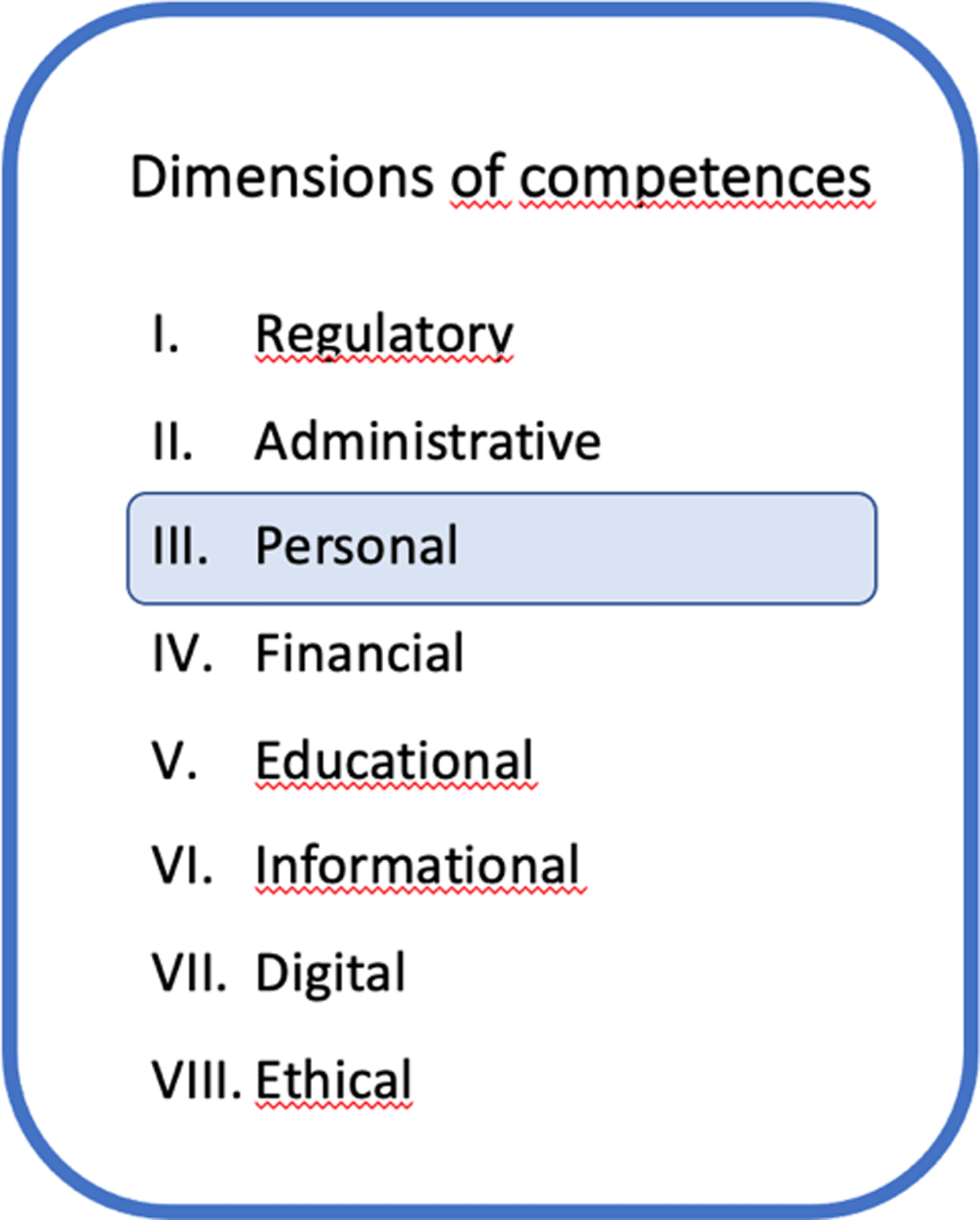
Moreover, answers to the CCJE questionnaire indicate a high degree of interaction between different public institutions that should be further researched. The Nordic countries of Finland, Denmark and Norway also claim to have Judicial Councils even though they have traditionally been described as following a court service model. Among the member states participating in the survey, only Sweden stated that it still follows that model while mentioning an ongoing discussion on judicial reform. This may either mean that the judiciary of the Nordic countries is changing in a fundamental way or that representatives reinterpreted their court service institutions as Judicial Councils. The reasons for this may be that the institutions fit the understanding of a Judicial Council as a body autonomously defending judicial independence. Given the positive image of Judicial Councils as a “must have” for so called new democracies, respondents to the survey in the Nordic countries may have felt that their court services now deserve the same name. This requires a more detailed look at the Nordic countries.
4. Judicial governance in the Nordic countries
4.1 General features of judicial governance of the Nordic countries
The Nordic countries, that is Denmark, Finland, Iceland, Norway, and Sweden are often grouped together as a «legal family».158 These five countries are all stable constitutional democracies with cultural similarities. As far as the available data shows, the Nordic judiciaries are perceived as highly independent compared to the average in member states of the European Councils.159 In the 2022 EU Justice Scoreboard, which includes a section on the perceived independence of the judiciary in the public, Finland and Denmark are on number 1 and 2.160 According to the available data, decisions of judicial appointments and promotions also enjoy high trust among judges.161 Except for Denmark, the Nordic countries are however not outstanding in that respect. The ENCJ survey 2022 asked judges whether they thought that appointment and promotion to different levels of the judiciary depended on reasons other than competence in their judicial system. In this survey, Germany, but also judicial systems with powerful Judicial Council, were not particularly successful.162 The Nordic countries did much better, particularly in the assessment of appointments to the Supreme Court. In Denmark and Norway only 1 and 3% respectively expressed that they doubted these appointments were based on ability and experience alone. Such surveys must be taken with great caution but can be taken as a hint that the Nordic systems are doing quite well.
4.2 The East/West divide of Nordic court systems
Despite cultural similarities, Nordic countries differ substantially in their divisions of state powers and constitutional jurisprudence.163 More detailed comparative studies tend to distinguish between Sweden and Finland in the East and Denmark, Iceland and Norway in the West.164 Although history provides less support for the East/West divide than expected and modern context seems to be underestimated as explanation for current similarities and differences,165 the divide is evident in the court systems and should be kept in mind here. In the East, the court system is divided into two separate branches: A general three-level court system and an administrative two-level court system. The supreme courts on top of each branch are independent from one another. In the West, a general three-level court system is the only branch of the judiciary. Although the level of specialisation is low in all the Nordic countries, specialised courts are more common in the East than in the West.166 A constitutional court is absent in all five countries.
There are differences crosswise the East/Wide divide and peculiarities of each judicial system. Unlike other Nordic countries, Sweden has for instance traditionally not referred to the judiciary as a separate third branch of state power. Instead, the judiciary has taken the role of an independent office within the administrative branch with judges as office holders who respect the prerogatives of the legislative and administrative powers of the state.167 To fully understand the Swedish model, one should take into consideration that Swedish tradition requires that central offices in the Swedish bureaucracy act independently although they are formally subordinated to the government.168 Ministers of the government are shaping policies for the future and are not supposed to instruct the bureaucracy within their field of competence. In theory, the national courts administration, which is part of the depoliticised bureaucracy, consequently, ought not fear political instruction from the Minister of Justice. Furthermore, a separate independent authority, the Chancellor of Justice, acts as the government’s ombudsman in the supervision of authorities and civil servants. In recent years, questions of reform of the judicial branch of state power, and particularly needs to strengthen the independence of the judiciary, has nevertheless become an issue high up on the political agenda. A proposal for a reform was presented in March 2023.169 We will look more closely into the proposed reform in section 4.3 below.
Another important factor to understand variations of judicial governance between the Nordic countries is the role and practice of judicial review. Judicial review of legislation and administrative acts is acknowledged in all five countries but has by far the longest traditions and is most actively carried out in Norway.170 The proactive constitutional role of the judiciary apparently plays a role when the strong reluctance to judicial self-governance in Norway is to be explained. Due to our background and interest in clarifications of objections to the Judicial Council model of judicial governance, we will pay particular attention to the pending reform proposals to strengthen long-term independence of courts and judges in Norway and Sweden (see section 4.3).
4.2 Nordic variations of judicial governance
4.2.1 Sweden
In the survey for the preparation of the CCJE Opinion no. 24, Sweden was, as already mentioned, the only Nordic country that reported as having no Council for the Judiciary. A National Courts Administration (Domstolsverket) was, however, established as early as 1975 as a central office clearly separated from the Ministry of Justice, with its own board. In 2008, the board of this agency was replaced by a director general who is responsible for the activities towards the government (enrådighetsverk). The director general is appointed by the government. An Advisory assembly (innsynsråd) with appointed representatives from the parliament, the bureaucracy and Swedish Lawyers Association have access to the activities and is an advisor to the director general. Despite the concentrated executive power, the National Courts Administration in Sweden is expected to differ substantially from a ministerial model, but the arrangement has become increasingly difficult to defend as sufficient to safeguard judicial independence on a long-term basis. There is an ongoing debate on whether the current situation, without formal protection of the body’s independence from the executive branch, is satisfactory. A Judicial Council, i.e. a proper independent body for the administration of the judiciary, has for long been requested by members of the parliament.171 The national debate is spurred by the debate about Councils for the Judiciary in other countries. As will be further explained in section 4.3, the establishment of a new court administration agency has been proposed.
At the time being, the competences of the Swedish Courts Administration are spelled out in general terms in an administrative regulation, not in a statute.172 The list includes co-ordination, appropriate allocation of resources, development work, accessibility and information, collaboration between courts and towards other authorities. Worth noticing is the fact that the Swedish Courts Administration does not have personnel competences such as appointment of judges. According to one of Sweden’s four constitutions – the Instrument of Government – permanent judges are appointed by the government.173 The process of appointment is regulated by law.174 Nominations for appointment are made by the Judges Proposal Board (Domarnämnden). The board has nine members. A majority of five positions is reserved for active or prior judges and are nominated by the ordinary courts and the administrative courts. Two members are lawyers not employed in the judiciary and one of them should be an advocate. These two jurist members are nominated by the bureaucracy and organisations authorised by the government. The government appoints the seven members mentioned for the board. The last two members of the board are representatives of the public. They are elected by the parliament (Riksdagen). The board itself selects its president and vice-president. A representative for the Courts Administration has a right to appear and be heard at meetings at the judges Proposal Board but does not have a right to vote.
The government is not bound by the nominations from the Proposal Board, but the Board should be heard before someone not nominated is appointed.175
4.2.2 Finland
Finland established a National Courts Administration (Tuomioistuinvirasto/Domstolsverket) in 2020.176 Although Finland modelled the organisation of the courts and procedural laws from Sweden after its declaration of independence in 1917,177 a different route is followed for the administration of the courts. In contrast to the identical named body in Sweden, the Finnish Courts Administration is formally independent and self-governed by judges. In the CCJE survey, Finland refers to the body as a Council for the Judiciary. The government appoints a board of eight members for a five-year period, and there is no ban on re-appointments. Appointment of each member is based on a proposal from the Ministry of Justice who is bound by a nomination process regulated by law.178 The members are six judges from various levels in the judiciary, one representative of other court personnel and a (non-judiciary) member with experience of public administration. The two supreme courts (general and administrative) nominate one member (with deputy member) each. The court president of the appeal courts and of districts courts nominate a member (and deputy member) each for their positions after conferring with the labour organisations. The court president of the administrative courts and special courts nominate a member (and deputy member) each after conferring with the labour organisations. The court presidents mentioned also, jointly, nominate the representative of other court personnel after conferring with relevant labour organisations. All the nominations from the court presidents are required to be “doubled”. This gives the government some flexibility in the composition of the board (gender, geography etc.). Members of the parliament and government are not permitted on the board. The board itself selects the president among the members and appoints the director of the organ.
A detailed list of competences for the Finnish Courts Administration is provided in the Courts Act Chapter 19a section 2.179 The competences include budgetary proposals for the Ministry of Justice, governance of local issues that are not within the competence of Ministry of Justice, administration and development of IT-systems in the courts, education for judges, communication service, regular reports on courts practice, participation in the general development of courts, proposals to the government and international co-operation in relevant fields for the courts, technical support to courts and budgetary proposals. The number of defined competences and level of judicial self-governance is higher than in any other of the Nordic countries.
The competences of the Finnish Courts Administration are, however, as the Swedish Courts Administration limited in dimensions. Competences within the personal dimension (appointment etc.) are for instance not within the field of competences that the body comprise. The President of Finland has the competence to appoint judges according to the Constitution. Appointments are based on proposals from the government and the process is regulated in the Finnish Courts Act. A separate Judicial Appointment Board is established to prepare for appointment of judges (Domarförslagsnämnden).180 The president is not expected to appoint other judges than those proposed by the board, but there is no formal ban against a departure and the situation has occurred once, but that was before the establishment of the National Courts Administration in 2020.181
The Judicial Appointment board have twelve members, elected for five-year terms. Nine of the members are judges. The judges (with deputy members) are nominated according to a similar process as the board of the National Courts Administration, i.e. by the courts. However, in the Judicial Appointment Board, the president and the vice-president are ex officio the members nominated from the general supreme court and the supreme administrative court respectively. The three non-judges on the board include a prosecutor, an advocate and a representative from Academia. The Appointment Board has its own secretariat. The Courts Administration also supports the Appointment Board administratively but has no formal role in the decision-making process.
Educational competences are in Finland allocated to an Educational Board, also with a legal basis in the Finnish Courts Act.182 This board has ten members and judges occupy six positions, including the role as president and vice-president. A prosecutor, an advocate, a representative from Academia and a representative from the Courts Administration have the four positions left on the board. Members are appointed by the government after a similar nomination process as mentioned for the judicial Appointment Board, i.e. judges are nominated by judges.
4.2.3 Iceland
Iceland is not among the member states that responded to the CCJE survey on Judicial Councils in Europe but is included here to complete the picture of the Nordic countries. Iceland’s National Courts Administration (Dómstólasyslan) was established quite recently, in 2018.183 The Appeal court between the district courts and the Supreme Court became active the same year, expanding the Icelandic court hierarchy from a two-level to a three-level system. The head of the courts administration is, as in Finland, a director appointed by the board. The board has five members appointed for five years and they can be re-appointed once. Four of five members are nominated from various levels and positions in the judiciary. The last member is nominated by the Minister of Justice. The competences of the Icelandic Courts Administration resemble the Finnish body and, as we shall see, also similar bodies in Denmark and Norway. The Icelandic Courts Act (lög um dómstóla) article 8 lists the main tasks for the body. The list includes competences to represent the judiciary, provide lifelong learning for judges, support courts with adequate IT and information tools, publish annually public reports on the activities of the judiciary, give guidelines to harmonise practice in the lower courts and suggest improvements of any kind for the judiciary and the relevant legislation.184
Like in Sweden and Finland, the Courts Administration in Iceland has not the personnel competences common for Judicial Councils in Europe. The president appoints judges for the Supreme and Appeal Court after proposals from the Minister of Justice. Judges in the district courts are appointed by the Minister of Justice. A Judicial Appointments Board (Dómnefnd) with five members elected for five years with one possible renewal is established to assess the qualifications for open positions. Two of the members are judges. The Supreme Court nominates one judge member but does not have to nominate a supreme court judge. The member nominated by the Supreme court is nevertheless ex officio the president of the board. The Appeal Court nominates the other judge to the board. The Courts Administration nominates a third member, who shall not be a judge in office, to the board. The fourth member is nominated by the Icelandic Lawyers Association and the fifth by the parliament (Alþingi). One member leaves the board each year.
The Minister of Justice is allowed to depart from the proposals for appointment if the parliament accepts the deviation within 1 month. The appointment of the four judges not nominated for the positions to the Appeal Court in 2017 was, however, considered a violation of ECHR article 6 – mainly because the Minister departed from the responsible committee’s nomination without giving reasons.185
4.2.4 Denmark
Both Denmark and Norway replaced the ministerial model of judicial governance with court administrations external to the Ministry of Justice to strengthen judicial independence at the rise of a new millennium.186 In the survey for the CCJE Opinion no. 24, both countries referred to their national courts administrations as Councils for the Judiciary. We will give an account for the Danish governance system first.
The Courts Administration (Domstolsstyrelsen) in Denmark was the first courts service established in the Nordic countries, in 1999. The bodies in Finland and Iceland explained above can be regarded as modern versions of the Danish model, with more emphasis on judicial self-governance. The legal authority for the Danish body is provided in a separate act, the Court Administration Act.187 After a law amendment in 2022,188 the Act authorises the Minister of Justice to appoint twelve members to a board according to a fixed nomination process. Originally, judges had five members and were in minority in the board. Today, six members shall be judges and consequently equal the number of non-judges: The Supreme court nominates one Supreme Court judge for appointment. Denmark’s two Appeal courts each nominate one judge. Furthermore, one district court president is nominated by peers. Finally, the Judges Association nominates two judges from district courts.
The association for deputy judges nominates one member and labour unions for administrative staff in court nominate two members. Thus, employees in the judiciary make a total of nine members. A lawyer and two members with skills in social governance complete the Board. A board member cannot hold political office, in the Parliament or in regional or local governance. The board appoints the director of the Courts Administration. The Minister of Justice has no general authority to issue instructions, except for orders to act upon recommendations from the Office of the Auditor General.
The competences of the Danish Courts Administration are regulated in highly general terms in the Courts Administration Act Section 1 and includes budgetary and administrative relations. On the website, the Courts Administration has specified their competences to include IT, education, law, communication, human resources, resource management and management of court buildings. The competences of the board are specified in the Courts Act Section 3 to include proper and suitable court management, budgetary proposals to the Minister of Justice, allocation of resources and general guidelines for the Courts Administration. A new Section 9a was added to the Act in 2015 to authorise the Courts Administration to establish and manage a public digital database of judgments. The case law database (Domsdatabasen) was launched in January 2022 and will gradually be expanded.
The Queen appoints judges after proposals from the Ministry of Justice. As in Sweden, Finland and Iceland there is a Judicial Appointment Board (Dommerudnævnelsesrådet) with legal basis in the Administration of Justice Act.189 The board has six members (with deputy members), appointed by the Minister of Justice for four years. Re-election is not possible, and two members leave the board each year. Three members are judges from the three levels of the court system, nominated from the courts they represent (the Supreme Court and Appeal Courts) or from the Judges Association (the district courts). The Supreme Court judge is the president of the board and has casting vote if needed. The non-judges are one advocate nominated by the Advocate’s Association and two representatives for the public, one nominated by the organisation for the municipalities in Denmark (Kommunernes Landsforening) and one nominated by an organisation for public enlightenment (Dansk Folkeopplysnings Samråd). Members of the parliament, regional or local governments cannot be members of the board.
The Judicial Appointment Board nominates only one person per open position and the Minister of Justice is competent to turn down a nomination for appointment of a judge once. If the Minister of Justice, contrary to expectations, departs from the nomination, a notification to the parliament is required and a strong justification will be needed.
4.2.5 Norway
The Norwegian Courts Administration was modelled after the Danish and established in 2002. A new chapter 1 A (Section 33-33d) was added to the Norwegian Courts Act to provide legal authority to the body.190 The Courts Administration has a board of nine members, elected for a period of four years with one possible renewal. The King in council (government) has the authority to appoint seven of nine members. There is no formal nomination process for these members and the government is in principle free to appoint whom they prefer. Three members should be judges from the ordinary courts, one a judge from a land consolidation court, one from the administrative staff and two should be lawyers. With a total of four judges, judges are in a minority on the board, but court employees have a majority of five. The Parliament appoints two representatives for the public. According to the preparatory works, these members should enjoy public confidence and have integrity and personal qualifications appropriate for such a position of trust. They shall not be lawyers,191 but political office is not an obstacle to become a member of the board. Active members of the Parliament have been appointed to the board.
The competences of the board of the Norwegian Courts Administration are copy pasted from Danish legislation and formulated as proper and suitable court management. Unlike in Denmark, the Norwegian board is subject to annual «guidelines» from Parliament.192 And even if the Minister of Justice has no general competence to instruct the Court Administration, the «King in Council» holds this competence by law. However, so far, the competence has never been used.
Like in all the other Nordic countries, the competence to appoint judges is with the executive power but is made dependent of a Judicial Appointment Board for proposals. The King in Council acquires the competence to appoint judges from the Constitution.193 The composition and competence of the Judicial Appointment Board is regulated in the Norwegian Courts Act.194 The body has seven members appointed by the government for four years, with one possible renewal. Three members are judges from the three-level court hierarchy, but not all levels have to be represented. An advocate, a lawyer from the public sector and two non-lawyers complete the board. The King in Council appoints the president of the board. The Courts Act does not formalise a nomination process. A representative for the Courts Administration has a right to appear and be heard at meetings of the Judicial Appointment Board, but no right to vote.
The Judicial Appointment Board is bound by law to propose three candidates for each open position, if available. Only the ranking, and not the reason for the ranking, is public. There are no formal limitations to the King in Council on deviations from the proposals given. The use of gender equality as argument to rearrange the list for an open Supreme Court position nearly 15 years ago received heavy critique, and the King in Council has never since made a departure from the proposals.
A Supervisory Committee (Tilsynsutvalget) is also established as an independent body to manage complaints and disciplinary measures against judges.195 The Supervisory Committee has five members appointed by the government for four years, with one possible renewal. Judges are in the minority with two members. The third member is an advocate and two representatives of the public. The competences of the committee are limited to critique, warnings and opinions of ethical conduct.
4.3 Pending Nordic Reform proposals
4.3.1 The Norwegian Reform proposal (2020)
A government appointed Court Commission proposed reforms to the Norwegian court system in 2020 which are still politically debated and not concluded.196 The mandate for the commission included precautions to strengthen judicial independence even if no imminent danger in the present system was identified. The concern for judicial independence was motivated by the unstable political conditions in Europe and an unknown future. The role of the national Courts Administration was naturally addressed. One of the suggestions was to base the independence of the Courts Administration in the Constitution. However, the proposed provision is a rather thin version of a constitutional guarantee with the simple wording: «The authority of the State shall respect and ensure an independent administration of the judiciary».197 The proposed provision is silent on the composition of the board and the competences of the body because the commission was not able to agree on a desirable permanent solution for these issues.
The commission has suggested many amendments to the Norwegian Courts Act to improve the independent status of the Courts Administration, to clarify the competences and increase the influence of the body. A Norwegian peculiarity, compared to recent reforms in Finland, Iceland and elsewhere in Europe, is that there is no preference in the commission’s report for judicial self-government in the sense of a substantial majority of judges on the board. The judge’s Association proposed to reform the Courts Administration, to name the body a Judicial Council and give judges majority on the board. The commission, however, argued that it would be democratically preferable that all three branches of government have a role in the governance of the judiciary and that corporate governance by judges would undermine confidence in the judiciary. Judges are not elected by the people and are not exercising their power on a democratic basis. An overwhelming majority of the members of the commission (14 of 16 members) feared that the judiciary would lose legitimacy and trust if judges got the majority vote on the board. In short, the commission drafted legislation for a more detailed nomination process for an expanded board of 11 (today 9) members where five judges nominated by the judges themselves according to a process developed by the Court Administration, will take seat. The judges shall represent all three levels in the court hierarchy, the land consolidation courts and include a court president from the district courts. A member representing other court personnel nominated by court personnel will, as in the present board, ensure majority for the judiciary. Two members of the commission, both judges, dissented and proposed to follow international recommendations and give judges a majority of six. The commission unanimously suggested to continue the arrangement with two representatives elected by Parliament to the board, with no ban for politicians. The government should appoint the rest of the non-judicial members (two or three members – at least one lawyer in private practice and a prosecutor) after proposals from the Norwegian Bar Association and Director General of Public Prosecution. With a requirement for three proposals for each position, the government is given flexibility to ensure gender equality, geographical representation etc.
The competences of the Courts Administration are proposed to be codified in the Norwegian Courts Act Section 33. The competences include management and distribution of resources, management of buildings and security, statistics and analysis of courts practice, superior employer function for court employees in general, enhancement of skills in the judiciary, representation, information and communication on behalf of the judiciary towards other branches of the government and to media and the public, technical infrastructure and digital services, report on and propose reforms to improve the judiciary and provide guidelines within its field of competences. Strange as it may seem, the Supreme Court is not listed to be serviced by the Courts Administration in these areas, only courts of first and second instance.
The commission also suggested to repeal the general competence of the King in Council to instruct the Courts Administration,198 to adjust the budgetary process and to increase the Courts Administration’s influence on the appointment process for members to the Judicial Appointment Board and for members to the Supervisory Committee for judges.
Due to heavy workload in the Judicial Appointments Board today, the commission suggested increasing the number of members on the board from 7 to 11 members. A majority of the commission did, for similar reasons as for the board of the Court Administration, not want to give judges majority vote, but reserved five positions for judges. It was suggested to give the board of the Court Administration, in agreement with the Judges Association, the competence to elect the judge members for the board. Two advocates, at least one in private practice, one lawyer in public office and three non-lawyers is suggested to have the rest of the positions on the board. The Bar Association shall decide at least one of the non-judicial members while the government is free to appoint the rest. When a court president is to be appointed, it is suggested that a representative for the Court Administration shall take the seat of the court president on the board and have voting right.
To strengthen judicial independence, it is also suggested that the King in Council shall be bound by law to accept nominations for judicial positions from the Judicial Appointments Board but still have competence to reject the proposal once, without further reason. However, the King in Council will be bound by a second nomination.
4.3.2 The Swedish Reform proposal (2023)
Like in Norway, a need for strengthened long-term protection of the independence of courts and judges is the point of departure for the reform. The 2020 Committee of Inquiry on the Constitution asserts that “the independence of courts and judges works well in Sweden today and is essentially protected by current regulation”.199 There are no apparent flaws or imminent dangers for the Committee to amend. To improve the long-term protection of judicial independence several amendments are proposed to one of Sweden’s four Constitutions (the Instrument of Government).200 We will focus here on the proposal to establish a new court administration agency that the Committee suggests is regulated by a new act, and not by ordinances, in the future.201
The proposed new court administration agency is named “Domstolsstyrelsen” (as in Denmark) to mark a change from the present “Domstolsverket”.202 It aims to make courts and judges more independent from the Government than the present Swedish Courts Administration but seems to need a new name to get sufficient attention to the fact that a reform is taking place. The administrative agency is proposed to remain subordinate to the government.203 The competences of the new body are also essentially the same as those of the present Swedish National Courts Administration. The Committee does not, for instance, recommend that the new court administration agency takes over personnel competences, such as appointment of judges, or play a role in disciplinary procedures.204
The proposals for reform are mainly concerned about setting limits for the government to control the new agency. The Committee suggests that the agency should be headed by a board of which judges and members of the judiciary hold a large majority: The board is to comprise nine members of whom five must be, or have been, permanent judges,205 two board members are recruited from other court staff and only two members are recruited from outside the judicial system. One of the seats for members outside the judicial system is designated a member of the Swedish Bar Association, the other seat is designated a person with specific knowledge or previous experience of public sector leadership and management. Representatives of the executive and legislative power cannot serve on the board. Candidates are proposed to the board by a specific nomination procedure where e.g. courts propose judges for the board.
The board appoints a director to be the head of the agency and can also make a decision to remove the director from office. As today, the new agency will be responsible for submitting a joint draft budget for the courts and for disbursing the appropriation allocated.206 If the government deviates from the draft in its budget bill to the parliament the Committee propose that special justifications for doing so must be provided. A similar adjustment to the budgetary process is suggested in the pending reform proposal in Norway.
The Committee also suggests several other adjustments to the governance of the judiciary that are relevant to the topic of this article, although not within the competence of the new court administration agency. Worth mentioning is that a provision of the Judges Proposals Board is proposed to be added to the constitution and that the Government should be bound by the list, but not the ranking, of candidates for a post as a permanent judge made by the Judges Proposals Board.207
The Committee also proposes to abolish the competence of the Office of the Chancellor of Justice (JK) to exercise supervisory duties towards courts and judges. A provision in the constitution should state that only the Parliamentary Ombudsmen (JO) and the Swedish National Audit Office may exercise supervision over or examine the administration of justice of the courts.208 Furthermore, a new disciplinary board for judges and a new court examination system are proposed established, but not elaborated in detail by the committee.
Provisions referring to the independence of courts and judges are suggested gathered in a joint new act on courts and judges. The amendments to the Swedish constitution are proposed to enter into force on 1 April 2027 and provisions in law should enter into force earlier or at the same date at latest.209
5. Levels of self-governance and dimensions of competences: A Nordic Model?
The review of the Nordic variations of judicial governance reveals that peculiarities in the current systems for judicial governance appear across the East/West divide. Sweden and Norway stand out from the ongoing trend and recommendation from CCJE to trust judges themselves to govern the judiciary. While Sweden has invented its own model of an apparently untouchable court service integrated in the executive power, Norway activates all the three state powers in the process. Judges are nevertheless substantially represented in advisory, consultative and decision-making bodies within the field of judiciary, e.g., bodies that nominate judges for appointment or disciplinary bodies.
In comparison to Sweden and Norway, the recently established courts administrations in Finland and Iceland both follow recommendations from the European Council and have introduced majority representation of judges on their boards. An explanatory factor for the reluctance in Sweden and Norway to follow the same path so far, is likely to be found in the perceived role of the judiciary in society. In the Swedish society where the judiciary has traditionally not been perceived as a state power, encapsulating a body for courts administration in the executive branch, has until recently seemed like a natural solution to achieve independence. In Norway, where the judiciary is perceived as a third power of the state, and more actively demonstrates the power of judicial review than in any other Nordic country, democratic legitimacy is the prominent concern. When judges at all levels in the court hierarchy carry out judicial review, they need at some point of appointment to be connected to somebody who is elected by the people. In Germany and Austria alike, this argument is brought forward against establishing councils for the judiciary elected by judges with personnel competences,210 because it is assumed that a chain of legitimacy linking each position of public power directly or indirectly to an act of elections by the people is constitutionally required.
The differences between the courts administrations in the Nordic countries tend to disappear when the competences of the bodies, and not the compositions of the boards, are scrutinised.
There are striking similarities in the dimensions of competences held – and not held – by the courts administrations in the Nordic countries. The dimensions of competences that are designated to Nordic courts administrations differ from the general impression from the CCJE survey of Judicial Councils elsewhere in Europe. Two characteristics are particularly striking and could perhaps justify the use of «Nordic model» as term. These two characteristics also highlight objections and important considerations that a state would need to assess before recommendations of judicial self-governance are followed. The figure below, marking the dimensions of competences that the Nordic countries have trusted to their administrative bodies for the judiciaries, illustrates the characteristics.
Based on the eight dimensions of governance of the JSG Index, the Nordic concept of a Judicial Council is completely different from the general concept of a judicial concept in Europe presented in a similar figure in 3.5 above. The first striking characteristic of the bodies in the Nordic countries is the complete lack of substantial competences within the personal dimension (appointment, promotions, removals, disciplining, evaluation etc). Personnel competences are not considered to be ‘must have’-competences for the bodies that are vested with administrative competences to safeguard judicial independence in the Nordic countries. Neither of the National Court Administrations in the Nordic countries are directly involved in the process of permanent appointment of judges. They all have separate Judicial Appointment Boards responsible for the nomination and leave the final appointment to the head of the executive power. As far as disciplining of judges is formalised, this competence is also designated to a separate independent body, e.g., the Norwegian Supervisory Committee for Judges. Furthermore, neither of the Nordic countries have schemes to evaluate judges. In most Judicial Councils in Central and Eastern Europe, personnel competences are in the core of the mandate, and CCJE Opinion 24 accordingly explicitly mentions such competences as tasks a Judicial Council preferably should hold. The two pending reform proposals to strengthen the long-term protection of judicial independence in Norway and Sweden in the future have no ambition to alter this picture.
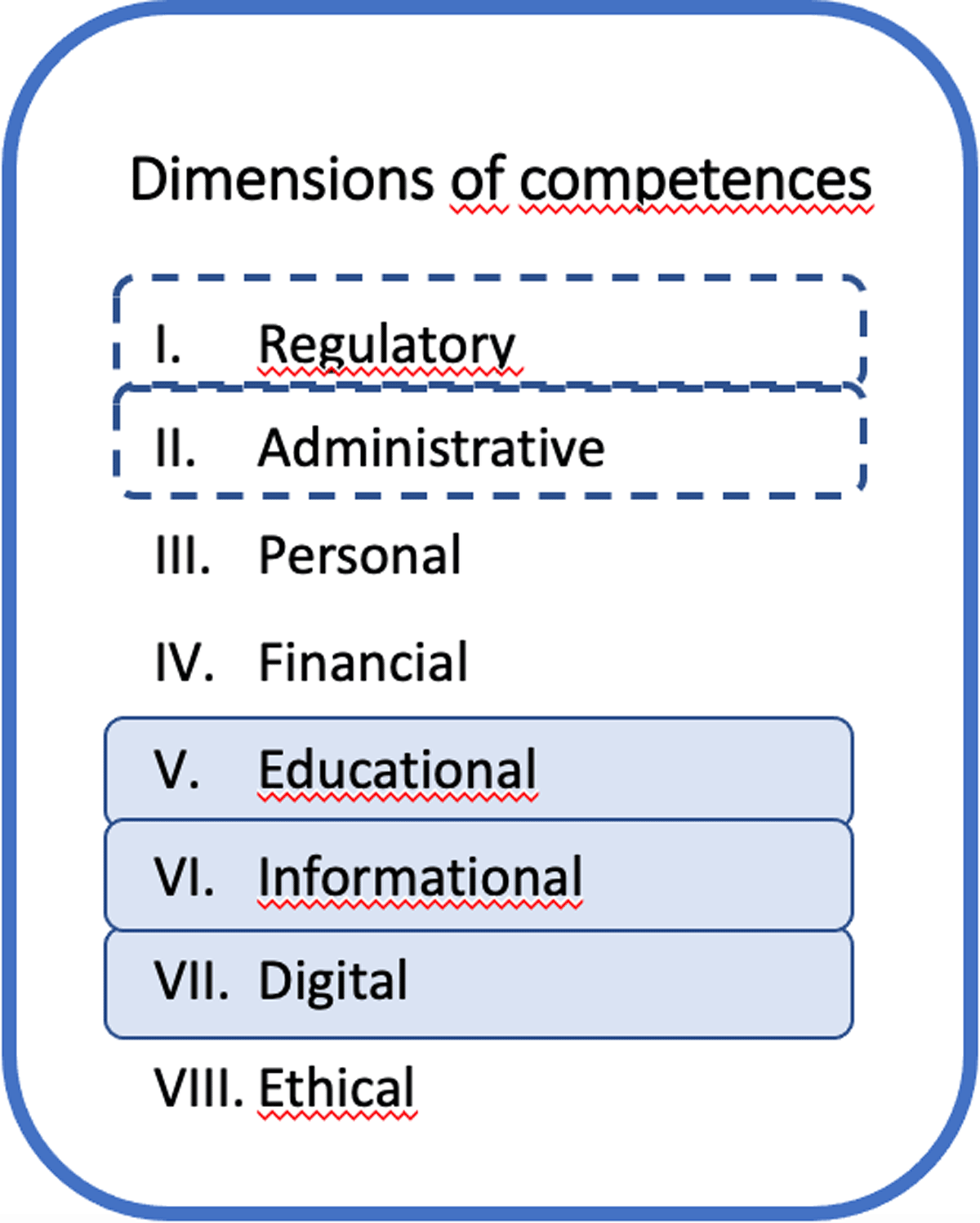
The second striking characteristic of the Courts Administrations in the Nordic countries concerns the competences they do hold. Typically, the Nordic bodies hold comprehensive competences in the dimensions referred to as «Informational» and «Digital». The CCJE survey displays that IT-competences are not always within the competences of Judicial Councils in Europe, but rather a competence for the Ministry of Justice. Public relations competences are often divided between the Ministry of Justice, court presidents or courts as well as the Judicial Council. The tradition for freedom of information, transparency and openness in Nordic democracies is a natural explanation for a transfer of informational and digital competences from the executive power to the body responsible for judicial governance.211 Transparency is a tool to strengthen the basis for democratic control of the exercise of power and for the participation of citizens in the democratic process,212 and is highly prioritised in the Nordic countries.
Allocation of IT-competence to bodies responsible for judicial governance is arguably not without hazards because it is a competence costly to manage. In a comparative study of digitalisation at the courts in the Nordic countries and the Baltic states published in 2022,213 the Nordic courts do not compare favourably with the Baltic courts where IT-competences are held by the ministries of justice. Allocation of IT-competences to bodies governing judicial independence might very well make technical development difficult and slow. Insufficient basic funding of the judiciaries is a general problem in the Nordic countries, highlighted in the Finnish report to the CCJE survey. So far, electronic case handling portals where all documents are filed electronically and case law databases with pseudo-anonymised decisions are available in Denmark, Finland, and Norway.
On the other hand, the Nordic approach to give priority to the informational and digital dimensions in the mandate for their independent court administrations is arguably a future-oriented move that judiciaries in other countries should take notice of. Informational and digital competences are keys to the development of the role of the judiciary in society and to improve the way courts deal with cases. To leave these competences to the executive power alone could be hazardous in the long run.
6. Concluding reflections
Judicial Councils have been used since the end of World War II to institutionalise the judiciary in times of change. Since the 1990s, they were recommended by European institutions to help countries in central and eastern Europe on their way to stable democratic societies governed by the rule of law. Today, “Judicial Councils” refers to bodies involved in the governance of judiciaries almost everywhere in Europe. However, the survey prepared before the work on CCJE Opinion No. 24 (2021) shows that there is great diversity with respect to competences and composition of such bodies. To lump all the bodies currently reported as Judicial Councils in an all-inclusive concept may seem to give little guidance to states planning to strengthen the independence of their judiciaries in order to prepare for unknown future developments in European democracies. However, concentrating on the joint goal of securing judicial independence rather than a particular concept may better accommodate for diversity throughout Europe.
Moreover, the survey we have explored also shows interactions between different institutions entrusted with the administration of the judiciary that need to be taken in account in an assessment of the independence of the judiciary in the state.
What we still do not know and have not been able to find out from our study, is what compositions, competences and interactions are indispensable or most successful to safeguard judicial independence. The complete lack of personnel competences does not for instance seem to be an obstacle to judicial independence in the Nordic countries. This might be the case, however, because independent appointment commissions secure a selection of qualified candidates relatively free from political influence.
Except for Sweden, all the Nordic countries developed national courts administrations during the 2000s, two of them only a few years ago. The review of the composition and competences of these bodies above has displayed that the development of full-fledged Judicial Councils, empowering judges to govern themselves with a multitude of competences in all the eight dimensions recognised in the Judicial Self-Governance Index, is a road not yet taken in any of these countries. Finland and Iceland are close, but neither of these Judicial Councils have the personnel competences that Opinion 24 finds preferable for such bodies. However, there is a noticeable trend towards more and more independent institutions with increasing numbers of judges on the boards.
What we also do not know is what role the larger political and economic context plays in this respect. It is highly probable however, that it is of some importance. After decades with economic growth and political stability, political actors in the two other branches of power in the Nordic countries seem to have found a path to interact respectfully with the judiciary that resembles each other but are not alike. Under these circumstances, a change in the institutional design of the judicial governance towards the traditional Judicial Council model with a number of personnel competences is not to be expected. It remains necessary to keep this political culture of mutual respect and interaction alive and safe from polarisation and misuse. A stable past is no guarantee for the future. The best course to this end must remain a constant topic to be discussed by society as a whole.
It remains open to debate why the questionnaires of Norway, Denmark and Finland answered that they had a Judicial Council in the CCJE survey. The answer might be that the persons filling out the report – like the ENCJ – focus on the role of those bodies in protecting judicial independence rather than the competences and composition of the individual body. Moreover, defining Courts Administrations as Judicial Councils might be seen as “judicial diplomacy”214 within judicial networks215 such as CCJE and ENCJ by which Nordic institutions wish to underline their belonging to the European family of independent judiciaries. Such networks offer important means of exchange and mutual support. After all, recent reforms in the Nordic countries took inspiration from the European discussion. However, it seems important to note in the dialogue that different institutional approaches to the set-up of Judicial Councils can lead to well working judiciaries. Although, having a ‘Judicial Council’ is not sufficient to safeguard judicial independence, a survey request for such a body is a valuable reminder of the fact that judicial independence should not be taken for granted. Reflections of the competences and compositions of bodies trusted the task to safeguard independent judiciaries, and the need to rethink different institutional designs from a comparative point of view, should perhaps be a regular exercise in a more turbulent Europe.
The answers from the Nordic countries to the survey, and recent developments towards increased number of judges on the boards of the Court Administrations illustrate nevertheless that it is hard to turn one’s back on «best practice» for institutional design of judicial governance. Promotion of European ideals for governance tend to harmonise as well as homogenise social practices. Bobek and Kosar have argued that the Judicial Council model provides an unsuitable institutional design for countries in transition and that Judicial Councils should cease to be promoted «as ‘the solution’ to judicial reform in Europe and on the global scale».216 Our hesitation towards a whole-hearted promotion of Judicial Councils is to begin with the fact that the diversity of compositions, competences and interactions included in the prevailing concept does not really provide one clear “model” easy to adopt and in the second place that we do not know what actually works to safeguard judicial independence. It might well be that different approaches involving different institutions reducing the possibility for cronyism and abuse by individuals or groups do the trick. Much more comparative research must be conducted to arrive at one or probably even more reliable models to safeguard judicial independence in the wide variety of member states in the European Council.
Notes
[3] The questionnaire and a compilation of answers can be found on the CCJE website: https://www.coe.int/en/web/ccje/opinion-no.-24-on-the-evolution-of-the-councils-for-the-judiciary-and-their-role-for-independent-and-impartial-judicial-systems?p_p_id=56_INSTANCE_3VHasSSKx889&p_p_lifecycle=0&p_p_state=normal&p_p_mode=view&p_p_col_id=column-4.
[4] The response of the Russian Federation – at the time still a member state – can be found there as well, but will not be taken into further consideration in this paper.
[5] The report is only available in Norwegian but published online by the government here: https://www.regjeringen.no/no/dokumenter/nou-2020-11/id2766587/.
[6] SOU 2023:12 Förstärkt skydd för demokratin och domstolarnas oberoende. [Strengthened protection for democracy and judicial independence]. English summary available on pp. 42–57 in the text available here: https://data.riksdagen.se/fil/B4E423C3-9C16-4392-BD38-C191D554FEE2.
[7] Katariná Sipulova, Samuel Spác, David Kosar, Tereza Papousková, and Viktor Derka, «Judicial Self-Governance Index: Towards Better understanding of the role of judges in governing the judiciary», Regulation & Governance 2022 pp. 1–21 on p. 3, doi: 10.1111/rego.12453.
[8] Katariná Sipulova, Samuel Spác, David Kosar, Tereza Papousková, and Viktor Derka, «Judicial Self-Governance Index: Towards Better understanding of the role of judges in governing the judiciary», Regulation & Governance 2022 pp. 1–21 on p. 3, doi: 10.1111/rego.12453.
[16] See for this division the two reports drawn up in preparation of CCJE Opinion No. 10 (2007), both accessible at https://www.coe.int/en/web/ccje/opinion-n-10-on-council-for-the-judiciary-in-the-service-of-society: Martine Valdés-Boulouque, The Current Situation in the Council of Europe’s Member States, CCJE (2007)3; See for a report on countries without a Judicial Council: Lord Justice Thomas, Preliminary Report Councils for the Judiciary, States without a High Council, CCJE (2007) 4; see also the respective chapters in David Kosar, Beyond Judicial Councils: Forms, Rationales and Impact of Judicial Self-Government in in Europe, in Kosar (ed) Judicial Self-Government in Europe Vol 19 No. 7 (2018) German Law Journal.
[17] W. Voermans/P. Albers, Councils for the Judiciary in EU Countries. European Council for the Efficiency of Justice, CEPEJ 2003.
[18] Nuno Garoupa, Tom Ginsburg, Guarding the Guardians: Judicial Councils and Judicial Independence. American Journal of Comparative Law, 57 (2009) 103–134.
[19] Michal Bobek, & David Kosar, Global Solutions, local damages: A critical study in Judicial Councils in Central and Eastern Europe. German Law Journal, (2014) 15, 1257–1292, 1265: the Ministry of Justice model, the Judicial Council model, the courts service model, a hybrid model, and the socialist model.
[20] For a helpful discussion of the literature see: Katariná Sipulova, Samuel Spác, David Kosar, Tereza Papousková, and Viktor Derka, «Judicial Self-Governance Index: Towards Better understanding of the role of judges in governing the judiciary», Regulation & Governance 2022 pp. 1–21 on p. 4, doi: 10.1111/rego.12453.
[21] See for the development of the French Council: Antoine Vauchez, The Strange Non-Death of Statism: Tracing the Ever Protracted Rise of Judicial Self Governance in France, in Kosar (ed) Judicial Self-Government in Europe Vol 19 No. 7 (2018) Germany Law Journal, p. 1613, 1616, 1617–1620. At this time, the French council only had disciplinary competences.
[22] Simone Benvenuti, Davide Paris, Judicial Self-Government in Italy: merits, Limits and the Reality of an Export Model, in Kosar (ed) Judicial Self-Government in Europe Vol 19 No. 7 (2018) German Law Journal, 1641, 1643.
[23] According to the fact sheets on the ENCJ-websites, there were also Judicial Councils in Greece and Romania, established in 1909.
[24] See for a detailed discussion: Antoine Vauchez, The Strange Non-Death of Statism: Tracing the Ever Protracted Rise of Judicial Self Governance in France, in Kosar (ed) Judicial Self-Government in Europe Vol 19 No. 7 (2018) German Law Journal, p. 1613.
[25] Simone Benvenuti, Davide Paris, Judicial Self-Government in Italy: Merits, Limits and the Reality of an Export Model, in Kosar (ed) Judicial Self-Government in Europe Vol 19 No. 7 (2018) German Law Journal, 1641, 1642.
[27] Aida Torres Pérez, Judicial Self-Government and Judicial Independence: the Political Capture of the General Council of the Judiciary of Spain, in Kosar (ed) Judicial Self-Government in Europe Vol 19 No. 7 (2018) German Law Journal, 1769.
[28] Anna Sledzinska-Simon, The Rise and Fall of Judicial Self-Government in Poland: On Judicial Reform Reversind Democratic Transition, in Kosar (ed) Judicial Self-Government in Europe Vol 19 No. 7 (2018) German Law Journal, 1839.
[29] For Romania see Bianca Selejan-Gutan, Romania: Perils of a «Perfect Euro-Model» of Judicial Council, in Kosar (ed) Judicial Self-Government in Europe Vol 19 No. 7 (2018) German Law Journal, 1707.
[31] See for a critical view: Maartje de Vesser, A Critical Assessment of the Role of the Venice Commission in Processes of Domestic Constitutional Reform, Legal Studies Research Paper SMU 2015.
[33] Michal Bobek and David Kosar, «Global solutions, local damages: A Critical study in Judicial Councils in Central and Eastern Europe», German Law Journal 2014 pp. 1257–1292. Cristina Parau, The Drive for Judicial Supremacy, in Judicial Independence in Transition (Anja Seibert-Fohr ed., 2012) 619, at 643.
[34] “Membership requires that the candidate country has achieved stability of institutions guaranteeing democracy, the rule of law, human rights and respect for and protection of minorities, the existence of a functioning market economy as well as the capacity to cope with competitive pressure and market forces within the Union.» https://www.europarl.europa.eu/enlargement/ec/pdf/cop_en.pdf.
[35] The Venice Commission and CCJE have recently stressed this: Venice Commission, Urgent Interim Opinion on the draft new constitution, 11 December 2020, Bulgaria, CDL-AD(2020)035 para 37; CCJE Opinion No 24 (2021) para 3.
[36] Here, two competing sets of values, judicial independence on the one hand and new public management on the other can be noted as decisive: Elaine Mak, Judicial Self-Government in the Netherlands: Demarcating Autonomy, in Kosar (ed) Judicial Self-Government in Europe Vol 19 No. 7 (2018) Germany Law Journal, 1801.
[37] Vereinigung der österreichischen Richterinnen und Richter, Überlegungen der richterlichen und staatsanwaltschaftlichen Standesvertretungen zu einem Rat der Gerichtsbarkeit (Mai 2011) 1 et seq., 9 et seq. critical perspective Markus Vasek, Richterbestellung in Österreich, 2021, 283 et seq.
[38] For a critical discussion of the suggestions: Fabian Wittreck, Gutachten G, Verhandlungen des 73. Deutschen Juristentages Bonn 2022, Band I C.H. Beck 2022, G.
[39] 3:53 Beschlüsse des DJT 2022. In: Verhandlungen des 73. Deutschen Juristentages Bonn 2022, Band II, C.H. Beck 2022.
[40] Michal Bobek and David Kosar, «Global solutions, local damages: A Critical study in Judicial Councils in Central and Eastern Europe», German Law Journal 2014 pp. 1257–1292.
[41] Rec 94(12) Adopted by the Committee of Ministers on 13 October 1994 at the 518th meeting of the Ministers’ Deputies); Council of Ministers Rec 2010(12) Judges: independence, efficiency and responsibilities, Chapter IV and explanatory notes.
[43] CDL-AD(2007)028-e Judicial Appointments – Report adopted by the Venice Commission at its 70th Plenary Session (Venice, 16-17 March 2007) para 25,26. Some doubts are expressed in para 26 if judges should be responsible for the administration of the judiciary https://www.venice.coe.int/webforms/documents/CDL-AD(2007)028.aspx.
[44] Venice Commission, Report on the Independence of the Judicial System – Part 1: The Independence of Judges, Doc. CDL-AD(2010)004 (Mar. 12–13, 2010). Para 32.
[46] ECtHR decision of 3.2.2022 –1469/19 – Advance Pharma SP.Z.O.O. v. Poland para. 184; ECtHR Grand Chamber of 15.3.2022 – 43572/18 – Grzeda v. Poland para 135; para 170; ECtHR of 8.11.2021 – 49868/19, 57511/19 – Dolinska-Ficek and Ozimek v. Poland; ECtHR of 30.4.2015 – 6899/12 – Mitrinovski v. The Former Yogoslav Republic of Macedonia, para 25.
[48] See Venice Commission, Urgent Interim Opinion on the draft new constitution, 11 December 2020, Bulgaria, CDL-AD (2020)035 para 37; CCJE Opinion No 24 (2021) para 3.
[52] Information from responses to CCJE questionnaire sent out in preparation of CCJE Opinion No. 24 (2021): Albania, Andorra, Armenia, Azerbaijan, Belgium, Bosnia and Herzegovina, Bulgaria, Croatia, Cyprus, Denmark, Estonia, Finland, France, Georgia, Greece, Hungary, Ireland, Italy, Latvia, Lithuania, Malta: did not respond to questionnaire, but is included based on information from ENCJ, Monaco, Montenegro, Netherlands, North Macedonia, Norway, Poland, Portugal, Romania, San Marino, Slovakia, Slovenia, Spain, Turkey, Ukraine.
[53] Information from responses to CCJE questionnaire sent out in preparation of CCJE Opinion No. 24 (2021): Austria, Czech Republic, Germany, Luxembourg, Sweden, Switzerland no one at the federal level, 5 out of 26 cantons have one, UK.
[54] Information from responses to CCJE questionnaire sent out in preparation of CCJE Opinion No. 24 (2021): Albania, Andorra, Armenia, Azerbaijan, Belgium, Bosnia and Herzegovina, Bulgaria, Croatia, Denmark, Estonia, Finland, France, Georgia, Greece, Hungary, Ireland, Italy, Latvia, Lithuania, Monaco, Montenegro, Netherlands, North Macedonia, Norway, Poland, Portugal, Romania, San Marino, Slovakia, Slovenia, Spain, Turkey, Ukraine.
[55] Sipulova Katariná, Spác, Samuel, Kosar, David, Papousková, Tereza and Derka, Viktor, «Judicial Self-Governance Index: Towards Better understanding of the role of judges in governing the judiciary», Regulation & Governance 2022 pp. 1–21 on p. 3, doi: 10.1111/rego.12453.
[56] David Kosar, Beyond Judicial Councils: Forms, Rationales and Impact of Judicial Self-Government in in Europe, in Kosar (ed) Judicial Self-Government in Europe Vol 19 No. 7 Germany Law Journal, 1567–1612; Sipulova Katariná, Spác, Samuel, Kosar, David, Papousková, Tereza and Derka, Viktor, «Judicial Self-Governance Index: Towards Better understanding of the role of judges in governing the judiciary», Regulation & Governance 2022 pp. 1–21 on p. 3, doi: 10.1111/rego.12453.
[57] Information from responses to CCJE questionnaire sent out in preparation of CCJE Opinion No. 24 (2021) (CCJE information): Albania, Andorra, Armenia, Azerbaijan (Judges selection committee formed by council), Belgium, Bosnia and Herzegovina, Bulgaria, Croatia, Cyprus, Finland (technical role), France (gives a binding opinion on proposal of MoJ, judges at supreme court, presidents of courts are selected by the council), Georgia, Hungary, Italy, Latvia, Lithuania, Malta: advice, Monaco, Montenegro, North Macedonia, Poland, Portugal, Romania, San Marino, Slovakia, Slovenia, Spain, Turkey.
[58] CCJE information: Albania, Andorra, Armenia, Azerbaijan, Belgium (not for deputy and specific mandates), Bosnia and Herzegovina, Bulgaria, Croatia, Cyprus, Finland, France (promotion of judges except supreme court judges, court presidents suggested by MoJ to council), Georgia, Greece, Hungary, Italy, Latvia, Lithuania, Malta, Monaco, Montenegro, North Macedonia, Poland, Portugal, Romania, San Marino, Slovakia, Slovenia, Spain, Turkey, Ukraine.
[59] CCJE information: Albania, Andorra, Armenia, Azerbaijan, Belgium, Bosnia and Herzegovina, Bulgaria, Cyprus, Georgia, Ireland, Italy, Lithuania, Montenegro, North Macedonia, Portugal, Romania, San Marino: Not yet, but is about to be introduced on the recommendation of GRECO, Slovakia, Spain, Turkey.
[63] CCJE information: Andorra, Armenia, Azerbaijan (suggestion), Belgium (proposal), Bulgaria (except of SC and Supreme Administrative Court), Croatia (except president of SC), Cyprus, Estonia (suggestion, can block appointment), France, Georgia, Greece, Latvia, Lithuania, North Macedonia, Netherlands (proposal), Portugal, Romania, San Marino (no removal), Slovakia, Slovenia, Spain (removal only for disciplinary reasons).
[64] CCJE information: Denmark, Finland, Norway, Poland (expresses opinion in certain cases), Ukraine.
[65] CCJE information: Albania, Andorra, Armenia, Azerbaijan, Belgium: no, but Council may provide information to the disciplinary courts if a judge refuses to assist in the exercise of powers of the Council, Bosnia and Herzegovina, Bulgaria, Croatia, Cyprus, France, Georgia, Ireland, Italy, Malta, Monaco, Montenegro, North Macedonia, Poland: elects judges’ disciplinary representative, Portugal, Romania, San Marino, Slovakia, Slovenia (independent body within), Spain, Switzerland in cantons, where they are in place, Turkey, Ukraine.
[67] CCJE information: Albania. Andorra, Armenia, Bulgaria: via Court of Cassation or Supreme Administrative Court), Italy, Latvia, North Macedonia: and a proposal for new legal solutions, Poland, Portugal: no formal procedure, Romania (also Ombudsman), Slovakia, Slovenia, Spain.
[70] CCJE information: Denmark: Negotiation, Monaco: mentions it to the prince, Netherlands: discussions with MoJ, Norway: discussions with parliament and MoJ, Romania, San Marino.
[73] CCJE information: Belgium, Hungary (may also by 2/3 majority propose to remove President of the National Office for the Judiciary Latvia.
[74] CCJE information: Azerbaijan, Bulgaria (plus right to appeal to court), Croatia (mentioned strong constitutional position), San Marino.
[76] CCJE information: Albania, Andorra, Bosnia and Herzegovina, Bulgaria, Denmark, Estonia, Finland, Georgia, Greece, Hungary, Italy, Latvia, Lithuania, Netherlands, Norway, Portugal, San Marino, Slovakia, Slovenia, Spain, Turkey.
[77] CCJE information: Albania, Andorra, Azerbaijan, Belgium, Bosnia and Herzegovina, Estonia, Finland, Georgia, Greece, Hungary, Ireland, Italy, Latvia, Lithuania, Netherlands, North Macedonia, Portugal, Romania, San Marino, Slovakia, Slovenia (limited), Spain, Turkey.
[78] CCJE information: Albania, Andorra, (parliament decides the budget, but council distributes funds to courts and public prosecutors), Armenia, Bosnia and Herzegovina, Bulgaria, Denmark, Finland, Georgia, Hungary, Lithuania, Montenegro, Netherlands, North Macedonia, Poland, Norway, Turkey.
[86] CCJE information: Albania, Andorra, (parliament decides the budget, but Council distributes it to the courts and public prosecutors), Armenia, Bosnia and Herzegovina, Bulgaria, Denmark, Finland, Georgia, Hungary, Lithuania, Montenegro, Netherlands, North Macedonia, Poland, Norway, Turkey.
[87] CCJE information: Azerbaijan, Belgium, Bosnia and Herzegovina, Croatia, Denmark, Estonia, Finland (preparing budget), France, Greece, Italy, Latvia, Lithuania (government).
[88] CCJE information: Andorra, Azerbaijan, Belgium, Bosnia and Herzegovina, Croatia, Denmark, Finland, Georgia, Latvia, Lithuania, Montenegro, Norway, Poland, Portugal, San Marino, Slovenia, Spain, Turkey.
[89] CCJE information: Albania, Andorra, Azerbaijan, Belgium, Bosnia and Herzegovina, Bulgaria, Denmark, Finland, Georgia, Hungary, Ireland, Italy, Latvia, Lithuania, Montenegro, Norway, San Marino, Slovakia, Spain, Turkey.
[90] CCJE information: Albania: School of magistrates, Armenia: Educational Commission of the general assembly of judges, Azerbaijan: Justice Academy of the Ministry of Justice, Belgium: l’« Institut de formation judiciaire », Bosnia and Herzegovina: Centres for judicial and prosecutorial trainings (Federation of Bosnia and Herzegovina, Republika Srpska and Judicial Commission of Brcko District BiH), Bulgaria: National Institute of Justice, Croatia: Judicial academy (independent body), Cyprus: The Cyprus Judicial Training School of the Supreme Court, Czech Republic: Judicial Academy, Estonia: Training Council, Finland: Judicial Training Board, France: L’école nationale de la magistrature, Georgia: High School of Justice, Greece: National school of judges, Hungary: President of the National Office for the Judiciary, Italy: Scuola Superiore della Magistratura, Latvia: The Latvian Judicial Training Centre (foundation based on agreement with the Court Administration), Luxembourg: cooperation with French ENM, Prosecutor general at the Supreme Court, Montenegro: Training Center in the Judiciary and State’s prosecutor office, Netherlands: training and study center for the judiciary, North Macedonia: Academy for Judges and Prosecutors, Norway: Judges training Committee appointed by Council following consultation of Association of judges, Poland: National School of Judiciary and Public Prosecution, Romania: National Institute of Magistracy, Russia: Judicial Department at the Supreme Court, Russian State University of Justice, Slovakia: The Judicial Academy of the Slovak Republic, Individual courts and, centrally, the National Courts Judicial Administration, Turkey: Justice Academy of Turkey, Ukraine: National School of Judges of Ukraine, UK: judicial college, administered by the Judicial Executive Board.
[93] CCJE information: Albania, Andorra, Armenia, Azerbaijan, Belgium, Bosnia and Herzegovina, Bulgaria, France, Georgia, Hungary, Ireland, Lithuania, Monaco, Netherlands, Norway, Poland, Portugal, Romania, San Marino: developed on consultation with judges and approved by Council, Slovakia, Slovenia, Spain, Turkey.
[94] CCJE information: Albania, Andorra, Armenia, Belgium, Bosnia and Herzegovina, Bulgaria, Denmark, Finland, Georgia, Ireland, Montenegro, Netherlands, Norway, San Marino, Spain: instructions and recommendations.
[95] CCJE information: Armenia, Azerbaijan, Belgium, Croatia, Estonia, Finland, France, Greece, Italy, Latvia, Lithuania, Monaco, North Macedonia, Poland, Portugal, Romania, San Marino, Slovakia: except for Supreme Court, Spain: material means, Turkey.
[97] CCJE information: Belgium, Bosnia and Herzegovina, Bulgaria, Croatia, Hungary, Italy, Latvia, (court administration), Lithuania, Netherlands, North Macedonia, Poland.
[99] CCJE information: Belgium: « Collège des cours et tribunaux », Georgia, Ireland, Lithuania, Ukraine.
[101] CCJE information: Austria, Czech Republic, Germany, parliament has a voice in: Austria, Germany, Switzerland.
[102] see for the Czech Republic: Adam Blisa, Tereza Papoušková, Marína Urbániková Judicial Self-Government in Czechia: Europe’s Black Sheep? in Kosar (ed) Judicial Self-Government in Europe Vol 19 No. 7 (2018) Germany Law Journal, 1951; see on the role of court presidents: Adam Blisa and David Kosař, Court Presidents: The Missing Piece in the Puzzle of Judicial Governance, in Kosar (ed) Judicial Self-Government in Europe Vol 19 No. 7 (2018) German Law Journal, 2031 and the questionnaires of the member states gathered in preparation of CCJE Opinion No. 19 (2016).
[105] For a detailed discussion of judicial self-government in Germany see Fabian Wittreck, German Judicial Self Government – Institutions and Constraints, in Kosar (ed) Judicial Self-Government in Europe Vol 19 No. 7 (2018) German Law Journal, 1931.
[107] Czech Republic, Germany based on evaluations drafted by court presidents and subject to judicial review.
[108] CCJE information: Switzerland in some cantons public vote, Germany Richterwahlausschüsse (federal level, certain Länder).
[110] CCJE information: Denmark, Finland, Greece, Hungary, Ireland, Latvia, Lithuania, Netherlands, Norway, Ukraine.
[111] Czech Republic: committee appointed by MOJ or Court Presidents; Estonia Judicial Examination Committee, Denmark, Finland: Judicial Appointments Board, Greece: Entering the school of judges after difficult exams carried out by a committee of judges, prosecutors and university professors, Hungary: President of the National Office for the Judiciary, Ireland, Latvia, Lithuania, Luxembourg: Commission de recrutement des attachés de justice, Netherlands: national committee of selection of judges, Norway: Judicial Appointment Board, Sweden: The Judges Proposals Board is a state authority composed of members from the judiciary, the attorney general’s office, the bar association and parliament. The board proposes candidates – in order of qualification – to the government (cabinet of ministers), which decide on appointments, Ukraine: High Qualification Commission of Judges of Ukraine, UK.
[116] CCJE information: Albania, Azerbaijan, Bulgaria among 14 members, 6 members are elected by their peers, but the number is higher because of 2 ex officio judges and parliament elects judges as well as members, Croatia, Estonia, Finland, Georgia, Greece, Latvia, Monaco, Netherlands, North Macedonia, Poland, Romania, Slovenia, Spain, Turkey, Ukraine.
[117] CCJE information: Bosnia and Herzegovina (15 members, 11 from judiciary, at least 5 judges), France (22 members, 6+6 judges and prosecutors elected by their peers, 8 prominent figures outside judiciary, 2 ex officio, Italy (27 members, 16 from judiciary, 12 judges), Malta (not of members, but majority of votes), Portugal (8 of 17).
[118] CCJE information: Armenia, Belgium, Montenegro, San Marino, Slovakia, since 2022 also Denmark.
[119] CCJE information: Denmark (11 members, 5 judges, since 2022, there are 6 judges among 12 members) Norway (11 members, 5 judges).
[121] CCJE information: Andorra, Armenia (5 by peers, 5 by parliament), Bosnia and Herzegovina, Bulgaria, Estonia, France, Georgia, Hungary, Italy, Latvia, North Macedonia, Netherlands, Portugal, Romania, San Marino: not yet, such a reform is under discussion now, Slovenia.
[124] CCJE information: Finland, Latvia: supreme Court, Romania: general assemblies in every court, election results verified by Senate.
[125] CCJE information: Armenia, Bulgaria, Estonia, Georgia, Hungary (proposals for the Council are made by a committee), Latvia, Lithuania. Montenegro, organised by election committee, Ukraine.
[129] Before, however, there is an election among the judges and parliament appoints the judges elected.
[130] CCJE information: Albania, Armenia, Azerbaijan, Belgium, Bosnia and Herzegovina, Croatia, Finland, Georgia, Hungary, Latvia, Monaco, Montenegro, North Macedonia, Norway, Portugal, Romania, San Marino, Slovakia, Slovenia, Spain, Turkey.
[132] CCJE information: 15 years: Bulgaria, 10 years: Albania, Armenia, 7 years: Romania, 5 years: Georgia, Hungary, 3 years: Lithuania; Spain: 3 judges must have more than 25 years of experience.
[135] CCJE information: Bulgaria: 6, but those can be judges as well, Cyprus, Greece, Ireland, Lithuania.
[136] CCJE information: Armenia (5), Bulgaria (6) Hungary: President of the National Office for the Judiciary, MoJ, Chief Public Prosecutor, President of the Bar Association, President of Notaries, President of the National Council for the Judiciary may attend in a consultative capacity and also representative of interested organisations, Italy (8), Montenegro (1), Romania, Slovenia (5), Spain (8) Turkey (3), Ukraine (4).
[137] CCJE information: Albania (2), Belgium (6), Croatia (2), Denmark, Italy, Spain, Turkey (1 min), Ukraine (2).
[138] CCJE information: Albania (2), Belgium, Denmark, Estonia (1), Italy, Norway (2) Turkey (1 min), Ukraine (2).
[139] CCJE information: Albania, Armenia, Bulgaria, Italy, Montenegro, Turkey, Ukraine: 15 years, Belgium: 10 years, Romania: 7 years, Georgia: 5 years.
[140] CCJE information: Albania, Bulgaria, Montenegro, Romania (members will be checked for work in the secret service before 1990 and may not have held public office in the last 5 years), Spain (high prestige), Ukraine.
[145] CCJE information: Albania (1), Croatia (2), Estonia (2), Monaco (also Crown Council), North Macedonia, Poland (4 mp, 2 senators, San Marino (MoJ and 11 members of Parliament), Turkey.
[146] CCJE information: Andorra, Armenia, Bosnia and Herzegovina, Croatia, Denmark, Estonia, Finland, France, Georgia, North Macedonia, Ukraine, in Turkey, non-judge applicants apply to the President of Parliament.
[149] CCJE information: Azerbaijan, Bulgaria, France, Georgia, Poland (4 Sjem, 2 Senate), Portugal, Slovakia, Ukraine.
[152] CCJE information: Albania, Azerbaijan, Belgium (Senate, non-judge members), Bulgaria (members not elected by judges), Georgia (5), Italy (1/3 of members, “lay members”), Poland (4 Sjem, 2 Senate), Portugal (7), North Macedonia (3), Norway (2), Romania (Senate, non-judges), San Marino, Slovakia (3), Slovenia (5), Spain (all, including judges selected by their peers, 10 by congress, 10 senate), Turkey (non-judges and prosecutors), Ukraine (some).
[153] CCJE information: Denmark, Finland, Slovakia (3), in Norway, by the King in Council i.e. the government.
[154] CCJE information: Georgia (1), Slovakia (3), North Macedonia (3), Poland (1), Portugal (2), Ukraine.
[155] CCJE information: Albania, Armenia, Belgium, Bulgaria, Georgia, Poland, Montenegro, Portugal, San Marino, Spain; Turkey.
[156] CCJE information: Azerbaijan: MoJ, President of Supreme Court, Cyprus all judges of the Supreme Court, Bulgaria: President of SC, Supreme Administrative Court an Prosecutor General, Estonia: Chief Justice, Legal Chancellor and Chief Public Prosecutor, France: president cour de cassation for formation of judges and Public Prosecutor general for formation for prosecutors, Georgia: President of Supreme Court, Greece: President of the Supreme Court and prosecutor general, Hungary: The president of the Kúria, Ireland: all judges, Italy The President of the Republic, The President of the Supreme Court (Suprema Corte di cassazione), The Attorney General at the Supreme Court (Procuratore Generale della Repubblica presso la Suprema Corte di cassazione), Latvia: The Chief Justice of the Supreme Court; The President of the Constitutional Court; The Minister of Justice; The Chairperson of the Legal Affairs Committee of the Saeima; The Prosecutor General; The Chair of the Latvian Council of Sworn Advocates; The Chair of the Latvian Council of Sworn Notaries; The Chair of the Latvian Council of Sworn Bailiffs; Lithuania: The President of the Supreme court, The President of the Supreme administrative Court and the President of the Court of Appeals, Monaco: director of judicial services, first president of the court of revision, Montenegro: President of the Supreme Court, Minister of Justice, North Macedonia: President of the Supreme Court and MoJ, Poland: president SC, president Supreme Administrative Court, MoJ, Portugal: president of the supreme court, Romania: the President of the High Court of Cassation and Justice, who represents the authority of the judges, the Minister of Justice and the General Prosecutor of the Prosecutor’s Office attached to the High Court of Cassation and Justice, San Marino: MoJ, draft reform aims at removal, Turkey: MoJ = President of Council, Deputy MoJ member, Ukraine: President Supreme Court.
[157] CCJE information: Albania, Andorra, Armenia, Belgium, Bosnia and Herzegovina, Croatia, Denmark, Finland, Netherlands, Norway, Slovakia, Slovenia, Spain: answer no, but President SC is attached to it.
[158] E.g., Konrad Zweigert, Hein Kötz, An introduction to Comparative Law, 3d ed, Clarendon Press 1998 p. 276 and Husa, Jaakko, A New Introduction to Comparative Law, Bloomsbury 2015 p. 228.
[160] 2022 EU Justice Scoreboard, Figure 50, p. 40; ENCJ survey 2022. https://ec.europa.eu/info/sites/default/files/eu_justice_scoreboard_2022.pdf.
[162] ENCJ Survey on judicial independence 2022, 34 ff; https://www.encj.eu/node/620.
[163] For details, see Bull, Thomas, «Institutions and Division of Powers» in Krunke, Helle and Thorarensen, Björg (eds), The Nordic Constitution. A Comparative and Contextual Study, Hart Publishing 2018 pp. 43–66 and Smith, Eivind «Judicial Review of Legislation» in Krunke and Thorarensen (eds), The Nordic Constitution, Hart Publishing 2018 pp. 107–132.
[164] E.g., Smits, Jan «Nordic Law in European Context: Some comparative observations», in Husa, Jaakko, Nuotio, Kimmo and Pihlajamäki, Heikki, Nordic Law – Between Tradition and Dynamism, Intersentia 2007 p. 55–56.
[165] Krunke and Thorarensen, «Concluding thoughts» in Krunke, Helle and Thorarensen, Björg (eds), The Nordic Constitution. A Comparative and Contextual Study, Hart Publishing 2018 pp. 203–218 on p. 205. For the historical context, see Suksi, «Common Roots of Nordic Constitutional Law? Some Observations on Legal-Historical Development and Relations between the Constitutional Systems of Five Nordic Countries» in Krunke, Helle and Thorarensen, Björg (eds), The Nordic Constitution. A Comparative and Contextual Study, Hart Publishing 2018 pp. 9–42.
[167] See John Bell, Judiciaries within Europe: A Comparative Review, Cambridge University Press 2006 p. 264.
[169] SOU 2023:12 Förstärkt skydd för demokratin och domstolarnas oberoande, [Strengthened protection for democracy and judicial independence]. https://data.riksdagen.se/fil/B4E423C3-9C16-4392-BD38-C191D554FEE2.
[171] See Motion 2016/17:3294 of Andreas Norlén and others, “Domstolarnas oberoende” [An independent Judiciary]. On the international level, the independence of the Swedish judiciary has been critically discussed with respect to a small portion of remuneration of judges that is performance based. See e.g. CCJE Opinion No. 17 (2014) para 11, fn 85.
[176] A new chapter 19 a was included in Domstolslagen [Courts Act] 25.08.2016/673 by law 22.2.2019/209. The previous governance system is described by Sarvilinna, Sami, «Court Administration in Finland» in Wahlgren, Peter, Procedural Law: Court Administrations, Scandinavian Studies in Law 2007 (51), Stockholm Institute for Scandinavian Law pp. 591–605.
[177] Cf. Anna Nylund, «An Introduction to Finnish Legal Culture», in Koch, Sören and Sunde, Jørn Øyrehagen (eds), Comparing Legal Cultures, 2nd edition, Fagbokforlaget 2020 pp. 149–190 on p.155.
[183] The statutory basis is Lög um dómstóla [Courts Act] 7 June 2016 nr. 50, chapter II (art. 5–10), enforced 1 January 2018. The former governance system is described in brief in Wahlgren, Peter, Procedural Law: Court Administrations, Scandinavian Studies in Law 2007 (51), Stockholm Institute for Scandinavian Law pp. 606–607 «Iceland’s Judicial System».
[186] For a more detailed presentation of the present governance system, see «The Danish Courts – An organization in Development», in Wahlgren, Peter, Procedural Law: Court Administrations, Scandinavian Studies in Law 2007 (51), Stockholm Institute for Scandinavian Law pp. 581–590 and Arvid Rosseland (ed.), «Presentation of the National Courts Administration and the Norwegian Courts Reforms of 2002» in Wahlgren, Peter, Procedural Law: Court Administrations, Scandinavian Studies in Law 2007 (51), Stockholm Institute for Scandinavian Law pp. 608–628.
[196] Two Norwegian Official Reports (NOUs) are only available in Norwegian; NOU 2019: 17 Domstolstruktur [Court Structure] and NOU 2020: 11 Den tredje statsmakt [The third power of the state].
[210] Fabian Wittreck, Gutachten G, Verhandlungen des 73. Deutschen Juristentages Bonn 2022, Band I C.H. Beck 2022, G 72 et seq., Markus Vasek, Richterbestellung in Österreich, Verlag Österreich, 2022, 246 et seq.
[211] See Oluf Jørgensen, (ed.), Offentlighed i Norden [Public Access to Official Documents in the Nordic Countries], Nordicom Information (36) 2014, with English summary on pp. 233–260.
[213] TemaNord 2022:518 Digitalization at the courts. A report of the digitalization at the courts in the Nordic countries and the Baltic states.
[214] See David Law, “Judicial Comparativism and Judicial Diplomacy”, 163 University of Pennsylvania Law Review (2015) 927.
Competing Interests
Anne Sanders, have no competing interests to declare, but would like to mention that I have served as the expert of CCJE Opinion 24 (2021) and three other CCJE Opinions.
Ragna Aarli, have no competincg interests to declare.