
Table 1
Factors, items, factorial loads of the Public Defenders’ Governance Scale, and median responses.
| Factor | Item | Factor Load | Responses Median |
|---|---|---|---|
| Control and Accountability | 32 – The Public Defenders’ Office carries out orientation campaigns with its members in order to prevent functional faults. | 0.41 | 2 |
| 33 – The Public Defenders’ Office uses mechanisms to control the actions of its managers. | 0.50 | 4 | |
| 34 – The internal control bodies of the Public Defenders’ Office carry out periodic audits. | 0.51 | 4 | |
| 35 – The Public Defenders’ Office uses the recommendations of internal control bodies in the decision-making process. | 0.57 | 4 | |
| 37 – The organs of the higher level of the Public Defenders’ Office exert control over each other. | 0.40 | 4 | |
| 39 – The Public Defenders’ Office establishes mechanisms that guarantee the autonomy of internal control bodies. | 0.47 | 4 | |
| 41 – The Public Defenders’ Office establishes mechanisms to guarantee the answerability of its public agents. | 0.56 | 5 | |
| 42 – The Public Defenders’ Office punishes the public agents that act with impropriety. | 0.61 | 4 | |
| 43 – Public Defenders’ Office managers are held accountable for their actions. | 0.70 | 4 | |
| 44 – The Public Defenders’ Office applies, in its daily life, the Rule of Access to Information. | 0.51 | 5 | |
| Social Participation | 13 – The bodies of the higher level of the Public Defenders’ Office adopt formal mechanisms of social participation for decision-making. | 0.52 | 2 |
| 14 – The Public Defenders’ Office considers the opinions of groups of society in its decisions. | 0.40 | 4 | |
| 15 – The Public Defenders’ Office allows the participation of diverse stakeholders (defenders, servants and citizens) in its decision-making process. | 0.53 | 2 | |
| 17 – The Public Defenders’ Office conducts public hearings to address the needs of the population. | 0.36 | 3 | |
| 19 – Public Defenders’ Office allows the participation of all stakeholders (defenders, servants, and citizens) in the internal processes for the choice of leaders. | 0.71 | 1 | |
| 21 – Public Defenders’ Office establishes mechanisms of social participation in the election of its leadership. | 0.72 | 1 | |
| Strategic Resources | 1 – Public Defenders’ Office conducts training activities for the public officials responsible for the services provided to citizens. | 0.51 | 3 |
| 2 – The Public Defenders’ Office provides opportunities to update defenders’ knowledge. | 0.47 | 5 | |
| 3 – Public Defenders’ Office trains its public agents of the finalistic area in several fields of knowledge. | 0.48 | 4 | |
| 4 – The Public Defenders’ Office agencies maintain multidisciplinary teams for citizen services. | 0.42 | 3 | |
| 5 – The Public Defenders’ Office conducts leadership training. | 0.50 | 2 | |
| 6 – The Public Defenders’ Office provides the necessary working conditions for public agents to carry out their tasks. | 0.49 | 3 | |
| 8 – Public Defenders’ Office’s budget resources have increased over the last three years. | 0.43 | 5 | |
| 9 – Public officials use Public Defenders’ Office action plans to guide their activities. | 0.43 | 4 | |
| Access to justice | 16 – Public Defenders’ Office establishes channels of communication with society. | 0.59 | 4 |
| 18 – Public Defenders’ Office conducts educational campaigns to inform citizens about the services that are provided. | 0.60 | 4 | |
| 22 – The Public Defenders’ Office works together with other public agencies to increase access to vulnerable populations. | 0.66 | 5 | |
| 23 – The Public Defenders’ Office works together with society’s organizations to increase access to justice. | 0.67 | 4 | |
| 24 – The Public Defenders’ Office contacts other public bodies through administrative channels with the aim of solving the problems of its public customers. | 0.42 | 6 | |
| 49 – The Public Defenders’ Office takes action to serve vulnerable populations in hard-to-reach locations. | 0.62 | 5 | |
| 50 – The Public Defenders’ Office conducts roaming customer service campaigns. | 0.51 | 6 | |
| 55 – Public Defenders’ Office acts to bring the defender closer to society. | 0.49 | 4 |
[i] Source: Research data.
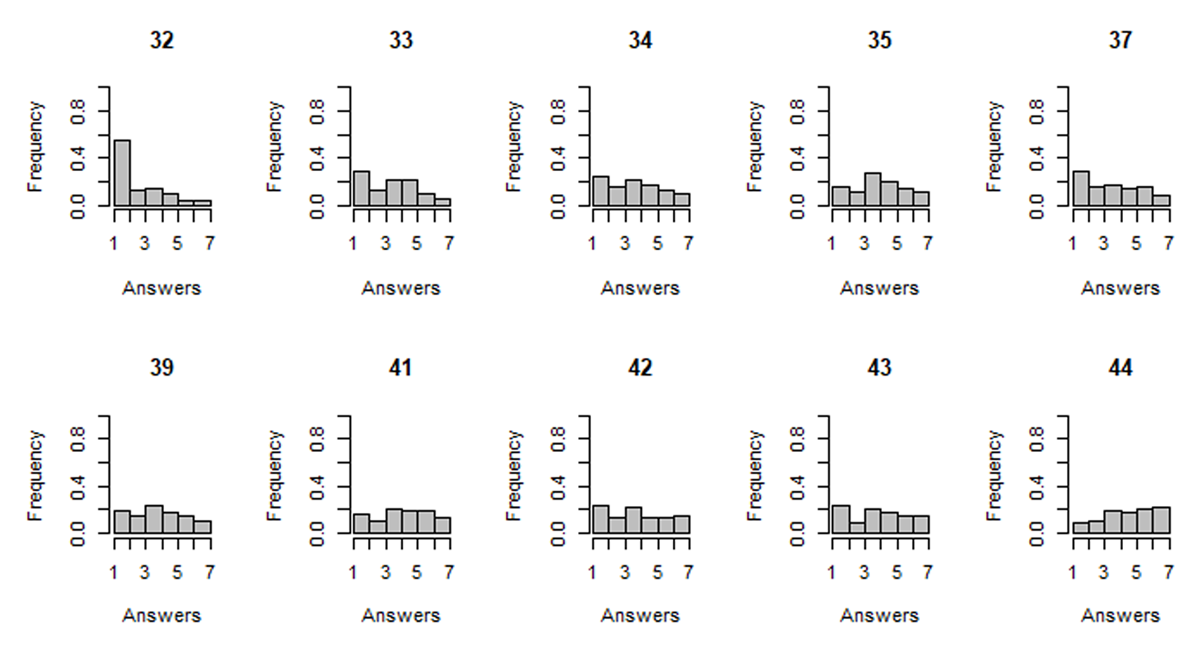
Figure 1
Control and Accountability. Source: Research data.
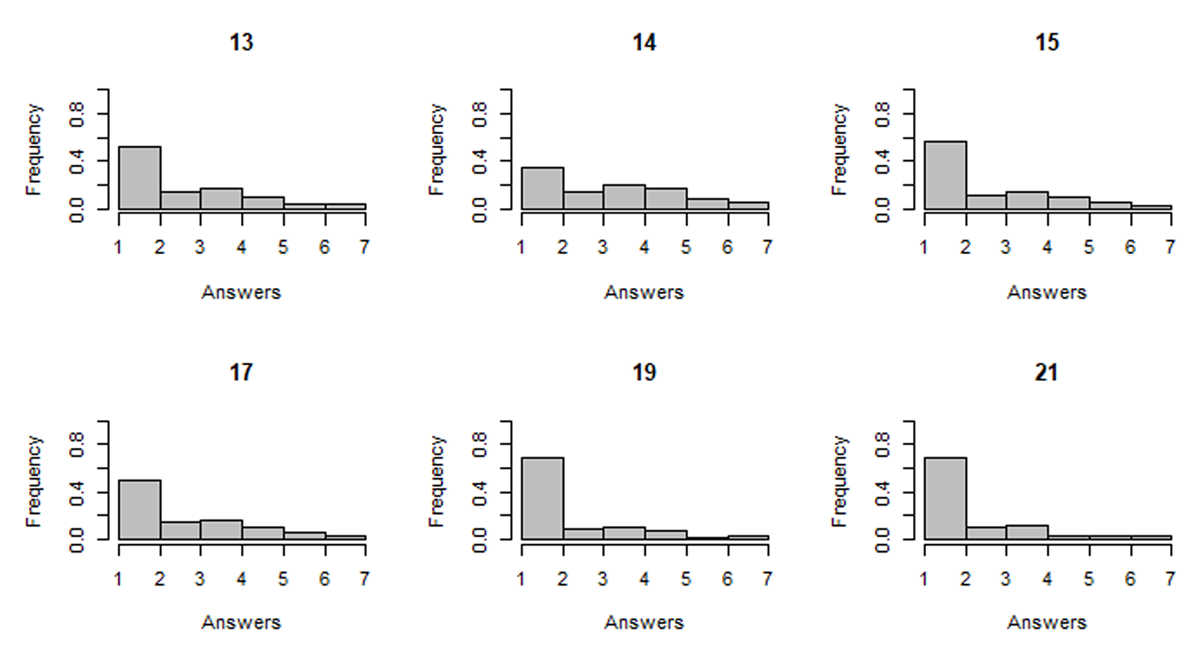
Figure 2
Social Participation. Source: Research data.
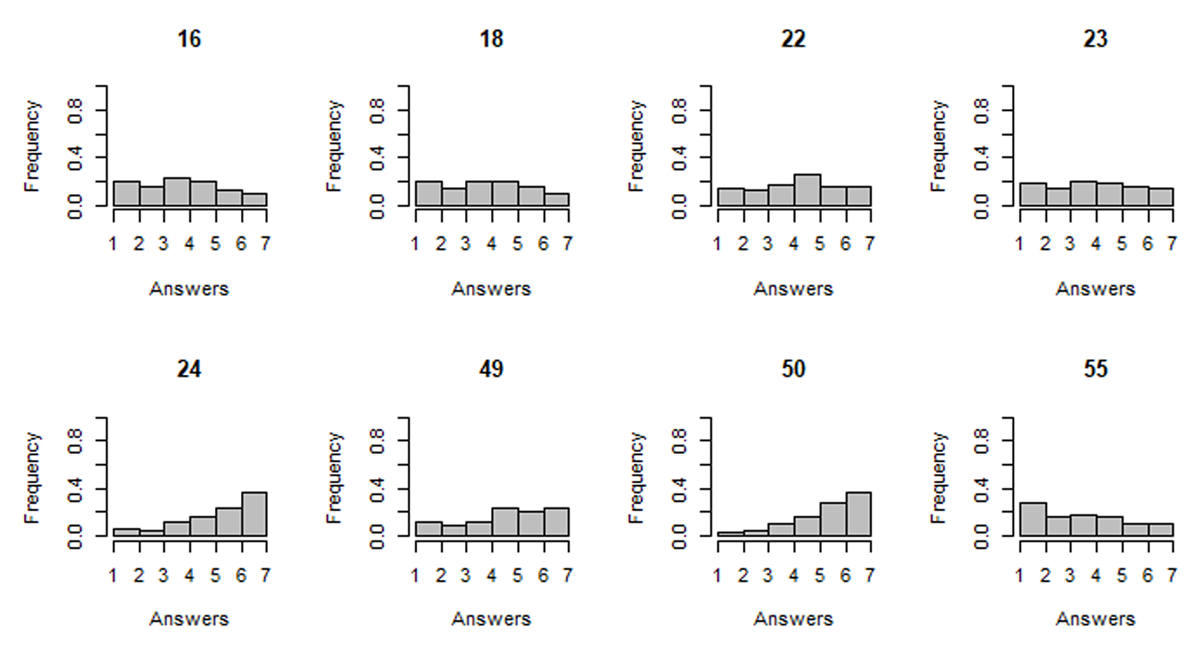
Figure 3
Strategic Resources. Source: Research data.
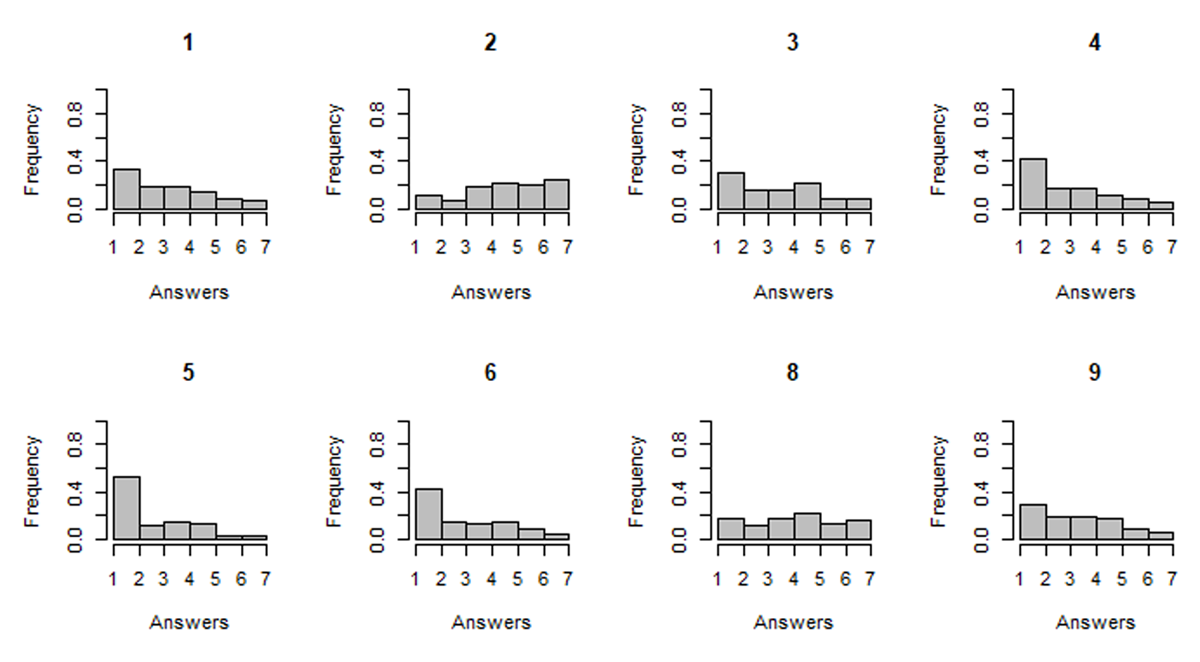
Figure 4
Access to Justice. Source: Research data.