
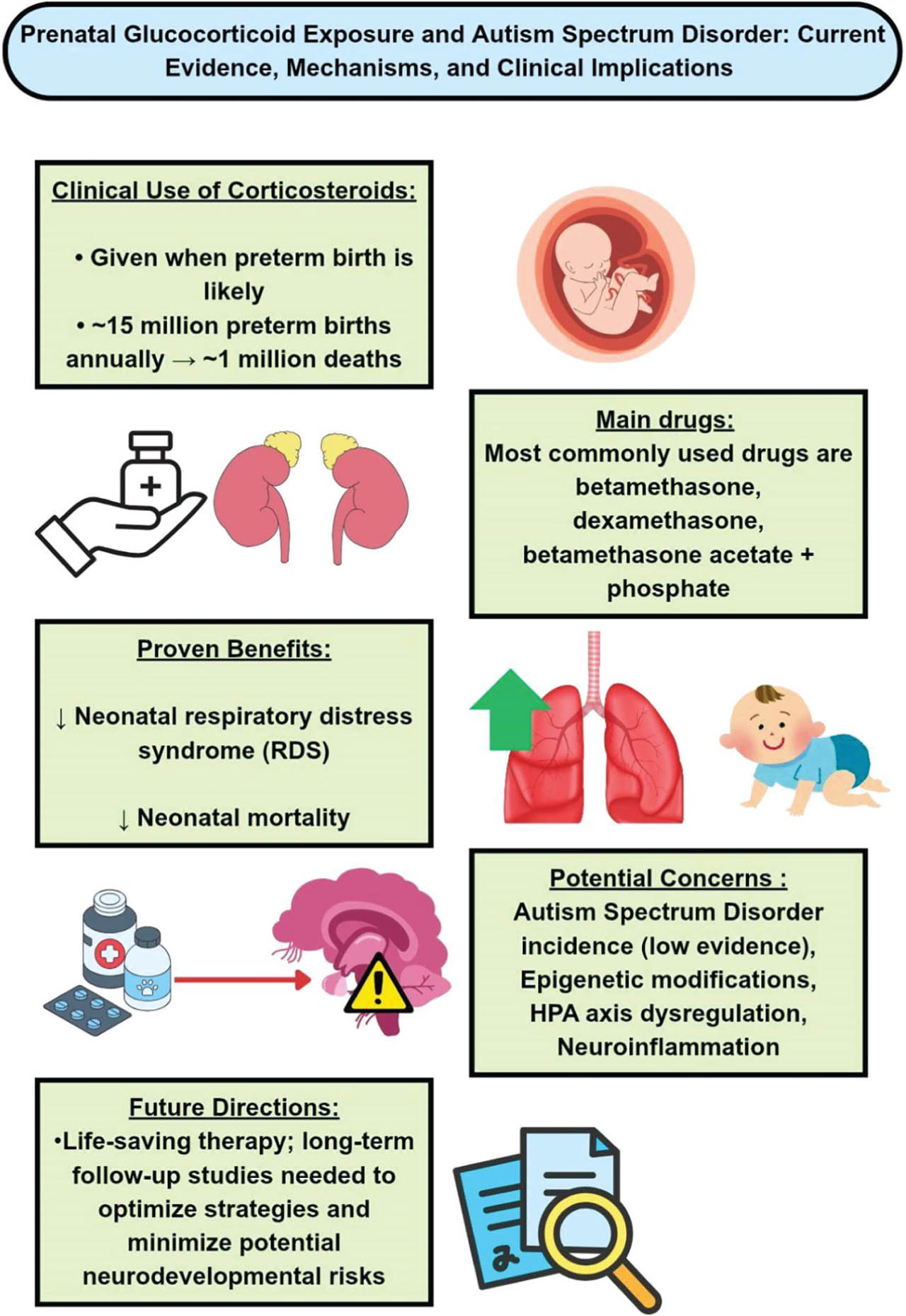
Prenatal glucocorticoids are vital for reducing neonatal respiratory complications in premature infants. However, emerging evidence suggests a potential association with increased risk of autism spectrum disorder (ASD). Proposed mechanisms include hypothalamic-pituitary-adrenal axis dysregulation, epigenetic modifications, and altered hippocampal development. While life-saving in preterm births, caution is advised in late preterm or term pregnancies. Further standardised studies are required to clarify long-term neurodevelopmental effects.
Table 1.
Summary of key human studies on Prenatal Corticosteroid exposure and ASD/Neurodevelopmental outcomes.
| Author | Year | Study population | Study design | Number of cases | Outcome | Corticosteroid | Main Findings |
|---|---|---|---|---|---|---|---|
| Räikkönen K et al. [33] | 2020 | Finnish Institute for Health and Welfare | Population-based retrospective cohort study |
| Any childhood mental and behavioural disorder | Betamethasone | Antenatal corticosteroid treatment was significantly linked to an increased risk of mental and behavioural disorders in children |
| Laugesen K et al. [34] | 2025 | Danish medical birth registry | Population-based cohort study |
| Mental disorders in offspring |
| Prenatal exposure to systemic glucocorticoids was significantly associated with a greater risk of specific mental disorders |
| Bannerman CG et al. [8] | 2016 | Eunice Kennedy Shriver National Institute of Child Health and Human Development (NICHD) | Multicenter, randomised trial |
| Early respiratory support or death within 72 hours after birth. | Betamethasone | Antenatal administration of betamethasone to women at risk of late preterm delivery was associated with a significant reduction in respiratory complications among newborns |
| Ninan K et al. [29] | 2022 | Systematic review and meta-analysis focusing on long-term outcomes of antenatal corticosteroid exposure | Systematic review and meta-analysis of randomised clinical trials (RCTs), quasi-RCTs, and cohort studies |
|
|
| A single course of antenatal corticosteroids was linked to reduced neurodevelopmental impairment in extremely preterm children but increased risk of adverse neurocognitive or psychological outcomes in late-preterm and full-term children |
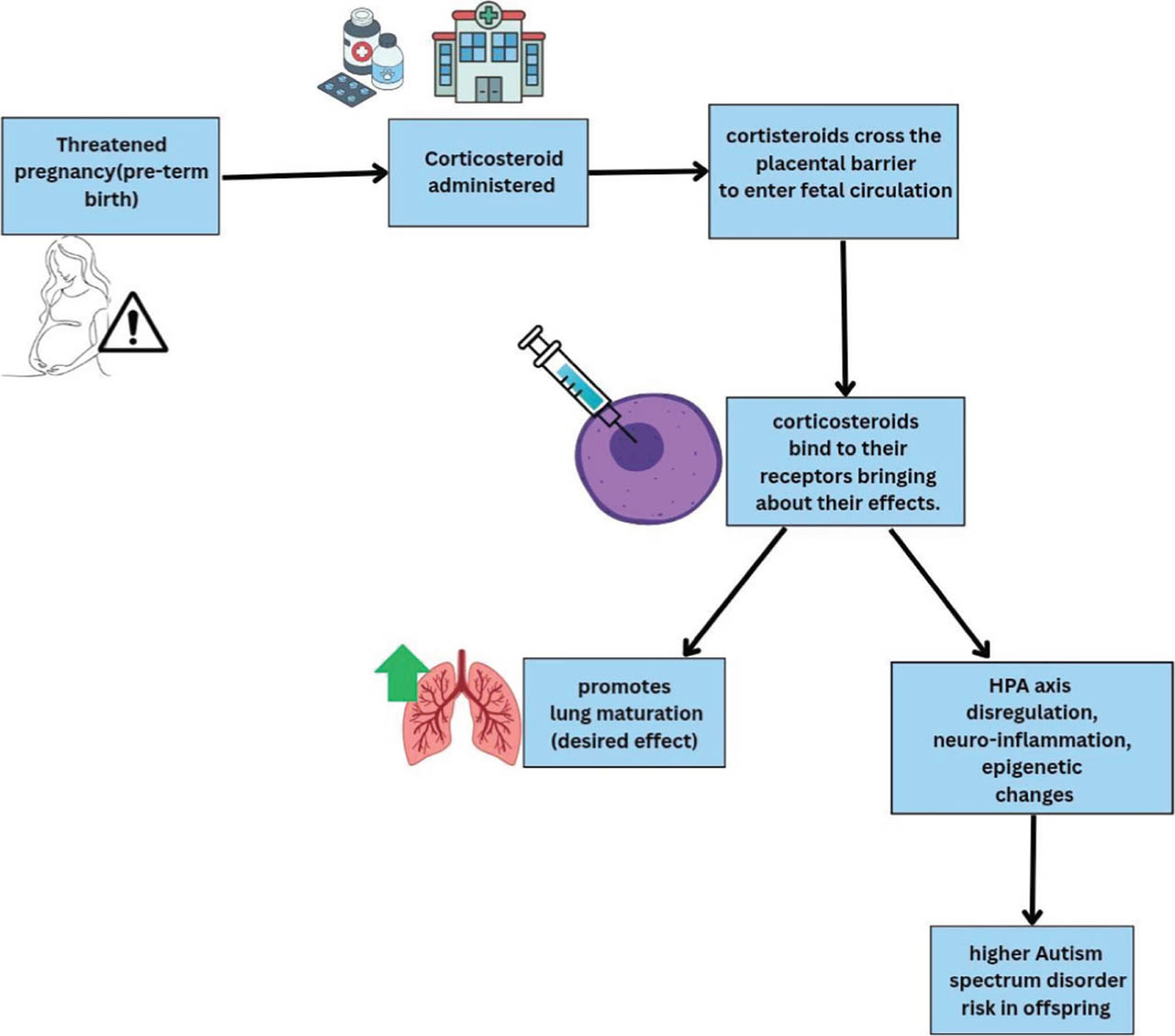
Figure 1.
Conceptual Framework – Pathway from Antenatal Corticosteroid Exposure to ASD Risk.
Table 2.
Proposed Mechanisms Linking Prenatal Corticosteroid Exposure to ASD.
| Biological mechanism | Description | Evidence | Potential effect |
|---|---|---|---|
| HPA axis dysregulation | Hormonal imbalance, which might increase cortisol levels in fetus | Elevated prenatal maternal cortisol programs the infant HPA axis, leading to larger cortisol responses to stress at 6 and 12 months of age [48]. | HPA axis dysregulation is associated with increased risk of depression and has been implicated in ASD pathogenesis. |
| Epigenetics | Corticosteroids interact with enzymes that control epigenetic processes. | Glucocorticoids interact with DNA methyltransferases and histone deacetylases, modifying transcriptional activity without altering DNA sequence [44]. | Epigenetic changes can persist across the lifespan and may contribute to transgenerational ASD risk. |
| Neuro inflammation | Excessive cortisol hyperactivates the HPA axis, leading to neuro inflammation | Glucocorticoids can mediate hippocampal inflammation; hippocampal abnormalities are consistently implicated in ASD [50]. | Hippocampal inflammation is linked to depression and cognitive impairment, conditions that frequently co-occur with ASD. |
| Sex-specific vulnerability | Fetal sex may modulate the neurodevelopmental effects of glucocorticoid exposure | Steroid-related biomarkers in maternal serum differ by sex and are associated with altered autism risk [52]. | May help explain the consistently higher prevalence of ASD in males. |