
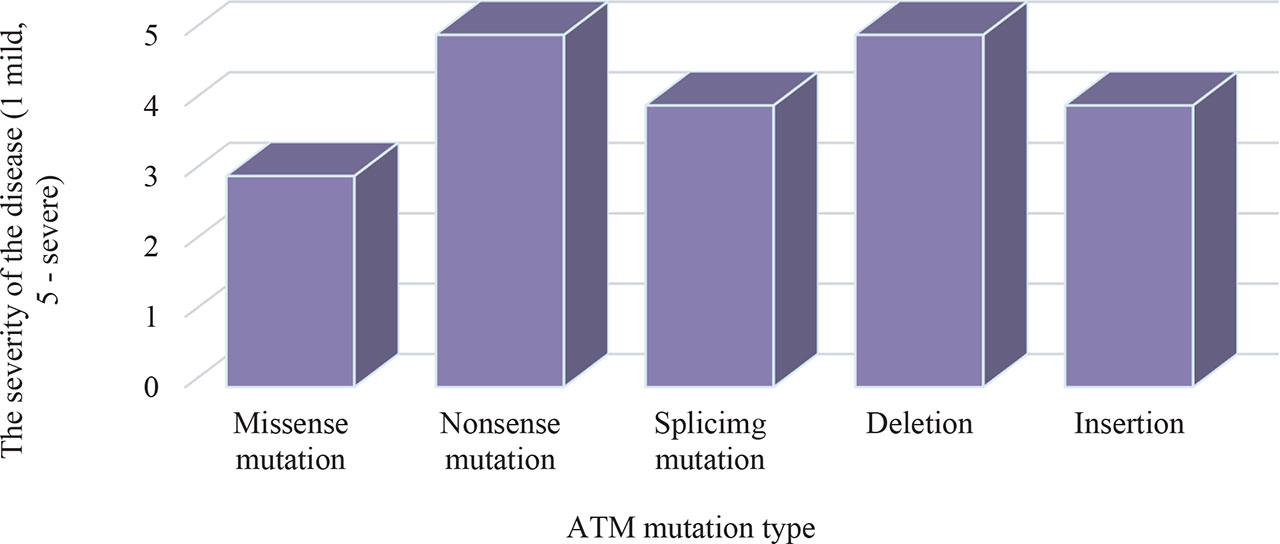
Figure 1.
Impact of ATM mutation type on the severity of Louis-Bar Syndrome.
Source: created based on analysis of data [13,14,15,16,17,18].
Table 1.
Diagnostic methods for ataxia-telangiectasia (Louis-Bar Syndrome).
| Method | Purpose |
|---|---|
| Clinical examination | Detection of ataxia, nystagmus, telangiectasia, dysarthria |
| Electrophysiology | ENMG (electroneuromyography) – diagnosis of peripheral neuropathy; evoked potentials – assessment of sensory impairments |
| Brain MRI | Identification of cerebellar atrophy, enlargement of the cisterna magna |
| Laboratory tests | IgA, IgG, AFP (nephelometry), PCR for infections, γH2AX assay – evaluation of DNA instability |
| Pulmonary function tests | Spirometry, pulse oximetry, blood gas analysis – diagnosis of broncho-obstructive syndrome |
| Genetic testing | NGS, MLPA – confirmation of ATM, gene mutations, pedigree analysis |
Table 2.
Treatment approaches for ataxia-telangiectasia (Louis-Bar Syndrome).
| Therapeutic approach | Treatment methods | Expected outcome |
|---|---|---|
| Supportive therapy | L-carnitine, coenzyme Q10, B vitamins, alpha-lipoic acid, vitamin E | Improvement of neuronal energy metabolism, reduction of oxidative stress |
| Immunomodulation | Intravenous immunoglobulin (IVIG) therapy | Reduced frequency of infectious complications, maintenance of immune function |
| Antibacterial therapy | Mucolytics, macrolides, inhaled antibiotics, prolonged antibiotic courses for chronic infection | Improved bronchial patency, prevention of chronic respiratory infections |
| Respiratory therapy | Bronchial drainage, vibratory massage, breathing exercises, mechanical insufflation-exsufflation devices, positive expiratory pressure (PEP) therapy | Enhanced pulmonary function, prevention of bronchiectasis and respiratory failure |
| Physiotherapy and rehabilitation | Targeted exercises, coordination training, stabilisation techniques | Slowed progression of ataxia, maintenance of motor function |
| Genetic counselling | Prenatal diagnosis (PCR analysis of amniocytes), preimplantation genetic testing for monogenic disorders (PGT-M) | Reduced risk of offspring with ataxia-telangiectasia |
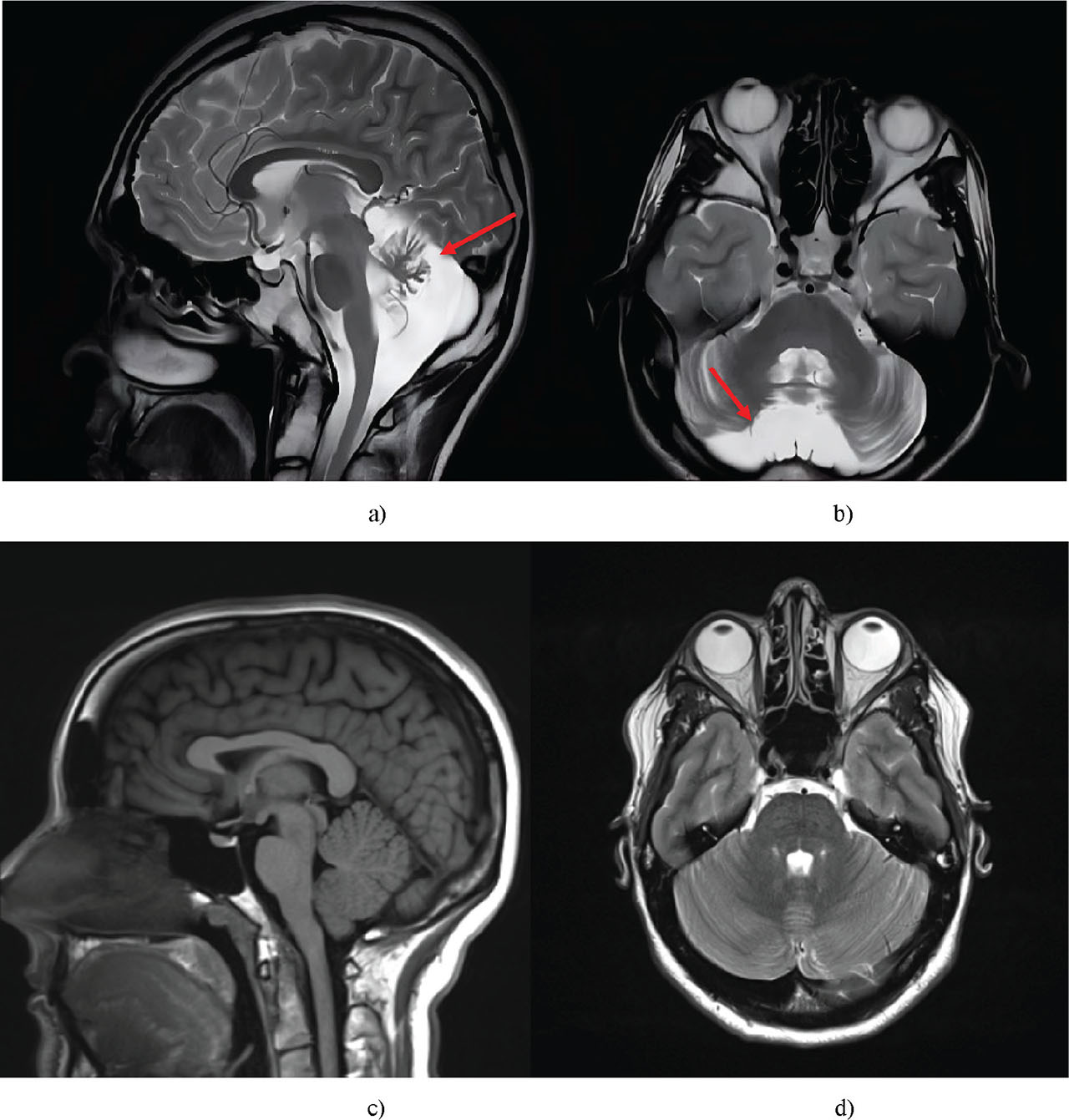
Figure 2.
Brain MRI of the eldest child (Patient 1): a) sagittal; b) axial sections. Healthy brain: c) sagittal; d) axial slices. The pathological features observed include severe cerebellar vermian atrophy, compensatory enlargement of the posterior cerebellar cistern, and marked decrease in overall cerebellar volume, with thinning of the cerebellar folia and deepening of the cerebellar sulci.
Source: a-b were obtained during the study and c-d are reproduced from [34].
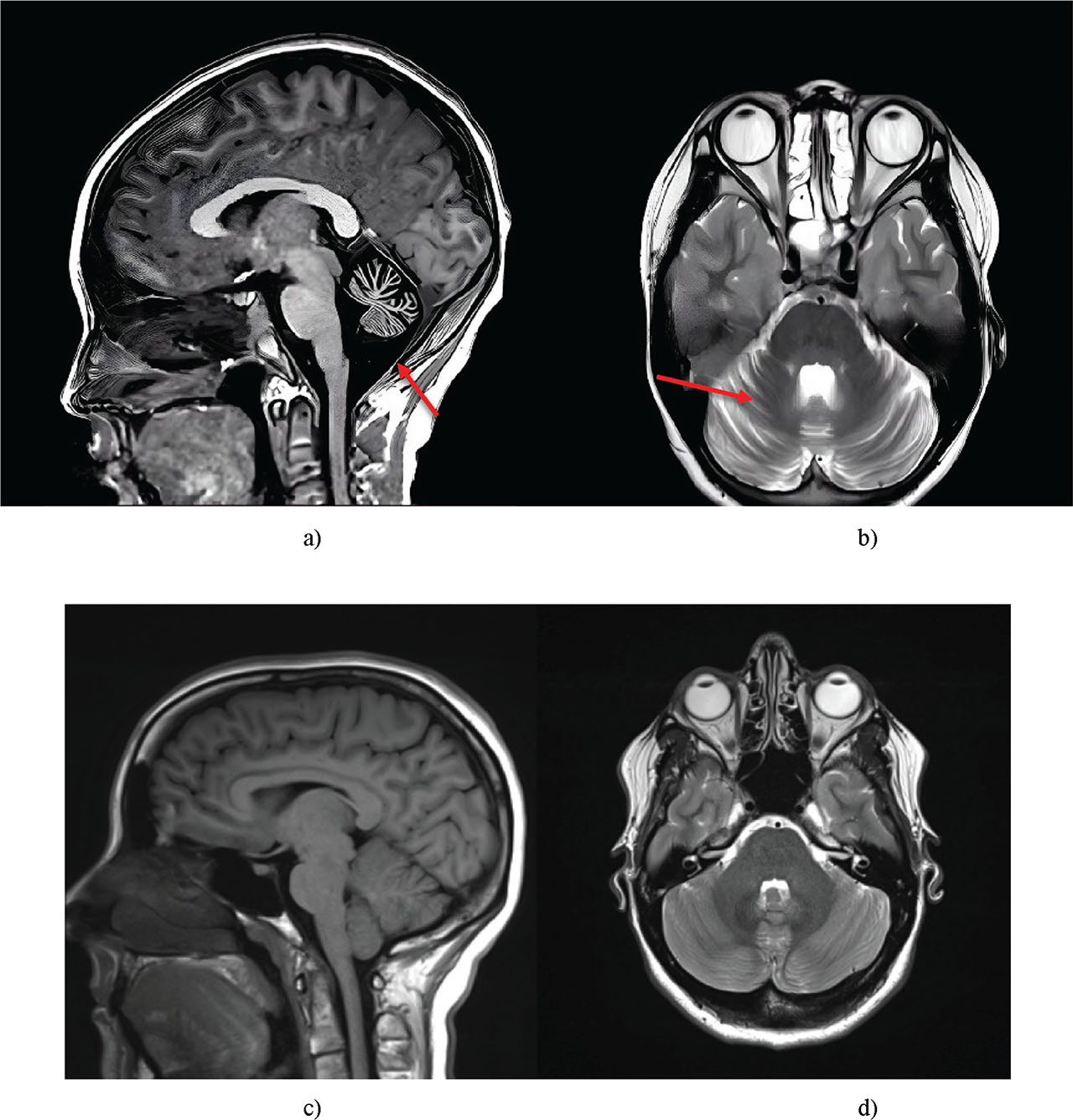
Figure 3.
Brain MRI of the middle child (Patient 2): a) sagittal; b) axial sections*. Healthy brain: c) sagittal; d) axial slices. The pathological features observed include moderate vermian thinning and cerebellar hemispheric subatrophy with moderate sulcal widening.
Source: a-b were obtained during the study and c-d are reproduced from [34].
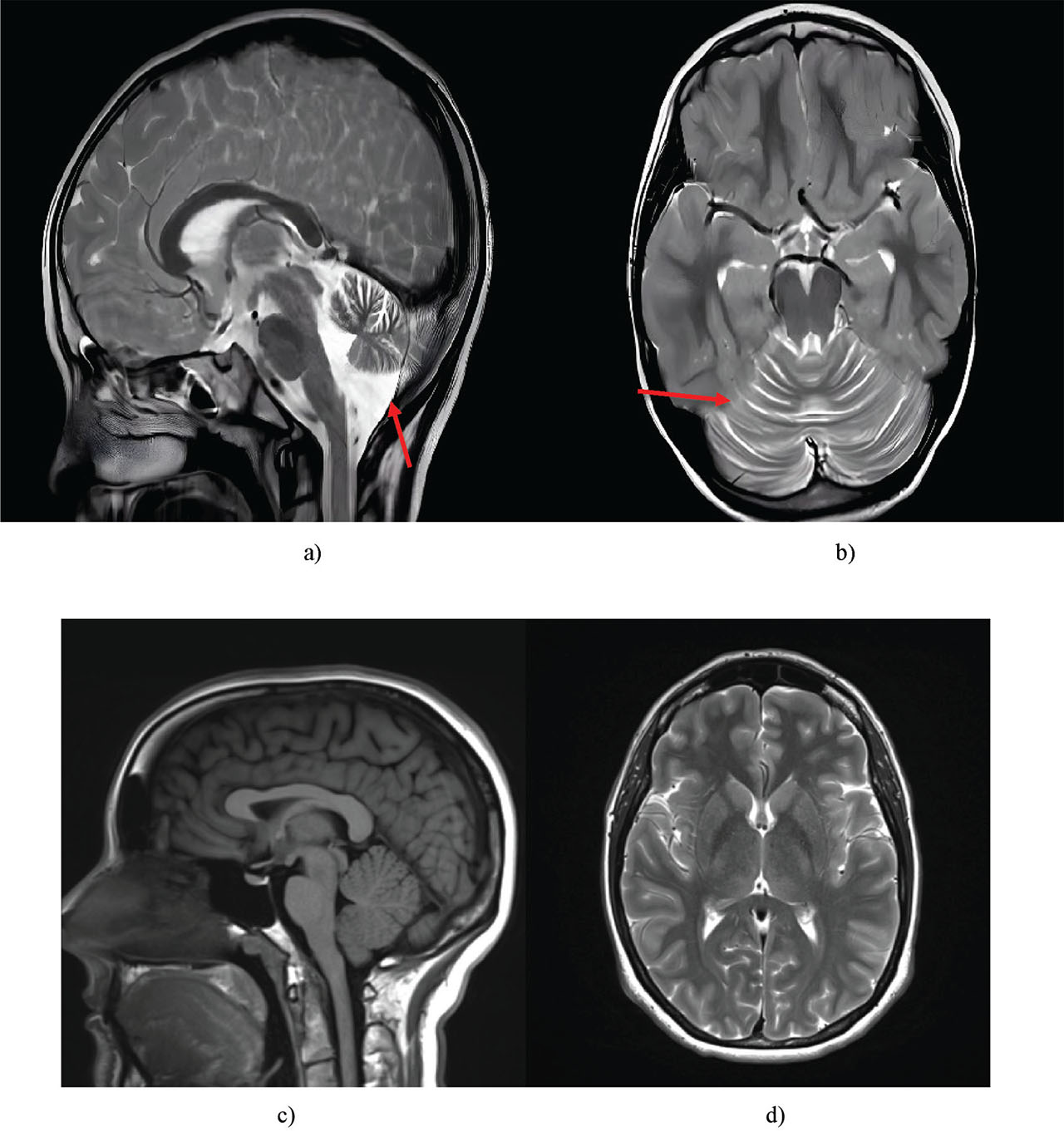
Figure 4.
Brain MRI of the youngest child (Patient 3): a) sagittal; b) axial sections*. Healthy brain: c) sagittal; d) axial slices. The pathological features observed include minimal vermian thinning and subtle sulcal widening with relatively preserved cerebellar volume.
Source: a-b were obtained during the study and c-d are reproduced from [34].
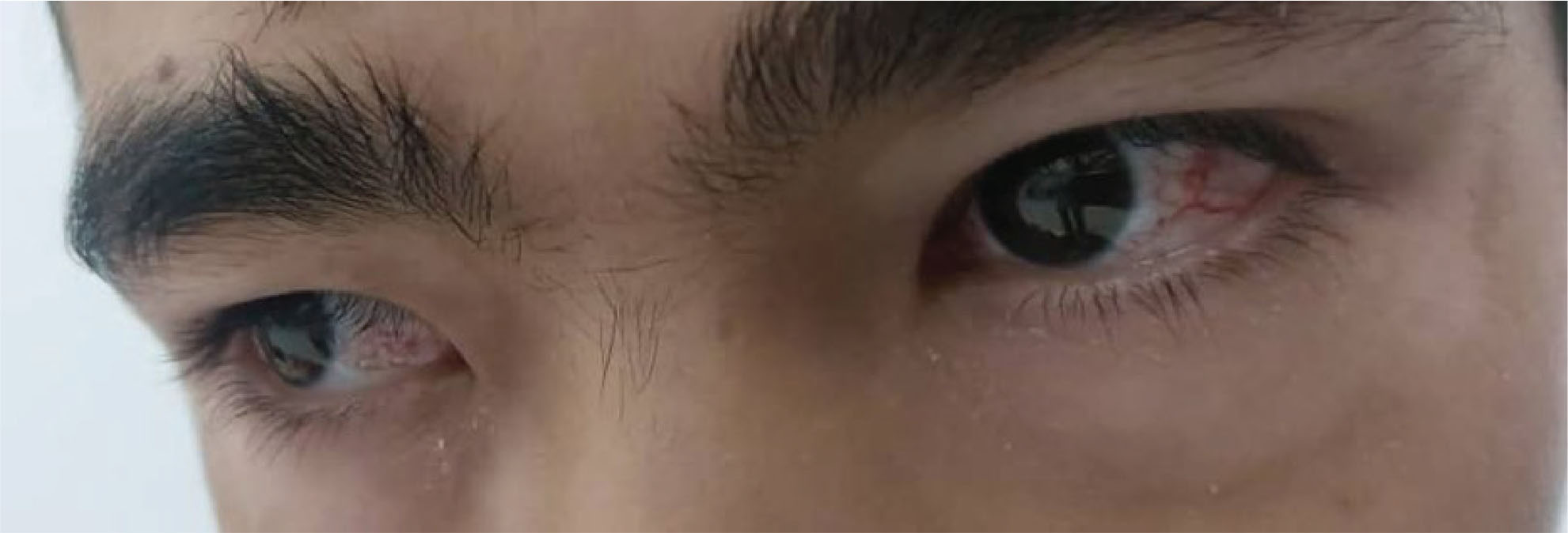
Figure 5.
Telangiectasias on the conjunctivae of the eldest child, appearing as “spider-like” vascular lesions.
Source: obtained during the course of the study.
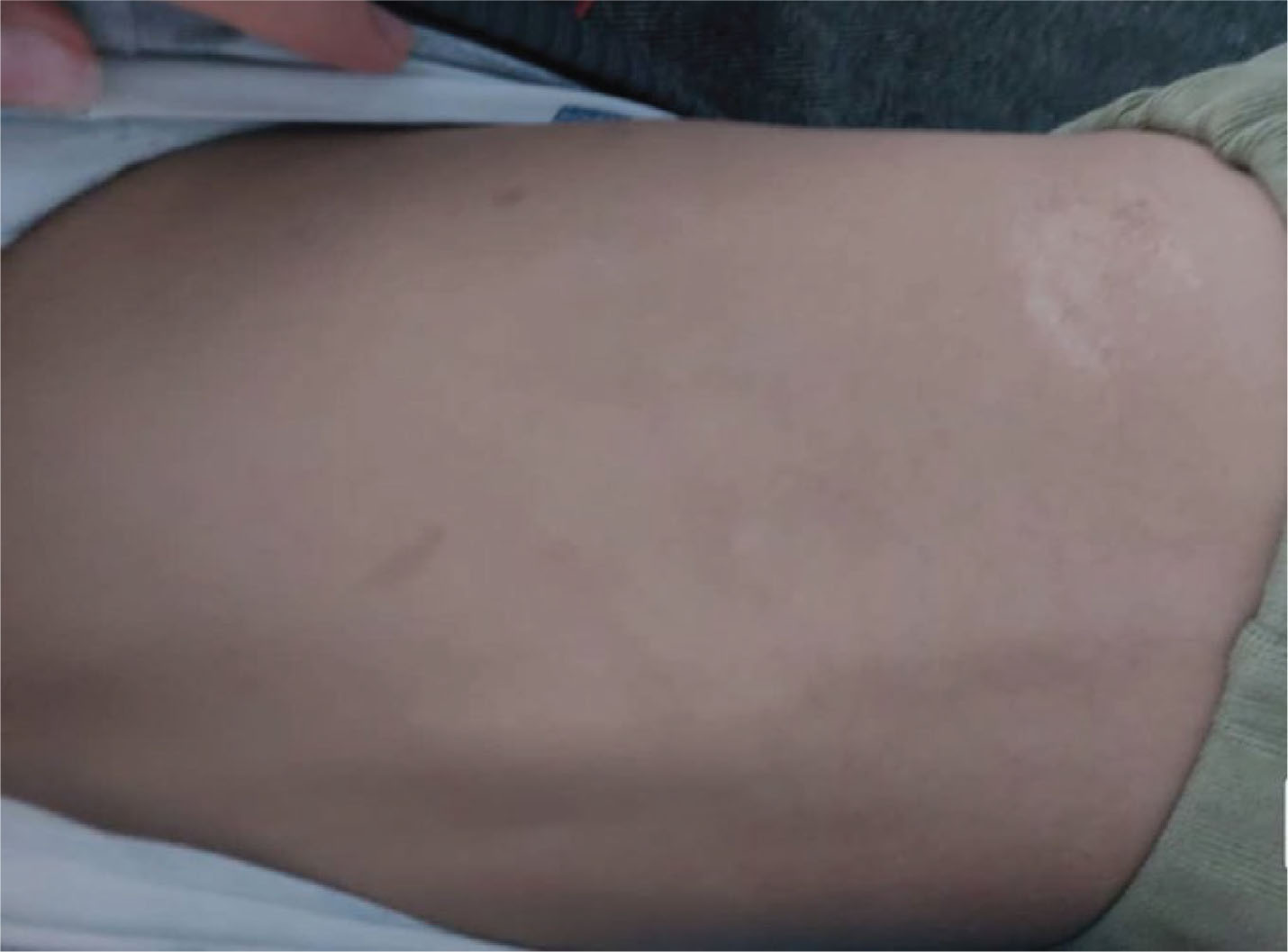
Figure 6.
Skin lesions in the youngest child: “café-au-lait” spots and an area of skin induration.
Source: obtained during the course of the study.
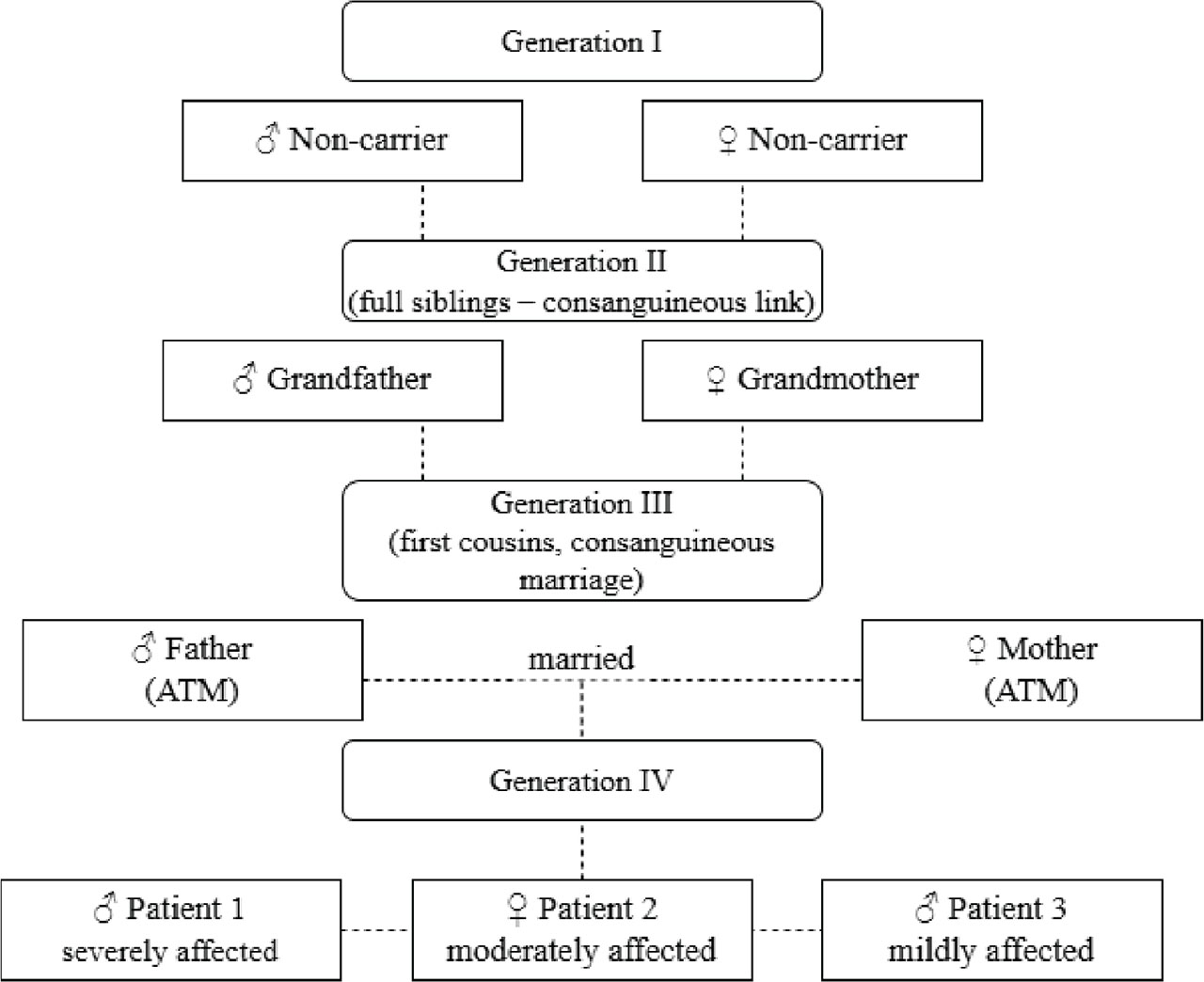
Figure 7.
Family pedigree, demonstrating consanguineous marriage in the third generation.
Source: based on data from the present study.