
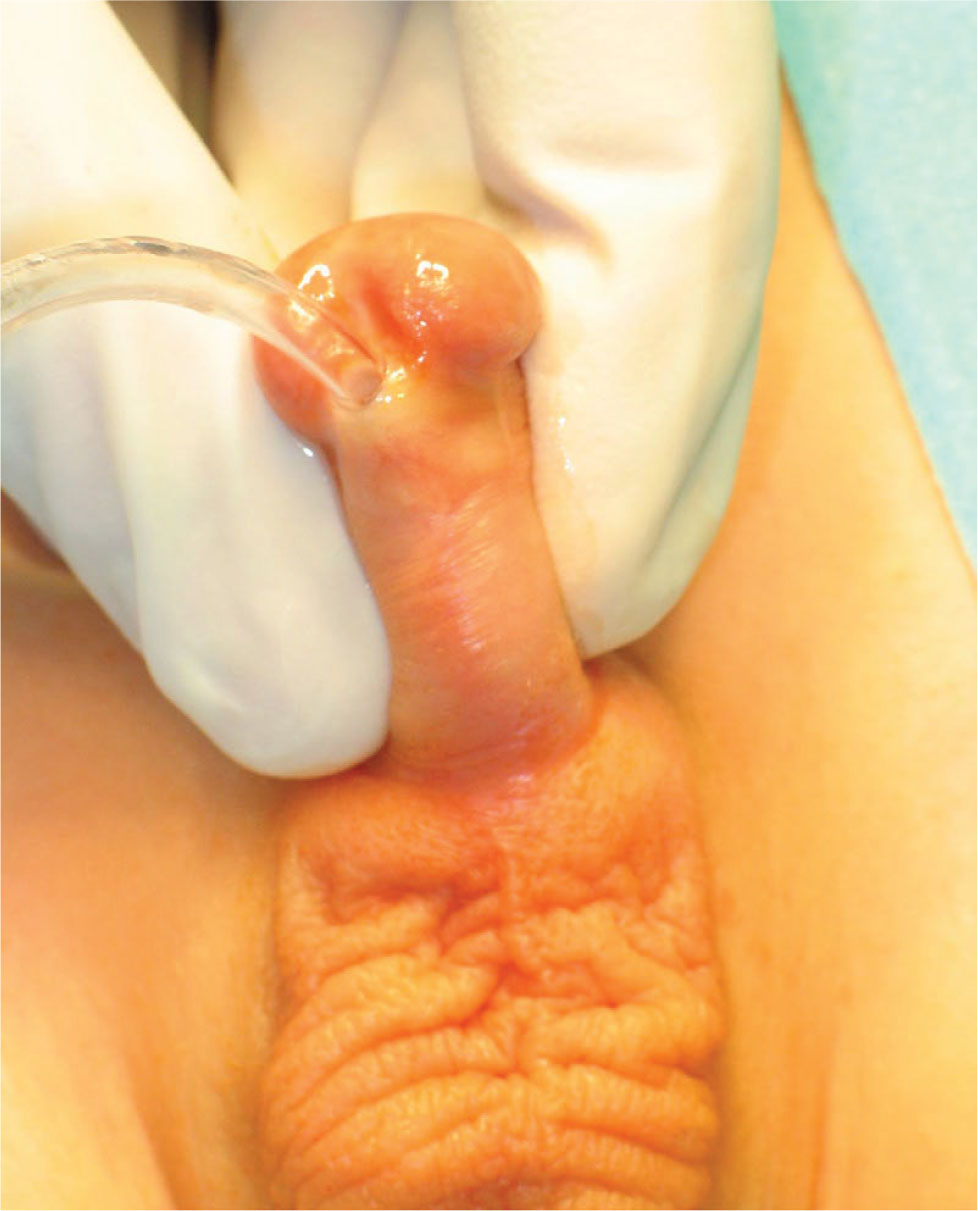
Figure 1.
Evaluation of meatus in coronal localisation.
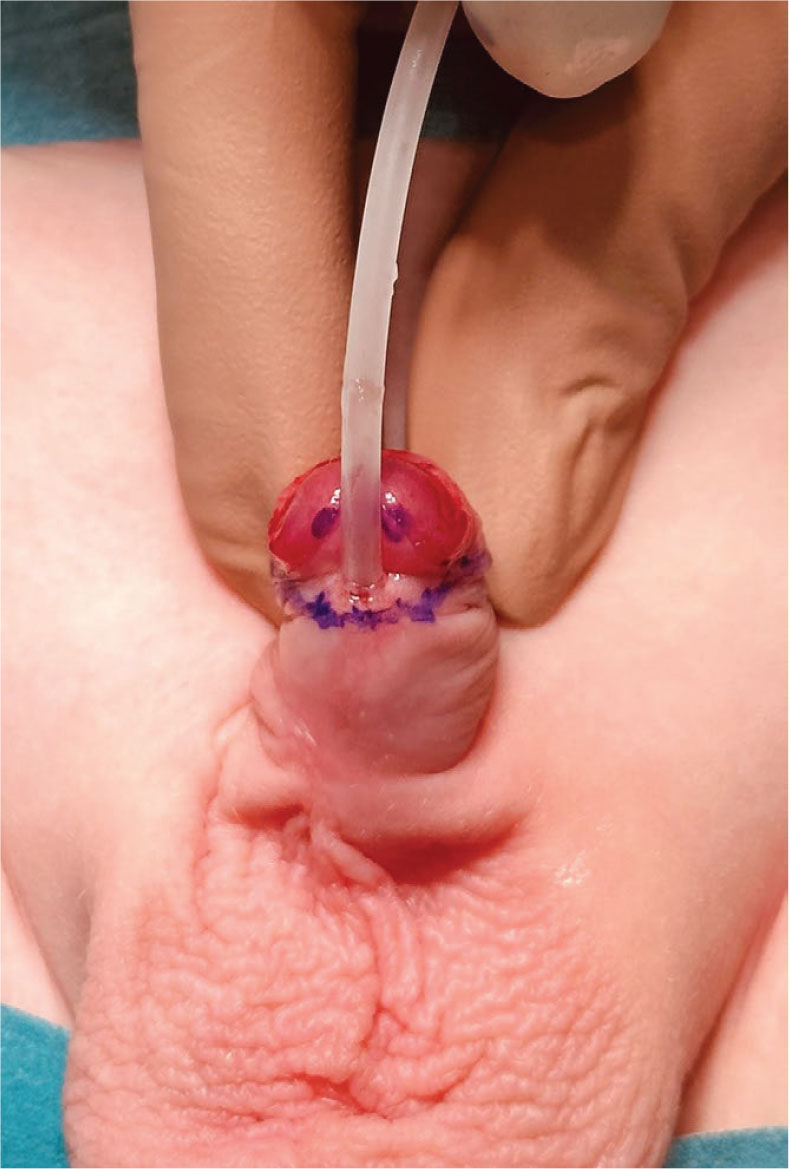
Figure 2.
Marking points and the cutting lines to the tops of split glans and foreskin.
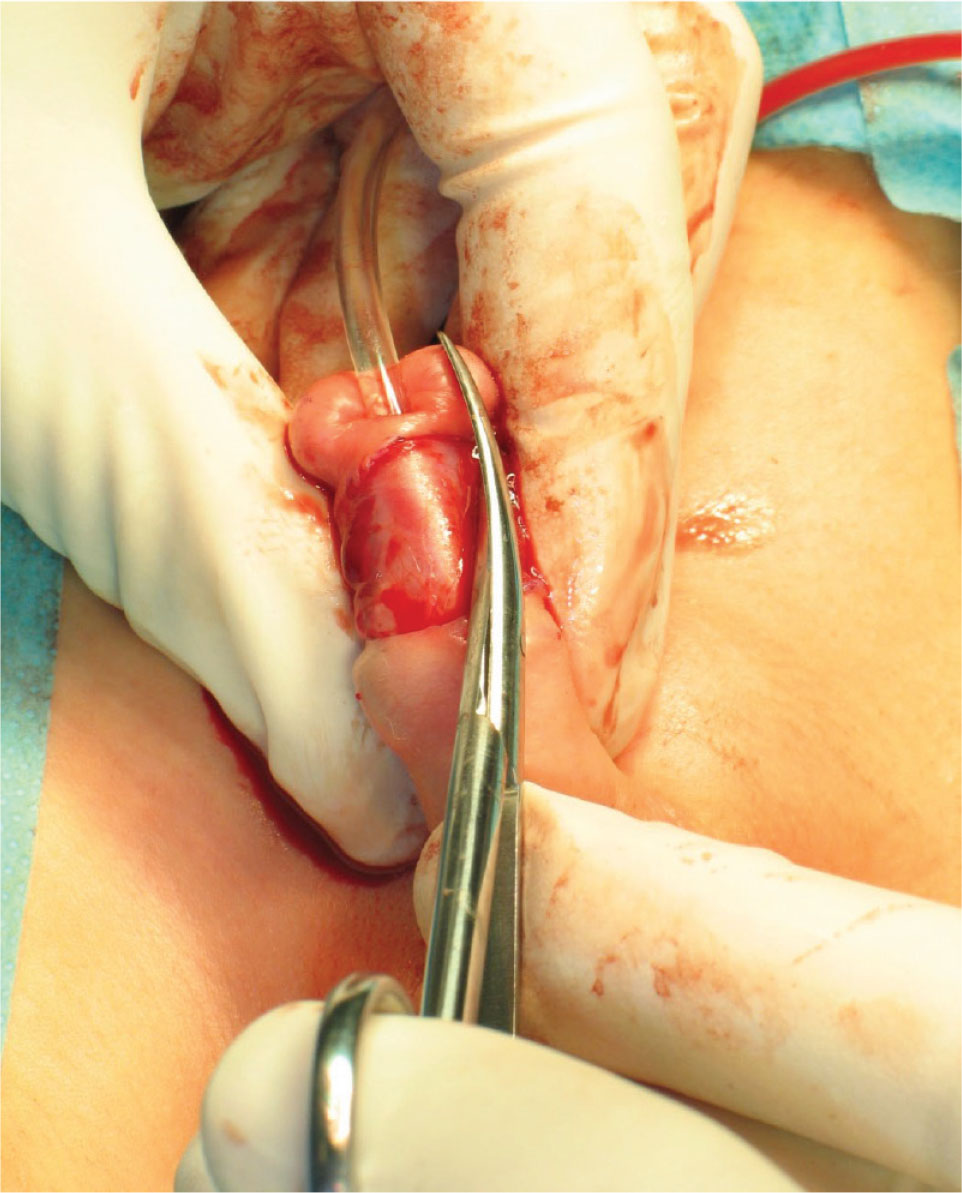
Figure 3.
Meatoplasty procedure. Dissection of penis skin. Release abnormal fascial attachments. Vertical glans incisions.
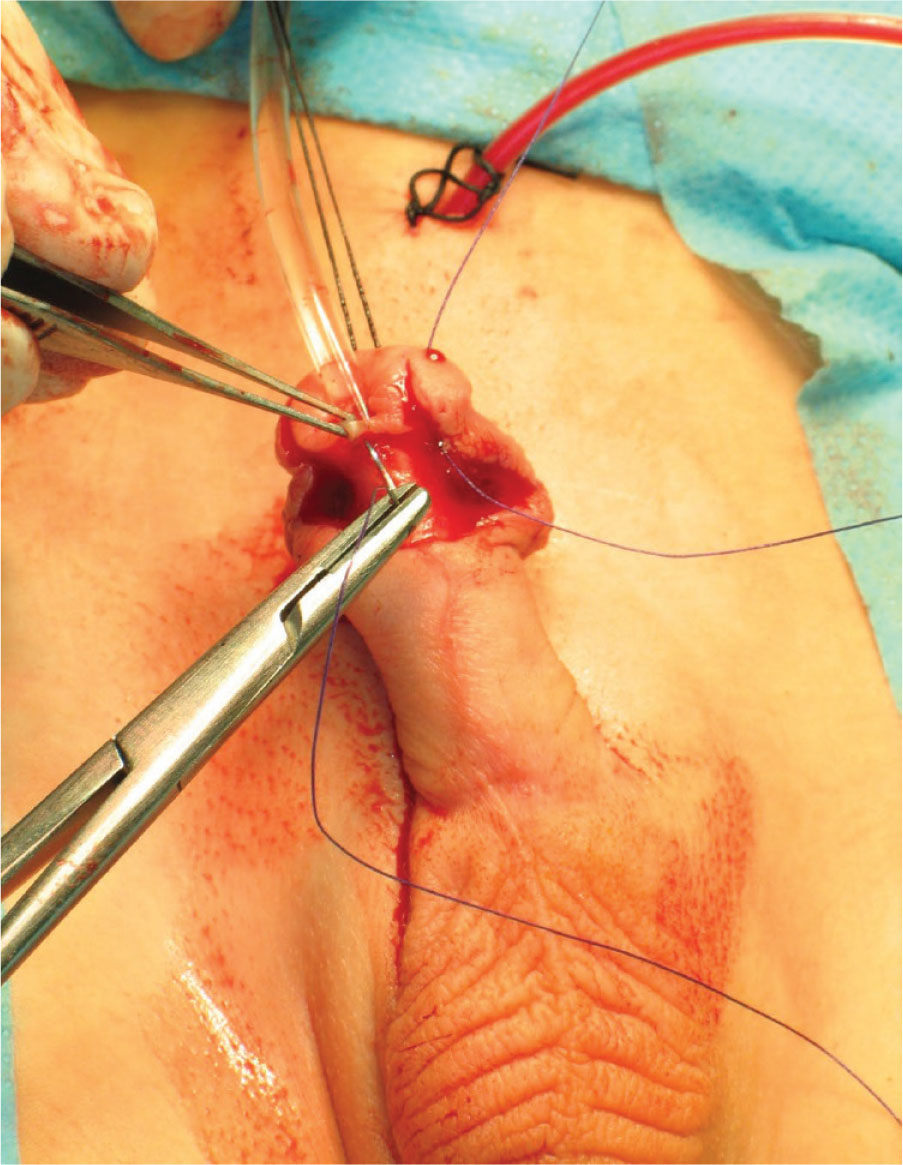
Figure 4.
Blanket suture. Top of incision-centre of the urethra-across top of incision.
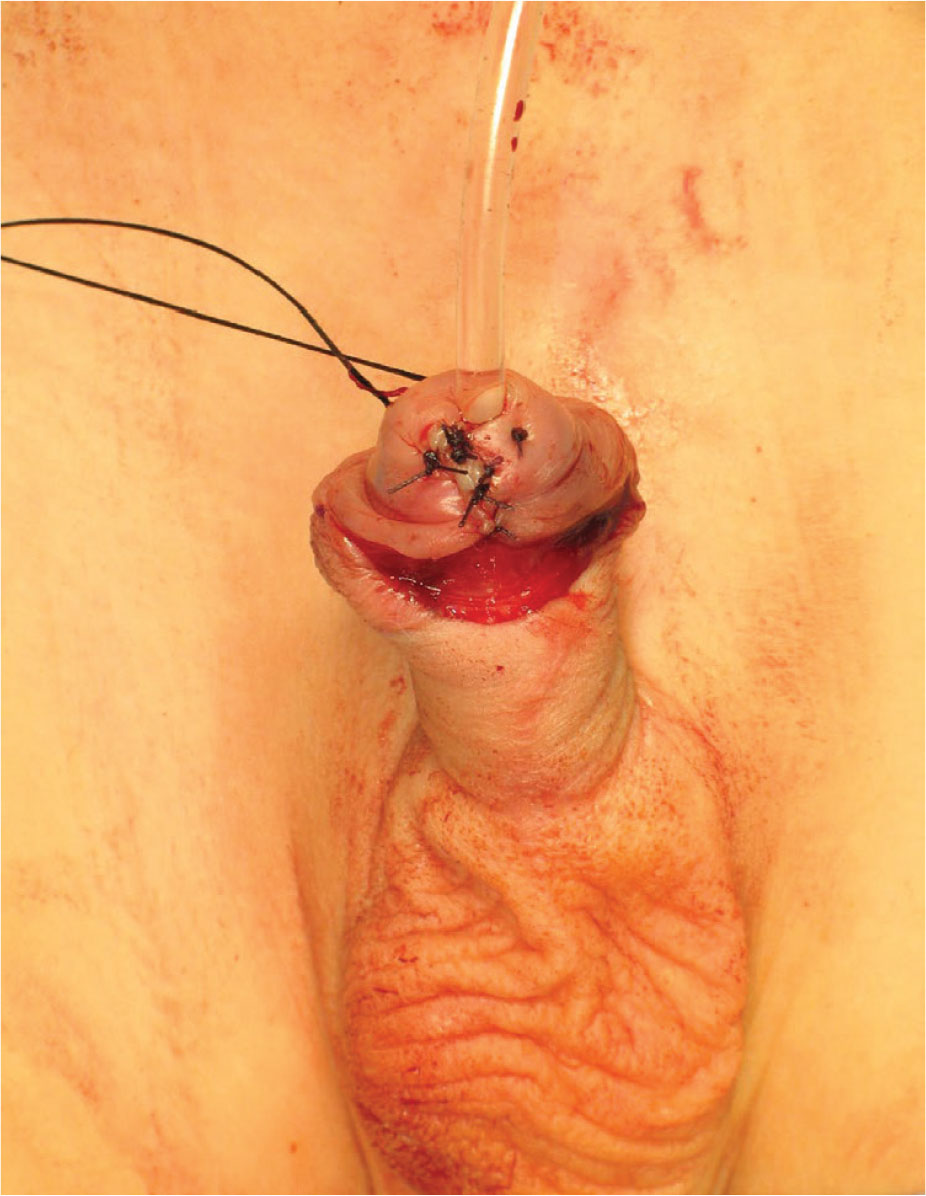
Figure 5.
Glans blanket sutures.
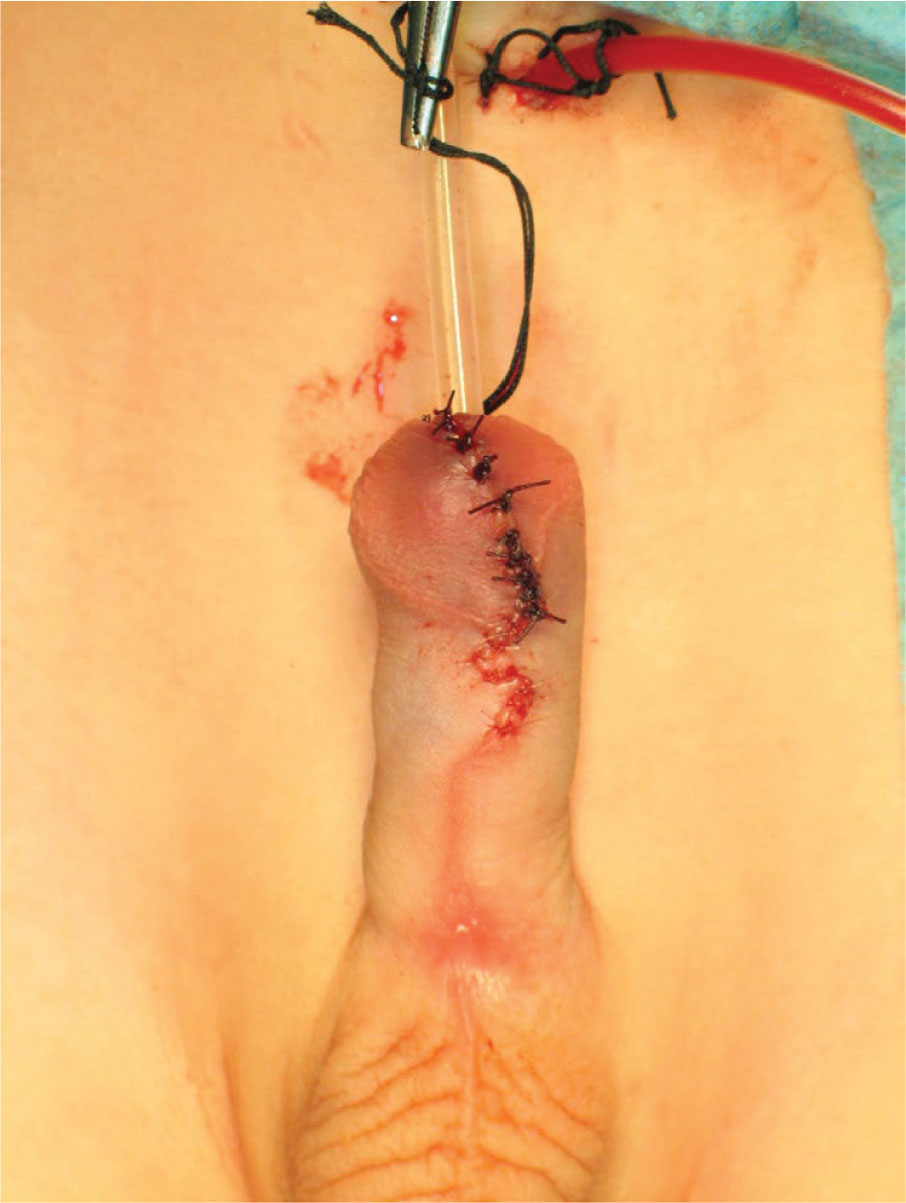
Figure 6.
Plastic surgery of the penis frenulum, inner and outer plate the foreskin. Plastic surgery of the penis skin.
Table 1.
Early complications after coronal hypospadias treatment.
| Study participants | |
|---|---|
| 265 | |
| Early complications during hospitalisation: | |
| Catheter problems, including: | 8 (3.01%) |
| - suprapubic urinary drainage tube obstruction | 5 (1.88%) |
| - premature catheter removal | 3 (1.13%) |
| Haematoma and swelling requiring dressing change | 18 (6.79%) |
| Early complications after hospitalisation: | |
| Persistent haematoma and swelling | 9 (3.39%) |
| Dysuria | 6 (2.26%) |