
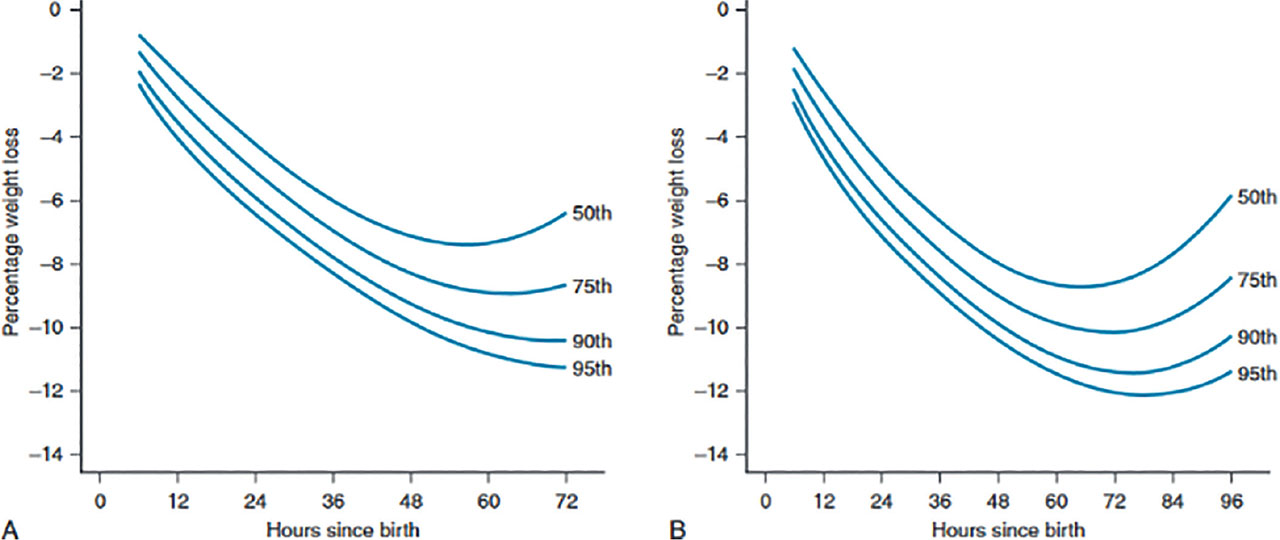
Flowchart 1.
A, Estimated percentile curves of percent weight loss by time after birth for vaginal deliveries. B, Estimated percentile curves of percent weight loss by time after birth for caesarean deliveries.
Table 1.
Summary of studies on maternal risk factors for neonatal hypernatremia
| No. | Author/year | Method | Location | Case group / Control group | Maternal risk factor | QUADA scores |
|---|---|---|---|---|---|---|
| 1 | Boskabadi et al. (2014) (16) | Cross-sectional | Iran | 670 cases | Breastfeeding frequency and status, let-down reflex, breast filling postpartum and after each lactation, breast softening after breastfeeding, duration of mother's admission | 12 |
| 2 | Boskabadi et al. (publishing) | Cross-sectional | Iran | 934 neonates | Breast problems, lack of let-down reflex | 13 |
| 3 | Boskabadi et al. (2016) (3) | Descriptive - analytic | Iran | 418 neonates | The time of first lactation, breastfeeding frequency | 13 |
| 4 | Uras et al. (2007) (62) | Retrospective | Turkey | 1150 neonates | Breast problems | 13 |
| 5 | Boskabadi et al. (2013) (63) | Cross-sectional | Iran | 273 neonates | Let-down reflex, mastitis, breast tightening before each lactation, breast softening after each feeding, breastfeeding status | 12 |
| 6 | Boskabadi et al. (2010) (6) | Prospective | Iran | 106 neonates | Breast problems | 13 |
| 7 | Boskabadi et al. (2022) (2) | Cohort | Iran | 183 neonates | Inappropriate breastfeeding | 12 |
| 8 | Mujawar et al. (2017) (19) | Retrospective | Iran | 8 neonates | Breast milk sodium | 13 |
| 9 | Caglar et al. (2006) (8) | Prospective | Turkey | 34 neonates | Breast problems with breastfeeding difficulties, Primipara, delay in theinitiation of first breastfeeding, cesarean section | 13 |
| 10 | Ramesh et al. (2017) (20) | Descriptive | India | 201 neonates | Primipara | 12 |
| 11 | Goyal et al. (2018) (21) | Prospective | India | 384 neonates | Cesarean section, Primipara, pregnancy complications, delay in the beginning of lactation after delivery, poor latch-on during breastfeeding, lack let-down reflex, decreased frequency of lactation, nipple difficulties | 13 |
| 12 | López Martín et al. (2018) (64) | Retrospective | España | 20 neonates | Primiparity and greater maternal age | 12 |
| 13 | Orgunet al. (2019) (35) | Cross-sectional | Turkey | 100 neonates | High breast milk sodium level and primiparity | 13 |
| 14 | Celik K (2021) (65) | Prospective | Turkey | 47 neonates | Primiparity, insufficient breastfeeding | 13 |
| 15 | Alp EK (2022) (22) | Retrospective | Turkey | 54 neonates | Insufficiency of breast milk, nipple problems, incorrect breastfeeding techniques | 13 |
| 16 | Zayed ME (23) | Cross-sectional | Sudan | 206 neonates | Insufficiency of breast milk, breast problems | 12 |
Table 2.
Risk factors and prevention methods of neonatal hypernatremic dehydration
| Maternal risk factors | Prevention methods |
|---|---|
| Lactation Factors: Maternal breastfeeding status, let-down reflex, breast filling after delivery and lactation, breast filling before each lactation, breast softening after lactation, delay in the onset of first lactation, reduced breastfeeding frequency, poor latch-on during breastfeeding, decreased or lack of mammary gland development during pregnancy, history of breast surgery, hypoplastic or abnormal breasts, endocrinopathies-induced infertility, pituitary dysfunction after delivery bleeding, retained placenta, delay in the onset of lactation for more than 12 to 24 hours postpartum, irregular breast drainage or stimulation, breast congestion or lack of breast enlargement after delivery, lack of colostrum production, technical problems of breastfeeding position, breastfeeding with one breast or early separation of the infant from the mother's breast during breastfeeding and before full drainage of breast milk, high breast milk sodium level. breast milk sodium level. Breast factors: Breast problems, lack of let-down reflex, mastitis, nipple difficulties. Maternal factors: Duration of maternal hospitalization, primiparity, greater maternal age, cesarean section, pregnancy complications, social factors such as depression, fatigue and inadequate support. | Maternal factors: attention to the frequency of breastfeeding and the situation of lactation, the elimination of breast problems and the improvement of milk production and transmission, more breast examination during prenatal and postnatal periods, encouraging to start lactation immediately after delivery and immediate intervention in case of breast feeding problems (poor latch-on, breast congestion, delayed milk outflow and nipple difficulties). Neonatal factors: check of neonatal weight and frequency of urination and defecation especially during the first week of life; feeding frequency more than 8 times per day. |