
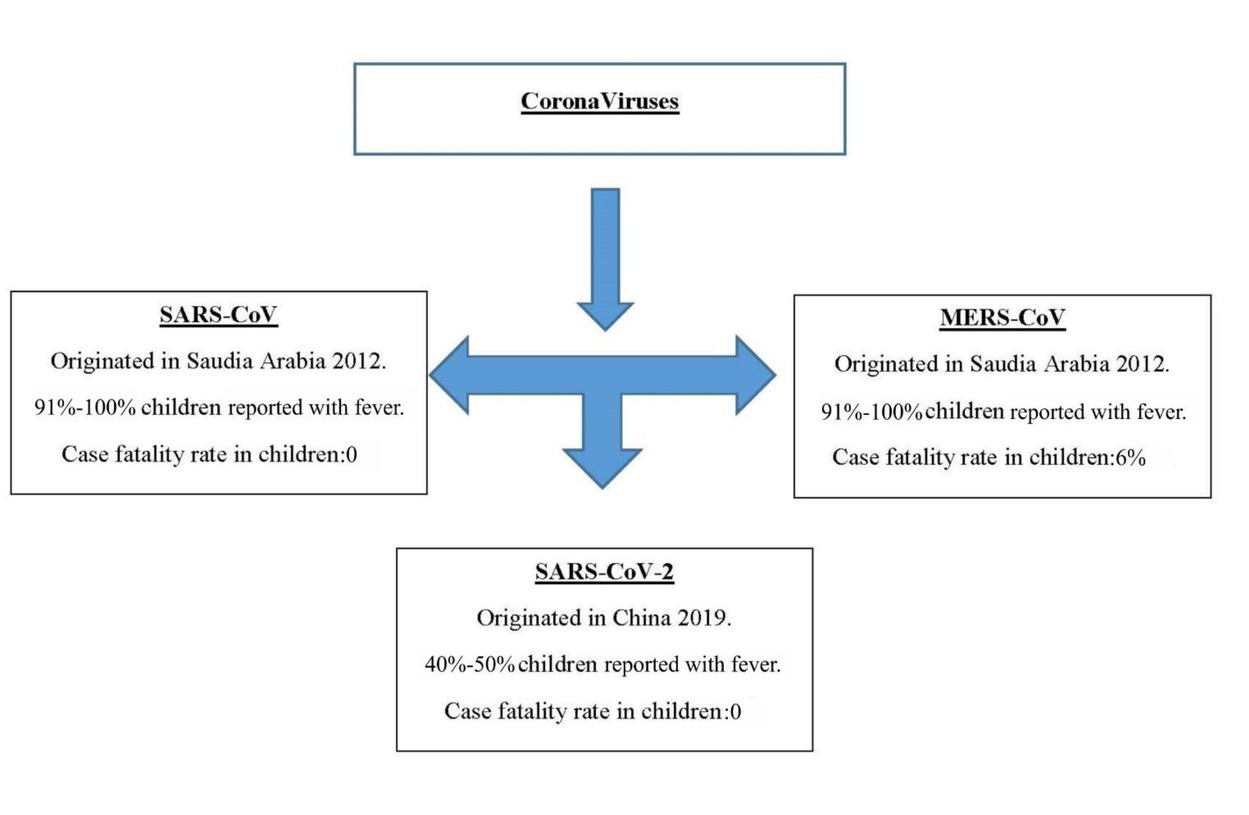
Figure 1
Evolution of Coronaviruses.
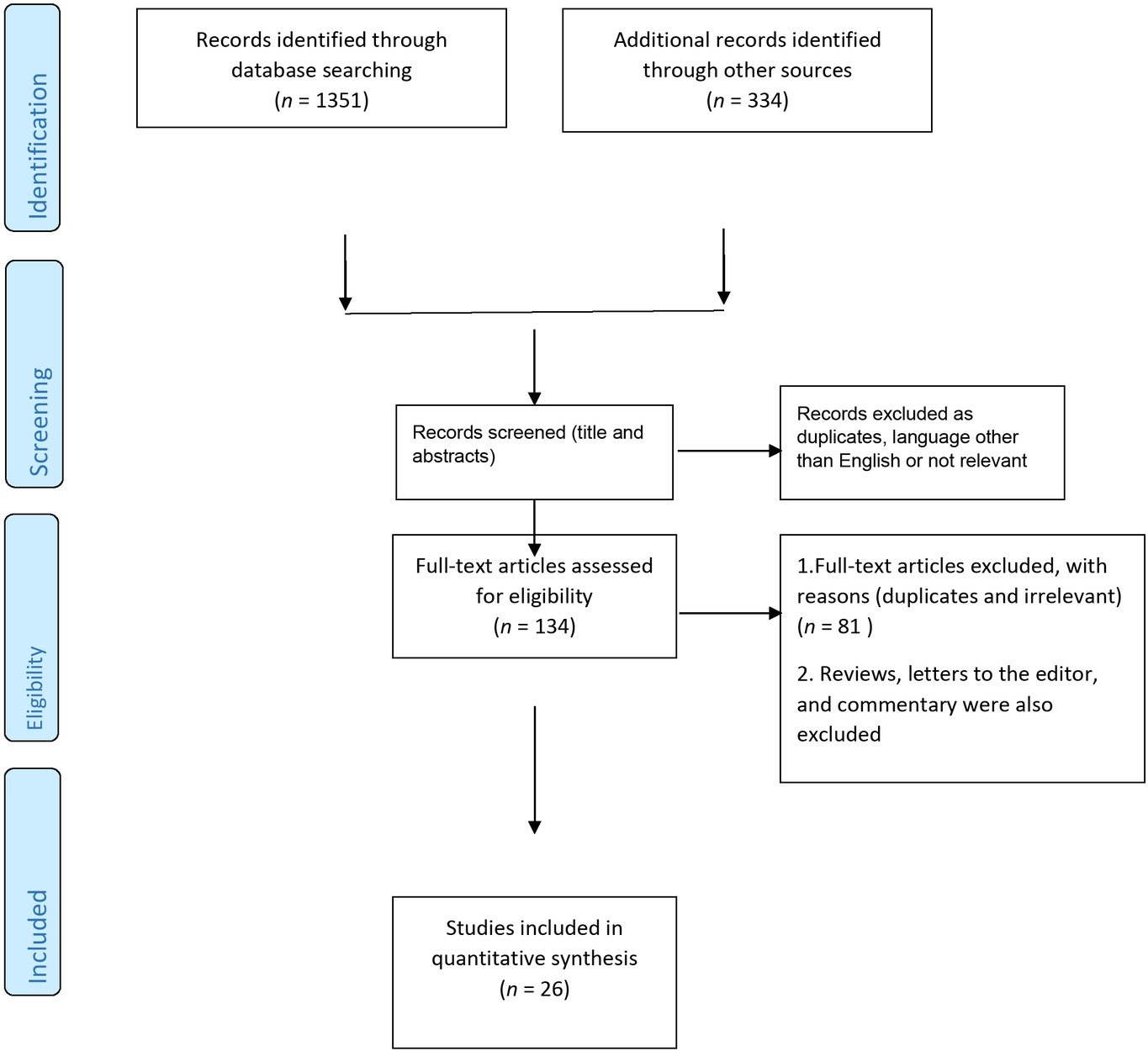
Figure 2
PRISMA flow diagram.
Table 1
Characteristics of the studies included.
| Sl No. | Author’s name | Title of study | Type of study | Purpose of study | Results of study |
|---|---|---|---|---|---|
| 1. | Chuming C et al.23 | Coronavirus Disease- 19 Among Children Outside Wuhan, China | Cross- sectional. (31 children < 18 yrs.) | Description of characteristic features of infection in children. | 12 infants (38.7%) showed remaining two-thirds had minor cases in children). The majority not have any underlying illnesses had underlying diseases, one and the other had duplicate the children were in familial |
| 2. | Feng K et al.24 | Analysis of CT features of 15 Children with coronavirus 2019 novel infection. | Cross sectional. (15 children of age 4–14 yrs.) | To study computed tomography features in children with COVID-19. | For their first chest CT images, lesions, while 9 patients had lesions. Seven cases of small opacities and 2 cases of opacities were found. |
| 3. | Pan X et al.25 | Asymptomatic cases in a family cluster with SARS-CoV-2 infection | Case series. | Case study of clinical characteristics family cluster of COVID-19 (mother, 33; father, 35; 3-year-old boy). | ▪ Clinical Manifestation: asymptomatic. |
| 4. | Sun K et al.26 | Early epidemiological analysis of the coronavirus disease 2019 outbreak based on crowdsourced data: a population-level observational study. | Cross- sectional study. (9,507 children under the age of 15 yrs.) | A population-level research analysis is being conducted using data from a health care-oriented social network that is currently | ▪ Clinical manifestation: no |
| broadcasting COVID-19 news stories from local and national Chinese health authorities and agencies with regards to COVID-19 epidemiology patterns, including the spread of the epidemic in China. | |||||
| 5. | Wang P et al.27 | Epidemiological characteristics of 1212 COVID-19 patients in Henan, China | Cross- sectional study. | Cross-sectional analysis publicly of available data. | Out of 1,212 COVID-19 cases aged 0–10 years (1.98%) and 21 cases aged |
| 6. | Henry BM et al.28 | Preliminary epidemiological analysis on children and adolescents with novel coronavirus disease 2019 outside Hubei Province, China: an observational study utilizing crowdsourced data | Cross- sectional study. (children < 19 yrs) 53 children (0–12 yrs) and 27 adolescents (13–19 yrs). | To study crowdsourced data outside of Hubei province (i.e., includes mainland China minus Hubei and rest of the world). | Fever was the most common followed by cough (36%). asymptomatic. A total of 29 noted to have an infected family. |
| 7. | Yu H et al.29 | Data-driven discovery of clinical routes for severity detection of COVID-19 paediatric cases | Cross- sectional study. | To assess 105 cases of COVID-19 infected children diagnosed in Wuhan. 64 males, 41 females. | Shortness of breath, supported respiration, apnea, cyanosis, dehydration, and progressive increase of lactate were reported. 8 were critically ill. |
| 8. | Tank A et al.30 | A retrospective study of the clinical characteristics of COVID-19 infection in 26 children. | Case series. | To assess clinical features in children with COVID-19. | ▪ 9 patients were asymptomatic. Fever was the most common symptom. Other symptoms, cough (in eleven of seventeen patients), rhinorrhea (in two), diarrhea (in two), vomiting (in two), were also observed. A small minority of patients had lymphocytopenia. ▪ According to chest CT scan, 11 patients showed unilateral pneumonia, 8 patients had no pulmonary infiltration. |
| 9. | Li-Na Ji et al.31 | two family clusters | features in | ▪ Mild respiratory or gastrointestinal | |
| cases. | Case series. | children COVID-19. with | Both of them had normal ▪ | ||
| (2 children) | ▪ After general and symptomatic children recovered quickly. | ||||
| 10. | Park JY et al.32 | First Paediatric Case of Coronavirus Disease 2019 in Korea. | Case report. (10 yr old girl) | Reporting the features of first paediatric patient with COVID-19 in Korea. | The girl reported with low computed tomography (CT) nodular consolidations with opacities in subpleural areas She recovered without any |
| Rahimzadeh | Reporting | ▪ All children had at least one | |||
| 11. | G et al.33 | COVID-19 infection in Iranian Children: A | Case series. | features of | ▪ Fever, chills, myalgia, cough, and crackle were common |
| case series of 9 patients. | (9 children with age 2– | COVID-19 in Iranian children. | patients presented with diarrhea, nose. Three cases had leukopenia | ||
| 10 yrs). | ▪ | All cases received supportive therapy. | |||
| 12 | Xia W et al.34 | Clinical and CT features in paediatric patients with COVID‐ 19 infection: Different points from adults | Cross- sectional study. | Case series of 20 paediatric patients from Wuhan Children's Hospital who presented from January 23 to February 8, 2020, with the primary goal of describing radiological characteristics. | Average length of hospital confirmed by pharyngeal swab acid test. Seven of 20 had underlying (congenital). No evidence that the virus. Thirteen of 20 cases with COVID-19 |
| 13. | Xu H et al.35 | A follow-up study of children infected with SARS-CoV-2 from Western China. | Cross- sectional study | To study the features and the duration of positive nucleic | ▪ 11 children (34%) were asymptomatic, whom 6 had normal computed scan images. |
| (32 children). | acid in children with COVID-19. | ▪ All children recovered. No | |||
| 14. | Shekerdemian L et al.36 | Characteristics and Outcomes With Coronavirus of Children Disease 2019 (COVID- 19) Infection Admitted | Cross- sectional study, | To experience assess the of COVID-19 in paediatric | ▪ 40 children (83%) had preexisting medical conditions, 35 (73respiratory symptoms, and invasive ventilation. |
| to US and Canadian Paediatric Intensive Care Units. | (48 children). | intensive care units. | ▪ The hospital mortality rate | ||
| 15. | Dong Y et al.37 | Epidemiology of COVID-19 among children in China | Cross- sectional study. (2,135 | To study the epidemiological and transmission | ▪ More than 90% of all children mild, or moderate cases. illness onset to diagnoses days). |
| children with mean age 7 yrs.) | patterns in children with COVID-19 | ▪ Mild 314 (43.1); Moderate (2.5); Critical 3 (0.4); Missing (0.1). | |||
| 16. | Qui H et al.38 | Clinical and epidemiological features of 36 children with coronavirus disease 2019 (COVID- 19) in Zhejiang, China: an observational cohort study. | Cross-sectional study. (36 children with mean age 8.3 years). | To assess the clinical and epidemiological features of children with COVID-19. | ▪ Transmission: Through close members (32 [89%]) or a epidemic area (12 [33%]); both exposures. ▪ Clinical manifestation: 19 pneumonia; 17 (47%) had either were asymptomatic upper respiratory symptoms symptoms: fever (36%) and those with fever, four (11of 38.5°C or higher, and temperature of 37.5°–38. |
| ▪ Management: All children by aerosolization twice a lopinavir–ritonavir syrup needed oxygen inhalation. | |||||
| 17. | Qiu C et al.39 | Transmission and clinical characteristics of coronavirus disease 2019 in 104 outside- Wuhan patients, China. | Cross-sectional study. (3 children) | Contact investigation was conducted on each patient who was admitted to the assigned | Transmission through family |
| hospitals in Hunan Province. | |||||
| 18. | Wang S et al.40 | A Case Report of Neonatal 2019 Coronavirus Disease in China. | Case report. | Reporting a case of neonatal COVID-19 infection in China with pharyngeal swabs tested positive by RT-PCR assay, 36 hours after birth. | The infant was isolated in hospital. x-ray showed thickened abnormalities in heart and palate. |
| 19. | Kam KQ et al41 | A well infant with Coronavirus Disease 2019 (COVID-19) with high viral load. | Case report. (6-month-old infant). | A case report highlighting the difficulties in establishing the true incidence of COVID-19. | Infant was asymptomatic. Diagnosis through the presence stools of infant. |
| A Case Series of | ▪ Eight (80%) children had patients with COVID-19 of travel to Wuhan or Wuhan. | ||||
| Children With 2019 Novel Coronavirus Infection: Clinical and | Case series. (10 children | To study clinical and epidemiological | ▪ For the 3-month-old infant, symptomatic COVID-19after the sick baby without | ||
| 20. | Cai J et al.42 | Epidemiological Features | with mean 74 months of age) | features in children with COVID-19. | ▪ The interval between symptom index symptomatic case (mean: 6.5 days) and the onset and departure from and 9 days. |
| ▪ Eight (80%) patients had 4 (40%) had sore throat, 3 2 (20%) had sneezing and | |||||
| ▪ Chest radiograph revealed in 4 (40%) of 10 patients. | |||||
| ▪ Out of those admitted symptomatic. Fever was from chills, cough, loss shortness of breath etc. | |||||
| 21. | Graff K et al.43 | Risk factors for severe COVID-19 in children. | Cross- sectional study 454 children. 191 females. | To describe the epidemiology and risk factors for severe COVID-19 | ▪ 45% of children with COVID comorbid condition. The comorbid conditions identified (16.7%), gastrointestinal disease (10.6%). |
| Average age 11 years. | disease in children. | ▪ Diagnosis through nasopharyngeal washes/aspirates, and bronchoalveolar and RT PCR. | |||
| ▪ 55% required respiratory critical care. | |||||
| COVID-19-related giant coronary aneurysms in an infant | Reporting a case | ||||
| 22. | Ghatasheh G et al.44 | with multisystem inflammatory disorder in children: the first | Case report (infant of 9 months of | of COVID-19 related aneurysms in an | ▪ The clinical and biochemical compatible with complicated disease (KD). |
| case report from the united arab emirates and the arab region. | age) | infant MID in children. | ▪ Treated with intravenous anticoagulation for 3 weeks. | ||
| 23. | Sethuraman U et al.45 | Multisystem inflammatory syndrome in children | Case series. | To study the clinical features of MIS in | ▪ Most of them were African older than 5 years old who once in the previous 48 |
| associated with novel coronavirus SARS- | children with COVID-19. | ▪ More than a third of the with asthma being the most | |||
| CoV-2: Presentations to a paediatric emergency department in Michigan. | ▪ The most frequent signs gastrointestinal symptoms or diarrhea), anorexia, symptoms were uncommon. | ||||
| Comparison of clinical | ▪ Although 44.4 percent abdominal tenderness, only right lower quadrant tenderness. | ||||
| and epidemiologic characteristics of young febrile infants | Cross | To evaluate and compare clinical | ▪ In 2020, fewer febrile infection or a positive respiratory in previous years (6 percent | ||
| Leibowitz J et | with and without | sectional study. | and epidemiological | ▪ respectively). COVID-19 was the most | |
| 24 | al.46 | Severe Acute | (124 infants | features in febrile | in 2020, with 20 out of |
| Respiratory Syndrome Coronavirus-2 Infection. | of age < 57 days). | infants with or without COVID - | ▪ Infants infected with COVID-to register as Hispanic. | ||
| 19. | ▪ None of the babies who substantial bacterial infection. | ||||
| Severe acute respiratory syndrome coronavirus 2 clinical | Cross | Review of | ▪ Overall, 143 (51%) had respiratory (25%) had MIS-C, and 69 manifestations including fever. | ||
| 25 | Fernandes DM et al.47 | syndromes and predictors of disease severity in hospitalized children and youth. | sectional study (281 paediatric patients). | clinical features of 281 hospitalized kids with COVID-19. | ▪ Patients with MIS-C were non-Hispanic black compared respiratory disease (35% (2%) died and 114 (41%) intensive care unit. |
| ▪ Race/ethnicity or socioeconomic predictive of disease severity. | |||||
| 26 | Simpson JN et al.48 | Results of testing children for severe acute respiratory syndrome coronavirus- | Retrospective cross- sectional study. | To study the demographics, clinical features, and test results of | ▪ 28.2% had a positive polymerase test. |
| 2 through a community-based testing site. | (1,445 children < 21 years of age) | children with COVID-19 in community | ▪ The daily positivity rate increased period, from 5.4% during 47.4%. | ||
| setting. | ▪ Patients with fever or cough contact with someone with infection were more likely |
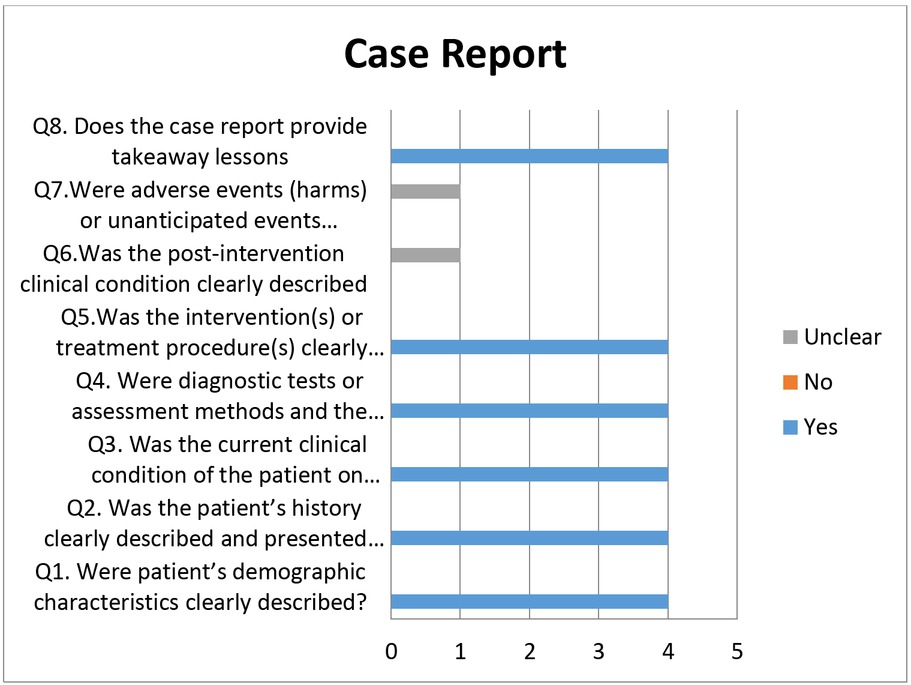
Figure 3
Quality assessment of case reports.
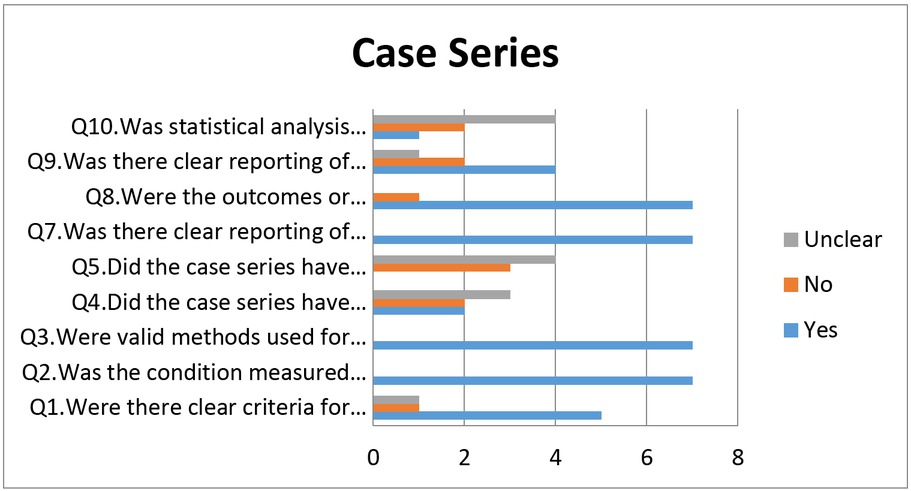
Figure 4
Quality assessment of case series.
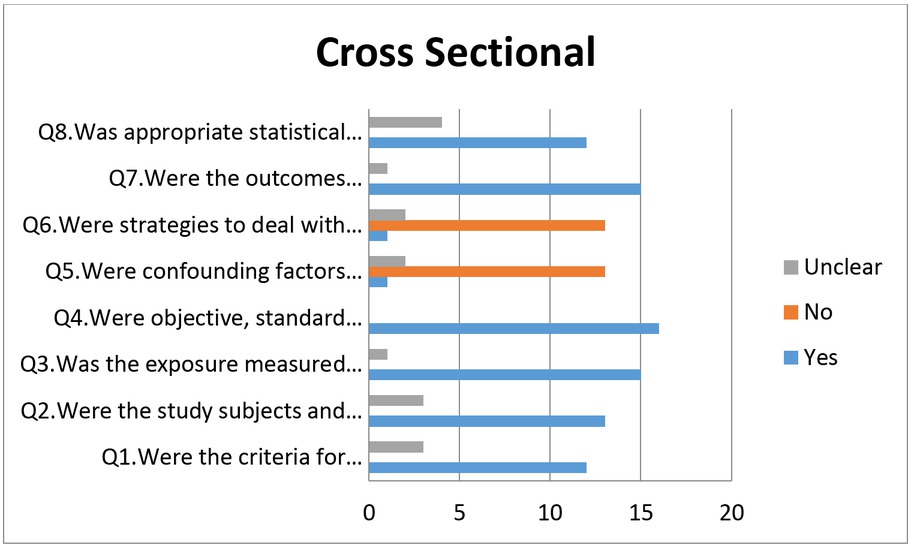
Figure 5
Quality assessment of cross-sectional studies.
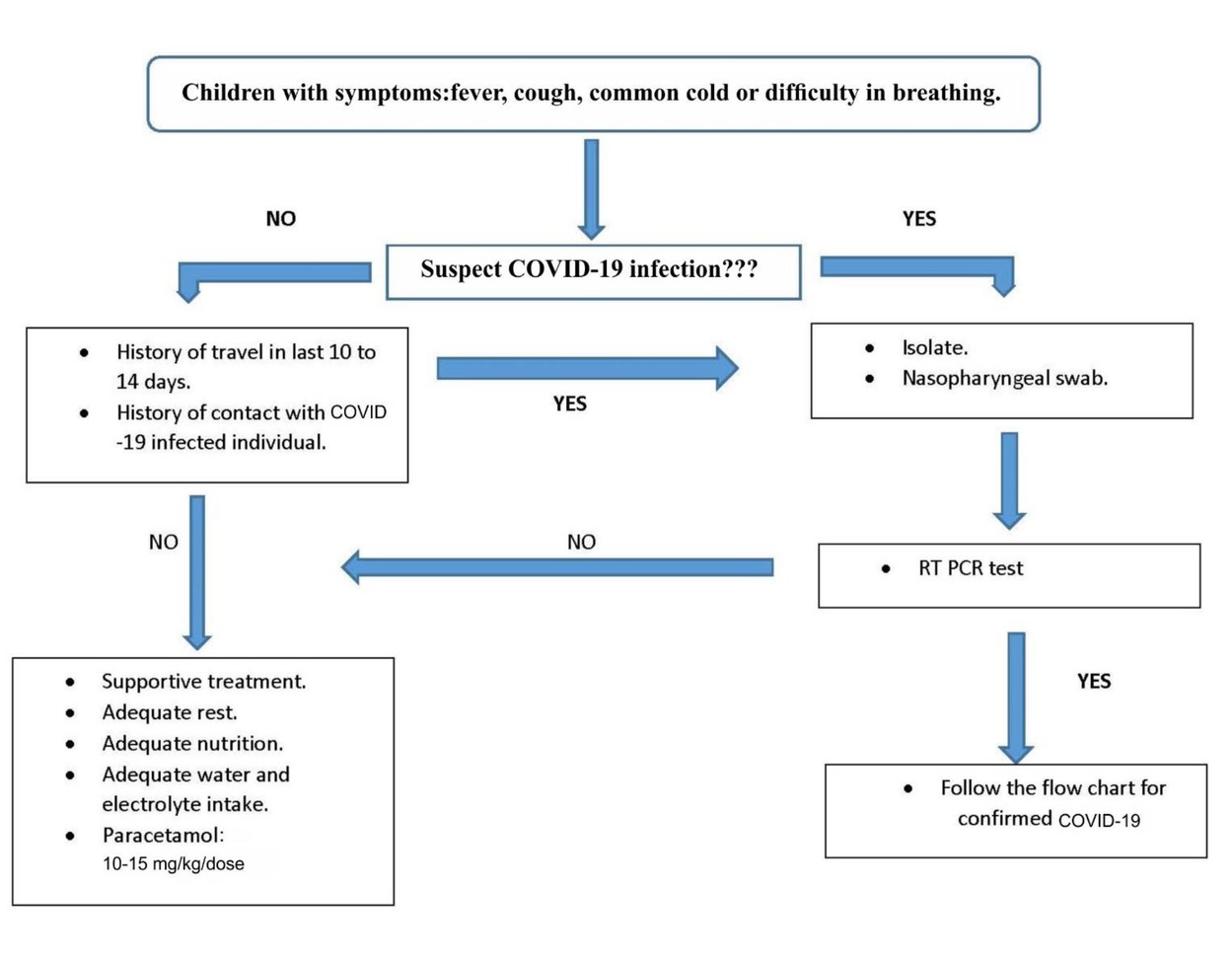
Figure 6
Proposed flow chart for management of children with COVID-19 like symptoms.
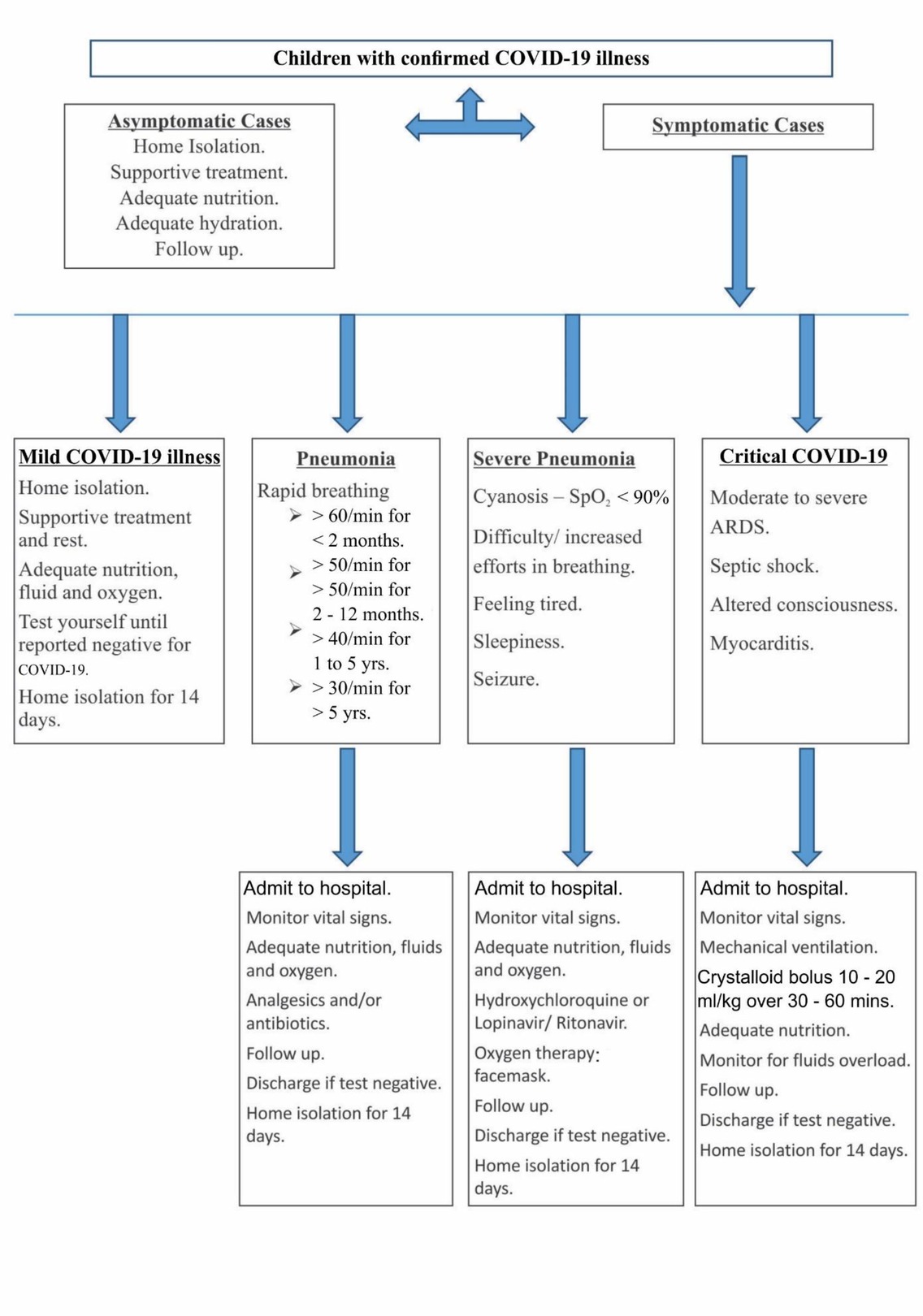
Figure 7
Proposed flow chart for management and supervision of COVID-19 positive children.
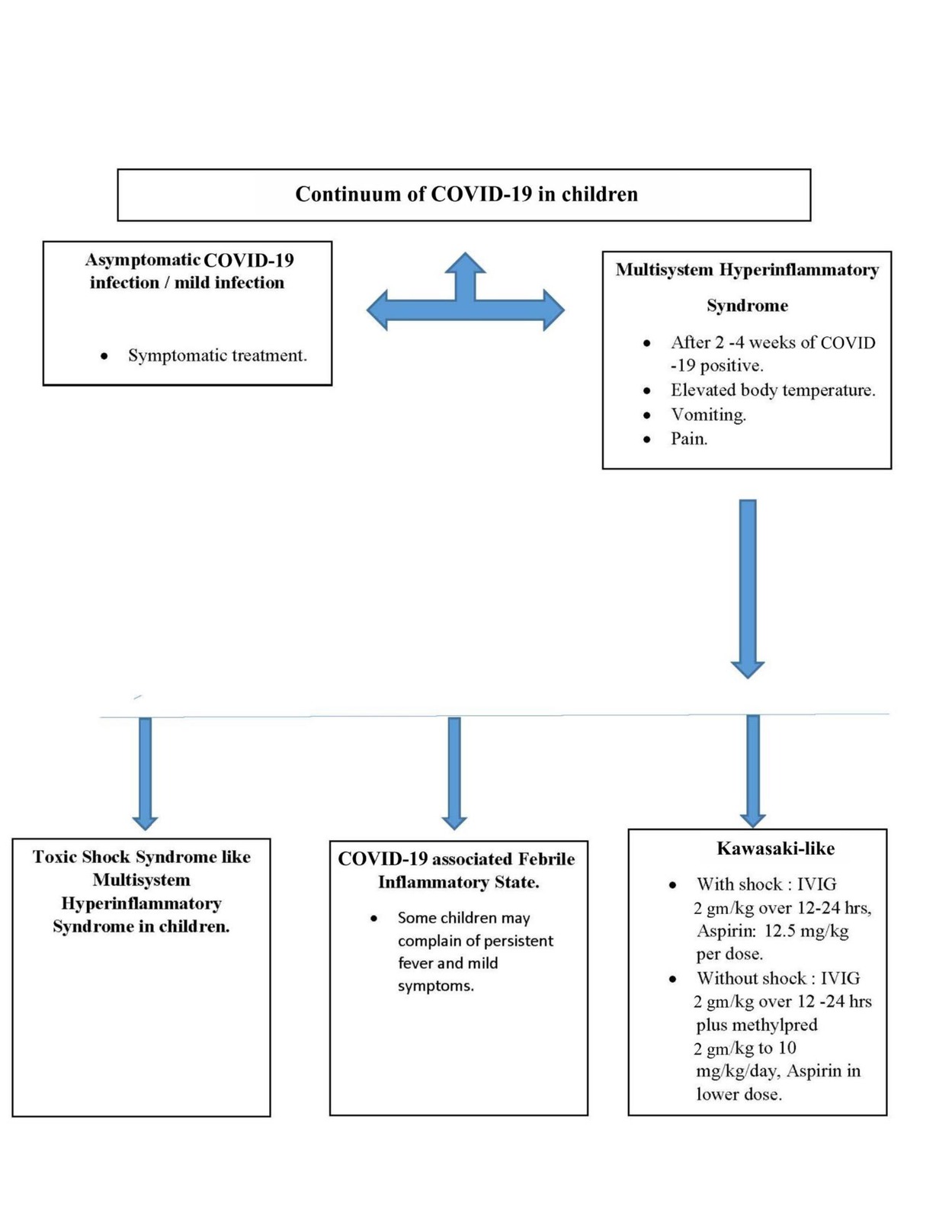
Figure 8
Continuum of COVID-19 in children.