
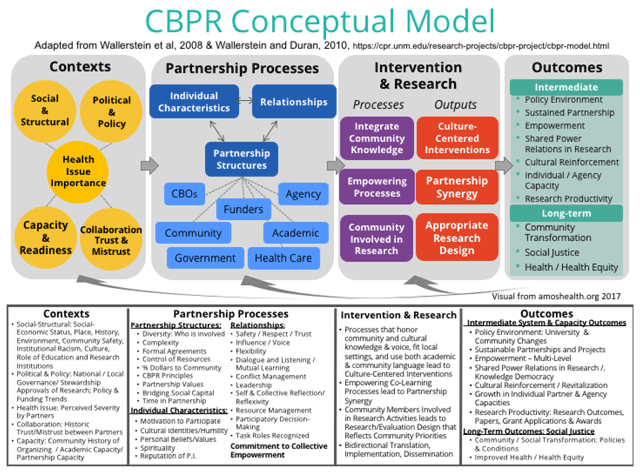
Figure 1
CBPR conceptual model explaining context, partnership processes, intervention & research, and outcomes of CBPR partnerships.
Table 1
Demographic data of clients.
| Variable | N | % |
|---|---|---|
| Gender | 151 | |
| Male | 33 | 22 |
| Female | 118 | 78 |
| Age | 148 | |
| 1–17 | 9 | 6 |
| 18–45 | 109 | 74 |
| 46 and older | 30 | 20 |
| Marital Status | 148 | |
| Married | 76 | 51 |
| Separated | 14 | 9 |
| Divorced | 10 | 7 |
| Committed Relationship | 21 | 15 |
| Single | 27 | 18 |
| Country of Origin | ||
| Dominican Republic | 7 | 5 |
| El Salvador | 14 | 11 |
| Honduras | 20 | 16 |
| Mexico | 68 | 53 |
| USA | 7 | 5 |
| Other | 13 | 10 |
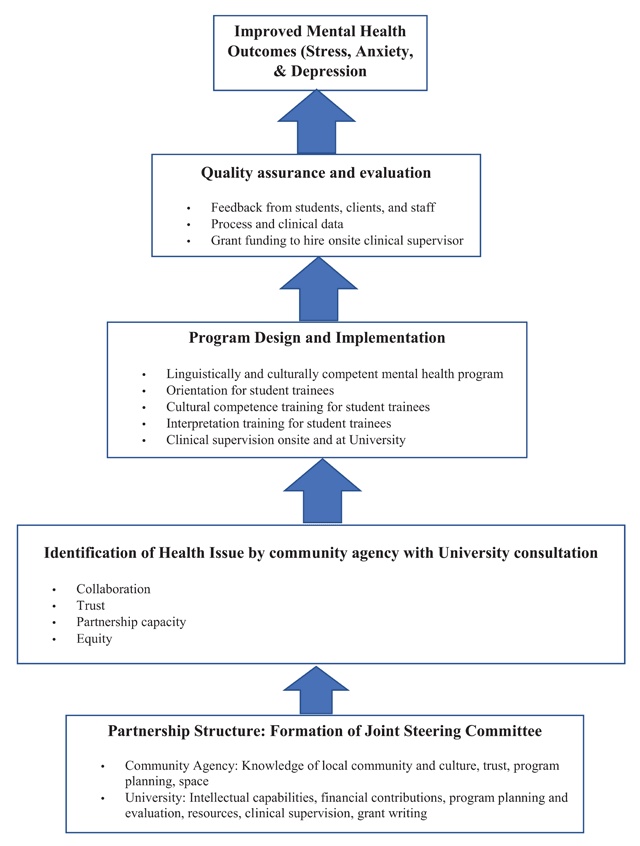
Figure 2
Consultation model for developing a community counseling training clinic.
Table 2
Recommendations for developing a community counseling training.
| Challenges | Recommendations |
|---|---|
| 1. Building trust in the community |
|
| 2. Language brokering |
|
| 3. Providing culturally responsive services |
|
| 4. Providing affordable services to low-income populations |
|
| 5. Managing attrition |
|
| 6. Recruiting student trainees |
|
| 7. Providing adequate supervision to students |
|
| 8. Coordination & organization of services: Administration & record keeping |
|