
Introduction
Greater community participation and control in defining community problems as well as designing interventions is essential for advancing health equity (Israel et al., 1998). Building on the assets of communities, community-academic partnerships (CAPs) offer collaborative approaches to support and enhance the capacity of existing community-based initiatives and programs to meet public health needs (Griffith et al., 2010). CAPs refer to community-partnered collaboratives where community representatives and researchers co-create research, interventions, programs, or policies throughout the decision-making processes and implementation into real-world applications (Pellecchia et al., 2018). CAPs help integrate multi-level contexts and embed community expertise into designing, adapting, and delivering evidence-based interventions (EBIs). Longer-term studies on CAPs have also shown their effectiveness in the maintenance and sustainability of intervention components (Spoth et al., 2011). CAPs can be considered models of intersecting systems, whereby multiple partners are working together across varied, respective organizational boundaries toward an intended shared goal.
Though much has been written on conditions for and obstacles to success, less is known about specific factors that may help CAP collaboration as well as their relative influence on collaborative processes (Gomez et al., 2021; Home et al., 2021). Moreover, how CAPs are formed and maintained throughout their development is unclear, indicating a need for more research on processes shaping partnership dynamics (Drahota et al., 2016; Hoekstra et al., 2020; Ortiz et al., 2020). For example, CAPs are instrumental in addressing complex, systemic health problems in partnership with communities that are marginalized (Abdulrahim et al., 2010). However, developing CAPs in over-researched settings and/or partnering with disenfranchised populations may present unique challenges to community researchers and practitioners (Abdulrahim et al., 2010; Wieland et al., 2021). To date, few studies have provided strategies or promising practices to strengthen CAP efforts in these contexts (Home et al., 2021; Pellecchia et al., 2018). Even less guidance is available to design collaborative strategies with a lens toward equity and justice (Wolff et al., 2017). Therefore, assessing contextual factors and eliciting community perspectives may identify effective practices and broaden understanding of factors that facilitate or hinder collaboration within CAPs (Behringer et al., 2018; Brookman-Frazee et al., 2012; Ortiz et al., 2020; Petiwala et al., 2021; Wallerstein et al., 2019).
Community-Academic Partnerships in Flint, Michigan
Flint is a community made up of about 80,000 people and has a population that is predominantly African-American (Carrera et al., 2019). The community has faced historical and traumatic events that have burgeoned issues related to distrust of institutions (Carrera et al., 2019; Citrin, 2001). Yet, throughout multiple public health emergencies, the Flint community has demonstrated active and engaging ways of partnering with researchers and policymakers to navigate crises. For example, some CAPs have been viewed as successful in navigating community concerns through the water crisis (Lewis et al., 2021). CAPs have been utilized to showcase stories from the perspectives of Flint community members firsthand for decades (Carrera et al., 2019; Citrin, 2001; Hailemariam et al., 2020; Key et al., 2019; Paberzs et al., 2014). Ensuring the accuracy, consistency, and engagement in how community stories are shared is viewed as an important aspect of crisis response and recovery (Carrera et al., 2019). This is consistent with other collaboratives, where community voice is critical to developing strategies that can address community needs (Petiwala et al., 2021). Thus, in Flint, engaging community partners becomes central to the research process, extending lived experiences into actual knowledge creation generated from community and capacity building (Carrera et al., 2019; Citrin, 2001).
The Partnership Consortium Core
The current study examines the Partnership Consortium Core (PCC), one of four cores of a broader research center—the Flint Center for Health Equity Solutions (FCHES). The FCHES was a National Institute of Minority Health and Health Disparities (NIMHD) funded transdisciplinary collaborative center made up of varied community and research partners. FCHES was designed to mitigate health disparities using varied levels of community-based participatory research with community members in Flint and across Genesee County (Bustos et al., 2022; Ellington et al., 2022; Johnson-Lawrence et al., 2019; Lewis et al., 2021; Meghea et al., 2021). The FCHES included four cores: Partnership Consortium, Methodology, Administrative, and Dissemination and Implementation Science (Ellington et al., 2022; Meghea et al., 2021). The center also included two intervention research projects on obesity prevention and substance abuse (i.e., Church Challenge, Strengthening Flint Families).
The PCC was an external-facing consortium of the FCHES that facilitated collaborations between local and national community and research partners and coordinated activities to develop and maintain those partnerships. The PCC leadership structure included researchers and community leaders. It was modeled as a CAP and as a community-driven network aimed to embed community partnerships into EBI development, rebuild trust among community-based organizations (CBOs) and academic institutions, minimize duplication of research efforts, and leverage resources toward health equity solutions in Flint and across Genesee County. While the FCHES was initiated in 2016, the PCC was only in its formative phase of development during the current study.
The current study is a closer examination of the PCC to determine ways to foster collaboration within the FCHES Partnership Consortium. Using an exploratory case study design, the current project aimed to examine the precedents of a CAP at the initial formation stage, allowing for the exploration and assessment of facilitating and hindering factors to interpersonal, operational, and network level processes as well as the community context in which the CAP was occurring (e.g., COVID-19). This research sought to add to the knowledge base on key determinants of the development of CAPs and extend this narrative to the Flint community’s experience throughout the COVID-19 pandemic.
The Model of Research Community Partnership (MRCP)
Understanding CAPs requires a model. The Model of Research Community Partnership (MRCP) is a theory-based conceptual model that has been applied to clinical settings in the context of implementation research and mental health services (Brookman-Frazee et al., 2012). CAPs in Flint have benefited from applying the MRCP to help guide the development of an evaluation framework designed to examine the broader functioning of FCHES as a whole (Ellington et al., 2022). A distinction is made between the evaluation of FCHES and the current study as this is a dedicated examination of PCC partners’ experiences and partnership dynamics rather than the overall functioning of the FCHES framework. The MRCP outlines critical collaborative components needed for the initial and ongoing development of CAPs and can be used to describe and evaluate multilevel influences embedded in community partnerships (Brookman-Frazee et al., 2012, 2016; Drahota et al., 2016) (Figure 1). The model specifies determinants of CAPs developing from formation to sustainment, allowing for the exploration and assessment of factors that occur throughout partnership development with consideration of community contexts. At the formation stage, CAPs are expected to establish and monitor components needed for strong partnership functioning, including interpersonal and operational processes. For the current study, the model was adapted to include facilitating and hindering factors of network processes during the formation phase because network-related characteristics can also shape partnership dynamics (Retrum et al., 2013; Varda et al., 2012). Throughout the execution of partnership activities, CAPs create varied forms of proximal outcomes for knowledge creation and exchange, and tangible products. In the final stage of sustainment, distal outcomes related to extended infrastructures that can facilitate future community collaborations are assessed and monitored (Brookman-Frazee et al., 2012).
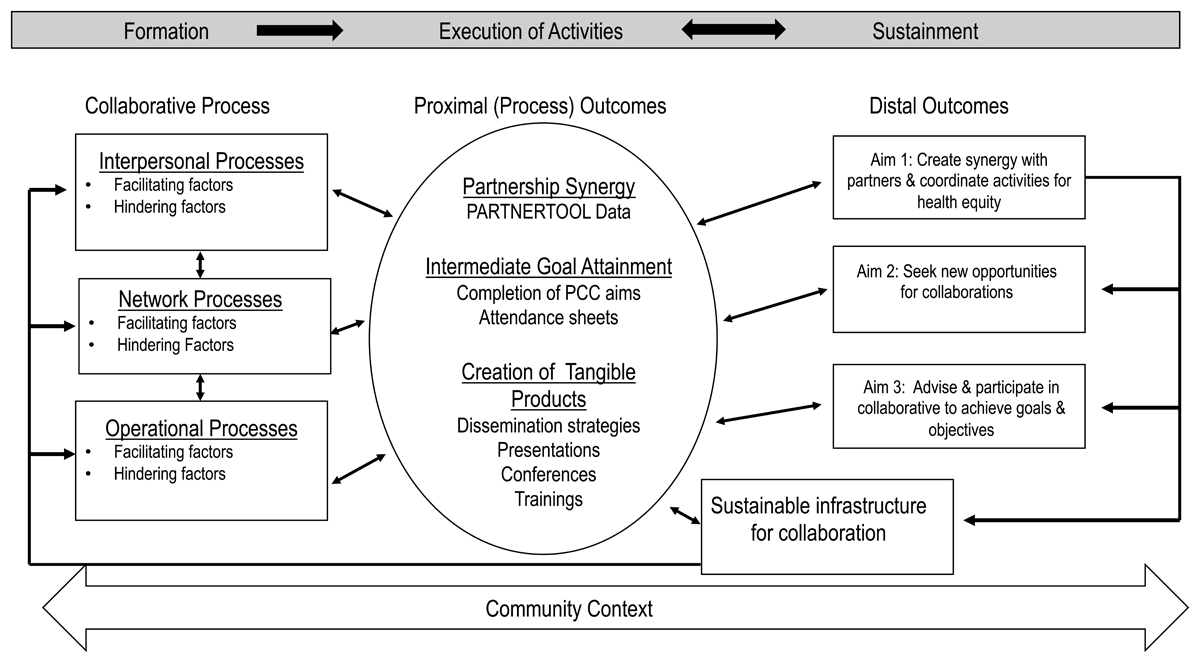
Figure 1
Adapted Model of Research Community Partnership.
Methods
Using a case study of 25 community and research partner representatives from organizations leading public health equity efforts in Flint, the study applied a sequential explanatory mixed methods (MM) design (QUAN → QUAL) over a one-year period of CAP development. The adapted version of the Model of Research Community Partnership (MRCP) guided the research design to incorporate network related processes relevant to CAP development (Figure 1). Using a survey and qualitative interviews, the MM approach provided data on the: (1) breadth of determinants to CAP development and (2) depth of determinants to expand and contextualize experiences with the CAP that are not made explicit through quantitative data (Creswell & Plano-Clark, 2011).
Data Collection Phases
Data were collected in January 2021 with two phases for each data strand. In the first phase, quantitative data were collected and analyzed. In the second phase, qualitative instruments were created based on the quantitative results to collect qualitative data that expanded and elaborated on survey results. When appropriate, both data strands were converged for an integrated discussion about key findings (Creswell & Plano-Clark, 2011). The study was approved by Michigan State University’s Institutional Review Board (IRB) (#CR00001249).
Participants
As of January 2021, the CAP included 25 agencies, including community members (n = 21) and researchers (n = 4) from universities, nonprofits, health-related organizations, county, and community health boards, or coalitions at the local, state, and national levels. Key representatives most knowledgeable about their agency’s participation in the CAP were recruited to participate in the study. If more than one member from a participating agency was involved in the CAP, CAP leaders from the PCC advised the team on the most knowledgeable partner to recruit for participation. To participate in the study, CAP representatives needed to meet the following eligibility criteria: (a) represent an active, participating agency in the CAP; (b) read and speak proficiently in English; and (c) be 18 years of age or older. Of note, two policymakers who were considered part of the CAP were excluded from the current study due to a lack of engagement in CAP activities.
Quantitative Measure
A quantitative, electronic survey was used to collect key facilitators and barriers to the CAP partnership development and perceived success of the CAP. In the survey, one item was created that utilized multiple response options based on a systematic review that summarized barriers and facilitators of CAPs across various settings (Drahota et al., 2016). An open-text response option was also included to allow participants to specify other factors not listed. Participants were asked to select factors that had contributed or hindered the CAP’s development. Perceived success was collected using a single, Likert-type response item that asked participants to rate how successful they thought the CAP had been in meeting its goals that given year (“1” Not Successful to “5” Completely Successful). Additional demographic details were collected on: (1) agency affiliation, (2) agency role and (3) duration of time involved with FCHES.
Procedures
The research team first obtained study approval from the CAP leaders (1 community co-PI and 1 academic PI) and then sought IRB approval. Once approval was obtained, a recruitment email was distributed to all key representatives, detailing information about the study’s purpose, incentives, expected activities, and eligibility to participate in the survey and interview. A $50 incentive was used to increase response rates throughout the COVID-19 pandemic, and an optional $100 charitable donation to a Flint CBO was added. A donation in combination with the $50 gift card was thought to increase the likelihood of participation from community leaders in health-related settings and align with community priorities of supporting Flint CBOs (Conn et al., 2019; Parkinson et al., 2019). All materials were distributed through email and Qualtrics with written consent obtained within the online survey. Participant names and contact information were stored in a password-protected server that was only accessible to the research team.
Qualitative Measures
Semi-structured individual interviews
Quantitative data analyses informed the development of the semi-structured, individual interview. Adapted from prior work that elicited community partner perspectives (Gomez et al., 2021; Ortega et al., 2018), the final interview protocol included seven questions designed to elaborate perspectives on CAPs and elicit more in-depth discussion about endorsed facilitating and hindering factors to the CAP.
Qualitative analysis
Directed content analysis, a widely used, flexible, and deductive approach, was utilized along with inductive coding procedures (Hsieh & Shannon, 2005). First, interviews were transcribed and independently validated by two study personnel. The codebook included a priori codes developed from the MRCP and based on quantitative results. Emerging codes that extended beyond the survey were also created using consensus procedures. Prior to coding, a team of 3 coders (first author, second author, and a research intern) reviewed the initial coding schema for clarity, definitions, and examples from the transcripts, and completed a practice training with 2 randomly chosen transcripts. Open discussion consensus procedures were used to resolve discrepancies and address any confusion with the coding schema to finalize the codebook and ensure quality in analyses. Once consensus for practice transcripts was reached, the team was assigned to code all transcripts independently. All transcripts were double-coded for inter-coder reliability (O’Connor & Joffe, 2020). Coders met to discuss any discrepancies using open discussion consensus meetings. Text segments were assigned specific codes to consolidate interview data into analyzable units (Hsieh & Shannon, 2005; O’Connor & Joffe, 2020). Interview data were coded iteratively to create themes illustrating underlying data patterns (Vaismoradi & Snelgrove, 2019). Emergent codes were developed using an iterative constant comparison approach and by the extent of their salience within and across interviews (O’Connor & Joffe, 2020). Categories from the MRCP were then used to organize the themes (Gomez et al., 2021).
Procedures
All respondents who participated in the quantitative phase of the study were contacted by email and telephone to participate in the interviews. The first author described the study’s purpose and aims, expected activities, incentives, and reminded them of their previous participation in the quantitative phase of the study. Participants were invited to schedule their interview using a Calendly link to find a convenient time and were given a $50 Visa gift card for their participation. All interviews were conducted by the first author, who had significant training in qualitative techniques and through a HIPAA-compliant platform (Zoom). Interviews lasted up to 30 minutes. Best practices in qualitative interviews were utilized to assure quality data and procedures, including reviewing project aims, participant consent and review of rights, and obtaining verbal consent before starting the interview (Bernard, 2006). All data were kept confidential; documents were de-identified and assigned ID codes, and names discussed in interviews were de-identified within the transcripts.
Results
A total of 16 CAP partners, representing 2 academic organizations and 14 CBOs (64% response rate), completed the survey. All community partners were leaders in health-related agencies, including agencies that played a central role in providing direct health services (n = 4) and non-profit agencies (n = 10) focused on providing Flint community members with resources. Partners’ involvement with the CAP averaged around 35 months (SD = 13.72) with a range of 12 – 52 months. Sixty-four percent of community partners held mutually exclusive roles as chief executive directors, 14% were chair board directors, and 7% were presidents of their agency, health division directors, or community coordinators. Academic research partners reported their roles as faculty (50%) or research specialists (50%). A subsample of nine participants who completed the quantitative survey also completed the interviews (56% of respondents), including two academic partners and seven community partners.
Perceived Success of the CAP
On average, both community and research partners viewed the CAP as very successful in meeting goals during its formation phase (M = 4, SD = .816) with community partners reporting slightly lower scores than academic partners (Table 1).
Facilitating and Hindering Factors
Quantitative frequency data (Table 2) regarding facilitating and hindering factors were integrated with qualitative data to expand and contextualize partner perceptions and experiences with endorsed factors (Creswell & Plano-Clark, 2011). Quantitative data were presented by partner type (i.e., research, community) to highlight any unique concerns and observe any discrepancies between partners. Total counts of factors were also calculated to illustrate key categories endorsed. Guided by the adapted version of the MRCP, quantitative and qualitative data were organized into three themes of facilitating and hindering factors: interpersonal processes, operational processes, and network processes.
Table 2
Frequencies of Facilitating and Hindering Factors by Partner Type.
| CATEGORY | INTERPERSONAL QUALITIES | COMMUNITY n | COMMUNITY % | ACADEMIC n | ACADEMIC % |
|---|---|---|---|---|---|
| Facilitating factors | Respect among partners | 11 | 78.6% | 2 | 100% |
| Good relationships between partners | 9 | 64.3% | 1 | 100% | |
| Trust between partners | 12 | 85.7% | 2 | 100% | |
| Mutual benefit for all partners | 10 | 71.4% | 2 | 100% | |
| Shared vision, goals, and/or mission | 13 | 92.9% | 2 | 100% | |
| Effective conflict resolution | 6 | 42.9% | 2 | 100% | |
| Hindering Factors | Mistrust between partners | 10 | 71.4% | 1 | 50% |
| Inconsistent partner participation/ membership | 5 | 35.7% | 2 | 100% | |
| Lack of shared vision, goals, and/or mission | 8 | 57.1% | 1 | 50% | |
| Lack of mutual benefit | 8 | 57.1% | 1 | 50% | |
| OPERATIONAL PROCESSES | |||||
| Facilitating Factors | Clearly differentiated roles/functions of partners | 3 | 21.4% | 2 | 100% |
| Well-structured meetings | 8 | 57.1% | 2 | 100% | |
| Good initial selection of partners | 4 | 28.6% | 2 | 100% | |
| Good quality of leadership | 9 | 64.3% | 2 | 100% | |
| Bringing together diverse stakeholders | 11 | 78.6% | 2 | 100% | |
| Positive community impact | 12 | 85.7% | 2 | 100% | |
| Hindering Factors | Differing expectations of partners | 9 | 64.3% | 1 | 50% |
| Poor or unequal decision-making | 8 | 57.1% | 1 | 50% | |
| Unclear roles and/or functions of partners | 9 | 64.3% | 2 | 100% | |
| Excessive funding pressures or funding control struggles | 6 | 42.9% | 1 | 50% | |
| Excessive time commitment | 11 | 78.6% | 1 | 50% | |
| High burden of activities/tasks | 6 | 42.9% | 1 | 50% | |
| Other: Common agenda to direct efforts | 1 | 7% | 0 | 0% | |
| NETWORK PROCESSES | |||||
| Facilitating factors | Exchanging info/knowledge | 9 | 64.3% | 2 | 100% |
| Sharing resources | 8 | 57.1% | 2 | 100% | |
| Effective and/or frequent communication | 7 | 50% | 2 | 100% | |
| Informal relationships created | 2 | 14.3% | 2 | 100% | |
| Hindering Factors | Poor communication between partners | 11 | 78.6% | 2 | 100% |
| Lack of a common knowledge or shared terms between partners | 6 | 42.9% | 1 | 50% |
Theme 1: Interpersonal Processes
Interpersonal Processes as Facilitating Factors
Interpersonal processes include constructs related to the quality of relationships among CAP partners and can be considered either facilitative (if high quality) or hindering (if low quality) to CAPs (Brookman-Frazee et al., 2012; Drahota et al., 2016). The total number of facilitating factors selected on the survey ranged from 1 to 6 (M = 4.5, SD = 1.36). Closer inspection by partner type and with qualitative responses are discussed below.
Good Relationships and Quality of Relationships Between Partners
Community partners endorsed trust (85.7%) and respect (78.6%) between partners as key facilitating factors that contributed to the CAP’s development; all research partners endorsed both factors. During interviews, partners described relationship qualities needed to maintain positive collaborations in more detail, such as genuine, trusting, and respectful relationships, with an explicit recognition that “partners need to take time to actually build that relationship” (P005). Another partner emphasized the value of trusting relationships throughout crises: “You have to have relationships. Then from the emergency preparedness perspective, you have to have trusting relationships before there’s a crisis” (P001).
Community (64.3%) and all research partners also endorsed facilitating factors related to having and maintaining good quality of relationships between partners within the CAP, emphasizing the importance of extending those relationships with core leaders and CBOs outside of the CAP. Community partners viewed intentionality to build relationships with the community as critical to advance intervention use, underlining how CAPs need to leverage community strengths and knowledge to design effective EBIs. One community partner emphasized, “Good solid relationships could make programs work, even if they’re [programs] not well-designed, but right designed programs that don’t have good relationships can fail” (P006). The ability to rely on and build on existing relationships was noted as another facilitating factor for developing new relationships within the CAP, particularly throughout the COVID-19 pandemic: “Our partnerships were established as we were working on other health equity things” (P004). Good relationships also needed to involve resource sharing and contributions—deliberate processes that allowed for trust-building. Many community partners mentioned positive experiences in gaining access to COVID-19 data through the city’s health department, referring community members to services provided through other partner agencies, and sharing information about upcoming health events.
Shared Vision, Goals, and/or Mission
Community (92.9%) and all research partners endorsed a shared vision, goals, and/or mission. During interviews, partners emphasized that having a shared vision, goal, and/or mission was a key facilitator driving collaborative partnerships for health equity, particularly if partners had previously demonstrated commitment to health equity efforts. Partners described how it was easier to collaborate with others who “already play in the same space” (P003). That is, partner engagement can be determined by history and whether you have had a demonstrated presence in the community through service, support, advocacy, or other involvement. This points to the need for alignment of health equity principles to increase collaboration opportunities among agencies and invest in communities longer-term beyond the research project.
Mutual Benefit for All Partners
Community (71.4%) and all research partners endorsed mutual benefits for all partners as a facilitator. Participants elaborated on mutual benefits, noting how any collaboration should demonstrate the value of health equity outcomes with clear benefits to participating partners, populations directly impacted, and the broader community. One community partner shared, “The idea is that it doesn’t matter whose flag is in it, as long as we’re getting to where we want to get” (P004). Mutual benefits among CAP partners were also considered critical to ensure an equal partnership process as well as sustaining positive collaborative outcomes. As one community partner shared, “If there isn’t equity coming out of the partnership [through mutual benefits], it’s going to be that three-legged stool that has a shorter leg… It can’t stand at all” (P005).
Interpersonal Qualities as Hindering Factors
The total number of hindering factors selected on the survey ranged from 0 to 4 (M = 2.25, SD = 1.483). The majority of community and research partners endorsed mistrust (71.4%, and 50%, respectively), lack of shared vision, goals, or mission (57.1% and 50%, respectively), and lack of mutual benefit (57.1% and 50% respectively) as hindering factors to the CAP’s development.
Mistrust Between Partners
Community and research partners elaborated on barriers related to the Flint community’s historical distrust of academic institutions. Given the history of Flint’s water crisis, distrust within the community continued to remain a challenge; this was especially true when trying to distribute information regarding COVID-19. One participant shared, “When you think about our community partners, they’ve had so many negative experiences. How can they have faith that the academics and the institutional partners can be trusted?” (P006). Community partners emphasized the critical need to address factors leading to distrust to initiate and sustain a CAP more successfully: “If the partnership isn’t firmly developed in terms of its relationships and transparency in the motivations and all of those things, if that isn’t established, distrust will just kill it” (P005).
Inconsistent Partner Participation
While a small group of community partners endorsed this factor in the survey, all of the research partners viewed inconsistent partner participation (35.7% and 100% respectively) as a key hindering factor to the CAP. Across interviews, community partners emphasized hindering factors related to competing interests and/or priorities among partners and further elaborated on the consequences of inconsistent partner participation. First, many community partners mentioned how consistent participation is a central tenet for effective partnerships to move toward goals: “Showing up is 90% of the job” (P005). This was shared because some CAP partners tended to be engaged in health equity efforts involving other institutions outside of the CAP, which potentially limited their involvement and commitment to any one effort. Another community partner discussed how commitment to multiple equity efforts can feel overwhelming, as well as dilute one’s effort: “There’s a risk of you going in multiple directions and some of them will be competing for your time… you end up not spending quality time on any of them” (P008). Given the inconsistent partner participation noted throughout the CAP’s development, partners also described how such inconsistencies led to missed opportunities in understanding the value of the work (“I don’t think people realized the value that would come back to their agency,” P004) and in moving forward with the CAP’s mission (“not having a sense of where we all are and where we want to get to,” P006).
Theme 2: Operational Processes
Operational Processes as Facilitating Factors
Operational processes include the logistics and quality of partnership functioning within a CAP and relate to its organizational aspects (Brookman-Frazee et al., 2012; Gomez et al., 2021). These processes can either facilitate or hinder CAPs depending on the quality of the processes utilized to initiate and sustain CAP activities (Drahota et al., 2016). The total number of facilitating factors selected on the survey ranged from 1 to 6 (M = 3.7, SD = 1.74). Closer inspection by partner type and expansion with qualitative responses are discussed below.
Bringing Together Diverse Partners
Most of the community (78.5%) and all of the research partners endorsed bringing together diverse stakeholders as key facilitators in shaping the CAP. Partners elaborated on their responses during interviews and indicated that collaborations with a focus on bringing together diverse community and research partners are critical for innovation, reaching diverse audiences, and broadening positive community impact. A community partner noted how “these different organizations, non-traditional, have relationships into the community that public health may not be able to reach; [they’re] really valuable” (P004). In this regard, participants encouraged the use of innovative approaches to engage with CBOs not traditionally involved in providing health services to develop or adapt EBIs that can reach more diverse community members, and, ultimately, mitigate underserved needs.
Positive Community Impact
Most of the community (85.7%) and all research partners endorsed positive community impact as another key facilitating factor for the CAP. Throughout interviews, partners elaborated on positive community impact as it relates to shared decision-making power rendered to communities to move the work forward as well as their motivations to engage with the CAP overall. While not listed in the survey, partners explicitly advocated for the inclusion of communities in decision-making processes to drive impact. One community partner emphasized the importance of “Hearing everyone’s voice and not just the ones that are funded most, but all ideas should be listened to, valued, and appreciated” (P006). Another community partner shared, “If you don’t have a voice from all community partners, you can’t move ahead (P004) and “There has to be a balance between what the community needs and what the individual [academic] needs…there has to be common ground (P008). These comments highlighted the importance of power-sharing across research and community partners that provide equitable opportunities to contribute and integrate community voice into decision-making efforts. Others emphasized the reality of challenges in carrying out positive community impact and ensuring that equity stays centered throughout the process: “There’s a lot of hard work that needs to happen to make sure [we’re] equal…” (P006).
Good Quality of Leadership
Community (64.3%) and all research partners also endorsed good-quality of leadership as a facilitating factor. Participants discussed how CAP leaders played a major role in building trust with community partners through their existing networks, reputation, and history of engaging with the Flint community in health equity efforts beyond the CAP. CAP leaders demonstrated leadership that prioritized relevant community concerns: “Through their leadership… they came to the table listening first” (P004). This underlines the importance of including leaders with strong reputations in the community, who are already well-respected and perceived as trustworthy, to facilitate collaboration efforts. Other examples of good qualities of leadership were described as decentralized leadership practices, including power sharing among partners to coordinate the broader group and leverage diverse skill sets among partners.
Operational Processes as Hindering Factors
The total number of hindering factors selected on the survey ranged from 0 to 4 (M = 2.25, SD = 1.483). Community and research partners primarily endorsed hindering factors related to excessive time commitment (78.6% and 50%, respectively), unclear roles and/or functions of partners (64.3% and 100%, respectively), and differing expectations of partners (64.3% and 50%, respectively). In interviews, community partners noted that not all CAP members were as engaged as others, which led to a higher burden on some partners: “Some folks get asked, some organizations get asked a lot of and some do not” (P009). This was in line with the endorsement of a high burden of activities and tasks as a hindering factor to at least 50% of partners who completed the survey.
Some partners also described a lack of clarity in what roles community partners would play in the CAP, leaving some confused about ongoing efforts. This aligns with factors related to differing expectations of partners that were endorsed by over half of community and research partners. One community partner shared, “What has been difficult for me is trying to understand how everything is fitting together. I am not able to see that roadmap” (P008). One research partner shared similar observations regarding role confusion of community partners, “It often seemed to me like the community partners didn’t know what their role was or who’s responsible for what and what is happening” (P009). This suggests that the CAP may have needed to focus on building basic facilitating structures that allow for more role clarity, as well as community ownership and leadership.
Theme 3: Network Processes
Network Processes as Facilitating Factors
Network processes are constructs related to the function of ties between partners that can give insight into what facilitates or hinders partnership dynamics. This theme was added to the MRCP to incorporate network-level qualities utilized to initiate or sustain CAP activities. The total number of facilitating factors selected on the survey ranged from 0 to 4 (M = 2.13, SD = 1.544). The majority of community and research partners endorsed exchanging info/knowledge (64.3% and 100%, respectively), sharing resources (57.1% and100%, respectively), and effective and/or frequent communication (50% and 100%, respectively) as facilitating factors to CAP development.
Effective and/or Frequent Communication
Half of the community partners and all research partners endorsed effective and/or frequent communication as facilitating factors and elaborated in interviews. Based on community partners’ insights, having effective and frequent communication must involve being upfront with roles, expectations, and CAP priorities to ensure transparency. Having such processes in place was viewed as helpful in aligning partners’ interests in the CAP’s mission as well as in establishing a shared sense of commitment. Another community partner also emphasized communicating partners’ needs (as they are ongoing) to maintain good relationships with partners and direct the partnership toward reconciliations, particularly if there have been unintentional harm: “When we think about relationships and somebody walks away hurt and upset and I didn’t tell them why I was hurt and upset, how can they do anything? It’s all tied together” (P007). This also relates to deliberate partnership processes that build trust through bidirectional communication, which in turn, can foster qualities of good relationships described earlier.
Network Processes as Hindering Factors
The total number of hindering factors selected on the survey ranged from 0 to 2 (M = 1.25, SD = .683). Poor communication was endorsed by 78.8% of community partners and 100% of research partners. Both community (42.9%) and academic (50%) partners also endorsed a lack of shared language as hindering factors. In interviews, participants elaborated on the importance of these factors in driving CAPs. Community partners described the potential to derail health equity efforts without clear communication and how necessary it is to move the work forward: “There needs to be a roadmap for all partners to be on the same page regarding how things are going to get done” (P008). Other community partners described the lack of shared terms between researchers and communities as a loss in translation, leading to inaccurate portrayals of community members. One community partner shared, “Academics like to write about things that are wrong, not necessarily about things that are going well. So those people [community partners] who are doing the hard work in the trenches have academics writing articles about them… They’re not in the trenches with them to know what it’s like” (P006). This calls attention to the oppressive structure of academic language and research, underscoring the importance of reducing barriers to more intentional dialogues that can facilitate engagement and communication in CAPs.
Discussion
Guided by the adapted MRCP, the current study examined facilitating and hindering factors that can influence and shape the development of CAPs. Facilitating and hindering factors for CAPs are well known (Drahota et al., 2016). However, there is a need to understand differences in how these factors shape CAPs, which vary by developmental phase and community context (Gomez et al., 2021). In this study, we examined a CAP throughout its formation phase and in the context of a public health pandemic within the Flint community. With a case study, we were able to generate knowledge about how CAPs might function within a particular context and with marginalized communities (Atkinson & Delamont, 2006). Using this approach, we documented the perceived success of a CAP in meeting its goals and identified key factors contributing or hindering the success for CAP development using survey data. Mixed methods integrated with qualitative interviews then expanded upon the quantitative data to better understand how facilitating and hindering factors have contributed to the CAP’s development with elaborated details for context. Taken together, these findings expand the literature on determinants and tell us an important story on how such factors can influence CAP formation and success.
Overall, interpersonal processes were most frequently endorsed as facilitating factors to the CAP’s success by both community and research partners. This is in line with prior studies that have found interpersonal processes to be the most influential for the initial and ongoing development of CAPs and as key factors influencing success in community collaborations (Gomez et al., 2021; Mattessich & Monsey, 1992). Many partners emphasized how important it was to have established relationships embedded with trust to navigate the pandemic. This demonstrates the importance of prioritizing the quality of relationships with communities rather than quantity, drawing attention to components of trust, respect, shared values, and history of relationships needed for successful collaborations that work to address community needs. Establishing practices that foster mutual trust can also challenge power inequities embedded in CAPs (Wallerstein et al., 2019). Relationships embedded with trust can facilitate co-creation with community knowledge and increase the impact of partnerships (Mattessich & Monsey, 1992; Varda et al., 2008; Varda & Retrum, 2012; Varda & Sprong, 2020). Moreover, perceptions of value and trust in partnerships carry significant implications for successful collaborative outcomes (Varda et al., 2008; Varda & Retrum, 2012). Therefore, future CAPs are encouraged to invest in developing and monitoring interpersonal factors that may be critical for good quality relationships with communities.
Operational processes were most frequently endorsed as hindering factors. Specifically, excessive time commitment and unclear roles and/or functions were found salient in the survey and across interviews with community and research partners. Some partners discussed how unequal decision-making between partners can lead to inconsistencies in roles and functions and including communities in the decision-making process can facilitate positive community impact. This aligns with prior studies that underscore the need for the distribution of equitable power in the operational processes of CAPs to improve broader collaborative outcomes (Brookman-Frazee et al., 2016; Carrera et al., 2019; Lau et al., 2020; Wolff et al., 2017). Distributing decision-making power across all partners can also maintain a critical threshold of participation and consistency—key factors that facilitate systems-level changes in CAPs (Kegler et al., 2019; Nowell, 2009; Wolff et al., 2017). The operational processes of CAPs are its core functions. It is critical to clearly define roles and responsibilities to establish structures that will facilitate decision-making, community ownership, and leadership (Wolff et al., 2017). Future CAPs are encouraged to apply a collaborative approach that ensures equitable power distribution to empower the roles of community partners as leaders while also balancing the burden of participation.
On the other hand, operational processes related to bringing together diverse partners and positive community impact were primarily viewed as facilitating factors contributing to the CAP’s success. Community partners valued the involvement of diverse partners and viewed them as key players needed to advance innovative health equity efforts. Others emphasized the importance of partnering specifically with trusted CBOs that are not traditionally involved with health services. These community-grounded insights align with literature that supports the value of multiple, diverse partners in optimizing CAP efforts by fostering trust, as well as mobilizing social action (Butterfoss, 2007; Nguyen et al., 2021; Nowell, 2009; Wallerstein et al., 2019). Some studies have demonstrated how diverse partners can provide leaders with opportunities to build bridges for improved collaboration outcomes (Hamilton et al., 2014). Other literature has also pointed to how flexibility and creativity in generating co-created knowledge are essential to CAP success (Home et al., 2021). Extending partnerships to include community partners beyond the status quo (e.g., same players) is another means of building from community strengths and leveraging existing assets. Community researchers and practitioners can advance partnerships by engaging with “non-traditional” CBOs that already have ties with the community but are not traditionally involved with direct health services.
More research is needed on key facilitating and hindering factors that are related to network processes underlying CAPs. Network-related factors focused on the function of communication and collaborative activities, play a key role in partnership development and may allow for a deeper examination of multi-level determinants that lead to CAP outcomes (Retrum et al., 2013; Varda & Sprong, 2020). Findings demonstrated that many community partners viewed knowledge exchange as a facilitating factor and poor communication as a hindering factor to CAPs. These two factors are related. If researchers want community partners to authentically engage in knowledge exchange as equal partners, there is an obligation to co-create structures that build on their language and understanding, offer space for questions, and flexibility to adapt communication materials in a way that is accessible to all parties for full participation. Future research is encouraged to examine network processes of CAPs using a network science lens to broaden understanding of CAP formation as well as the implications on power dynamics.
An expanded discussion is needed on barriers to communication in CAPs. Lack of shared terms and common language between community and research partners are often found as consistent hindering factors to successful CAP outcomes (Gomez et al., 2021; Lewis et al., 2021; Nguyen et al., 2021). Throughout interviews, community partners described navigating differences in language, such as who was included in “community” and which priorities were incorporated in “equity,” specifying the need for partnerships to “make sure we speak the same language.” Research partners also discussed “research” as a language that didn’t translate well into community settings, leading to missed opportunities for building relationships. It’s important to acknowledge that academic language and research can function as forms of oppressive power, maintaining “hierarchies even within well-intentioned partnerships” (Kegler et al., 2019; Wallerstein et al., 2019, p. 22). CAPs must engage with communities using strategies that can lead to transformative changes in power (Kegler et al., 2019; Wolff et al., 2017). Structuring partnerships with deliberate processes that allow for communication to equalize power in access and knowledge is critical (Wallerstein et al., 2019; Wolff et al., 2017). These findings suggest the need for more appropriate adaptations in how community researchers and practitioners communicate and translate the impact of research in a way that is relevant to communities by taking culture and unique characteristics into consideration. Future CAPs should also incorporate practices that invite community partners to co-create shared terms/language for improved communication. Moreover, maintaining transparency in communication when working with communities can be impactful in mitigating barriers that lead to distrust.
Overall, the results of this study demonstrate the importance of the quality of relationships embedded with trust, value, respect, and history. Interpersonal processes were viewed as integral in facilitating CAP development and maintaining its function in collaboratively responding to public health concerns. This is consistent with extant literature on how good quality of relationships with communities can promote the implementation and sustainability of EBIs (Brookman-Frazee et al., 2012; Pellecchia et al., 2018). It is worth noting the emphasis community partners placed on maintaining good quality of relationships and how that provided them the ability to rely on existing relationships throughout the COVID-19 pandemic. This extends the notion that building and maintaining trust in partnerships is considered dynamic (Lucero et al., 2018). Community partners underlined the importance of keeping connections alive, building on them, and committing to learning more about their partners: “What good is it to put together a partnership that is one and done?” We echo this sentiment and encourage future CAPs to plan for partnerships with a lens toward longer-term sustainability beginning from its initial formation phase as well as establish trust enhancing relational practices throughout the collaboration process.
Limitations
The current study is not without limitations. First, the sample size can present potential biases. However, the sample was purposive, identifying key representatives who were most knowledgeable about the CAP’s health equity efforts. This was expected to provide the most reliable perspectives regarding the CAP. Furthermore, seminal literature has provided best practices for qualitative sample sizes ranging from 3–10 or up to 60, depending on the extent of saturation reached (Hennink & Kaiser, 2022). Another limitation relates to the psychometric properties of instruments. However, determinants were grounded on a systematic review of CAPs, ensuring the items were evidence-informed. Integration of quantitative data with qualitative findings can also clarify and expand on responses, which can function as an indicator for the reliability of measures (Creswell & Plano-Clark, 2011). External contexts related to COVID-19, such as modifications to the recruitment and assessment process, may have threatened generalizability to other CAPs, as the study carried out data collection during the extenuating circumstances of a global health crisis. Moreover, the study is limited in its scope for CAP effectiveness and restricted to the one-year term of funding for data collection. Despite these limitations, however, the study advances our understanding of key factors that can shape the success of CAPs in meeting goals of advancing health equity.
Conclusion
CAPs can be effective in improving EBI implementation and sustainability (Spoth et al., 2011) as well as developing community-defined solutions. Communities know their communities best—incorporating community perspectives into CAP strategies can identify priority concerns to better meet community health needs. Guided by dimensions of the MRCP, we highlighted facilitating and hindering factors found across multi-level contexts related to interpersonal, operational, and network processes during the formation phase of a CAP and from the perspectives of Flint community partners. Findings encourage future CAPs to prioritize the quality of relationships to ensure trust, respect, and shared values are maintained, establish operational structures that facilitate equitable decision-making processes to share power with community partners and leverage community expertise and assets through the involvement of more diverse partners who have an ongoing commitment to communities. Overall, it is necessary to center on community needs and perspectives and build on existing relationships, especially where distrust may continue to be a larger issue. Throughout, effective communication that is accessible and relevant to communities is essential. These findings provide insights into approaches that may benefit future collaborations facing crises or challenges for improved partnership outcomes.
Data Accessibility Statements
The authors confirm that the data supporting the findings of this study are available within the article or its supplementary materials.
Ethics and Consent
The authors confirm that the study was approved by Michigan State University’s IRB (#CR00001249). The authors confirm that consent was obtained from all participants included in the study.
Acknowledgements
The authors acknowledge and thank Flint community partners for investing their time and expertise to the project. We acknowledge Calandra Reichel who provided additional research support as a research intern with the Accessing Community Treatments and Services Lab.
Funding Information
This work was directly supported by funds from the Society for Community Research and Action (SCRA), Michigan Psychological Association Foundation, the College of Social Science at Michigan State University, and funding from the National Institutes of Mental Health Disparities (U54-MD011227).
Competing Interests
The authors have no competing interests to declare.
Authors Contributions
Tatiana E. Bustos: conceptualization, data curation, formal analysis, funding acquisition, investigation, methodology, project administration, visualization, writing—original draft, writing—reviewing and editing, supervision. Sana Simkani: project administration, formal analysis, data curation, writing—reviewing and editing. Aksheya Sridhar: visualization, writing—reviewing and editing. Amy Drahota: conceptualization, funding acquisition, writing—reviewing and editing. All authors read and approved the final manuscript.