
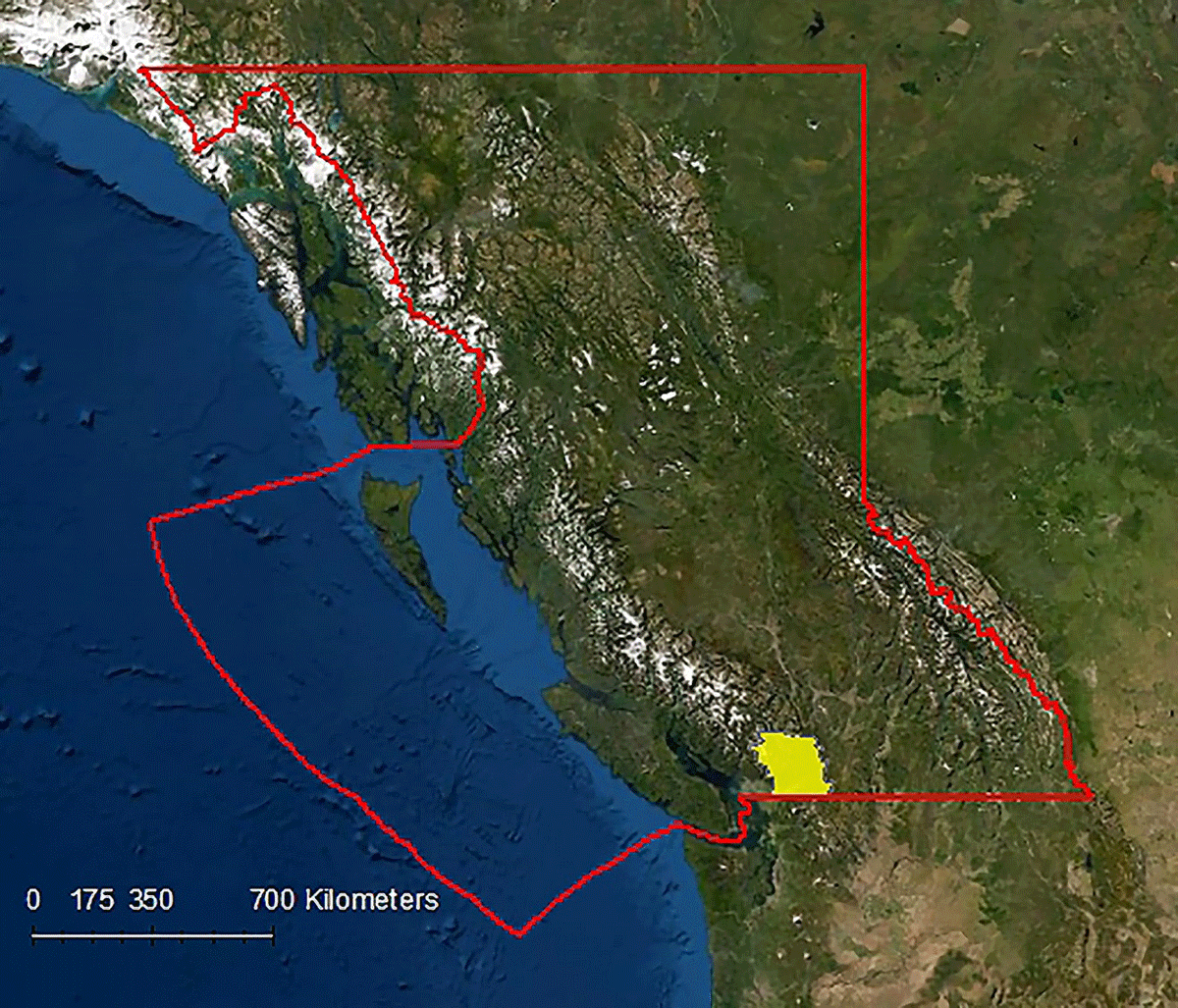
Figure 1
Location of the Fraser Valley Regional District (yellow) within BC (red).
Note: Data sources: BC Data Catalogue, Esri, DigitalGlobe, GeoEye, Earthstar Geographies, CNES/Airbus DS, USDA, USGS, AeroGRID, and ISN.
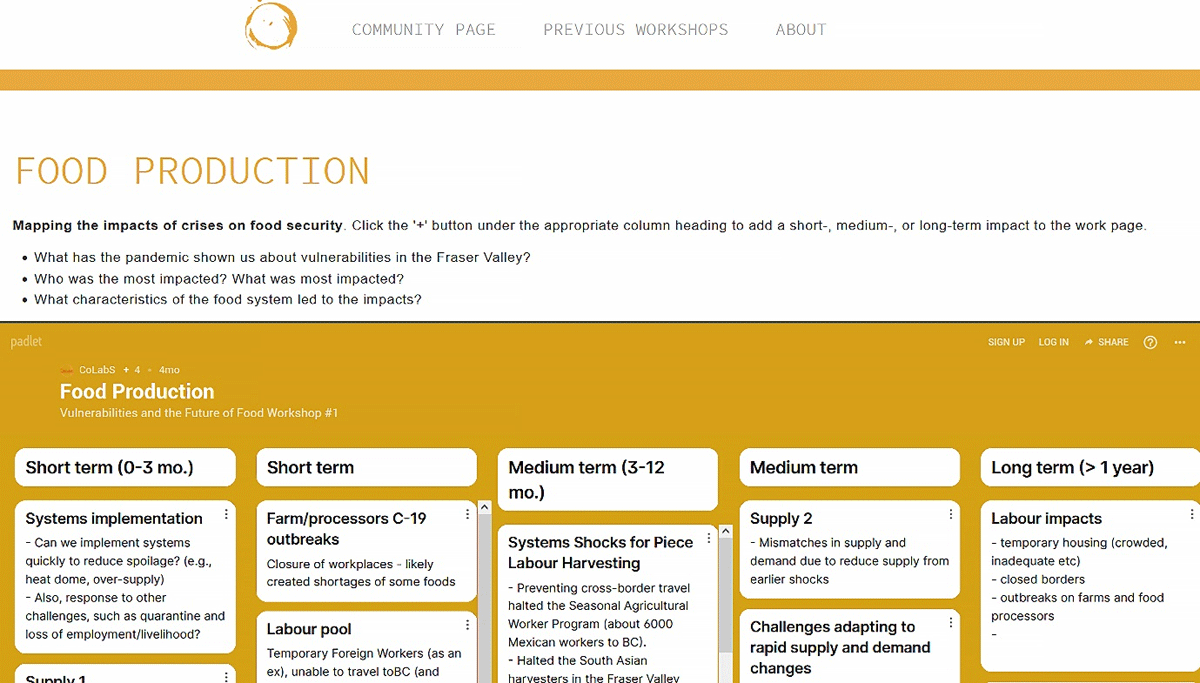
Figure 2
CoLabS Screenshot of the First Workshop’s Working Table.
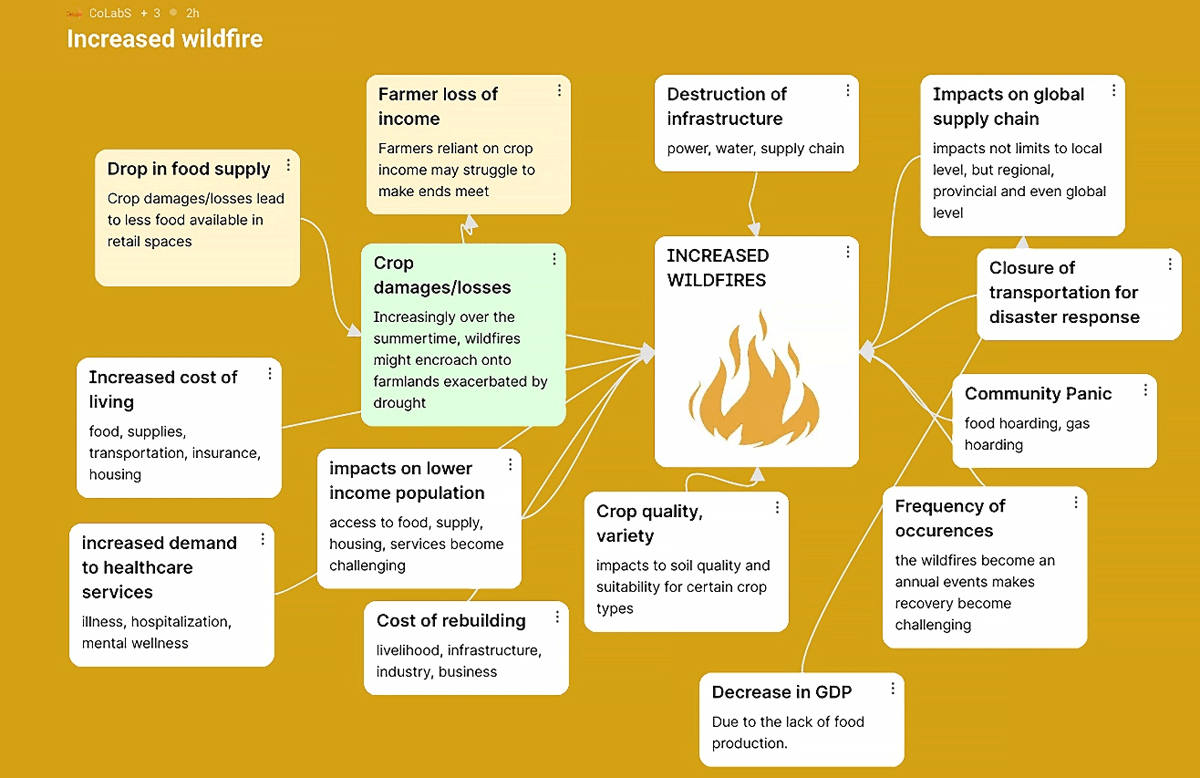
Figure 3
CoLabS Screenshot of the Second Workshop’s Hazard-Impact Mapping Working Table.
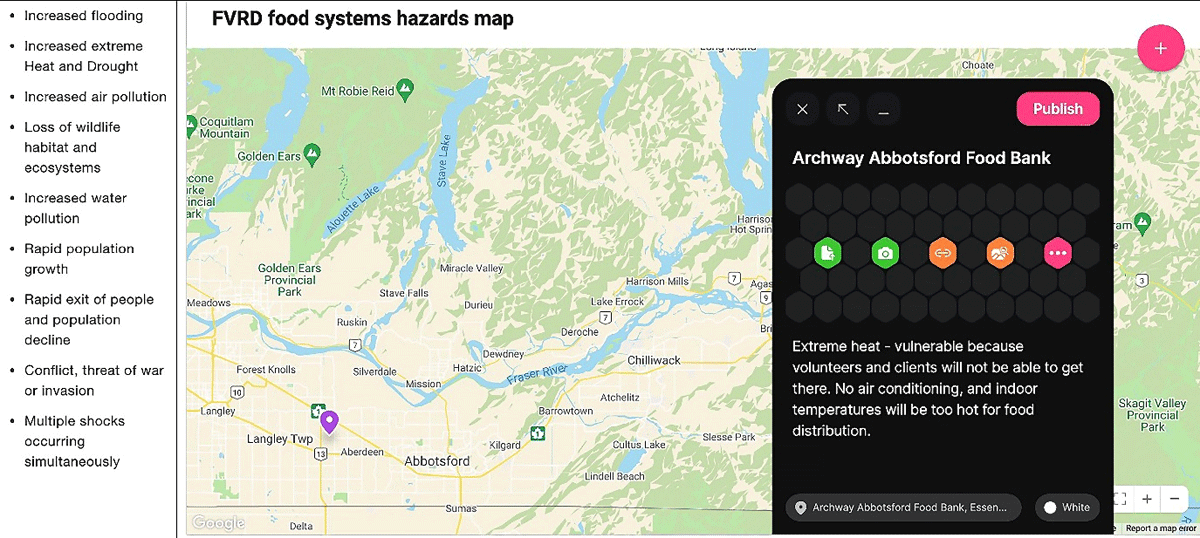
Figure 4
CoLabS Screenshot of the Second Workshop’s Spatial Mapping Table.
Table 1
Food System Hazards Explored in the Second Workshop.
| TYPE OF HAZARD | HAZARDS |
|---|---|
| Environmental | Flooding; Wildfire; Extreme heat and drought; Air pollution; Water pollution; Loss of wildlife habitat and ecosystems |
| Socioeconomic and political | Rapid population growth; Rapid population decline; Threat of war, conflict, or invasion; Economic recession and market failure |
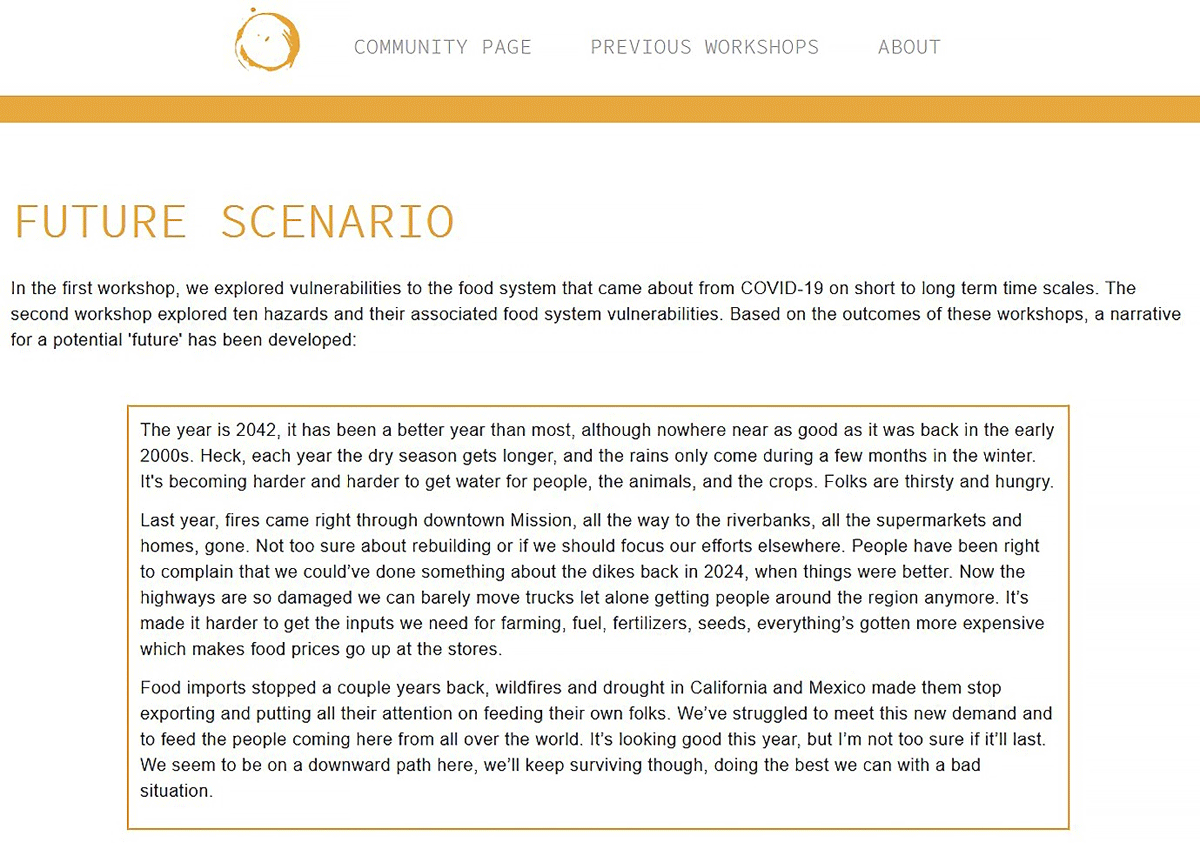
Figure 5
CoLabS Screenshot of the Future Scenario Narrative used in the Third Workshop.
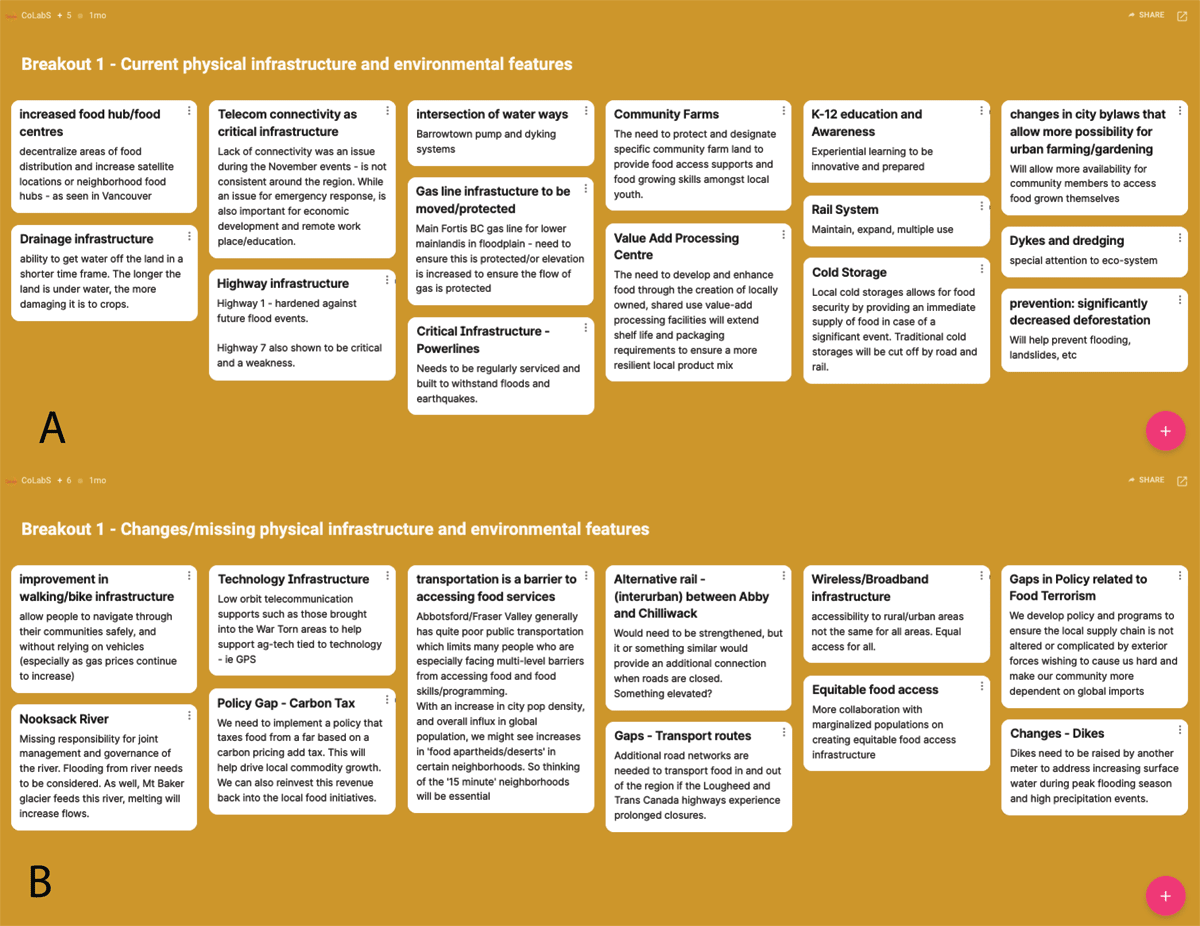
Figure 6
CoLabS Screenshots of Third Workshop’s Working Tables.
Note: CoLabS Screenshots of Third Workshop’s Working Tables on (A) current and (B) missing/gaps in physical infrastructure and environmental features.
Table 2
Thematic Findings on Strengths and Limitations of the Participatory Research Process.
| CATEGORY | THEME | DESCRIPTION |
|---|---|---|
| Strengths | Place-based approach | The research focused on the Fraser Valley region for developing and advancing contextualized, local knowledge. Extending beyond the administrative boundary to include relationships and interactions between places. |
| Relationship development & reciprocity | Relationship building was done by meeting community organizations and stakeholders on their terms and addressing their needs, and by participating in local networks. | |
| Multi-dimensional exploration | The research involved participants/stakeholders in exercises that explored food systems vulnerabilities through temporal and spatial dimensions. | |
| Dynamic digital tools | The variety of digital tools created an engaging workshop experience and opportunities for effective individual and group brainstorming. | |
| Limitations | Participation | Comprehensive participation of food system actors (e.g., producers, labourers) and specific social groups (e.g. Indigenous, racialized, people experiencing poverty) was not fully achieved. |
| Capacity limitations | Capacity limitations created challenges for certain stakeholders to participate, such as those working in food production and vulnerable groups with limited access to (or comfort with) online technologies. | |
| Real-world issues | Real-world hazard events influenced topics and focus of workshop discussion and activities. | |
| Online tool constraints | Some online tools were limiting in terms of the ideas and inputs participants wished to provide. |