
Introduction
This article draws from my past experiences as a Finnish translocal migrant in the UK. Everyday materialities influenced the way I made sense of my translocal trajectory and perceived myself in relation to Finland and the UK. Inspired by that, my study asks how everyday domestic material culture creates translocal (dis)connectedness between the UK and Finland. The aim of this article is to show how everyday objects generate intricate meanings in migrants’ lives that are spread across several geographical locations.
Numerous interdisciplinary studies exist on migrants’ material cultures related to identities, taste, home-making and lifestyle (see e.g. discussions by Khrenova & Burrell 2021; Lauser et al. 2022; Marschall 2019; Money 2007; Ran & Liu 2021). My approach is to focus on the everyday materialities that generate (dis)connectedness between translocal sites through the idea of ‘translocal assemblage.’ This means a structure were things ‘come together’ on multiple scales and through several simultaneous processes (Amelina 2021; Ghoddousi & Page 2020). Hence, translocal materiality can be understood as a ‘structure of multiplicity’ (Nail 2017). It consists of concrete elements, the agencies that connect the concrete elements and the relations that keep the fragments together (Nail 2017). In the assemblage that I discuss, the concrete elements are the everyday materialities and the translocal sites in the UK and Finland. The agencies are the people using, gifting and sending items. The components are kept together by the imaginaries circulating cultural items, applying sociocultural capital, continuities of practises and negotiating social dynamics and agency through materialities.
Assemblages are changing, multifunctional structures that highlight spatiality and temporality, distributed agencies and unevenly distributed power. This eradicates the need to lock thinking within particular scales, such as specific spatial entities and temporalities. Thinking through an assemblage draws together flows of ideas, materials, resources and social and cultural capitals across sites and scales such as local, regional, national, past, present and future (McFarlane 2009). But why is it useful to apply this theorisation to studying material culture?
Basu and Coleman (2008) state that migration is ‘grounded in objects, practises and relationships’ that facilitate the negotiation of one’s positionalities, temporalities, (im)mobilities, power relations and multiplicities of social and cultural capital. All these characteristics frame the notion of ‘translocal’ (Brickell & Datta 2011). It is understood as simultaneously participated co-presences that are situated in physical locations and connected to other locations (Brickell & Datta 2011). Co-presences are tangled within multiple scales: emplaced and embodied in one location, and participated in other locations as imagined, virtual and occasionally visited. Through co-presences, translocal places form ‘place portfolios’ (Massey 2005) where places are made sense of through their mundane everydayness. Assemblage theory draws together the multiplicities of translocal (dis)connectedness and presents it as a constellation that shows the balancing act of the ‘heres’ and ‘theres’ in translocal migrants’ lives.
Furthermore, assemblage theory enables understanding the relationships and agency between scales and processes, and how agency ‘emerges out of complex relations’ (Ghoddousi & Page 2020). Assemblages bring in the simultaneous, but opposite, processes such as connectedness and disconnectedness, and shows how the constant evolvement of its components entangle in different, but never disentangled, ways (Amelina 2021; Ghoddousi & Page 2020; McFarlane 2009).
The so called ‘middling’ migrants,’ such as Finns’, translocalities in the UK have not been looked at closely from material culture’s point of view, despite the ‘Nordic’ lifestyle being seen as ‘trendy’ in the UK (Lister 2009). ‘Middling’ migrants are understood as middle-class, usually well-educated and often migrating for non-economic reasons (Conradson & Latham 2005). This paper focuses on such migrants’ domestic materialities, called by Frykman and Frykman (2016) and Marschall (2019). It contributes to the literature on translocal material culture and translocal (dis)connectedness of a migrant group that is ‘hidden’ in the UK (Gawlewicz & Sotkasiira 2020).
My research shows that the meanings of everyday materialities infiltrate through multiple sites, routes, flows, social dynamics and practises in migrants’ translocal spaces. They generate translocal (dis)connectedness through three types of items: practical items generate (dis)connectedness to everyday rhythms, and nostalgic items enable imagined (dis)connectedness to past and future. In addition, biographical items help in reaffirming the self in different phases of one’s migration trajectory.
Migrants’ Domestic Material Culture As a Translocal Assemblage
Migrants negotiate several types of (dis)connections through everyday materialities during their migration trajectories (Collins 2018), and even the most mundane objects are significant (Woodward 2001). Objects function as ‘markers of translocal connectivity’ (Brickell & Datta 2011) across multiple sites and in this way, create ‘plurilocal frames of reference’ (Levitt & Schiller 2004). The mundane, everyday use of items and consumption practises, and the routines and relationships between items and their users provide links to subjective lived experiences, social dynamics, identities and memoryspaces (Hatfield 2011; Money 2007). Through everyday materialities, the ‘heres’ and ‘theres’ in translocal migrants’ lives are interconnected (Brickell & Datta 2011).
Miller (2008) observes that the material culture in migrants’ homes is reflective of both the adoption of the outside world and the subjective constellation of personal narratives. Translocal domestic spaces, hence, act as intersections of connections: emplaced, mobile and imagined. They represent several translocal sites, routes and agencies. To understand the meaning structures of everyday translocal materialities, I discuss them as an assemblage. This means a constellation of seemingly different elements that come together to form an interlinked structure of meaning (Nail 2017; Rubinov 2014).
Assemblage theory originates from Deleuze and Guattari in 1980. Migration researchers and geographers have seen assemblages as the ‘relational spatialities’ that produce ‘unconscious arrangements of bodies, things and ideas’ (Collins 2018) where different elements co-function (Anderson & McFarlane 2011). Migration scholars have applied assemblage theory to home-making (Rios & Watkins 2015) and remittance practises (Rubinov 2014). It has also been discussed as the desire driving migration trajectories (Collins 2018), space and power behind social movements (McFarlane 2009) and the constructions of cultural difference and otherness (Datta 2008).
Finns’ everyday materialities in the UK produces a four-dimensional assemblage. It brings together meanings across temporal, spatial, sociocultural and personal scales and facilitates several simultaneous negotiation processes. It is also a platform for negotiating change and agency as it generates competing narratives of power between its components. I will now discuss these dimensions together with the types of materialities that emerged from my data: practical, nostalgic and biographical items.
First, the assemblage is stretched over multiple scales. Applying the assemblage lens highlights the social relations and interactions between everyday materialities and agencies, and the experiences that are generated though ‘flows of affect’ going through assemblages (Ghoddousi & Page 2020). For example, everyday practical items, such as kitchen ware brought from one’s old homeland, allow participation in familiar practices ‘here’ and ‘there.’ The habitual use of familiar items remains continuous regardless where they are used (Povrzanovic Frykman & Humbracht 2013) and provides embodied familiarity ‘into a situated and practical everydayness’ (Levitt & Schiller 2004). Familiar mundane items also create familiar sensoriums (Frykman & Frykman 2016) that are connected to different temporalities and spatialities in one’s lifecourse. Familiar sensoriums enable migrants to create ‘a sense of unchanging locality’ (Tan & Yeoh 2011). This generates subtle connectedness between the ‘here and now’ and the ‘there and now,’ and offers the basis for the ‘ways of being’ in translocal spaces (Levitt & Schiller 2004; Woodward 2001). The ‘ways of being’ include embodied cultural and gendered roles (Pink 2004) that are subconsciously re-enacted through materialities – for example as migrants continue to materialise their domestic spaces in a way that they feel familiar with.
Nostalgic materialities, such as items of certain brands, bring in memories from pre-migration times (Lemmetti & Tuominen 2017). Brand relationships have formed during one’s growing up in specific places, and have been parts of people’s visual and emotional narratives in specific timespaces (Lemmetti & Tuominen 2017). Obtaining and consuming nostalgic items allow the formerly created brand relationships to continue in new locations. Nostalgic items also create connectedness to the future as migrants often imagine consuming familiar brands when visiting former homelands. This generates links to past attachments, past ideas of self and family, and allows those ideas to continue into the future. In this way, the flows of affect that the assemblage produces infiltrate through different spatialities and temporalities. In this capacity, nostalgic materialities are used to confront the new timespaces that have now become parts of one’s narrative. Nostalgic items weave spatiality and temporality together and produce imaginaries of personal, subjective translocalities (Tan & Yeoh 2011).
Second, assemblages include several simultaneous processes. Assemblages are formed by materialities, narratives and performance, and acknowledged as processual, rather than producing an ‘end-product’ (Anderson & McFarlane 2011). Migrants constantly negotiate the meanings of the ‘heres’ and ‘theres’ in their lives, and the idea of the migrant self evolves during one’s translocal trajectory. Assemblages enable the recognising of several entangled processes (Amelina 2021). Practical objects, for example, maintain the enactments of identities. In this way, they make their users aware of connections to particular social groups (Levitt & Schiller 2004). However, the third type of materiality in this study, biographical items, conveys the idea of simultaneous processes perhaps in the most intriguing way, as they maintain the processes of negotiating a sense of self throughout one’s migration trajectory. Biographical items contain pre-migration memories of home culture, social dynamics and phases in one’s narrative. Marschall (2019) calls these items ‘memory objects’: belongings have personal significance. They are visual anchors, representing personal experiences and social dynamics in particular places in one’s life. In this capacity, objects have a ‘private psychological role’ (Woodward 2001). Walsh (2011) discusses cultural and personal connectedness through material culture in her study about elderly British migrants. She notes that biographical items can be seen as ‘narrating a self’ and providing a sense of continuity through their displays. Hence, it is clear that biographical items facilitate the negotiations of the self ‘here’ and ‘there’; but also the subjective meanings of places, events and people.
Third, assemblages keep changing. They are interchangeable, re-combining structures of multiplicities (Anderson & McFarlane 2011; Nail 2017) and represent a constellation that is reflective of specific moments (Nail 2017). However, the changes in the assemblage’s components do not break it. For example, the ideas of ‘self,’ ‘home,’ ‘family’ and ‘belonging’ are subjected to change during one’s life course. One starts othering the previously familiar and vice versa. This results in shifts in the perceived importance of agency, the social dynamics and the accumulation of cultural know-how and silent knowledge. Objects produce (dis)connectedness that one can evaluate: items become more, or less, important during certain phases in one’s life.
Marschall (2019) points out that objects gain more importance through relocations and transitions as they force the ‘choice of remembering.’ Suddenly items with assumed small importance, such as tourist kitsch, are laden with memories and become symbols of identification (Tolia-Kelly 2004). In this way, they enable the negotiations of positionalities through asking: ‘Who am I here, and who am I there?’ (Walsh 2011). In this way, items act as temporal references to people’s past and represent places ‘frozen in time’ (Tan & Yeoh 2011). They turn homes into translocal sites (Hatfield 2011) and represent emotional connections to the past, present and future, as they offer a ‘base’ for negotiating one’s positionalities. In this way, personal items enable one to ‘carve out personalised, subjective temporalities’ (Urry 2007). As the significance of items change during one’s life course, items function as catalyst for change. Practical, nostalgic and biographical items function as negotiating identity transitions, when one prefers to, for example, distance oneself from using or consuming them, or chooses to dispose of memories by disposing of biographical items. Objects are, nevertheless, important containers of meanings and memories from ‘original places,’ as discussed for example by Basu and Coleman (2008).
Furthermore, the sets of relations in an assemblage cannot be separated. Assemblage ‘constructs a set of relations between self-subsisting fragments’ (Nail 2017, discussing Deleuze & Guattari 1980). The relations linking the elements together consist of mobile and emplaced materialised practises, social dynamics between the agents, and the spatialities and temporalities that are crossed through practises and imaginaries. Routes and flows of items from one place to another are filled with meanings that generate translocal (dis)connectedness, but also competing narratives of power. For example, one needs to negotiate the (dis)continuities of co-presences through (not)engaging in cultural and habitual materialities that were emplaced in one’s pre-migration timespaces.
Everyday materialities can be seen as tangible representations of power and agency between translocal sites. McKay (2006) and Rubinov (2014) discuss participation in several co-presences through sending material remittances, and explain how gift-giving and transporting items transmit subtle culturally coded messages between the givers and receivers. Sending items can also be seen as a form of transnational care and a way of sharing experiences, as discussed by Khrenova and Burrell (2021). They also found an example of power relations that are negotiated through sending things: moral obligations towards one’s old home country versus positioning oneself in the new environment (Khrenova & Burrell 2021). In addition to the flows of materialities between sites, the routes between them are also important. Burrell (2008) discusses how the ‘spaces in between’ are materialised as migrants transport mundane items ‘from home to home.’ Power narratives between migrants and their everyday materialities bring past obligations, cultural capital and memories to the present. They also generate new power relations throughout migrant trajectories and force one to renegotiate identities, home, belonging, family and the self.
Different types of domestic materialities bring together the spatial, temporal, personal and sociocultural scales and processes, and enable one to negotiate changes in one’s migration trajectory. It is to be noted, however, that the meanings produced by everyday materialities overlap, and it is not to say that different types of materialities would not produce similar meanings. Assemblages can, hence, be seen as ‘fragmentary wholes’ (Amelina 2021).
Understanding Finns and Finnish Material Culture in the UK
Approximately 21,000 Finns live in the UK (Statistics Finland 2022), most in the Greater London area (Embassy of Finland to the UK 2022). Research on Finns in the UK has focussed on labour market and cultural capital (Koikkalainen 2013a; Koikkalainen 2013b; Koikkalainen 2019), and recently, on the implications of Brexit referendum (Riikonen 2020; Gawlewicz & Sotkasiira 2020). The UK has been Finns’ second most popular destination country after Sweden (Korkiasaari & Söderling 2003) up to 2014, when Estonia replaced it in the top three (Statistics Finland 2022). Still, little has been written about the present-day Finns’ material culture in the UK. Studies on brand relationships partly focus on Finns’ everyday practices in the UK (Lemmetti & Tuominen 2017), but research on material culture as generating translocal (dis)connectedness is largely absent.
For Finns, applying personal agency to their migration trajectories is important. They seldom move due to cultural or economic pressures, and it is not common to send financial or material remittances ‘back home’ to support left-behind communities. There is no cultural practise of validating one’s economic success by displaying wealth (Rubinov 2014). When items are sent, or gifted during visits, they serve as reinforcements of affective connections.
Many migrant groups in the UK express collective cultural identities through visual constellations of ‘trans-ethno spaces’ (Gill 2010), but ‘Finnish’ neighbourhoods or areas where one could get a ‘little Finland’ – feeling are absent. Nevertheless, The Finnish Sailor Church, ‘Finnish Schools’ and Finnish student associations organise cultural events and food markets. As many events take place in London, they are not equally accessible to all Finns in the UK. Items are, however, increasingly available online, and selected Finnish and Nordic produce is available in supermarkets. Finnish material culture in the UK is visible in the same way as Finns themselves: claiming small fractions of space within the cultural mosaic of identities and materialities.
Data and Methods
This paper applies a digital ethnographic approach and uses data from an online survey (N = 323) and online interviews (N = 42). The respondents for both data sets were recruited from an active Facebook discussion group, aimed at Finns living in the UK (over 3500 members in 2021). Due to my background, I am a member of this Facebook group, but had had no personal links to the participants prior to my research. My membership in the group is justified, as cultural and technical knowledge of the setting is mandatory in digital ethnography (Giglietto, Rossi & Bennato 2012). My positionality was transparent: in the invitations to participate in the online survey and interviews, I introduced the study and my background. I explained that all data would be anonymised, and ensured that my participants understood that the data would be accessed only by me, and only for my research. I also informed my participants that I would publish some of the data and ensured that they understood this. I also invited participants to ask for more details about my research before participating. An informed consent was obtained from all participants.
Question themes included the preferred usage of Finnish items, shopping preferences and practises related to sending and receiving items from Finland. Participants freely discussed Finnish items; often mentioning everyday life situations related to domestic materialities. Both data sets were coded with Atlas.ti software by arranging the data in three categories (practical, nostalgic and biographical items), and further organising it according to the types of (dis)connectedness that were discussed.
Most respondents were in the age group of 31 to 40 years, held a degree in higher education, and had stayed in the UK from just under a year to over 50 years. The top three reasons for moving to the UK were studying, sense of adventure and work possibilities, echoing the findings of Koikkalainen (2019). In both data sets, however, the gender balance followed a typical trend in studies about Finns in the UK: 92.4% of the online questionnaire respondents and 90.3% of the interview participants were females. This reflects the study of Koikkalainen (2013b) who notes that Finnish women living in the UK appear to be more willing to participate in studies. Similarly, Gawlewicz and Sotkasiira (2020) note this in their study where they purposedly tried to recruit Finnish males for their dataset. Furthermore, migration from Finland to the UK has been dominated by women. Between 1990 and 2020, over 63% of Finnish citizens immigrating to the UK were women (Statistics Finland 2022). Many female participants also mentioned staying in the UK due to starting a family there.
Due to the geographical distance and the outbreak of COVID-19, the interviews were conducted via Facebook’s chat feature, instant messaging (IM) – a method seen as the ‘innovations in ethnography’ (Seligmann & Estes 2020). It was selected due to both its efficiency and social media’s role as a natural everyday activity among the participants, an advantage noted by Barratt (2012) and Käihkö (2020). However, while data from social media platforms is easy to harvest, it poses questions about data protection and privacy as data is often stored online. This can result in personal data being lost, should the online platform become compromised. Both my data sets were anonymised, removed from online and stored on two external hard drives.
Due to the lack of face-to-face dynamics, potentially resulting in the data being more interpretative, it was important to ensure a setting where a mutual trust could be fostered (Barratt 2012: 567). Participants indicated using social media as a means to maintain their social dynamics in the UK and in Finland. Hence, respondents effortlessly integrated participation as a part of their normal everyday interactions, mentioning that they were for example ‘just on a lunch break.’ Participation filled in mundane spacetimes and thus eradicated the tension of ‘being interviewed.’ This follows Roberts et al.’s (2016) observation that the internet is ‘embedded, embodied and everyday.’
Hitchings and Latham (2020) point out that ethnographic approach decreases the ‘personal distance typical of other techniques.’ The ethnographic lens allowed me to utilise my personal experiences, letting me make informed observations from my data. Naturally, it is difficult to assess how much this influenced my analysis. However, my participants’ narratives differ from my own, for example related to product availability. The aftermath of Brexit will further continue to change Finns’ everyday materialities in the UK.
Findings
Practical Items – Reproducing the Everyday Rhythm
Practical items brought from Finland, such as a cheese cutter and scissors from a Finnish brand Fiskars (Figure 1) in the emerging assemblage allowed everyday practises, originally emplaced in Finland, to continue in UK homes (Levitt & Schiller 2004). They produced a familiar, everyday rhythm, connecting the ‘here and now’ from several locations through habitual use (Povrzanovic Frykman & Humbracht 2013). Closely intertwined with the perceived familiarity of practical items was the assumed quality of them, indicating that the base of the everydayness was rooted in the discourse of reliability of Finnishness. Through everyday materialities, migrants situate qualities within scales and sites (Rubinov 2014). The ‘quality discourses’ that Finns link to the everyday Finnish items appear as long-lasting, embedded cultural imaginaries that bring in specific sociocultural silent knowledge.
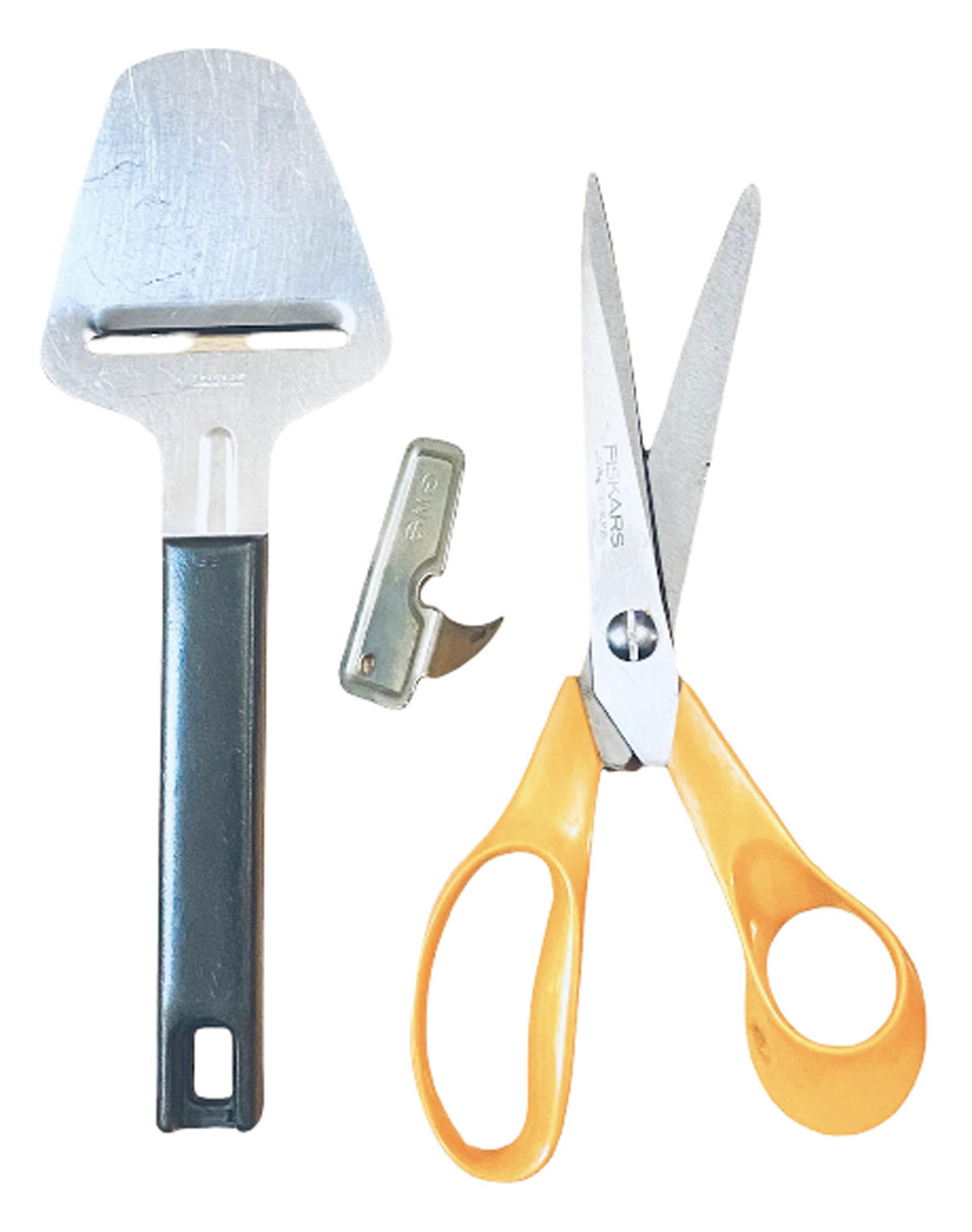
Figure 1
Fiskars cheese cutter, ‘proper tin opener’, and Fiskars scissors. (Photo: author)
Sini, who had arrived in the UK four years ago, is very connected to the everyday flow in Finland. She visits Finland regularly and follows news and Finnish TV-programmes online. She describes reproducing the familiar, reliable, everyday rhythm through practical items:
The tin opener that is used here [UK] is a ridiculous invention. And you just cannot cut cheese [with a knife], you must make thin slices [with a cheese cutter]. I use Finnish table ware, because I prefer the quality. When I visit Finland, I buy cheese, rye bread, and berries, especially lingonberries. I use Finnish food items whenever I have them, but I try to ration them.
Sini’s excerpt shows that she not only prefers to create a sense of the familiar everyday rhythm, but she also likes to make it continue to the future by rationing her reserves. For Sini, not only using the items in the UK but also the idea of having them at home helps staying in touch with the everydayness in Finland. Everyday practical items, hence, enable the application of agency through practises (Frykman & Frykman 2016).
Discussions about practical items revealed roles like ‘daughter’ or ‘granddaughter’ (Levitt & Schiller 2004), as female participants described the practises that they had seen their mothers and grandmothers engage in. It appeared that culturally coded, learned gendered practises (Pink 2004) were subconsciously continued through materialities. Participants narrated their situated femininities or the idea of them, ‘here’ and ‘there.’ A female survey participant, having lived in the UK for over 15 years, describes:
I have the curtains from my childhood home. I still make porridge in an old oven dish that my mother used to use. She had got it as a wedding present. These things remind me of my childhood and family. When we bought a house a few years ago, I dragged my grandma’s old glass cabinet and a rocking chair here from Finland. And I brought my grandma’s old cheese cutter with me.
This quote suggests that everyday practical items provide an emotional space where one can negotiate the continuities of everyday practises. As Tan and Yeoh (2011) observe, the material quality of places is important as it continues to signify the embodied, corporeal, material and imagined qualities of relations as they unfold in everyday rhythms, even if they are stretched across space. In this way, spatialities and temporalities are drawn together with personal and cultural practises.
Practical items also created familiar sensory environments. Feldman et al. (2019), in their study about kimchi’s role in creating Korean-American identity, found that it generated connectivity and reaffirmation of one’s acquired taste and territoriality. Similarly, Povrzanovic Frykman and Humbracht (2013) discovered that the sensual environments created by everyday items turn into tactile awareness of the familiar places and practises in distant locations. This is visible in Noora’s account. She had lived in the UK for 10 years after meeting her British spouse. She mentions not visiting Finland as often now as her family had grown, but describes how she constructs a familiar Finnish sensory environment through objects:
I brought with me my MoccaMaster [coffee maker]. I like its sound.
Maintaining familiar practises was, however, not important for everybody. Still, having either a concrete or imagined access to Finnish items was. Taika, who had lived in the UK for 30 years, mentions that she had had phases where using Finnish things had been really important, but she now uses only a few items. The awareness of a granted access to Finnish items was still important:
I get items sent to me from Finland. I go to Finland about four times a year, so I don’t really miss Finnish items as I know that I can get them from there. And almost everything can be ordered online if I get really home sick.
From the above examples, we can see that practical everyday items brought in fragments from spatial, temporal, sociocultural and personal scales. They provided the continuities of familiarity and cultural know-how in the UK, and enabled one to apply agency to the everyday flow. Items also brought in sociocultural silent knowledge and imaginaries, and facilitated changes when one negotiated disconnectedness, like Taika’s quote shows.
Nostalgic Items – Maintaining Memoryscapes
Nostalgic items produced links to specific spacetimes in pre-migration times that were brought in the present and linked to the future. Items that generated nostalgic feelings were almost always those of certain food brands or types of objects that held a collective cultural identification point, and had been part of people’s narratives growing up (Lemmetti & Tuominen 2017). Through reflecting on shopping for Finnish items during visits, receiving them from family and friends, and using the items once back in the UK, participants narrated a complex, yet extremely interesting, account of translocal (dis)connectedness.
Participants cherished the ideas about having Finnish food items for ‘special moments.’ Milla, who has lived in Scotland for six years, visits Finland a few times a year. For her, bringing back familiar food from Finland is important, perhaps more so than actually consuming it:
In my freezer, there’s always rye bread for special moments. Once in a while, I bring back coffee from Finland and I often have Fazer chocolate in the cupboard.
Milla’s quote implies that transporting items is connected to past attachments, past ideas of self and past social dynamics that can be continued by carrying items from their original sites to new ones. This reinforces the links to family and friends whose everydays are still filled with those items. Burrell (2008), in her study about Polish migrants in the UK, found that Poles ‘domesticate the detour’ by bringing things to the UK from their visits to Poland. Similarly, Finns ‘materialise’ the spaces in-between, making them meaningful.
The imaginaries of transporting items instead of actually doing it were equally important. This indicates that ‘materialising the imaginaries’ of the routes between translocal sites serves as a type of translocal connectedness. This ‘emplaced mobility’ enables people to remain spatially local, but their lives can be shaped by various translocal cultural imaginaries (Brickell 2011). Several survey participants mentioned pre-planning their shopping in Finland, taking great pleasure in visualising the items. However, sometimes visualising the materialities was more important than obtaining items:
I always have a list about what I would bring back, and I often have a half-empty suitcase with me. But when I get there [Finland], the items don’t seem to matter so much. So I end up not buying them. (Female, in the UK for over 10 years)
In addition to the items themselves and the planning for shopping for them, the actual shopping sites (in Finland) were important, too. This indicated an attachment to past practises that originated in Finland, and appeared to function as source of reinforcement for one’s cultural identity. These ‘flows of affect’ bind observers and materialities together across scales in assemblages (Ghoddousi & Page 2020).
Sometimes shopping for Finnish items in Finland indicated being part of a ‘specific sociocultural knowledge.’ Alisa came to the UK 14 years ago. She describes items that she had bought during visits to Finland, because it had felt ‘better’ to do so there, despite most of the items being available in the UK, too. Her account implies that obtaining items in Finland enabled her to reinforce her connection to the Finnish cultural discourses. Buying toys, like Legos that have traditionally been popular in Finland, also connected Alisa to her Finnish childhood, enabling her to narrate and produce a shared connection to those times for her own children:
Culturally, it is nicer to buy [Finnish things] in Finland, like […] we bought a Fiskars axe. Sometimes we want to buy Legos in Finland even though they would be cheaper in the UK.
Attachments towards familiar brands came through also as a way to maintain social dynamics both in Finland and in the UK. Especially Fazer Blue chocolate (Figure 2) – a long-standing brand familiar to generations – served as a collective identification item for my participants. Interviewees explained introducing Fazer chocolate as a novelty item in the UK that gave them recognition as a member of a particular group. Leena, who arrived six years ago, described giving Fazer chocolate as a gift. Her account implies that she saw the chocolate both as an act of appreciation towards her friends, but also as something that strengthened her position as a Finn in the UK and gave her a sense of Finnish identity:

Figure 2
Fazer Blue chocolate (photo: Katariina Luomanen. Reproduced with permission of the photographer.)
I bring things from Finland that my friends [in the UK] already know to value. I used to ask my family to bring more Finnish items when they visited, but not so much anymore. It is enough if I get Fazer Blue!
Leena’s mention about receiving Fazer Blue as a gift from family members also implies that it is considered as a form of a mobile, materialised affection and a form of transnational care, echoing the findings of Khrenova and Burrell (2021). Interviewees mentioned receiving small parcels – almost every time containing chocolate – often for Christmas, or ‘just because.’ Siru, who had moved 16 years ago, discussed receiving parcels from ‘home.’ They were seemingly important, even though she mentions being able to find what she needed in the UK:
I get a parcel every now and again from home. Xylitol chewing gum, salty liquorice, Fazer blue, and other sweets. And reflectors! Even though I can pretty much find what I need here.
Most participants were not sending items to Finland very often, as gifts were mainly given during visits to Finland. Sending parcels seemed as ‘reserved’ for the family and friends in Finland who were, this way, able to participate in the everydayness of their loved ones in the UK. Similarly to Khrenova and Burrell’s (2021) findings, women mentioned receiving parcels from ‘mothers, aunts and sisters.’ The few men that I had in my datasets indicated that they did receive parcels from their families sometimes, but that things were mainly brought during visits from family and friends. This carefully implies that sending items can be seen as a form of affection and care that is perhaps engaged more by women. Khrenova and Burrell (2021) mention that female family members often take great pleasure in choosing and packing items to send, suggesting that imagined, materialised connections to family members, even when there is no promise of a physical interaction, is important to women. However, due to the gender bias in the data, I am not making the assumption here that this practice and its meaning would be reserved for women.
With nostalgic items, questions about cultural obligations arise. Materialities enable migrants to balance between familiarity and new cultural practises and solve the ‘sense of duty and perceived responsibility […] that reveal ethical entanglements’ (Rabikowska 2010). This, however, reveals an important point in the ways Finns position themselves in the UK. Nostalgic items have a double function in generating connectedness to past self and in highlighting a membership of a particular group. This way they generate novelty value for Finns in the UK. By engaging in the use of nostalgic items, Finns can fulfil the ‘obligation’ to their national identity and continue to narrate themselves through these items, but they are simultaneously able to apply agency to one’s personal migration trajectory through utilising the novelty value items generate for them in the UK.
The narratives about Fazer blue are embedded deeply into Finns’ cultural identity (Lemmetti & Tuominen 2017). It has to be asked if the idea of them as something that ‘all Finns abroad crave’ is true, or if it is a materialised imaginary that Finns abroad are ‘required’ to identify with. It can also be asked if the imaginary is being kept ‘alive’ by the left-behind communities and turned into a cultural ‘obligation’ to perceive it as an essential part of Finnish migrants’ lives. This reflects Rabikowska’s (2010) findings about Polish migrants’ identity negotiations in the UK: migrants sometimes feel an ‘obligation’ to follow a collective narrative as an ‘ethically modulated declarations of nationalist attachments.’ This narrative, either imagined or performed, could be seen as ‘protecting’ the sense of normality that has been created by keeping up the same practises for long periods of time. In addition, Finn’s attitude to Finnish chocolate is an interesting example of Bourdieu’s notion of habitus; the acquired taste, habit, obligation and the experience of taste, as seen from Leena’s quote:
I keep telling everybody about Finnish chocolate and make them taste it, because British chocolate is just horrible rubbish.
This type of articulation about ‘their’ bad food and ‘our’ good food (Rabikowska 2010) highlights the need to identify with collective ideas of ‘us’ in a new environment by creating connections through items with a strong affective value. These ‘flows of affect’ bring in the sociocultural meanings in the assemblage (Ghoddousi & Page 2020).
Nostalgic items functioned as managing self-identity, family relationships and self-esteem (Frykman & Frykman 2016) not just for the translocal migrant, but also for their left-behind social groups. In this way, they bound different agencies between translocal sites together. Through nostalgic items migrants – and the left-behinds – can manage and narrate changes during their migration trajectories and maintain memoryscapes (Basu & Coleman 2008). The types of imaginaries that objects generate also function as strong emotional links between places across several temporalities. This suggests that while the physical mobility of both agents and objects forms an important part of the concrete assemblage, the imaginaries that are built around the materialities are equally important. This brings out the advantage of the analytic frame of assemblages as they allow for ‘mobility to be detected and analysed even in the absence of movement’ (Salter 2013).
Biographical Items – Reinforcing the Self
Biographical items functioned as tools to apply agency to one’s migration trajectory. These items had been brought from Finland, and marked connections to milestones – like weddings or graduations. Many also mentioned childhood toys (Figure 3) and photos. Biographical items generated temporal and emotional references to one’s roots, providing a sense of continuity (Marschall 2019; Tan & Yeoh 2011). A survey respondent mentioned bringing with her some heirlooms that she linked to childhood memories:
I took with me some inherited furniture. And my grandma’s old sewing machine, and my grandad’s typewriter. It is like […] for respecting one’s roots. I used to play with them as a kid. (Female, in the UK for over 40 years)
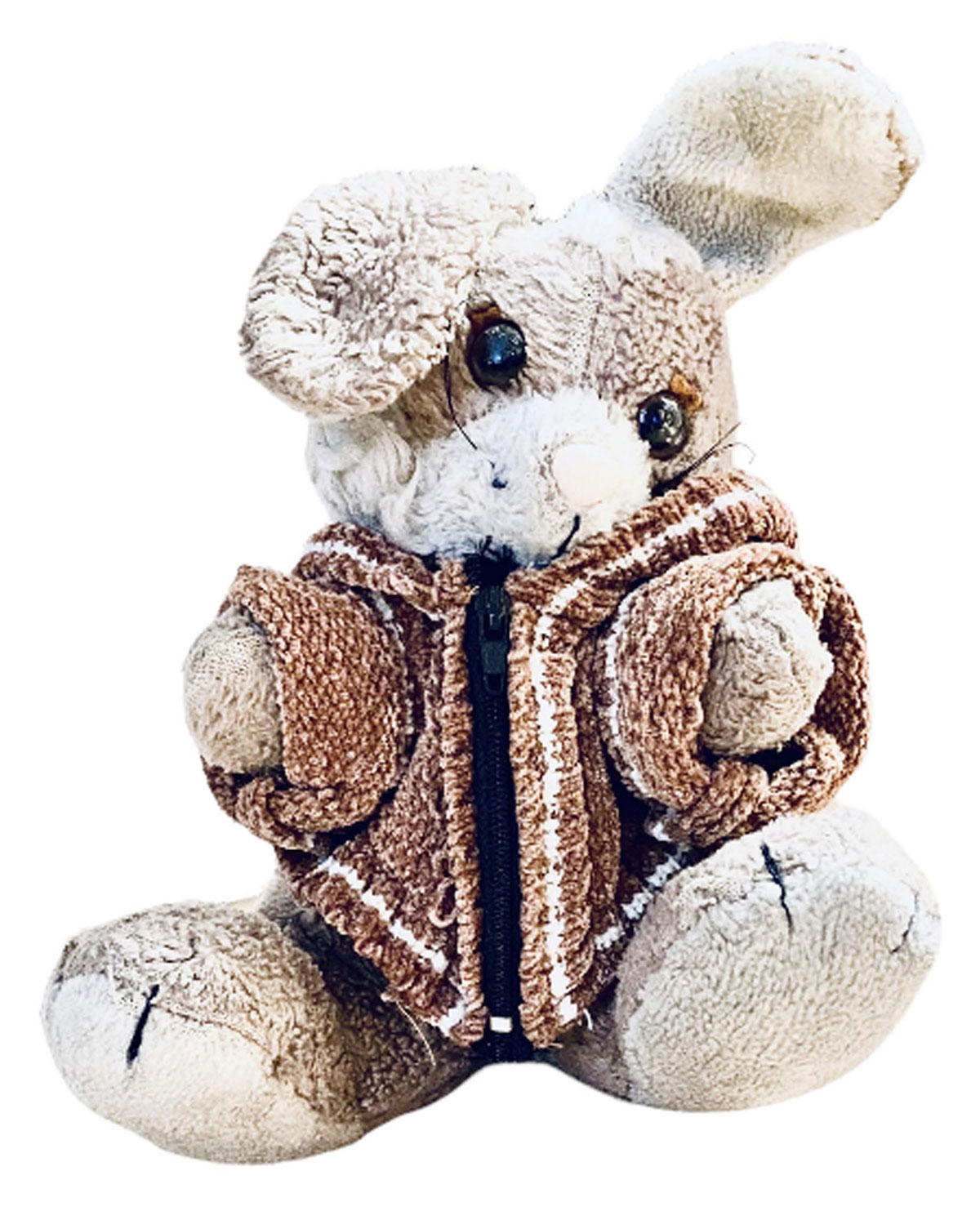
Figure 3
A childhood toy transported to the UK from Finland. (photo: author)
Tolia-Kelly (2004) and Hatfield (2011) discuss emotionally charged items turning homes into translocal sites, functioning as visual links between the self and the phases in one’s life. Many participants described first arriving with ‘a couple of suitcases,’ and then gradually bringing more personal items after each visit to Finland. The importance of past personal belongings in their UK homes increased once they had got more settled. Siru describes how she had ‘brought the Iittala ware [traditional Finnish designer glassware that is often given as presents] gradually in suitcases,’ echoing many others who reminisced transporting personal items ‘bit by bit.’ Transporting biographical items along migratory trajectories represents one’s agency (Basu & Coleman 2008). In choosing to (not)remember the references the items represent, participants were able to be in charge of their translocal trajectories through materialising it according to their preferences. However, some had not brought many things with them because they did not feel the need to. This type of translocal disconnectedness that one can choose (Tan & Yeoh 2011) was a way to construct a sense of self in the UK, and the ability to make personal choices appeared to function in the background as a source of translocal power.
Sirpa’s account suggests that the need to acquire visual anchors related to Finland emerged despite disconnecting oneself from Finland. Sirpa had lived in the UK for 23 years, and describes how she does not use nor miss Finnish items. She is not following the Finnish news, either, and is not interested in socialising with other Finns in the UK. She also states that she would probably never visit Finland if she did not have family there. Despite this, however, she mentions having some Finnish items in her home:
I don’t use any Finnish food items or other items at all […] but I have bought some Finnish glassware items second hand on eBay.
Personal items created translocal agency: one could choose to actively remember one’s past in specific locations, or let the idea of past lived places float as a subconscious, occasionally called for reinforcement for self. Choosing not to use Finnish items could indicate a shift in identity: one identifies as ‘less dependent on items from home’ (Frykman & Frykman 2016).
The study participants narrated a change in everyday practises over time, such as ‘I used to cook Finnish food more often.’ These changes indicate that even if practises change, the idea of engaging in them through specific materiality is transferred to the ‘registry of the past’ for migrants. It becomes a framework against which one can still reflect on the continuity of their everydays. Such changes do not break the assemblage, but represent specific timespaces in the migration process. Changes make the assemblage’s components recombine by pushing some relations to the forefront and creating new meanings for other relations (Nail 2017).
Conclusions
The translocal assemblage that this study has discussed brings together elements that appear to be far from each other ontologically; such as ‘physical objects’ and ‘lived experiences’ (Anderson & McFarlane 2011). It is clear that everyday materialities need to be understood as being both: concrete objects and the complex meanings they convey through several scales, processes and changes. The aim of this article was to show how everyday objects generate intricate meanings in migrants’ lives that are spread across several geographical locations. The translocal (dis)connectedness that everyday items generate is emplaced in multiple translocal sites, and mobile as it is transported through routes and flows. Furthermore, everyday items materialise the links between translocal sites through imagined (dis)connectedness.
Addressing middling migrants’ domestic material culture through an assemblage brings in a less focussed viewpoint about migrants’ material flows. When removed from the context of financial remittances that are sent by migrants to their sending societies, it becomes possible to see the objects’ roles in translocal everydays more widely. Objects and their intersubjective meanings and ways of using them reveal structures that are specific to individuals, families and migrant groups, and linked tightly to the migrant condition. This article contributes to the research on not only about the multiple roles of migrants’ material culture in everyday translocal lives, but also increases the knowledge of the everyday materialities of a middling migrant group that does not extensively participate in sending financial remittances to their sending societies. Translocal migrants constantly negotiate their positionalities in the rhythm of everyday life, and in several temporal and geographical frames. Everydays are stretched across scales through links to the past and the commitments for the future. Everyday materialities as a translocal assemblage provide a frame for managing the multiplicities of translocal lives – they help Finns shape their identity as either ‘Finns in the UK’ or ‘Finns who now live in the UK.’
Assemblages make it impossible to ignore the relations between its components – the concrete objects, sites where they are used, routes along which they are transported and the people using them. Assemblages include several agencies: not only those of translocal migrants and their social groups in the UK, but also those in Finland. Hence, translocal everydays produce competing narratives of power when one balances between the ‘original’ and ‘new’ cultural and social practises. Everyday materialities enable migrants to apply agency to their everydayness as they are able to choose to maintain (dis)connectedness and identify with or against a particular group. In the process, the types of (dis)connectedness everyday materiality generates changes over time. Assemblages present specific moments (Nail 2017) and are, hence, mutable. This aligns with the narratives of my participants – the need to maintain connectedness varies in importance; and generating disconnectedness is equally important.
Complex entangling of concrete and imagined features is typical for assemblages, and this is visible in my findings. Scales, processes, changes and power narratives infiltrate and cross each other, and are seemingly related, yet simultaneously distant, from one another. However, the three types of everyday items reveal an interesting ‘structure of multiplicity’ (Nail 2017) where several interlinked fragments produce a structure of meaning that enables the balancing of several co-presences in Finns’ translocal trajectories in the UK.
Competing Interests
The author has no competing interests to declare.