![Isolation, Identification, and Comprehensive Genomic Characterization of a Bovine Rotavirus G10P[11] Strain in China Cover](https://paradigm-files.s3.eu-central-1.amazonaws.com/PJM/cover-image.jpg)
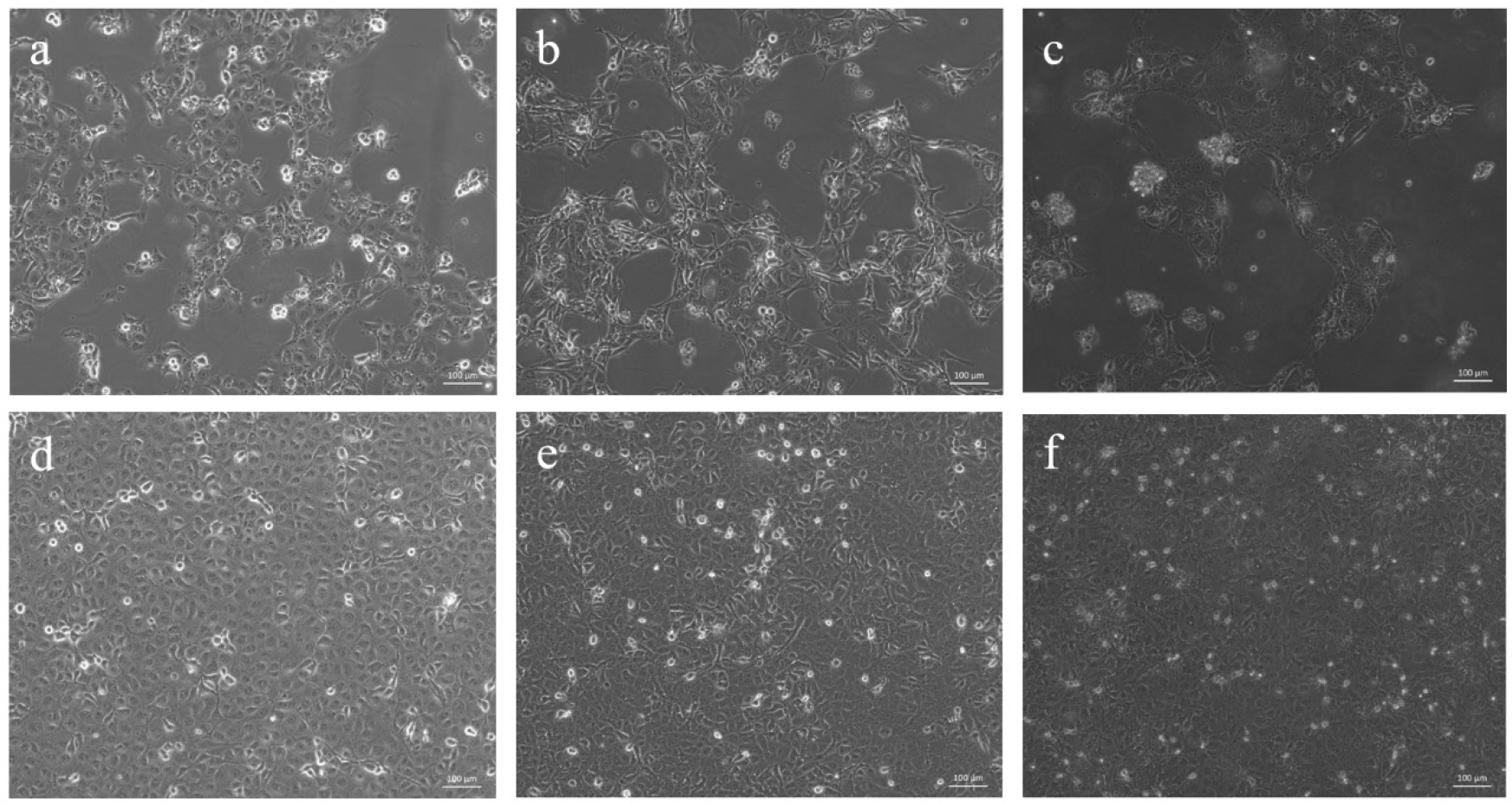
Fig. 1.
Inverted phase-contrast microscopy of BRVA-infected MA104 cells (100× magnification). A)Infected, 24 h; B) infected, 48 h; C) infected, 72 h; D) uninfected, 24 h; E) uninfected, 48 h; F) uninfected, 72 h.Cells were cultured in 24-well plates and incubated with or without BRVA for different durations. Cytopathic effects began at 48 h and intensified by 72 h compared to the negative controls. Scale bars represent 100 μm.
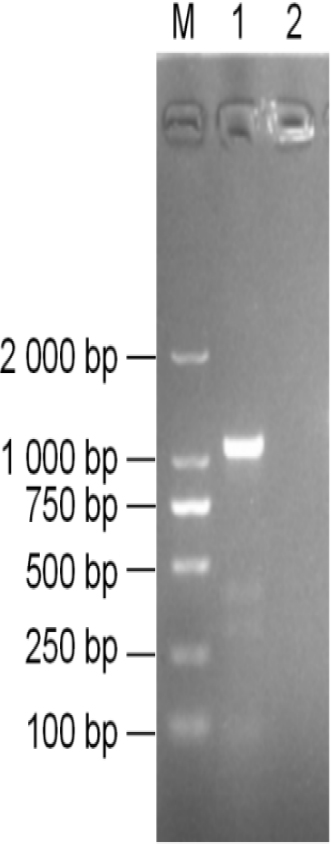
Fig. 2.
Results of agarose gel electrophoresis for RT-PCR amplification of BRVA.
M – DL 2000 DNA marker; 1 – MA104 cells infected with SHH2023001; 2 – negative control (uninfected MA104 cells). The presence of a specific band at approximately 1,060 bp confirms the successful amplification of the BRVA VP7 gene in the infected sample (lane 1). The negative control (lane 2) shows no amplification, indicating the absence of viral RNA.
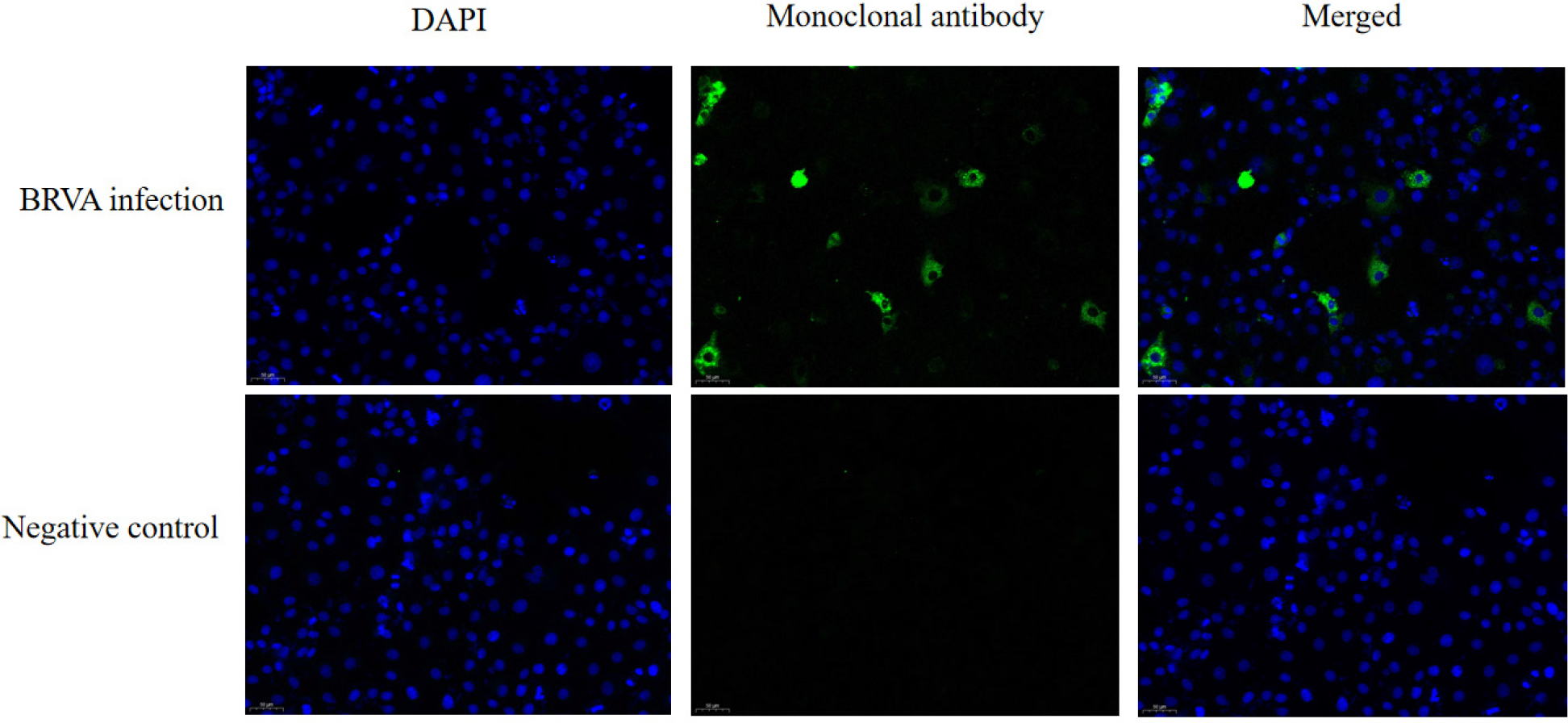
Fig. 3.
Virus identification by indirect immunofluorescence assay.
MA104 cells grown on coverslips in 6-well plates were infected with BRVA. The cells were fixed and incubated with a monoclonal antibody against the BRVA p42 antigen (1:200) and a goat anti-mouse fluorescent secondary antibody. Images were captured post-infection. BRVA infection (SHH2023001); uninfected (normal cells). Scale bars represent 50 μm. The signal indicates cytoplasmic sub-cellular localization, which is expected for BRVA infection. The negative control (uninfected) was used to validate the assay, and multiple fields of view were checked for consistency.
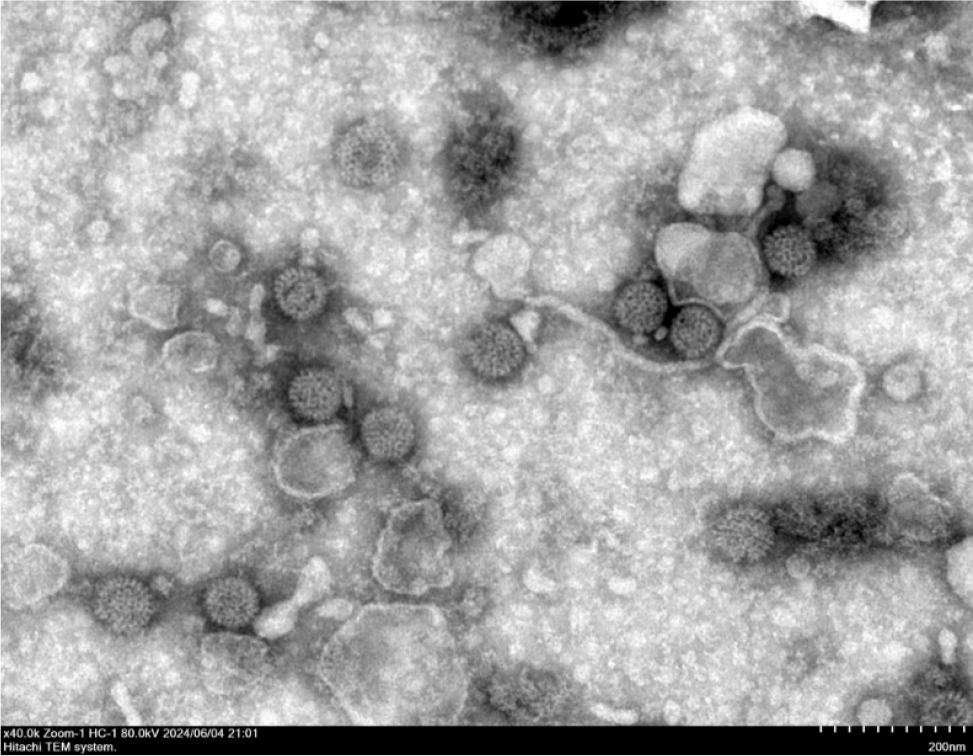
Fig. 4.
Transmission electron microscopy (TEM) observation of BRVA-infected MA104 cell cultures. SHH2023001 virions were visualized under TEM (Scale bar = 200 nm).
Table I
Nucleotide sequence identity between strain SHH2023001 and other strains for each gene segment.
| Gene | Closest strain | Accession No. | Homology (%) | Genotype |
|---|---|---|---|---|
| VP7 | RVA/Human-wt/THA/DB2015-66/2015/G10P[14] | LC367319 | 95.41 | G10 |
| VP4 | RVA/Cow-tc/USA/B223/1983/G10P[11] | LC133550 | 96.62 | P[11] |
| VP6 | RVA/Bovine-tc/KOR/KJ9-1/2010/G6P[7] | HM988974 | 97.20 | I2 |
| VP1 | RVA/Human-wt/JPN/HKD0825/2016/G1P[8] | LC384330 | 95.12 | R2 |
| VP2 | RVA/Sheep-wt/CHN/GS2023/2023/G6P[1] | PP115427 | 97.77 | C2 |
| VP3 | RVA/Bovine-tc/CHN/DQ-75/2008/G10P[11] | GU384193 | 94.25 | M2 |
| NSP1 | RVA/Sheep-wt/CHN/GS2023/2023/G6P[1] | PP115432 | 96.47 | A11 |
| NSP2 | RVA/Human-wt/VNM/NT0578/2008/G2P[4] | LC060821 | 96.98 | N2 |
| NSP3 | RVA/Human-wt/HUN/BP1062/2004/G8P[14] | FN665695 | 96.14 | T6 |
| NSP4 | RVA/Horse-wt/IND/ERV2/2015/G6P[1] | OK651114 | 97.44 | E2 |
| NSP5 | RVA/Human-wt/HUN/BP1062/2004/G8P[14] | FN665698 | 97.20 | H3 |
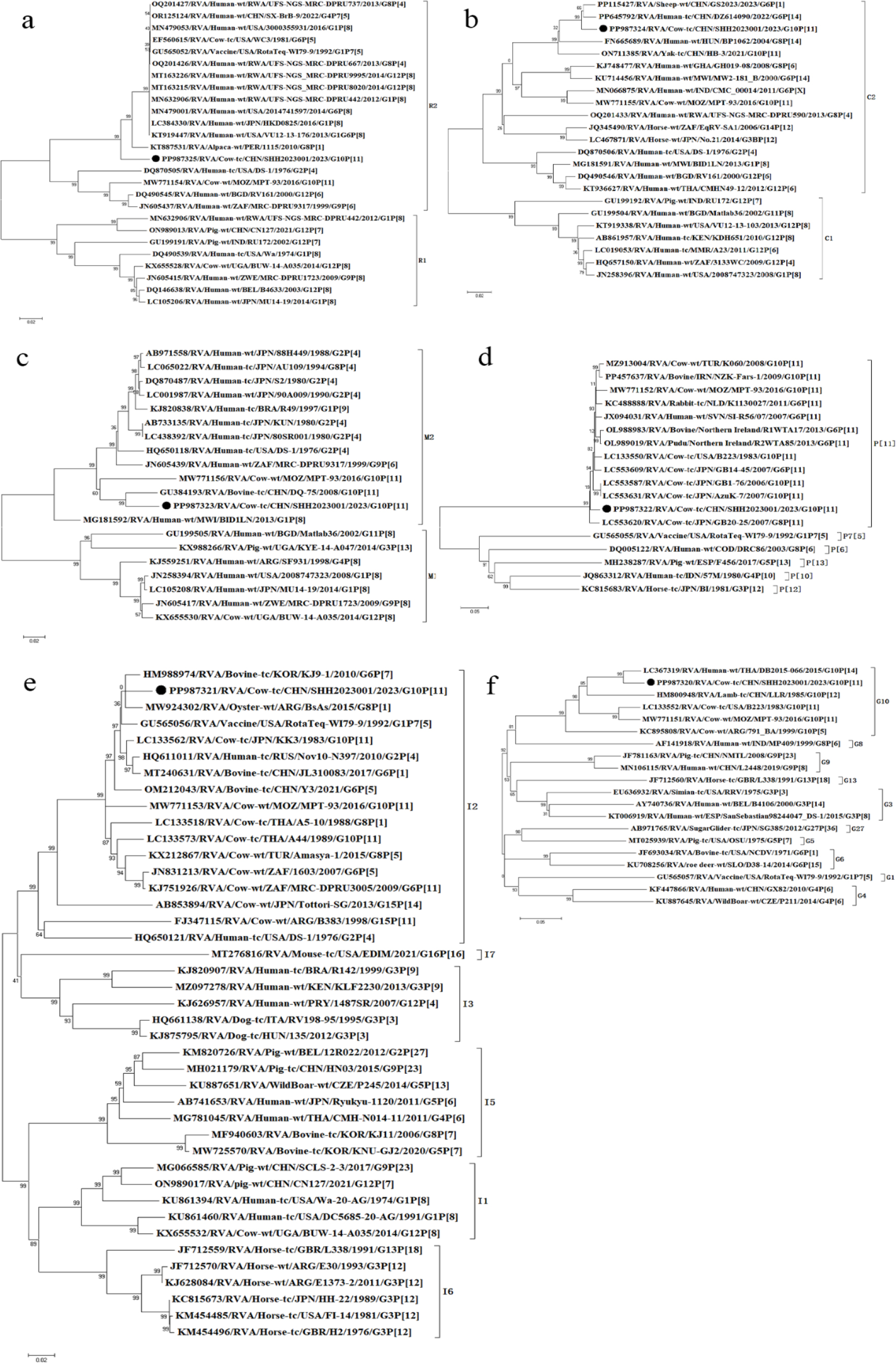
Fig. 5.
Phylogenetic analysis of the SHH2023001 strain based on nucleotide sequences of VP1 (a), VP2 (b), VP3 (c), VP4 (d), VP6 (e), and VP7 (f) genes. Trees were constructed using the neighbor-joining method in MEGA 7.0, with bootstrap values (1,000 replicates) above 70 indicated. The scale bar represents nucleotide substitutions per site. Genotypes are shown on the right. Strains detected in this study are marked with a black circle.
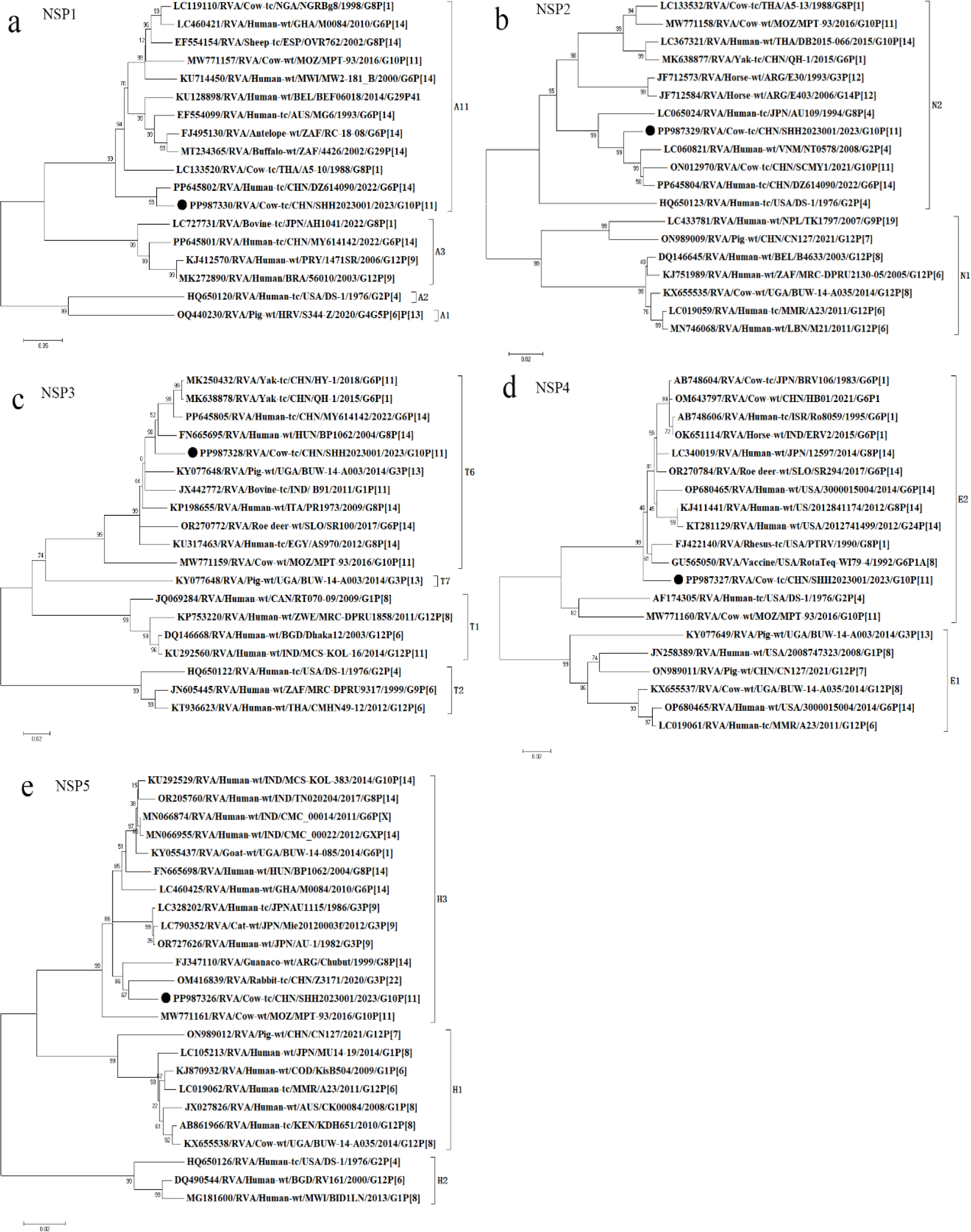
Fig. 6.
Phylogenetic analysis of the SHH2023001 strain based on nucleotide sequences of NSP1 (a), NSP2 (b), NSP3 (c), NSP4 (d), and NSP5 (e) genes. Trees were constructed using the neighbor-joining method in MEGA 6.0, with bootstrap values (1,000 replicates) above 70 indicated. The scale bar represents nucleotide substitutions per site. Genotypes are shown on the right. Strains detected in this study are marked with a black circle.