
Table I
Clinical and demographic characteristics.
| Patient No./isolate | Age/sex | Ward | Specimen | Diagnosis | Invasive procedure | Antimicrobial therapy | Prognosis |
|---|---|---|---|---|---|---|---|
| 12(Kp1) | 52(M) | ICU | drainage fluids | abscess of the parotid gland, septic shock | incision and drainage of an abscess | meropenem, tigecycline, fluconazole | unknown |
| 32(Kp2) | 68(M) | Cardiac Surgery | sputum | severe pneumonia, septic shock | heart surgery | died | |
| 52(Kp3) | 51(M) | Transplantation Centre | blood | malignant tumor of the hilar bile duct | resection of hepatic bile duct lesions | tigecycline | recovered |
| 55(Kp4) | 45(F) | Transplantation Centre | drainage fluids | liver abscess | partial hepatic lobectomy | vancomycin, flucytosine | recovered |
| 206(Kp6) | 56(M) | EICU | ascites | abdominal infection, infectious shock | left thoracocentesis for drainage | cefoperazone sulbactam, polymyxin, meropenem, linezolid, tigecycline | unknown |
| 209(Kp7) | 78(M) | Neurology | blood | sepsis, bacteremia | non-operative | imipenem, tigecycline | recovered |
| 255(Kp8) | 50(M) | ICU | ascites | acute necrotizing pancreatitis, septic shock | incision and drainage of retroperitoneal abscesses | vancomycin, imipenem, tigecycline, caspofungin | recovered |
| 356(Kp9) | 68(M) | ICU | sputum | severe pneumonia, septic shock | tracheal tube | vancomycin, imipenem, polymyxin, caspofungin | died |
| 434(Kp10) | 37(M) | Hepatobiliary Surgery | sputum | septic shock | abdominal exploratory surgery, tracheal tube | ertapenem, meropenem, imipenem | unknown |
| J19(Kp13) | 58(M) | Cardiac Surgery | sputum | coronary atherosclerotic heart disease | coronary bypass graft | recovered |
Table II
Genotypic profiles and resistance mechanisms of Klebsiella pneumoniae isolates.
| Isolates | ST type | Plasmid replicons | Size of plasmid replicons | β-lactamases and carbapenemases |
|---|---|---|---|---|
| Kp1 | ST11 | IncFIB(K)/IncHI1B, IncR/IncFII, IncFIB, IncFII, ColRNAI, ColKP3 | 193835 bp, 133766 bp, 112792 bp, 84876 bp, 11970 bp, 5596bp, 6141 bp | SHV-11, SHV-12, CTX-M-65, LAP-2, OXA-232, KPC-2 |
| Kp2 | ST231 | IncFII/IncFIB, IncFIA/IncFII, ColKP3 | 126359 bp, 71307 bp, 6141 bp CTX-M-15, SHV-1, OXA-232 | CTX-M-186, TEM-1, |
| Kp3 | ST231 | IncFII/IncFIB, IncFIA/IncFII, ColKP3 | 127803 bp, 71307 bp, 6141 bp CTX-M-15, SHV-1, OXA-232 | CTX-M-186, TEM-1, |
| Kp4 | ST231 | IncFII/IncFIB, IncFIA/IncFII, ColKP3 | 127803 bp, 71688 bp, 6141 bp CTX-M-15, SHV-1, OXA-232 | CTX-M-186, TEM-1, |
| Kp6 | ST231 | IncFII/IncFIB, IncFIA/IncFII, ColKP3 | 126406 bp, 71307 bp, 6141 bp CTX-M-15, SHV-1, OXA-232 | CTX-M-186, TEM-1, |
| Kp7 | ST231 | IncFII/IncFIB, IncFIA/IncFII, ColKP3 | 127803 bp, 71307 bp, 6141 bp CTX-M-15, SHV-1, OXA-232 | CTX-M-186, TEM-1, |
| Kp8 | ST231 | IncFII/IncFIB, IncFIA/IncFII, ColKP3 | 127803 bp, 71307 bp, 6101 bp CTX-M-15, SHV-1, OXA-232 | CTX-M-186, TEM-1, |
| Kp9 | ST231 | IncFII/IncFIB, IncFIA/IncFII, ColKP3 | 127806 bp, 71307 bp, 6141 bp CTX-M-15, SHV-1, OXA-232 | CTX-M-186, TEM-1, |
| Kp10 | ST231 | IncFII/IncFIB, IncFIA/IncFII, ColKP3 | 127806bp, 71307 bp, 6141 bp | CTX-M-186, TEM-1, CTX-M-15, SHV-1, OXA-232 |
| Kp13 | ST231 | IncFIB/IncFII(K), IncFIA/IncFII, ColKP3 | 126359 bp, 71305 bp, 6141 bp | CTX-M-186, TEM-1, CTX-M-15, SHV-1, OXA-232 |
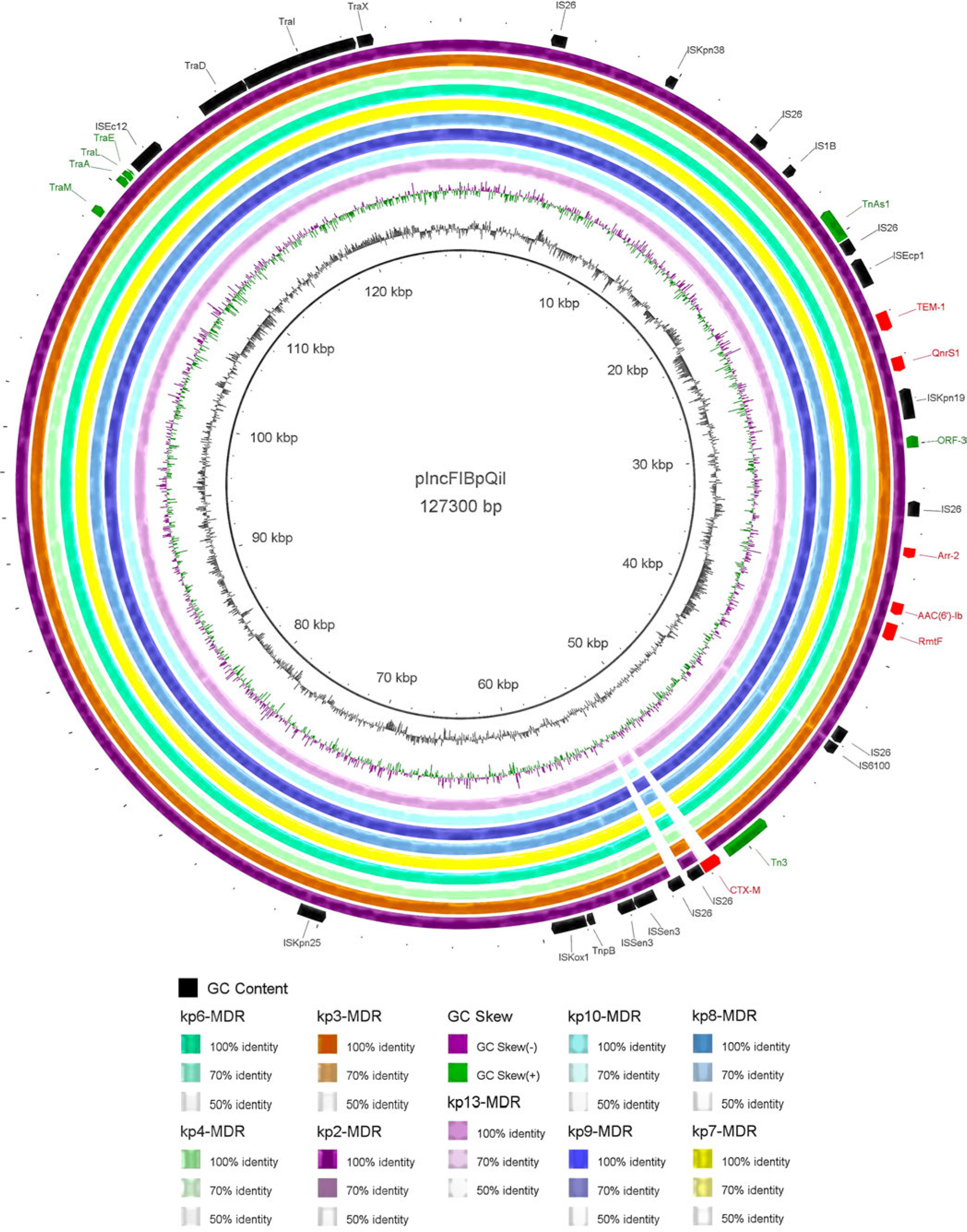
Fig. 1.
Circular representation of IncFII/FIB-type plasmids in ST231 isolates.
The plasmid pIncFIB-Q1 spans 127,300 base pairs (bp). The map is divided into several tracks, each representing different genomic features.
The outermost tracks mark specific genes with resistance markers (e.g., blaKPC, qnrB19), the middle tracks show genes with varying expression levels indicated by different color shades, and the innermost tracks depict GC content and GC skew. Each track uses a distinct color code, as the legend explains, to represent gene density, antibiotic resistance genes, virulence factors, and mobile genetic elements.
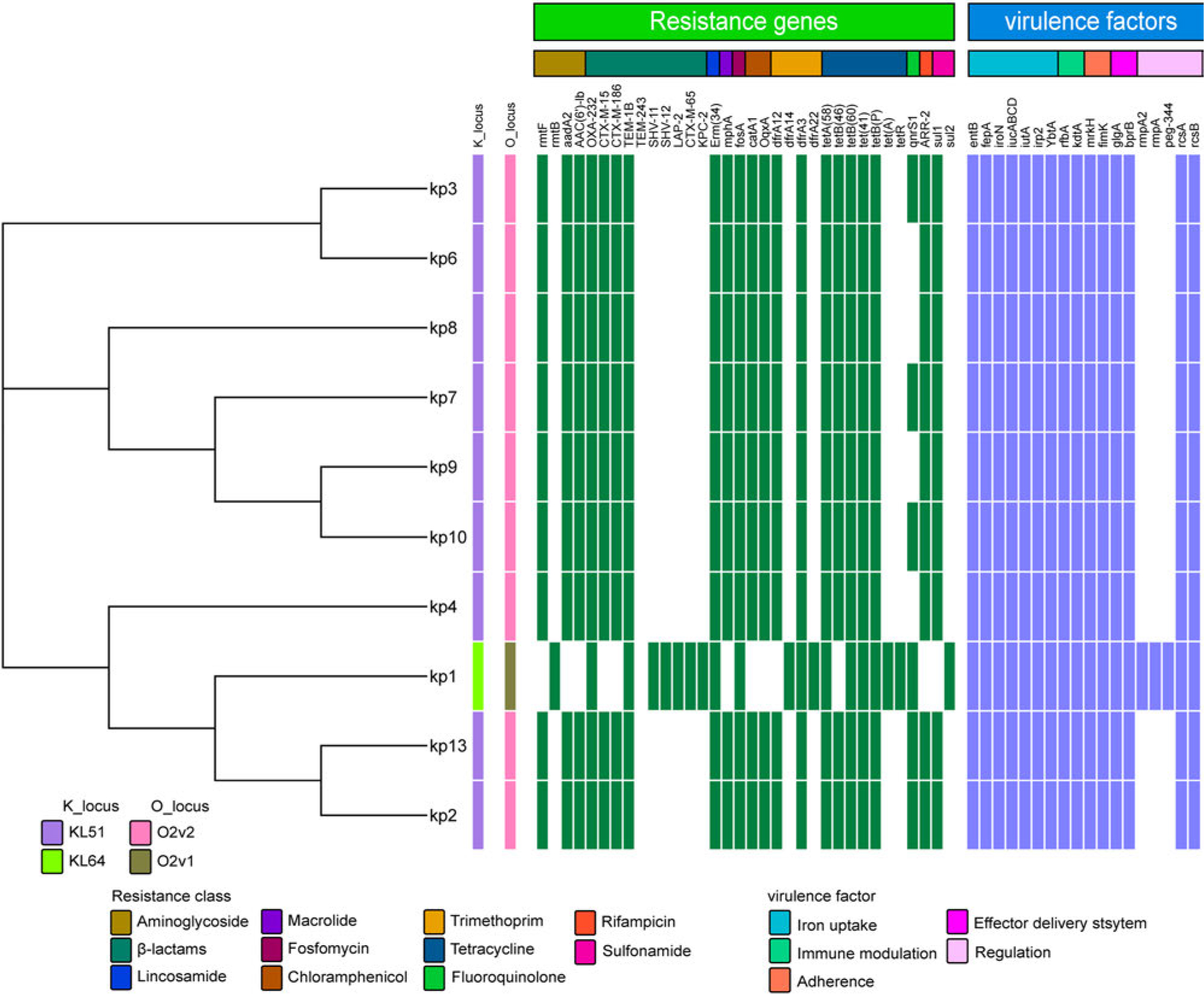
Fig. 2.
Phylogenetic analysis and genotypic characterization of bacterial strains.
The phylogenetic relationships and distribution of resistance genes and virulence factors across ten bacterial strains (Kp1 to Kp13) are displayed.
The phylogenetic tree (left) illustrates evolutionary distances based on whole-genome sequencing data, while the heatmap (right) indicates the presence (colored) and absence (white) of specific resistance genes (green) and virulence factors (blue).
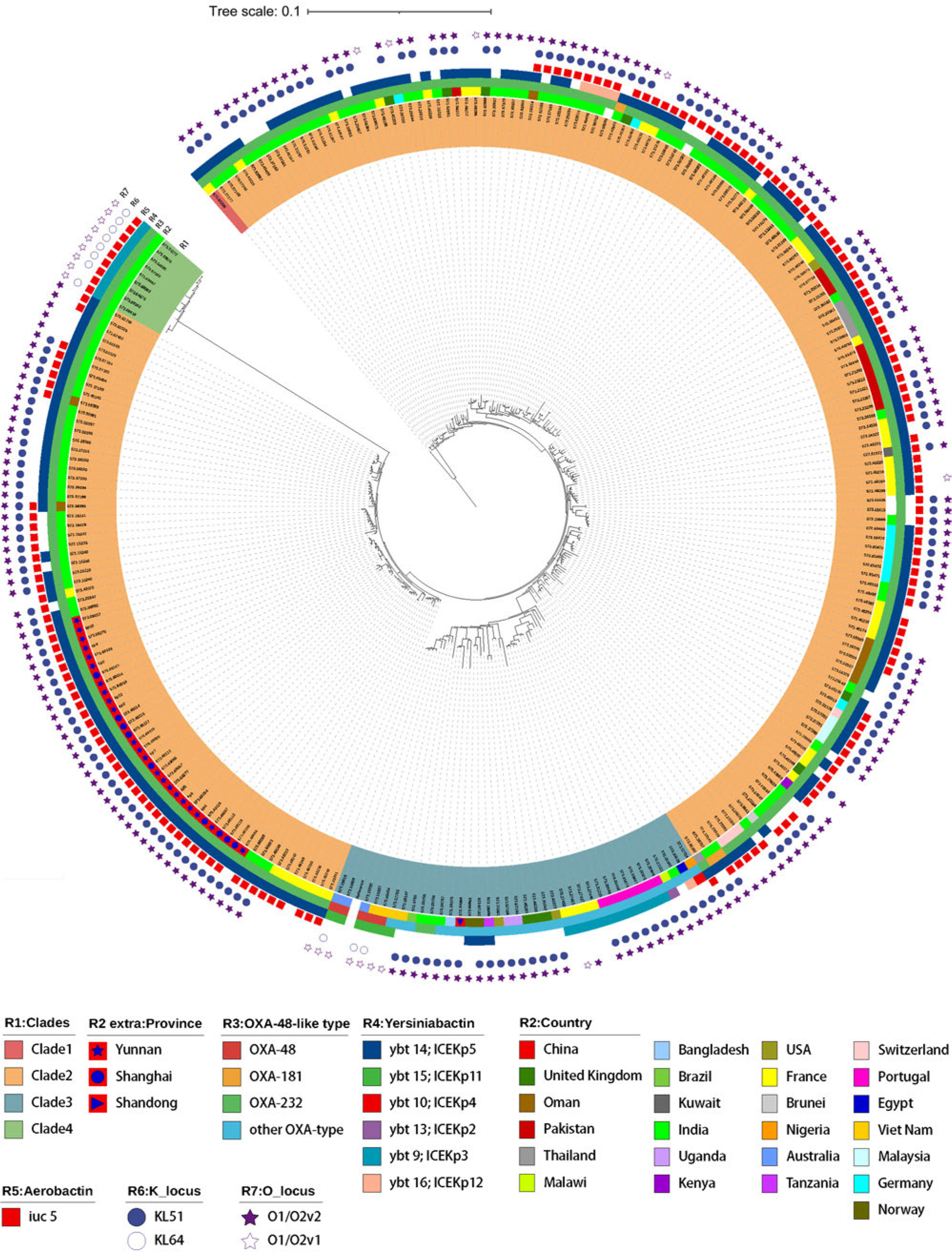
Fig. 3.
Phylogenetic analysis of global ST231 Klebsiella pneumoniae isolates.
The phylogenetic tree constructed from core SNP analyses of 264 global ST231 isolates is color-coded to represent various clades (R1: Clades), geographical origins (R2: Country and extra: Province), and specific genetic characteristics (R3: OXA-48-like types; R4: Yersiniabactin types; R5: Aerobactin type, R6: K locus, R7: O locus). Each concentric ring corresponds to different attributes, such as antibiotic resistance genes, toxin production genes, and other relevant genetic markers. The innermost circle shows phylogenetic relationships based on whole-genome sequencing data.
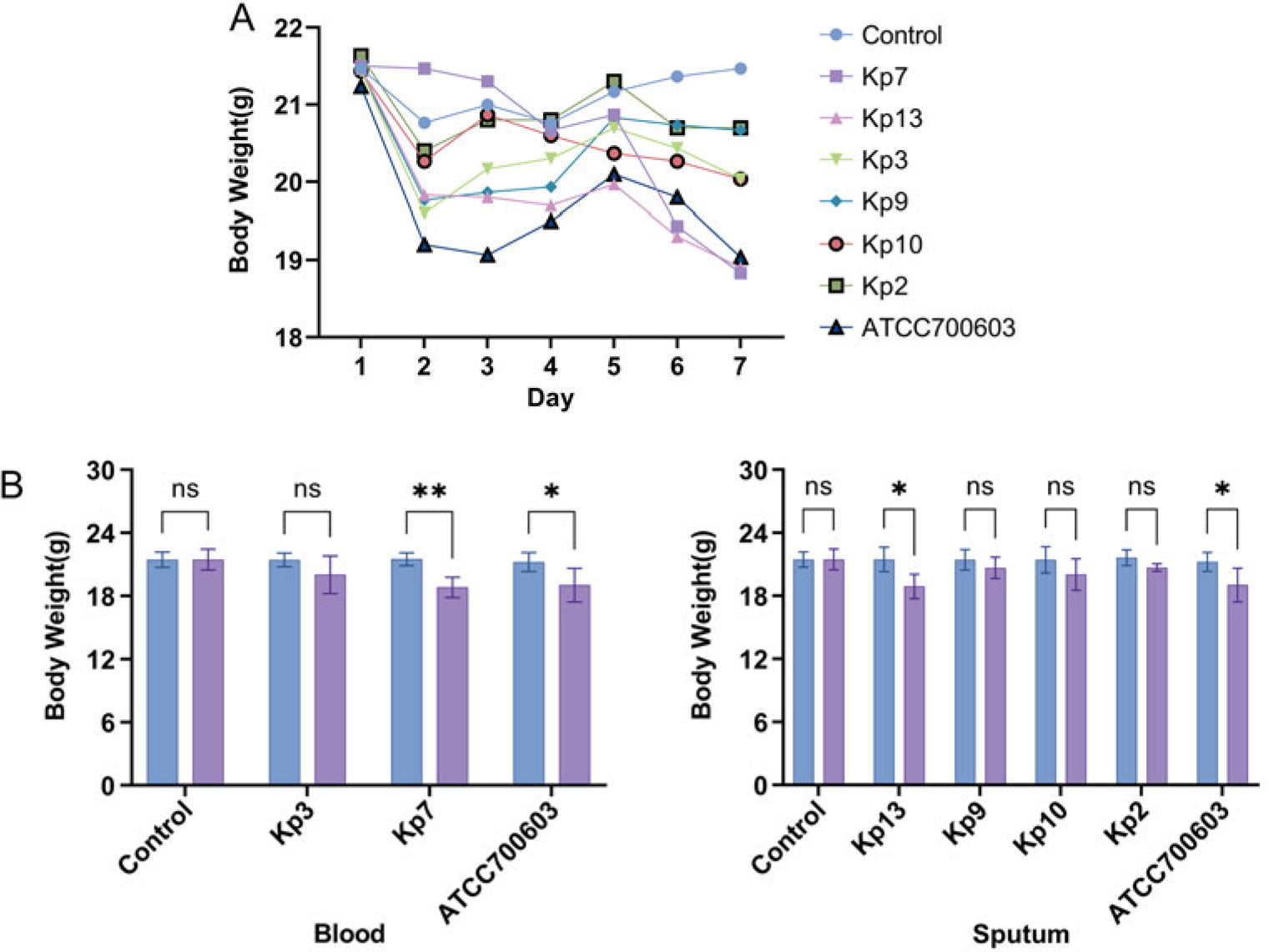
Fig. 4.
Weight change and survival analysis of mice infected with ST231 Klebsiella pneumoniae.
Six-week-old male C57BL/6 mice, grouped in trios, were inoculated intranasally with 30 μl of 108 CFU/ml bacterial suspension. Health monitoring occurred daily for seven days.
a) Daily average weight fluctuations among mice infected with different ST231 K. pneumoniae strains;
b) comparison of mouse weight between day 1 and day 7 for different ST231 K. pneumoniae strains.
* – p < 0.05, ** – p < 0.01.
The standard strain ATCC® 700603™ as a positive control.
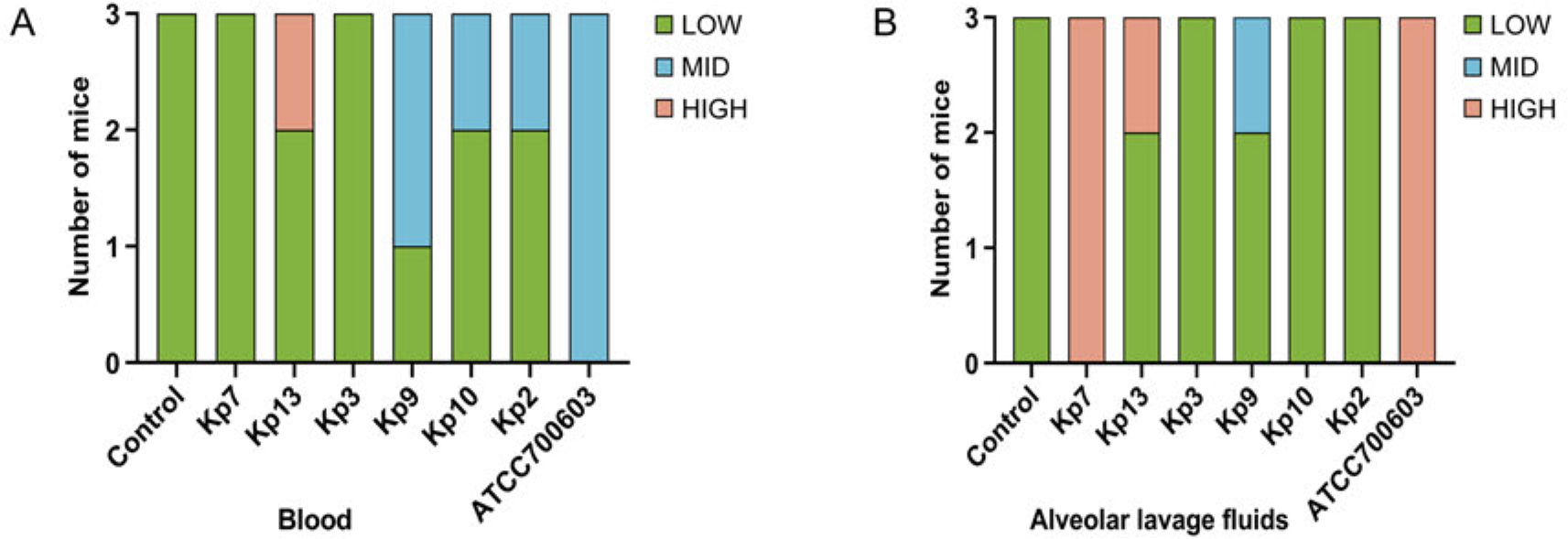
Fig. 5.
Colony count analysis in mouse alveolar lavage fluids and blood samples post infection.
The growth levels, categorized into low (< 30%), medium (30–60%), and high (> 60%) based on percentage colony formation.
a) The colony counts from cultures of blood samples collected from mice;
b) the colony counts from cultures of alveolar lavage fluids obtained from mice.
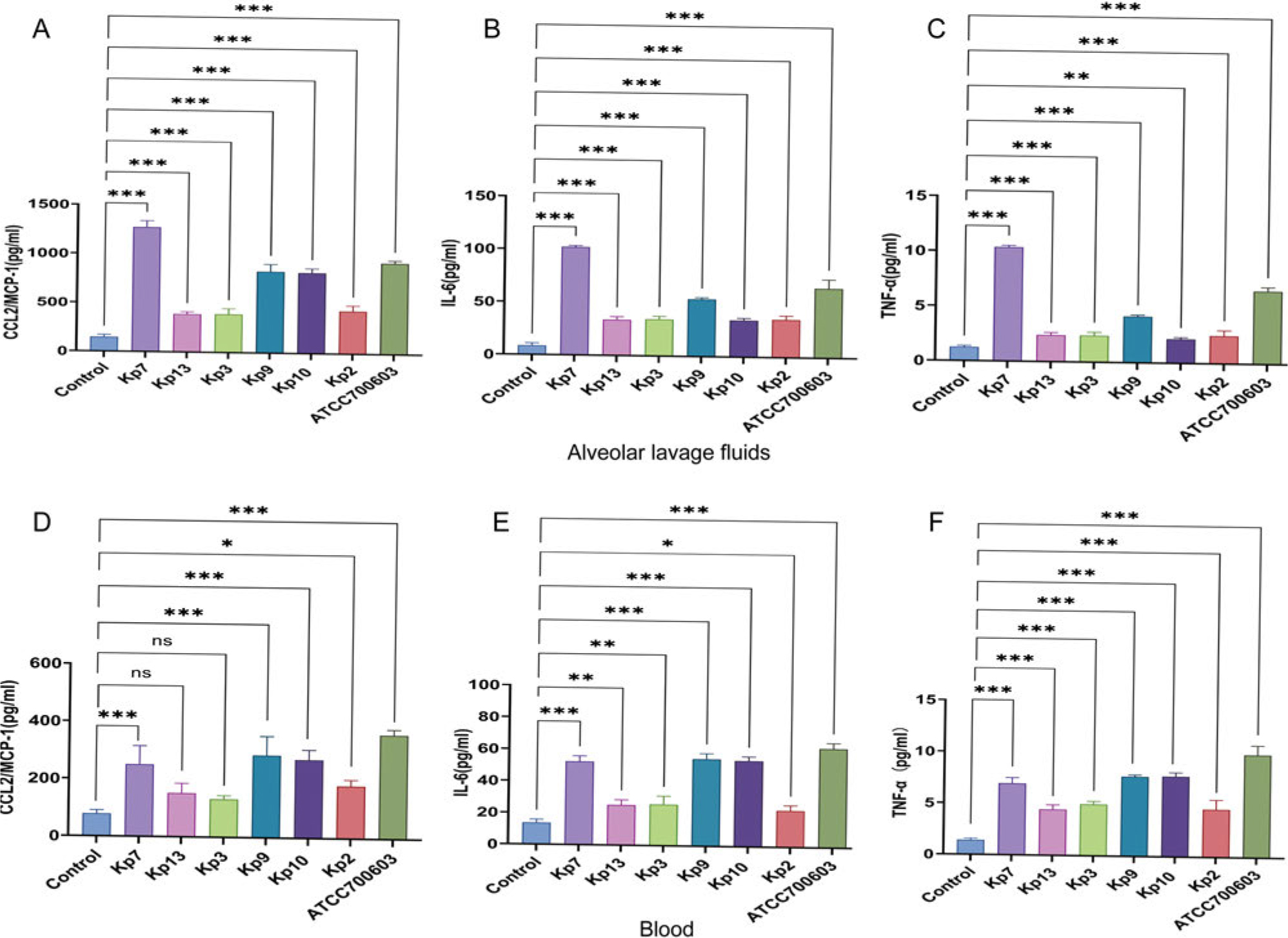
Fig. 6.
Inflammatory response to ST231 infection in mice.
The levels of key inflammatory markers (CCL2/MCP-1, IL-6, and TNF-α) were quantified in the alveolar lavage fluid (a-c) and blood (d-f) of infected mice. The data from nine independent experiments.
* – p < 0.05, ** – p < 0.01. *** – p < 0.001. The standard strain ATCC® 700603™ as a positive control.
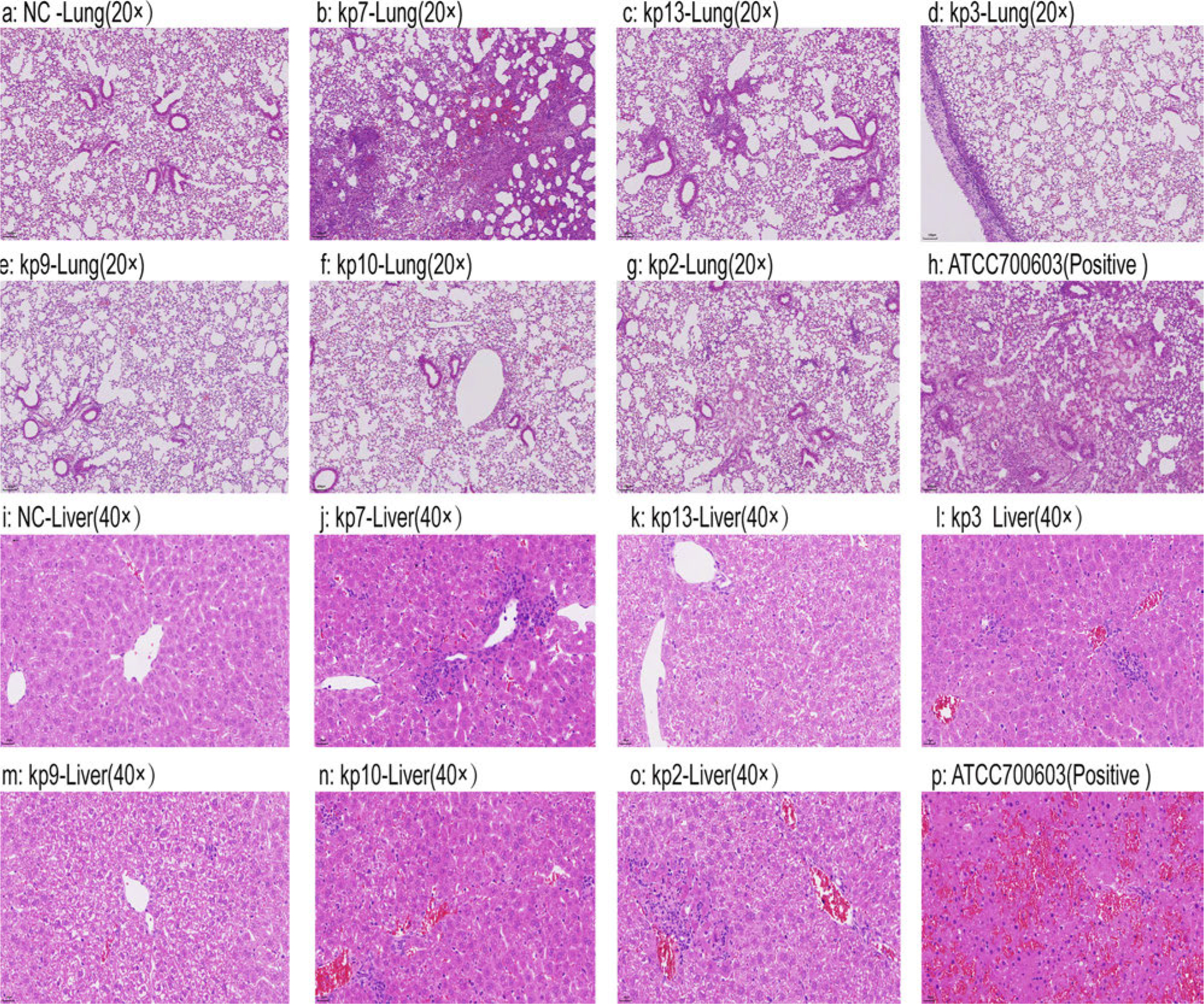
Fig. 7.
Histopathological impact of ST231 isolates on mouse tissues.
The images, stained with hematoxylin and eosin, reveal significant tissue damage, particularly in the lungs (b–g) and livers (j–o), where extensive cellular infiltration and structural disruption are evident. Renal injury was not significant, and data are not shown.