
Introduction
The brewing industry has undergone significant transformations in recent decades. Following a period of globalization characterized by the acquisition of breweries by multinational corporations, a new wave emerged marked by the establishment of small, locally oriented breweries, so-called craft breweries. The terms: craft brewery, artisanal brewery, microbrewery, independent brewery, specialty brewery, and local brewery are sometimes used to describe breweries that have recently begun operating on a small scale and produce different types of beer. This distinguishes them from larger breweries that mass-produce beer, often have a history spanning more than a century, and have survived the consolidation processes of the twentieth century (Garavaglia & Swinnen, 2017). Tremblay and Tremblay (2011) added that craft breweries offer a wide variety of beers with different tastes and have no chance to compete with multinational companies on price; nevertheless, they have gained in quite a lot of popularity among many customers.
Considering the concentration of the brewing industry and the expansion of craft breweries, there is a need to understand beer consumer preferences (Howard, 2014). In this context, the aim of the study is to identify differences among beer consumers and characterize segments, with particular emphasis on consumer preferences in the Slovak Republic.
In recent years, consumer behavior and beerdrinking habits have been changing. Thirty years ago, Slovakia was among the countries with the highest beer consumption, with an average annual consumption of 95 liters per capita. Since then, however, this figure has declined sharply due to the COVID-19 pandemic and currently stands at the level of 70 liters per capita (Statistical Office of the Slovak Republic, 2023). Among all countries, Slovakia is the one where such a significant decrease has been observed, which therefore warrants a thorough analysis of changes in beer consumer preferences in this country.
This consumer study is based on a questionnaire survey conducted on a sample of 904 consumers in Slovakia between September 2022 and July 2023. The study describes segments and identifies consumer preferences, which are key factors determining business success in the brewing sector. The results of the study are a valuable source of information that can be used to present the product in various marketing campaigns, through which brewing companies aim to influence consumers’ behavior and achieve producers’ objectives. The study also makes it possible to understand consumer behavior in specific segments, depending on their preferences for industrial and craft beer, through the use of principal component analysis and cluster analysis. Therefore, the study findings can be applied to the business practices of beer producers when defining the marketing mix and developing consumer-oriented strategies, which are adequately adapted to each segment with the aim of ensuring higher customer satisfaction and achieving better economic results for the company.
Despite several similar studies (Jaeger et al., 2017; Malone & Lusk, 2018; Murray & O’Neill, 2012), there is still a research gap in naming individual segments specifically and describing their characteristics. Most research typically focuses on segmenting consumers by gender, age, and income (Aquilani et al., 2015; Gómez-Corona et al., 2016). This study aims to fill that gap by exploring the following research question: What are the preferences of beer consumers in Slovakia? The study identifies different segments of beer consumers and provides an in-depth analysis, focusing on their preferences for industrial and craft beers. This approach makes a significant contribution to current scientific research, offering unique insights and a new perspective on beer consumer segmentation.
Craft Beer vs. Industrial Beer
Craft beer has different characteristics compared to industrial beer, and therefore it can be considered an exceptional category in the field of brewing (de Paula et al., 2021; Tong, 2022). It differs from mass-produced versions of beer mainly in terms of processing technology and brewing method (Elzinga et al., 2015). Mastanjević et al. (2019) emphasize that the health benefits of moderate consumption of this beverage, resulting mainly from the presence of polyphenolic compounds and other antioxidants, contribute to a shift from lager-type commercial variants to craft beer. Moreover, innovativeness and taste profile can be considered key attributes that differentiate these various types of beers (Jaeger et al., 2020). On the other hand, the factors driving the choice of a product can also be treated as potential aspects of its differentiation. Svatošová et al. (2021) identified taste, quality, and origin as key attributes determining consumer choices, with these characteristics showing the greatest disparities between the analyzed types of beer. Aquilani et al. (2015) found that beer lovers consider quality to be the most important attribute and show a strong preference for artisanal offerings.
Carvalho et al. (2018) found that preferences for mass-produced and craft products, as well as the innovativeness of consumers’ approach to consumption, are influenced by socio-demographic aspects, such as age, education, and income. In the context of the differences between consumers in both market segments, Jaeger et al. (2020) pointed out disparities on two levels. First, consumers of craft products show a high preference for innovative variants with a flavor profile characterized by hop bitterness, fruitiness, and sourness. Second, they are more involved in activities where beer, as a product, has an important position.
The differences between traditional and craft beers can also be based on different reasons for drinking them. Gómez-Corona et al. (2016) point out that the consumption of craft beer is considered an emotional experience associated with taste and enjoyment. In contrast, mass-produced beers are perceived in a more functional way, as beverages primarily intended to refresh and quench thirst. Betancur et al. (2020) emphasize that choosing industrial beer is associated with social reasons, the pursuit of enjoyment, and the need to reduce anxiety and stress. On the other hand, the consumption of craft beer is associated with pleasure (Thomé et al., 2016). Malone and Lusk (2018) state that the key aspects differentiating consumers in both categories are their preference for beer and their knowledge about it.
Other differences among consumers relate to factors such as price, origin, and perceptions of quality, taste, and aroma. Muggah and McSweeney (2017) identified that taste is a key attribute that differentiates artisanal products from industrial ones, highlighting the unique flavor profile of beers brewed by small breweries. Lerro et al. (2020) note that craft products are perceived as being of higher quality, with a distinctly different, more original, natural, and better taste. Aquilani et al. (2015) emphasize, on the other hand, that aroma and quality play a crucial role in consumers’ shift from mass-produced beers to craft beers. Castillo-Ortiz et al. (2024) found that buyers are willing to pay a premium price for beer with high alcohol content, low bitterness, intense aroma, and dark color, which meet the attributes of craft beer. Ahmad (2017) adds that some consumers seek affordable, industrially produced beverages, while others are willing to invest more in high-quality craft beers, valued for their originality and diversity.
In terms of brand loyalty, Calvo-Porral and Levy-Mangin (2015) found that consumers show higher loyalty to well-known global industrial brewery brands than to local brands, including those that sell craft beers. Morgan et al. (2022) focus on consumer trust in the long-standing tradition of large industrial breweries resulting from the well-known and predictable quality of their products, but they also note the existence of a group of buyers for whom local identity and support for the local economy are key. In this context, Wojtyra et al. (2020) add that the origin of beer is a significant decision-making attribute for consumers, emphasizing that many people are loyal to a particular country or region, driven by quality, rich history, and variety of styles. Acitelli (2017) also points to the importance of geographical location, which influences consumers’ decisions to choose craft or industrial beer, as some localities are dominant in craft beer production, while others are dominated by large industrial breweries. A consumer study conducted by Svatošová et al. (2021) indicates that consumers show a greater preference for craft products than mass-produced ones.
Consumer Perception of Craft Beer
Consumer studies investigating consumption behavior in the craft beer market are primarily oriented toward consumer characteristics, habits, attitudes, motivations, and the attributes of this type of beer, thereby pointing to new consumer trends. Consumers of craft beer can be described as young, regular beer drinkers with higher education who are able to recognize the quality of beer. This consumer profile has been investigated in numerous studies (Carvalho et al., 2018; Muggah & McSweeney, 2017; Rivaroli et al., 2019). Baiano (2021) and Gómez-Corona et al. (2016) found that craft beer consumers are predominantly higher-income individuals. Betancur et al. (2020) also analyzed the impact of socio-demographic factors, including gender, age, education, and country. Rivaroli et al. (2020) found that men are more likely to consume craft beer, but research by Muggah and McSweeney (2017) also indicates women’s preference for this type of beer, with bitterness and sweetness proving to be important attributes.
Craft beer consumers strongly value and prefer craft beer for consumption due to the fact that it is handmade, carefully crafted, and has a low level of automation (Carvalho et al., 2018). For the above reasons, its quality is perceived by buyers as very high, and the positive perception of this product is reinforced by the variety of flavors, such as malted barley, chestnut, and honey beer (Aquilani et al., 2015). This is reflected in the higher consumer price of craft beer. However, Carvalho et al. (2018) found that consumers are willing to pay a price for high-quality beer with a unique taste. Bimbo et al. (2023) confirm that this consumer segment is willing to pay more, which presents an opportunity to develop new, innovative beers that differentiate themselves from others.
Mejlholm and Martens (2006) emphasize that artisanal products are also chosen due to a need for authenticity and a desire to find a unique product identity. This is also confirmed by Gómez-Corona et al. (2016), who found that consumers perceive them as authentic and unique, and that their consumption is not motivated solely by need or functionality. Moreover, Tirado-Kulieva et al. (2023) also emphasize that another reason for consuming craft beer may be its potential health benefits resulting from the presence of phytochemicals. The content of these compounds is the result of the use of a wide range of raw materials, strains, and brewing techniques in the production process, which influence the macro-, micro-, and phytochemical profiles of the beverage.
Taylor et al. (2022) found that external factors, such as packaging, brand, and price, significantly influence intrinsic motivation by shaping consumers’ perceptions of craft beer. Intrinsic motivation, expressed through factors such as enjoyment and relaxation, had a direct positive effect on personal involvement and consumption. However, extrinsic motivation did not directly affect the personal involvement of consumers, indicating that its influence occurs primarily through its relationship with intrinsic motivation. Kleban and Nickerson (2012) emphasize that the perception of craft beer by consumers is also related to the successful market positioning of craft beer, which is influenced by many determinants such as its quality, market availability, competitive pricing, marketing, and promotion.
On the other hand, it is essential to highlight the key barriers limiting craft beer consumption among current consumers. The main reasons for not drinking it are not only the price but also its sensory characteristics, particularly the taste. Some consumers find its taste too intense, sometimes sweet, with exotic notes and excessive bitterness. Another important reason for limited consumption is its availability on the market. Gómez-Corona et al. (2016) found that consumers would like to be able to buy craft beer anywhere, such as in supermarkets, grocery stores, or regular restaurants, not just in specialty stores.
The aim of the study is to answer the following research questions:
What are the characteristics of beer consumers in Slovakia?
Do consumers prefer craft beer over industrial beer?
Material and Methods
Data Collection and Research Sample
The study is based on primary data collected between September 2022 and July 2023 (preliminary tests were conducted between February and May 2022) using an online questionnaire survey. The questionnaire was created in Google Forms and distributed via email and selected social media platforms (Facebook, Instagram). A snowball sampling method was applied to increase the response rate. In total, 904 respondents were surveyed, selected based on criteria including alcohol consumption and Slovak territorial affiliation. The socio-demographic profile of the research sample is presented in Table 1.
Table 1.
Socio-demographic profile
| Gender | |
| Female | 38.81 |
| Male | 61.19 |
| Age | |
| 18–25 years | 24.40 |
| 26–40 years | 47.28 |
| ⩾ 41 years | 28.33 |
| Education (%) | |
| Primary | 1.98 |
| Secondary | 52.59 |
| University | 45.42 |
| Place of residence (%) | |
| Rural | 40.79 |
| City ⩽ 20 thousand inhabitants | 12.02 |
| City > 20 thousand inhabitants | 47.19 |
| Gross individual incomeBrutto | |
| < 600 | 24.31 |
| 600—900 | 20.55 |
| 901—1200 | 18.78 |
| 1201—1500 | 13.50 |
| > 1500 | 22.76 |
| Marital status (%) | |
| Married | 26.02 |
| Divorced | 3.97 |
| Single | 70.01 |
| Economic status (%) | |
| Employed | 71.90 |
| Self-employed | 18.03 |
| Unemployed | 10.07 |
Research Design
The craft beer revolution brought greater possibilities for choosing beer in line with customer requirements. Some customers have changed their long-standing preferences and started to try other styles of beer. For this reason, various segments of beer consumers are distinguished. This poses a challenge for both brewers and researchers who seek to study and identify these segments. Therefore, in order to achieve the objectives of this study, a questionnaire was developed to obtain primary data from respondents. The first part of the questionnaire included classification questions about respondents, focusing mainly on socio-demographic characteristics such as gender, age, place of residence, income, education level, marital status, and employment status. This approach was inspired by earlier studies that used many of these characteristics to analyze beer consumer segments (Aquilani et al., 2015; Malone & Lusk, 2018; Murray & O’Neill, 2012), with the aim of identifying segments of artisanal beer enthusiasts. As a result of the craft beer revolution, an increasingly wide range of beer styles has emerged on the market, and consumers are gradually moving away from conservative choices (Garavaglia & Swinnen, 2018; Pokrivčák et al., 2019). Therefore, the second part of the questionnaire focused on beer consumption preferences, specifically on which styles (lager, dark beer, IPA, APA, porter, stout, wheat beer, beer specials, flavored beer) respondents prefer to drink and purchase most frequently. A five-point Likert scale was used to identify preferences (where 1 was the lowest preference and 5 the highest).
To more precisely characterize consumer segments, additional questions were included, based on similar research by Gómez-Corona et al. (2016), in which attitudes toward beer consumption in Mexico were analyzed. These items concerned consumer habits (consumption and purchasing patterns), such as alcohol preference, frequency of alcohol consumption, frequency of beer consumption, place of consumption, place of beer purchase, and factors influencing purchase decisions (see variables operationalization in Table 2).
Table 2.
Operationalization of variables
| Specification | Variables | Operationalization | Measurement | |
|---|---|---|---|---|
| Socio-demographic characteristics | Age | What is your age? | 1: 18–25 years; 2: 26–40 years; 3: ⩾ 41 years | |
| Gender | What is your gender? | 0: woman; 1: man | ||
| Level of education | What is your level of education? | 1: primary education; 2 secondary education; 3: higher education | ||
| Monthly income | What is your monthly gross income (EUR)? | 1: < 600; 2: 600–900; 3: 901–1200; 4: 1201–1500; 5: >1500 | ||
| Residence | Where do you live? | 1: rural area; 2: city ⩽ 20 thousand inhabitants; 3: city > 20 thousand inhabitants | ||
| Marital status | What is your marital status? | 1: single; 2: married; 3: divorced | ||
| Employment status | What is your employment status? | 1: employed; 2: self-employed; 3: unemployed | ||
| Attitudes towards industrial and craft beers | Beer type | Domestic industrial beer / Foreign industrial beer / Domestic craft beer / Foreign craft beer | I like to drink (beer type). | Likert scale (1–5): totally disagree; 3 – neutral attitude; 5 – totally agree |
| I often (regularly) purchase (beer type). | ||||
| Beer style | Lager / Dark beer / IPA / APA / Porter / Stout / Wheat beer / Specials / Flavored beer | I like to drink (beer style). | Likert scale (1–5): 1 – totally disagree; 3 – neutral attitude; 5 – totally agree | |
| I often (regularly) purchase (beer style). | ||||
| Consumption and purchasing patterns | Alcohol preference | What do you prefer to drink? | 1: beer; 2: wine; 3: spirits | |
| Alcohol consumption frequency | How often do you drink alcohol? | 1: once a month; 2: once a week; 3: more frequently | ||
| Beer consumption per week | How many beers do you usually drink per week? | 1: up to one beer; 2–3 beers; 4–5 beers; > 5 beers | ||
| Place of beer consumption | Where do you usually drink beer? | 1: pub; 2: home; 3: family and friends; 4: restaurant; 5: other | ||
| Place of beer purchase | Where do you usually purchase beer? | 1: beer shop; 2: pub; 3: supermarket; 4: nearest shop; 5: other | ||
| Decisive factor at purchase | What is the most important factor when purchasing beer? | 1: brand; 2: price; 3: taste | ||
Statistical Analysis
Principal Component Analysis (PCA) was applied to identify latent factors among eight statements describing attitudes toward industrial and craft beers. The PCA method is often used to reduce consumer marketing data (Muresan et al., 2022; Salvatore et al., 2022). Additionally, the Kaiser–Meyer–Olkin (KMO) test and Bartlett’s test were performed to assess the validity of the method. It is recommended that KMO values be higher than 0.5 and that Bartlett’s test be statistically significant (Shrestha, 2021; Šedík et al., 2025). Afterwards, a k-means cluster analysis was performed based on the principal component (PC) values. This type of cluster analysis is commonly used in customer segmentation of large-scale data sets, and its algorithm is applied to identify key consumer segments, which form the basis for developing effective marketing strategies (Arunachalam & Kumar, 2018; Mesforoush & Tarokh, 2013). In addition, Cronbach’s alpha was calculated to assess the internal consistency of the analyzed statements.
Since the data obtained did not have a normal distribution, non-parametric tests were used, such as the Kruskal–Wallis test, Friedman’s rank test, Nemenyi’s procedure, and the chi-square. Friedman’s rank test was used to determine whether there were significant differences in the assessment of statements regarding attitudes towards industrial and craft beers. Furthermore, a post-hoc multiple pairwise comparisons using Nemenyi’s procedure was used to identify existing differences, which allowed the analyzed statements to be divided into several groups labeled from A to F. Statements assigned to different groups were rated by consumers as significantly different. The Kruskal–Wallis test was employed as an equivalent to the ANOVA test for scale-based questions (style and type of beer) to determine significant differences among three or more groups. In turn, the chi-square test was used to examine significant differences between segments for categorical questions.
In addition, multiple correspondence analysis (MCA) was conducted to assess and illustrate the relationships among a set of categorical variables. MCA represents a descriptive technique for examining the relationships between more than two categorical variables (Ateş & Ceylan, 2010). MCA was applied to examine differences in consumer preferences in distinct segments with regard to selected yes/no questions (craft beer awareness; craft beer consumption; preference for particular brewery; preference for special place of consumption; preference for regional beer). The main focus was placed on the first two factor dimensions (F1 and F2) obtained in MCA, due to the fact that they explain a relevant proportion of the data matrix’s inertia. The statistical analysis was performed using IBM SPSS Statistics Grad Pack 28.0 (IBM Corp., Armonk, NY, USA) and XLSTAT 2022.4.1 (Addinsoft, NY, USA), assuming a significance level α = 0.001.
Results
Table 3 presents the results for the eight statements that reflect the attitudes of Slovak beer consumers towards industrial and craft beer from small and large breweries, both domestic and foreign. Cronbach’s alpha coefficient for the selected eight items was 0.755, suggesting their relatively high internal consistency. Results indicate that, in general, Slovak beer consumers prefer craft beer from small breweries (both domestic and foreign), as well as domestic industrial beer from large breweries. The lower level of agreement was observed for the statement concerning the purchase of foreign industrial beer from large breweries. Statistically significant differences are indicated by distinct groups formed by Nemenyi’s procedure.
Table 3.
Attitude statement towards industrial and craft beers
| Attitudes | Mean of ranks | Groups |
|---|---|---|
| I like to drink domestic craft beer from small breweries. | 5.56 | A |
| I like to drink foreign craft beer from small breweries. | 4.96 | B |
| I like to drink domestic industrial beer from large breweries. | 4.61 | C |
| I often purchase domestic craft beer from small breweries. | 4.60 | C |
| I like to drink foreign industrial beer from large breweries. | 4.35 | C, D |
| I often purchase domestic industrial beer from large breweries. | 4.20 | D, E |
| I often purchase foreign craft beer from small breweries. | 3.90 | E, F |
| I often purchase foreign industrial beer from large breweries. | 3.82 | F |
Furthermore, all eight attitude statements were used in the principal component analysis, which identified two components with eigenvalues > 1. The Kaiser-Meyer–Olkin measure of sampling adequacy value was 0.638, and Bartlett’s test of sphericity was statistically significant with a p-value of < .0001. These results confirmed the appropriateness of the factor analysis and the adequacy of the dataset for this type of analysis. The interpretation of the obtained components is unambiguous. The first component includes statements on craft beer, while the second component includes statements relating to industrial beer (Table 4).
Table 4.
Principal components analysis of agreement scores on attitudes towards industrial and craft beers
| Attitudes towards industrial and craft beer | Components | |
|---|---|---|
| 1 | 2 | |
| I like to drink foreign craft beer from small breweries. | .898 | |
| I often purchase domestic craft beer from small breweries. | .891 | |
| I like to drink domestic craft beer from small breweries. | .891 | |
| I often purchase foreign craft beer from small breweries | .871 | |
| I like to drink domestic industrial beer from large breweries. | .839 | |
| I like to drink foreign industrial beer from large breweries. | .833 | |
| I often purchase domestic industrial beer from large breweries | .800 | |
| I often purchase foreign industrial beer from large breweries. | .757 | |
Data Segment Creation
The two-factor scores representing consumer agreement with attitude statements related to industrial and craft beer, derived from the principal component analysis, were subjected to a k-means cluster analysis. A three-cluster solution was obtained. Figure 1 displays these three clusters in two dimensions, reflecting attitudes toward craft and industrial beers. The smallest segment includes 231 consumers (25.5%) and can be characterized as consumers who prefer and frequently purchase craft beers from small breweries, both domestic and foreign; hence, this segment was labeled “craft beer enthusiasts.” The largest segment comprises 405 consumers (44.7%) who prefer and regularly purchase industrial beers from large breweries, both domestic and foreign ones. This group is referred to as “conservative drinkers.” The final segment is termed “indifferent consumers,” as respondents in this group indicated negative preferences toward both craft and industrial beers.
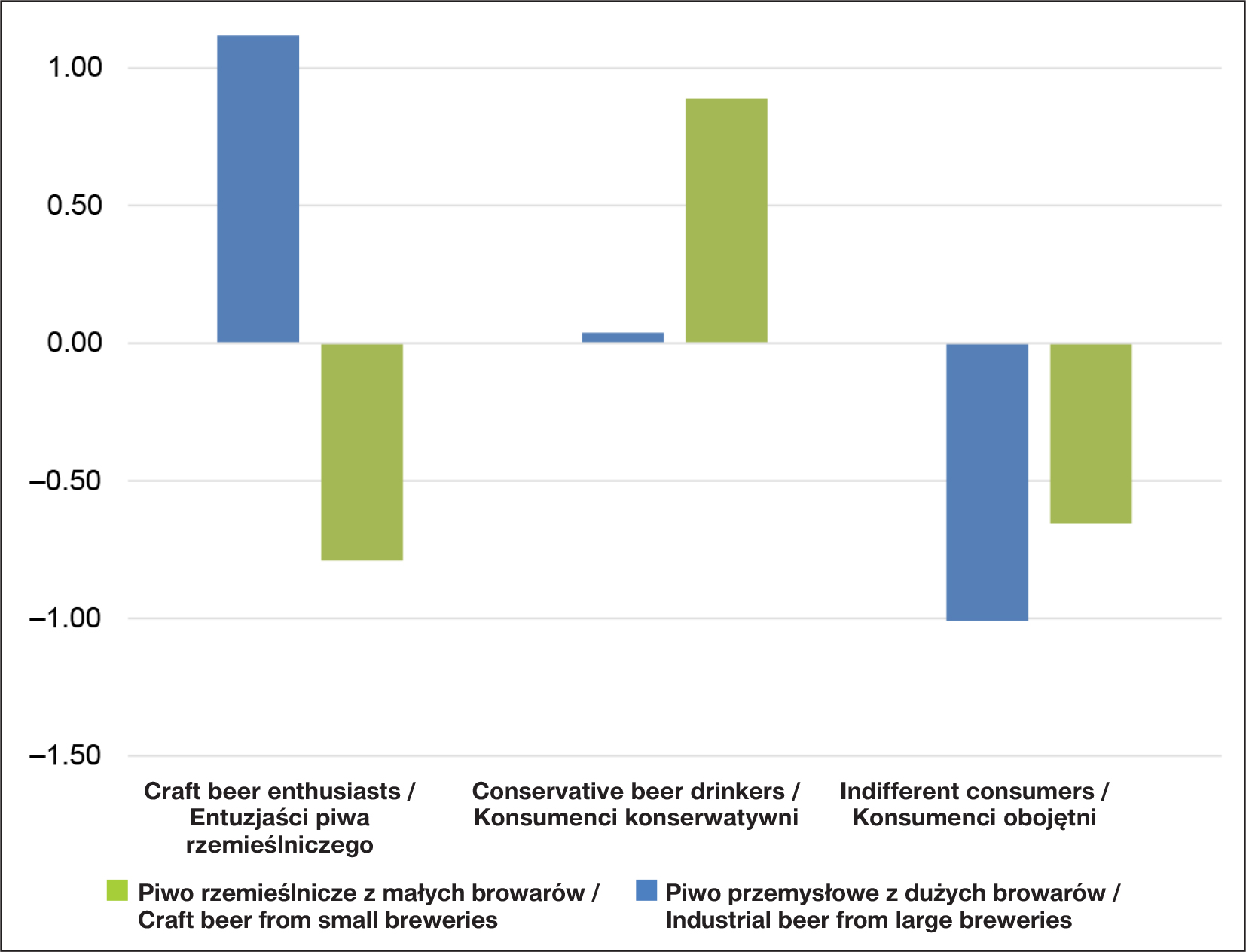
Figure 1.
Three cluster solutions from k-means clustering
Source: authors’ own elaboration.
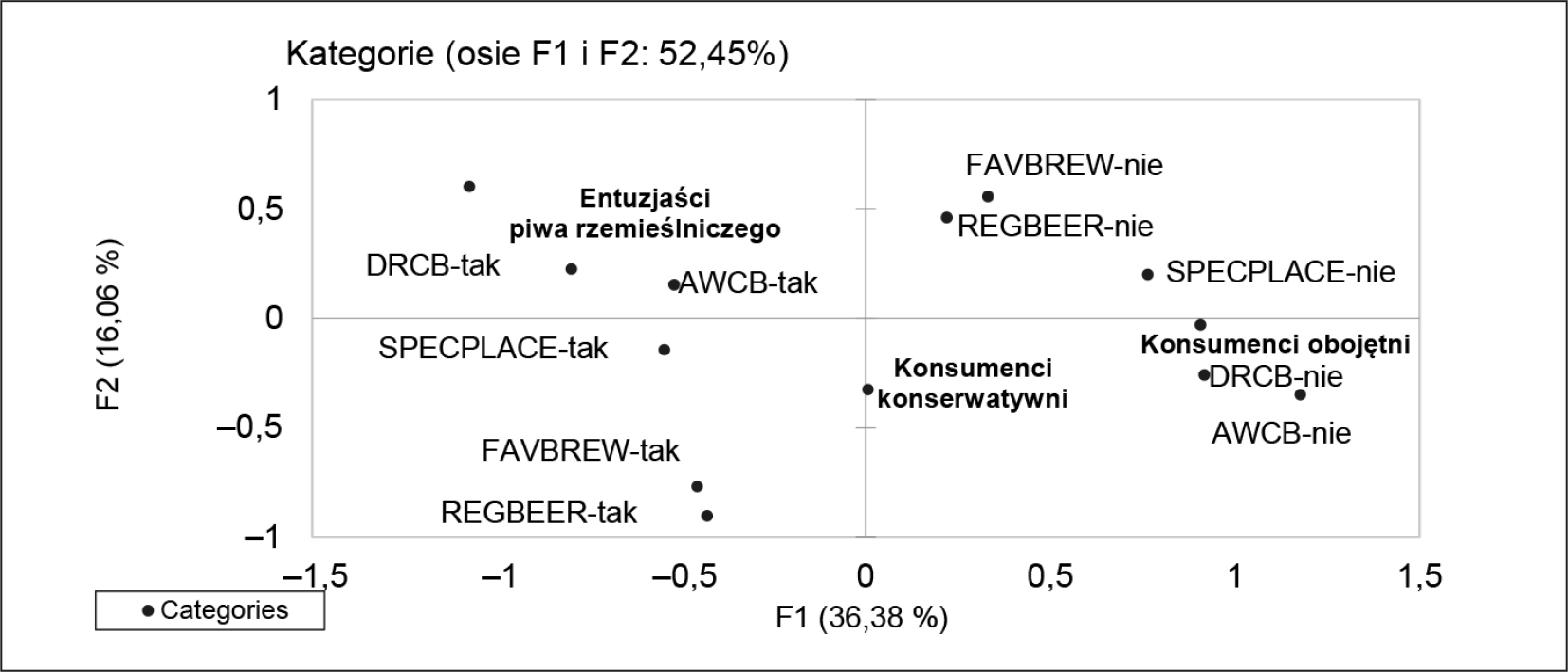
Figure 2.
Results of multiple correspondence analysis
Note: AWCB — craft beer awareness; DRCB — craft beer consumption; FAVBREW — preference for particular brewery; SPECPLACE — preference for special place; REGBEER — preference for regional beer
Source: authors’ own elaboration.
Consumer Segment Profiling
An analysis of socio-demographic variables allowed for a detailed characterization of the identified segments. The craft beer enthusiasts group consists mostly of males (75.8%) aged 26 to 40 (60.6%), who reside in cities with a population of over 20 thousand inhabitants (65.8%). This segment has the highest percentage of people with higher education (59.3%) and those in the highest personal income category (46.8%). Indifferent consumers are mainly females aged 18–25 years old living in rural areas. The majority of members of this segment have secondary education (61.3%) and belong to lower-income categories. The last segment, conservative drinkers, is mostly comprised of males (64.7%), aged 18–25 (44.9%) or 26–40 (40.5%). Most of them live in either rural areas (44.7%) or cities with more than 20 thousand inhabitants, and have completed secondary education. In all segments, the majority consisted of employed individuals who described their marital status as single (Table 5).
Table 5.
Demographic profile of created consumer segments
| Specification | Craft beer enthusiasts (%) | Conservative drinkers (%) | Indifferent consumers (%) | |
|---|---|---|---|---|
| Gender* (%) | female | 24.24 | 35.31 | 56.46 |
| male | 75.76 | 64.69 | 43.54 | |
| Age* (%) | 18–25 years | 23.38 | 44.94 | 54.98 |
| 26–40 years | 60.61 | 40.49 | 25.46 | |
| ⩾ 41 years | 16.02 | 14.57 | 19.56 | |
| Education* (%) | primary | 1.30 | 1.23 | 3.69 |
| secondary | 39.39 | 54.32 | 61.25 | |
| higher | 59.31 | 44.44 | 35.06 | |
| Gross individual income* (%) | less than EUR 600 | 3.03 | 9.04 | 13.54 |
| EUR 600–900 | 9.61 | 14.30 | 19.35 | |
| EUR 901–1200 | 20.86 | 16.80 | 22.32 | |
| EUR 1201–1500 | 19.72 | 20.67 | 14.29 | |
| more than EUR 1500 | 46.78 | 39.19 | 30.51 | |
| Place of residence* (%) | rural | 20.78 | 44.69 | 52.03 |
| city ⩾ 20 thousand inhabitants | 13.42 | 11.36 | 11.81 | |
| city > 20 thousand inhabitants | 65.80 | 43.95 | 36.16 | |
| Marital status* (%) | married | 36.36 | 22.22 | 22.88 |
| divorced | 3.03 | 4.69 | 3.69 | |
| single | 60.61 | 73.09 | 73.43 | |
| Economic status* (%) | employed | 71.86 | 70.15 | 74.54 |
| self-employed | 24.24 | 17.91 | 12.92 | |
| unemployed | 3.90 | 11.94 | 12.55 |
Craft beer enthusiasts can be defined as consumers who drink alcohol more than once a week, for whom beer is the most popular alcoholic beverage. This segment is characterized by the highest weekly beer consumption, and most of its members buy beer in specialized beer stores or pubs. The most important factor in purchasing beer is taste. Indifferent consumers can be characterized as the segment with the lowest weekly beer consumption (up to one beer) and the lowest frequency of alcohol consumption (once a month). As alcohol, people in this segment are more likely to choose wine or spirits. Most of them buy beer at a supermarket, a pub, or the nearest shop. The most important factor determining the purchase of beer is taste, but brand plays a greater role in this segment than in the other two. The last segment, “conservative drinkers”, prefers beer, and its members usually drink more than four beers per week. In terms of alcohol consumption frequency, this segment reported medium consumption (once a week), and the most popular places to buy beer are pubs or supermarkets. Taste is the most important factor when selecting beer. In all segments, pubs or homes were indicated as the main place of beer consumption (Table 6).
Table 6.
Consumption and purchasing patterns
| Specification | Craft beer enthusiasts (%) | Conservative drinkers (%) | Indifferent consumer (%) | |
|---|---|---|---|---|
| Alcohol preference* (%) | beer | 72.26 | 43.59 | 21.00 |
| wine | 16.79 | 29.95 | 41.20 | |
| spirits | 10.95 | 26.46 | 37.80 | |
| Alcohol consumption frequency* (%) | once a month | 8.23 | 26.67 | 46.86 |
| once a week | 31.60 | 40.99 | 35.42 | |
| more frequently | 60.17 | 32.35 | 17.71 | |
| Beer consumption per week* (%) | up to 1 beer | 3.72 | 15.01 | 39.08 |
| 2–3 beers | 15.48 | 22.96 | 17.09 | |
| 4–5 beers | 21.88 | 23.55 | 17.72 | |
| > 5 beers | 58.93 | 38.48 | 26.11 | |
| Place of beer consumption* (%) | pub | 53.25 | 55.56 | 45.76 |
| home | 37.66 | 31.60 | 31.37 | |
| family and friends | 4.33 | 10.37 | 10.33 | |
| restaurant | 1.73 | 1.98 | 4.06 | |
| other | 3.03 | 0.49 | 8.49 | |
| Place of beer purchase* (%) | beer shop | 51.95 | 8.42 | 3.35 |
| pub | 28.57 | 39.85 | 35.69 | |
| supermarket | 10.82 | 35.64 | 39.41 | |
| nearest shop | 5.19 | 15.35 | 21.19 | |
| other | 3.46 | 0.74 | 0.37 | |
| Decisive factor at purchase* (%) | brand | 5.73 | 11.00 | 19.33 |
| price | 1.76 | 7.00 | 11.52 | |
| taste | 92.51 | 82.00 | 69.14 |
According to MCA, it can be stated that the consumers in the first segment, “craft beer enthusiasts”, are familiar with and drink craft beer. Moreover, they tend to drink beer in special places (preferred pub, bars, or restaurants). Indifferent consumers can be defined as people who are unaware of craft beer and therefore, they do not consume it at all. Individuals in this segment do not prefer regional beers or beers from specific breweries. Furthermore, they do not have specific places where they tend to consume beer. Conservative drinkers choose beers from a specific brewery and drink them in special places (preferred pubs, bars, or restaurants); however, they do not prefer regional beers. People in this segment are familiar with craft beer, but they do not consume it.
Regarding beer style preferences, the results showed (Table 7) that craft beer enthusiasts in general like and often drink specialty beer, IPA, and APA beers, followed by lagers and porters or stouts. Conservative drinkers indicated the highest preference for lager, followed by beer specials. Indifferent consumers indicated, on average, negative preferences for all beer categories. Moreover, the results closest to neutral were obtained for lagers and flavored beers.
Table 7.
Consumer consumption and preferences for different types of beer
| Consumption and preferences | Beer type | Craft beer enthusiasts | Conservative drinkers | Indifferent consumers |
|---|---|---|---|---|
| I like to drink beer types. | Lager* | 3.53a | 4.15b | 2.85c |
| Dark* | 2.64a | 2.71a | 2.07b | |
| IPA, APA* | 4.35a | 3.14b | 1.96c | |
| Porter, Stout* | 3.26a | 2.59b | 1.72c | |
| Weiz* | 3.10a | 2.76b | 1.83c | |
| Beer Specials* | 4.38a | 3.45b | 2.13c | |
| Flavored beer* | 3.06a | 2.98a | 2.60b | |
| I often drink beer types. | Lager* | 3.37a | 4.09b | 2.69c |
| Dark* | 2.32a | 2.65b | 1.92c | |
| IPA, APA* | 4.23a | 2.90b | 1.74c | |
| Porter, Stout* | 2.96a | 2.39b | 1.65c | |
| Weiz* | 2.76a | 2.58a | 1.74b | |
| Beer Specials* | 4.15a | 3.21b | 1.98c | |
| Flavored beer* | 2.87a | 2.85a | 2.45b |
Discussion
Craft beer is an expanding product category that has become increasingly popular among consumers (Jaeger et al., 2020). This rising popularity is also influencing consumers’ preferences and consumption trends in the commercial beer market (Aquilani et al., 2015). This is also confirmed by the study results, which indicate a very positive attitude among consumers towards craft types of beer, as well as a tendency to purchase foreign craft beers instead of industrial ones when local craft brands are absent. This result is also supported by the study by Gómez-Corona et al. (2016), which highlights the rapid growth of local craft beer producers in Mexico, as well as the expansion of the consumer base. The study divided consumers into three groups (craft beer enthusiasts, conservative drinkers, and indifferent consumers), and the results showed that although men dominate in beer consumption, women predominate in the indifferent consumers group, which consumes up to one beer per week. Consumer segmentation, including craft beer, has also been investigated by several other studies. Research conducted by Gómez-Corona et al. (2016) proposed to divide the beer consumer into three types: “industrial”, “occasional industrial”, and “craft beer”, depending on consumer ethnographies and an understanding of the benefits and motivations behind beer consumption. Calvo-Porral et al. (2018) identified five segments of beer consumers labeled as “beer lovers”, “circumspect seniors”, “social consumers”, “homelike women”, and “beer to fuddle drinkers”, with the “beer lovers” and “homelike women” segments defined as those with high market potential for specialty and craft beers. Nieto-Villegas (2024) identified three distinct consumer segments based on their attitudes towards ecological production, emphasizing that it is consumers with a positive attitude towards ecological production who perceive craft beers positively.
Research conducted by Jaeger et al. (2020) focused on investigating the existence of segments in the context of craft beer, and the results showed that some consumers exhibit a characteristic preference for craft beer characterized by stronger and more complex flavors, while others prefer less complex and more traditional flavors. The study conducted by Long et al. (2018) identified five clusters among craft beer consumers with emphasis on lifestyle and perception of locality, as follows: “adventurers,” “preservers,” “conservatives,” “learners,” and “tradesmen.” Adventurers, the largest group, prioritize variety and novelty, making them a key target for the craft beer industry. Conservatives, who tend to have more women than men, also seek novelty but are drawn to the uniqueness of craft beer, indicating potential for targeted marketing. Learners, consistent craft beer consumers, value intellectual engagement and local economic support, making them ideal customers for smaller, local breweries. Preservers and tradesmen, who prefer stability and routine, are less motivated by local or novel products, making them less likely to be primary targets for the craft beer market. Furthermore, Pilone et al. (2023) in their study focus on the craft beer market as a dynamic market characterized by two consumer clusters, on the one hand conservative and older consumers who perceive craft beer as a substitute for wine, and on the other hand young people who prefer craft beer, reflecting on a modern and dynamic lifestyle.
The study results indicate that consumers who prefer to consume craft beer are mainly men, consumers under the age of 40, with higher education, employed, and with a higher monthly income. These results are in line with the study conducted by Lerro et al. (2020) in Italy, which revealed that craft beer consumers are young, well-educated, and employed. Graefe and Graefe (2021) also emphasize that craft beer is more popular, especially among the younger generation of respondents with higher education. Rivaroli et al. (2020) in their comparative study between the countries of Germany and Canada found that craft beer consumers are mainly men, although Muggah and McSweeney (2017) also highlighted the willingness of Canadian women to consume craft beer in their study.
The research further points to differences in consumption among groups and according to income. Lower-income groups search for cheaper alternatives. However, Im et al. (2019) point to the problem with alcohol in lower-income groups in rural areas, which may result not so much in the issue of preference for craft and industrial beers, but rather in satisfying the needs of alcohol dependent subjects. The authors of the study confirm, however, that it is mainly employed individuals who show higher consumption levels, as their higher incomes allow them to satisfy their needs, for example, by consuming more expensive craft beers. According to our research and that of Pokrivčák et al. (2019), craft beer enthusiasts are looking not only for the beer itself, but also for the environment in which it is offered. The unfamiliarity with craft beers among indifferent consumers indicates a lack of knowledge about them rather than a lack of interest in these products.
An interesting indicator is the high frequency of consumption of craft beers and, in particular, the strong connection between the consumption of these types of beers in pubs. Lerro et al. (2020) found that Italians drink craft beer more than once a month, mainly in pubs and with friends and colleagues. Furthermore, Meyerding et al. (2019) identified that the taste of beer is still a strong, decisive factor in all segments. Results are in line with other studies, which indicated that price, taste, brand loyalty, or preference for a certain beer style are important factors for beer consumers (Carvalho et al., 2018; Gómez-Corona et al., 2016; Sester et al., 2013). The taste of beer has played and will likely continue to play a dominant role. Fans of craft beer expect dominant flavors, bitterness, texture characteristics, and sparkle from beer (Mastanjević et al., 2019). Rumánková et al. (2019) point out that even during times of crisis, the beer market remains resilient. The stability of individual preference groups shows that, despite the economic downturn, there is still a strong consumer base for craft beers, and consumers are more willing to pay extra for quality, local beer with added value.
It is also necessary to note the distinction between different styles of beer. Craft enthusiasts prefer beer specials and IPA, APA. Lager represents the most common type among conservative consumers. Indecisive consumers are more likely to apply for flavored variants and lagers. Pavslar and Buiatti’s (2009) findings, as well as Darwin’s (2018) findings, contribute towards the same results as ours in terms of beer preference. Moreover, there is an increasing preference for non-alcoholic beers both in craft and industrial beer markets. Low-alcohol and non-alcoholic beers have become an important part of the global beer market. For instance, in Poland, non-alcoholic beer has been gaining importance, accounting for almost 5% of the beer market value (Kozłowski et al., 2021).
Conclusions
The study showed a certain diversity among beer consumers in Slovakia. It can be concluded that the Slovak beer sector comprises consumers who are conservative in their beer consumption, mostly opting for lager or other industrial types produced by large-scale breweries, as well as so-called craft enthusiasts who prefer craft beers made by local small-scale producers. Nevertheless, there exists a consumer segment with indifferent preferences towards craft beer and industrial beer, produced by both small-scale and large-scale producers.
The research findings can support managerial decision-making in breweries by providing insights into customer preferences, particularly in shaping product portfolios. As consumer demand has shifted beyond traditional lagers, many breweries have expanded their offerings to include IPAs, APAs, and other beer specialties, appealing to craft beer enthusiasts. This diversification strategy helps reduce business risk, while an alternative approach focuses on serving conservative drinkers through a specialized lager portfolio.
Craft beer consumers are typically urban men aged 26–40 with higher education and income levels, who prioritize taste and often drink beer in pubs. Moreover, the results of the segmentation (craft beer enthusiasts, conservative drinkers, indifferent consumers) provide essential data for differentiating and positioning products among various target groups, which allows for a deeper understanding of consumer needs and better personalization of the final product.
This study has some limitations. The first limitation is the application of self-reported measures related to beer consumption and purchase in the survey. The second limitation is based on the territorial scope of the study, which was designed only at the national level. In future research, these issues should be addressed. It would be appropriate to include other countries, especially to study the changes in customer preferences in countries with a strong beer-drinking culture and in those with a strong wine-drinking tradition, where such shifts have been driven by the craft beer revolution. Another limitation is related to the sampling method. The research sample may not accurately represent the population; therefore, the results cannot be generalized. The last limitation is the application of only selected sociodemographic characteristics of the respondent. For a better description of this segment, it would be appropriate to apply additional characteristics such as type of work performed (physical vs. mental work), diet (fast food vs. classic food), or hobbies (sport vs. culture).