Have a personal or library account? Click to login
Biodiversity of the benthic diatom flora in the coastal zone of the Gulf of Gdańsk: a case study of the Gdynia–Sopot transect Cover

Biodiversity of the benthic diatom flora in the coastal zone of the Gulf of Gdańsk: a case study of the Gdynia–Sopot transect

Open Access
|Jul 2022

Figures & Tables

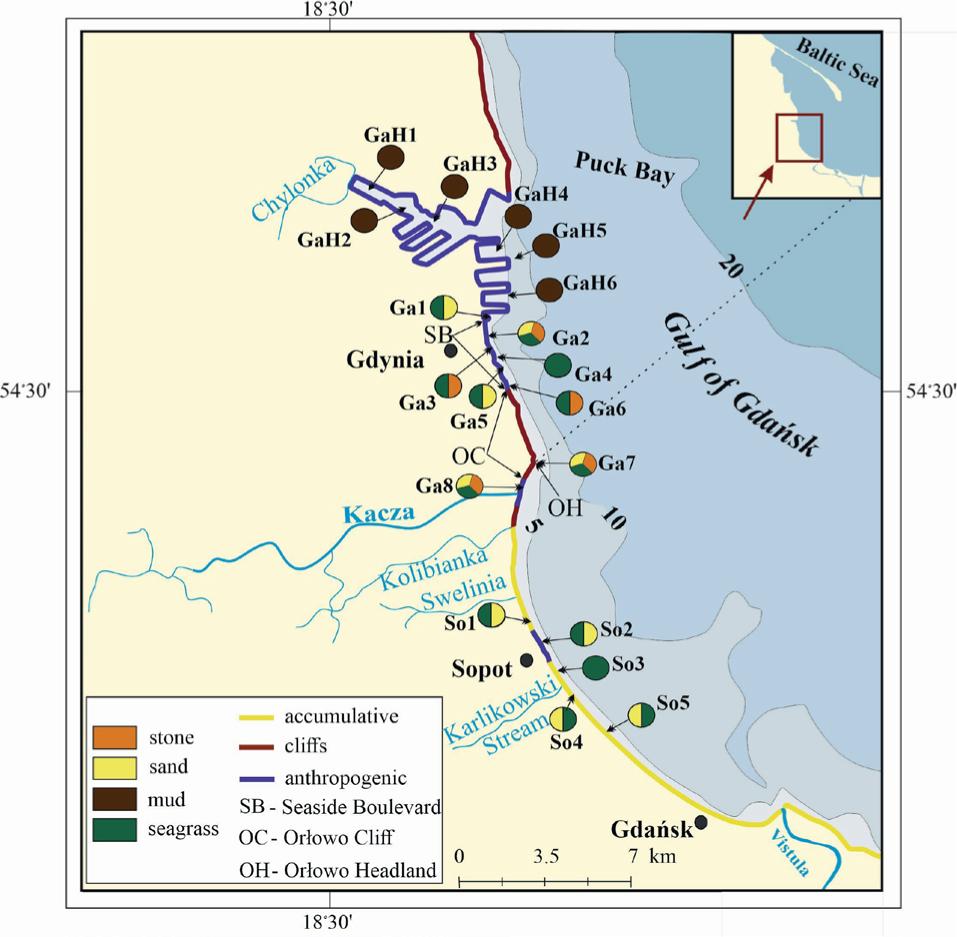
Figure 1

Location of the study area

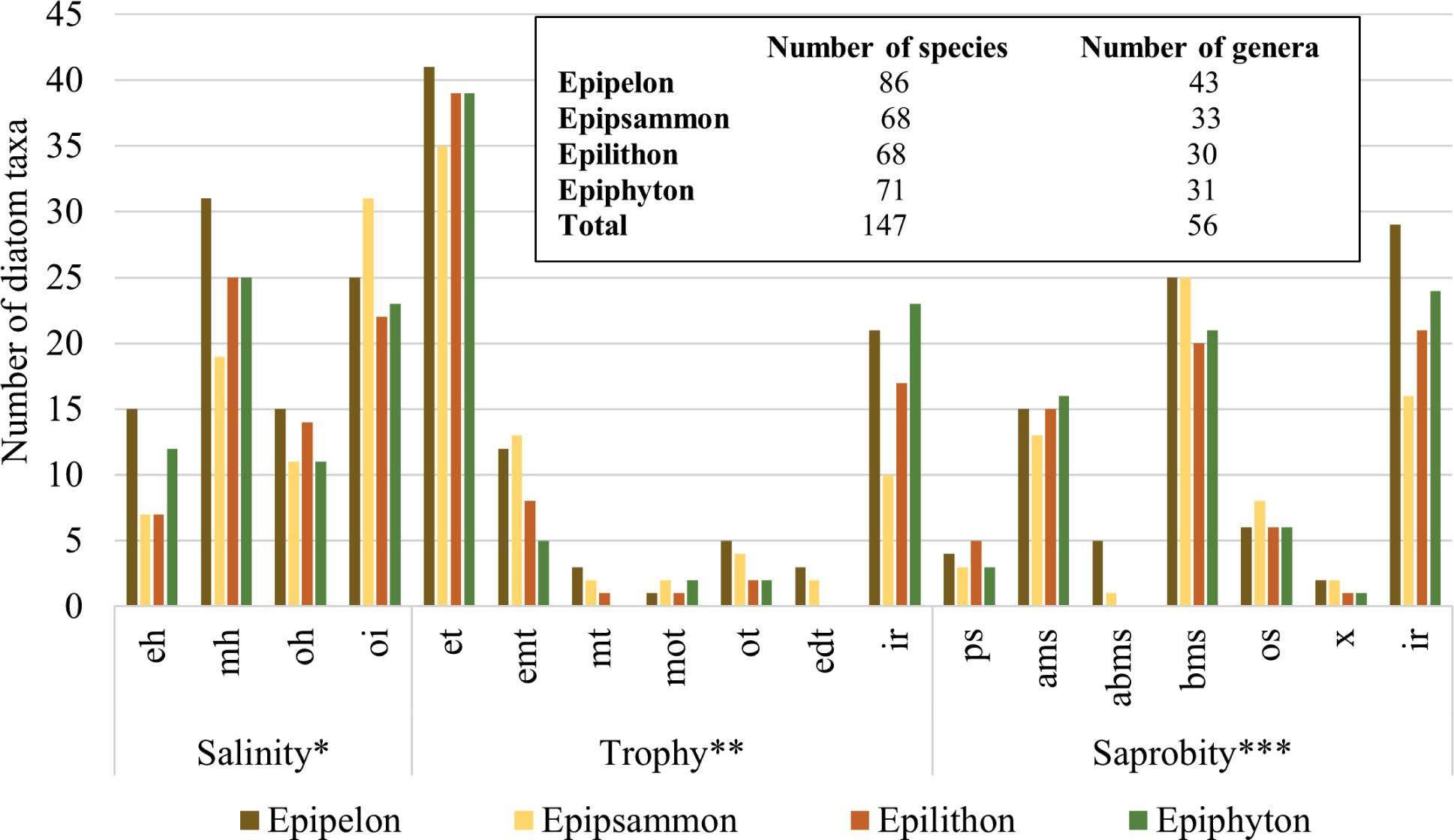
Figure 2

The number of diatom taxa (species, subspecies, varieties, forms) versus ecological preferences: *eh-euhalobous, mh-mesohalobous, oh–oligohalobous halophilous, oi–oligohalobous indifferent; **et–eutraphentic, emt–eumesotraphentic, mt–mesotraphentic, mot-meso-oligotraphentic, ot–oligotraphentic, edt–eurydystrophic, ir-irrelevant; ***ps–polysaprobous, ams–α-mesosaprobous, abms–α-β-mesosaprobous, bms–β-mesosaprobous, os– oligosaprobous, x-xenosaprobous, ir-irrelevant

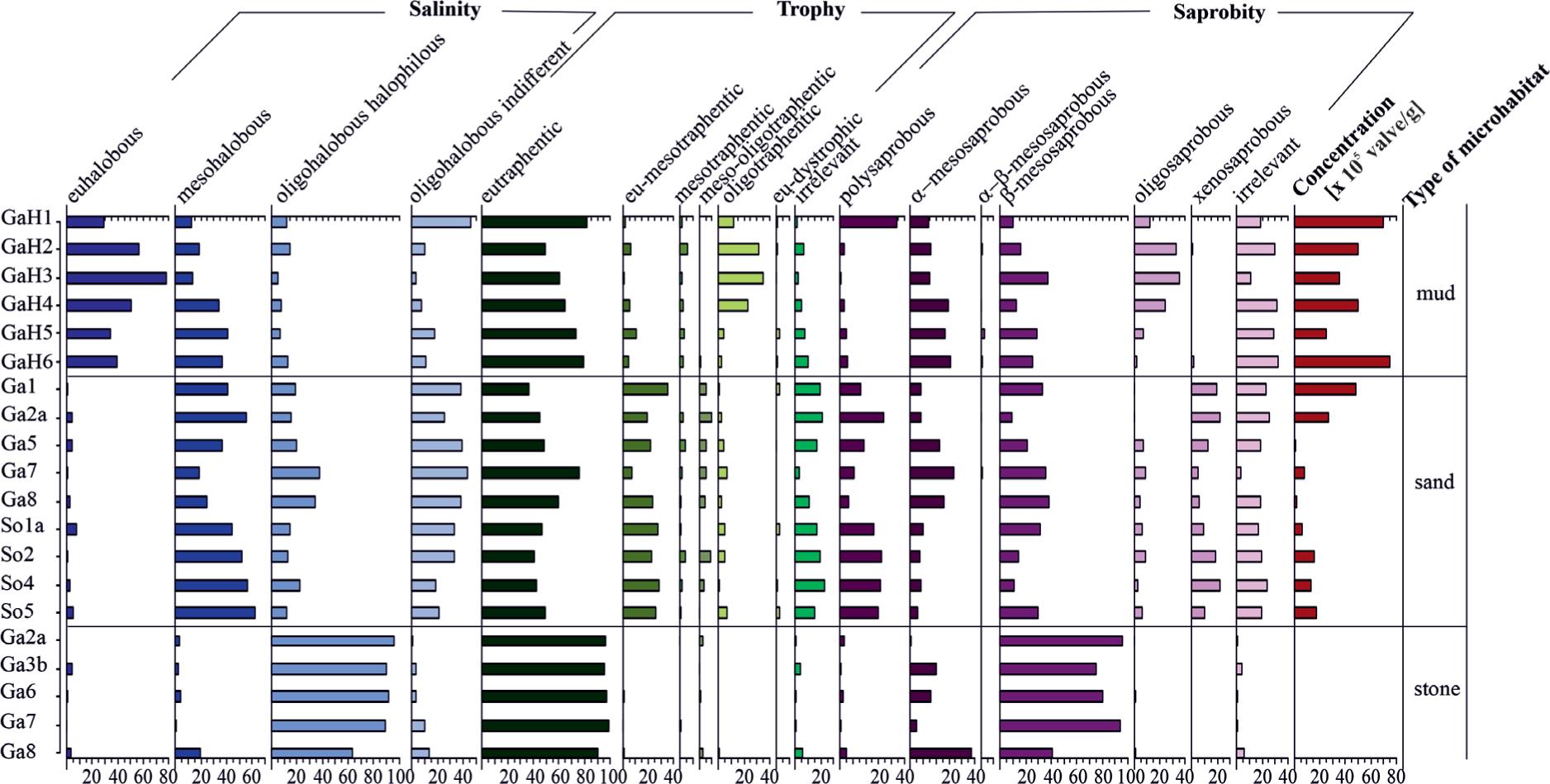
Figure 3

Percentage content of the diatom ecological groups in epilithon (stone), epipsammon (sand) and epipelon (mud)

Figure 4

Frequency of the main diatom taxa in epilithon (stone), epipsammon (sand) and epipelon (mud)

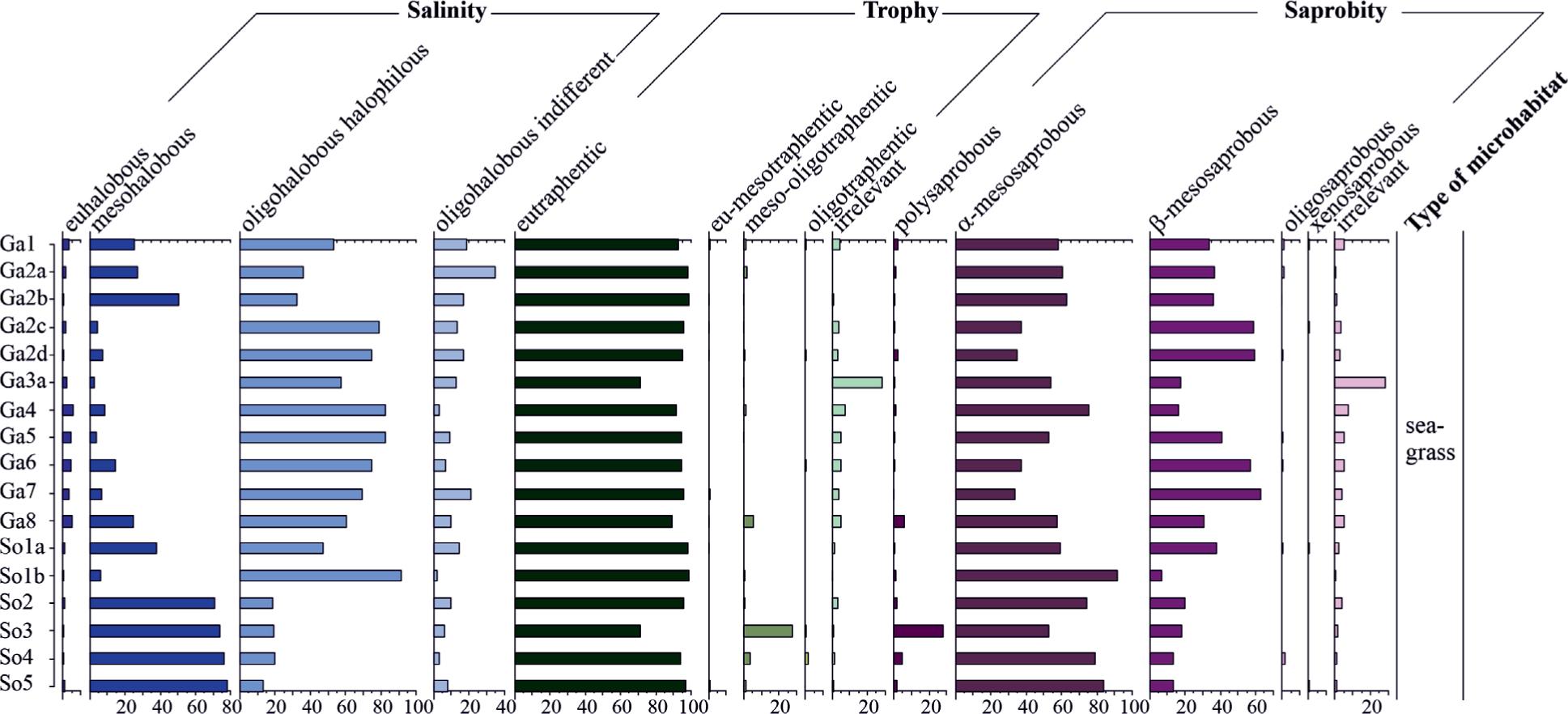
Figure 5

Percentage content of the diatom ecological groups in epiphyton (seagrass)

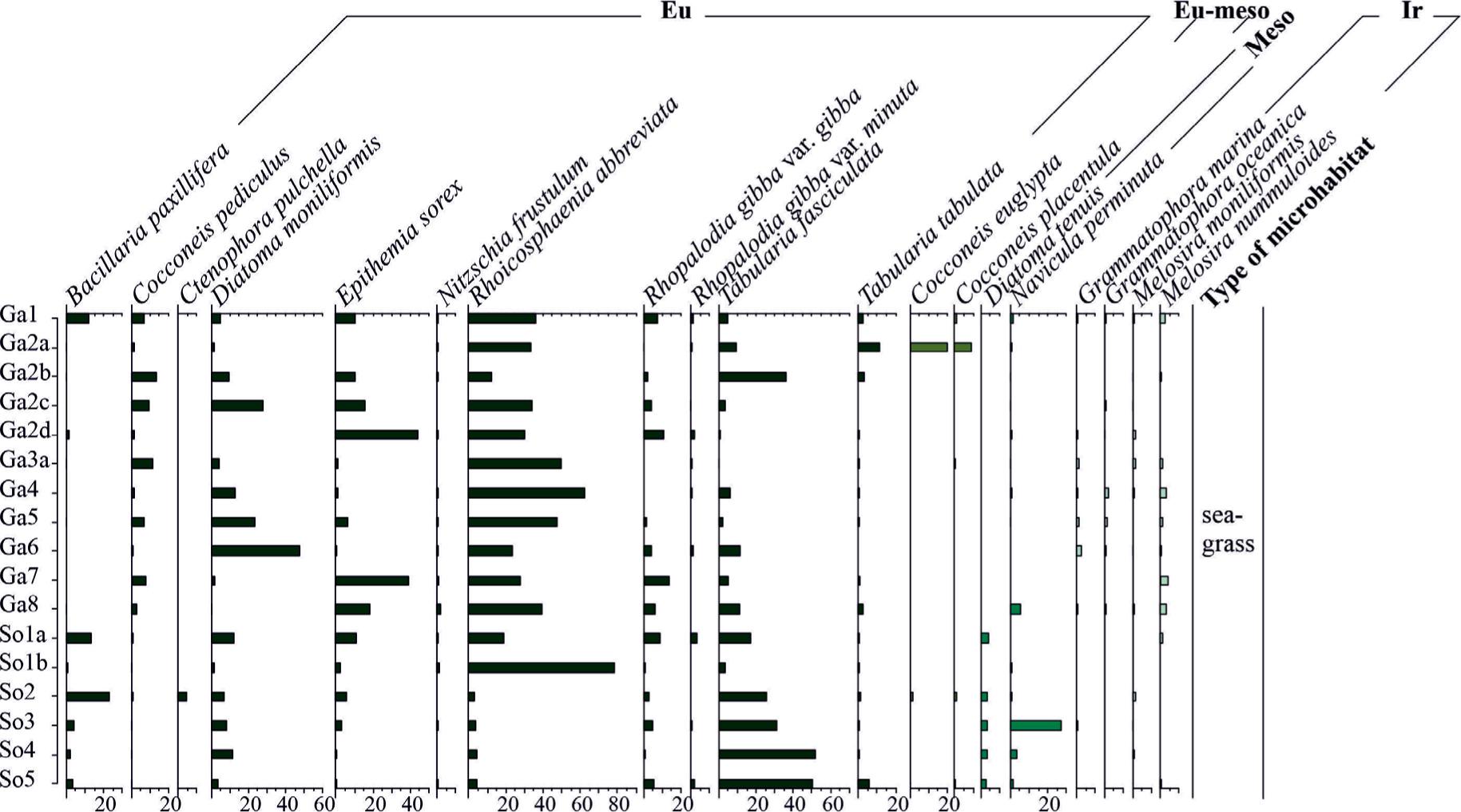
Figure 6

Frequency of the main diatom taxa in epiphyton (seagrass)

Characteristics of the analyzed samples_ Types of microhabitats: st – stone, sa – sand, mu – mud, sg – seagrass_ Black dots represent single samples collected

SitesSamplesΦλLocationDepth [m]Types of microhabitats
stsamusg
GaH1GaHl54°32.523N18°30.32EGDYNIA PORTport channel13.6   
GaH2GaH254°32.30N18°31.20EDock VII15.6   
GaH3GaH354°32.10N18°31.85Eport channel12.3   
GaH4GaH454°31.85N18°33.27EDock III14.4   
GaH5GaH554°31.70N18°33.62Esouth channel8.7   
GaH6GaH654°31.26N18°33.50EDock I9.2   
Ga1Ga154°30.999N18°33.138EGDYNIAbeach0.25  
Ga2Ga2a54°30.774N18°33.062E0.25 
Ga2b   
Ga2c   
Ga2d   
Ga3Ga3a54°30.573N18°33.203ESeaside Boulevard0.3   
Ga3b   
Ga4Ga454°30.499N18°33.258E0.3   
Ga5Ga554°30.333N18°33.412E0.3  
Ga6Ga654°30.147N18°33.527E0.3  
Ga7Ga754°29.101N18°34.118Ebeach0.3 
Ga8Ga854°28.788N18°33.834Epier0.2 
So1So1a54°27.057N18°34.062ESOPOTbeach0.3  
So1b   
So2So254°26.811N18°34.345Epier0.25  
So3So354°26.447N18°34.636Ebeach0.3   
So4So454°26.115N18°35.051E0.24  
So5So554°25.666N18°35.751E0.27  
DOI: https://doi.org/10.26881/oandhs-2022.2.10 | Journal eISSN: 1897-3191 | Journal ISSN: 1730-413X
Language: English
Page range: 224 - 238
Submitted on: Nov 4, 2021
Accepted on: Apr 20, 2022
Published on: Jul 7, 2022
Published by: University of Gdańsk
In partnership with: Paradigm Publishing Services
Publication frequency: 4 issues per year

© 2022 Dominika Hetko, Małgorzata Witak, Sandra Oliwa, published by University of Gdańsk
This work is licensed under the Creative Commons Attribution-NonCommercial-NoDerivatives 4.0 License.