Have a personal or library account? Click to login
Diversity and succession of microbial communities on typical microplastics in Xincun Bay, a long-term mariculture tropical lagoon Cover

Diversity and succession of microbial communities on typical microplastics in Xincun Bay, a long-term mariculture tropical lagoon

Open Access
|Mar 2022

Figures & Tables

Figure 1

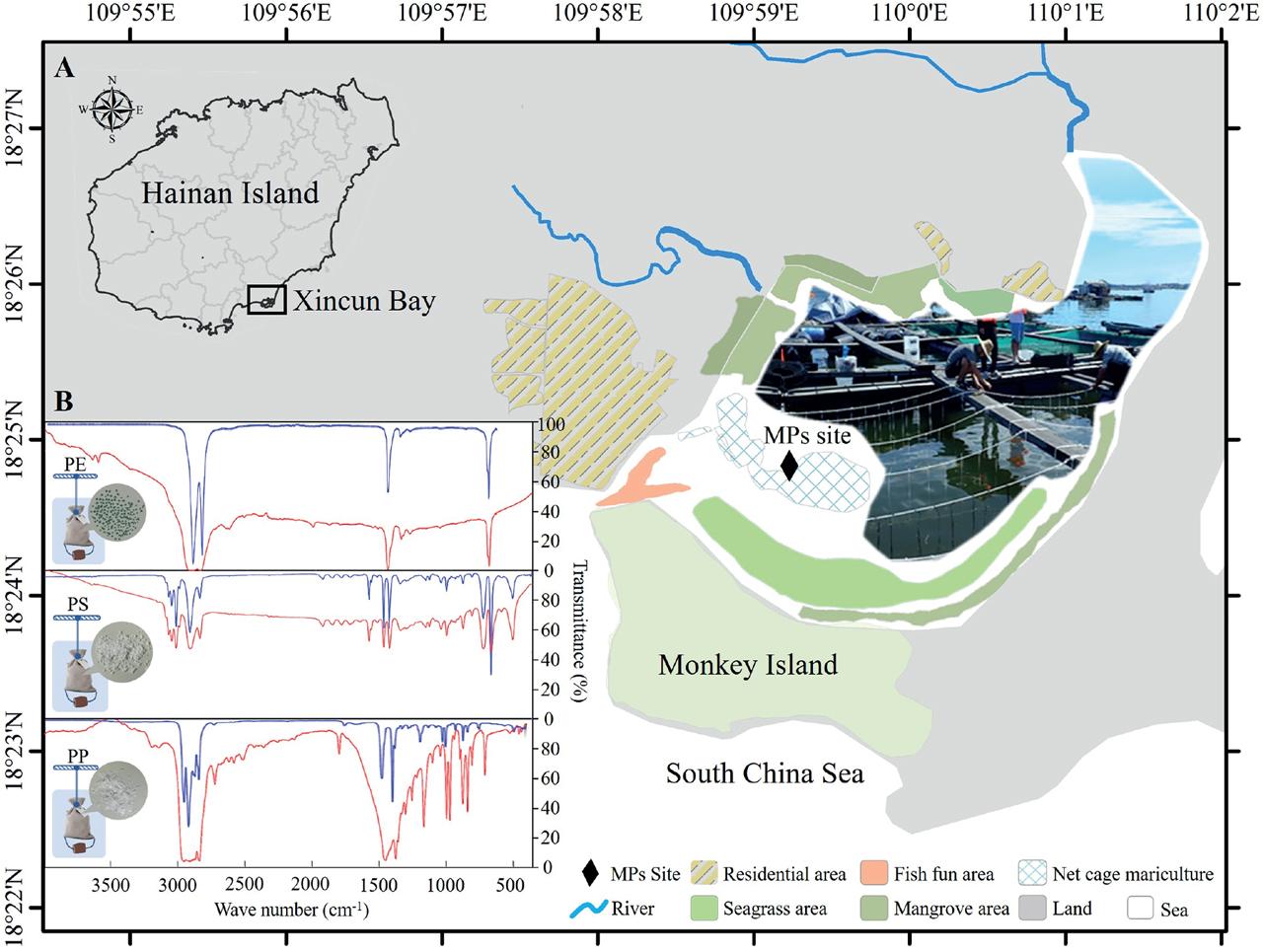
(A) Location of the experiment and spatial distribution of ecosystem types within the bay. (B) FTIR spectra of MPs originating from fishing nets, foams and woven bulk bags in red; reference spectra of polyethylene, polystyrene and polypropylene in blue.

Figure 2

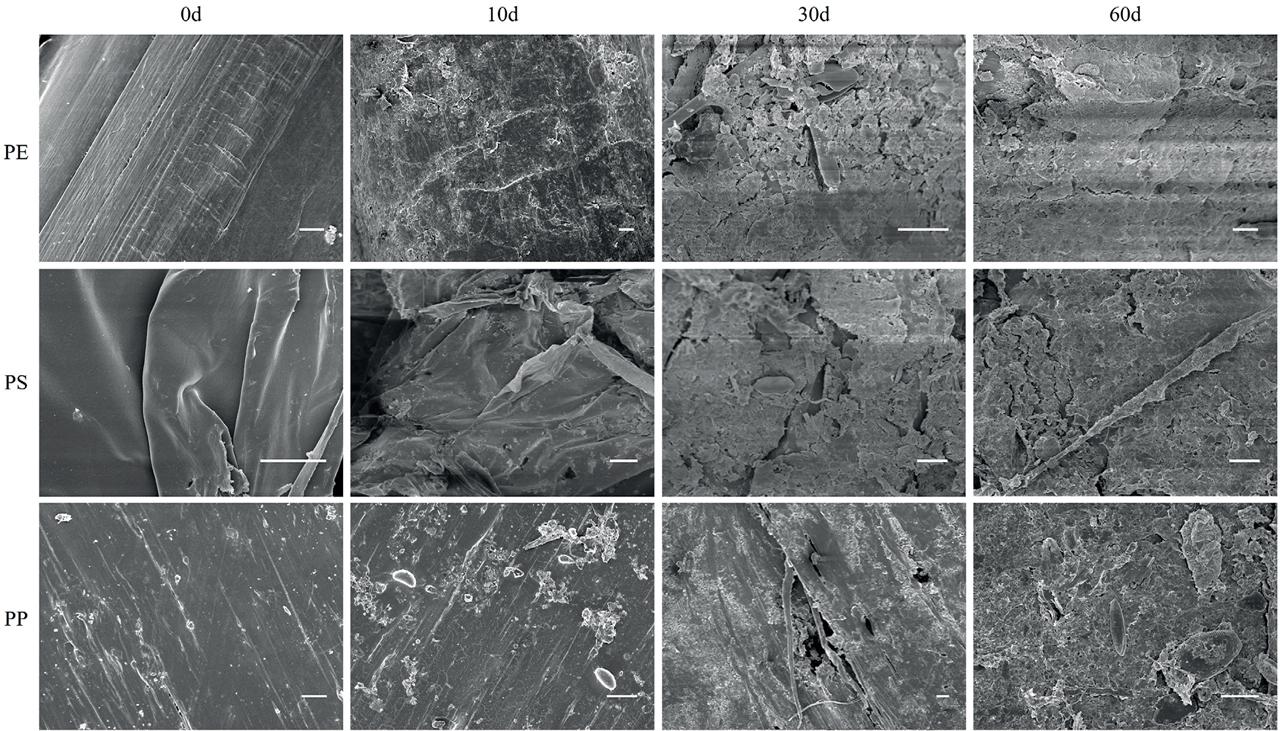
Scanning electron microscopy images of the surface of different MPs showing biofilm after 0, 10, 30, and 60 days (scale bar = 10 μm).

Figure 3

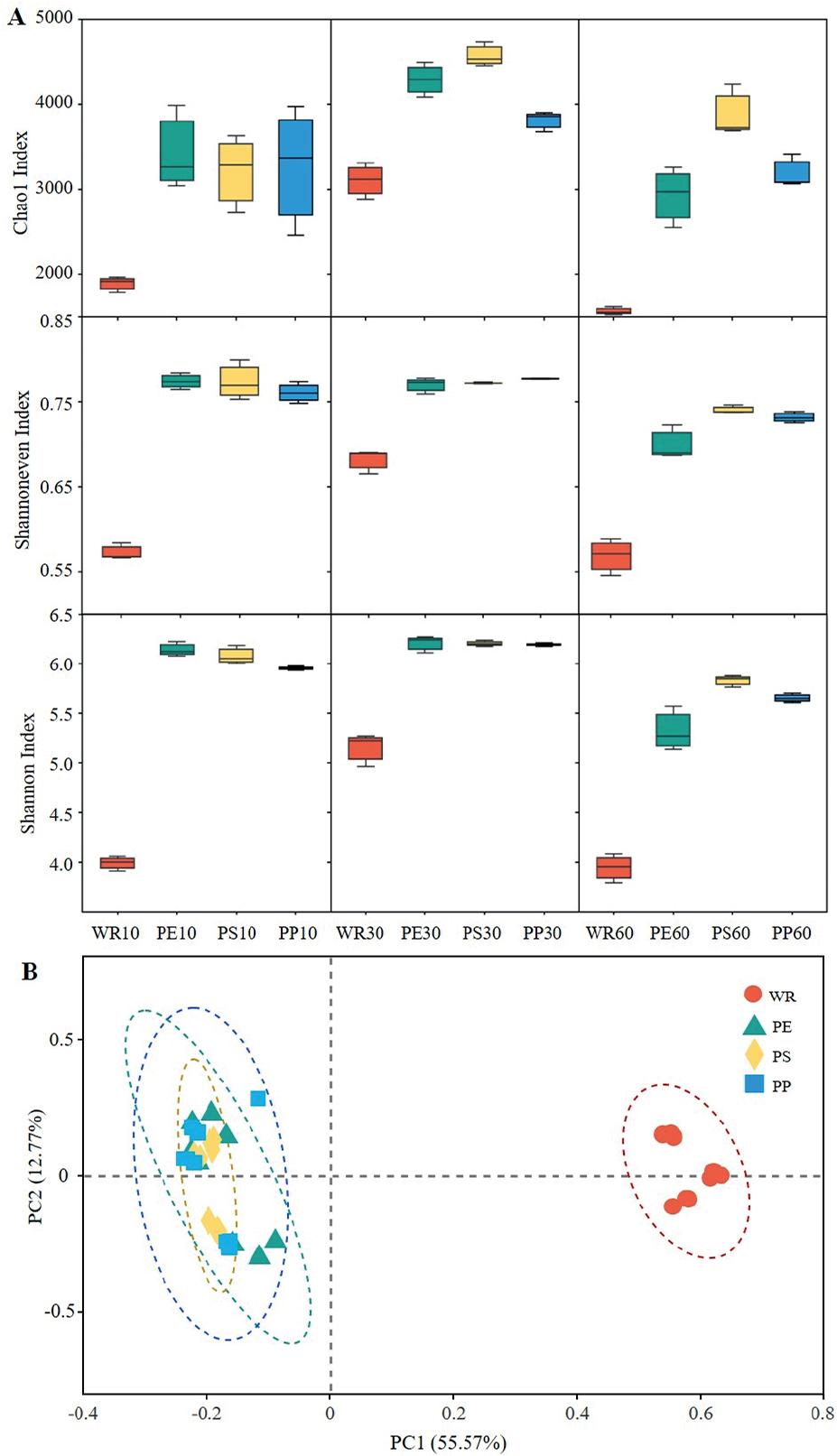
(A) Alpha diversity (Chao1, Shannoneven and Shannon indices) of bacterial communities on MPs and seawater after 10, 30 and 60 days of exposure. (B) Principal Coordinates Analysis (PCoA) based on Bray–Curtis distance, calculated from OTUs of bacterial communities.

Figure 4

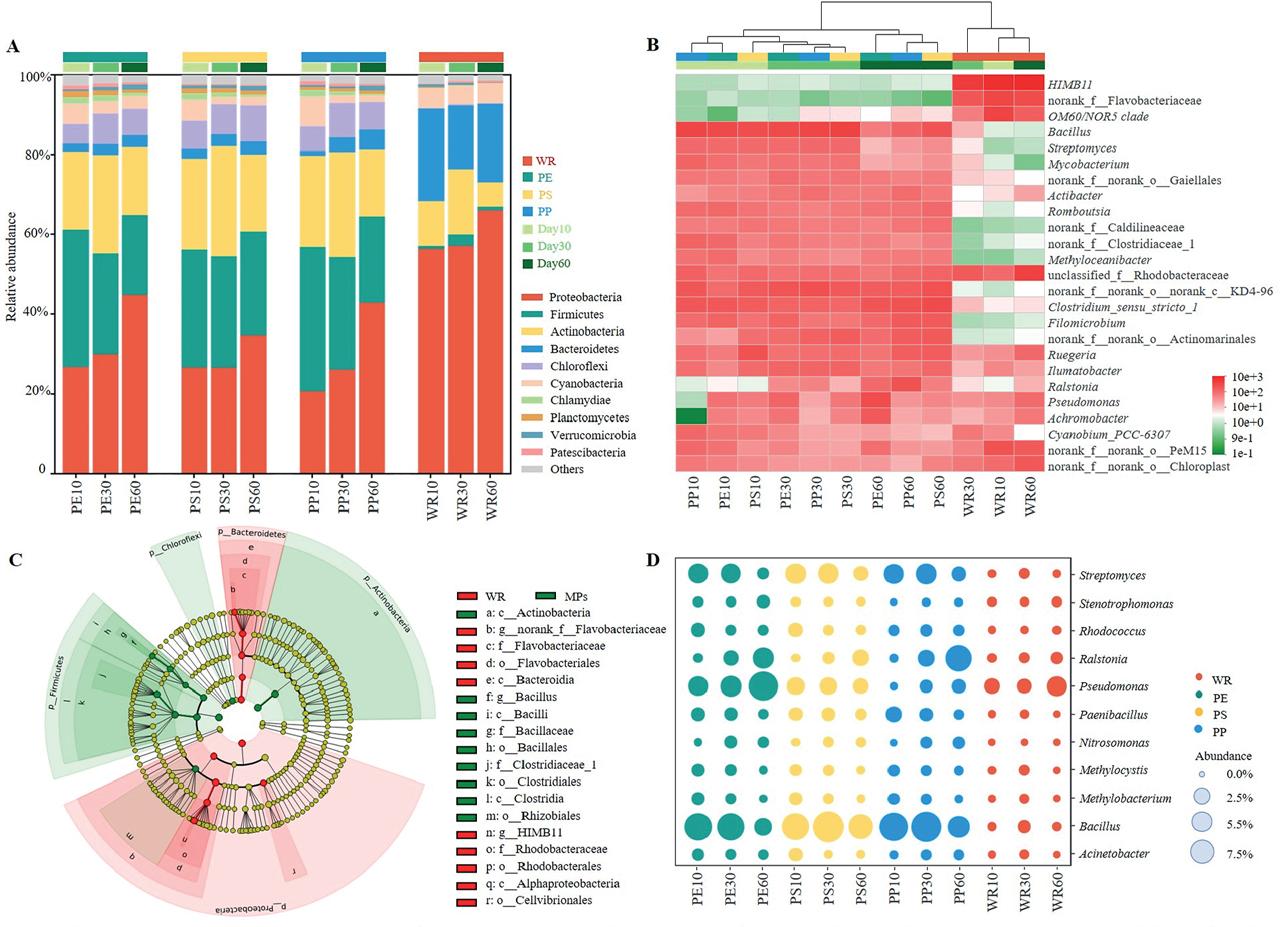
(A) Histogram of abundance distribution at the phylum level. (B) Heatmap of abundant bacterial genera (top 25) present in the microbial community of different groups. (C) Cladograms of LEfSe analysis using abundance of the full taxonomy for MPs and seawater. Bacterial groups from phylum to species level are listed from the center out. Biomarkers were selected based on the Kruskal–Wallis test (p < 0.05) and the linear discriminant analysis score greater than 4.5. (D) Abundance bubble chart of potential degradation bacteria and pathogens at the genus level.

Figure 5

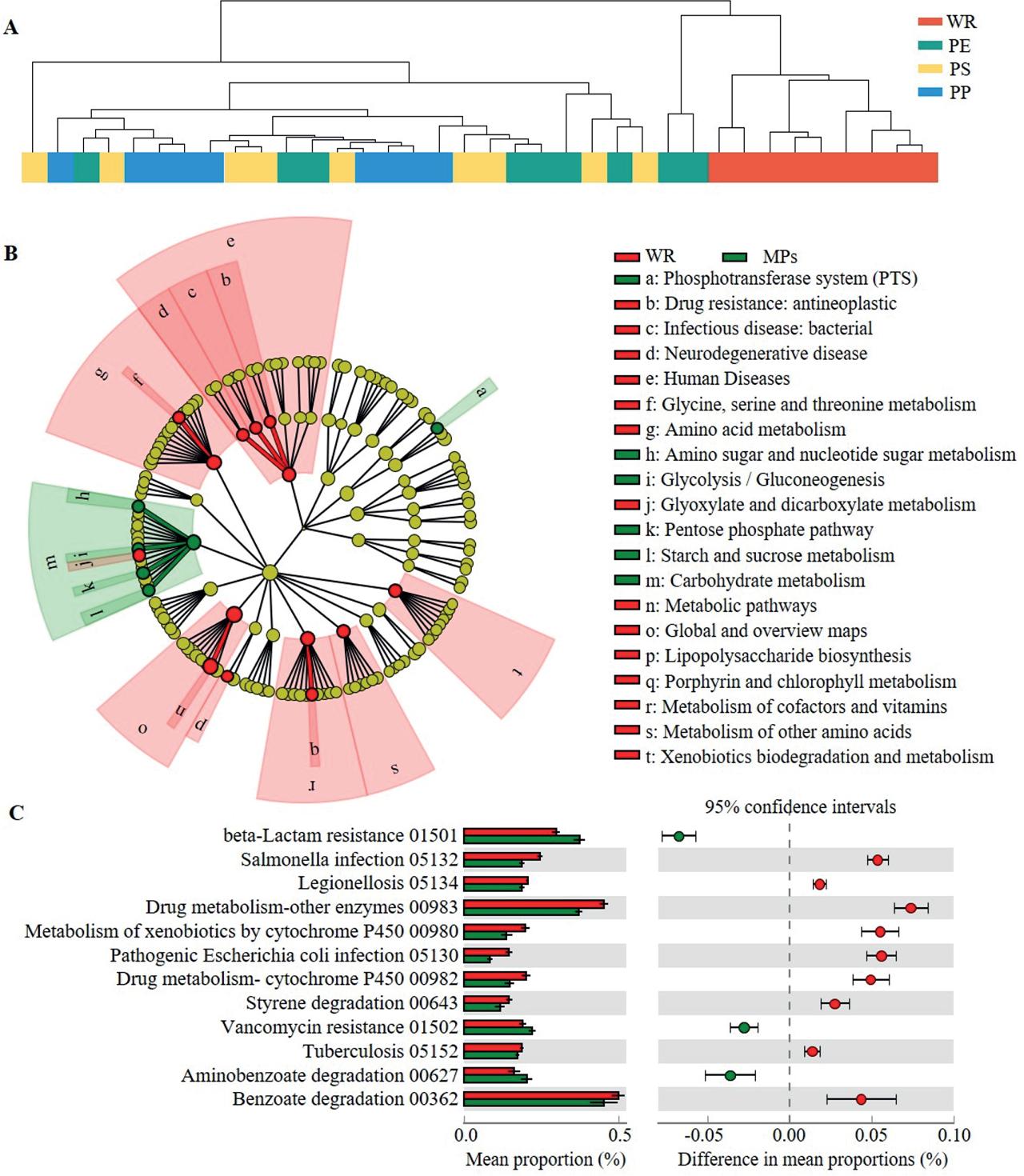
(A) Hierarchical cluster analysis of KEGG categories at level 3. (B) LEfSe analysis using abundance of the predicted metabolic pathway. Biomarkers were selected based on the Kruskal–Wallis test (p < 0.05) and the linear discriminant analysis score greater than 2.8. (C) Comparison of the abundance of predicted metabolic pathways of Drug resistance: antimicrobial, Infectious disease: bacterial and Xenobiotics biodegradation at level 3. A positive value indicates a significantly (p < 0.01) higher abundance of metabolic pathways in bacteria associated with seawater compared with this those associated with MPs.

Figure 6

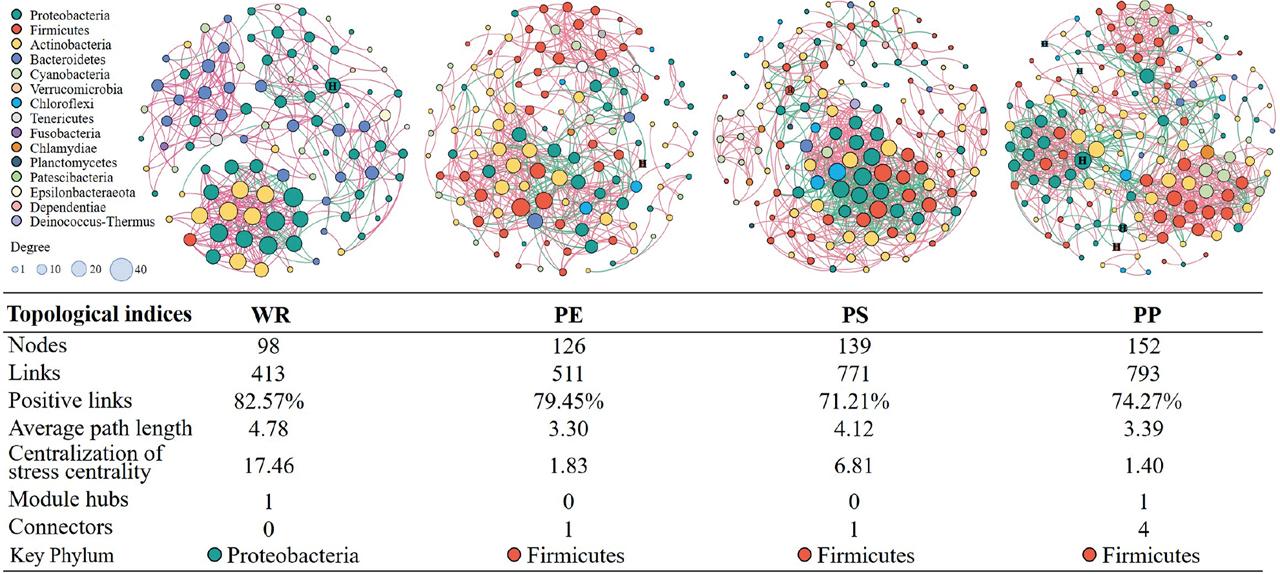
Overview of bacterial networks in seawater, PE, PS and PP. Node color represents different phylogenetic phyla. Pink lines indicate positive interactions and green lines indicate negative interactions.
DOI: https://doi.org/10.26881/oahs.2022.1.02 | Journal eISSN: 1897-3191 | Journal ISSN: 1730-413X
Language: English
Page range: 10 - 22
Submitted on: Jul 22, 2021
Accepted on: Sep 3, 2021
Published on: Mar 31, 2022
Published by: University of Gdańsk
In partnership with: Paradigm Publishing Services
Publication frequency: 4 issues per year

© 2022 Yunfeng Shi, Shuai Wang, Hui Wang, Zhaoyang Li, Jiali Cai, Qiuying Han, Muqiu Zhao, published by University of Gdańsk
This work is licensed under the Creative Commons Attribution-NonCommercial-NoDerivatives 4.0 License.