
1. INTRODUCTION
1.1. Distributed propulsion
The concept of distributed propulsion has been investigated for a number of reasons over the past century. Early concepts, developed in the 1920s and 1930s, were used primarily to achieve additional thrust [15]. The Dornier Do X, with its 12 engines, is one such example; it suffered from many technical problems that exposed the technological limitations of the era. Later, distributed propulsion was considered for the design of short or vertical take-off aircraft, though the main challenge associated with this approach was the infeasible complexity of maintaining multiple engines. More recent research on distributed propulsion has been driven largely by the feasibility of electric motors, which renders system complexity far less of a concern. Performance gains come from improved aerodynamics and propulsive efficiency [16]. An aircraft can be designed with considerable freedom, accommodating any number and layout of engines and propellers [17], opening the door to substantial departures from conventional aircraft aerodynamics. A notable example is the NASA X-57, which features a row of propellers positioned along the wing, activated only during take-off and landing in lieu of conventional high-lift devices. The additional lift required during low-speed flight phases is generated by the accelerated airstream. During cruise, only the two tip-mounted engines are used, with the distributed propellers folded. The resulting aircraft has a significantly reduced wing area – an outcome that would not be achievable with conventional propulsion.
1.2. Joined wing configuration
The joined wing configuration is often scrutinised as one of the candidates for prospective aircraft. This unconventional configuration consists of two lifting surfaces of congruent area and span. One is located at the top of or above the fuselage, and the second at the bottom. One of the lifting surfaces is attached forward of the aircraft’s centre of gravity, and the second significantly aft of it. The lifting surfaces are joined either directly or with tip plates, creating a box wing. The joined wing was introduced by Prandtl in 1924 [1] and further developed by Wolkovitch [2] and many others [3–3]. Conventionally, the joined wing features a front-low and aft-high arrangement. Alternatively, a joined wing aircraft can be designed in an inverted configuration, with a front high-wing and a low aft-wing [6]. Nevertheless, the difficulties associated with this configuration – namely strong aerodynamic coupling [7] and static indeterminacy – remain.
1.3. The MOSUPS
A dedicated research programme was undertaken to explore the properties of an inverted joined wing aircraft [8]. In the course of this project, an unmanned flying demonstrator was built to investigate the flight characteristics of the configuration (Fig. 1). These characteristics were thoroughly examined [9] using data from both CFD analyses and wind tunnel measurements [10].
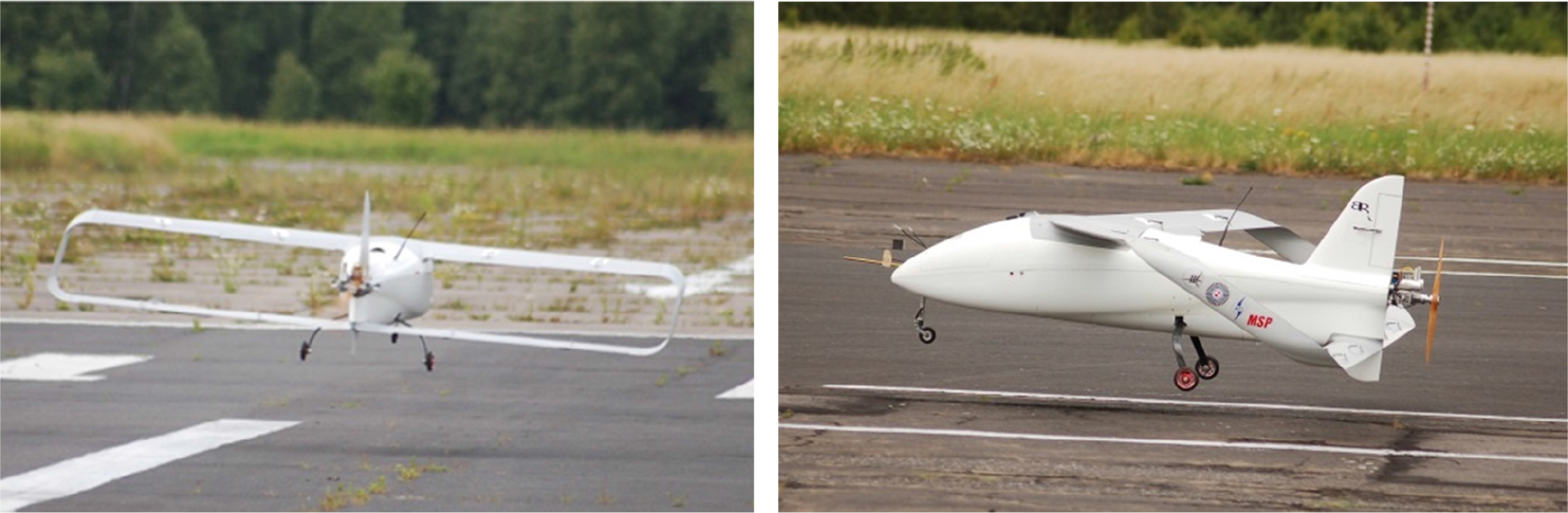
Fig. 1.
MOSUPS just after takeoff “rotation” (left) and during “flare” just before touchdown (right).
The MOSUPS design was carried out with extensive use of low-fidelity optimization [11], which resulted in a sub-optimal geometry. The main problem is related to the relatively low angle of attack required for trim. As a result, the aircraft is unable to fly at peak performance, requiring significant control surface deflections. The position of the thrust vector appears to be the only design parameter that can readily improve the pitching moment and reduce trim drag. Consequently, the application of propulsion distributed along the aft wing was envisaged. The small motors associated with distributed propulsion would also require small propellers, allowing the thrust axis to be located below the center of gravity. This would necessitate increased lift from the aft wing to maintain equilibrium, thus reducing the need for control surface deflections. These considerations were initially assessed using simple CFD methods, which demonstrated an advantage of distributed propulsion [12], and subsequently verified using wind tunnel data [13]. Unfortunately, neither of these studies accounted for the effect of the propeller slipstream on the aft wing aerodynamics – an effect that was investigated recently and is presented in this paper.
A further concern was identified in [14], which revealed a considerable region of reversed flow over the aft wing at the cruising angle of attack. Increasing the air velocity over the aft wing was proposed as a means of addressing this issue, as the associated rise in local Reynolds number would reduce the tendency for laminar separation bubbles to form.
The results of the research conducted to address these issues were presented at the 9th International EASN Conference. The present paper provides the most relevant data and conclusions, and is organized as follows. Section 2 describes the concepts investigated in this work. Section 3 describes the Computational Fluid Dynamics (CFD) model. Section 4 presents and discusses the results of the analyses.
2. DISTRIBUTED PROPULSION CONFIGURATIONS
The design freedom associated with distributed propulsion systems allows for the consideration of various types, numbers, and sizes of propulsors. In the present work, two types of propulsors were considered:
Foldable propellers of diameter 240 mm, and
Electric Ducted Fans (EDFs) of internal diameter 76 mm.
Both options require 10 propellers to deliver sufficient thrust.
Five concepts, presented in Figure 2, were selected for CFD analyses. These comprise configurations with a row of small propellers located either in front of (b) or behind (c) the aft wing; a hybrid concept (d) using the original pusher propeller supplemented by an additional row of three small propellers; and two configurations using ducted fans, placed on the upper surface (e) or behind the aft wing (f). The concepts and their features are summarized in Table 1.
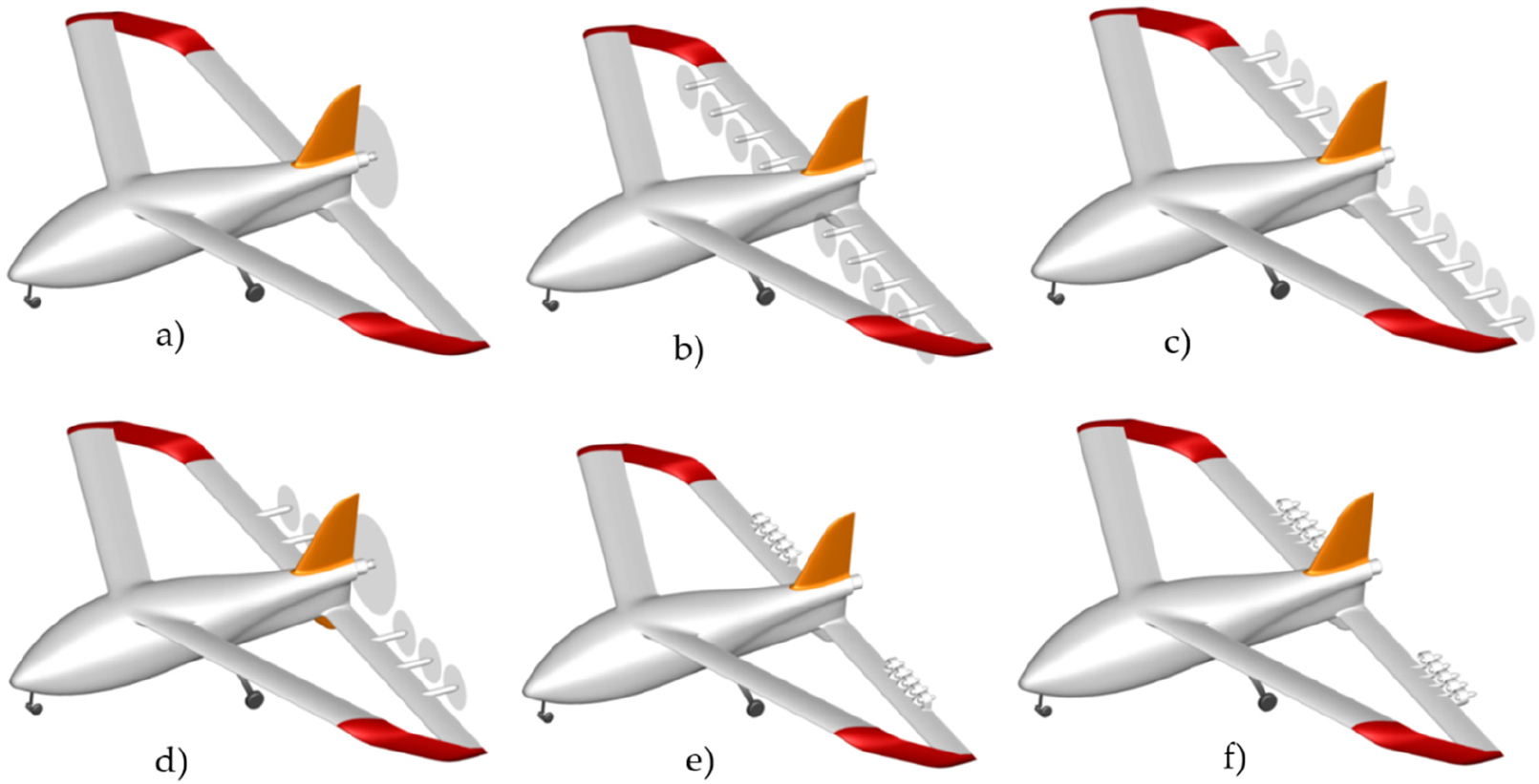
Fig. 2.
Selected configurations of distributed propulsion for MOSUPS.
Table 1.
Summary of distributed propulsion concepts analyzed in the current work.
| Concept name | Description | |
|---|---|---|
| a) | Baseline | Single pusher propeller located behind the fuselage. |
| b) | Prop 1 | Row of five small propellers in front of each aft wing. |
| c) | Prop 2 | Row of five small propellers behind each aft wing. |
| d) | Hybrid | Three small propellers added behind of each aft wing. |
| e) | EDF1 | Row of five ducted fans on each aft wing. |
| f) | EDF2 | Row of five ducted fans behind each aft wing. |
Propellers were considered because the incidence angles of both wings were selected to achieve economic airspeed with a horizontal fuselage attitude. As a result, the MOSUPS requires neither significant rotation for take-off nor significant flare before landing (see Figure 1), meaning blade tips would maintain sufficient clearance from the runway. Furthermore, the risk of ground contact during landing can be reduced further, as the engines can be set to idle and the propellers folded. However, both the Prop 1 and Prop 2 configurations may present difficulties during a crosswind landing abort, as propeller blade tips could strike the runway if pitch, yaw, and bank angles are significant. For this reason, abort landing configurations were also investigated, in which the four outboard motors are shut down and their propellers folded, leaving only the six inboard engines available for the emergency maneuver. The Hybrid configuration did not require such a variant, as the outboard engines are absent, replaced by the central pusher.
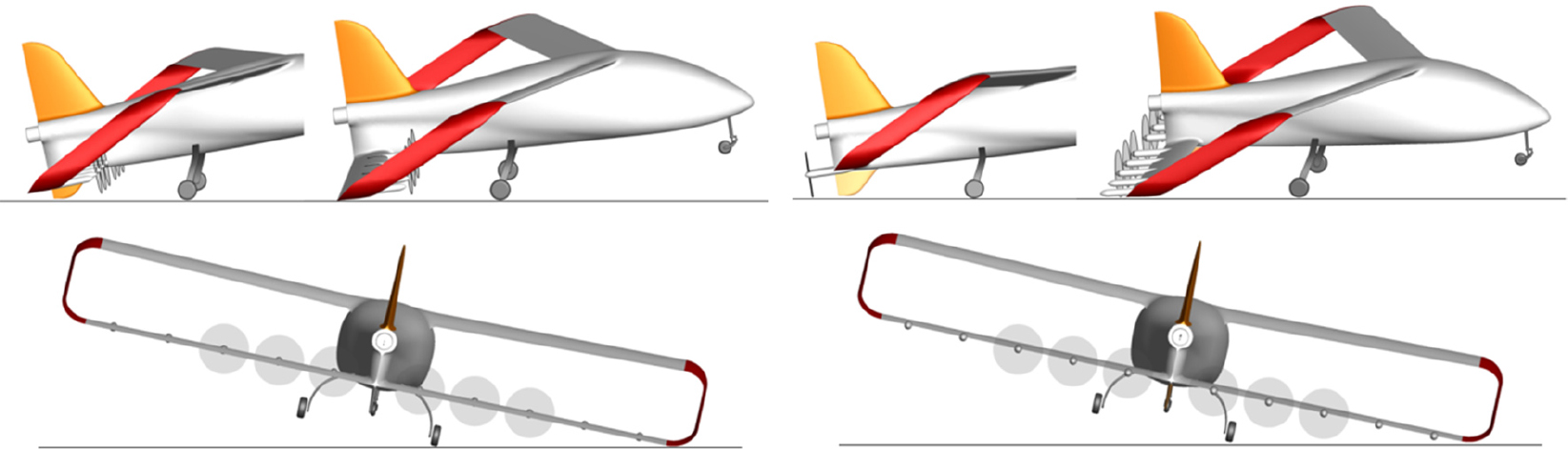
Fig. 3.
Configurations with pulling and pushing propellers during crosswind landing.
Finally, to prevent propeller-runway contact in the Prop 2 configuration, additional vertical surfaces were added below the aft wingtips.
3. COMPUTATIONAL SETUP
The CFD simulation was conducted using the finite volume method to solve the Navier-Stokes equations, which describe viscous fluid motion. They are derived by applying Newton’s second law with the assumption that stress in a fluid is the sum of viscous and pressure terms.
Continuity equation:
Momentum conservation equations:
where p is static pressure, is the stress tensor, and and are the gravitational and external body forces. The stress tensor is defined as:
where μ is the molecular viscosity, I is the unit tensor.
A commercial software package, ANSYS Fluent, was chosen for this task. Due to the complexity of the aircraft geometry, a structured mesh was not feasible; consequently, an unstructured tetrahedral mesh was created. ICEM CFD, a tool within the ANSYS suite, was used for mesh generation. This choice was dictated by ICEM’s powerful and robust prismatic mesh generation capability. Prismatic elements are extruded from the walls into the tetrahedral mesh, allowing even complex geometries to be enclosed by a well-defined boundary layer mesh. During this process, border elements may become compressed, so the tetrahedral elements are continuously smoothed and redefined as necessary.
In the calculations described, the Menter k-ω SST turbulence model was used [18]. This model requires a mesh satisfying a y+ criterion of 1, so the boundary layer mesh parameters were set accordingly. These settings allowed the solver to capture laminar separation bubble regions on the wing surface, which was one of the key objectives of this study. The resulting mesh is shown in Figure 5. To simulate the influence of the propeller wake, a simplified approach employing actuator discs in place of propellers was used. The pressure jump was determined by the required – or assumed – thrust value, and was held constant along the propeller radius. This approach is sufficiently simplified to enable calculation of multiple cases without detailed knowledge of the propeller geometry (rotational speed, airfoil sections, chord distribution, and blade pitch), thus avoiding the typical complications and extensive requirements of rotating propeller simulation.
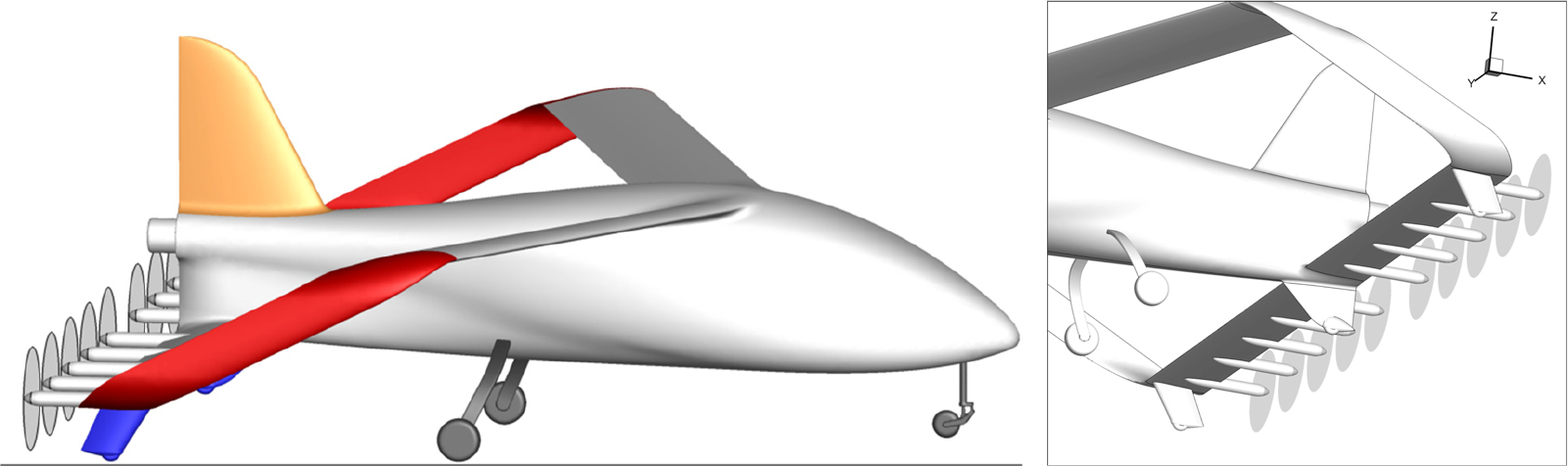
Fig. 4.
Pushing variant with additional fins.
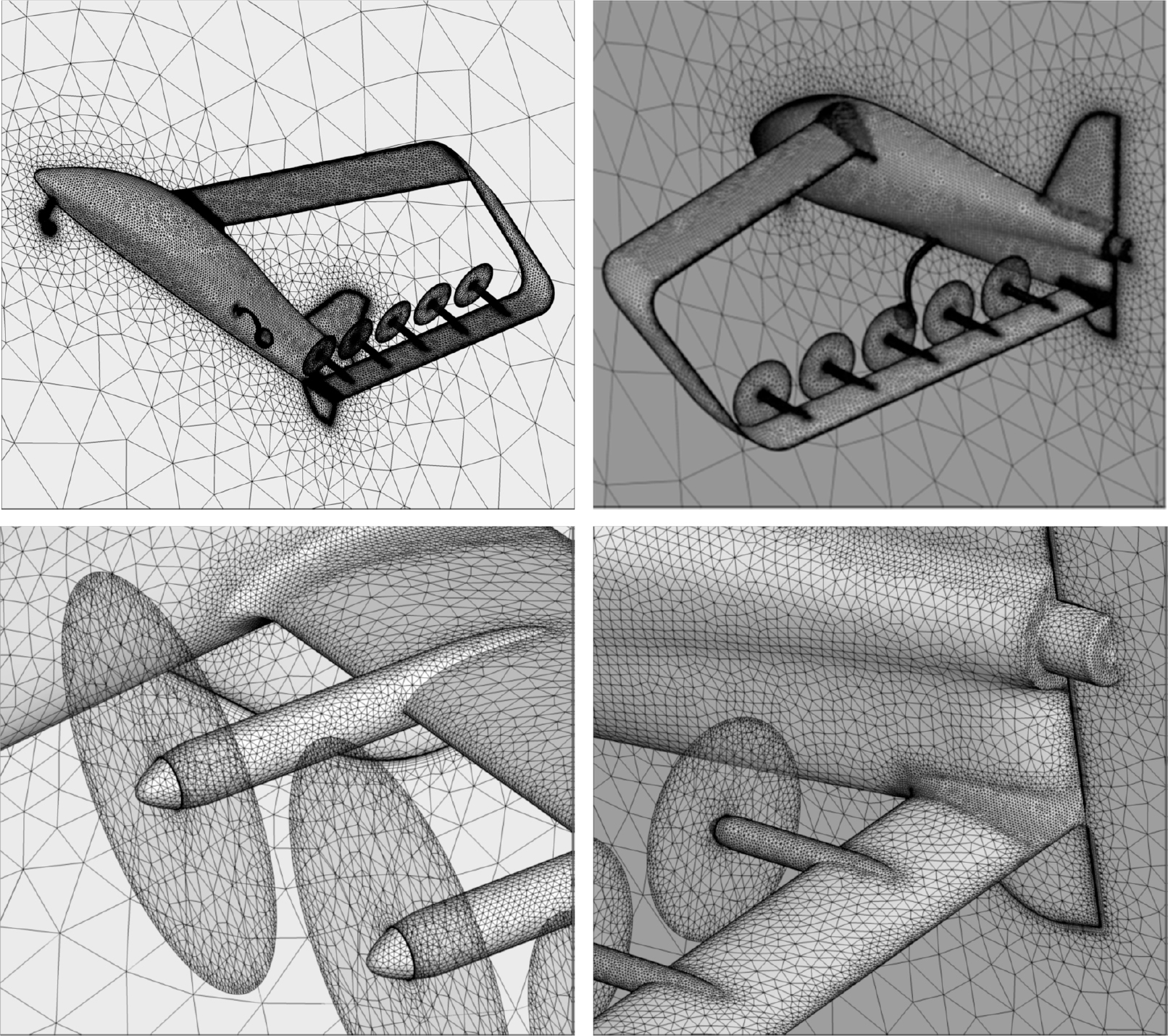
Fig. 5.
Mesh used for calculations.
4. RESULTS AND DISCUSSION
Computations were performed across a range of angles of attack, with thrust set for cruise at an airspeed of 25 m/s. The quantitative and qualitative analyses allowed the effect of distributed propulsion on the MOSUPS to be assessed for each configuration considered. Figure 6 shows regions of reversed flow on the MOSUPS surface in the cruise configuration. As can be seen, none of the configurations resulted in complete elimination of the reversed flow region on the aft wing. For the Prop 1, Prop 2, and Hybrid configurations, the reversed flow region appears thinner in the chordwise direction compared with the baseline. For the EDF 1 and EDF 2 configurations, the reversed flow was eliminated entirely ahead of the fans but widened on either side of them. As a result, the excess drag associated with this phenomenon was not eliminated. Additionally, the engine nacelles increased the total drag of each configuration (Fig. 7).
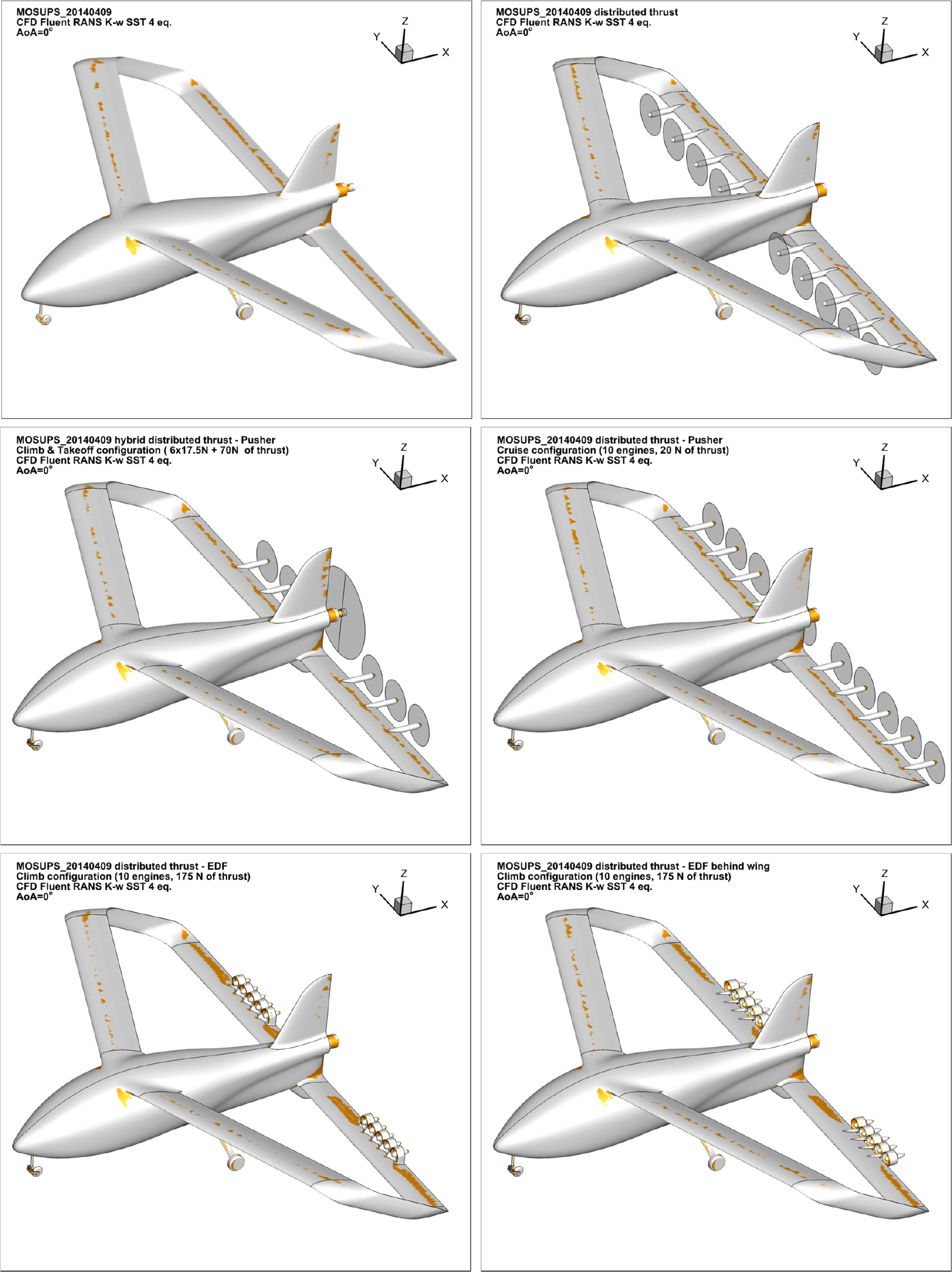
Fig. 6.
Reverse flow regions on the top surface of MOSUPS in cruising configuration.
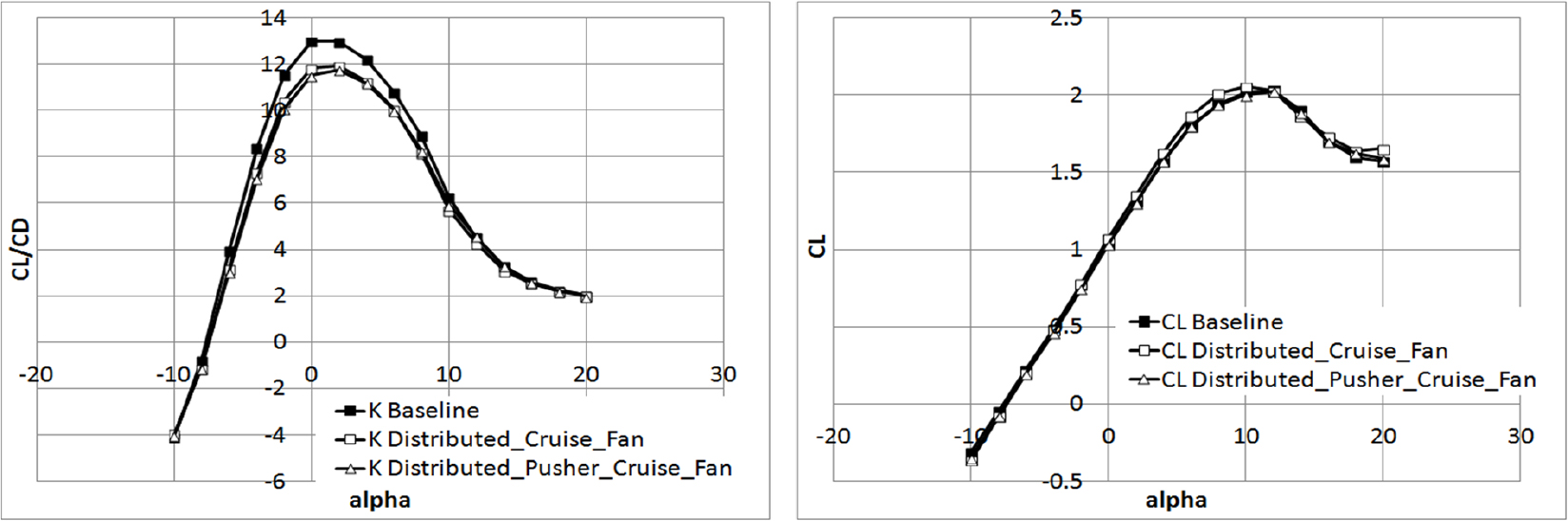
Fig. 7.
Effect of engines nacelle on aerodynamic efficiency CL/CD and lift coefficient CL in configurations Prop-1 and Prop-2, in comparison with baseline case without the thrust effect.
The main objective of the present study was to determine the effect of various distributed propulsion concepts on MOSUPS trim drag. Figure 8 presents the influence of the considered configurations on the pitching moment coefficient with no control surface deflection. It should be noted that the baseline configuration achieves trim at a relatively low angle of attack of -6°. Almost all distributed propulsion concepts improved this metric, shifting the zero-pitching-moment angle to around 2° in the EDF 1 case. The Hybrid configuration alone did not yield any significant improvement and is therefore not included in Figure 8.
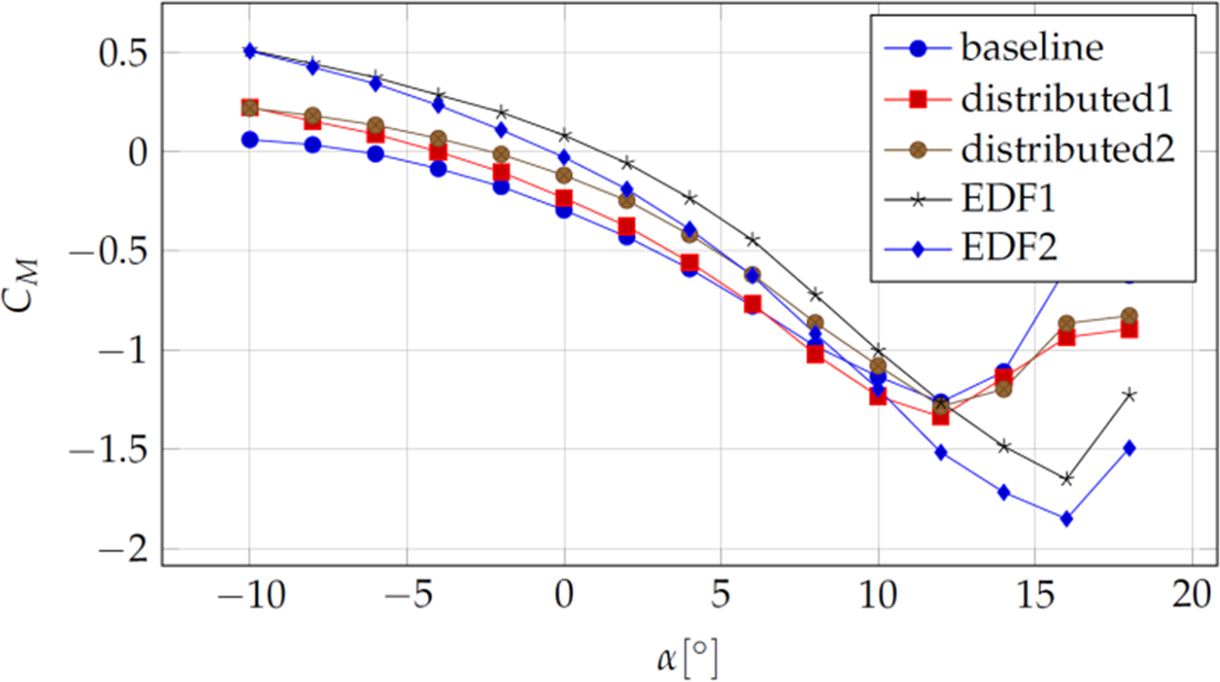
Fig. 8.
Pitching moment for analyzed concepts. The influence of modifying the propulsion axis position and propeller selection reveals very large effects.
A corresponding reduction in trim drag was therefore expected. However, in the Prop 1 configuration, the adverse effect of thrust axis position was replaced by an adverse effect of increased aft wing drag and lift due to elevated dynamic pressure (Fig. 9), and the shift in zero-pitching-moment angle proved small. In the Prop 2 configuration, by contrast, the expected pitching moment improvement was achieved. Consequently, the balance of forces and moments occurred closer to the maximum L/D ratio without any elevator deflection (Fig. 10). The net effect of the Prop 1 configuration was unsatisfactory, yielding only L/D ≈ 7 against an available L/Dmax ≈ 12. The Prop 2 configuration performed somewhat better, achieving L/D ≈ 9.5. However, Prop 2 carries the greatest risk in crosswind landing conditions and was therefore also analyzed with additional fins below the aft wingtips (Fig. 4). Figure 11 shows that the addition of fins reduces L/Dmax slightly, and a trimmed value exceeding 9 should not be expected.
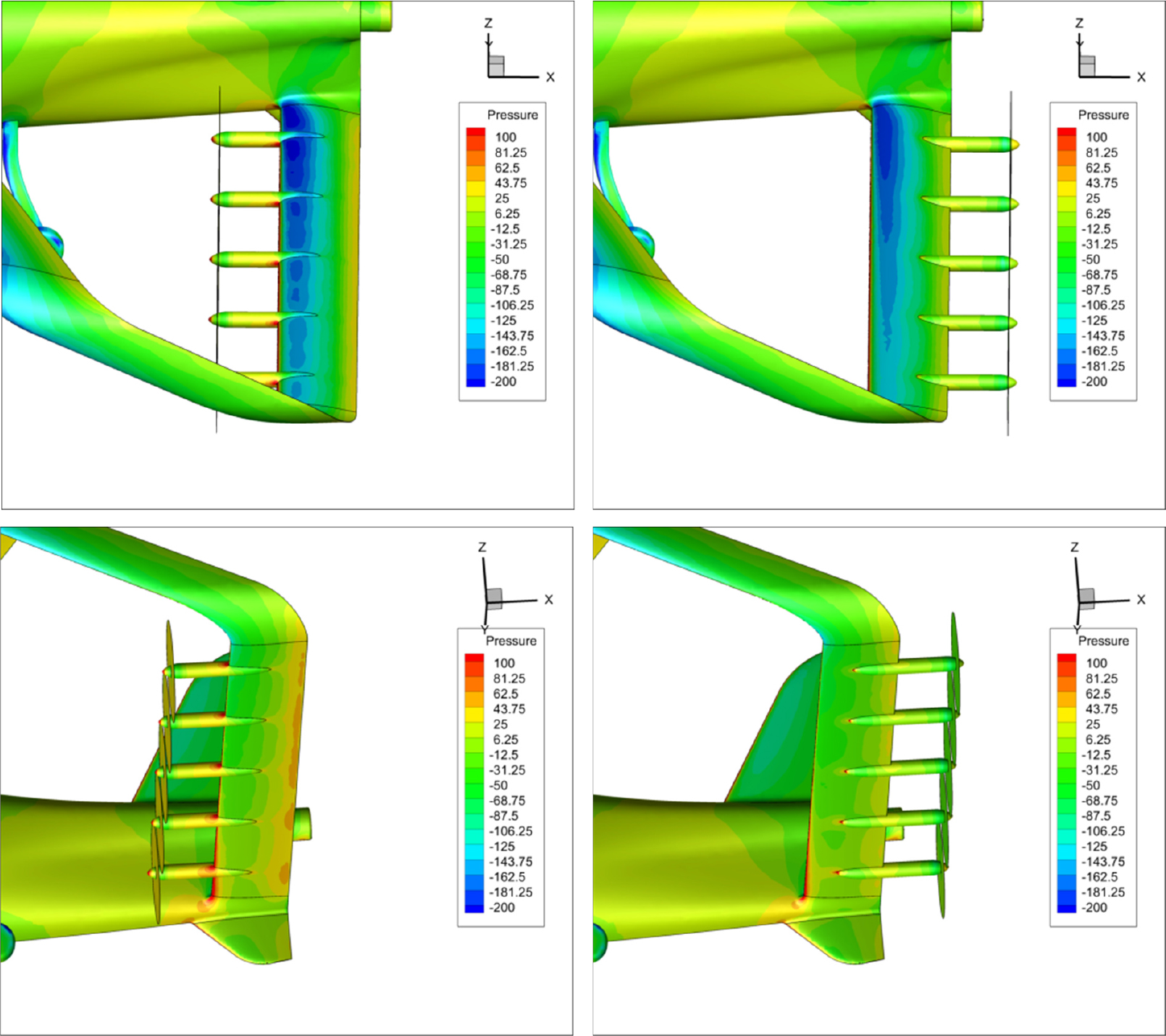
Fig. 9.
Difference in pressure distributions on the aft wing between tractor and pusher distributed propulsion configurations (AoA=0°).
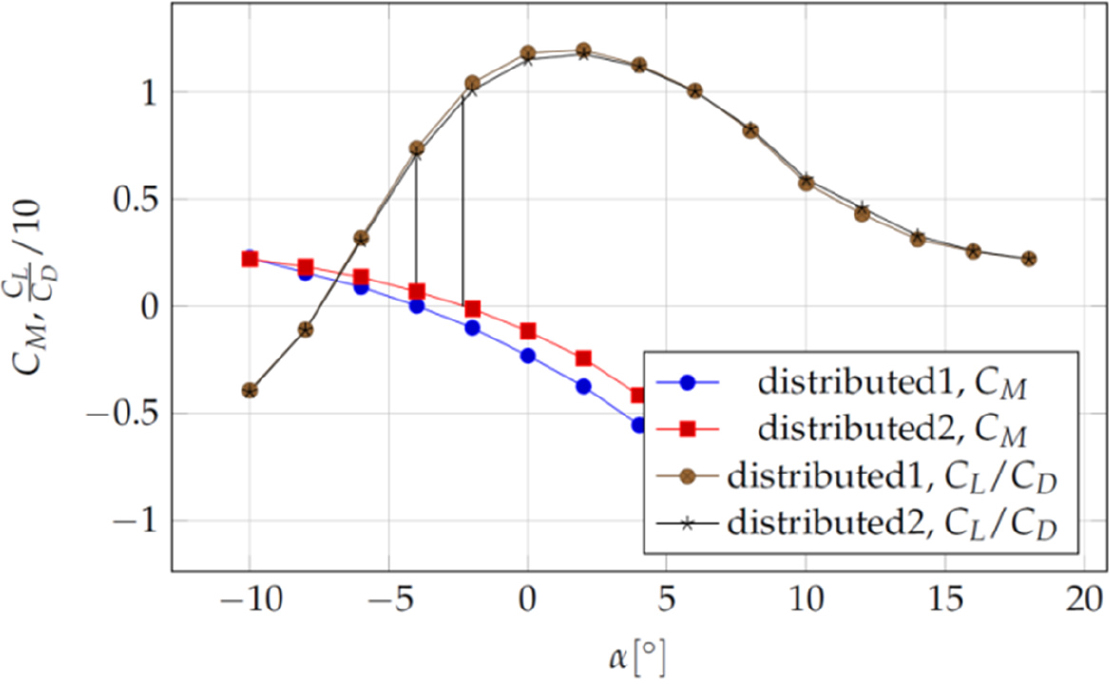
Fig. 10.
Thanks to increased pitching moment, trim is achieved at higher angle of attack, which improves cruise efficiency. Vertical lines were added to indicate the trim position on the CL/CD plot.
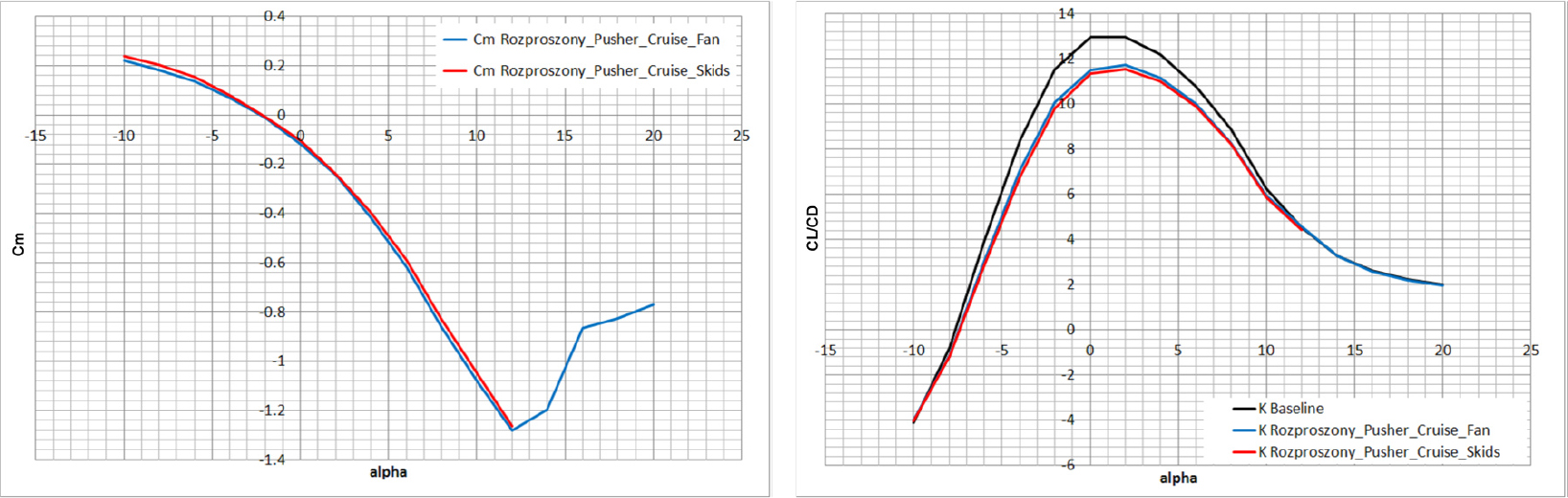
Fig. 11.
The effect of skid installation below the aft wingtips.
A further means of improving safety was offered by the EDF configurations. The configuration with EDFs installed on the upper surface of the aft wing is optimal from this perspective. However, the associated increase in velocity also produces the strongest adverse effect on aft wing drag in this configuration (Fig. 12). As a result, the zero-pitching-moment angle was shifted to a favorable value, but the available L/Dmax was simultaneously reduced to 9.5. The EDF 1 configuration therefore offers no performance advantage over Prop 2.
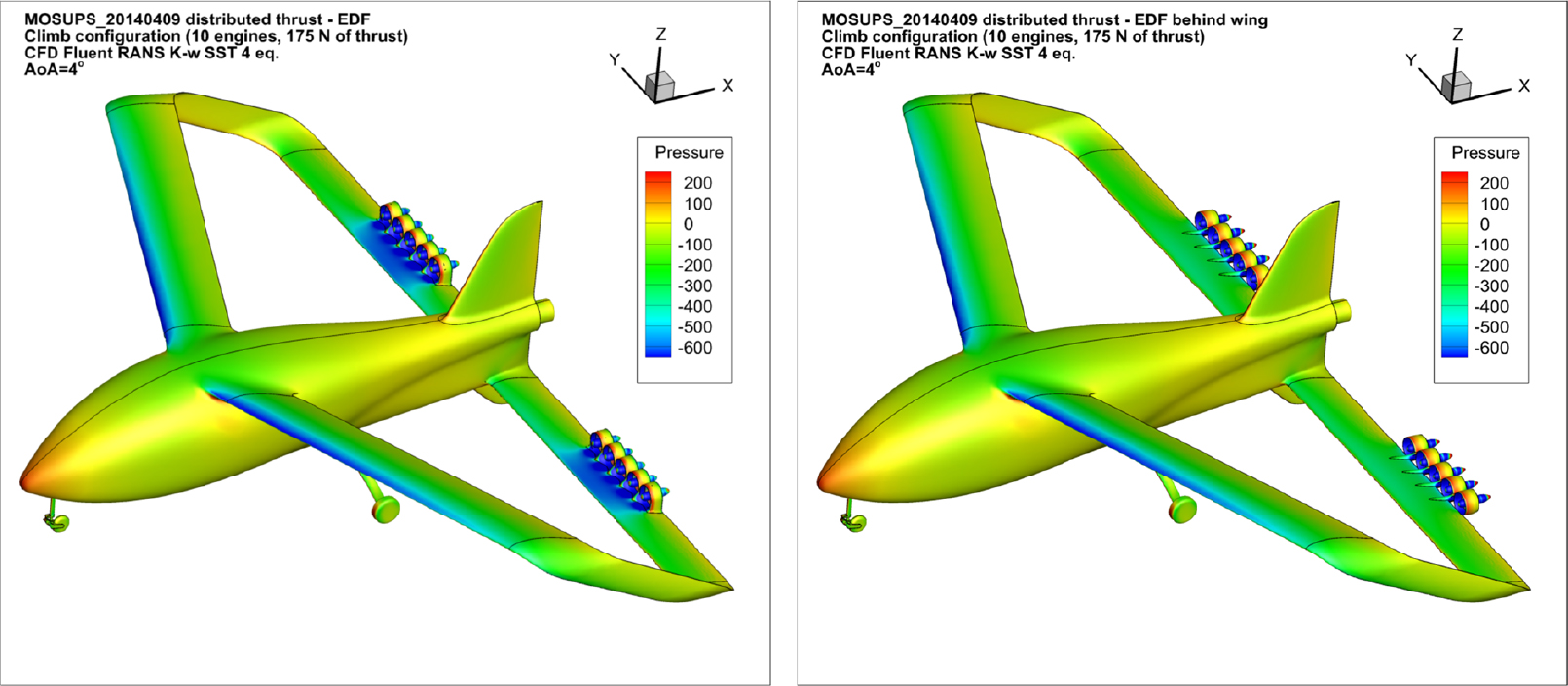
Fig. 12.
The effect of increased velocity ahead of EDF in EDF 1 and EDF 2 configurations.
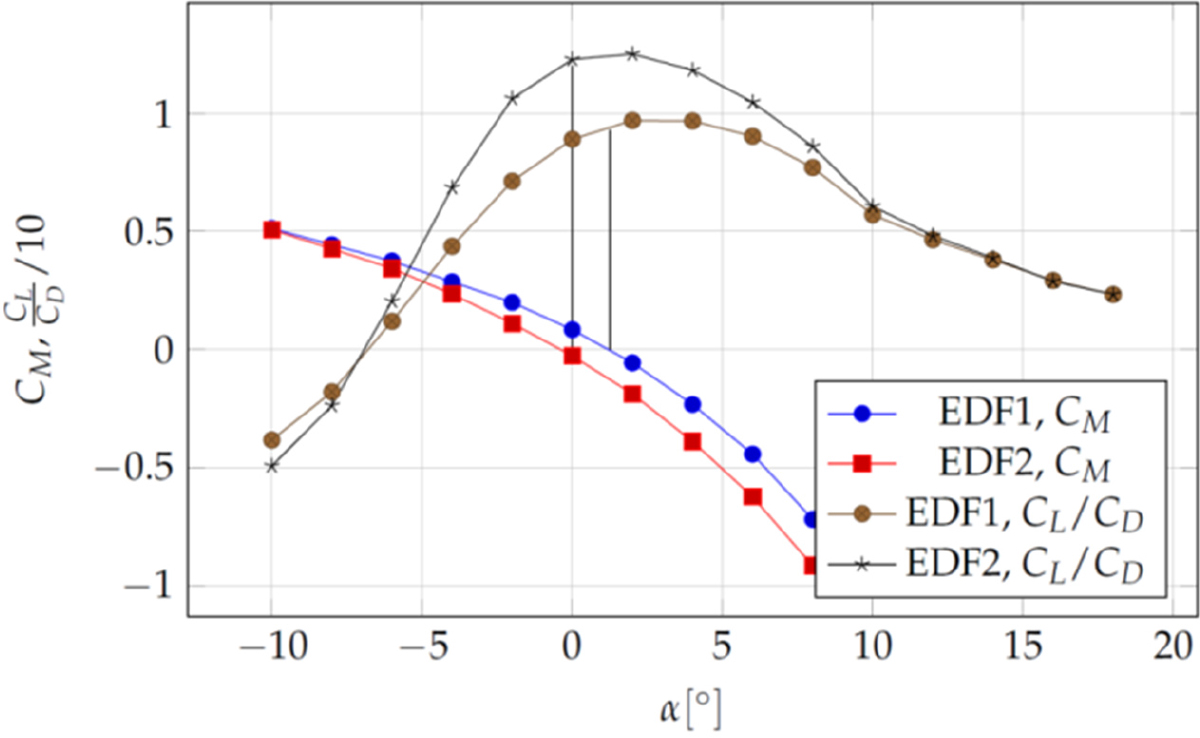
Fig. 13.
Due to increased pitching moment, trim is achieved at higher angle of attack, which improves cruise efficiency. This is especially significant in EDF cases. Vertical lines were added to indicate the trim position on the CL/CD plot.
For this reason, the configuration with EDFs installed behind the aft wing was also investigated. This configuration is considerably safer than Prop 2 and offers the best performance of all cases analyzed. The zero-pitching-moment angle with no elevator deflection was shifted to 0°, while a high L/Dmax ≈ 12.5 is maintained at AoA = 2°. Consequently, a value of L/D ≈ 12 can be expected in the cruise configuration.
5. CONCLUSIONS
The present paper describes an analysis of several distributed propulsion concepts as an attempt to address the pitching moment deficiency of an inverted joined wing aircraft. Additionally, local aerodynamic features of the aft wing – specifically, regions of reversed flow – were investigated. The study confirmed the potential of distributed propulsion as an extension of aircraft design freedom. Depending on the configuration, different degrees of improvement in flight performance were achieved. The EDF configurations proved the most promising, owing to their stronger influence on the flow field around the wing. Conventional propellers mounted at a distance from the wing had a comparatively modest effect on aft wing aerodynamics; their advantage over the baseline in the present study was attributable primarily to the change in thrust axis position rather than aerodynamic interaction with the wing.
Notes
[1] Conflicts of interest Conflicts of Interest
The authors declare no conflict of interest. The funders had no role in the design of the study; in the collection, analyses, or interpretation of data; in the writing of the manuscript, or in the decision to publish the results.
Abbreviations
- CFD
Computational Fluid Dynamics
- RANS
Reynold-Averaged Navier-Stokes
- EDF
Electric Ducted Fan