
1. INTRODUCTION
EU aerospace research aimed at meeting the ACARE environmental goals is a key factor in the development of the aviation industry as a whole [1]. The main direction of current research in aviation is the search for solutions that reduce the environmental impact of aviation while increasing the efficiency of aerospace technology. Within the framework of new projects, various configurations of the hybrid turbo-electric propulsion system (HTEPS) are being developed. These configurations, which include a gas turbine engine (GTE), an electric motor, batteries and fuel cells (FC), represent a promising direction for reducing the negative environmental impact of aviation.
In the design of turboprop aircraft, one of the central issues is the interaction between the propellers and the airframe components, particularly during take-off, extended take-off, and go-around. Modern turboprop concepts in tractor configuration are characterized by high disk loading and an increased number of propeller blades, both used to raise the cruise speed and to limit excessive noise. It is therefore necessary to address the problem arising from high disk loading – namely, the direct effect of forces on the operating propellers (thrust and normal force) on aircraft stability, especially at non-zero angles of incidence. A further problem is the high energy level of the propeller wake, which has a significant indirect effect on the aerodynamics, stability, and controllability of the aircraft. This effect is primarily associated with the interaction between the propeller wake and other elements of the aircraft layout. The complexity of accounting for the mutual interference of the wake with the wing and other airframe elements has led to the widespread use of experimental methods to study propeller-airframe interactions when developing turboprop aircraft layouts. The integration of the HTEPS with the aircraft (A/C) components is therefore an important issue in creating an aircraft with effective performance [2].
For a regional aircraft, regardless of the type of propulsion system (PS), the use of a propeller is typical. For both HTEPS and conventional PSs, the mutual consistency of propeller performance as part of the PS and the aircraft components during all stages of the flight cycle can provide the necessary basis for further improving efficiency and economy. Research into improving propeller performance is contributing to the development of new types of propellers, such as variable-pitch propellers, coaxial propellers, and counter-rotating propellers, which open up new opportunities for increasing the efficiency and maneuverability of the aircraft. Thus, the study of propeller performance as part of the HTEPS is a relevant scientific and engineering task.
2. LITERATURE REVIEW AND PROBLEMA STATEMENT
As noted above, the study of propeller performance as part of the aircraft PS and of the aircraft as a whole is a relevant scientific task in modern aviation science and engineering. This relevance arises from several factors, including increasing requirements for the efficiency, economy and safety of aircraft flight. The study of propeller aerodynamic performance allows the identification and elimination of factors that lead to vibration, surge, stall and other undesirable phenomena which may compromise flight safety. It also enables the optimization of propeller parameters (pitch, blade angle, blade shape) to achieve maximum thrust with minimum fuel consumption – an especially important aim in meeting modern requirements for the environmental friendliness and economy of air transport. Optimal propeller performance also helps to reduce the take-off and landing distance, which is particularly important for aircraft operated at small airfields or in difficult climatic conditions.
Studies [3–4] present an analysis of the parameters of regional aircraft equipped with hybrid PSs, along with the advantages and disadvantages of individual solutions for improving the efficiency of a propeller-based PS across the flight cycle. For regional aircraft, the use of a propeller-based PS is typical. Study [5] reports that modern jet airliners mainly perform cruise flight at speeds of M = 0.7–0.77; at such speeds, propfans can operate efficiently and a PS with an open rotor can achieve higher efficiency than a conventional one. The authors of [5] also present further economic and environmental arguments in favor of propeller-based PSs for regional aircraft and for urban air mobility. In [6–8], hybrid PSs for aircraft are described as one of the possible types of PS capable of reducing emissions to the environment while maintaining flexibility and applicability to regional aviation. A large body of research is currently devoted to improving propellers and integrating them into hybrid or fully electric propulsion systems. In [9], it is noted that the efficiency of hybrid PSs may be lower than that of conventional PSs, but that they open up new possibilities for integrating propulsion systems into the aircraft design, which can offset the disadvantages.
Paper [10] analyzes propeller placement and argue that, for a regional aircraft, the conventional wing-mounted propeller location offers advantages in terms of efficiency and weight balance over a tail-mounted propulsion system. It is clear from these sources that an HTEPS with a propeller is one of the most promising choices for future advanced regional aircraft. The cited studies pay particular attention to the mutual coordination of unit performance and to the improvement of overall performance, including that of the propeller.
Considerable research effort is being devoted to improving propeller performance for advanced regional aircraft, including those with an HTEPS. In [11], propeller optimization based on CFD analysis is shown to yield better results than optimization based on analytical methods, and that CFD results agree more closely with experimental data. In [12], a design approach and experimental investigation of a large-scale propeller model for a regional aircraft are presented, and the advantages of combining CFD and BEMT methods are emphasized. Propeller performance calculations are considered together with wing design in [13], which presents the development of a method for designing and analyzing propeller operation in combination with the aircraft wing in an electric propulsion system. However, [13] presents data for only one engine rating, and a propeller optimized for operation at a single rating may perform unsatisfactorily at other ratings of interest for the aircraft. Paper [14] presents the aerodynamic optimization and aeroacoustic study of the so-called Boxprop – a joined-blade propeller developed within the project for the electric propulsion system of a regional aircraft. The results show that this type of propeller can offer both advantages and disadvantages compared with a conventional propeller.
The authors of study [15] address the integration and improved interaction of the propeller with HTEPS components. They present a reprofiling of the propeller intended to increase the outflow velocity near the hub, thereby improving heat exchange in the electric PS heat exchanger located downstream of the propeller.
To meet the requirements of advanced regional aircraft at all flight stages, it is necessary to develop a propeller that is effective under a variety of flight conditions. The study of propeller performance at high flight speed is of particular interest for further research, with a view to extending the range of flight Mach numbers over which the propeller operates efficiently.
3. RESEARCH AIM AND TASKS
The aim of this work is to justify and determine the design and parametric concept of a propeller for the HTEPS of an advanced regional aircraft, and to investigate the aerodynamic performance of the resulting propeller. To achieve this aim, the following tasks are formulated:
To create propeller variants with different geometric parameters and to carry out 3D simulations of their operation at the flight control points.
To justify the selection of the propeller variant that meets the requirements at the flight control points.
To calculate and analyze propeller performance over a wide range of flight Mach numbers.
4. RESEARCH METHODS
4.1. Method for obtaining propeller geometry
To obtain the geometry of the blade variants, two analytical calculation methods were used: Zhukovsky’s vortex theory [16] and the blade element momentum theory (BEMT) based on the Adkins and Liebeck algorithm [17]. To generate the blades and propeller variants, an aerodynamic profile based on the NASA GA(W) airfoil [18] was used. The NASA GA(W) blade profile cross-section (Fig. 1 a) and its aerodynamic characteristics – the dependence of the lift coefficient (CL) on the angle of attack (AoA) (Fig. 1 b), and the dependence of the drag coefficient (CD) on the lift coefficient (Fig. 1 c) – are presented. These aerodynamic data were used to obtain the preliminary blade geometry. The aerodynamic characteristics shown in Fig. 1 correspond to a Mach number of 0.2 and a Reynolds number of 2 × 10⁶. During the calculation of blade geometry, the profile characteristics for each section were adjusted in accordance with the calculated Mach and Reynolds numbers. For all variants, a saber-shaped profile of the blade stacking line with an angle of 30 degrees at the tip was specified.
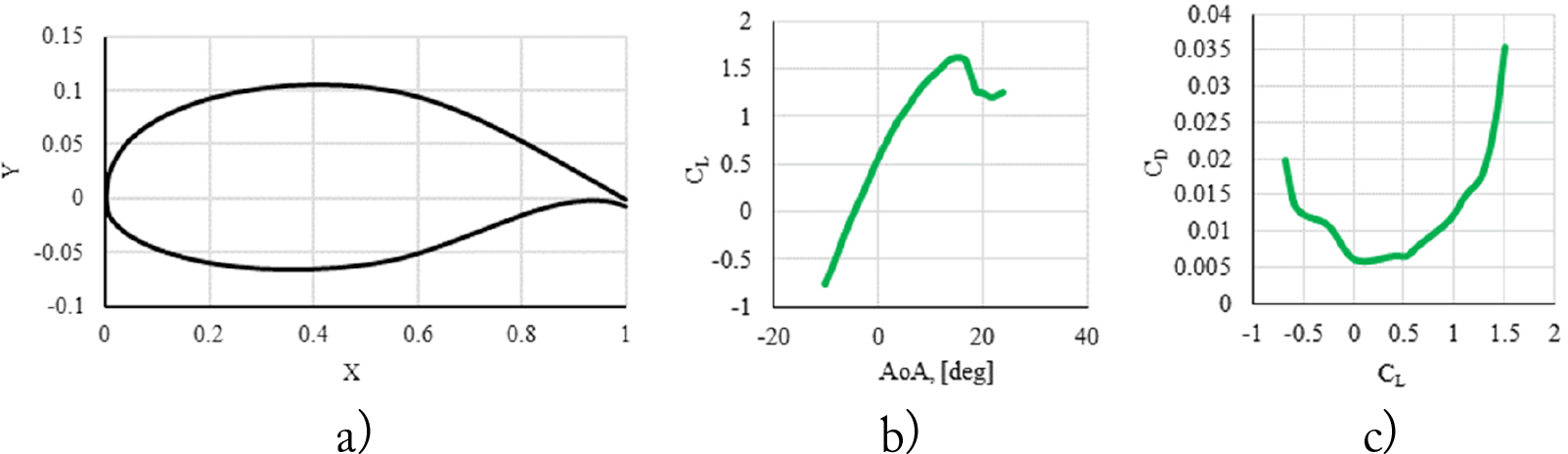
Fig. 1.
NASA GA(W) type blade profile cross-section and its aerodynamic characteristics.
The geometry of each propeller variant was generated as follows:
One operating point from the general flight profile of the aircraft was selected as the propeller design point. The flight conditions at this point – flight altitude, flight speed and shaft power available – were used as input data for the propeller design analysis.
The maximum propeller diameter and the number of blades were selected.
The distribution of the angle of incidence and of the chord of the profiles was selected to obtain a smooth distribution of parameters.
A 3D model of the blade was created according to the specified geometric parameters for subsequent CFD analysis.
4.2. Simulation method of propeller variant operation
To compute the viscous flow through the propeller, the SST turbulence model was used together with the Gamma-Theta laminar-turbulent transition model [19]. A grid-convergence analysis was performed for the initial propeller variant at the Cruise operating point. The results, as the dependence of the thrust coefficient (CT) and the power coefficient (CP) on the number of mesh elements, are presented in Fig. 3.
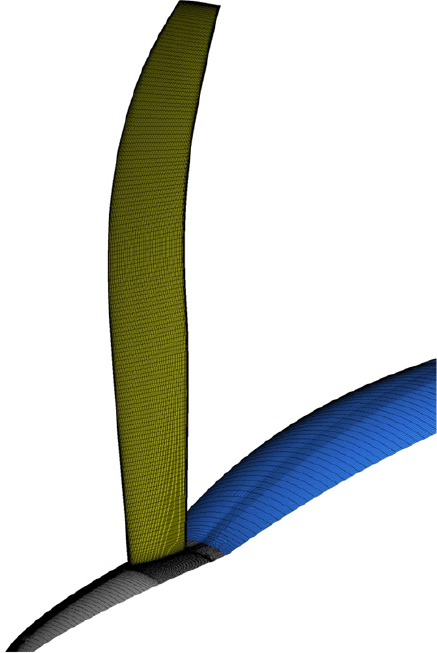
Fig. 2.
Computational domain and grid on the surfaces of the blade, spinner, and nacelle element.
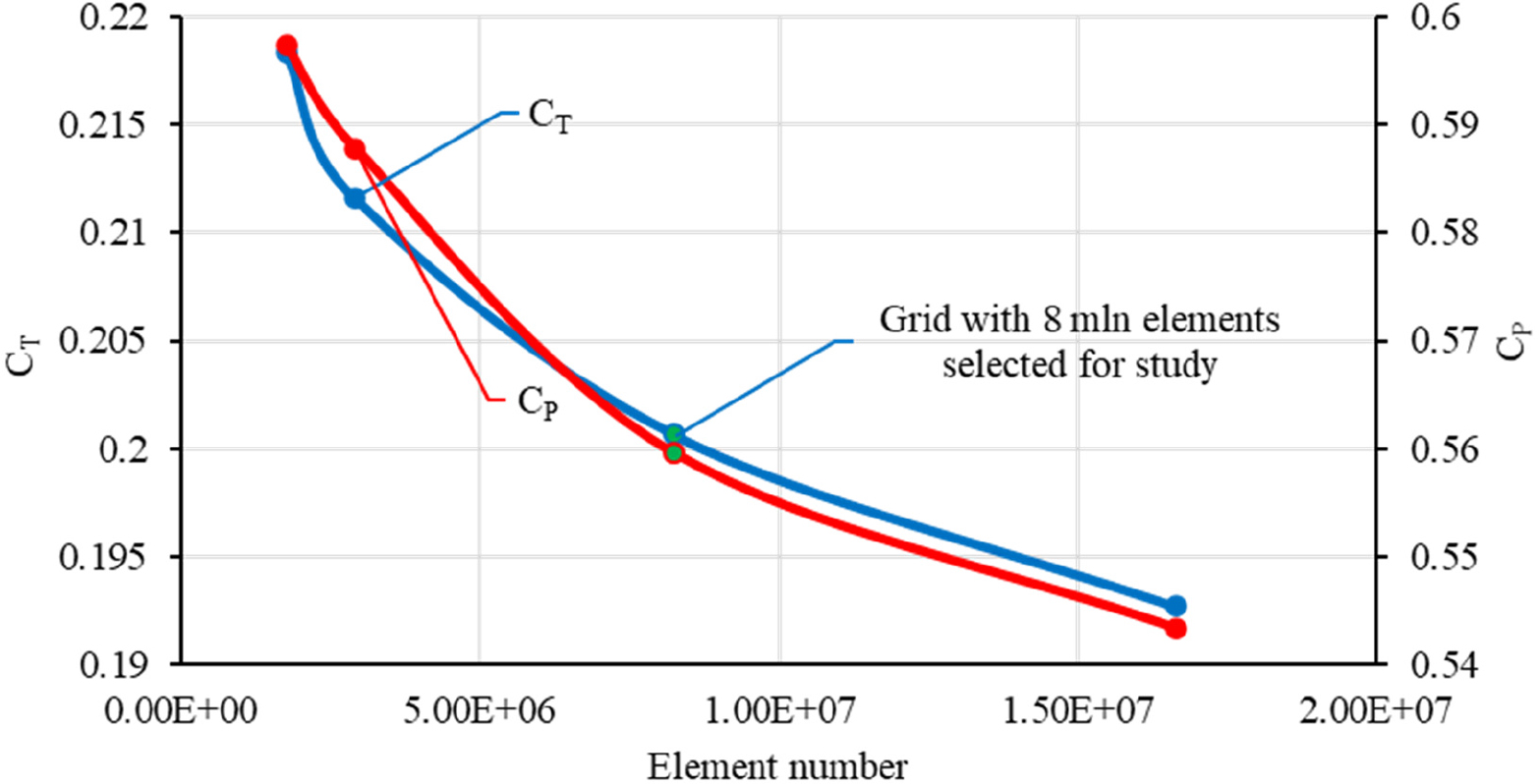
Fig. 3.
Grid analysis.
As shown in Fig. 3, the parameters change rapidly between the coarsest grid of 1.8 million elements and the grid of 8.3 million elements, whereas between 8.3 million and the finest grid of 16.6 million elements the change is much more gradual. For this study, a grid of 8.3 million elements was selected. The average Y+ value on the selected grid is 1.
5. RESEARCH RESULTS
5.1. Determination of the design and parametric concept of propeller for the HTEPS
To determine the design and parametric concept of the propeller, calculations were performed for 20 propeller variants at Max Cruise (H = 6000 m, M = 0.45) and at Take-off (H = 0, M = 0). The results are shown in Figs 4–6 as plots of the propulsive efficiency of the propeller (EFF) at the prescribed Cruise power against the ratio of the thrust at the prescribed Take-off power to the thrust required at Take-off.
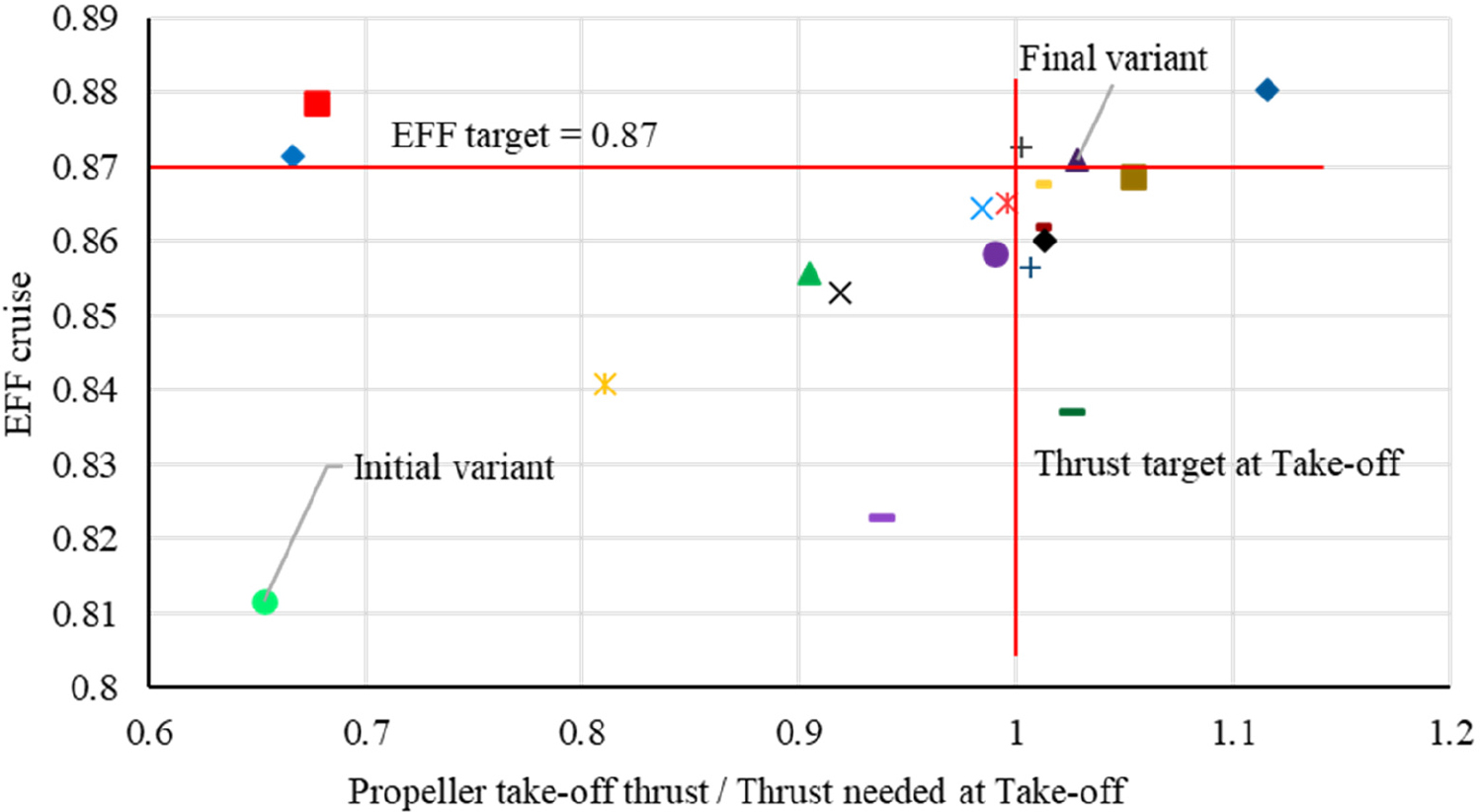
Fig. 4.
Design parameters of all considered propeller variants.
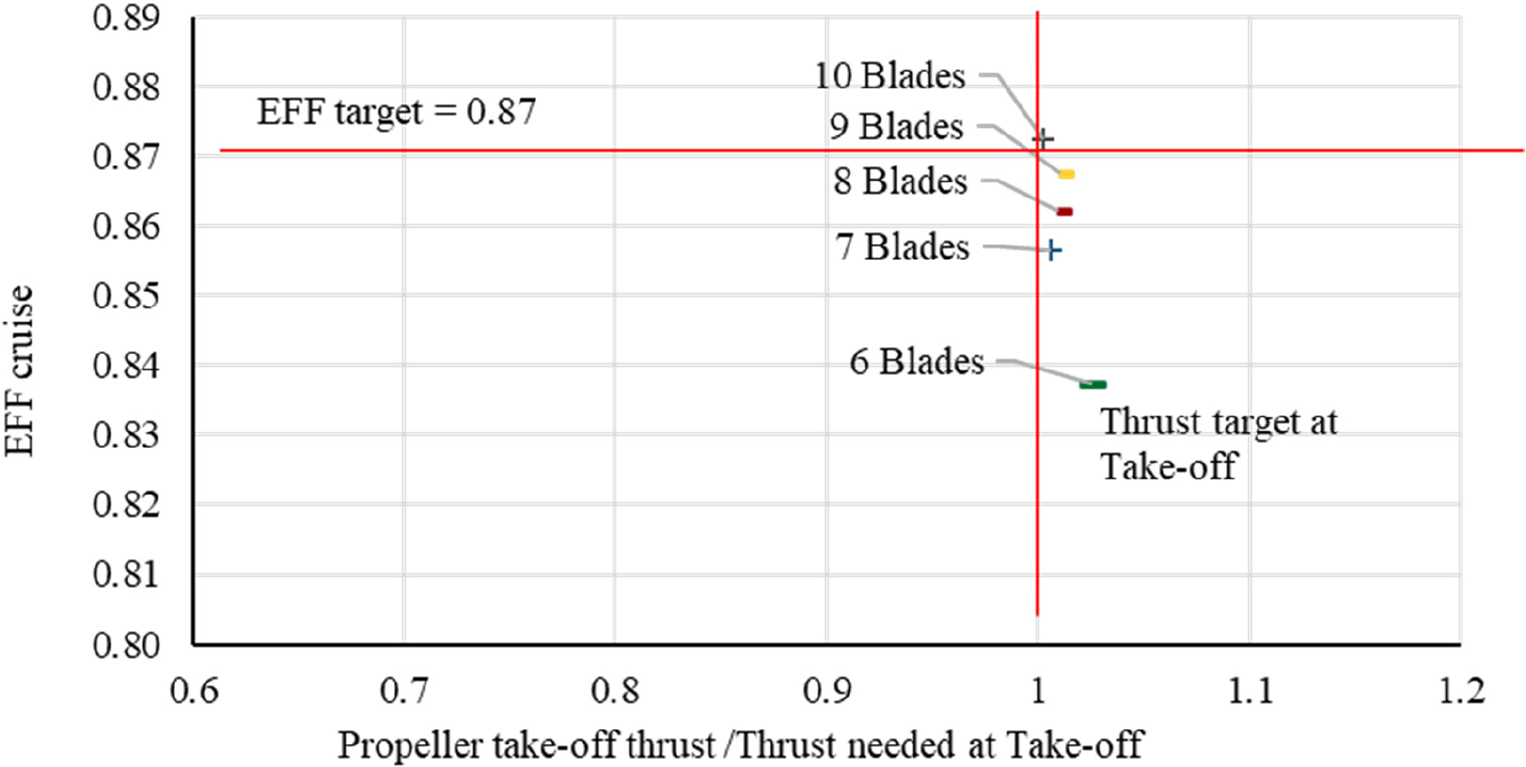
Fig. 5.
Design parameters of propeller variants with different numbers of blades.
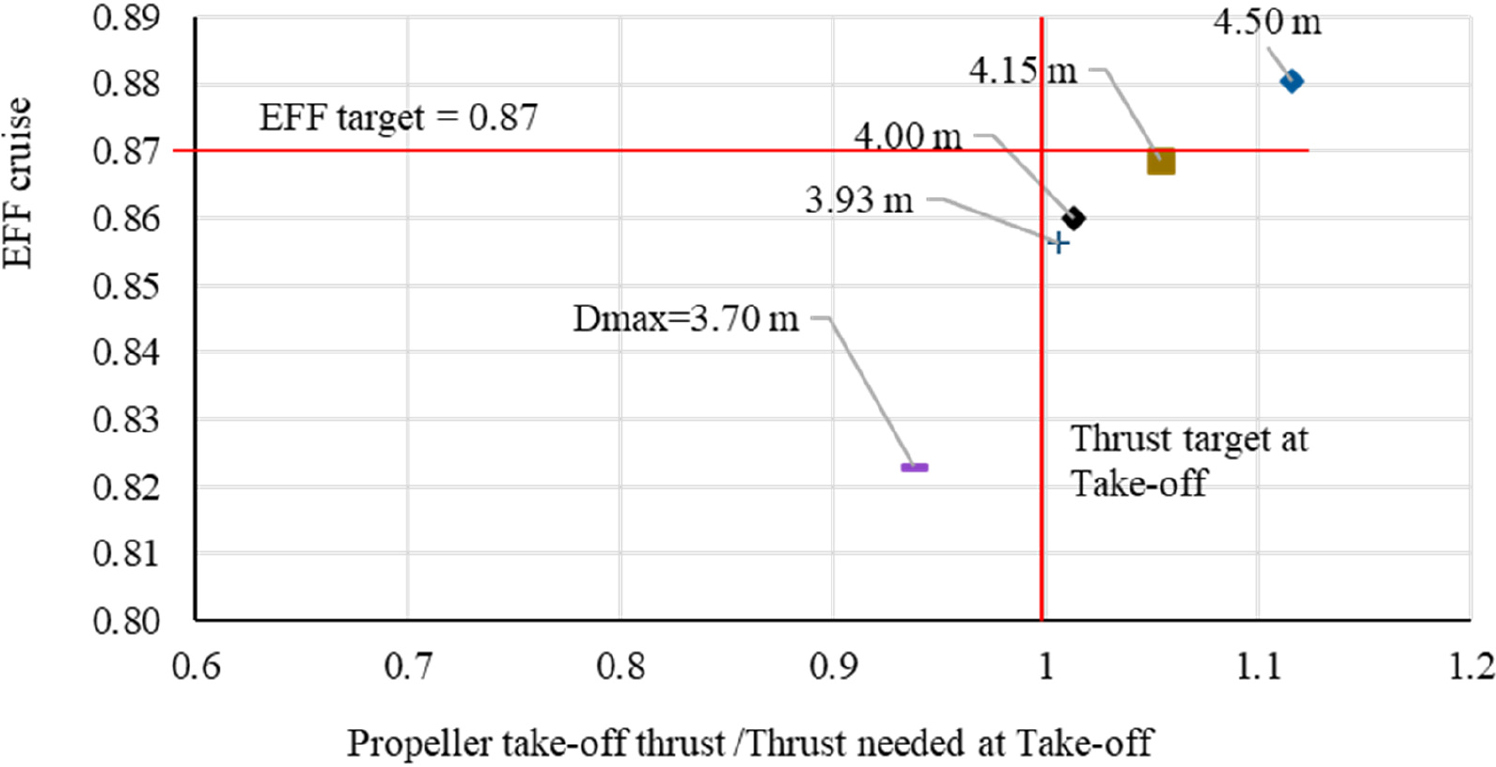
Fig. 6.
Design parameters of propeller variants with different maximum diameters.
During the search for variants that met the set requirements, the angles of incidence and the chord distribution were varied. To select the number of blades, propellers with 6-10 blades were generated using the same design-point parameters, with an unchanged maximum diameter and unchanged distributions of angles of incidence and maximum thickness. From the full set of variants, cases with different blade numbers were selected; these are presented in Fig. 5.
A further study was carried out in which propeller parameters were varied on the basis of changes in the maximum diameter, while the design power, the distribution of angles of incidence and the number of blades were held constant (Fig. 6).
After comparing the variants and selecting their parameters, the propeller variant with 7 blades and a maximum diameter of 4.15 m was chosen – not only on aerodynamic grounds, but also for reasons of blade strength and on-aircraft installation. The distributions of the main geometric parameters of the adopted variant – the chord (b), the section twist angle (φ) and the maximum thickness-to-chord ratio (Cmax / b) – are presented in Fig. 7.
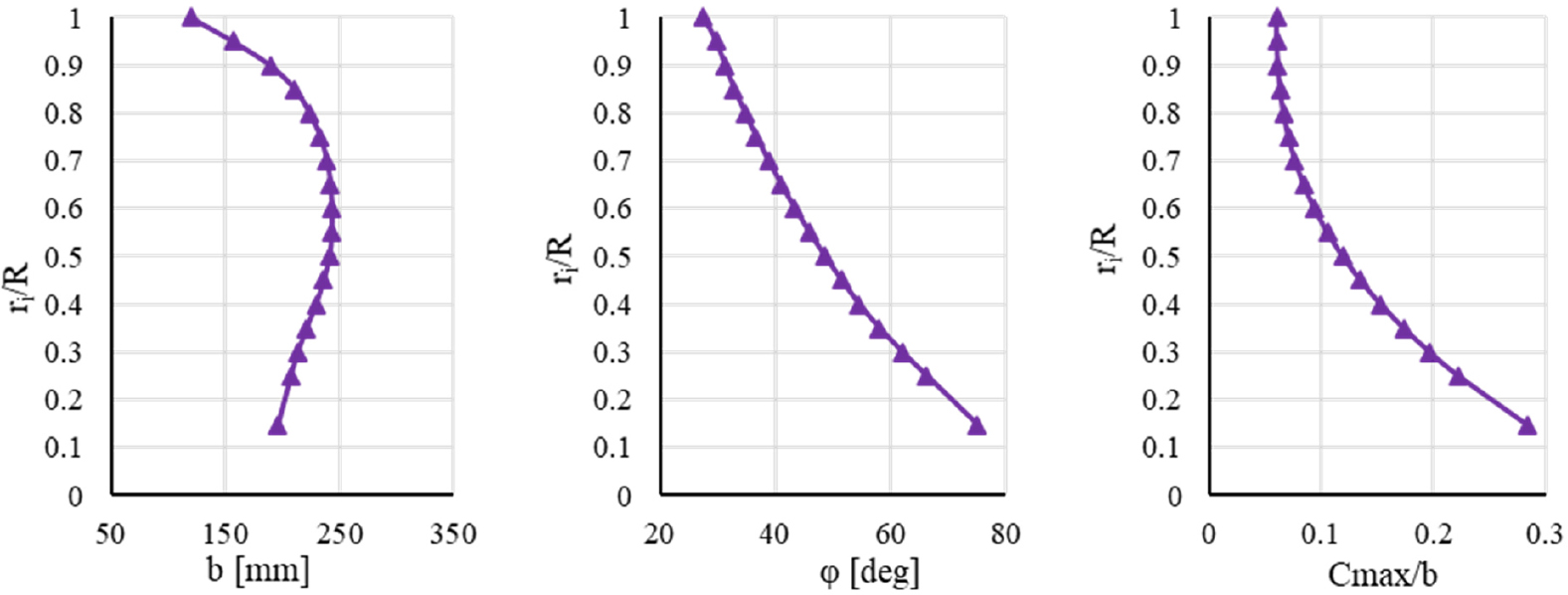
Fig. 7.
Blade geometric parameters.
5.2. Performance research of final propeller variant
The performance of the final propeller variant was calculated over a wide range of flight Mach numbers at a propeller rotational speed of N = 950 rpm. The performance is presented in Figs 8–10 as plots of the thrust coefficient, the power coefficient and the propulsive efficiency versus advance ratio (J) at different blade pitch angles (φ0.75).
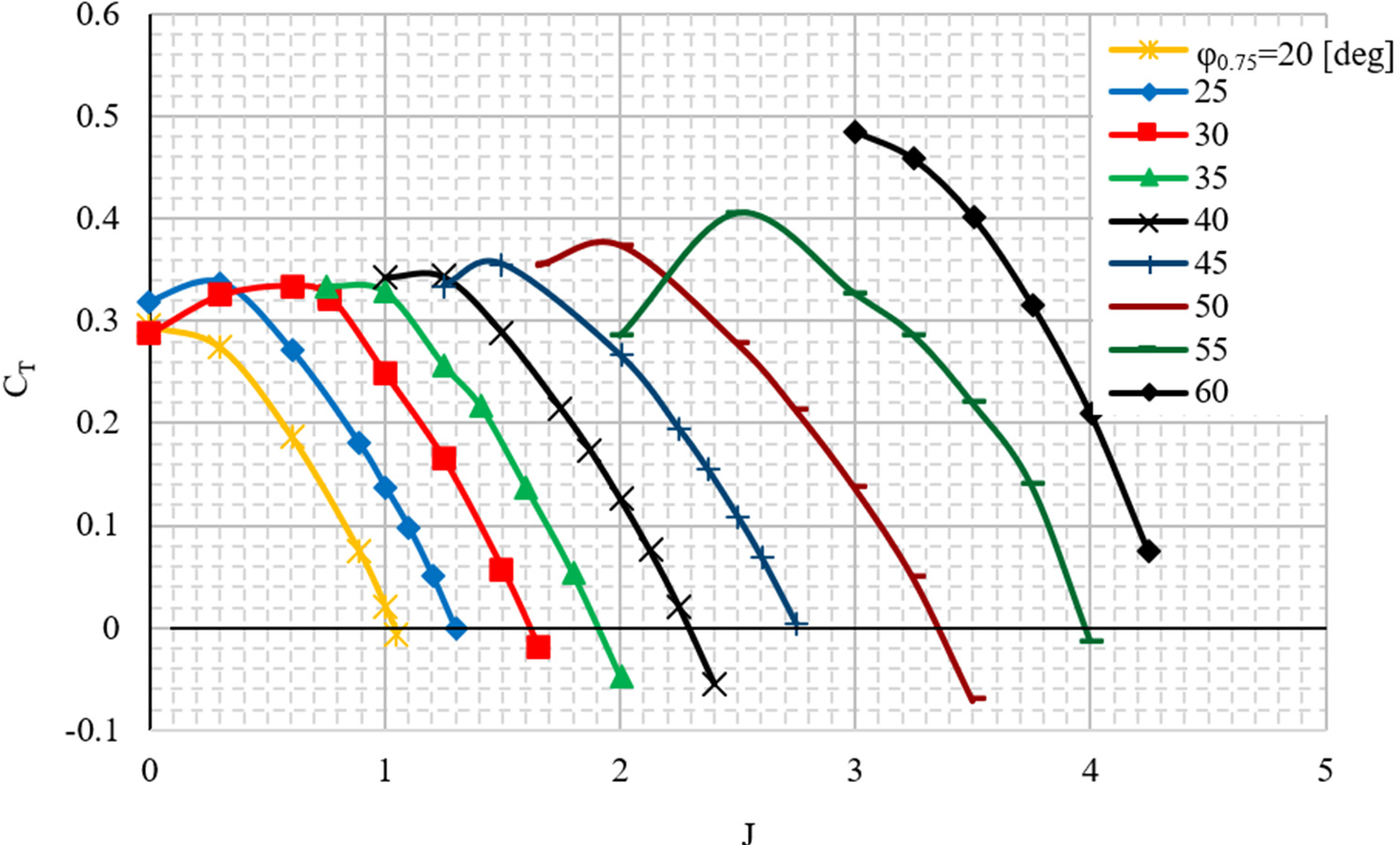
Fig. 8.
Thrust coefficient of the final propeller variant at different blade pitch angles.
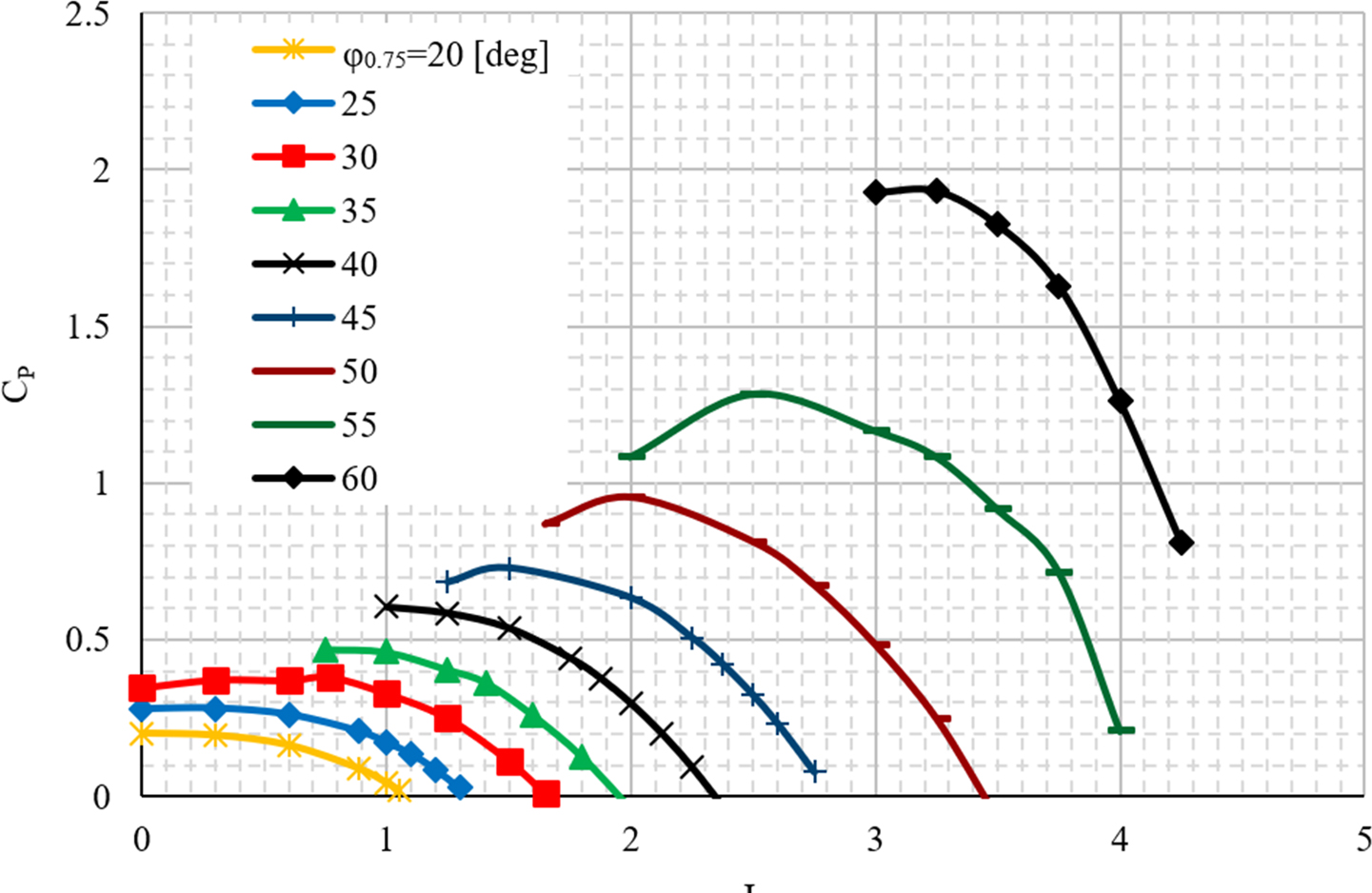
Fig. 9.
Power coefficient of the final propeller variant at different blade pitch angles.
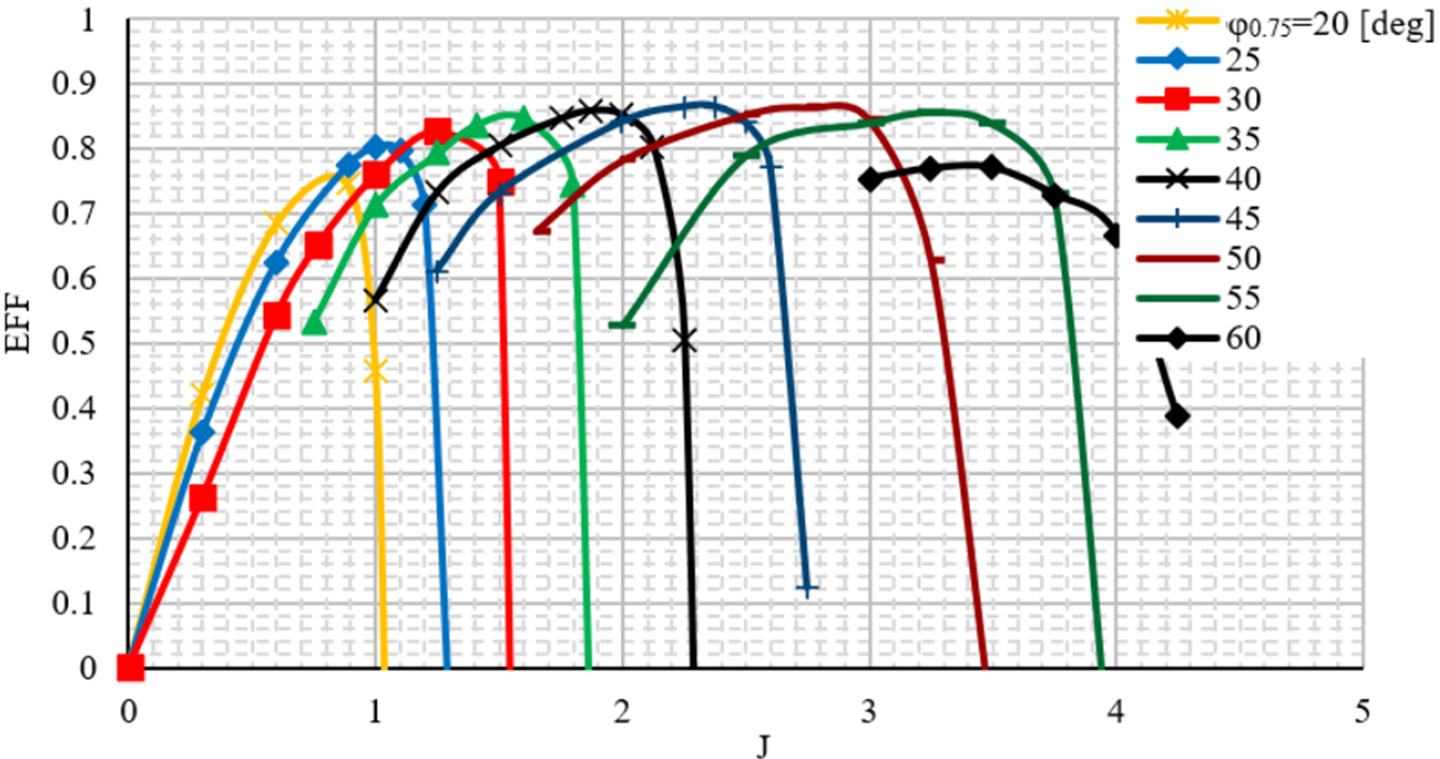
Fig. 10.
Efficiency of the final propeller variant at different blade pitch angles.
The performance shown in Figs 8–10 is replotted in Fig. 11 as the dependence of propeller efficiency on flight Mach number; the purple line traces the maximum efficiency at each pitch angle.
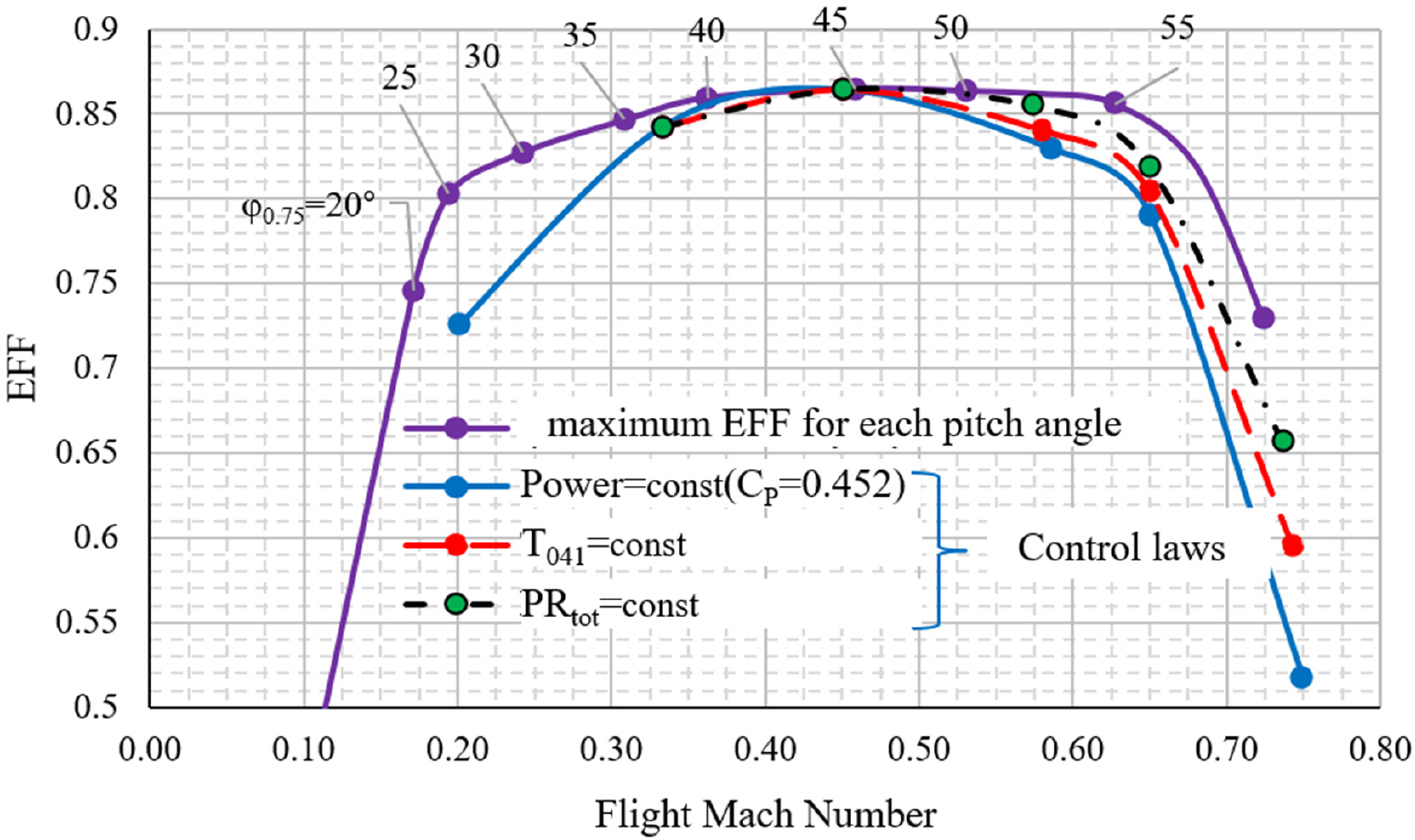
Fig. 11.
Efficiency of the final propeller variant at different blade pitch angles.
To analyze the propeller operation in conjunction with the HTEPS, a simulation of hybrid PS operation under different control laws was carried out. The results are presented in Fig. 12 as the dependence of the power-to-nominal-power ratio (Power), the specific fuel consumption (CFC), the gas temperature at the turbine inlet (T41) and the total pressure ratio (PRtot) on the flight Mach number.
The operating points at which the propeller and the PS can work together under the different control laws, as given in Fig. 12, are superimposed on the propeller performance maps in Figs 8–10 and 11.
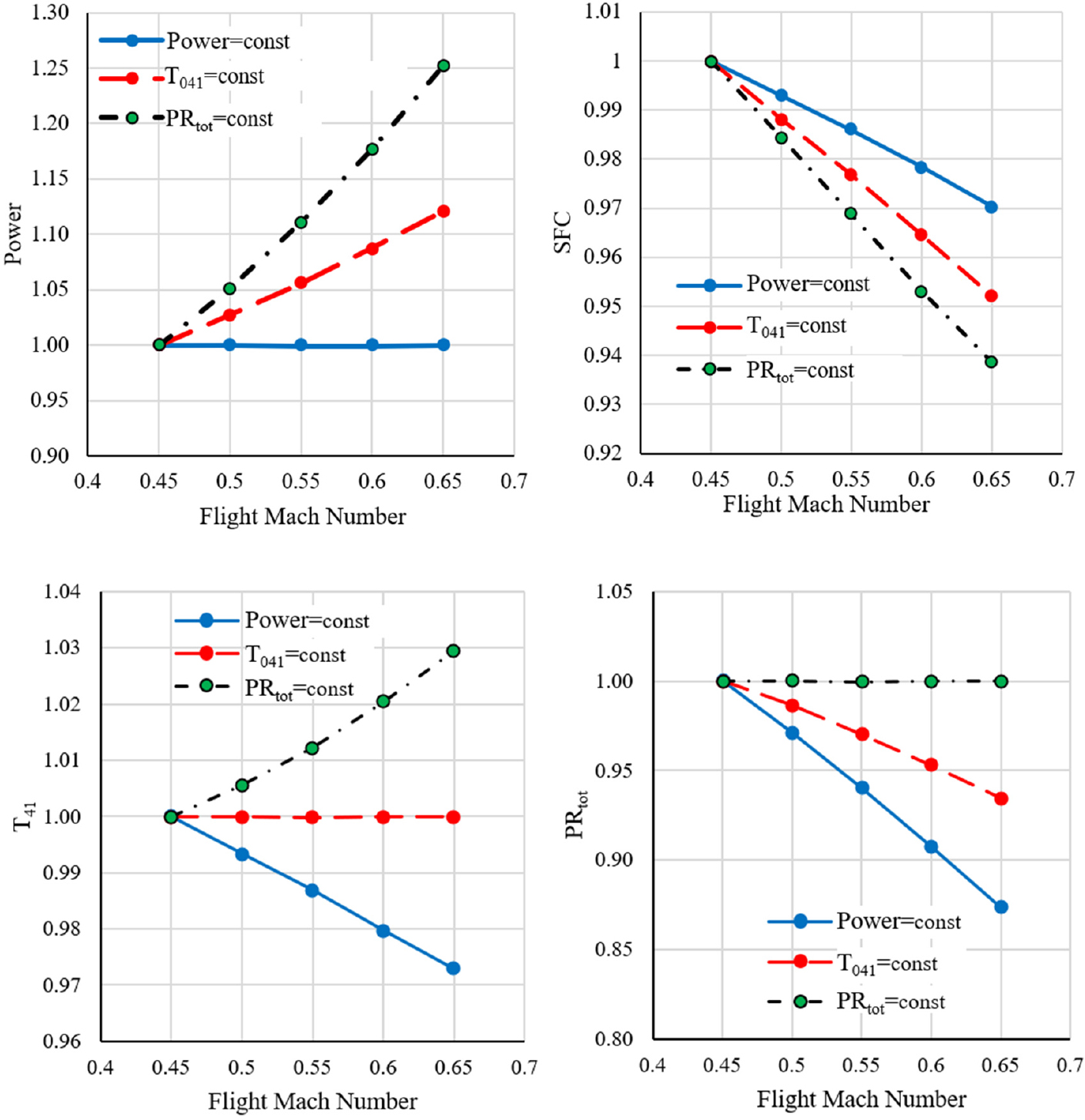
Fig. 12.
Results of performance simulation with different control laws.
6. DISCUSSION
Figure 4 compares the simulation results at two engine ratings for all the propeller variants considered. The initial variant in Fig. 4 exhibited both insufficient efficiency at Cruise and insufficient thrust at Take-off. In the subsequent variants, the required Cruise efficiency was achieved, but the Take-off thrust remained insufficient. By modifying the section angles of incidence, the Take-off thrust could be increased at the cost of a reduction in Cruise efficiency. A comparison of the geometry-generation methods was then carried out. Two methods were used to produce propeller variants: one based on Zhukovsky’s vortex theory [16] and one based on BEMT with the Adkins and Liebeck algorithm [17]. Under the same conditions, the BEMT method yielded a geometry that gave the best results in the verifying CFD analysis, and subsequent searches were therefore carried out on the BEMT-based variants.
After the distribution of angles of incidence along the span had been set at the design point, the choice of the number of blades was re-examined. The geometric parameters of propellers with different numbers of blades were determined at the same power; to keep the power fixed, the chord was varied while the other propeller parameters were held constant. Figure 5 shows how the Cruise efficiency and the Take-off thrust change with the number of blades: an increase in the number of blades raises the Cruise efficiency and slightly reduces the Take-off thrust. Because the design is at constant power, increasing the number of blades leads to a reduction in chord, and variants with a large number of blades may therefore be problematic in terms of strength. It was also important at this stage to leave a thrust margin at Take-off, since the Take-off operating points of the propeller lie close to stall, a region where the CFD method may have increased errors. It was therefore decided to continue with the 7-bladed propeller variant.
In the next step, the effect of propeller diameter on the Cruise efficiency and the Take-off thrust was investigated. As shown in Fig. 6, over the range of maximum diameters studied, increasing the diameter raises both the Cruise efficiency and the Take-off thrust; such a dependence is typical for propellers. When designing a propeller, it is common practice to adopt the maximum permissible diameter, as noted in [16]. As with a change in blade number, when designing at constant power the blade-section chord decreases as the diameter increases, and for thin blades of large diameter the strength may become insufficient. The installation of the PS on the aircraft also imposes a limit on the maximum diameter. A maximum diameter of D = 4.15 m was therefore selected, in order to benefit from the increased diameter without unduly compromising blade strength or the propeller’s placement on the aircraft.
After a final redistribution of the angles of incidence at the design point, the final variant was obtained. The Cruise simulation results for this variant are shown in Fig. 4, and the distribution of its geometric parameters is presented in Fig. 7.
Figures 8–10 show the calculated performance of the final variant over a wide range of advance ratios at constant rotational speed, and hence over a wide range of flight Mach numbers. The final propeller variant exhibits a broad range in which the maximum efficiency exceeds 0.86. At high advance ratios with a blade pitch angle of 60 degrees, the efficiency drops sharply – both because of the high flight speed and because this region is far from the design point, so that the distribution of section pitch angles is far from optimal.
The designed propeller exhibits a very smooth variation of maximum efficiency with flight Mach number, remaining almost constant over the range from M = 0.35 to M = 0.65 (purple line in Fig. 11). To sustain this maximum efficiency, however, the power factor – and hence the engine power driving the propeller – must be increased.
To support further aircraft design and optimisation, the effect of the engine control law on the main turboprop-engine parameters was investigated. The control laws considered are Power = const, the conventional law for turboprop engines; T41 = const; and PRtot = const. As can be seen in Fig. 12, engine control under the T41 = const and PRtot = const laws leads to an increase in power and a decrease in specific fuel consumption as flight speed increases.
In flight at M = 0.65 under the Power = const law, the coordinated operation of the propeller and the propulsion system occurs at a propeller efficiency of 0.791. Under the T41 = const law, the propeller efficiency rises to 0.804, and under the PRtot = const law it reaches 0.819; according to Fig. 9, the maximum propeller efficiency at this Mach number is approximately 0.840. Using the PRtot = const law, it is possible to maintain the propeller efficiency nearly constant at 0.863 over the Mach-number range from 0.45 to 0.53. It would therefore be advantageous in future work to adopt the PRtot = const law, since for an HTEPS with fuel cells, in addition to the efficiency improvements noted above, this law has a positive effect on fuel-cell performance by raising the compressor pressure and providing bleed air at higher pressure, which increases fuel-cell efficiency.
In this way, the “aircraft-propeller-engine” system can in principle be optimized to increase the flight speed of a regional aircraft, which in turn improves its transport efficiency and reduces its environmental impact.
The effect of new materials on the performance of the blade or the propeller as a whole was not addressed in this paper. Nevertheless, this issue is relevant to applications in both civil and military aircraft [20]. The use of different materials for blade construction and the influence of material properties on propeller performance will be investigated in future research.
7. CONCLUSIONS
In this study, twenty propeller variants with different geometric parameters were defined, and an analysis of the thrust produced at the specified engine ratings and prescribed power was performed. From these design variants, a propeller meeting the requirements was selected, and its performance was then calculated over a wide range of flight Mach numbers. A smooth, progressive variation of maximum efficiency with flight Mach number was observed for the selected propeller over the range from M = 0.35 to M = 0.65. Operation of the HTEPS was simulated and the propeller thrust parameters were determined when the propeller operated together with the PS under different control laws. It was found that the use of the PRtot = const law at increased flight speed yields a higher propeller efficiency, a higher gas-turbine-engine efficiency, and further advantages for HTEPS economy, such as improved fuel-cell efficiency owing to the supply of higher-pressure air.
The results obtained in this paper are intended to be used in future work to optimize the “aircraft-propeller-engine” system with a view to improving the transport efficiency of the aircraft. An aeroacoustic CFD analysis of the final propeller variant is also planned.