Have a personal or library account? Click to login
Computational Determination of Dynamic Stability Derivatives Cover

Computational Determination of Dynamic Stability Derivatives

By: Janusz Sznajder  
Open Access
|Dec 2025

Figures & Tables

Fig. 1.

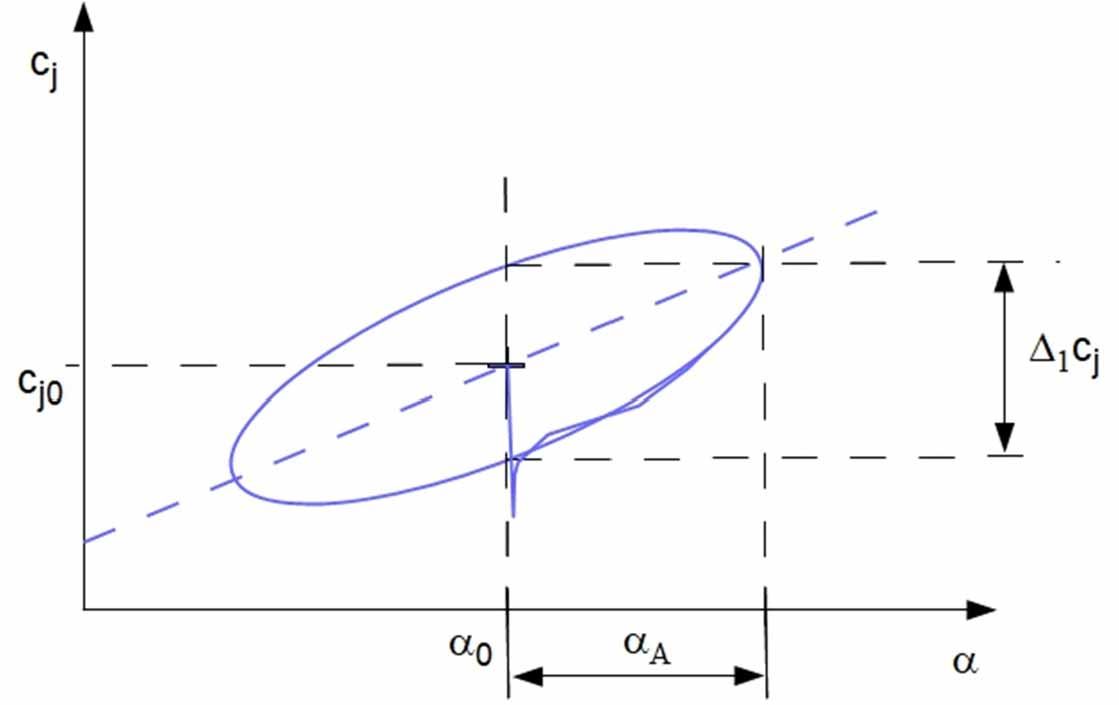
Generic hysteresis shape of aerodynamic coefficients in steady, forced oscillations in the attached-flow regime.
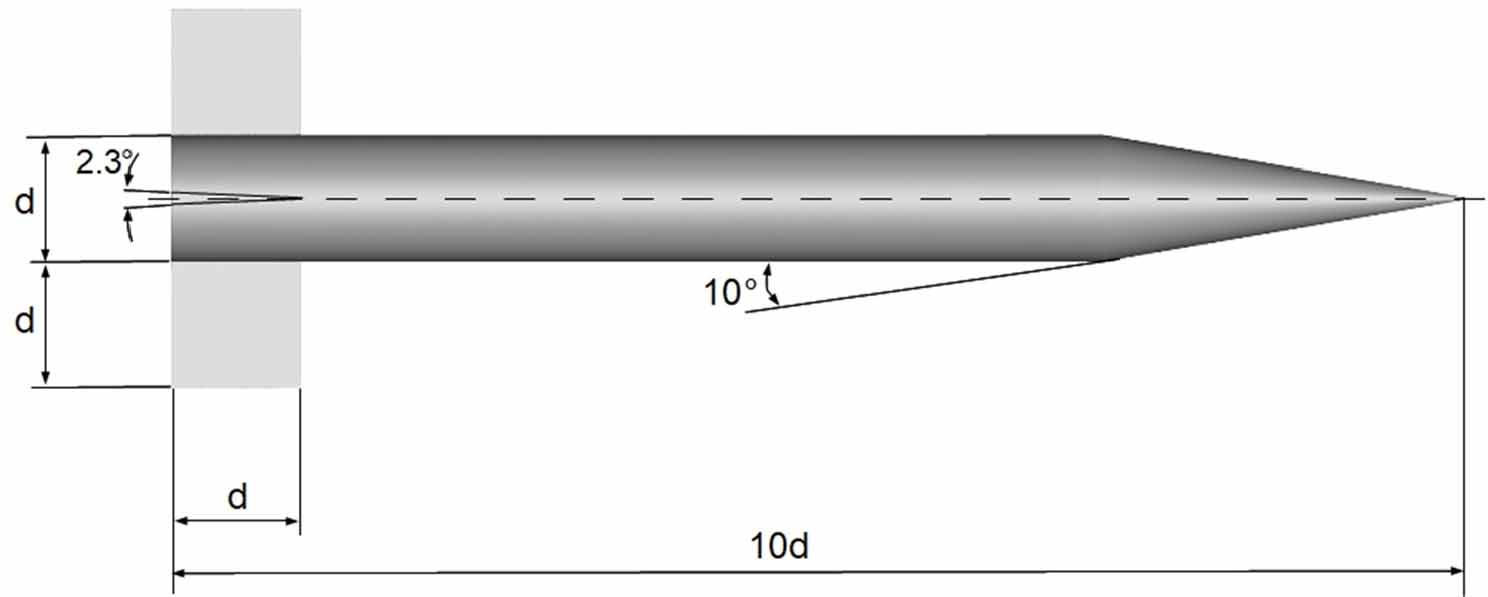

Fig. 2.

Geometry of the Finner model missile.
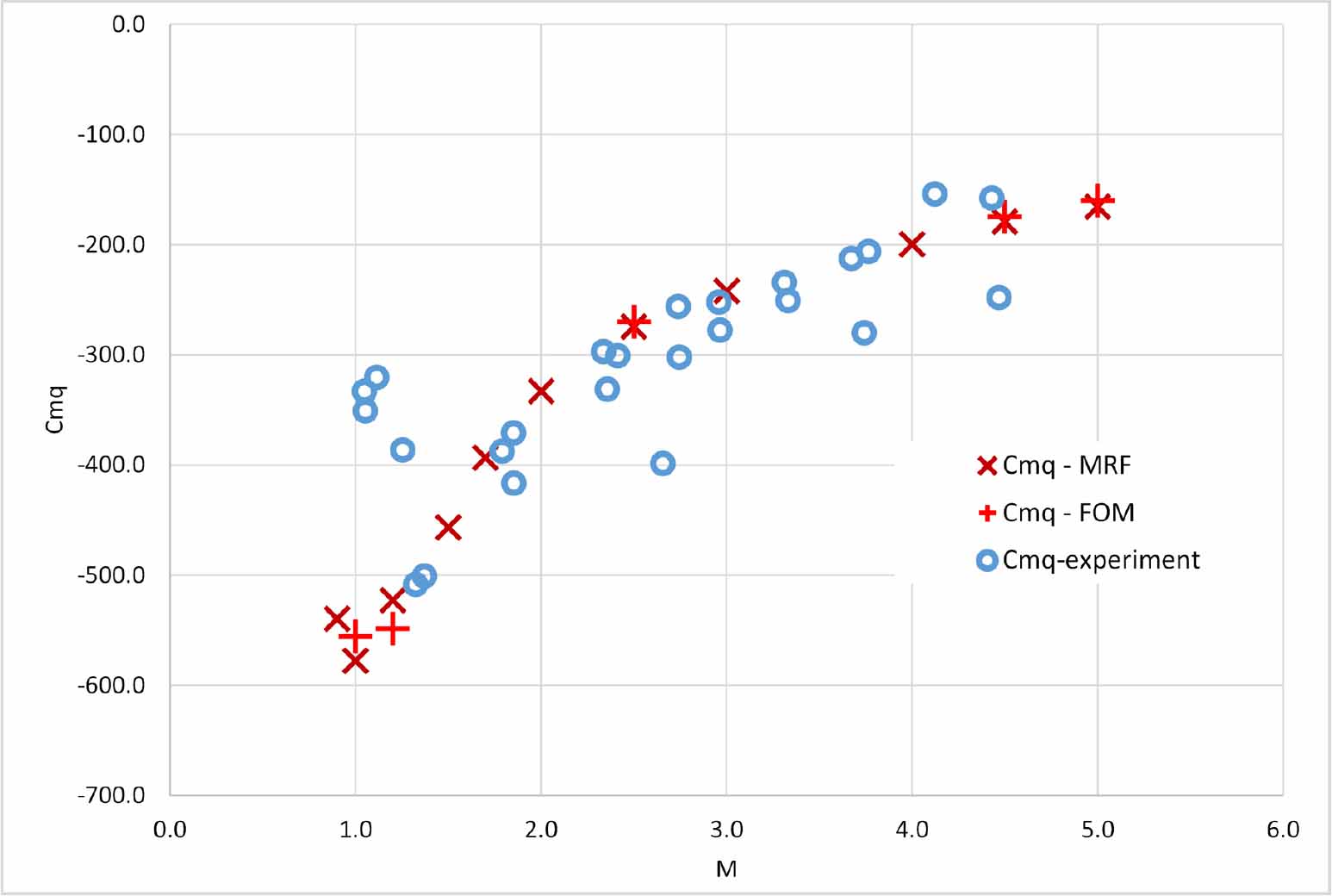

Fig. 3.

Comparison of values of the cmq derivative obtained using two computational methods with experimental results from [14].
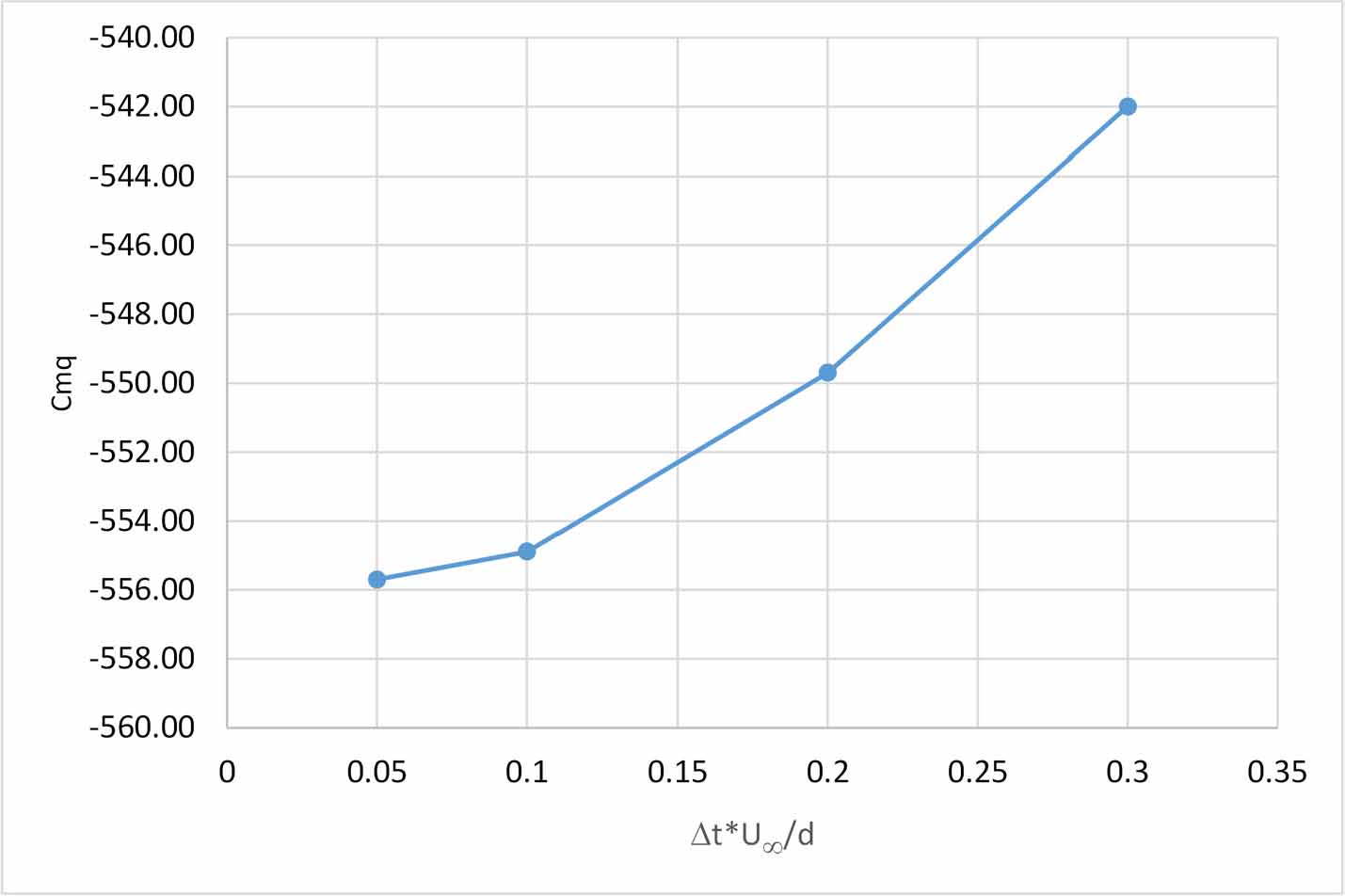

Fig. 4.

Convergence of the cmq derivative obtained using the Forced Oscillations method with respect to the time step, M = 1.0, α = 0°.
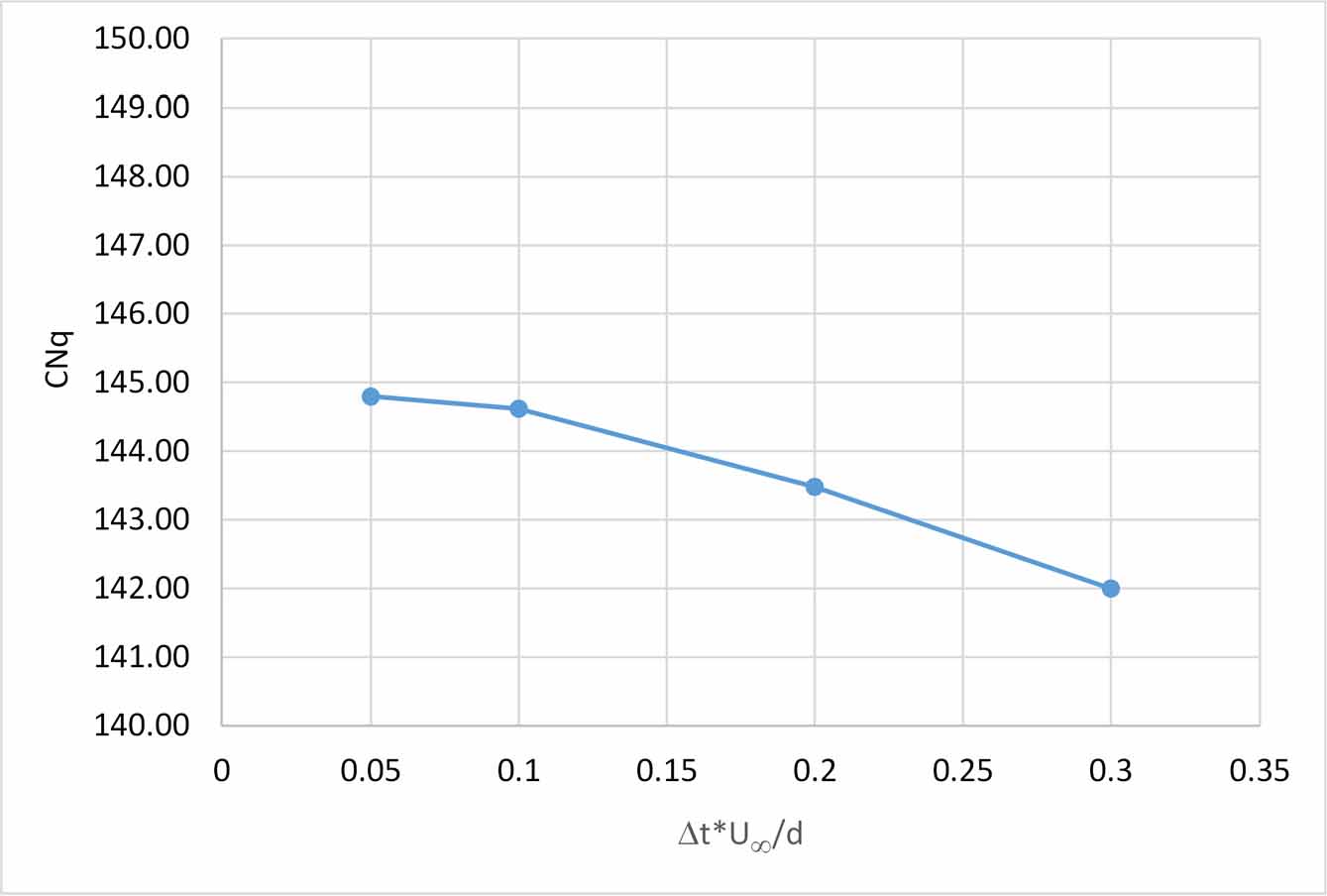

Fig. 5.

Convergence of the cNq derivative obtained using the Forced Oscillations Method with respect to the time step, M = 1.0, α = 0°.

Fig. 6.

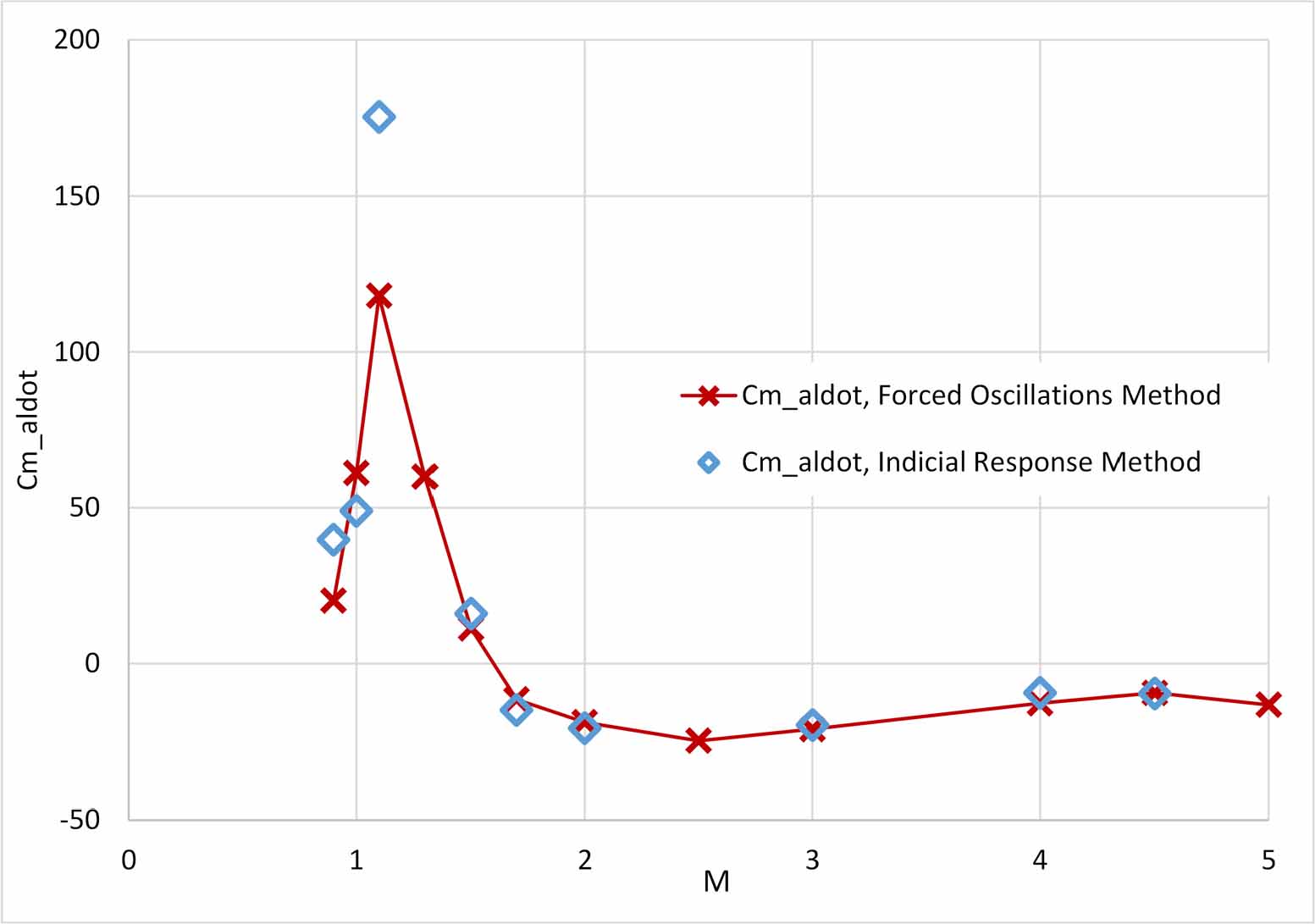
Comparison ofvalues of the cma˜{c_{{m_{\tilde a}}}} derivative calculated using the Forced Oscillations and Indicial Response Methods.
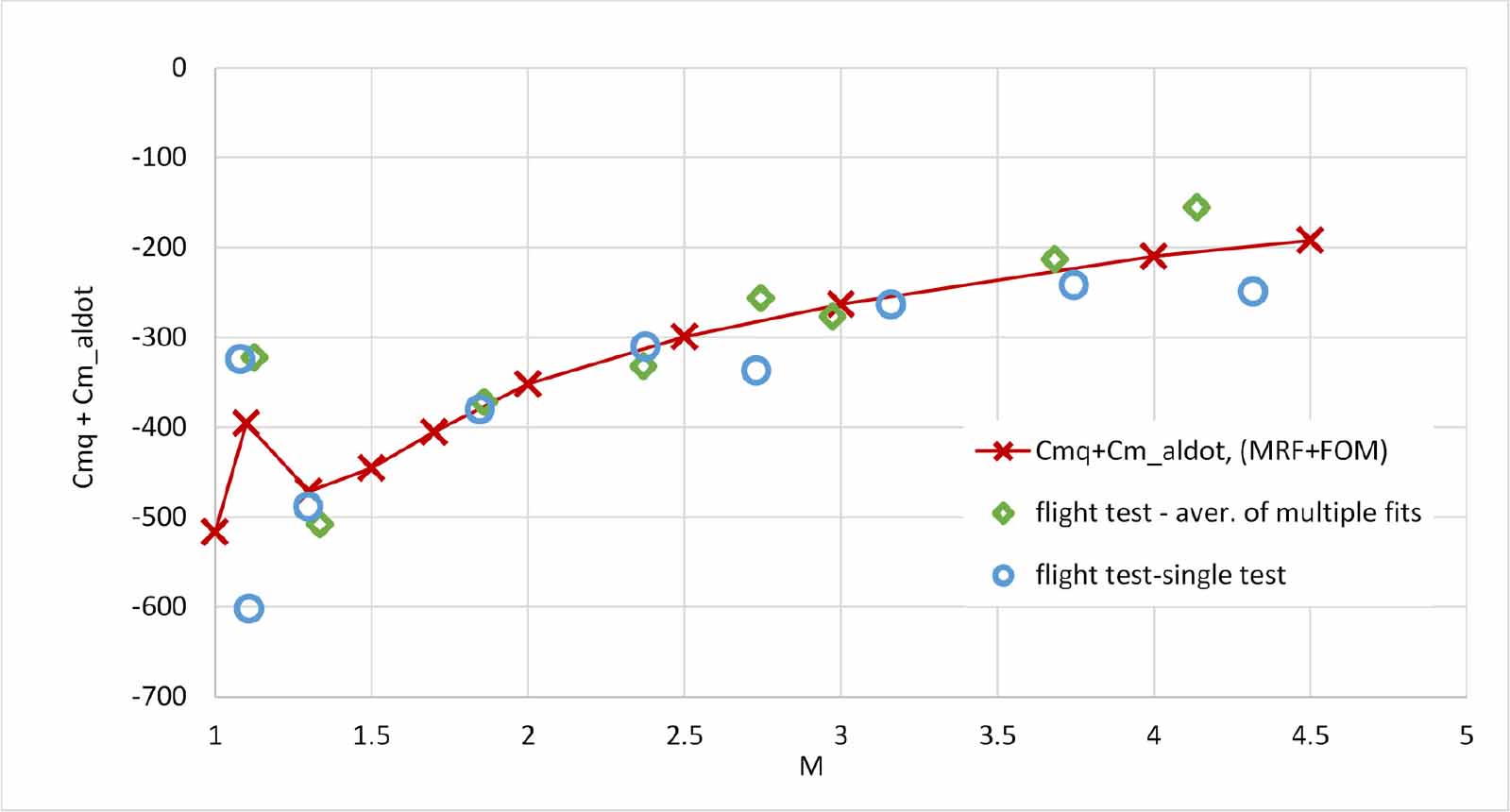

Fig. 7.

Comparison of the sum of derivatives cmq and cmα˜{c_{{m_{\tilde \alpha }}}} computed in the present work and measured in experiment [6], [14].
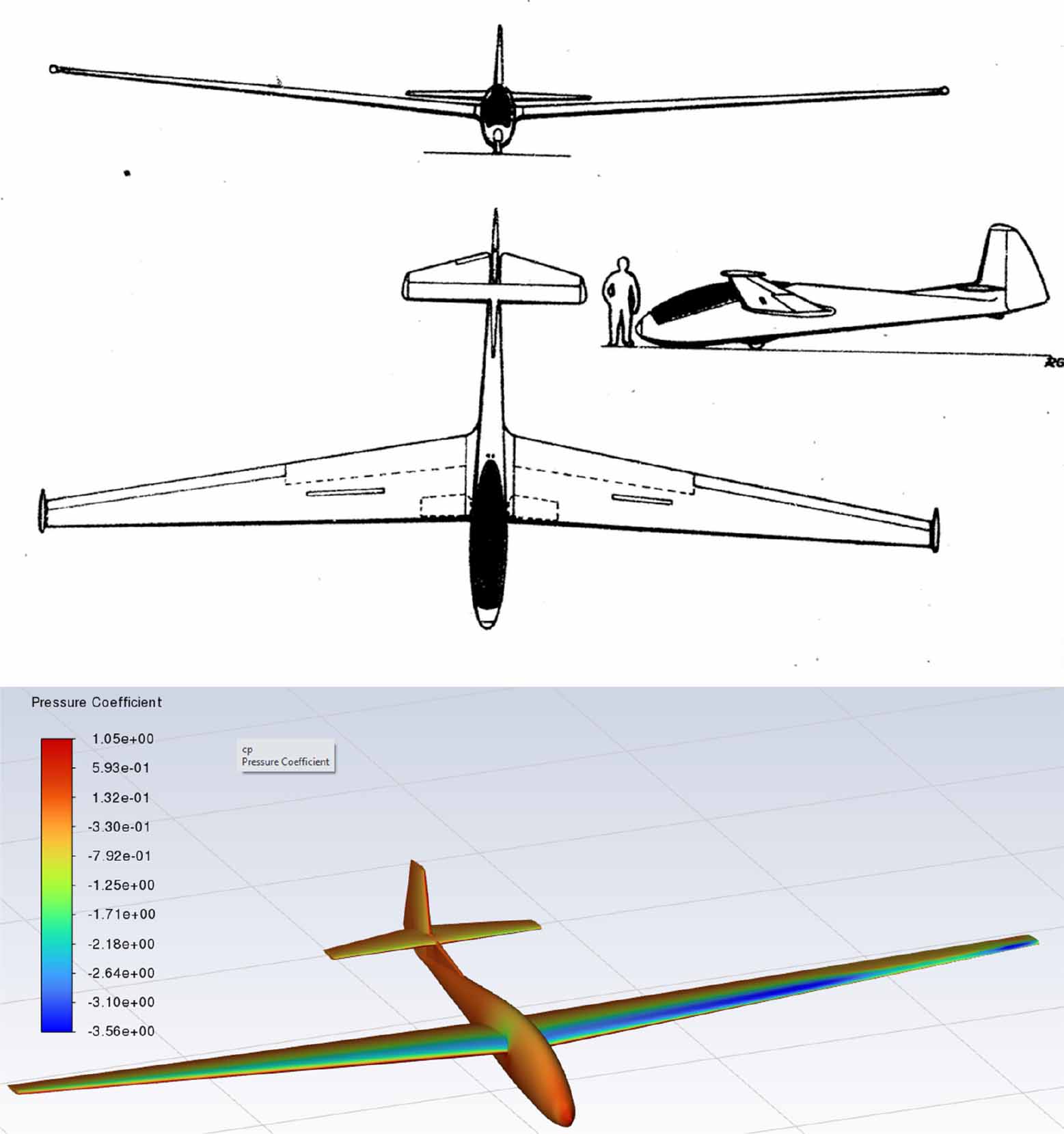

Fig. 8.

Geometry of the SZD-9 Bocian 1E glider in three views (from [16]) and surface distribution of pressure coefficient obtained for a steady flow at α = 10° and rotational velocity p = 0.5 rad/s, computed using the Moving Reference Frame in Ansys Fluent.
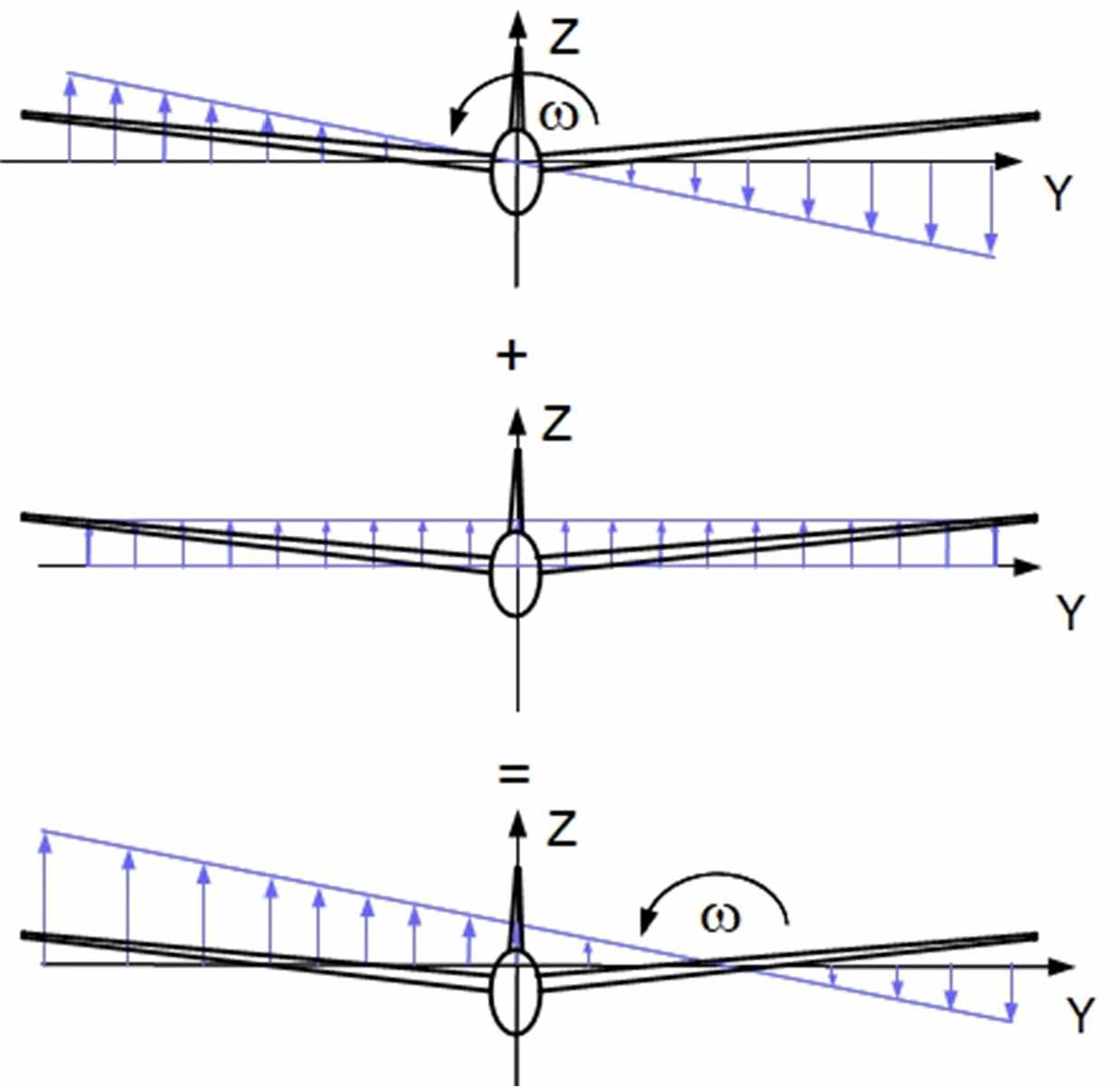

Fig. 9.

Schematic illustration of imposing a constant rotational velocity at nonzero angle of attack for flow simulations in a non-inertial reference frame.
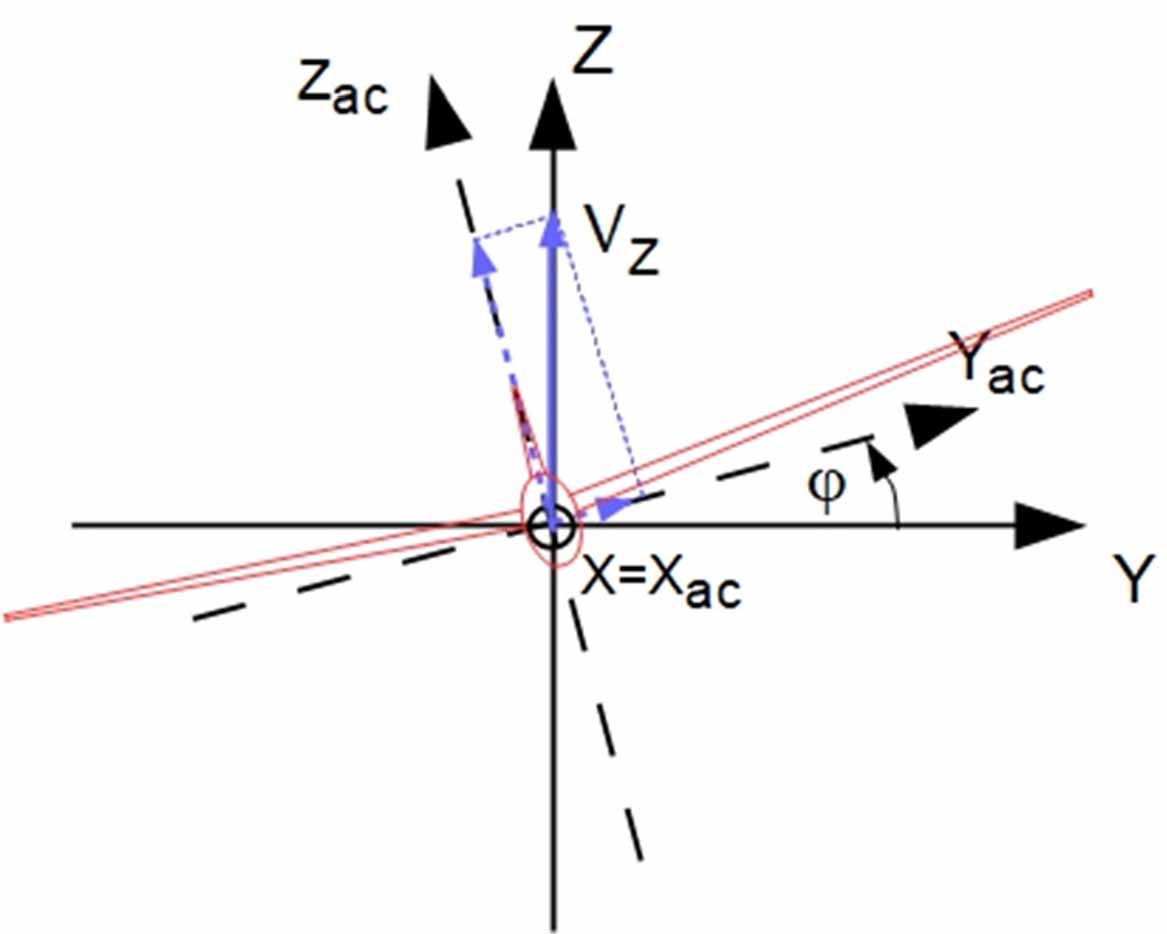

Fig. 10.

Appearance of a sideslip velocity in aircraft coordinate system Xac, Yac, Zac at non-zero angle of attack and non-zero roll angle φ. VZ is a free-stream velocity component along the Z axis. The axes of the coordinate system are the default axes of the flow solver.
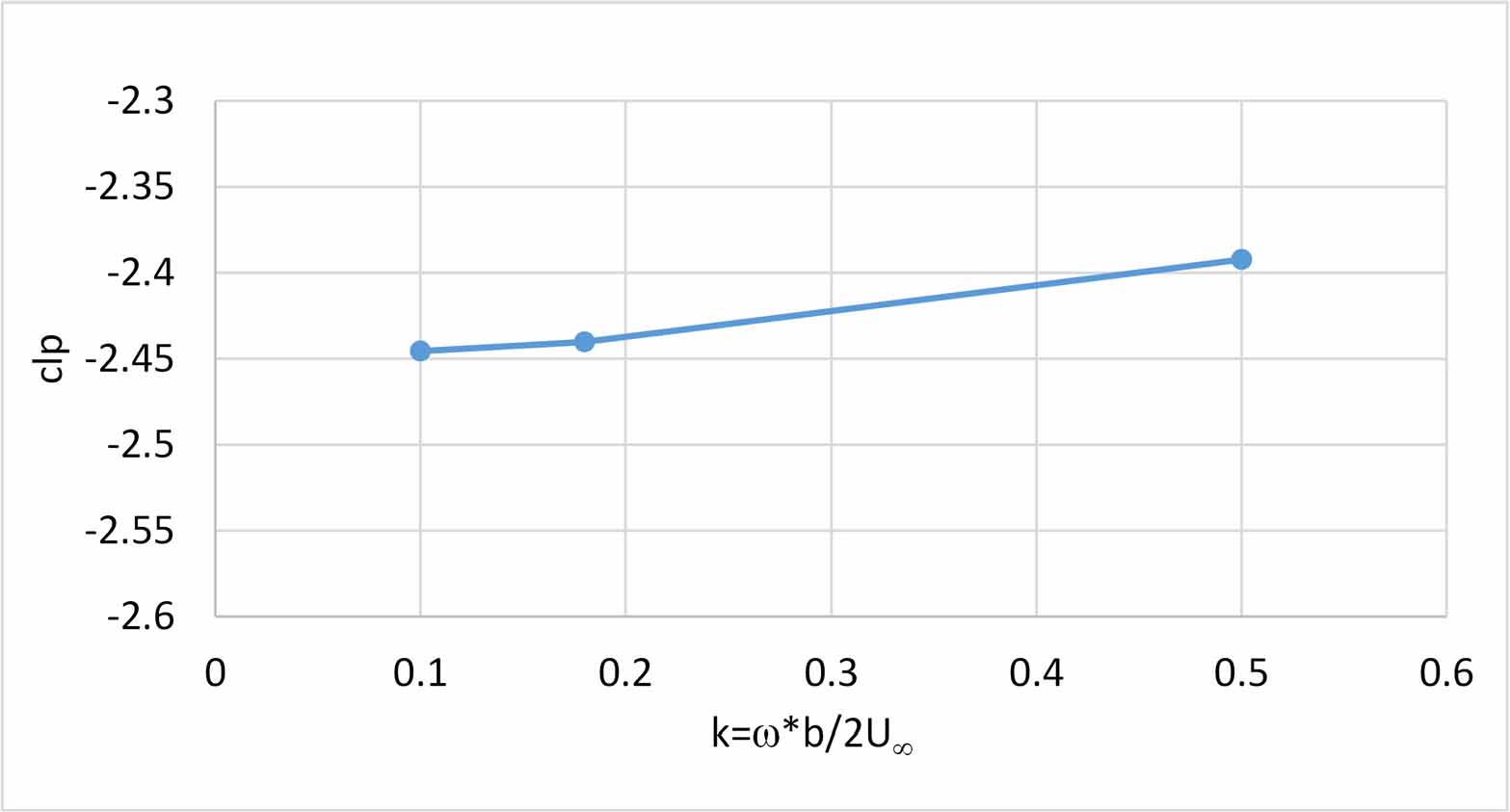

Fig. 11.

Effect of reduced frequency of roll oscillations on the clp derivative.
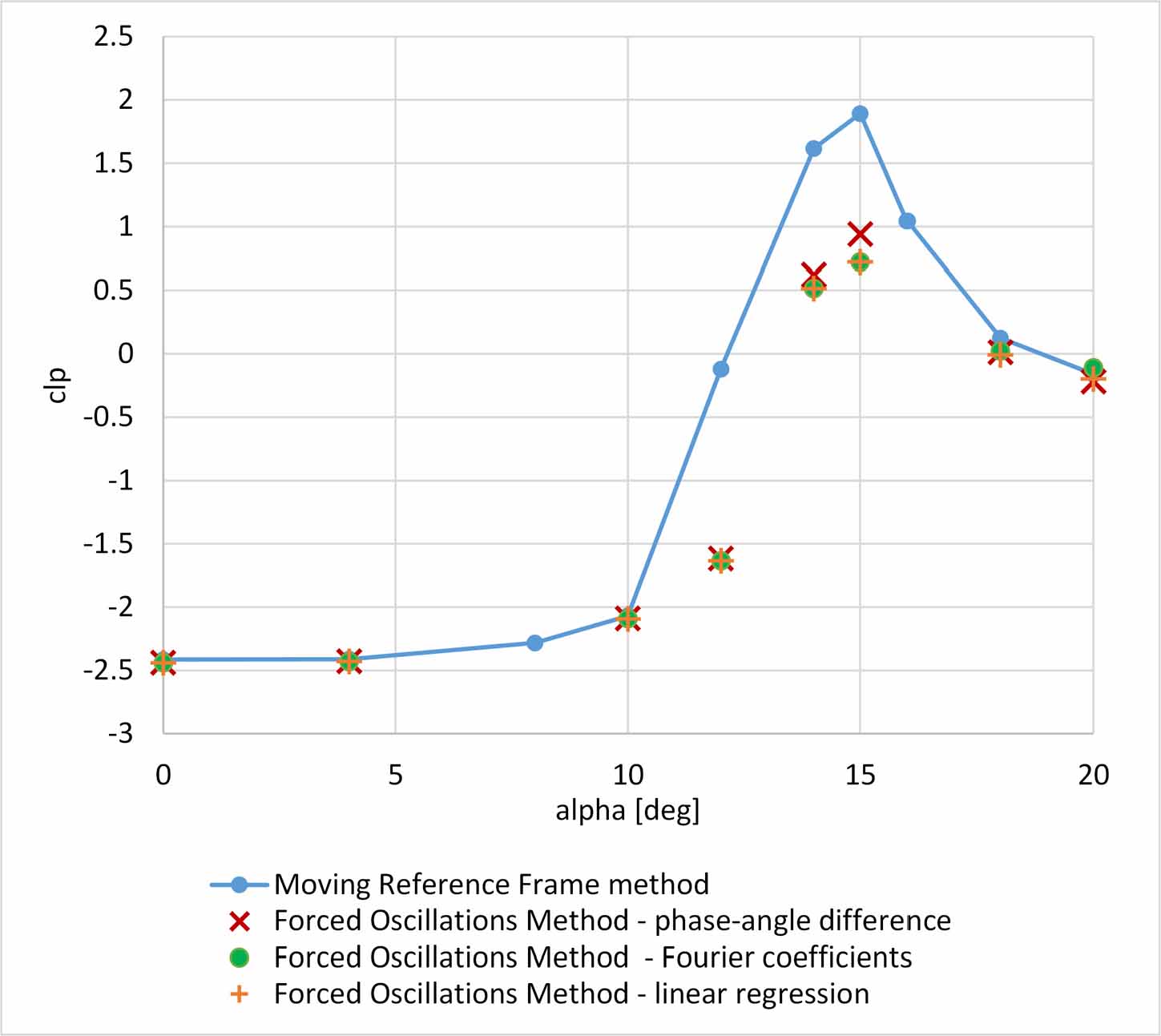

Fig. 12.

Comparison of values of the clp derivative determined using the Moving Reference Frame method and the oscillatory method with different result-processing techniques
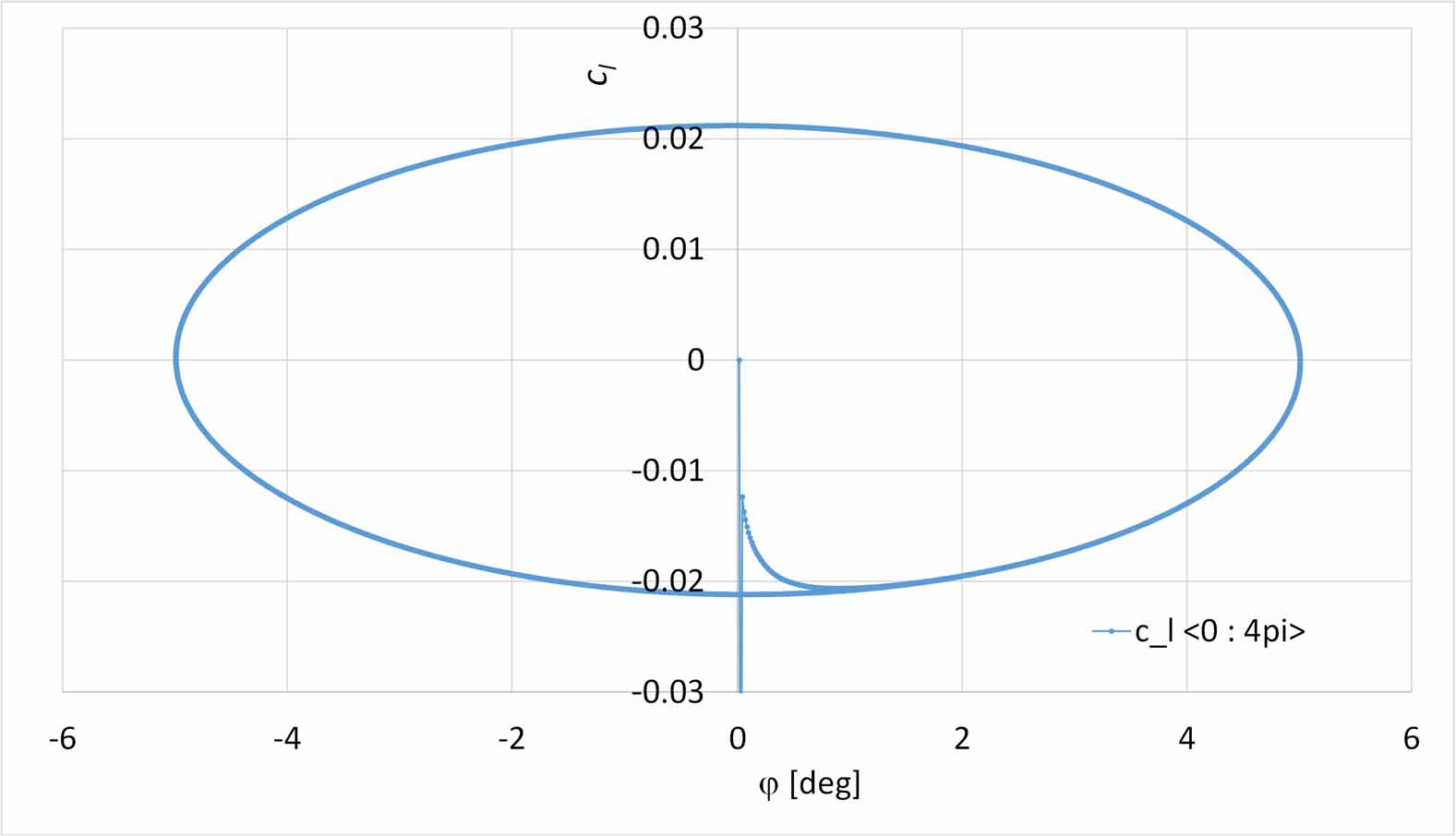

Fig. 13.

Hysteresis loop of the rolling moment coefficient cl in oscillations at angle of attack α = 4°.
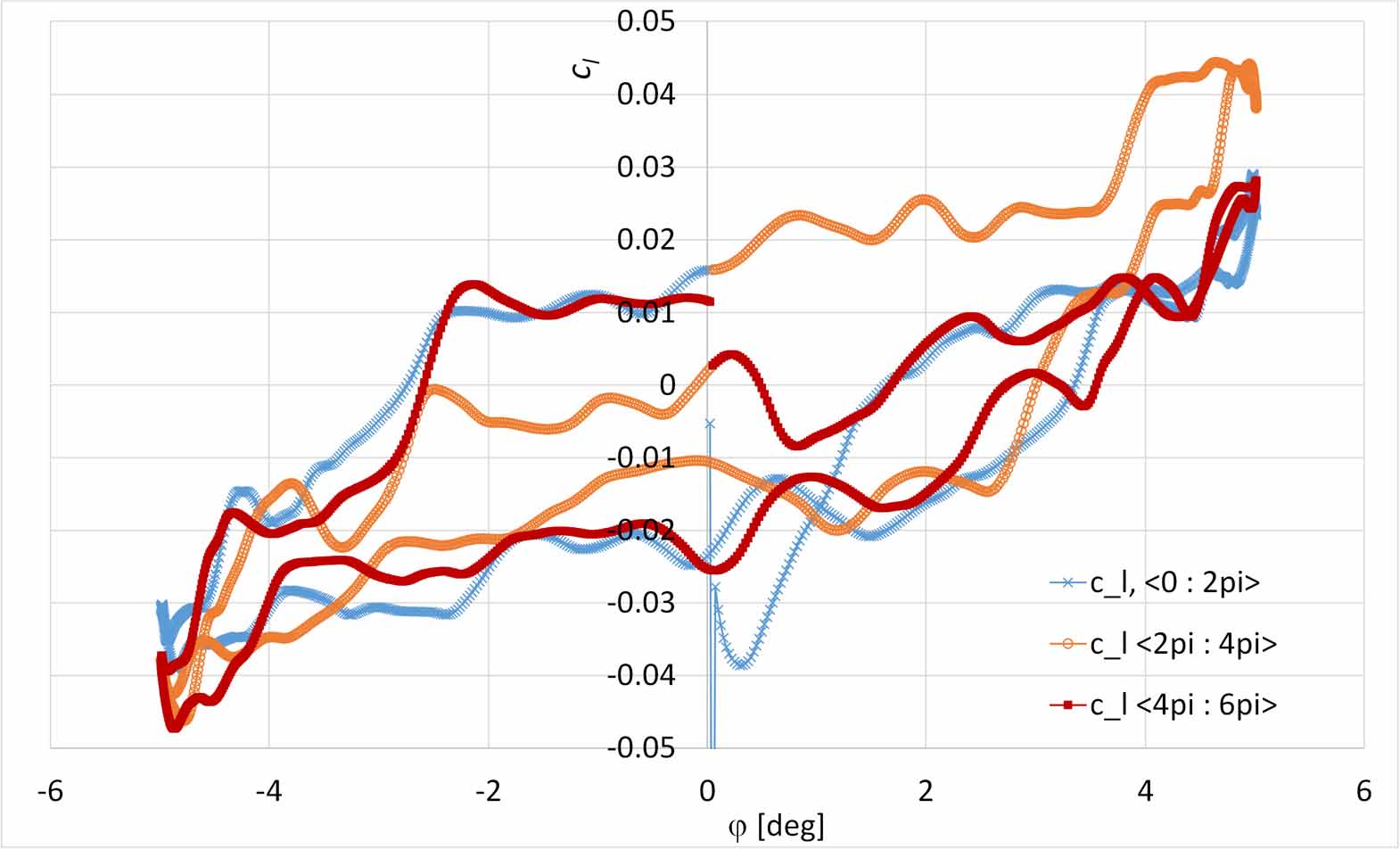

Fig. 14.

Hysteresis loop of the rolling moment coefficient cl in oscillations at angle of attack α = 15°.
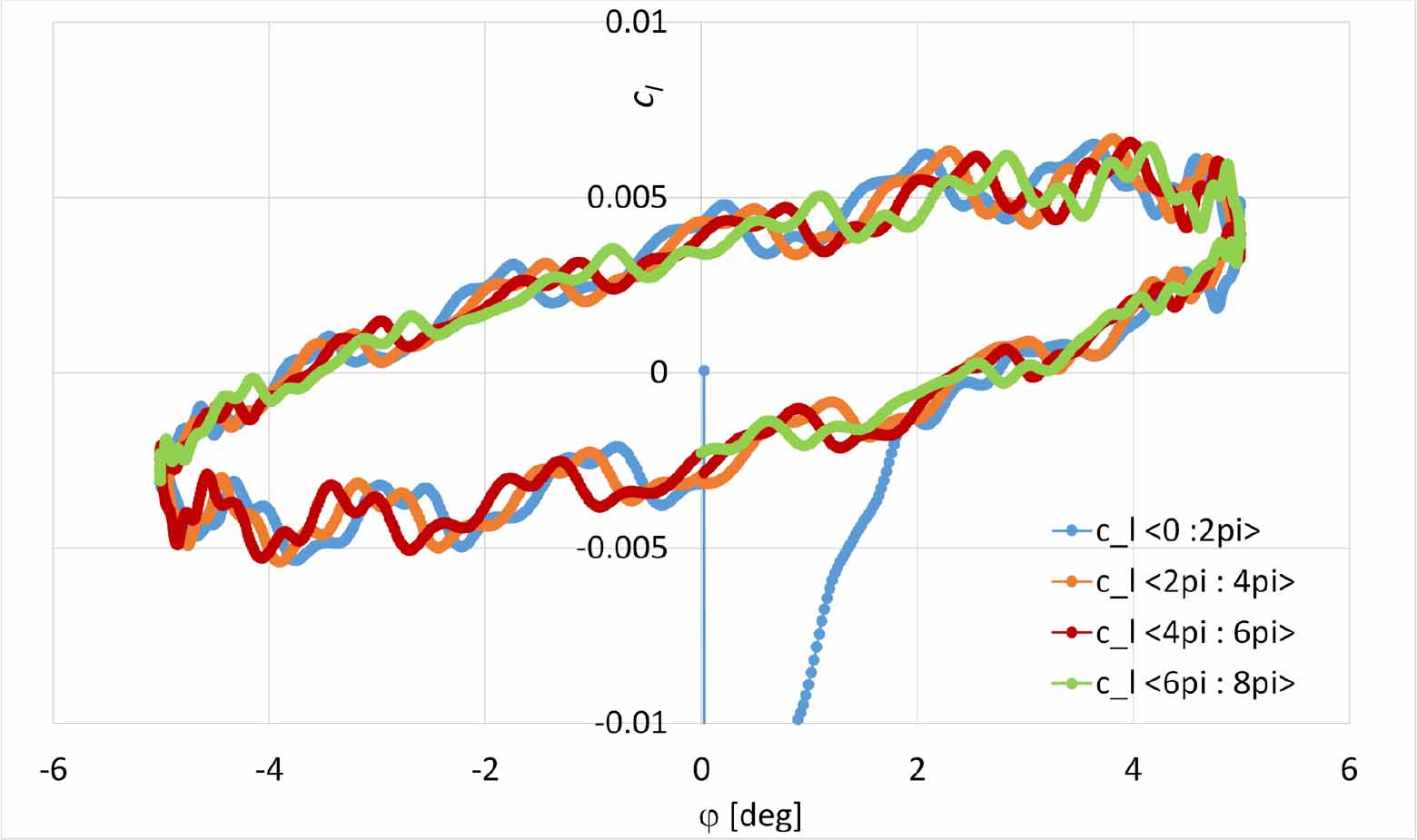

Fig. 15.

Hysteresis loop of the rolling moment coefficient cl in oscillations at angle of attack α = 20°.
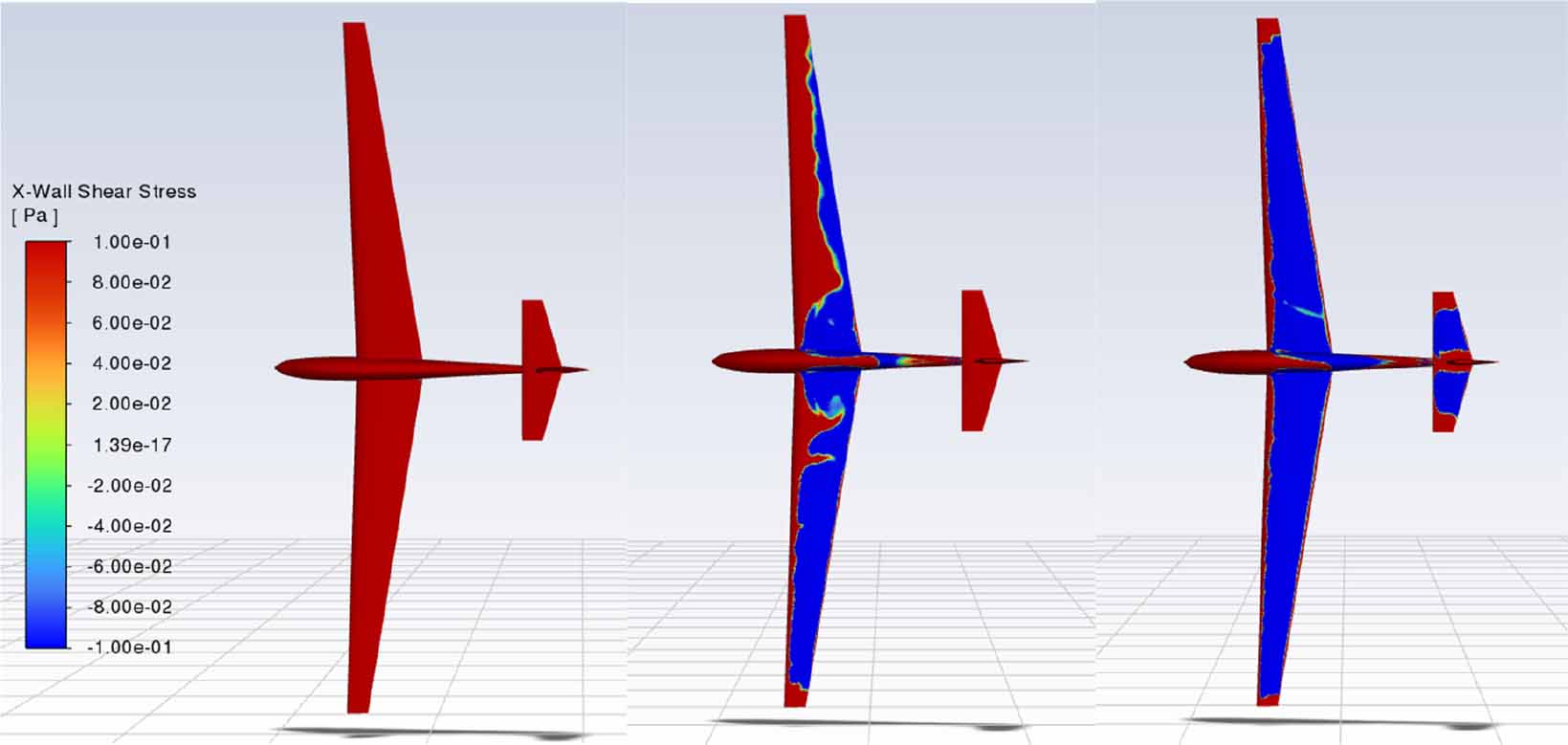

Fig. 16.

Regions of attached (red) and separated (blue) flow on the glider’s upper surface at angles of attack α = 4°, 15° and 20°, visualized by an appropriate scaling of the wall-shear-stress component in the X-direction (along the fuselage centerline). Results obtained using MRF simulations.


Percentage change in dynamic derivatives after decreasing the time step_

Δ t* U/dΔ% CmqΔ% CNq
0.3-2.47%-1.93%
0.2-1.08%-0.91%
0.1-0.15%-0.12%
0.050.00%0.00%
Language: English
Page range: 98 - 121
Submitted on: Sep 17, 2025
|
Accepted on: Nov 20, 2025
|
Published on: Dec 24, 2025
In partnership with: Paradigm Publishing Services
Publication frequency: 4 issues per year

© 2025 Janusz Sznajder, published by ŁUKASIEWICZ RESEARCH NETWORK – INSTITUTE OF AVIATION
This work is licensed under the Creative Commons Attribution-NonCommercial-NoDerivatives 4.0 License.