
1. INTRODUCTION
The history of Yugoslav aviation is deeply intertwined with the broader political and military developments of the region. From the formation of the Kingdom of Serbs, Croats, and Slovenes in 1918 to the dissolution of Yugoslavia in the 1990s, aviation played a crucial role in both national defense and technological advancement. During World War II, the Yugoslav Royal Air Force struggled against the German invasion, while partisan aviation emerged as a symbol of resistance. In the post-war period, rapid industrialization and domestic aircraft production led to significant developments in the aerospace sector, particularly with the establishment of the SOKO aircraft factory in Mostar. However, the collapse of Yugoslavia in the 1990s marked the decline of its aviation industry, leading successor states to seek foreign aircraft for their military needs. This paper examines the historical trajectory of Yugoslav aviation, emphasizing its wartime challenges, industrial achievements, and eventual downfall.
After the end of World War I in 1918, conditions emerged for the formation of a state that would gather together the South Slavs living in the territories of Serbia, Montenegro, and the South Slavic parts of Austria-Hungary. The Kingdom of Serbs, Croats, and Slovenes—also known as the SHS Kingdom (Kraljevina Srba, Hrvata i Slovenaca)—was established with the crucial support and arbitration of Serbia’s Western allies. However, from the beginning, unresolved national tensions quickly became the central issue of Yugoslav internal politics and strained relations with neighboring countries, including Italy, Bulgaria, Albania, Austria, and Hungary. These political divisions and the ongoing efforts to establish a cohesive national identity would later influence the trajectory of the Yugoslav military, including its aviation sector.
2. THE YUGOSLAV ROYAL AIR FORCE IN THE ATTACK ON YUGOSLAVIA
The German-led invasion of Yugoslavia commenced on April 6, 1941. The Yugoslav Royal Air Force (VVKJ) was the only branch of the armed forces of the Kingdom of Yugoslavia that entered the April War fully mobilized and at operational readiness. Under a secret mobilization on March 12, 1941, aviation units were deployed to 23 military airfields designated in the “R-41” war plan [1]. According to this plan, the VVKJ had 142 fighter planes and 147 bombers available for combat.
Despite these preparations, the Yugoslav Air Force faced significant strategic and technological challenges in the lead-up to the invasion. In 1940, Britain attempted to bring Yugoslavia to the Allied side by supplying new Hawker Hurricane fighter aircraft to strengthen its defenses against the German threat. However, in early 1941, Germany countered this by selling Messerschmitt Bf 109 fighters to Yugoslavia. By March 1941, the arrival of Luftwaffe forces in neighboring Bulgaria intensified the pressure on Yugoslavia’s military leadership.
On March 27, 1941, a military coup in Belgrade, led by Air Force General Dušan Simović, overthrew the government that had signed the Tripartite Pact just two days earlier. This political shift eliminated any possibility of a peaceful settlement with Germany, leading Adolf Hitler to order the immediate invasion of Yugoslavia.
On April 6, 1941, Luftwaffe units stationed in Bulgaria and Romania launched a massive air assault on Yugoslavia, initiating the Bombing of Belgrade. The VVKJ, hindered by outdated equipment and newly introduced aircraft still undergoing operational integration, was forced to defend Yugoslavia’s extensive borders against multiple, simultaneous attacks. Additionally, divided loyalties within the military further weakened defensive efforts.
Despite these challenges, Yugoslav aviation attempted counteroffensives. On April 7, 1941, the Yugoslav 8th Bomber Regiment attacked German airfields near Szeged and Pécs (Hungary), but suffered heavy losses, losing eight aircraft [2]. Meanwhile, Yugoslav fighter aircraft and anti-aircraft artillery managed to down approximately 90–100 enemy planes, though these efforts were insufficient to slow the German advance significantly. A notable engagement occurred on April 6, during the Luftwaffe’s attack on Niš Airport at Medoševac, where Yugoslav ground forces shot down the aircraft of German fighter ace Herbert Ihlefeld.
Between April 6 and April 17, 1941, the VVKJ managed to receive reinforcements, including: 8 Hawker Hurricane Is, 6 Dornier Do 17Ks, 4 Bristol Blenheim Is, 2 Ikarus IK-2s, 1 Rogožarski IK-3, and 1 Messerschmitt Bf 109. These aircraft were sourced from domestic factories and repair workshops, but they arrived too late to turn the tide of the conflict. [3]
Despite brave resistance, Yugoslav aviation was unable to withstand the overwhelming power of the Luftwaffe. German forces executed precise airfield strikes, destroying a large portion of the VVKJ’s aircraft on the ground before they could even engage in combat. Additionally, logistical difficulties and supply shortages further limited the effectiveness of the remaining operational squadrons.
After just 11 days of fighting, the VVKJ was effectively neutralized, suffering heavy losses in air combat, destruction of aircraft on the ground, and the rapid overrunning of airfields by advancing enemy troops. The full-scale occupation of Yugoslavia followed shortly after, marking the end of the Kingdom of Yugoslavia as a sovereign state.
The Yugoslav Royal Air Force entered World War II with a determined, but ultimately outmatched, force. Despite early British military aid and last-minute reinforcements, the VVKJ’s outdated equipment, divided loyalties, and logistical challenges made it unable to defend against the swift and overwhelming German assault. The events of April 1941 (known as the “April war”) marked the collapse of the Yugoslav Air Force, setting the stage for the occupation and resistance movements that would define the coming years.
During the April War, the Yugoslav Air Force had a variety of types of aircraft across multiple categories [4], including:
a) Fighter planes: Avia BH-33, Hawker Furries, Hawker Hurricane, IK-2, IK-3, Messerschmitt Bf 109, Potez-63,
b) Bombers: Avia BH-33, Hawker Furries, Hawker Hurricane, IK-2, IK-3, Messerschmitt Bf 109, Potez-63,
c) Seaplanes: Dornier Do-22, Rogožarski SIМ-XII-H, Rogožarski SIM-XIV-H,
d) Training planes and liaison planes: Potez XXV, Fieseler FN, Fieseler Fi-156, Rogožarski PVT Rogožarski R-100, Messerschmitt BF-108, Rogožarski Freshman, Aero-2.
3. OCCUPATION OF THE KINGDOM OF YUGOSLAVIA IN 1941 AND THE RESISTANCE
Following the swift invasion by German, Italian, Bulgarian, and Hungarian forces in April 1941, the Kingdom of Yugoslavia ceased to exist as an independent state. The Axis occupation was marked by territorial division and harsh repression, meaning that Yugoslavia was effectively liquidated as a state. Resistance against the occupation began in June 1941 with the formation of the first partisan detachments. By 1 March 1945, these resistance forces had grown into the Yugoslav Army, a regular military force of the Democratic Federative Yugoslavia. The People’s Liberation Army was led by its Supreme Headquarters; members of the Army, called partisans, engaged in asymmetric warfare against the Axis occupiers. The partisan military strategy avoided engaging in conventional warfare due to the overwhelming superiority of the Axis forces in weaponry, mechanization, and air support. Instead, they relied on guerrilla tactics, ambushes, and sabotage. Until autumn 1943, the partisans operated with minimal external support, fighting in complete enemy encirclement, without significant reinforcements [5].
On May 23, 1942, two pilots of the Croatian Air Force (NDH), Franjo Kluz and Rudi Čajavec, defected to the partisans in Bosnia, marking the inception of partisan aviation [6]. On June 4, 1942, as the first partisan pilots, Kluz and Čajavec performed their first combat mission: bombing and machine-gunning Zalužane airport near Banja Luka. Kluz’s plane was damaged and shot down over Zalužani. On June 7, 1942, taking off from the base on Mount Kozara, a partisan plane pilted by Kluz bombed and machine-gunned enemy garrisons in Dvor na Una and Bosanski Novi. However, his plane was destroyed by fire on July 4, 1942.
Although short-lived due to a lack of infrastructure, this was the first instance of a resistance movement forming an air force. Throughout the war, the partisan aviation was destroyed and re-built several times until it became a permanent institution. The Partisans later organized a permanent air force, receiving aircraft, equipment, and training from captured or defected pilots of the NDH, the British RAF, and later, the Soviet Air Force.
On October 14, 1943, Supreme Commander of the NOV and POJ, Josip Broz Tito, issued an order to establish the First Air Force Base in Livno, together with the NOV and POJ Training College, marking the formal organization of partisan aviation. On December 31, 1943, US President Franklin Roosevelt ceremoniously handed over American Liberators to a group of Yugoslav aviators from the 15th Army Air Corps. On July 1, 1955, in Benin (near Benghazi, in Libya), the 2nd aviation squadron NOVJ was formed, consisting of 16 Hariken MK IV aircraft and 196 fighters. On January 5, 1945, the NOVJ Aviation Headquarters established the headquarters of the 11th Aviation (Fighter) Division and the 42nd Aviation (Assault) Division In Novi Sad. Three fighter regiments equipped with Yak aircraft (111th, 112th and 113th regiments) joined the 11th division, and three regiments with II-2 aircraft (421st, 422nd and 423rd regiments) joined the 42nd division.
Table 1 lists the planes used by the partisans, including their period of use and quantity. Many of these aircraft remained in service for several years after the war, forming the foundation of the post-war Yugoslav Air Force.
Table 1.
Aircraft used by the Yugoslav Partisan Air Force.
| Name of plane | Start of use | End of use | Number of planes |
|---|---|---|---|
| POTEZ 25 A2 | 23.5.1942 | 6.7.1942 | 1 |
| BREGUET 19 b2 | 23.5.1942 | 4.6.1942 | 1 |
| FLEET TRAINER | 6.10.1943 | 10.10.1943 | 1 |
| S.A.I.M.A.N. 200 | 9.1943 | 9.1943 | 1 |
| CAPRONI CA-311 | 1943 | 1945 | 12 |
| FIESELER Fi 156 C-1 | 1943 | 1947 | 1 |
| AVIA FL-3 | 29.10.1943 | 1945 | 5 |
| DORNIER DO-17 | 13.11.1943 | 1947 | 6 |
| FIZIR FP2 | 1944 | 1947 | 13 |
| BUCKER BU 181 | 10.1944 | 1945 | 2 |
| BUCKER BU 131 | 10.1944 | 1948 | 6 |
| FIAT G50 BIS | 2.9.1944 | 1945 | 2 |
| FIESELER FI 167A0 | 25.9.1944 | 1948 | 4 |
| JUNKERS JU 52/3M/AAC1 TUCKAN | 24.10.1944 | 1945 | 4 |
| MORANE-SAULINIER MS406 | 21.9.1944 | 1945 | 11 |
| BENES-MRAZ BE51 | 21.9.1944 | 1945 | 2 |
| BUCKER BU 133 JUNGMAISTER | 1945 | 1956 | 3 |
| SPITFIRE | 22.4.1944 | 18.8.1952 | 21 |
| HURRICANE | 1.7.1944 | 18.7.1952 | 16 |
| YAK-3 | 1944 | 1957 | 71 |
| YAK-7 | 1944 | 1947 | 18 |
| YAK-9 | 1944 | 1960 | 74 |
| TAKOVLJEV UT2 | 1945 | 1956 | 46 |
| ILYUSHIN IL-2 | 1945 | 1955 | 122 |
| GOTHA GO 145 | 1944 | 1945 | 1 |
| JUNKERS JU-87B-2 STUKA | 1945 | 1947 | 2 |
| MESSERSCHMITT BF 109G | 1944 | 1946 | 19 |
| BRISTOL BLENHEIM MKI | 1945 | 1947 | 1 |
| PERCIVAL PROCTOR MK3 | 1945 | 1947 | 2 |
| AVRO ANSON MKXI | 1944 | 1945 | 3 |
| De HAVILAND DH 82 | 1945 | 1949 | 49 |
| NORTH HARVARD MKIIB | 1945 | 1960 | 10 |
| FOCKE WULF 190A-8 | 1945 | 1947 | 8 |
| JUNKERS JU W 34Hi | 1945 | 1952 | 2 |
| ROGOŽARSKI R100 | 1944 | 1959 | 6 |
| ROGOŽARSKI PVT | 1945 | 1947 | 2 |
| FIZIR FN | 1945 | 1948 | 15 |
| CONSOLIDATED B24 LIBERATOR | 1945 | 1946 | 1 |
| LOCKHEED P38L-5 | 1945 | 1947 | 1 |
| NORTH AMERICAN P51D MUSTANG | 1945 | 1946 | 1 |
| ARDO AR 96 | 1945 | 1946 | 1 |
| LISUNOV LI 2 | 1945 | 1959 | 17 |
| SHCHERBAKOV SCE2 | 1945 | 1952 | 6 |
| PETLYAKOV PE 2 FT | 1945 | 1954 | 123 |
4. AIRPLANES PRODUCED IN YUGOSLAVIA
Following World War II, the Socialist Federal Republic of Yugoslavia (SFRY) undertook a major effort to rebuild and modernize its aerospace industry. As part of this reconstruction, domestic aircraft production was expanded, with several factories contributing to the development of both military and civilian aviation. The primary manufacturers in Yugoslavia included SOKO, UTVA, Ikarus, and Zmaj, producing a range of training, reconnaissance, fighter, and transport aircraft (Table 2).
Table 2.
Aircraft used by the Yugoslav Partisan Air Force.
| Manufacturer | Models |
|---|---|
| SOKO | Soko 522 • Soko G-2 Galeb • Soko J-21 Jastreb • Soko J-20 Kraguj • Soko J-22 Orao • Soko G-4 Super Galeb |
| UTVA | Utva 212 • Utva 213 Vihor • Utva Aero 3 • Utva 251 BC-3 • Utva 56 • Utva 60 • Utva-65 • Utva-66 • Utva-75 |
| Ikarus | Rogožarski IK-3 • Ikarus IK-2 • Ikarus 214 • Ikarus 215 • Ikarus S-49 • Ikarus 451 • Ikarus Aero 2 • Kurir |
| Ostali | Zmaj FP-2 |
Soko, in particular, was a Yugoslav aircraft manufacturer specializing in the production of combat aircraft. Headquartered in Mostar, Bosnia and Herzegovina, the company was founded in 1950 under the name Factory SOKO and later renamed Soko Aircraft Industry. In 1961, the company released its first domestically developed military aircraft, the SOKO G-2 Galeb. Over the following decades, several more models were developed, and SOKO also produced licensed helicopters, such as the Aérospatiale Gazelle, under the name Gazela. The SOKO headquarters spanned an area of 450,000 m2, located near Mostar Airport, which was used for testing newly developed aircraft. In addition to the main factory, several smaller production plants were established in nearby towns, employing approximately 8,000 workers, including 5,000 at the main facility.
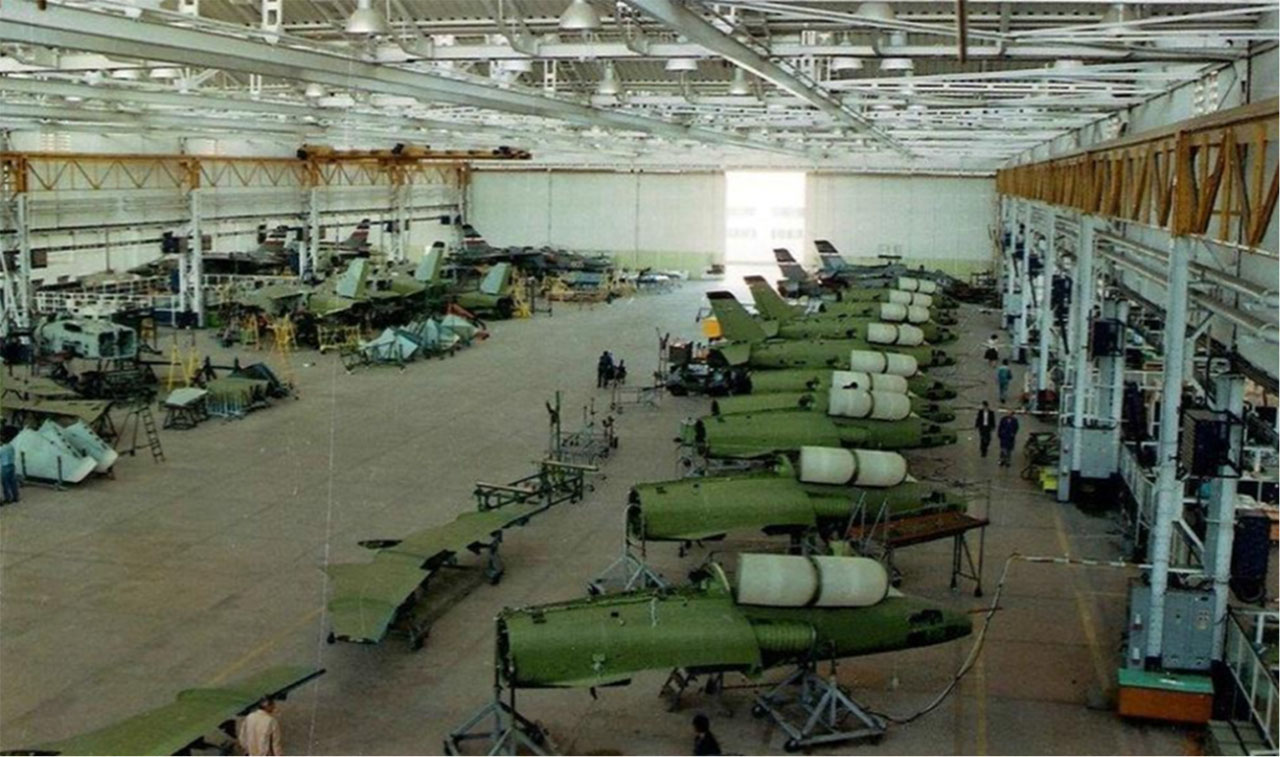
Fig. 1.
The Soko Factory.
Source: https://hercegovina.in/wp-content/uploads/2019/12/c2d257dd-soko_mostar.jpg
The following planes were produced, or to be produced, at the SOKO Factory [5]:
a) Military planes: Soko 522, Soko G-2 Galeb, Soko J-21 Jastreb, Soko J-20 Kraguj, Soko J-22 Orao, Soko G-4 Super Galeb
b) Helicopters: Aérospatiale Gazelle (produced under license)
c) Combat aircraft under development: Novi Avion (NA).
The SOKO aircraft factory successfully developed and manufactured various types of military aircraft. Below is an overview of its most significant projects.
4.1. Soko 522 (Falcon 522)
The Soko 522 was a single-engine, two-seater aircraft of Yugoslav production intended for pilot training and light combat tasks [5]. The development of the Sokol 522 began as an effort to replace the wooden Utva 213 Vihor with an all-metal aircraft. As many Pratt & Whitney R-1340-AN-1 radial engines were available at the time, through US military aid, the new aircraft was built as an Ikarus 213 metal structure with a Pratt & Whitney engine. It was designed by a team of engineers at the Ikarus aircraft factory in Zemun (Figure 2). After the first two prototypes are produced, all technical documentation is transferred to the Soko factory in Mostar, where a series of 110 aircraft would ultimately be created. The first flight of the new aircraft, the Soko 522, took place on June 19, 1955.
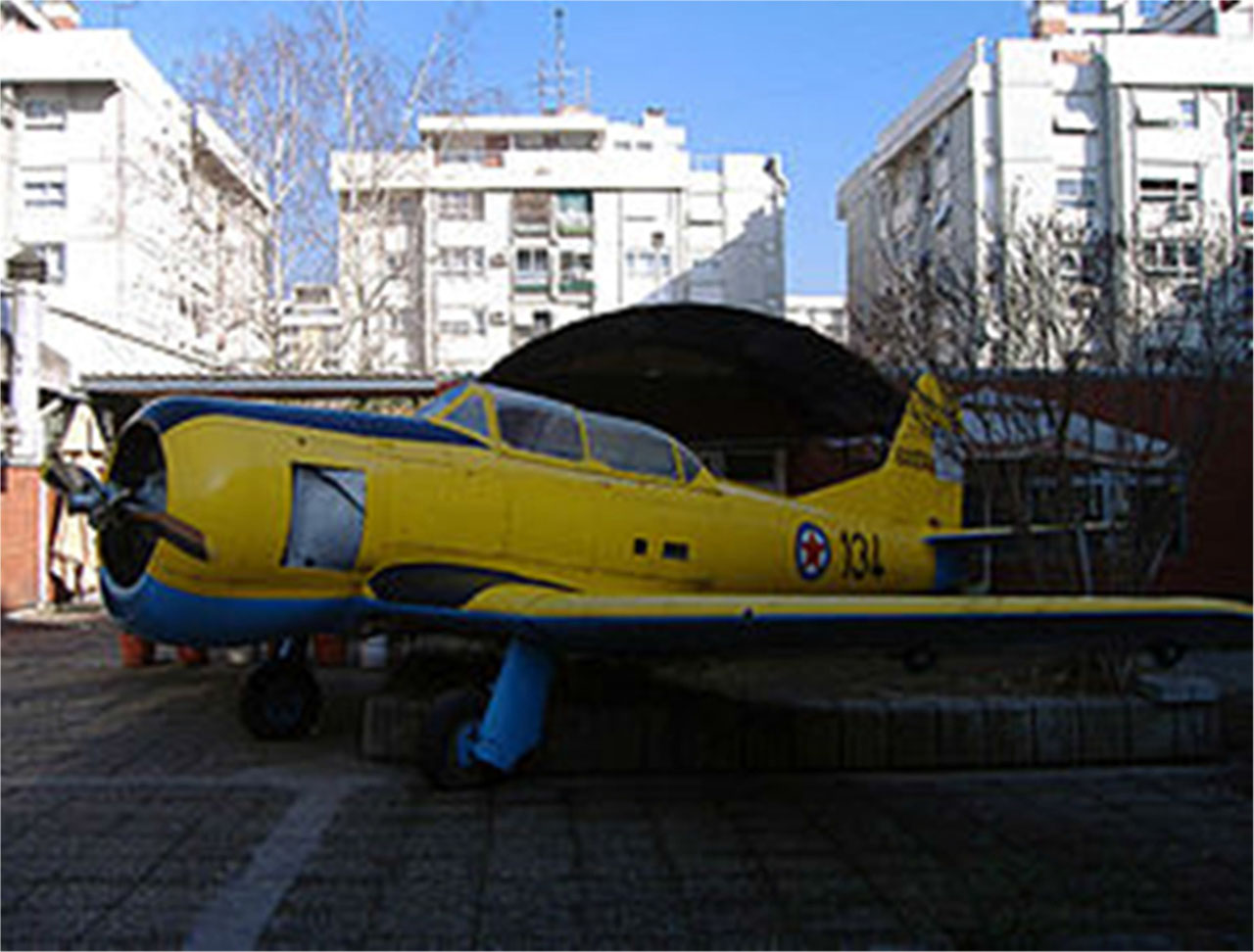
Fig. 2.
The Soko 522.
Source: https://upload.wikimedia.org/wikipedia/commons/9/96/Soko_522_01.jpg
4.2. Soko G-2 Galeb (Falcon G-2 Seagull)
The development of the Galeb G-2 began in 1957 at the Aviation Technical Institute with the creation of two prototypes, the Galeb-1 (with three rubber fuel tanks inside the hull) and the Galeb-2 (two tanks in the hull + type tanks). The latter would become the basis for further serial production [5] It made its first test flight on July 3, 1961. Serial production began in 1963 at the Soko factory, Mostar, and the first example entered operational use on July 30, 1965 (Figure 3).
The development of the improved Galeb G-2 intended for export began in November 1969. A more powerful engine was installed, the fuel capacity was increased, and the cockpit was improved. The only aircraft of this type was designated G-3 and was used for various tests.
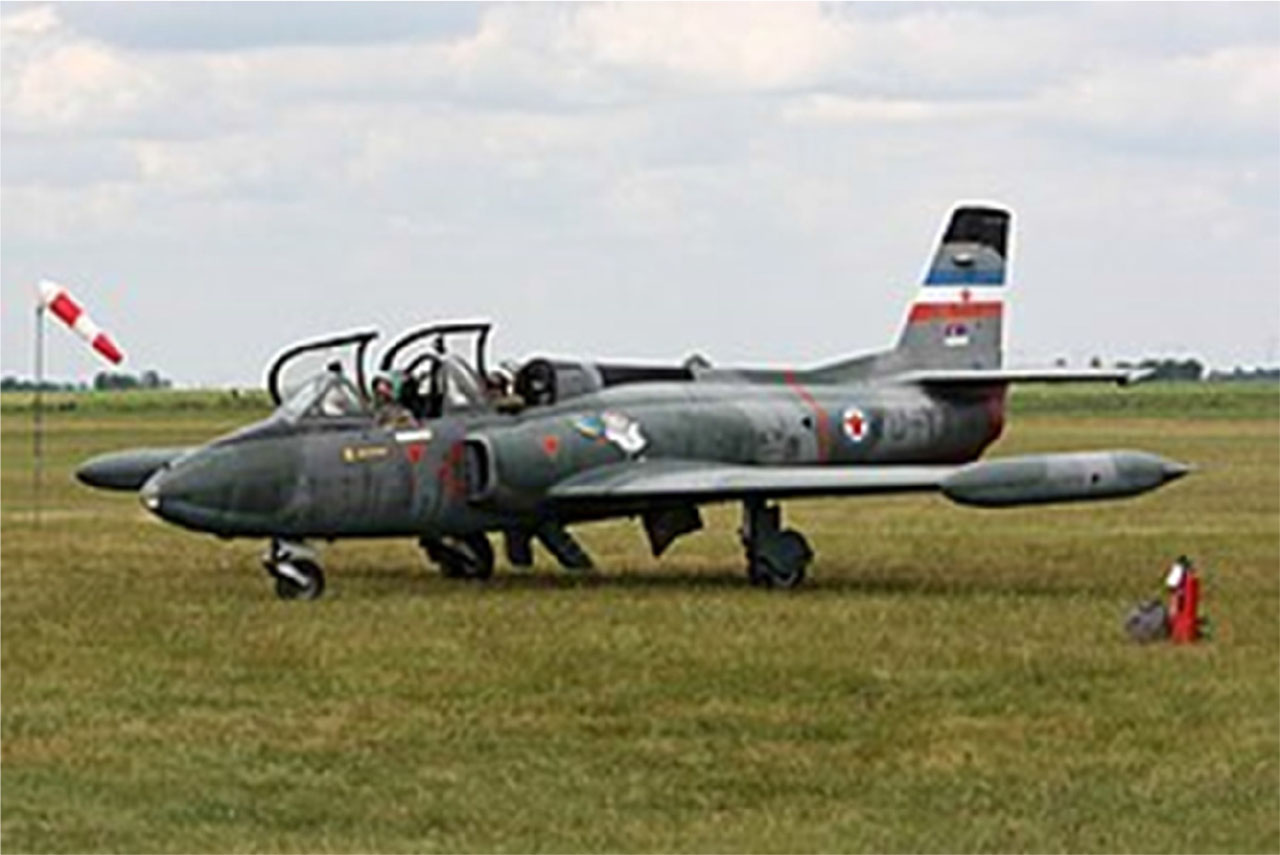
Fig. 3.
The Soko G-2 Galeb.
4.3. Soko J-22 Orao (Falcon J-22 Eagle)
The Soko J-22 Orao is a Yugoslav-made attack aircraft that grew out of a cooperative project, known as JUROM, between SFR Yugoslavia and Romania in the 1970s [5]. After the signing of a bilateral cooperation agreement in 1971, the JUROM cooperative association began researching and processing data on the achievements in military aircraft. The Jaguar aircraft, also developed in cooperation between Great Britain and France, which was then approaching serial production, was given special attention as a development model.
The J-22 Orao is a high-wing aircraft made of duralumin, using conventional solutions (Figure 4). The Soko Mostar factories for Yugoslavia and the Central National Industries Aeronautic Romane (CNIAR) were responsible for serial production. The first single-seat prototypes flew simultaneously in Yugoslavia (J-22 Orao) and Romania (IAR-93) on October 31, 1974. Shortly after, on January 23, 1977, the two-seat NJ-22 prototype flew. Serial production began in Romania in 1979, while serial production in Yugoslavia began in 1980. In the first series, the Soko Mostar factory made 20 aircraft, with certain modifications compared to the prototype.
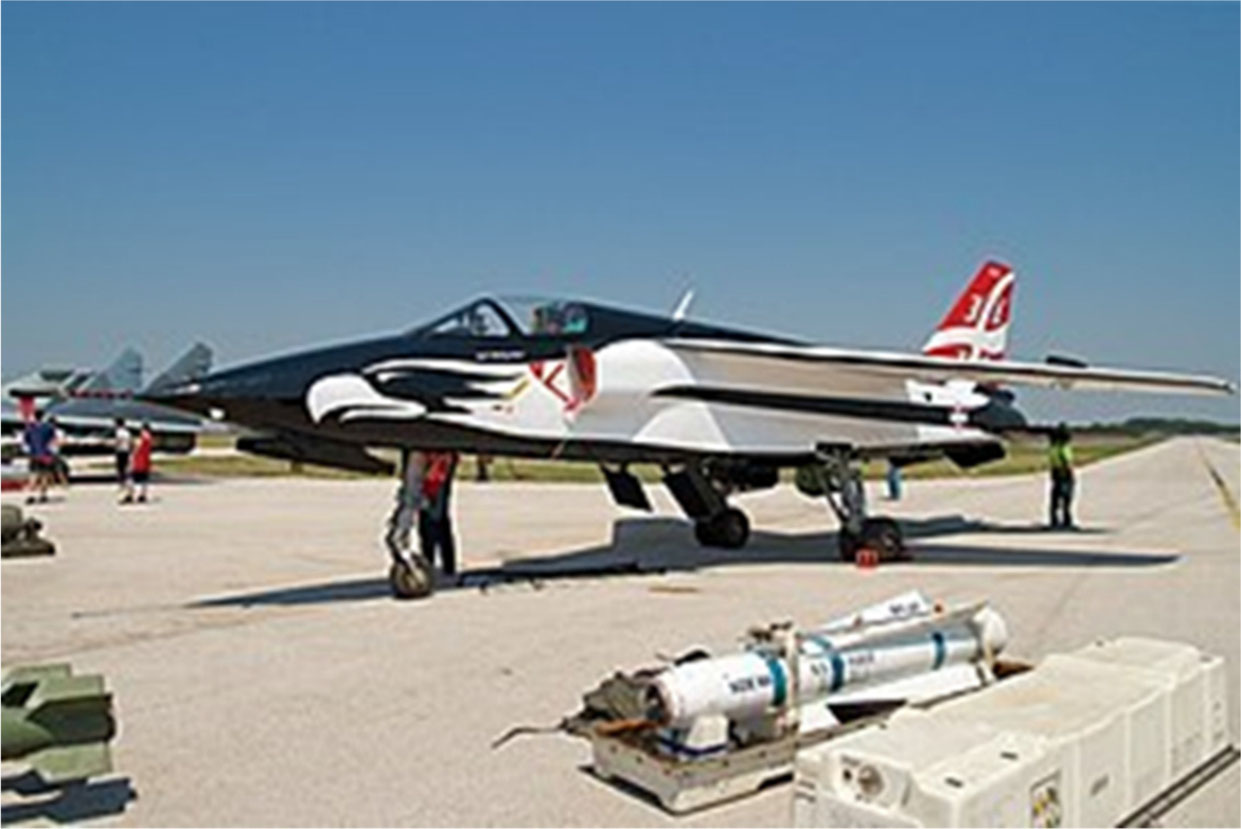
Fig. 4.
The Soko J-22 Orao.
4.4. Soko G-4 Super Galeb (Falcon G-4 Super Seagull)
The Soko G-4 Super Galeb (N-62), is a Yugoslav-produced trainer and light attack aircraft. The crew consists of two members sitting in tandem, with the rear part slightly raised compared to the front for better visibility (Figure 5). The aircraft flew on July 17, 1978; serial production began in 1982. The G-4 Super Galeb was built to replace the G-2 Galeb and the Lockheed T-33 in the Yugoslav Air Force [5]. About 90 of the G-4 Super Galeb aircraft were produced.
4.4. Novi Avion (NA)
Novi Avion (New Aircraft) was the working title for Yugoslavia’s 4th-generation, multipurpose supersonic fighter aircraft program. The abbreviation NA stood for both Novi Avion (New Aircraft) and Nadzvučni Avion (Supersonic Aircraft), highlighting its intended role as an advanced domestically produced fighter jet. The concept for Novi Avion emerged in the 1970s, following the successful first flight of the SOKO J-22 Orao [5]. Unlike previous projects, which still depended on foreign components, Novi Avion aimed for complete domestic independence in military aviation. In 1986, an official development program was approved, marking the start of serious design work. However, the project was abruptly halted in the early 1990s due to the breakup of Yugoslavia and the ensuing wars. No prototype was ever built, and Yugoslavia’s aerospace industry collapsed, ending any possibility of completing the aircraft (Figure 6).
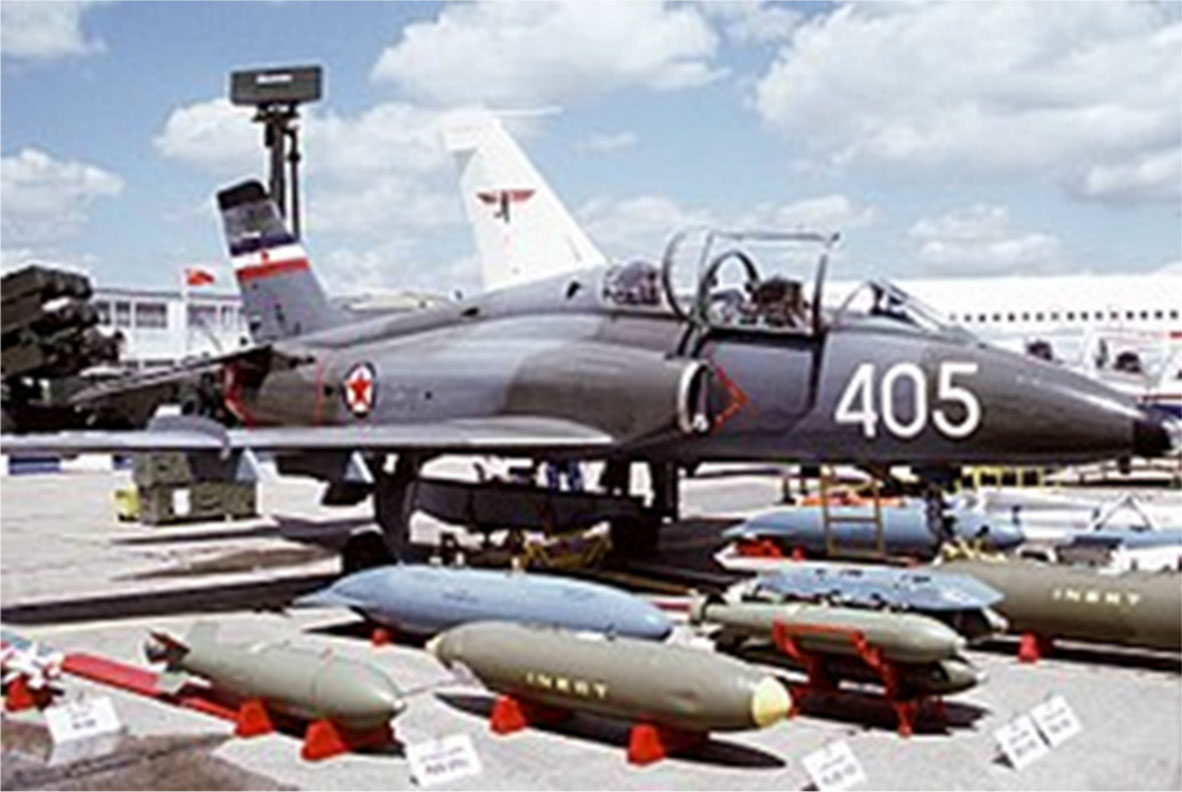
Fig. 5.
Soko G-4 Super Galeb
Source: https://encrypted-tbn0.gstatic.com/images?q=tbn:ANd9GcQZXbk8gFbxY53K3pZu8S1bIBK_oCW4bH85w&s
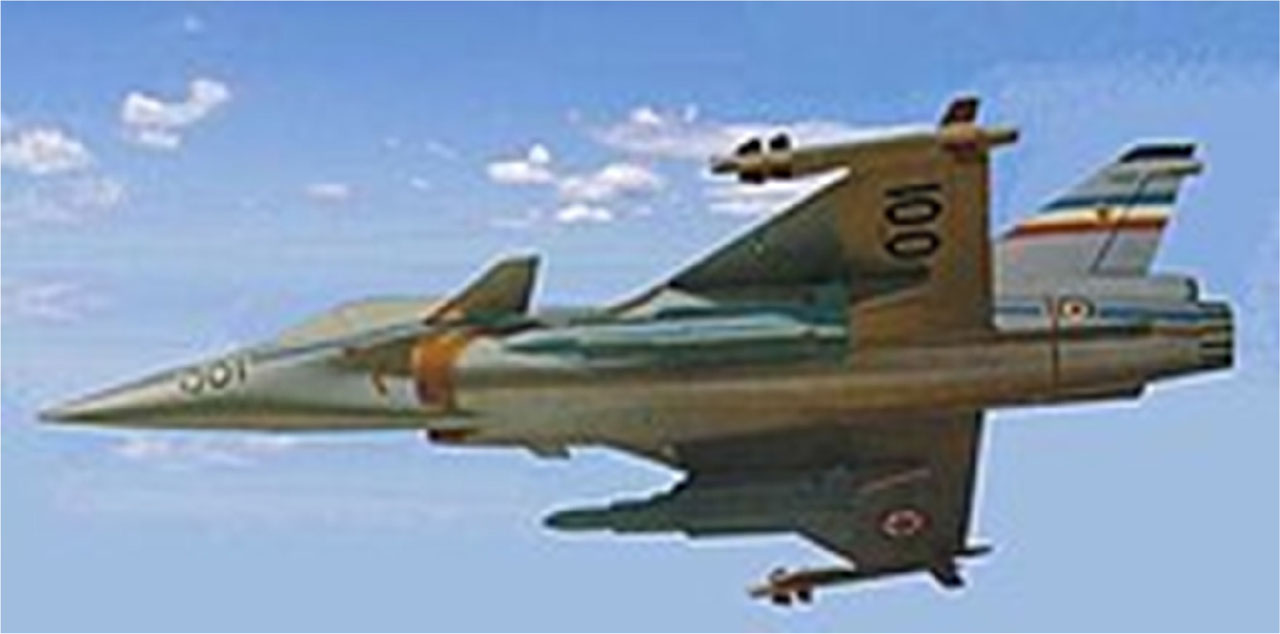
Fig. 6.
An artist’s rendition of what the Novi Avion (NA) would have looked like.
Source: https://encrypted-tbn0.gstatic.com/images?q=tbn:ANd9GcRHA_87IJP5UUuKFLhYiYUdzGijvVAoV3RWLg&s
5. ESTABLISHMENT OF THE FACULTY OF MECHANICAL ENGINEERING IN MOSTAR
In 1959, the Higher Technical School of Mechanical Engineering was founded in Mostar. After its establishment, this institution experienced various transformations and organizational and legal structures. In 1976, it became an independent higher education institution, known as the Faculty of Mechanical Engineering operating within the University of Mostar There were four departments at the Faculty of Mechanical Engineering: the Construction Department, the Production Department, the Organization Department, and the Aviation Department.
Most teaching and assistant staff were recruited from the “SOKO” factory. Later, many engineers graduating from the Faculty of Mechanical Engineering worked at the SOKO factory, contributing to the manufacturing of airplanes and helicopters. Additionally, teachers of the Faculty of Mechanical Engineering and colleagues from SOKO conducted numerous experimental tests of materials and structures. They analyzed the technology of manufacturing parts, the joining of structural parts with rivets, and their replacement with more economical spot welding. Numerous research projects were related to titanium processing technologies necessary to produce the Novi Avion supersonic aircraft.
The faculty also had a long-standing collaboration with the Faculty of Power and Aeronautical Engineering at the University of Warsaw. Between 1979 and 1990, professors and assistants from Mostar and Warsaw participated in a continuous exchange program, fostering scientific and technical advancements. This paper acknowledges the contributions of professors, assistants, and engineers who played a crucial role in these groundbreaking projects.
6. STATE OF AFFAIRS JUST BEFORE THE CIVIL WAR
As of 1991, the Yugoslav People’s Army (JNA) was one of the largest military forces in Southeastern Europe, possessing: 1,850 medium tanks, 13 light tanks, 240 reconnaissance armored vehicles, 490 infantry fighting vehicles, 500 armored personnel carriers, 1,934 large-caliber artillery pieces (from 105 mm upwards), about 3,000 120 mm mortars and 3,400 82 mm mortars, 1799 anti-tank guns, 449 aircraft and 190 helicopters, 11 submarines, 15 missile boats and gunboats, 14 torpedo boats and 79 other ships [7]. Since the 1960s, the Air Force had aimed to maintain a fleet of 400 combat aircraft. Fighter aviation was comprised of 167 combat aircraft of 16 modern MIG-29 fighters, and the rest were obsolete MIG-21 fighters, of which 77 were their best variant, type BIS. The bulk of the Air Force consisted of the obsolete subsonic attack planes Jastreb and Orao and the solid training plane Super Galeb, which was also used as a fighter-bomber.
7. THE SITUATION AFTER THE CIVIL WAR
During the war in Bosnia and Herzegovina, the SOKO factory was situated in the active conflict zone, and most of its machinery was either destroyed or stolen. Following the dissolution of Yugoslavia, seven smaller states emerged, each facing different challenges in rebuilding their military capabilities.
Many of the aircraft left behind after the war were obsolete and no longer suitable for modern air forces. In response to this situation, Serbia bought 6 used MiG-29 fighters, after which Croatia ordered 12 used Dassault Rafale aircraft. A year later, Serbia ordered an additional 12 new Dassault Rafale planes. The other countries are smaller and did not have the resources to purchase such aircraft. Montenegro, Kosovo, Bosnia, and Herzegovina ordered 6 Bayraktar TB2 drones each. Additionally, all newly established countries have begun investing in the development of civilian and military drones, recognizing them as a cost-effective alternative to traditional combat aircraft.
8. CONCLUSIONS
The history of Yugoslav aviation reflects the broader transformations of the state, from its formation in 1918 to its dissolution in the 1990s. The Royal Yugoslav Air Force entered World War II with high ambitions but was quickly overwhelmed by the German Luftwaffe. Partisan aviation, though initially small, laid the foundation for a structured air force that later became a crucial component of Yugoslavia’s military. In the post-war years, industrialization efforts led to the establishment of a domestic aerospace industry, with SOKO Mostar emerging as a key player in aircraft production. The factory’s contributions included a range of military planes and helicopters, with ambitions to develop a domestically produced supersonic fighter. However, the fragmentation of Yugoslavia and the wars of the 1990s brought an abrupt end to this progress. As the successor states struggled with economic and military challenges, they turned to foreign suppliers for their aviation needs. Today, the legacy of Yugoslav aviation survives in historical records, in the remnants of aircraft once produced domestically, and still-relevant cooperative ties (e.g. between Mostar and Warsaw), serving as a testament to Yugoslavia’s once-thriving aerospace industry.